Ostrava’s reputation is intrinsically linked to its mining history, and even now, remnants of the past can be found scattered throughout the city, dotting its skyline. Chimneys and headframes still rise above the city centre while mines leave their mark on the surrounding landscape despite the vast majority of the factories, shafts, and processing plants shutting up shop in the tail end of the 20th Century.
The most noticeable of them all is the sprawling Dolní Vitkovice (Lower Vitkovice) ironworks complex that still stands tall, a rusting mass of pipes, towers and blast furnaces where iron was forged until the plant’s closure in 1998.
However, despite this activity coming to an end almost a quarter of a century ago, it is the discovery of high-quality black coal in the 19th century and the opening of mines, factories and plants such as the sprawling Dolní Vitkovice ironworks that were a turning point for Ostrava and have left a lasting mark on the city’s past and present.

Ostrava has existed since as far back as the 13th century when it was just a small settlement on the river Ostravice. For centuries, it never had the cultural, political or economic sway of cities such as Prague and despite growing steadily over time, by the end of the 18th century, it had only 1000 inhabitants. These fortunes soon changed once it was found that the town sat on rich coal reserves. Ironworks were established, mines were opened, and factories were built.
Dolní Vítkovice ironworks were built in 1828 to produce the materials for the nation’s rail network and following the Second World War, the Communist regime continued the rapid expansion of industry in the region. The population boomed, growing rapidly over just one hundred years to the point where it is now home to over 300,000 people. Ostrava evolved into a metropolis defined by its labour force, celebrated as the “city of coal and iron” but also earning the derogatory nickname “Black Ostrava”.

The best place from which to survey the city’s urban sprawl is from the Art Deco observation tower of Ostrava’s New City Hall. The viewing platform stands at 72 metres but offers a breathtaking 360-degree view across to the Dolni Vitkovice ironworks and beyond the chimneys and headframes. The landscape of the city itself it flat, meaning that a clear day gives a sightline all the way to Poland on one side, and the Slovakian border, 50km away on the other.
While the panorama does extend to the Beskydy Mountains and the Jeseník massif (their closeness sees much of Ostrava’s population heading out of the city come the weekend to partake in hiking, skiing or other outdoor pursuits), the only hills that are found within the city limits are mostly manmade; heaps of mining waste dumped following extraction and left to smoulder or gradually become covered in vegetation. One such heap, Ema, stands at 315m high and consists of over 28 million tonnes of waste. This artificial hill is known locally as Ostrava’s Mount Vesuvius due to the fact that it is still smouldering, even now, with an internal temperature of 1500 °C but don’t let this put you off scaling it; The short hike to the summit affords views that are even better than those found at the City Hall.
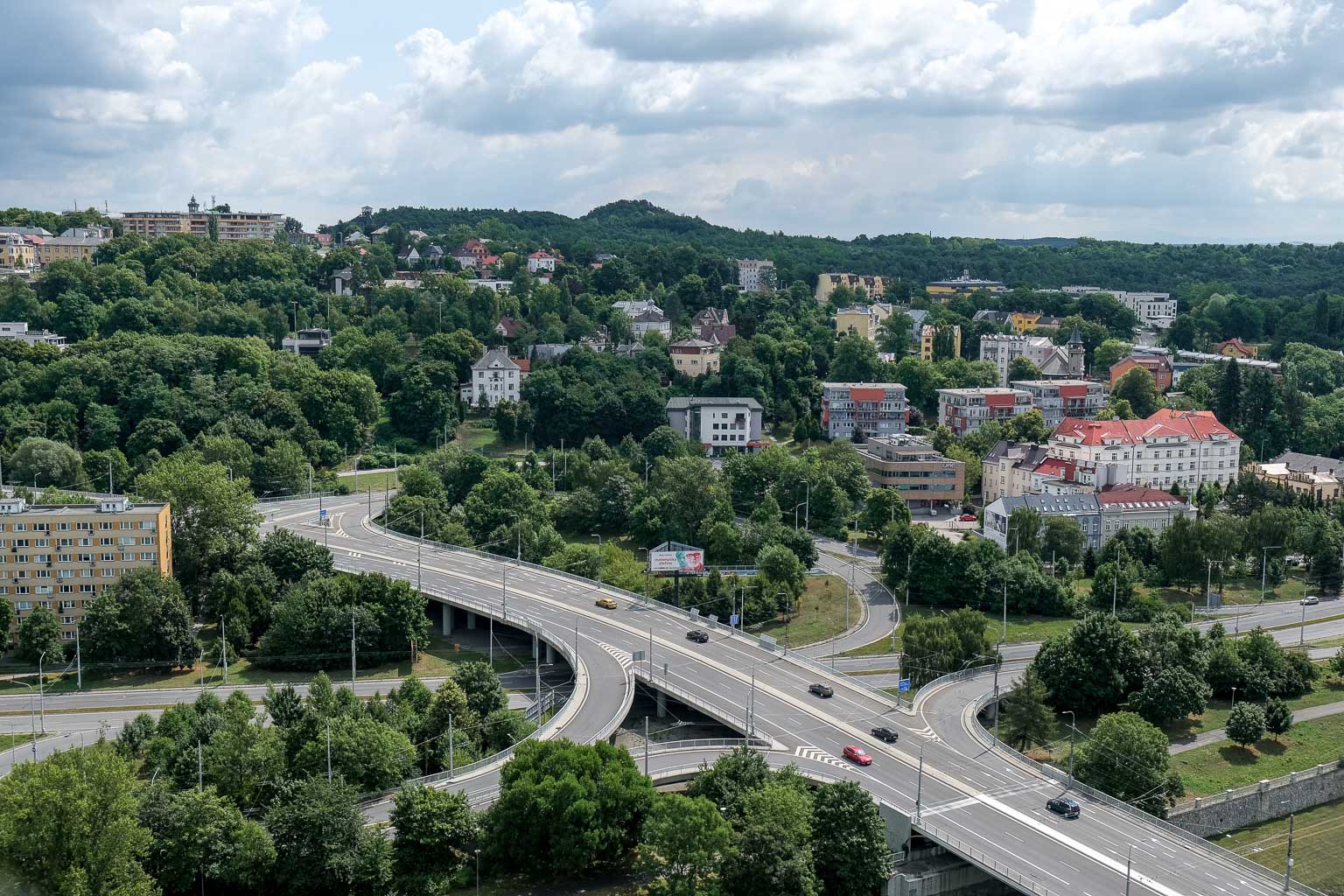
From either of these vantage points you can see that the name ‘Black Ostrava’ doesn’t really fit the city anymore. Between the factories and apartment blocks, green spaces and woodland occupy the space, spreading alongside the Ostravice in both directions or in the form of tree-filled squares that sit between the city centre’s streets.
While Ostrava’s ‘old town’ may not carry the same ornate grandeur seen in other Czech cities – after all, it isn’t particularly old in comparison – the pastel coloured buildings that line the strangely L-shaped Masarykovo náměstí feel very typical of the nation and the surrounding streets contain an abundance of architectural gems in the form of its churches, cathedral and fascinating examples of Art Nouveau and Art Deco facades.
But the people that visit Ostrava, and around 1.5 million people do each year, don’t necessarily come here for chocolate-box squares and picturesque buildings – these are a dime a dozen in Czechia. Instead, the city’s industrial past is an enormous draw.

The last quarter of a century have been tough on the city, faced with near economic collapse and a relatively high percentage of the population abandoning the city as long-standing industries did the same, it has turned its fortunes not by removing and destroying these mining artifacts, but by breathing new life into them. Both Landek Park and Michel Mine have been converted into informative museums that tell the story of the city’s mining history and its workers, while other structures have undergone a complete transformation.
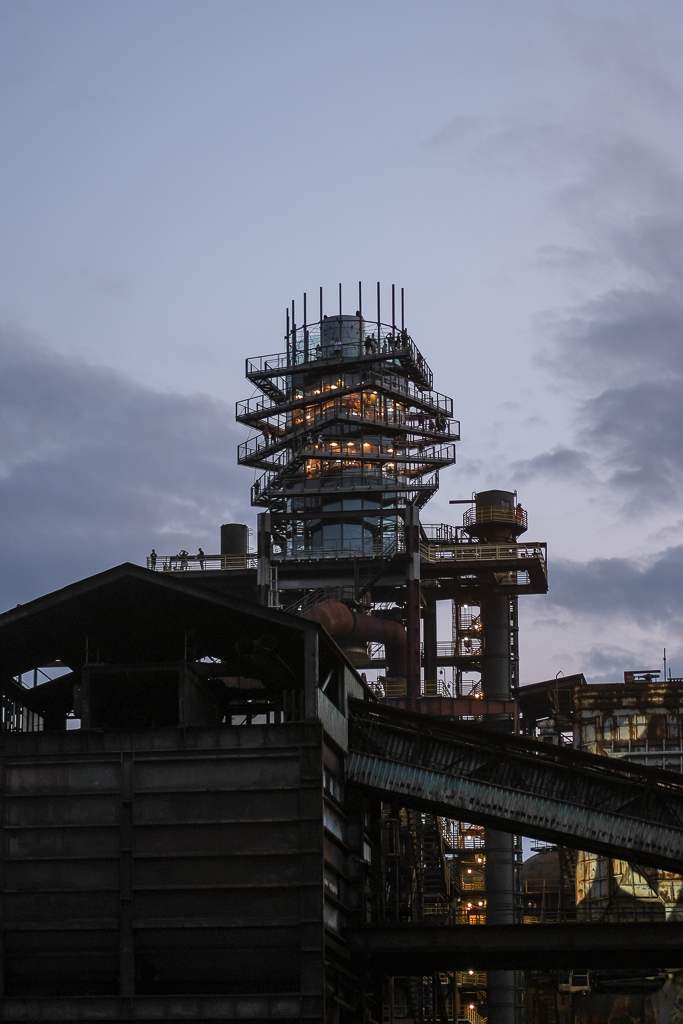
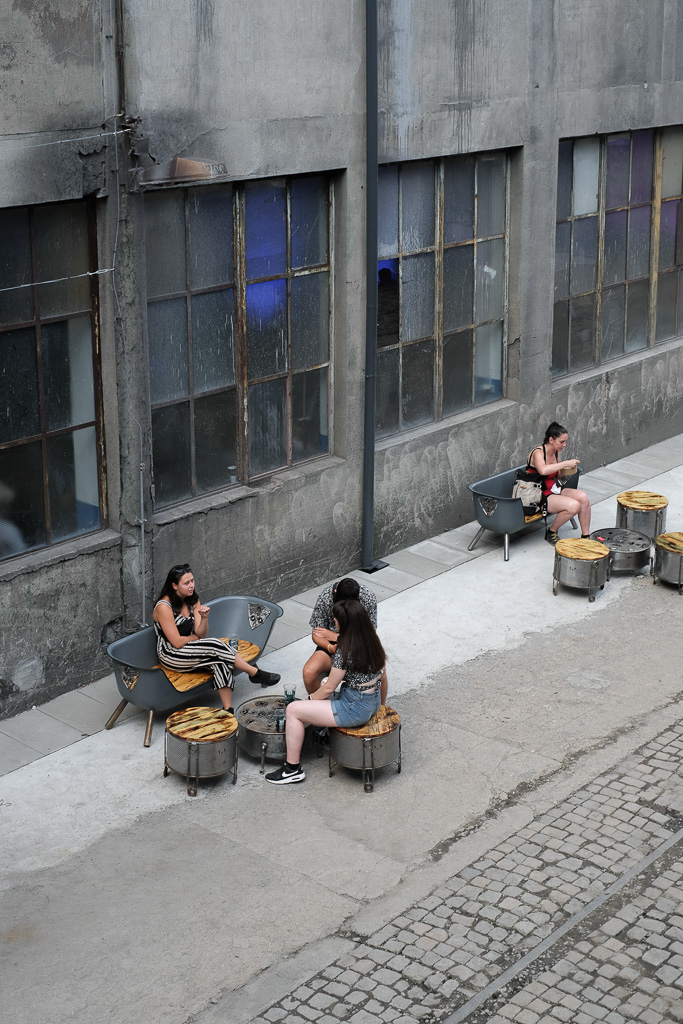
One such site is Dolní Vitkovice. This former metallurgical plant, mine and ironworks is a European Cultural Heritage Site that has thankfully not only been left standing proud on the edge of central Ostrava, but has been transformed over the last decade into an educational, cultural, and social center.
As well as having the chance to take tours of the site where you can learn about the entire process of iron production: from coal mining, coking, and the formation of iron, the repurposing of the site has created one of the city’s finest tourist attractions containing galleries, cafes and exhibitions. It’s a unique space that is used well by the city, with a whole range of events hosted in this dystopian setting throughout the year, with the two most notable being electronic dance festival Beats for love and the multigenre extravaganza of Colours of Ostrava that sees hundreds of acts perform across 21 stages.
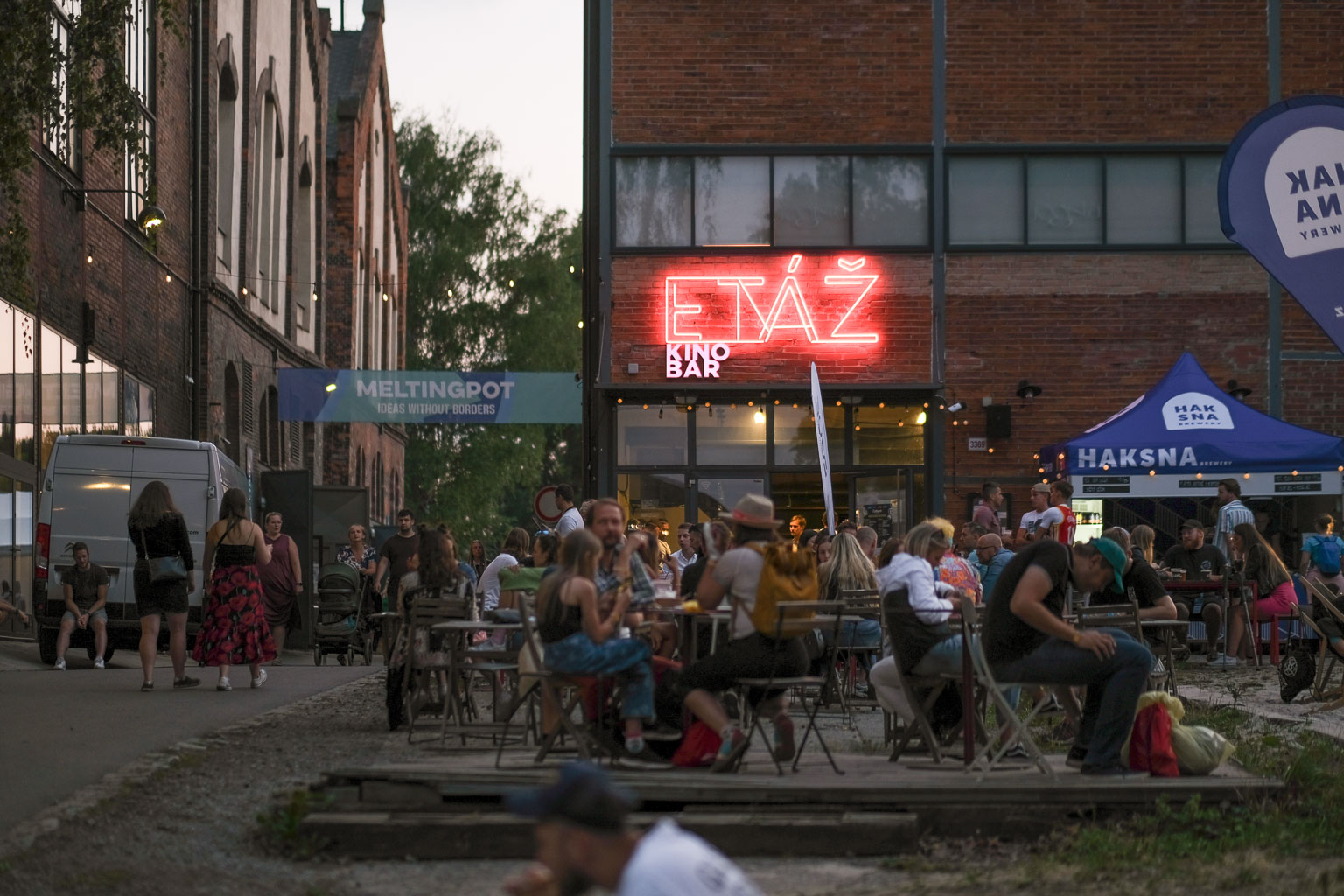
It’s been a long process, taking almost a quarter of a century, but Ostrava’s cultural revival is in full swing: Disused and rundown spaces have been given a new lease of life and the city is teeming with activity; from festivals, events and exhibitions to a city centre that is packed with exciting culinary offerings alongside cool boutiques, street art and an enticing nightlife scene.
While Ostrava may often be overlooked in favour of Czechia’s more picturesque destinations, this vibrant and gritty post-industrial city, is making a name for itself in a different way, metamorphosising into something much more interesting and finally laying to rest its ‘Black Ostrava’ title.


Where is Ostrava?
Tucked away in the northeast of Czechia, the capital of the Moravian-Silesian Region is located about 10 kilometres south of the Polish border and 50 kilometres west of the Slovak border. Despite it’s distance from Prague – 360km – meaning it doesn’t get a huge number of tourists making their way here from the Czech capital, It is just 170km from Brno and a short 90km from the Polish city of Katowice.
How to Get to Ostrava
There are regular, direct flights between London Stanstead Airport and Ostrava’s Leoš Janáček Airport, located 25km from the city centre and reachable via the S4 trainline.
Alternatively, Katowice Airport is located just one hour away by road with a Flix Bus service running between the Airport and Ostrava. If, like me, London Stansted is a little too far to travel, there are regular flights to Katowice from a number of UK bases.
If you are travelling to Ostrava from another destination within Czechia, then rail is one of the simplest options. Ostrava has three train stations – Hlavní nádraží (the main station), Ostrava-Svinov and Ostrava-střed – that have connections throughout the country and neighbouring nations
From Prague
The train journey between Prague and Ostrava takes approximately 3 and a half hours with services running every couple of hours between 5.30am and 8pm. Alternatively, Flixbus run a direct service between the two cities multiple times a day, taking approximately 5 hours.
Check the times and and ticket prices for buses or trains between Prague and Ostrava here.
From Brno
Frequent, hourly trains run between Brno and Ostrava, taking approximately 2 hours and 40 minutes with tickets starting at as little as £6. The Flixbus service is even more frequest and faster, taking just 2 hours and 10 minutes with the service running throughout the night. Tickets cost between £9 and £14.
Check the times and ticket prices for buses or trains between Brno and Ostrava here.
Where to Stay in Ostrava
Ostrava may not appear to have the same tourist draw as the country’s largest and second largest cities – Prague and Brno – but it appears to gain more visitors each year and as such, there are a good number of hotels to accommodate them meaning that there is usually good availability throughout the year.
However, if there is a major event happening in Ostrava – and there are a few throughout the year – you will find prices increasing and room availability dwindling quickly. This is particularly true during the few days of the Colours of Ostrava Festival.
Boutique
Hotel City.City
Despite being a decent walk north of the city centre, Hotel City.City is just a short hop from Ostrava’s Hlavní nádraží. The rooms are a little basic but this is a modern, stylish hotel that describes itself as a haven for design and creativity. The Loft Restaurant on the hotel’s ground floor has this in abundance, serving some of the finest cuisine that you will find in the city.
Central Location
Mercure Ostrava Center Hotel
In a central location, the 4-star Mercure Ostrava Centre is one of the city’s newest and more upmarket hotel offerings with 139 rooms, a restaurant, bar, summer terrace, and fitness centre.
The Best Things to do in Ostrava
Although Ostrava may be mostly known for its mining and industrial heritage, it has an interesting and complex history that vibrant present that makes it a captivating place to spend a few days. As well as the expected museums dedicated to the extraction and processing of natural resources, it’s a city brimming with artistic spaces, cultural events, and a burgeoning culinary scene.
Scale the Observation Tower of the New City Hall
The largest city hall complex in the Czech Republic, Ostrava’s New City Hall was constructed in 1930 with a beautiful Art Deco style clock tower that dominates the skyline of the city centre where it looms at 85.6 metres tall. The viewing platform stands a little lower at 72 metres but offers breathtaking views across to the Dolni Vitkovice ironworks but also allows you to see how green the city is, despite being known mostly for its mining and industry.


From the top you will be able to see the Moravian-Silesian and Těšín Beskydy Mountains and across the border to Poland. If there is a good visibility you can also see the Hrubý Jeseník massif.

The viewing tower is easily accessed by a lift in the entrance of the New City Hall. It is open from 9am until 7pm during the between March and October or 9am until 5pm during the months of November to February. Tickets cost 60 CZK and can be purchased at the Ostrava City Information Centre, which is located directly beneath the tower.
Sample the City's Art Scene
Ostrava’s Gallery of Fine Arts was originally founded as a Regional Gallery in 1952 and is housed in one of the city’s historic architectural gems that dates back to 1926. This is the largest gallery in the Moravian Silesian region, containing over 23,000 works that are visited by more than 100,000 art enthusiasts each year. It is one of the most notable galleries in Czechia.
Alternatively, the Plato Gallery of Contemporary Art has 6 exhibition halls filled with modern visual art, a library, café, cinema, and is surrounded by beautiful permaculture gardens. The space itself is almost as interesting as the art that it contains – situated in the former municipal slaughterhouse that was renovated in 2022 by architect Robert Konieczny and his studio KWK Promes, to feature six roatating walls that open the building up from all sides, an impressive sight to see that brings the surroundings inside and makes them a part of the interior space.
Nearby in the former hobby market you will find Plato Bauhaus, which is used for educational and community programs, where you will also find a freely accessible library with a reading room, a material library, a bookstore, a garden and a cinema.


Climb Ema Slag-Heap, Ostrava's Mount Vesuvius
The Ema Slag heap, towering over the city at 315m high, is a smouldering monument to Ostrava’s mining past. This is a completely man-made hill, consisting of over about 28 million tons of waste mining material that were transported to the eastern side of the city to be dumped.
The process began in 1920, and the resulting heap – which consists of over about 28 million tons of waste – was named after Italian countess Emma, whose husband, count Wilczek, founded Ostrava’s coal mines. It’s charmingly known as Ostrava’s Mount Vesuvious due to the fact that the heap is still smouldering, even now, with an internal temperature of 1500 °C. On a cold day, clouds of sulphur dioxide and methane can be seen rising from the hill along with their associated odours while when snow covers the entirety of the city, the sub-tropical soils of Ema are the only part of Ostrava that remain clear thanks to it’s temperate ground.
However, don’t let the talk of pungent fumes and burning ground put you off scaling the heap, it offers the best view in the city.

You can reach Ema slag heap on foot from the city centre via a relatively easy 4km hike. Starting at the New city Hall, walk along the banks of the Ostravice River and cross at either the green footbridge next to the county hall or the M. Sykora Bridge.
From the Silesian Ostrava City Hall you can follow the yellow tourist signs that will lead you along a short trail through the woods towards the top of Ema heap. From here you can either walk back the way you came or continue to follow the signs towards Ostrava Zoo.
The entire route from the New CIty Hall to the zoo is around 4km. Alternatively, you can park at the entrance to the short woodland trail and walk from there, which will take around 5 – 10 minutes.


Silesian Ostrava Castle
On the Silesian bank of the Ostravice River, close to its meeting point with the Lučina, stands the 13th century Ostrava Castle. Its first recorded mention dates all the way back to 1297 when an Olomouc bishop made an agreement with a Polish prince to build frontiers on the banks of the Ostravice to mark the Polish – Moravian borders in case the river flow should change in the future.
Despite the castle being devastated during the air bombardment of Ostrava in 1944, it was later acquired by the City of Ostrava and reconstructed, opening to the public in 2004.
There are several permanent exhibitions throughout the castle and courtyard that can be explored such as the chapel, armory, forge and ceremonial hall while the on-site amphitheater hosts events throughout the year.
Entry costs 80 Kč for adults and 40 Kč for children. The castle is open between 9am and 7pm throughout June to September as well as December while in all other months the opening hours are 10am to 5pm.


Landek Park
Sitting on Landek Hill, this is the largest mining museum in Czechia and the only place in Ostrava where you can go down a shaft. Via an original mining cage, visitors are lowered underground to explore around 250m of tunnels that were part of Anselm, the oldest mine in Ostrava.
Alongside the shaft, Landek Park also has exhibitions on mining equipment and mining rescue. Landek Park is open throughout the year and can be reached via buses 34, 52, 56, 66, 67, and 68


Michal Mine
Although you’re unable to go underground at Michal Mine, guided tours walk you throughout the entire complex, from the locker rooms, registration rooms and canteen to the Geologists office and Infirmary, giving you a real glimpse into the lives of the workers that once occupied the site.
Michalkovice pit No. 3 was first opened in 1843 and later named after the imperial adviser Michael Laier. In 1856 the mine passed into the ownership of the Ferdinand Northern Railway Company, which owned the mine up to the nationalisation in 1945.
The mine site remained open until June 1993 and was declared a national cultural monument in 1995. Since April 2000 it has been opened to the public where visitors can see the site as it was in the years between 1912 – 1915 when the mine was last fully reconstructed, making one of the most modern and progressive, fully electrified mining companies.
Dolní Vitkovice (DOV)
Of all the former industrial sites in the Ostrava, it is the remarkable Dolní Vítkovice ironworks – opened in 1828 – that dominates the city’s skyline.
This former metallurgical plant, mine and ironworks was once dedicated to supplying the essential materials required for the ever-expanding railway network and is now a European Cultural Heritage Site. Despite raw iron production in Dolní Vitkovice ending in 1998, the site has thankfully not only been left standing unused on the edge of central Ostrava, but has been transformed over the last decade into an educational, cultural, and social center.

The skillful repurposing of the site has created one of the city’s finest tourist attractions. Alongside galleries, cafes and exhibitions, visitors can explore the popular Science and Technology Centre, designed by the famous architect Josef Pleskot, scale the Tendon Climbing Wall housed in the former Hlubina Mine, or visit Gong, a repurposed gas storage tank that now hosts a multi-functional center made up of an auditorium, workspaces and a gallery.
Narrated tours of the Lower Vítkovice area are available, led by former employees of the furnace plant. For English speakers, MP3 players are available during Czech-language tours. However, English-speaking guides are available for groups of 10 or more.
The Bolt Tower
Standing at 80 metres tall – the highest point in the city – and accessible by a lift and a series of external walkways, the former blast furnace no. 1 at Dolní Vítkovice has undergone a stunning architectural redesign to feature a glass structure, shaped to mimic fire, rising as far as the factory flames once reached. Inside, the crystalline edifice now hosts a café where you can sip a casual cocktail or beer while soaking up spectacular views of Ostrava.
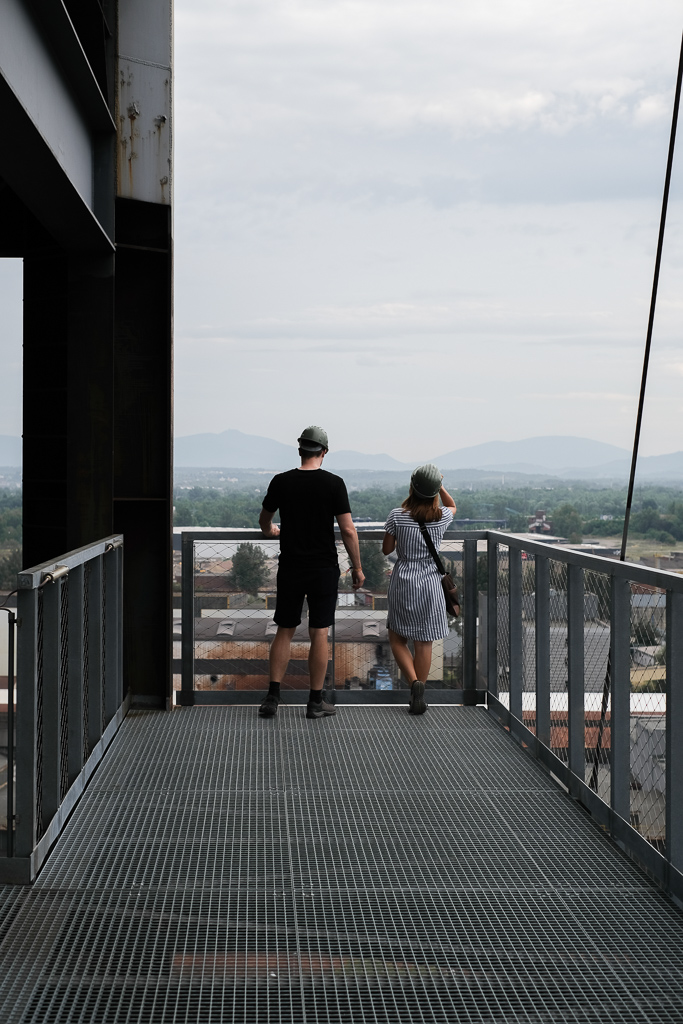
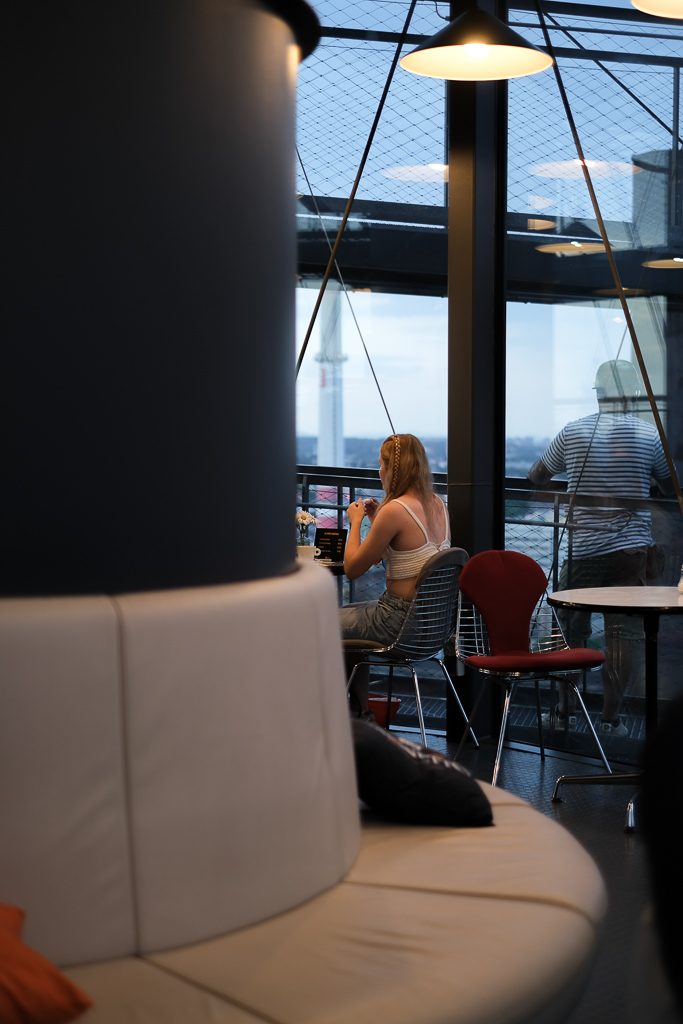
The Bolt Café is open dailt from 10am to 6pm but tickets need to be purchased in advance and give you a 60-minute visit during a fixed timeslot. These can be purchased online and cost 200 CZK per person. Children under 6 can enter for free.

Party at Colours of Ostrava Festival
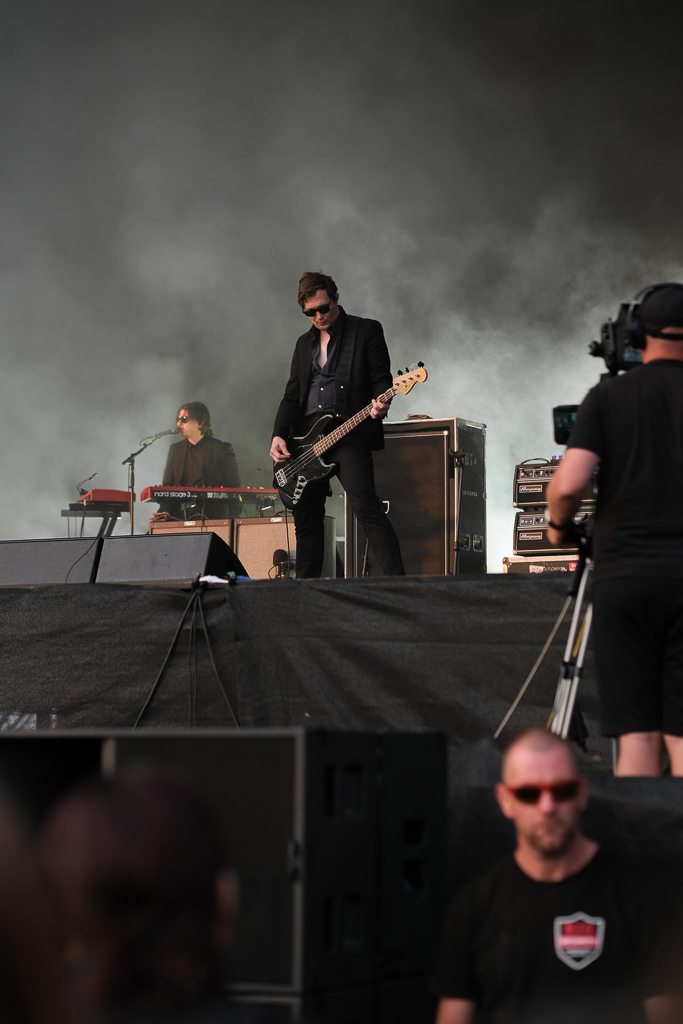
Now in its 20th year, the Colours of Ostrava – the city’s annual multi-genre music festival – has grown from a cluster of street performances to what is now Czechia’s largest, attracting around 53,000 punters across 4 days and some of the world’s most popular performers taking to the stage in the former Dolní Vítkovice ironworks.
It’s a setting that is used perfectly, giving the festival an almost post-apocalyptic feel. This industrial wasteland in the corner of the city unfurls to reveal a multisensory playground of music, visual art and performance. The two-dozen outdoor and indoor stages sit amongst kilometres of rusting pipelines and occupy every inch of the site, from gaping warehouses and tunnels to cavernous gas storage tanks, breathing new life and colour into this important piece of Ostrava’s heritage.
Past acts have included One Republic, The Killers, The Cure, Tame Impala and Pheobe Bridgers.

Tickets for the 2024 edition of Colours of Ostrava are already available for purchase here. You have the option of buying either a 4-day General admission ticket for €140 or a 4-day VIP ticket for €430.
This is both a very family-friendly and accessible festival and as such, children under 140cm in height can enter for free. If your child is under 15 years old but over this height, they can get a discounted ticket for €50 (proof of age is required).
Read More: Colours of Ostrava Festival – A Post Industrial Revelation
Take in Ostrava's diverse Architecture with a City Centre Walk
Although the rusting towers and dilapidated chimneys of Ostrava’s industrial past dominate parts of the city’s landscape, there is a beauty and variety to the architectural offerings dotted throughout its centre. I have already mentioned the looming, functionalist-style tower of the new city hall and the reconstructed 13th century castle that sits on the bank of the Ostravice, but take a walk through Ostrava and you will find all manner of buildings that vary wildly from Social Realism and to Renaissance style and Art Nouveau structures.
In some buildings, you will find multiple schools of architecture in one place. The Church of St. Wenceslas, near Masaryk Square in the Malá Kodaň area boasts six styles in one and it is claimed that a human skeleton – hidden beneath a heavy slab with 3 coins in its mouth – was found during the church’s reconstruction. This may sound ominous, and historians would agree; It is thought that these precautions were taken to prevent the deceased returning as a vampire.

There are no vampires to be found at the impressive Cathedral of the Divine Savior, whose 67m high towers, dated 1889, are the part of the Neo-Renaissance Basilica that is the second largest sacred object in Moravia after the Basilica of Assumption of Mary and Saint Cyrillus and Methodius in Velehrad.
For a major city in a nation that is one of the most Atheistic in Europe – the majority of Czechs identified as “without religious belief” in the 2021 Census – Ostrava has a lot of impressive religious buildings. Alongside the two churches mentioned above, you will find the Church of Immaculate Conception – alongside the former city hall – in Svatopluk Čech Square, decorated with facades that were designed in Viennese Art Nouveau designed by Architect Camillo Sitte. Elsewhere, the Evangelical Church of Christ is a beautifully historic brick building built in the style of Dutch Renaissance and dating from1907. The architecture was also influenced by trending Art Nouveau style, which was designed by Karl Troll and Ludwig Faigl.


If you are more interested in exploring the architecture of Social Realism in Ostrava, then the western neighbourhood of Poruba was constructed in a grand style known as Sorela and intended to extol the virtues of the communist era working family and laud the local mining industry through its impressive structures. From the Technical University of Ostrava, you can make tour way along Hlavni Trida, the former Lenin Avenue, where you can divert down Porubská street towards the enormous semi circular apartment building topped with a hammer and sickle as well as reliefs of communist era workers, left standing as a historical monument.

If you want the picturesque, colourful facades found in other Czech towns and cities, then Masaryk Square is probably your best bet, This expansive square, encircled by pastel-painted buildings, is lined with shops, cafés and restaurants. There are a few notable points of interest here such as the Old City Hall building, which currently houses the Ostrava Museum with an exhibition dedicated to the city’s history and a 12 metre tall baroque column where a statue of the Immaculate Mary stands, decorated with a wreath of stars.
In the 18th century, this part of the city was frequently ravaged by fires, but rather than buying a much needed water pump, the authorities instead erected a monument to St. Florian, the patron saint of firefighters, that still stands in the square today.
Stroll along the Ostravice River
While Ostrava has many waterways that flow in and around it, the Ostravice is main aquatic thoroughfare that winds through the city centre. On the summer day that I visited and walked a section of the river – on a warm July day – people fill the banks, relaxing by the water or enjoying alfresco drinks at the riverside Restaurace Loděnice and Dock Street Café. There is also a bustling market serving food and drink that I’m informed can be found most Saturdays throughout the summer.
Walking or cycling the tow paths is a great way to see the city, showing just how green Ostrava is, eschewing the idea that it is made up entirely of industrial remnants. Some people even choose to raft or kayak in the river.

Speaking of how much green space occupies Ostrava, a good place to begin your walk is Comenius Park, which sits in the heart of the city and is one of the largest urban parks in the Czech Republic, made up of over 3000 trees that cover a total area of 30 hectares. Although the park mostly formed naturally due to the flooding of the river, further development of the area was influenced mainly by the construction of the New Town Hall between 1924 – 1930.
You’ll pass the new town hall as you walk the riverbank between the park and Miloš Sýkora bridge which connects two historic parts of the city and was named after a local hero who was shot by the Nazis after he saved the bridge from being blown up during the Red Army’s liberation of Ostrava.


Eventually you’ll reach Malá Kodaň, a district known locally as ‘Little Copenhagen’, which emerged from the minds of a group of architects, who wanted to create a pedestrian-friendly area like those found in the Danish city. The project may not have reached fruition, but it has gone on to become the destination to visit if you are looking for musical performances, theatre, cultural events, street markets and good food. There is also a diverse range of bars and clubs, meaning that Malá Kodaň has partially replaced the notorious Stodolní Street as a nightlife hub.

The Best Day Trips from Ostrava
Ostrava’s location close to both the Jeseníky and Beskydy Mountains make it the perfect place to base yourself for day trips throughout North Moravia and beyond. Here are some of the best places I visited during my stay:
Stramberk
Sitting in the rolling green foothills of the Beskydy mountains, with winding narrow streets lined with folksy, timbered buildings and a pretty town square encircled by colourful facades, town of Štramberk – just 40 minutes south of Ostrava – makes for a particularly picturesque day trip from the city.
The castle ruins of Strallenberg whose tower, known as Trúba, looms high above the town is one of the main attractions. Not much of the castle remains, but some of the inner walls and the reconstructed guard tower which serves as a tourist viewpoint can still be seen. From here, you can enjoy a wonderful view of the Štramberk’s square as well as the peaks of Kotouč, Bílá hora, and the Beskydy mountains.
It is also a great place to enjoy the local delicacy of Štramberk ears, thin rounds of ginger and spice flavoured dough that not only fill the town with a sweet smell, but also commemorate the legendary victory of the Štramberk Christians over the Tartar army.
Read more: How to Spend a Day in Štramberk

Pustevny
Pustevny, on the border between the Moravian-Silesian Region and the Zlín Region and just a stone’s throw from Slovakia sits 1018m above sea level on a saddle of the Beskid Mountain range between the peaks of Radohšť and Tanečnice.
It’s an area that is popular with both hikers and cyclists, criss-crossed as it with trails that attract hoardes of visitors a day during the peak months, although many come to spend time amongst the folksy, Art Nouveau buildings that were constructed here in the late 19th century, designed by Slovak architect Dušan Jurkovič. The Wallacian-inspired structures of Maměnka and Libušín are two of the most well-known, becoming an important part of the region’s cultural heritage.
Here, you will also find the Valaška Trail, a 610 metre long set of wooden walkways, rope bridges, and a cascading tower that rises up amongst the treetops until it reaches a height of 1099m above sea level. The glass walkway at the summit is heart-stopping experience for anyone that has a fear of heights, but it offers stupendous views of the Beskydy ridge.
Read More: Pustevny – Pagan Gods and Folk Architecture in the Beskid Mountains


TATRA MUSEUM, KOPŘIVNICE
I was a little unsure when I was offered the chance to visit the Tatra Technical Museum in the nearby town of Kopřivnice. While Czechia is known for producing world class vehicles (Pilsen’s history with Skoda is testament to this), how interesting could a museum dedicated to Tatra trucks possibly be.
I was wrong. Opened in 2021 in the company’s former foundry, the Tatra Museum explains how it was here that the first motorised vehicle to hit the streets of Austria-Hungary was produced in 1897 and features an enormous collection of the companies trucks, fire engines and military vehicles, including the T805 truck that was riven by the famous Czechoslovak travellers Hanzelka and Zikmud, and the vehicle driven by Karel Loprais, who won the Dakar Rally on multiple occasions.
Most notably, each display is interactive thanks to the use of tablets loaded with augmented reality technology. Pointing the camera at information boards will translate them into different languages, play videos and hilariously, allow you to drive your own virtual Tatra vehicle throughout the exhibition space.

Getting Around
Ostrava’s city centre is very walkable, but there is also an extensive public transport network of trams and buses that serve the city centre and wider region. Contactless payments can be made directly on public transport via credit or debit card. Alternatively, tickets can be purchased via the MojeDPO app.
When Is The Best Time to Visit Ostrava?
While I usually advise on avoiding peak season when many European cities become crowded, I’d recommend visiting Ostrava in the summer months when the weather is warm (average temperatures vary between 20-30 degrees Celsius) and you can make the most of the city’s outdoor spaces and opportunities to hike in the nearby Beskid mountains.
Although Winter can be cold here, the mountains and surrounding hills become enveloped in a sheet of white, attracting skiers that flock for the well-groomed slopes and cross-country trails. Adding to the winter magic, you will find a display of intricate ice sculptures carved by skilled artists in Pustevny each year and the town of Stramberk is particularly festive with nativity scenes featured in windows of historical buildings all around town throughout December and January, giving you an excuse to brave the snow and take a stroll around the charming, winding streets of wooden cottages.
There are also a huge number of sporting and cultural events that take place in Ostrava throughout the year such as the Golden Spike, an athletics meeting held annually in June as part of the IAAF World Challenge Meetings or NATO Days, which is the largest 2-day army show in Europe and sees 125,000 people attending.
If music festivals are your thing, the previously mentioned Colours of Ostrava is a four day multi-genre extravaganza features 21 stages of discussions, theatre performances, films, workshops and art exhibitions across the Dolni Vitkovice complex.
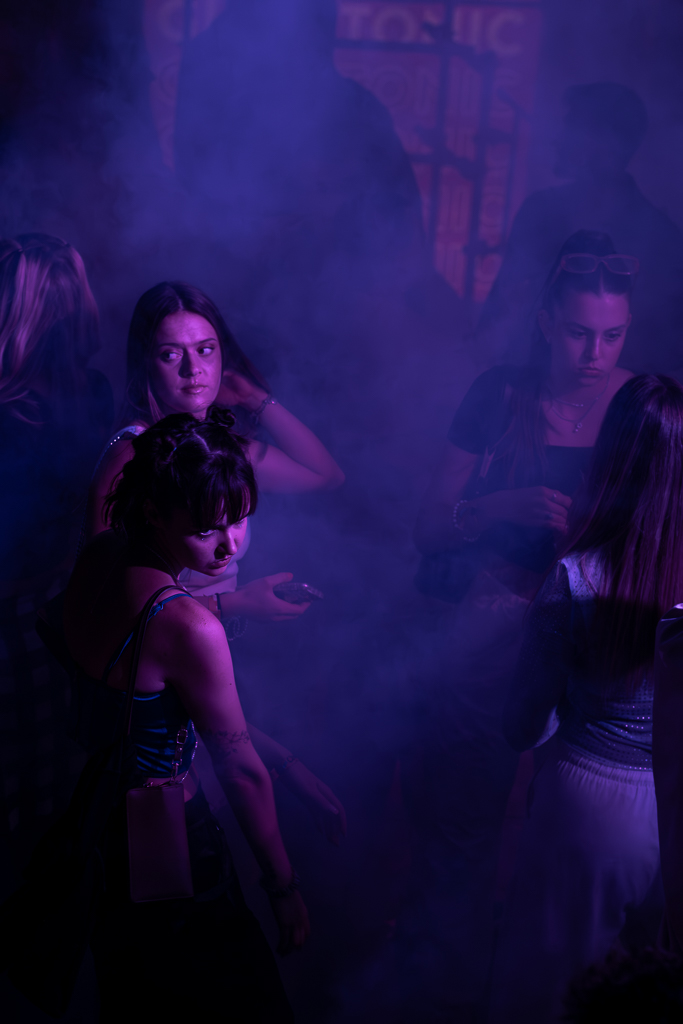
Alternatively, fans of electronic and dance music should head to Beats for Love, another four-day event at the same site that sees over 40,000 ravers dancing the night away amongst the metal remains of the famous ironworks.
How Long Should You Spend in Ostrava?
Although Ostrava is the third largest city in Czechia, you will be able to see almost all of its main attractions in a two-day trip. However, it is worth staying longer, using Ostrava as a base for exploring the surrounding towns and villages as well as any sights outside of the city limits.
There is scope for a much longer, week or two week long itinerary if you plan on visiting both the Jeseníky and Beskydy Mountains or take day trips throughout North Moravia and beyond.
You will need four days if you are coming to the city for Colours of Ostrava or Beats for Love and two if you want to attend NATO Days, but I highly recommend booking a couple of days either side of these events to visit the local museums and galleries as well as experience the city.
I visited Ostrava as a guest of Czech Tourism and Moravia Silesia Tourism. However, all views expressed are my own.