
Sitting at the confluence of two rivers, the Mze and the Radbuza, Pilsen may be mostly famous for its Pilsner Urquell Brewery and the beer style of the same name – Pilsner – but look beyond the copper tanks and thick-bottomed tankards and you will find an appealing medieval town filled with cobbled streets, pastel Baroque facades, beautiful religious architecture and a fascinating, if tumultuous, history.
The city is currently home to 170,000 people, making it Czechia’s fourth largest after Prague, Brno and Ostrava, and has been around in some form or another for over 700 years. In fact, the city’s old town, complete with beautiful square, Namesti Republiky, and the cathedral that sits at its centre, have remained relatively unchanged over the past few centuries despite Pilsen being subjected to plagues, sieges during the 30 Year War, and a battering from Allied bombs during WWII.
That doesn’t mean that it’s a city stuck in the past: Pilsen is a vibrant student town full of new attractions (both beer-related and non-beer-related) and things to see thanks to its status as the European Capital of Culture back in 2015. This is a city that is more than its most popular export.

How to Get to Pilsen
Most people visiting Pilsen will arrive via Václav Havel Airport in Prague (90km away/50mins by car). From the airport, you can take the no. 100 bus to Praha-Zličín (40 Czk) and from there, catch the yellow Regiojet buse or the green-orange Flixbus buse to Pilsen (every hour/100 Czk). It is also possible to catch the airport shuttle from the airport to Prague railway station where you can transfer to the Západní Express. The Express leaves every hour and takes approximately 1 hour 15 to reach Pilsen.
There are also direct trains from České Budějovice, Klatovy (Železná Ruda), Domažlice, Cheb and Žatec.
Where to Stay in Pilsen
Being Czechia’s 4th largest city and a major business/industrial hub, there is no shortage of large hotels and accommodation options in Pilsen’s city centre. However, a number of Pilsen’s breweries also offer a place to stay, often with the option of taking a soak in a beer spa for those really wanting to theme their entire stay in the city around its famous amber nectar.
Hotel
Courtyard by Marriot
Chain hotels are always a safe bet and the Courtyard by Marriott in Pilsen is no exception. Yes, it’s not exceptional, but the rooms are clean and have all the facilities that one would require for a short city break and the breakfast buffet is decent enough. The main reason to stay here is that it is located centrally in a particularly picturesque part of Pilsens old town just a short hop from both the Pilsner Urquell Brewery and the Pilsen Brewing Museum.
Hotel
Vienna House Easy Pilsen
Perfectly located for exploring the historical centre of Pilsen, Vienna House Easy is just a short walk from the train station and sits directly opposite one of the city’s main draws, the Pilsner Urquell Brewery. The rooms are modern and casual with a contemporary feel with the hotel offering an on-site fitness centre and bar/restaurant.
APARTMENT
Wellness Hotel Republika 24 Apartments
Situated a short walking distance from the Cathedral of St. Bartholomew, Jiří Trnka Gallery and the Museum of West Bohemia, Wellness Hotel Republika 24 Apartments offers fully equipped apartments rather than a regular hotel room. Each one comes with a kitchen and lounge, making it perfect for longer stays in the city.
DAY 1
Pilsen's Brewing History
It goes without saying that the first thing any visitor to Pilsen should do is have a glass of Pilsner lager. Make your way from the city centre, across the Radbuza and through the grand gateway of the Pilsner Urquell Brewery where the golden-hued Pilsner-style beer was first brewed in 1842.
Pilsner Urquell hasn’t always been the main brewery in town. During the 19th century, almost every house in central Pilsen brewed its own beer, however, it was known to vary wildly in taste and quality. It was in 1839 that the city’s collective brew was so bad that the citizens took it upon themselves to protest by pouring out 36 barrels in the town square. To make things right, the city’s council enlisted the help of Bavarian Master Brewer Josef Groll, who apparently created the perfect beer on his first attempt and Pilsner Urquell was born.
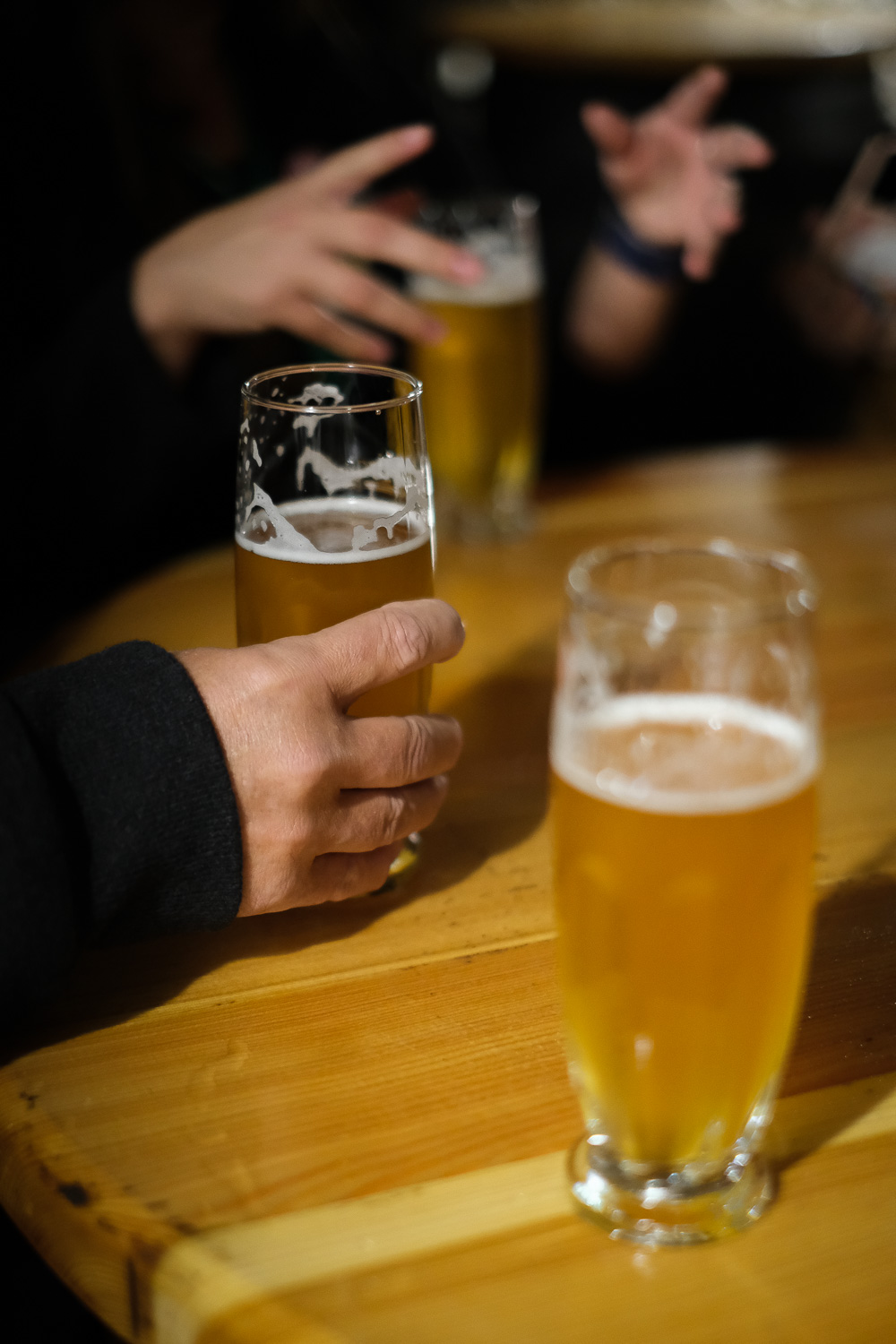

However, you will have to wait for that first sip of the amber nectar. Like most major breweries, the Pilsner Urquell Brwery Tour is a fairly touristy – but interesting – experience. You will walk through a museum of various beer-related objects, watch a film on a 180-degree video screen and ride the Czech Republic’s largest lift before getting to the best part of the tour: the cellars. There are 9km of lime-washed tunnels that run beneath the site and it was here that brewers used to store enormous barrels of the good stuff as it conditioned. A dozen or so of these barrels remain, though they are now for the benefit of tourists who are served a glass direct from the tap to enjoy underground.

When you emerge back to the surface, it is worth paying a visit to Na Splice for Lunch. Occupying a former fermentation cellar in the courtyard of the Pilsner Urquell Brewery – the ‘spilka’ – the vaulted ceilings of Na Spilce can host up to 550 diners, making it the largest gastropub in all of Bohemia. Here you can sample eight different draught beers while gorging on a menu of Czech classics such as beer goulash, rolled Přeštice pork brisket, and rabbit ragu.
I have previously mentioned that historically, almost every house in Pilsen brewed beer and a visit to the Pilsen Historic Underground shows how they were all connected by a 20 km-long labyrinth of tunnels that were built under the city centre during the 14th century. The tour allows you to don your hard hat and wander through around 800m of these corridors, cellars and wells. There is an exhibition of medieval items throughout, most of them found during excavations of the wells. You can also learn how ice and food were stored down here in the past, what role the underground played in the time of siege, and see the huge waterwheel of the city’s historical waterworks, which is considered to be the best-preserved object of its kind in the Czech Republic.
Attached to the Historic Underground, you’ll find the Brewery Museum, located in an original brewing house which dates from the 15th century. While its collection of beer and brewery-related objects may only appeal to the most ardent beer aficionados, its replicas and dioramas of historic pubs and brewing techniques are a fun diversion. Advance tickets for the Underground tour and Brewery Museum can be booked here.

It’s worth noting that and the end of the tour, you will receive a voucher for a 0.3 litre glass of Pilsner Urquell beer in the restaurants Na Spilce, U Salzmannů or in the pub Na Parkánu. As it is connected to the museum, go to Na Parkánu for a drink. The pub, sitting at the edge of the old town at the end of picturesque Veleslavínova Street, recently underwent an extensive renovation and is now a must-visit for beer lovers. While it can get a little rowdy on an evening, the food is as much of an attraction as the traditional lager and unfiltered pilsners – expect wonderful soups, plump dumplings, and some fantastic meat dishes.
Pilsner Urquell isn’t the only brewery in town and there are a huge number of micro and nano breweries that coexist with it. The largest is Purkmistr, producing around 150,000 litres a year. They operate a brewpub based on the site of an old farmhouse in the south of the city, which opened in 2007, although they claim to be one of the oldest in the country, tracing their history all the way back to 1341, when they were known as Domažlice Brewery. Although Purkmistr is a different brewery to the original, they still produce some of their beers using the same recipes. In a fun nod to local history, they use a camel on their logo in reference to the story of Pilsen’s citizens once stealing the camel owned by a sieging army and later gifting it to the King of Poland.
Even if you opt not to do a brewery tour, Purkmistr is the perfect place to end your first day in Pilsen with a plate of goulash and a tasting tray of beers.


DAY 2
Pilsen Beyond the Beer
Unsurprisingly, Pilsen isn’t all about beer. The city’s historic centre, much like many others in Czechia, radiates out from a vast and beautiful town square. Namesti Republiky is one of the nation’s largest and is dominated by the towering Cathedral of St. Bartholemew. This Gothic construction has existed almost as long as the city itself – it was built between the 13th and 16th centuries – and can be scaled via the 301 steps that wind their way to the top of the spire.
From here the views reach out 360-degrees past the stadium of Viktoria Plsen towards the Pilsner Urquell Brewery in one direction and over to the Skoda factory in the other. The Skoda company was founded by Emil von Skoda in the 19th century and played a hugely important part in the city’s industrial past, as it will in its future. The factory was repurposed during WWII in order to produce munitions and although this made Pilsen the target for Allied bombings, much of the city centre has survived completely intact.


Back at ground level, the square itself is suitably impressive. Surrounded by pastel facades, it’s an enormous space that is used throughout the year for markets, beer festivals, and celebrations. Three of its four corners feature golden sculptures seemingly modelled on letters of the Greek alphabet but are in fact representations of Pilsen’s history in the form of an angel, a greyhound, and the aforementioned camel. The fourth corner is taken up by a stunning statue of Virgin Mary atop a plinth in memory of the large percentage of Pilsens population that died of various plagues and pandemics during the 17th Century.


Hop across the road from the Marion Column towards the Town Hall with its elaborate Renaissance exterior. You can wander through the door into its ground floor to have a look at the marvellous three-dimensional model of the city’s Old Town.
Nearby you will find the Pilsen Puppet Museum or Muzeum Loutek. Czech Puppetry was recently added to the UNESCO World Heritage List. The tradition of puppetry in Pilsen dates back to the days of travelling theatres and well-known Pilsen native Josef Skupa is the creator of the characters of Spejbl and Hurvínek, whose statue can be found in the city’s green belt of gardens. The museum contains over 100 puppets and celebrates this definitively Czech art form with automated performances and the opportunity to try puppetry for yourself.
If all of this exploring is giving you lunchtime cravings, head to Lékárna just off Náměstí Republiky. The building that is now home to Lékárna is steeped in history. Once the brewing house Lékárna U černého orla – famous as one of the highest quality malt houses in the city – and then a pharmacy, it was designed and modified under the watchful eye of the architect Vít Spálenský. Nowadays it hosts two bars serving local Pilsners direct from the tank by finalist of the Pilsner Urquell Master Bartender Competition, Míra Nekolný, and first vice-champion barmaid from 2015, Martina Navrátilová.
The food is a modern take on traditional Austrian and Bavarian cuisine crafted by Michelin chef Patrik Jaros including Lékárna´s legendary tafelspitz, baked marrow bones, an Austrian gröstl, or the Czech classic of sirloin in cream sauce.
Read More: Traditional Czech Food to try in Pilsen.
Following lunch, work off your meal with a stroll around Pilsen’s garden belt. Surrounding the charming, old, medieval grid of streets and separating it from the industrial outskirts, this green space makes for a lovely afternoon stroll where you can circumnavigate the historic centre and take in the multiple statues and open spaces that punctuate the walkway. Make sure to stop off at the Great Synagogue with its Moorish design. It was built in 1893 and survived WWII to remain the third-largest synagogue in the world. Sadly, most of the synagogue’s congregation didn’t survive with it and it is now mostly used for theatre, musical performances and as an art space.


For dinner, I recommend stopping off U Mansfelda. Like many Pilsner Urquell gastropubs, a round, copper bar sits at its centre, surrounded by a laidback, cosy interior where the walls are adorned with framed beer advertisements and old, black and white images of Pilsen of times gone by. If the weather allows, take a seat outside on the terrace that overlooks a section of the pretty parkland which encircles the old town.
Pilsen is a student town and as such has a vibrant music and nightlife scene. There are plenty of great late-night options but I recommend wandering across the Radbuza River to the Small Breweries Club for a nightcap. There are 8 taps that regularly rotate with beers from nearly 250 different microbreweries across Bohemia. If there is nothing on tap that takes your fancy, they have a well-stocked fridge of international beers.
Museums to Visit in Pilsen
Pilsen is home to a number of world-class museums ranging from standard art galleries and historical exhibitions to the more unusual.
The Museum of West Bohemia
Boasting the title of being one of the Czech Republic’s largest museums, the Museum of West Bohemia sits in a beautiful neo-Renaissance building on Pilsen’s garden belt and is home to over 2 million objects. There are four permanent exhibitions: an Archaeology Exposition, a collection of applied arts and handicrafts, a History Exposition, and the city armoury that contains a rare collection of early European firearms from the 14th-17th centuries.
The Ethnographic Museum
Occupying two Renaissance houses in the centre of Pilsen, The Ethnographic Museum offers an authentic look into the local life of Pilsen’s people from the Middle Ages up to the modern day. The first section of the exhibition takes you through various reconstructed interiors of houses, showing you how the people of Pilsen would have lived during the Gothic, Renaissance, Baroque, Empire and Biedermeier periods while the second half of the museum is dedicated to life in the Pilsen countryside.
The Museum of Ghosts and Fairy Tales
Hidden away in a cellar space beneath Hotel Central on the corner of Riegrova Street and Republic Square, The Museum of Ghosts and Fairy Tales is a place to frighten and delight with myths and fairy tales from the old city of Pilsen and its surroundings.
The Skoda Family Museum
Pilsner Urquell isn’t the only brand that put Pilsen on the map, it is also famous for being the home of Škoda. The Museum of the Škoda Family, housed in a small building in Pilsen’s historic centre, tells the stories of Josef and František Škoda, who were instrumental in the development of modern medicine, and Emil Škoda who became an engineer in the Countess of Waldstein’s machine plants and later went on to found the Škoda Works in Pilsen that continues to be important to the city today, 150 years later.
DAY 3
Getting off the Beaten Path
Being just 50 miles from the German border, Pilsen was one of the few Czech cities to be liberated by American Troops during World War II. Even today there is a fairly pro-USA feeling in the city that culminates in the annual Liberation Day festival in May when reenactors parade through the city in US military vehicles and locals celebrate with food and music.
To learn more about the city’s occupation and liberation, head to the Patton Memorial Pilsen. While small, the museum does an excellent job of documenting the turmoil that the city went through during the mid-20th century and beyond, and how it became the most easterly city to be liberated by General Patton on his march across Europe. Alongside old US military equipment and supplies (which surprisingly includes an unopened can of Coca Cola from a US issue ration pack), you will be able to watch a video all about the Liberation Day festivities and see a wall signed by surviving veterans and visiting American politicians.


To learn more about the liberation of Pilsen, you will need to travel to Rokycany, a town about 20 km east of Pilsen. It is here that on May 7th, 1945, the path of the American troops met the Soviet forces that advanced from the east. So it was in Rokycany that the two armies drew a demarcation line at the culmination of the war. A vast outdoor museum – Vojenské Muzeum Rokycany – now sits at this point to mark the end point of Patton’s Liberty Road containing more than 190 pieces of military hardware ranging from WWII tanks, post war equipment of the Czechoslovak People’s Army (ČSLA), and artillery pieces.
One quirk of the museum is that almost all of the vehicles on display have been restored to full-working order and can be rented for a few thousand pounds per day. This has resulted in them featuring in numerous Hollywood blockbusters such as Jojo Rabbit, Fury, Hell Boy, and Lord of War.
The rest of the outdoor exhibition is made up of a section of war time and ‘Iron Curtain’ fortifications that were transported to the museum and installed in the nearby terrain in the same manner that they would have been on the original defensive line. These bunkers are connected by underground tunnels that allow you to experience what it would have been like to patrol the demarcation line.


It’s worth noting that not all of Pilsen’s historic attractions are related to war or Soviet occupation. Just south of Pilsen, in the village of Nebílovy, you will find the beautiful baroque Chateau Nebílovy.
Originally renovated to become a modern residence by the Czernin family in the 18th century and often referred to as the ‘floral castle’ as its interior was decorated with Romantique paintings of flowers by Antonín Tuvora toward the end of the 19th century, the palace is made up of two opposing buildings that unfortunately fell into disrepair during the 20th century. During the communist era, the chateau was used as apartment space and storage by the United Agricultural Cooperative but thankfully, the reconstruction of both chateau buildings commenced in the 1960s. The front chateau building was opened to the public in the 90s but sadly, the initial renovations were far from historically accurate. This can be seen when taking a tour of both buildings, as the rear Chateau is now being faithfully restored by expert architects. The Dance Hall, in particular, is incredibly impressive with its one-of-a-kind floral mural that covers the walls and ceiling.
Tours of the chateau cost CZK 150 for adults and take place every Tuesday to Sunday from May to September and on weekends throughout April and October.

When is the Best Time to Visit Pilsen?
The Czech Republic’s climate is fairly typical for a central European country with short, warm summers and winters that can become rather chilly with a smattering of snow. As expected, the summer months are the best time to visit Pilsen if you prefer warm weather and, as it is not a tourist hotspot, hotel rooms should still be both affordable and available throughout July and August.
Unsurprisingly, being the home to Pilsner lager, the town of Pilsen has a number of events throughout the year celebrating its foamy, golden creation. These range from small beer festivals run by craft breweries to celebrations that take over the entirety of the city’s main square. Like elsewhere in central Europe, the festivities really begin to take hold at the end of summer and start of autumn to coincide with the traditional hop harvest.
However, the city’s biggest celebration takes place at the beginning of May when Pilsen hosts its Liberation Day Festival. This annual event has taken place since 1990 and commemorates the liberation of Czechoslovakia by allied troops at the end of the Second World War in May 1945. Nowadays, there are few of the liberating US soldiers left that are able to make the yearly pilgrimage to Pilsen but the city still hosts an enormous party featuring live music, historical re-enactments and a parade of 1940s military vehicles through the center of town.



2 Responses
Thank you for this fantastic guide! Pilsen looks absolutely charming. Did you visit it on a day trip, or is it better to plan a view nights there?
best regards
Martina
Hi Martina, I stayed for two nights (3 days) which I think was a perfect amount of time to see the city sights and some of the surrounding area. If you just want to see the city itself, you could probably see it all in 2 days/night