Prague’s beauty is undeniable. It’s a city that dazzles at first sight. The Gothic cathedrals, pastel-colored facades, and medieval bridges feel like something lifted from the pages of a fairy tale. Wander through Old Town Square, and you’ll hear the Astronomical Clock chime as street performers entertain crowds. Cross Charles Bridge, and you’ll find artists painting against a backdrop of baroque domes and castle spires. The city’s grandeur is impossible to ignore. But beyond the well-trodden routes, another Prague exists; one of quiet courtyards, forgotten gardens, and secret passageways, where history lingers and the pace slows.
This is the Prague locals know. A city of hidden monasteries with centuries-old libraries, tiny cafés tucked behind unmarked doors, and parks where the only sound is the rustling of leaves. It’s the Prague where time seems to stand still inside a century-old cinema, where a riverside promenade leads to an art-covered underpass, and where a small, unassuming pub pours some of the best beer in Europe.
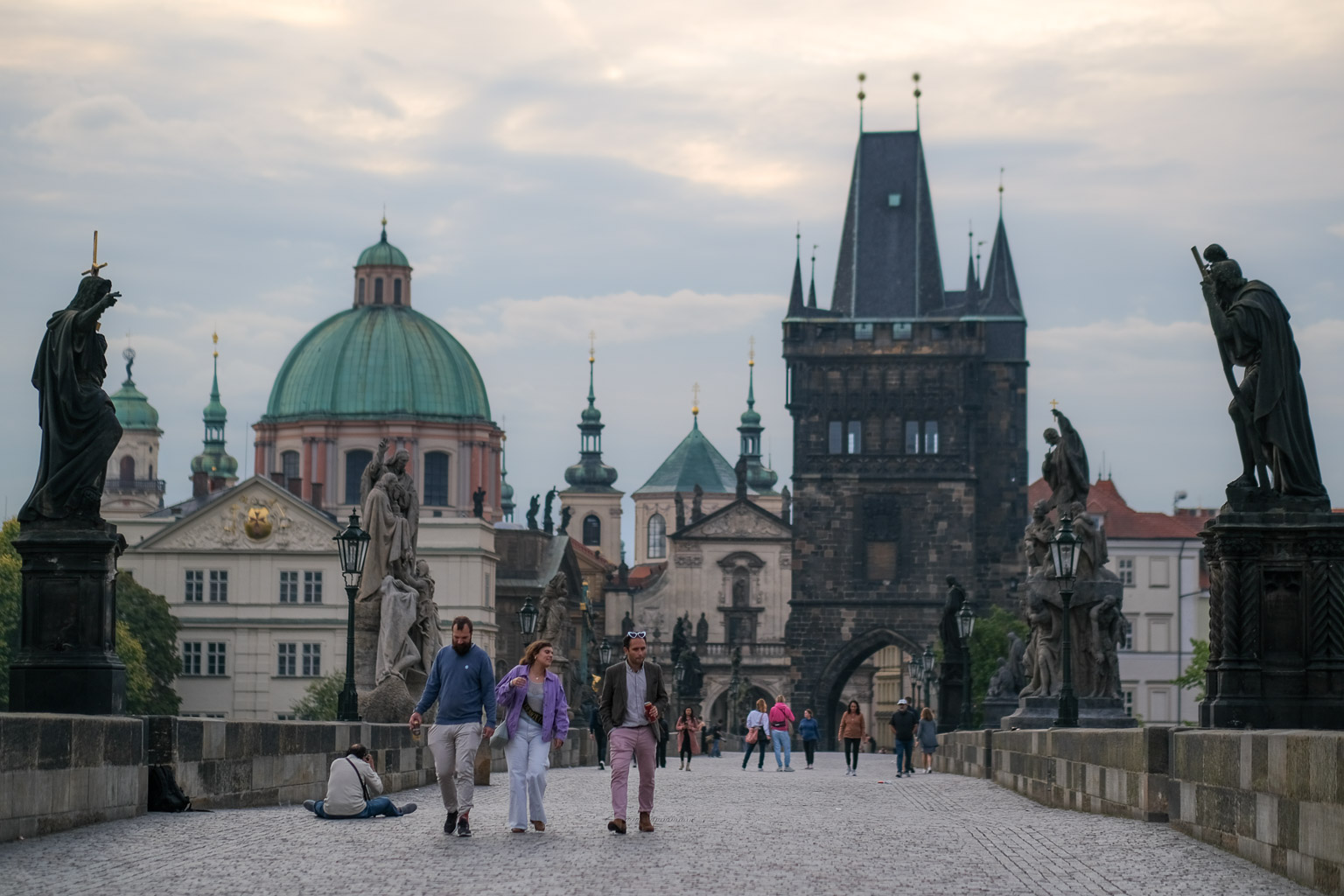
Some of these hidden gems are remnants of a Prague that no longer exists; quiet alleys that once housed revolutionaries, old synagogues that survived centuries of change, and secret gardens that were once the playgrounds of nobility. Others are vibrant spaces where the city continues to evolve; independent galleries, speakeasy-style cocktail bars, and creative hubs where artists and musicians gather to keep Prague’s cultural pulse alive.
For those willing to stray from the main squares and winding tourist routes, Prague reveals itself in ways most travelers never experience. Here, the best views don’t come with crowds, the best meals are often found in places without English menus, and the best moments happen in places you didn’t plan to visit.
So follow the quiet streets, look beyond the guidebooks, and let yourself get lost – because in Prague, the real magic is often found in the places no one tells you about.
10 hidden Gems in Prague
I’ll be the first to admit that seeing Prague’s famous landmarks is a must, but to truly feel the city, you have to go beyond the crowds. Search the internet and you’ll find endless lists of ‘hidden gems’, and while this list is far from exhaustive, these are my personal favorite spots; places I will always try to visit when passing through the capital of the Czech Republic. Skip the tourist traps, and you’ll find a city that surprises you at every turn.
Skautský institut v Rybárně
If there’s one place I always make a beeline for as soon as I arrive in Prague, it’s Skautský Institut v Rybárně. It’s always a similar routine; I’ll make my way from Hlavni Nadraz, through the Staré Mesto to the banks of the Vltava, fight my way past the crowds of the Charles Bridge before cutting through the surprisingly peaceful and picturesque Na Kampě square. From there, it’s a serene wander through the park beside the Kampa Museum and its iconic crawling babies, until I reach this cafe beside the river – My favourite place in Prague.
Nestled along the banks is an old Renaissance house that once served as a summer residence for the nearby Lesser Town palace of the Michnů z Vacínov. Over the years, the appearance and function of the house have undergone many changes, including Baroque renovations in the 17th century, but it has always remained an integral part of Kampa Island.


The Scout Institute in Rybárna has been operating within the building since June 2021. Here they have created a space for meetings, education and creation of all kinds, which is based on the Scout motto “I learn by doing”. Each month, they organise more than twenty events, with everything from film screenings to philosophical talks, live music, and storytelling nights.
However, this isn’t the reason that I love Skautský Institut v Rybárně; their ground-floor cafe is the reason I visit. Inside, wooden beams and rustic, vintage furniture create a cozy, lived-in feel, while the scent of fresh coffee drifts through the air. Artwork and historic photographs line the walls. It’s effortlessly cool, in a minimalist, insouciant kind of way.
Each day, they dish out a cheap vegan and vegetarian set menu consisting of soup and a main course, complemented by a selection of delectable pastries and cakes. To drink, you’ll find teas, beers, mulled wine and cocktails. These are best taken to the outside terrace that hugs the Vltava with views across to Staré Mesto.
It’s at its best in summer evenings when the outdoor tables are backed, forcing people to sip their drinks on the river’s edge beneath the venue’s strings of twinkling lights. Chatter and laughter fill the air, emanating an electric and welcoming atmosphere that exemplifies Prague at its finest.
Where: Kampa Park, U Sovových mlýnů 134/1, 118 00 Malá Strana
When: Daily 10am – 11pm
Vyšehrad
With the tourist hordes crowding both Prague’s Old and New Towns, it seems increasingly difficult to find a spot of quiet contemplation in the city centre. It seems particularly strange that one of my favourite places to avoid the throng is a national monument and one of the city’s most enduring landmarks.
High above the Vltava River, where the bustle of the Old Town feels worlds away, Vyšehrad stands as Prague’s most mystical fortress. This ancient stronghold, older than Prague Castle, is steeped in the city’s oldest myths, said to be the first seat of Czech rulers and the home of the fabled Princess Libuše, who foretold the rise of Prague itself.


It’s a steep climb to the summit up the stone staircase that winds upwards from the riverside, but it is worth it, not just for the spectacular view of the city.
At the heart of Vyšehrad lies the Basilica of St. Peter and St. Paul, its striking twin spires piercing the sky. Inside, Art Nouveau frescoes cover the walls and ceilings, glowing in warm, golden hues, telling stories of saints and Czech history. It is really one of the city’s most magnificent sights. Surrounding it, the Vyšehrad Cemetery is the final resting place of the country’s greatest minds: composers like Antonín Dvořák, writers, artists, and national heroes are remembered by baroque, marble monuments.

Yet Vyšehrad isn’t just a place of history; it’s a place of quiet escape. Families picnic on the grassy ramparts, joggers weave through the old fortress paths, and locals sip wine at the charming beer garden overlooking the city. Walk the walls and you get a 360° panorama of the city, from the distant Žižkov Television Tower on one side, to the castle on another. Doing this, it’s easy to see why Vyšehrad remains one of Prague’s most magical and lasting sanctuaries; a timeless fortress above a city that never stops moving.
Kino Aero
Tucked away in the unassuming streets of Prague’s Žižkov district, Kino Aero is no ordinary Cinema; It’s a sanctuary for cinephiles. It’s a place where Hollywood blockbusters take a backseat to indie darlings, avant-garde experimental film, and cult classics.
Opened in 1933, this historic cinema has lived through decades of change, from the golden age of Czechoslovak film to the turbulence of war and communism. Today, it remains one of Prague’s most beloved independent cinemas, known for its daring programming and laid-back, bohemian vibe. Velvet armchairs, exposed brick walls, and a neon-lit bar create an atmosphere that’s effortlessly cool yet welcoming. It’s the perfect setting for late-night screenings, retrospectives, and Q&As with filmmakers.


The programme is eclectic, ranging from noir thrillers and anime marathons to offbeat horror films and silent movie nights with live music. The theater is also home to Prague’s Shockproof Film Festival, celebrating the weirdest, wildest corners of cinema.
I finally managed to visit on a trip to Prague last year, making the most of the evening with a pre-screening drink at the adjoining Aero Bar is where locals, students, and film buffs linger both before and long after the credits roll, discussing plot twists over Czech beer or a glass of Moravian wine. It’s particularly inviting on a warm evening when the crowd spills out into the courtyard, illuminated by strings of lights and the cinema’s neon sign. Whether you’re a devoted cineaste or just looking for a different side of Prague’s nightlife, Kino Aero offers something rare: a cinematic experience with soul.
It’s worth noting that there are an abundance of fantastic, independent cinema’s in Prague; Bio Oko in Praha 7 is a prime example, and I always enjoy popping into Edison Film Hub, one of the latest additions to the Prague alternative scene, in the new town to pick up a coffee at their fantastic cafe/bar.
Where: Biskupcova 31, Prague 3 (Žižkov)
When: The cinema’s bar/cafe is open daily from 2pm until midnight, although the courtyard closes at 10pm. Check the Kino Aero’s website for the latest showtimes.
Brevnov Monastery Brewery of St. Adalbert
Prague isn’t short on fantastic breweries, but if you want to delve into the history of Czech beer, then it is worth making your way to the city’s outskirts to pay a visit to the Břevnov Monastery Brewery of St. Adalbert, tucked away in the serene grounds of Prague’s Břevnov Monastery. This is no ordinary brewery; The Břevnov Monastery is the oldest male monastery in Bohemia, and it has had close links to brewing since its foundation in 993.
The brewing tradition here dates back over a thousand years, and it is thought that this is the oldest known brewing site in Czechia.

After a long hiatus (the original brewery operated intermittently until 1889), the brewery was revived in 2011, bringing new life to the ancient tradition. Housed in a beautifully restored Baroque stable, the modern brewery maintains the monastery’s legacy of quality and authenticity.
Here, beer is not just a drink but a carefully crafted work of art. The brewery’s flagship Břevnovský Benedict, a rich and full-bodied lager, pays homage to the Czech Republic’s deep brewing roots, while seasonal and specialty brews—ranging from hop-forward IPAs to dark, velvety stouts—offer something for every palate. They brew around 20 different beers each year, while there are 6 on a permanent rotation.


Guided tours of the brewery are available in Czech, German, Russian and English, lasting around 45 minutes. However, even if you don’t want a deep explanation of the brewery’s history and brewing process, it’s worth stopping by for a tasting in their taproom, sipping a beer in the peaceful gardens under the shadow of the striking Baroque Church of St. Margaret, and the monastery’s historic library.
Read More: Where to Drink Beer in Prague
Where: Markétská 1/28, 169 00 Praha 6
When: Monday to Friday 10am – 11.45 & 12.30pm – 5pm
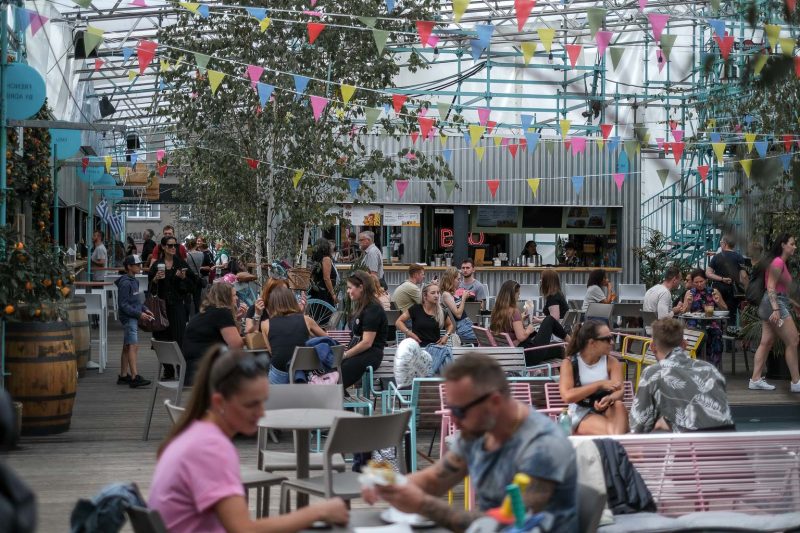
Manifesto Market
Nowadays, it seems that every city or destination has an abundance of street food markets; a cool and stylish place, often overly quirky, dishing out an array of world cuisine from independent vendors. However, Manifesto is more than just a regular food market.
Founded in 2018, Manifest’s aim is to transform forgotten urban spaces into dynamic social hubs, attracting creatives, tourists and locals to descend on a previously downtrodden neighbourhood and empty their wallets in return for a tasty meal. Made entirely from repurposed shipping containers, it is a modular design that can be easily uprooted and transported to a new location.
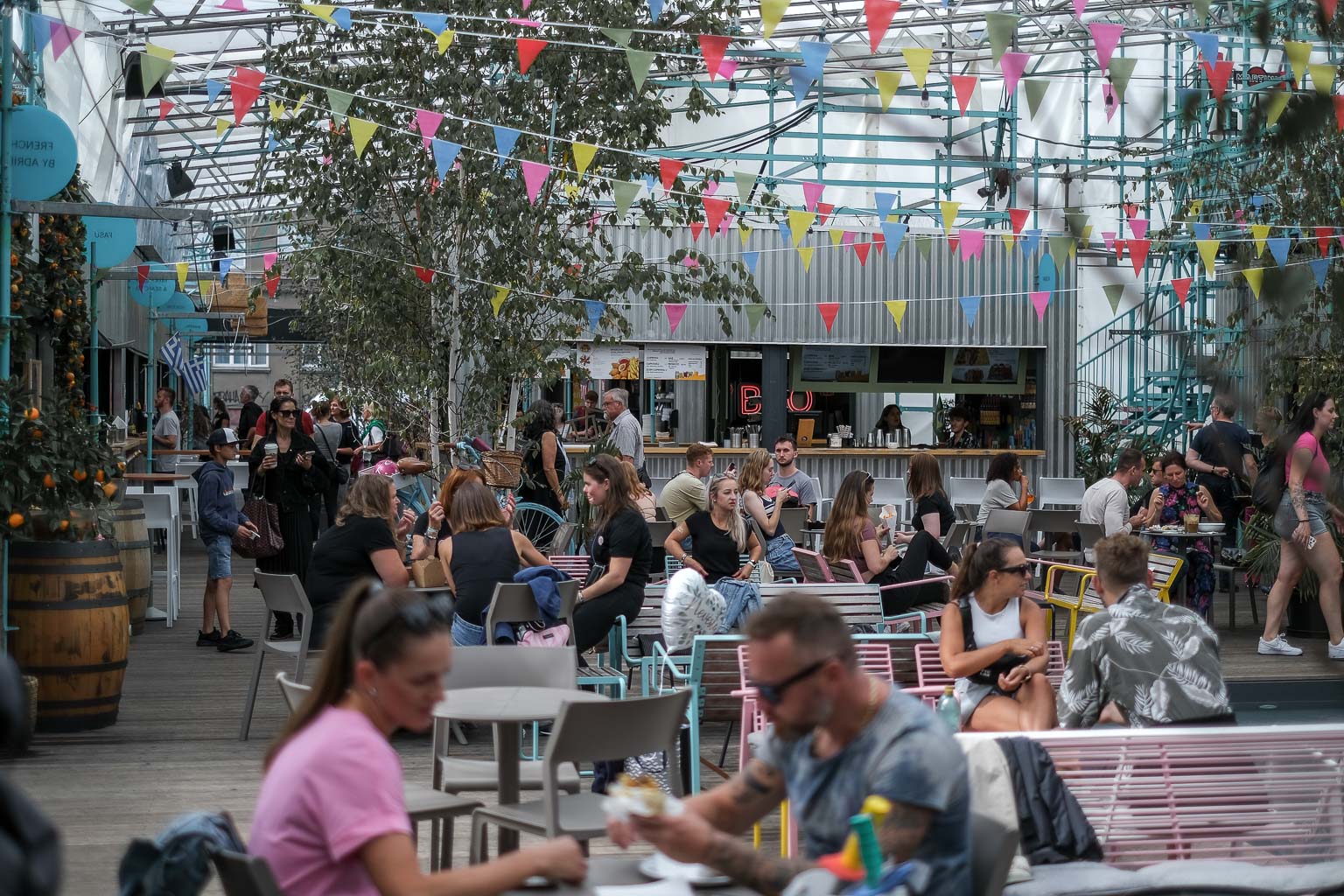
The market is a feast for the senses. The scent of slow-cooked barbecue drifts past sizzling dumplings, while artisan pizzas emerge from wood-fired ovens, and craft cocktails are mixed with precision. From traditional Czech fare to Asian fusion, Latin American bites, and plant-based delights, Manifesto is a showcase of Prague’s evolving culinary landscape.
By day, it’s a relaxed oasis where locals sip espresso and enjoy gourmet street food under strings of twinkling lights. By night, the energy shifts; live music and DJ sets turn the market into an open-air festival, where visitors gather over steaming bowls of ramen or clink glasses filled with the ubiquitous Pilsner Urquel, Moravian wine, or locally brewed craft beers.


The design evolves throughout the seasons, too. I visited in the summer to find a pool party atmosphere, complete with sun loungers and a place to have a dip, while on my most recent trip in the chilly month of January saw Manifesto decked out like a ski lodge ready for an apres ski extravaganza.
Whether you’re here for a quick bite or to soak in the city’s electric energy, Manifesto Market is more than a place to eat—it’s where Prague’s creative spirit comes to life.
Where: Ostrovského 34, 150 00 Praha 5 (Anděl)
When: Dailt 12pm – 10pm
Františkánská Zahrada
Just steps from the bustling crowds of Wenceslas Square, Františkánská Zahrada (Franciscan Garden) is a peaceful retreat hidden in plain sight. Tucked away between Prague’s main thoroughfare and Jungmannovo náměstí behind unassuming passageways, this walled garden offers a serene escape from the city’s lively streets.
Originally part of a medieval monastery founded in 1348, the garden thrived through the centuries as a place where the Franciscan monks tended fruit trees, medicinal herbs, and fragrant flowers, using the space both for contemplation and the practical aspects of monastic life. Though much of its original purpose has evolved, its essence remains unchanged—a haven of tranquility amid the city’s fast-paced rhythm.
Today, the garden is a delightful blend of history and urban charm. Neatly trimmed hedges frame vibrant flower beds, and shaded benches offer a welcome rest beneath centuries-old chestnut trees in the shadow of the Church of the Virgin Mary of the Snow. A charming fountain bubbles at its center, which only adds to the peaceful atmosphere, while the scent of roses and lavender lingers in the air.
It’s a place that I always make an effort to pass through when making my way from Prague Hlavni Nadrazi towards the Old Town, and I’m not the only one. Despite its central location, Františkánská Zahrada remains a quiet retreat for both locals and other weary travellers where they can sip coffee, read a book, couples share whispered conversations, and visitors find a moment of calm away from the nearby crowds. It’s a picturesque, hidden piece of Prague’s past.
Where: Vodičkova, 110 00 Nové Město
When: Daily 8am – 7pm
Letna Beer Garden
Perched high above the Vltava River, Letná Park sprawls across a sun-dappled plateau. This vast green space has long been a favorite escape for locals, whether for a long morning jog, a slow afternoon stroll along tree-lined paths, or simply to soak in one of the most spectacular views in the city.
Once the site of royal vineyards, Letná has transformed over the centuries, playing host to everything from grand exhibitions to Communist-era parades. Today, it’s a playground of open spaces, shaded trails, and panoramic viewpoints that offer a postcard-perfect perspective of Prague’s red rooftops, Gothic spires, and the many bridges arching over the river.


But Letná is more than just a scenic retreat—it’s also home to one of the city’s most beloved institutions: the Letná Beer Garden. Nestled among leafy trees with an unobstructed view of Prague’s skyline, this legendary spot is a pilgrimage site for beer lovers. It isn’t anything particularly fancy; long wooden picnic benches invite travellers and locals alike to gather over frosty mugs of Pilsner Urquell or Kozel, while the scent of grilled sausages drifts through the air from small kiosks.

As the sun sets and the city lights flicker to life below, Letná takes on a magical quality. Conversations hum, laughter echoes, and glasses clink in a toast to Prague’s effortless beauty. Whether you come for the view, the beer, or simply the atmosphere, Letná is the perfect sunset hangout in Prague.
Where: Letenské sady, 170 00 Praha 7-Holešovice
Vrtba Garden
One of Prague’s most breathtaking hidden treasures, Vrtba Garden is a Baroque gem that’s quietly tucked away in the historic Malá Strana district. You’ll find its unassuming entrance on Karmelitská Street, behind which the terraced landscaping unfurlss into an exquisite fusion of architecture, art, and nature that has remained one of the city’s most enchanting escapes for over 300 years.
Built in the early 18th century for Count Jan Josef of Vrtba, a high-ranking noble in the Habsburg court, the garden was designed by František Maxmilián Kaňka, one of the leading architects of the Baroque era. Every detail, from its sculpted hedges to its dramatic staircases and elegant balustrades, was created to impress, making it a rare surviving example of Italian-style Baroque landscaping in Central Europe.
Ascending the garden’s terraces, you’ll find Classical statues by Matyáš Bernard Braun, one of Bohemia’s finest sculptors, standing like silent guardians among geometrically manicured flowerbeds. Vibrant roses bloom against the soft ochre walls of the Vrtba Palace, while ivy-draped staircases lead to hidden viewpoints.
At the summit, the reward is one of the most spectacular panoramic views of Prague—red rooftops, church spires, and the majestic silhouette of Prague Castle stretching across the horizon.
Where: Karmelitská 25, 118 00 Malá Strana
When: Daily 8am – 7pm
The Jewish Quarter and Spanish Synagogue
In the heart of Prague’s Old Town, where narrow cobblestone streets whisper stories of centuries past, lies Josefov, the city’s historic Jewish Quarter. This small yet profoundly significant district is home to one of the best-preserved Jewish heritage sites in Europe—a place where faith, tragedy, and resilience are etched into every stone.
Once a walled ghetto, Josefov is a living testament to the endurance of Prague’s Jewish community, dating back over a thousand years. Today, its ornate synagogues, solemn cemetery, and moving memorials stand not only as architectural wonders but as powerful symbols of a rich yet turbulent history.


The area contains a slew of historical monuments, including the Old Jewish Cemetery, Old-New Synagogue, Maisel Synagogue, Pinkas Synagogue, and Spanish Synagogue. A “Jewish Town Ticket” is required to visit all of them, which can be picked up at the Jewish Museum in Prague at Maiselova 15 or online for 420 CZK

Some highlights of Prague’s Jewish Quarter include:
The Old-New Synagogue (Staronová synagoga)
Europe’s oldest active synagogue, the Old-New Synagogue, has stood since 1270, its Gothic stone walls sheltering prayers for over seven centuries. Inside, beneath its vaulted ceilings, flickering candlelight reveals medieval inscriptions and ancient wooden pews.
The Spanish Synagogue (Španělská synagoga)
A dazzling jewel of Moorish design, the Spanish Synagogue is a striking contrast to its older counterparts. Built in 1868, its intricate gold arabesques, stained-glass windows, and domed ceiling transport visitors to the grandeur of Andalusia. This synagogue also houses a moving exhibition on Czech-Jewish history, including tales of prominent figures like writer Franz Kafka, whose statue stands just outside.
The Pinkas Synagogue (Pinkasova synagoga)
Pinkas Synagogue is not just a place of worship; it is a place of remembrance. Its walls bear the handwritten names of nearly 80,000 Czech and Moravian Jews who perished in the Holocaust, making it one of the most haunting memorials in Prague. Just beyond, the Old Jewish Cemetery, with its thousands of crooked, layered tombstones, tells a story of centuries of life, loss, and survival.
The Maisel and Klausen Synagogues
Both transformed into museum spaces, these synagogues house an extraordinary collection of Jewish artifacts, from ancient Torah scrolls to ceremonial silverwork. They offer an intimate look into Jewish traditions, festivals, and daily life.
Our Lady of Exile & the View from Strahov Monastery
There’s something magical about Strahov Monastery. Perched high above Prague, just a short walk from the Castle, this Premonstratensian monastery was founded in 1140 and is a sprawling complex containing courtyards, gardens, the church of the Assumption of the Blessed Virgin Mary, and the monastery’s crown jewel, The Strahov Library, often named as one of the most beautiful in the world. Here you’ll find ornate ceiling frescoes soaring above towering bookshelves filled with centuries-old tomes, maps, and manuscripts. The Philosophical Hall and Theological Hall, adorned with intricate woodwork and celestial murals, feel like something from a lost era of enlightenment.
But Strahov isn’t just for book lovers—it’s also a haven for beer enthusiasts. Tucked within the monastery complex, the Strahov Monastic Brewery (Klášterní pivovar Strahov) carries on a brewing tradition that dates back to the 13th century. Today, the brewery serves up its line of St. Norbert beers, named after the monastery’s founder. From the deep, malty Amber Lager to the robust Dark Doppelbock, each sip is a taste of Prague’s brewing heritage.


Although I always recommend that people make a quick stop here to sample a few historic brews, that isn;t the main reason that I will normally stop by Strahov on a trip to Prague; Step out of the monasteries Eastern gate and you will be shown an expansive panorama over vineyards and rooftops towards the Vlatava that takes in the castle, old town, and everything in between.
The path here stretches from the Lesser Town to the Petrin Tower, and it’s well worth the walk. However, make sure to stop off Our Lady of Exile, a quiet and undervisited viewpoint that is, in my opinion, the best in Prague.
Where to Stay in Prague
Czechia’s capital is one of the most visited cities in Europe and due to the huge volume of visitors that come to the city each year, there is also an abundance of hotels, hostels and rental properties that make deciding where to stay feel like a daunting task. After a few visits to the city, here are some of my recommendations.
Budget
Sophie's Hostel
Prague has a huge number of hostels, and these can vary from accommodation with downright grimy, bunk-filled dorms to the more luxurious hostels with modern furnishings and private rooms. Thankfully, Sophie’s is the latter and easily one of the best hostel experiences in Prague. The beds are comfortable, the bathrooms are clean, and the on-site bar plays host to events, meaning it is always busy and a good place to meet fellow travellers.
Mid-Range
Miss Sophie's Downtown
Managed by the same company as Sophie’s Hostel, there are several stylish, boutique hotels dotted around the city that come under Miss Sophie’s brand. I stayed at Miss Sophie’s downtown, located just a 2-minute walk from Prague’s main railway station and a short hop from both the Old Town and New Town, on my first trip to Prague and loved its stylish, modern rooms and laid back bar that sits beside the reception area.
Luxury
Andaz Prague
The luxurious Andaz Prague is located on Senovážné Square, in the heart of the historical center of Prague and just a short walk from the popular to Wenceslas and Old Town Squares. This stylish concept hotel by Hyatt features an in-house wellness spa, the Mez cocktail bar, and avant-garde Czech bistronomy with Japanese Izakaya influences at their ZEM restaurant.
Getting to Prague
There are regular flights to Prague’s Vaclav Havel airport, 17km northwest of the city centre, from most major UK airports. As well as being the only airport serving the metropolitan area of Prague, it is also Czechia’s main hub for international flights.
For information on how to get to the centre of Prague from the airport, check out my useful guide.