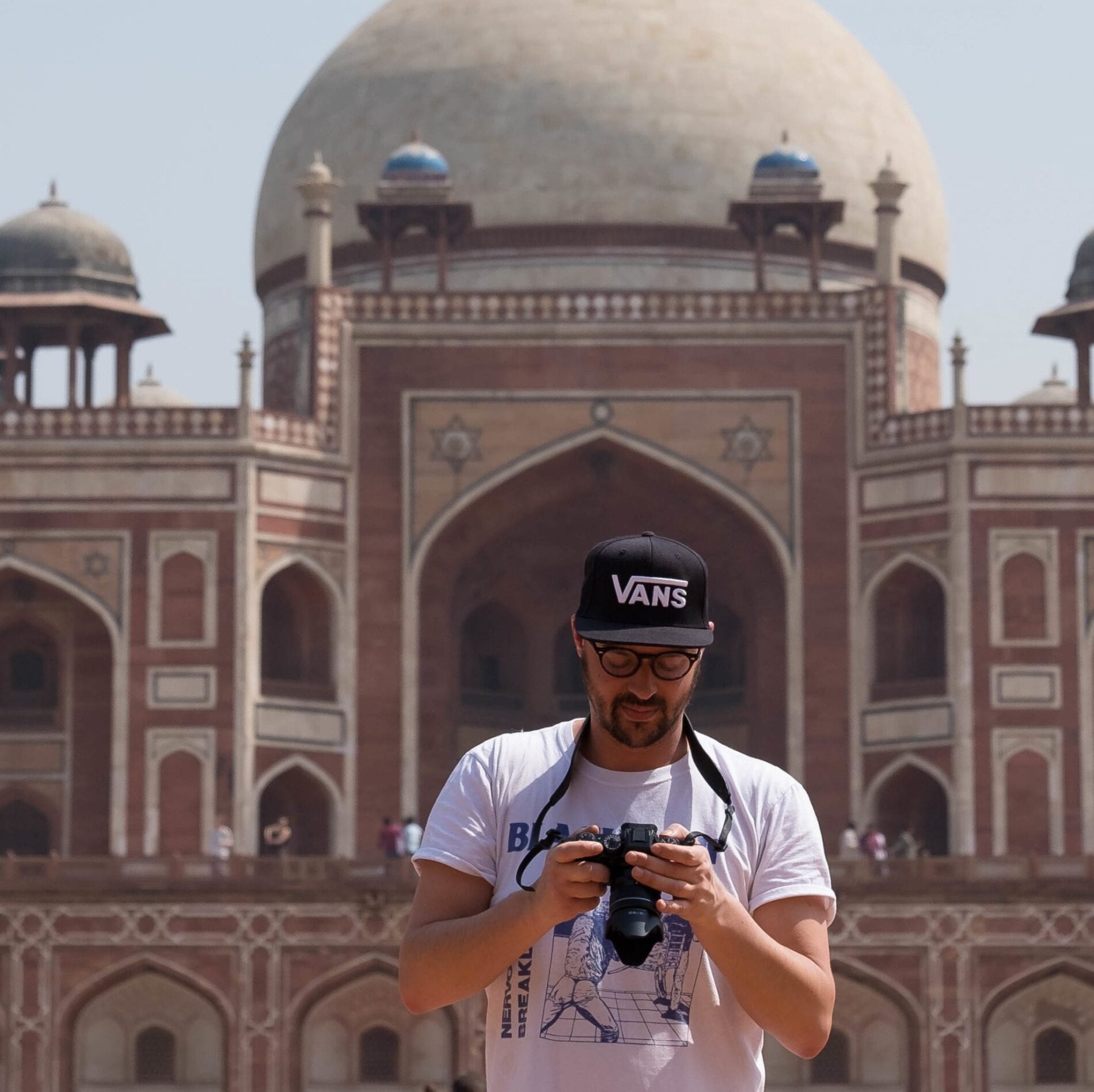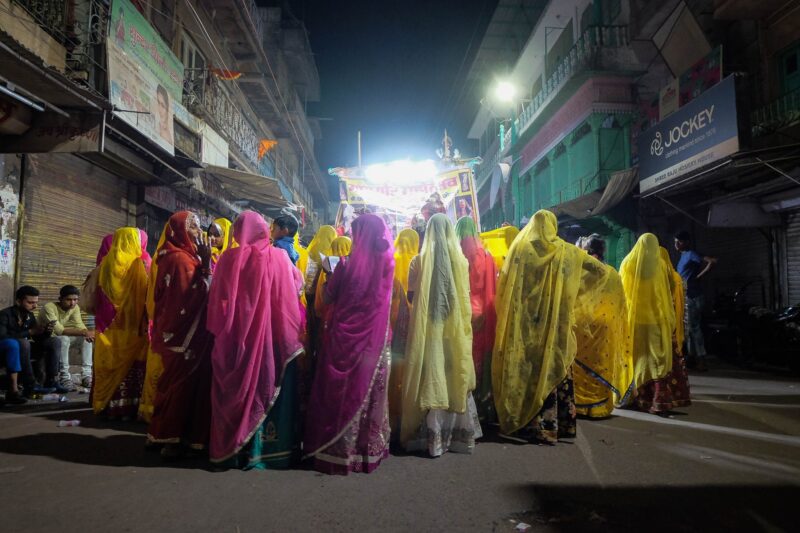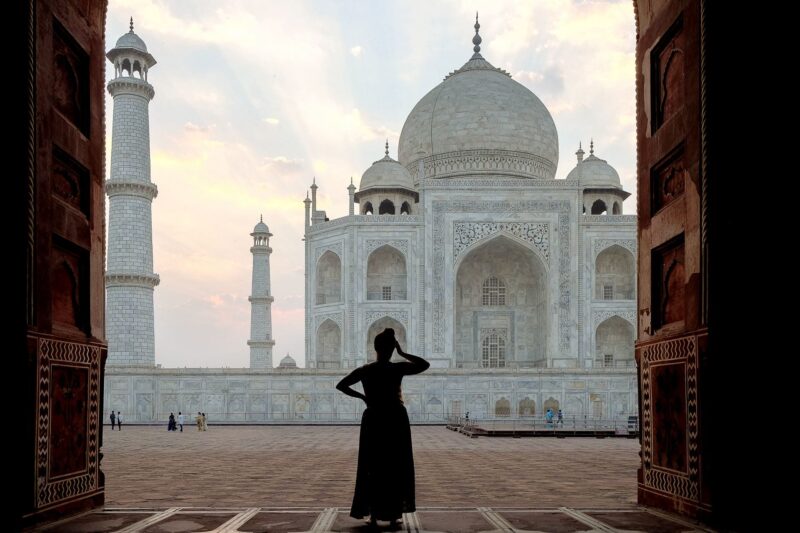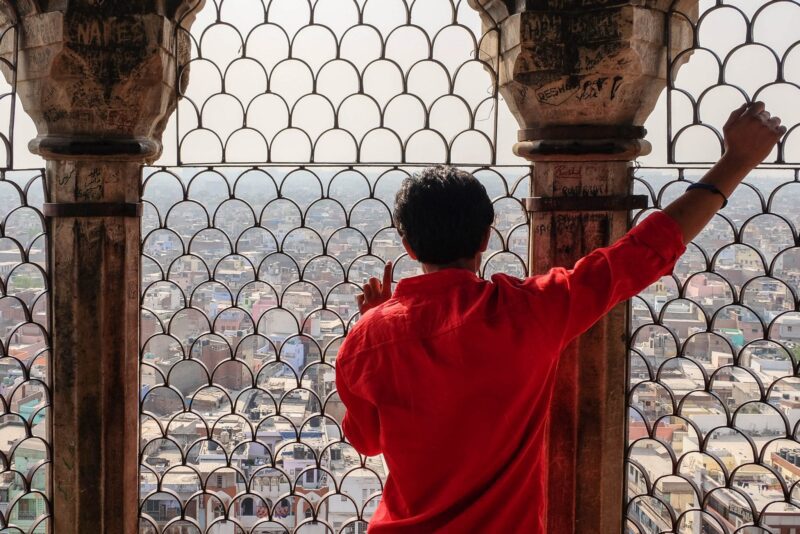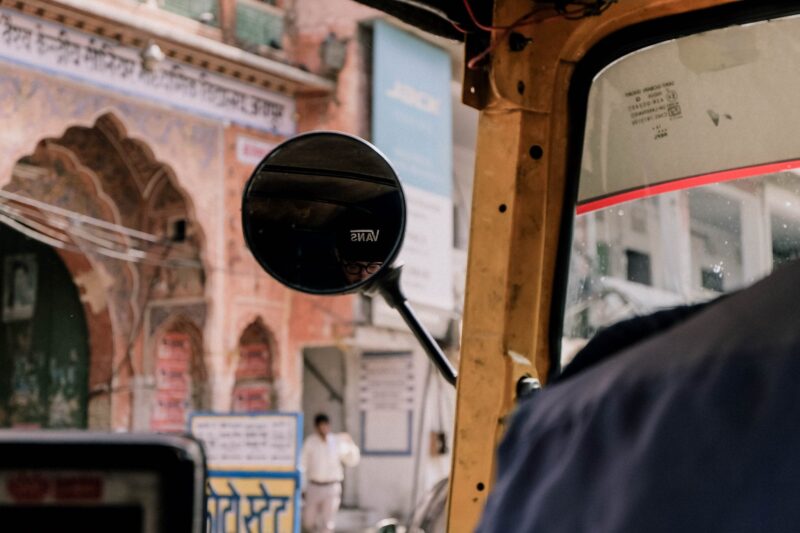
There is no place in India quite like Rajasthan. The land of the kings is home to magnificent fortresses rising from the desert, lavish palaces, camel trains and jungle-dwelling tigers. However, beyond the architectural wonders and maharajas, it is the enthralling mix of culture and festivals that left me transfixed.
The trail through Rajasthan is well-worn for a reason. Starting in the region’s capital of Jaipur, you will find the pink-tinged city brimming with bazaars, splendid architecture and enormous forts while the pious and incense-scented lakefront town of Pushkar moves to the sounds of chanting and puja. Onwards to another lakeside, you can sail alongside the towering façade of Udaipur’s City Palace before getting lost in the maze-like streets of the Jodhpur’s Blue City that unfurl beneath the mighty walls of Mehrangarh Fort. For me, Rajasthan is a colourful and enchanting introduction to India’s wonders and with this itinerary, you will see the state at its best.
ITINERARY OVERVIEW
THE LAND OF THE KINGS: THE BEST OF RAJASTHAN IN 2-WEEKS
Day 1 & 2: Jaipur
Day 3 & 4: Pushkar
Day 5 – 7: Udaipur
Day 8: Ranakpur and Jodhpur
Day 9 & 10: Jodhpur
Day 11 – 13: Jaisalmer
Day 14: Back to Delhi
DAY 1 & 2
Jaipur
The city’s bustling streets burst with colour and chaos. Cycle rickshaws weave among clouds of exhaust and soot as they dodge camels, cars and the occasional dawdling elephant. Swarms of motorbikes honk and buzz through the city’s vibrant marketplaces and grand gateways.
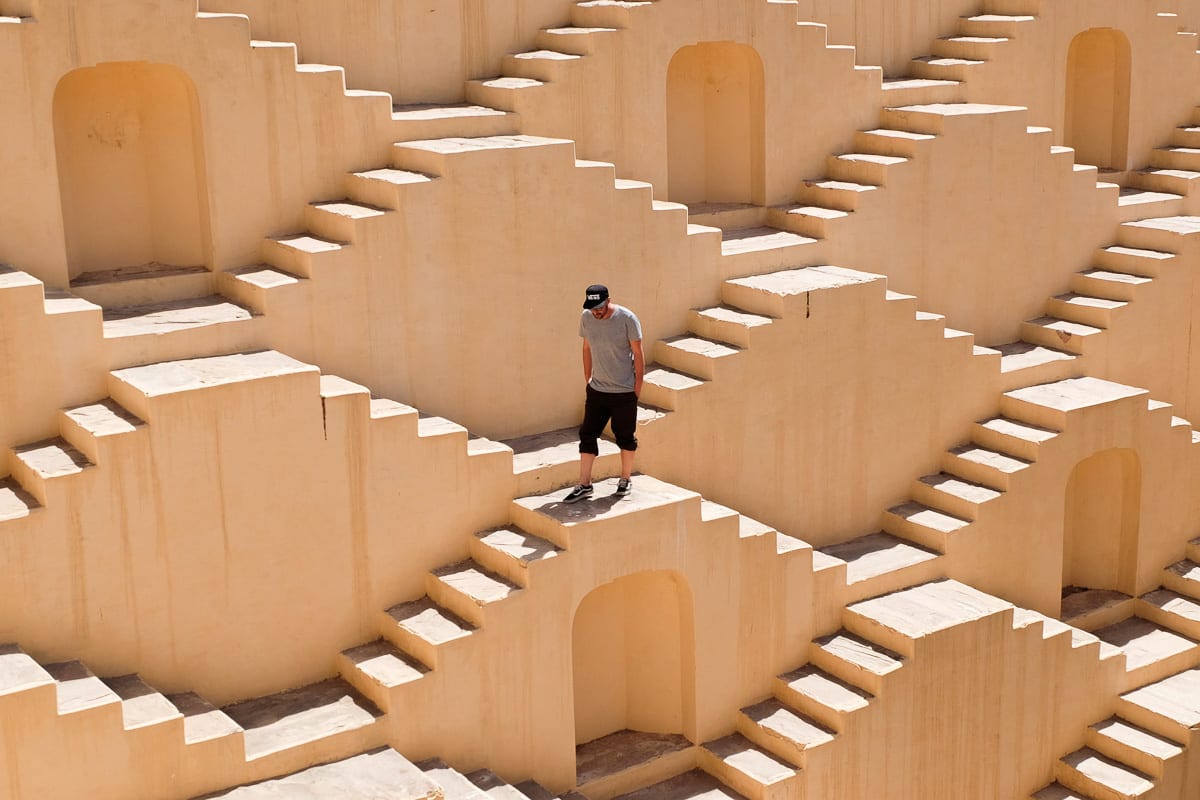
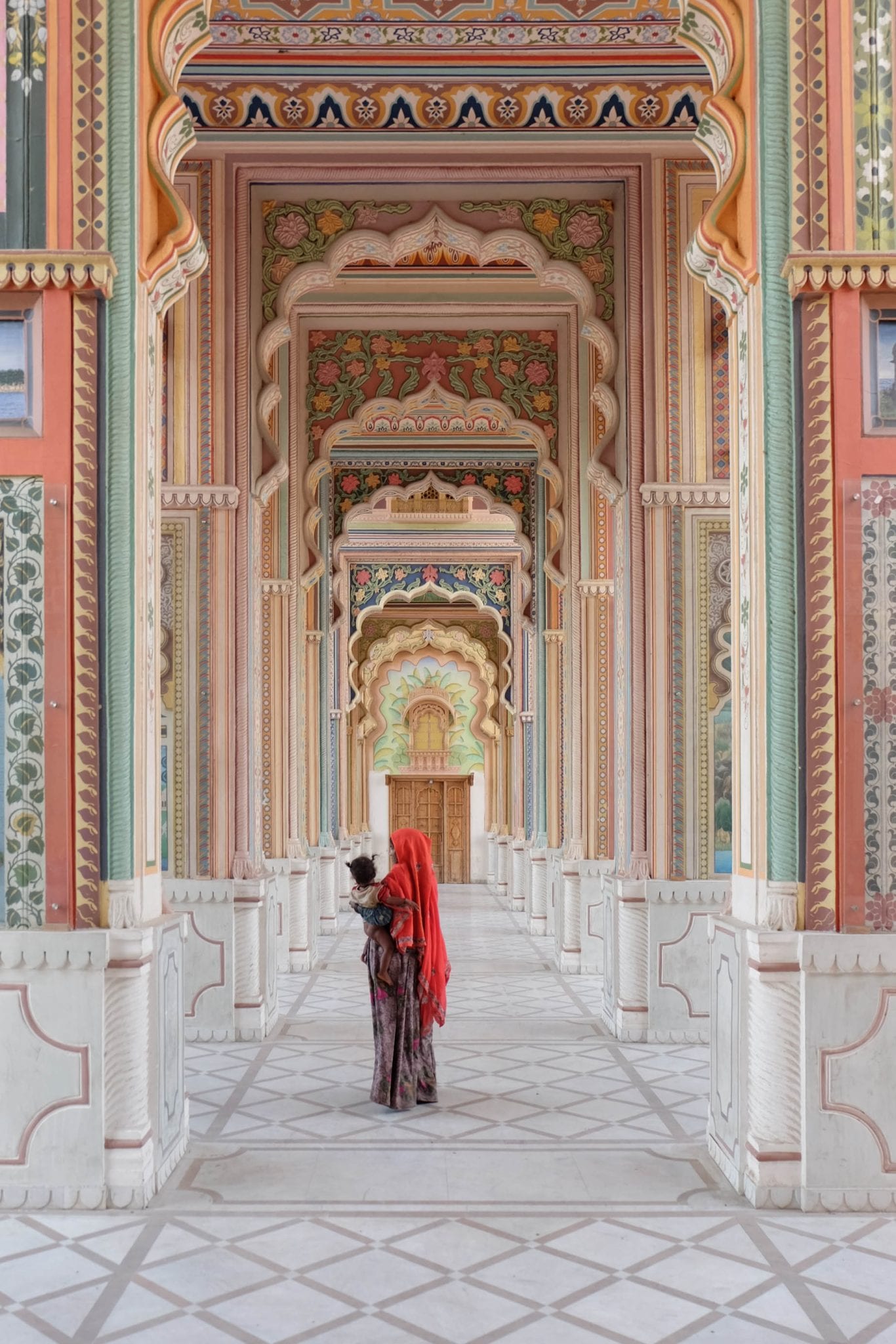
However, the present-day metropolis that is modern Jaipur has been built on centuries of history. This is the ‘Land of the Kings’, the realm of maharajas, where majestic forts and opulent palaces are more numerous than anywhere else in India. The splendours of Rajasthan’s past are still here to explore. At the centre of Jaipur, the elegant City Palace still housing the former royal family, is an island of tranquillity; the marvellous honeycomb facade of the Hawa Mahal looms over a traffic-clogged thoroughfare; and the city’s pink-tinted walls are punctuated with 7 imposing, decorative gates. Look further still and you will find sprawling hilltop fortresses, Escher-like step wells, and temples left to the care of roaming packs of monkeys.
Arriving in Jaipur
As Rajasthan’s capital and largest city, reaching Jaipur from either Delhi, or Agra if you are touring the Golden Triangle, isn’t an issue.
There are 9 trains leaving for Agra each day, taking 4 and a half hours and costing around ₹185 for 3rd class. The faster 3 and a half hour train will cost you around ₹500. From Delhi there are at least 9 trains each day, taking anywhere between 4 and a half to six hours.
Where to Stay in Jaipur
Jaipur isn’t short of high quality, budget guesthouses and hostels. Many of the best properties are concentrated along MI Road or 2km away from the Old City in the peaceful Bani Park area. The ever-reliable Zostel chain is one of the best spots in the city for wallet-friendly dorm beds while on the edge of the Old City, Krishna Palace is a beautiful, family-run heritage property with a lush garden and roof terrace.
Day 1 Itinerary
Start your first full day in Jaipur by wandering along the traffic-clogged MI road in search of breakfast. Hidden away in a small courtyard is Indian Coffee House, a Society for Indian Coffee Workers-owned cooperative with two branches in Jaipur.
It doesn’t look like much – It’s dingy inside, with pale green walls and fans running constantly to cool the interior – but this outdated, 70’s decor only adds to the appeal as uniformed waiters, complete with Nehru topi or a Pathan turban on their heads, go from table to table dishing out enormous dosas, crispy pakoras, omlettes and egg dishes that are some of the cheapest you’ll find in the city. The filter coffee isn’t too bad either.
Following a hearty breakfast, you will only be a short walk from some of Jaipur’s main attractions. Of these attractions, the City Palace is undoubtedly the star and with good reason. Situated right in the centre of the old city, you enter through the pink outer walls to find a maze-like complex of gardens, courtyards and buildings. The original outer wall was built by Jai Singh but the interior has been added to and enlarged over the years, with different buildings and palaces deriving from different centuries. Although the parts of the palace that you will see for the regular entrance fee are not all that exciting, you will have to pay the eye-watering extra ₹2,500 (around £27.50) for entrance to the palace’s most impressive rooms. I couldn’t justify the expense but for that price, but you will get a personal guide, a cup of chai in a private courtyard, and entrance to the palace gardens.

Afterwards, pay a visit to Jantar Mantar (Gangori Bazaar, 200 rupee entry) nearby. Although Jantar Mantar may just resemble a sculpture park filled with enormous, geometric statues, it is actually an observatory built by Jai Singh II in 1728 in order for him to measure the night sky (the name means ‘instruments of calculation’) that was added to the UNESCO world heritage list back in 2010. The complex features the world’s largest sundial.
There is just one more of this area’s trio of attractions to visit and this is the Hawa Mahal. One of Jaipur’s most iconic and distinctive landmarks, the Hawa Mahal was constructed in 1799 by Maharaja Sawai Pratap Singh as a way to allow ladies of the royal household to watch life on the streets below without being seen themselves. The five-storey tall honeycomb hive facade consists of 953 latticework windows for the ladies viewing pleasure. Entry is 200 rupees but if you just want to see the building’s famous façade, I recommend heading across the road and up a stairway to the Wind View Café where you can enjoy a coffee and quick lunch on the cafes terrace with an unbeatable view of the palace.

To round out your first day in Jaipur, take a self-guided walking tour around the old Pink City and its bazaars, starting at New Gate and taking a 4km circular stroll clockwise around the city, ending at Ajmer Gate. Head through New Gate and make your way through Bapu Bazaar, stopping to gawp at the colourful textiles and fabrics. Once you hit Sanganeri Gate, take a left and stroll through the jewelers and goldsmiths and Johari Bazaar, passing the majestic Hawa Mahal once again. Eventually you will reach the minarets of Jama Masjid where you can swing a left and wander past Tripolia Bazaar. In this area you can stop inside Maniharon Rasta, the perfect place to pick uup some beautiful bangles, or climb the steps of Iswari Minar Swarga for a, frankly, fairly underwhelming view of the city. Eventually you turn left again to wander past the stoneworkers of Khajane Walon ka Rasta before reaching the city walls beside Indra Bazaar, your end point.

No doubt at after all that walking you will be in need of a few refreshments. Just a 5 minute walk away down MI Road is Lassiwalla, the city’s most famous and popular lassi establishment that has been dishing out hundreds of creamy drinks each day since it first opened back in 1944. However, if it’s something a little stronger that you’re looking for, I have to recommend a trip to Bar Palladio. Bar Palladio describes itself as a place that delights in fantasy, a candle-lit wonderland and a floating world. Here you can wander amongst the peacocks and tented pavilions in the bar’s garden or head inside into a cobalt blue dreamland that appears to be modelled on the City Palace’s summer room, although the owner claims that the decor is inspired by the iconic Caffé Florian and Harry’s Bar in Venice. Either way, it really is an enchanting place to come for an early evening cocktail. The bar itself opens at 6 pm but tables fill fast. I recommend arriving at opening or pre-booking.
You can stay for food at Bar Palladio but if you’re on a tighter budget, how about catching a cab or tuk-tuk to Peacock Rooftop Restaurant. Situated on a rooftop terrace on the Hotel Pearl Palace, this quirky and fun restaurant offers romantic, candlelit, 360 views of Jaipur that reach all the way towards Hathroi fort. The cuisine is varied and inexpensive, although the Rajastani thali is probably the best thing on the menu.
Day 2 Itinerary
Today is going to be another busy day in which you will be heading out of the city centre to see some of the sights on the edge of Jaipur. After breakfast (I’d always recommend starting at Indian Coffee House again) hop in an Uber or taxi towards Amer Fort. Along the way, ask your driver to stop briefly beside Man Sagar Lake so that you can see the Jal Mahal, or water palace, from afar. When I visited, the palace was undergoing extensive renovations meaning that it cannot be accessed, but it is worth stopping off on the road between Jaipur and Amer to take a look and capture a few photographs before continuing your journey to the fort.

The Amber Fort is not only Jaipur’s most popular tourist attraction, it is also one of the most magnificent buildings in all of Rajasthan. Built with pink and yellow sandstone then embellished with white marble floors and walls, it is infinitely photogenic, especially as the sun fades on an evening, giving the whole fortress an orange and pink hue. Amer was the former capital of Jaipur state, with the fort being built in 1592 by Maharaja Man Singh. Subsequent extensions have lead to the fort comprising of an enormous and expansive network of palaces, temples and courtyards that will take the best part of a day to explore fully.
Elephants are used to carry tourists up the winding, hilly, switchbacks from the main road to the fort, but due to the mistreatment and abuse that these animals go through to be trained, as well as the health impact of carrying passengers please do not pay to ride an elephant to the entrance. It is just a short, 10-minute climb to the top or 4WD vehicles are available (40 rupees return for 5 passengers) if you are unable to walk.

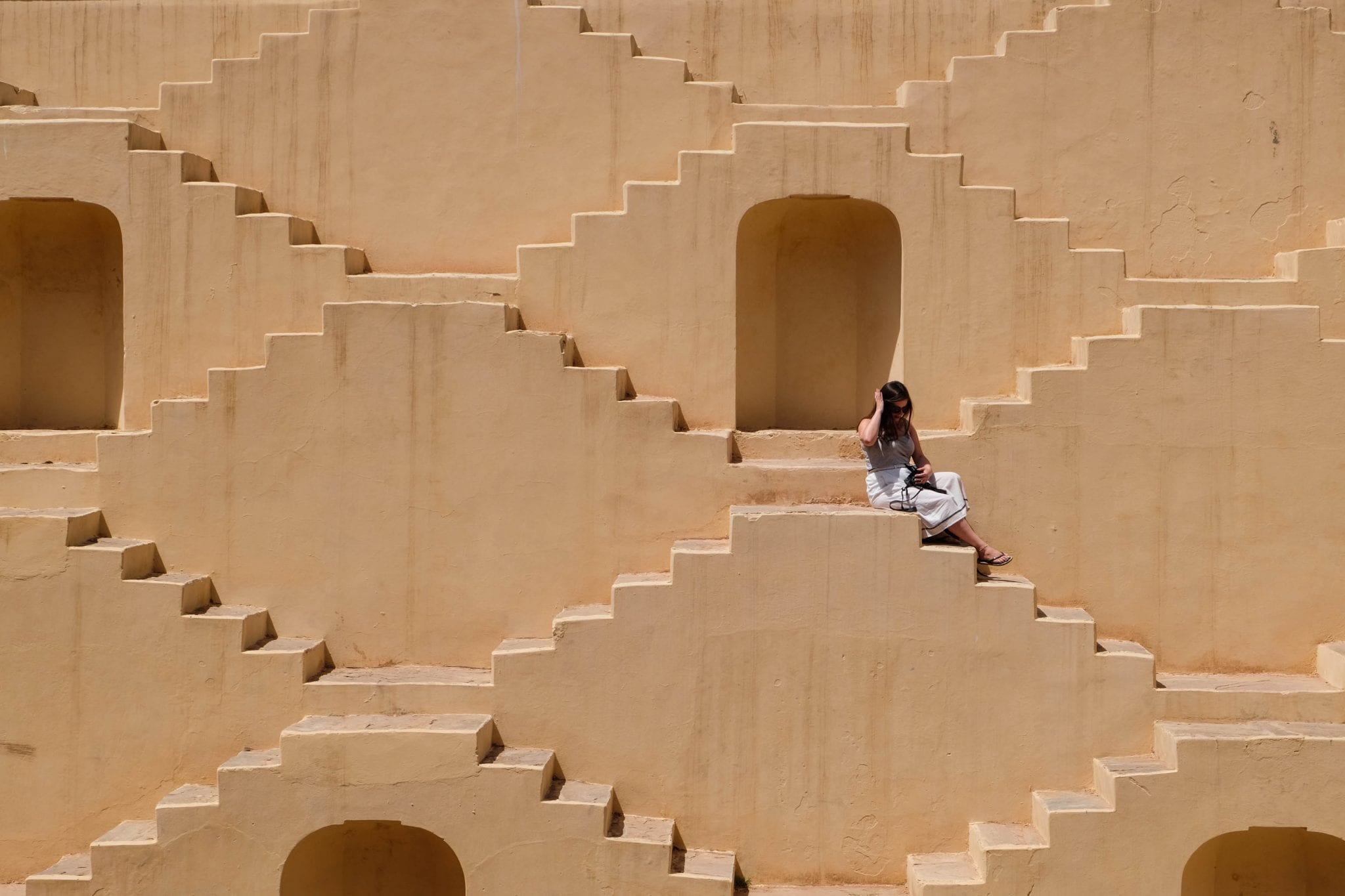
If you feel up for a little stroll, you can take the rear exit of the Fort and stroll 10-15 minutes downhill to the town of Amer. Here you will find Panna Meena Ka Kund, a beautifully refurbished step well. Built in the 16th century as a way of collecting the monsoon rains, the step well was a centre point for the community, used as a water source, bathing pool and for washing clothes. The geometric staircases are a stunning combination of ingenious Indian engineering and architectural beauty.
For our next stop you will have to catch a taxi or Uber again. Nahargarh Fort stands high above the northern limits of Jaipur, casting an imposing shadow over the city and can be a bit of a pain to reach. One way is to climb the steep, 2km path that winds up towards the fort from Nahargarh Fort Road but I would suggest going by car, although this is a 16km round trip from the city centre. Going direct from Amber Fort of Panna Meena Ka Kund means you can avoid having to travel back into the city just to head out again.
The fort was originally named Sudarshangarh, but it became known as Nahargarh, which means ‘abode of tigers’. Local legend says that the fort was named for Nahar Singh, a dead prince whose spirit was thought to be disrupting construction only sated once a temple was built within the grounds. While the labyrinthine corridors and maze of courtyards within the fort itself are impressive, the main attraction is the view of the city from the ramparts.

Catching a taxi back into the city, you should have now worked up quite an appetite so it’s time to head for dinner. If you’re staying within the walls of the Pink City, seek out Ganesh Restaurant, a purely vegetarian restaurant located atop the city walls. atop the city walls. It’s a little difficult to find but their creamy butter masala is worth the effort. If you’re hotel is further west along the MI Road, then Handi, a restaurant that has been in business since 1967 serving up a great range of barbecue and tandoori dishes, is a great choice.
With that, your time exploring the Golden Triangle is done. You can either catch a late-night train back to Delhi for your flight home or return to your hotel to rest, catching your train to Delhi the next morning.
Read More: The Most Instagrammable Spots in Jaipur
IF YOU HAVE MORE TIME IN JAIPUR
Galta Ji Temple
Although Galta Ji Temple is situated right on the edge of Jaipur’s city centre, it feels desolate and is incredibly evocative. Squeezed between two cliff faces in a deep valley and accessible by taking a winding, hilltop path, Galta Ji is most commonly known as the ‘Monkey Temple’ as hundreds of macaques and langurs call the crumbling buildings their home, running riot on the temple steps or playing in the sacred tanks.
A hilly, rugged path of steep climbs and switchbacks winds its way from Galta Gate, on the eastern edge of Jaipur, to Galta Ji. I rode by tuk-tuk to the gate from Jaipur’s city centre, and then it took me approximately 25 minutes to follow the clearly marked path and reach the temple. While the pedestrian route may seem like a slog, you are rewarded with hazy views of the bustling city from Surya Mandir, a temple sitting on a ridge 100m above Jaipur.
It’s claimed that the sacred tanks of Galta Ji are ‘many elephants deep’. When I visited, I didn’t see many pilgrims taking the plunge into the temple’s water so I couldn’t judge for myself, instead the pools were full of frolicking macaques. Small bags of peanuts are available to purchase at the entrance, but only do so if you are prepared to be mobbed by macaques. If you would rather keep the monkeys at a distance, it is worth waiting for the temple’s self-proclaimed ‘Monkey Master’ who arrives sporadically with bowls of fruit with which to feed the monkeys.
Alternatively, you can reach Galta Ji by car or Uber. Although the temple is only a few kilometres from the city centre, it is approximately 10km from the City Palace by road. You should be able to visit by tuk-tuk for around 300 rupees, including waiting time. A taxi will be more expensive, charging 500 – 700 rupees.
Read More: Galta Ji Monkey Temple

Read More: A Backpacker’s Guide to Jaipur
DAY 3 & 4
Pushkar
Pushkar is unlike anywhere else in Rajasthan. This small, yet enchanting town has the right mix of mysticism, religious fervour, and magnetism that causes backpackers and new age types to linger here for weeks, if not months.
The town itself encircles a holy lake, thought to have been created when Lord Brahma vanquished a demon, Vajranash, using a lotus flower. The lotus flower fell to the ground, creating Pushkar lake. Even to this day, the town contains one of the world’s only Brahma temples, making it a prominent Hindu pilgrimage town that devout Hindus should visit at least once in their lives.
Although Brahma may be the focus of much of the town’s devotion, there are actually 52 bathing ghats and 400 pastel blue temples surrounding the lake meaning that the town hums and vibrates to the constant sound of chanting, drumming and incense-fuelled puja.
Read More: A Backpacker’s Guide to Pushkar

Arriving in Pushkar
As Pushkar doesn’t have its own railway station, the easiest way of reaching the town is by getting a train to the nearby town of Ajmer. This station provides great connections to most major cities in India with multiple trains per day. From the Ajmer train station, you can either take a taxi to Pushkar (30 minutes, ₹500-600), Uber (₹300 flat), or take the public bus.
To take the bus, you will have to avoid the over-enthusiastic rickshaw drivers upon leaving the station and head to the bus stand on the opposite side of the road. The ride is around 30 minutes and costs ₹20.
It is possible to get a bus from both Jaipur (4 hours, ₹160, 7 buses daily) and Jodhpur (5 hours, ₹185, 3 daily) to the town’s Naya Bus stand.
Where to Stay in Pushkar
Due to the fact that it is a traveller’s hub, drawing in hippies, crusty backpackers, and Hindu pilgrims from far and wide, Pushkar has much more budget options than mid-range or expensive hotels. Many of the newer, more modern backpacker hostels are located on the eastern edge of town, around 10-minutes’ walk from the lake. Although accommodation is relatively cheap, expect prices to skyrocket during the camel fair.
As far as budget options go, Zostel is a solid choice. I stayed at a couple of their hostels during my time in Rajasthan and was relatively impressed. Yes, they’re nothing special, but Pushkar’s Zostel has an onsite cafe, a large atrium with sofas for relaxation, and a small, outdoor swimming pool that is cleaned daily. Situated across the road from Zostel, Madpacker’s is set within a beautiful building and decorated within an inch of its life with patterned throws, cushions, and Indian murals.
If you’re willing to spend a little more, Inn Seventh Heaven is set within a beautifully converted haveli. You walk through the heavy wooden doors into a central courtyard complete with a marble fountain and flower petals scattered all around. Green vines and flowers tumble down into the incense-scented central atrium. This hotel is the perfect, tranquil haven to escape the hubbub of the town. As a boutique hotel, all of the rooms spread over the 3 floors are uniquely decorated and stuffed with hand-crafted furniture and comfortable beds.
Day 3 Itinerary
Taking the early-morning train from Jaipur and then catching a tuk tuk or taxi from Ajmer, you should arrive in Pushkar around lunch time or in the early afternoon. If you haven’t filled up on the delicious rotis, samosas and tea served by the vendors that weave their way through the train carriages, you are probably in the mood for a bite to eat. It’s worth noting here that due to Pushkar’s religiosity, it is a strictly vegetarian town: no meat, eggs or alcohol are allowed within 2 km of the Brahma temple.
Start your stay in Pushkar by refuelling at the wonderful Cafe Nature’s Blessing. Located a little out of town, near to both the Madpacker’s Hostel and Zostel, this small and friendly, family run cafe has an extensive vegan menu and some of the best, freshest food you will eat in Rajasthan. I ate the mushrooms in mango sauce, which was phenomenal.

Spend the afternoon taking a circular walk around the central lake. There are fifty-two bathing ghats surrounding Pushkar’s holy waters, where holy men mill around, performing puja and handing out flowers while pilgrims bathe in the sacred waters. Some of the ghats have more significance than others. It was in Gandhi Ghat where Mahatma Gandhi’s ashes were scattered, and Vishnu and Brahma are said to have bathed in Varah Ghat and Brahma ghat respectively.
Finish your walk at Sunset Point where, as the sun begins to set and bathes the lake in a golden glow, travellers, locals and musicians gather. I found that sitting outside Sunset Café, drinking tea and eating pastries from the on-site German bakery was the perfect end to the day.

As night falls, it’s time to explore some of Pushkar’s temples. With the Vedic walking tour, you spend 2 and a half hours exploring the one mile stretch of road that manages to squeeze in temples for all 4 of India’s major religions. Although you can get a feel for the town by wandering around and visiting the temples by yourself, this tour will give you a deeper insight into this mystical town as well as encouraging you to meet people and ask questions. There is also the added bonus of having a guide, meaning you will avoid hassle as you visit the city’s sights. Tours cost 1800 rupees per person and last 2 and a half hours. Evening photography tours are also available.
End the day with dinner at the Laughing Buddha Café. The food isn’t the best in town, and the menu is pretty sparse, but eating here contributes to a good cause. Half of the cafe’s profits go to the Little Buddha’s Hearts Foundation, a charity organised by the Laughing Buddha’s owner, Sheru, to support children’s education in Nadliya. Even if you don’t eat here, you can drop off a donation of stationary, shoes or clothes at the donation box inside.

Day 4 Itinerary
As there isn’t a great deal to see or do in Pushkar compared to other cities and towns in Rajasthan, today will be a little more relaxed than others in this itinerary. Spend the morning and afternoon exploring the town to soak up the atmosphere, partake in a little yoga or shop at Sadar Bazaar, the market along Pushkar’s Main Market Road lined with shops selling everything from Indian souvenirs and touristy trinkets to hand-crafted, locally made jewellery. Many of the charming little shops are covered in beautiful, hand-painted signs.

While you’re there, stop for a quick lunch at Laffa Walla Falafel Stand. There are a few identikit falafel wrap stands clustered in a small area of the market, but I was told by a few people that Laffa Walla is the original. It’s a claim that was verified by the owner, who enthusiastically told me, multiple times, that he serves the best falafel in Pushkar. He was probably right; the food was delicious, filling, and reasonably priced. I even had a couple of free masala chais thrown in for good measure.
Around an hour before sunset, begin the long walk from the lake up towards Savitri Mata Temple. The temple sits atop a hill overlooking the entire town to one side and plains and mountains to the other. While the main reason to visit is for the vistas, the temple itself is welcoming and you’ll experience no hassle when inside, which is a bit of a contrast to the town’s more touristy houses of worship. It takes around 45 minutes to reach the summit (it’s a 2km uphill walk) but the views are worth it. If the walk seems a little strenuous, it is possible to take a cable car to the top (90 rupees, open 9.30 am to 7.30 pm).

On your return to town, pay a visit to one of the world’s only Brahma temples. With its bright red spire surrounded by blue columns, the temple can become fairly busy and daunting during the chanting ceremonies, or aartis, conducted here (one begins two hours before sunrise, one 40 minutes after sunset, and one 5 hours after sunset). Bags, cameras and shoes must be left at the lockers outside and expect to be hassled by people for donations when inside. My recommendation is to leave if you are made to feel uncomfortable, and only donate in the donation boxes that are scattered throughout the temple.
For dinner, pay a visit to Sixth Sense, the restaurant nestled inside the atmospheric Seventh Heaven Hotel. The relaxed, rooftop restaurant has swing chairs and sofas, allowing you to chill out with an expansive view over the city, as well as a regular dining area. Keep an eye out for the pulley system that whisks meals and drinks up to the roof from the ground floor kitchen.
TIPS & ADVICE FOR VISITING PUSHKAR
Pushkar is considered sacred, so many rules that apply within India’s religious sites, apply within the town as a whole.
Consumption of alcohol, meat or eggs is not allowed within 2 km of the Brahma temple, so I would advise against carrying alcohol with you when visiting the city.
Dress appropriately, particularly when visiting the ghats or temples. It’s recommended that men wear full-length trousers and tops that cover their shoulders. Women are advised to wear full-length clothes. You may not run into any issues if you wear less (a lot of tourists walk around the city in shorts and vests) but, out of respect, it is best to keep covered. When visiting the Ghats, ensure that you take off your shoes, and try to avoid photographing the bathers.
As Pushkar is a very touristy city, scamming is widespread, particularly around the lake. Be careful of anyone giving you flowers or offering a puja (prayer); fraudulent “holy men” are rampant around the ghats and will insist that they give you a blessing or that you should make an offering, often to the order of a few thousand rupees. Stand your ground and walk away if you feel harassed.
DAY 5 - 7
Udaipur
Over 400 years, successive Maharaja’s have shaped Udaipur, building floating palaces stunning Forts on the water’s edge. Encircling the glistening Lake Pichola and surrounded by the jagged Aravalli Hills, Udaipur is considered by many to be the most beautiful city in Rajasthan, and arguably in all of India. Known simultaneously as the White City, The City of Lakes, and the Venice of the East, it was founded in 1568 by Maharana Udai Singh II as his new capital of Mewar when he set about building an abundance of ornate and extravagant palaces and havelis, eventually flooding the nearby village of Picholi to create the stunning expanse of water that sits at the centre of the city today.
Many of those buildings still remain and have been added to over the years, creating a city filled with fantastical palaces, temples, and labyrinthine streets for the intrepid visitor to explore. Although Pichola is the focus for most tourists, with tranquil boat rides to floating palaces and watching the sunset reflecting in the water from a rooftop vantage point as the sounds of Puja echo around, the city boasts colourful bazaars, an abundance of art galleries and a delicious foodie scene that is a good mix of traditional Rajasthani cuisine and a slightly hipster cafe culture. Add to this the city’s tag of ‘the most romantic spot in all of India’, and you can see why Udaipur is a must-visit on any Rajasthan itinerary.
Read More: A Backpacker’s Guide to Udaipur

Arriving in Udaipur
Udaipur has direct train services from a few of the main cities in Rajasthan and further afield. The journey from Ajmer (near Pushkar) is around 5 hours and there are 4 trains each day. The station is 2.5 km south of the city centre and should cost around 50 rupees to reach by autorickshaw.
Where to Stay in Udaipur
Udaipur has a good mix of Backpacker hostels, budget rooms, and more luxurious accommodation set within the opulent interiors of converted palaces and havelis. Most of the budget places cluster around the eastern edge of the lake around the tangle of noisy streets that make up the city’s touristic centre. I found that it was better to cross the footbridge from Lal Ghat and stay in the area around Hanuman Ghat or Ambrai Ghat where you will get a little more peace and more of a friendly, local vibe.
You may have to hop out of your rickshaw and walk across to Hanuman Ghat, as I found that a fair few drivers don’t want to take you all the way.
While the ubiquitous Zostel and GoStops hostels are some of the best choices for dorm beds, I stumbled upon Hostelavie beside Ambrai Ghat and was reasonably impressed. Although the dorm is a huge 20-bed affair, the hostel is set inside the grounds of the much more luxurious Shree Villas on the banks of Lake Pichola. This means that you can enjoy the comfort of a resort at hostel prices. There are 84000 sq. feet of gardens within the grounds and an outdoor swimming pool with a magnificent view of the lake and the Sajjan Garh Fort. There is also a continental breakfast at Shree Villa’s onsite restaurant included.
Day 5 Itinerary
After taking a taxi to Ajmer and catching the train for a 5-hour long ride, you will arrive in Udaipur relatively late in the day. Stop for a quick coffee and cake along the waterfront at Jheels Ginger Coffee Bar and Bakery where you can enjoy your drink while watching people splash, swim and bathe at nearby Gangaur Ghat. Feeling a little refreshed, stroll over Daiji Bridge to Hanuman Ghat and spend the remainder of the afternoon exploring the narrow streets and art galleries of this quiet, friendly neighbourhood. Luckily, one of the city’s best – or at least best situated – restaurants is located here. Ambrai, on Ambrai Ghat, has a wonderful waterfront terrace that gives perfect views of the city skyline and Jagmandir Island. You should be able to turn up unannounced and get a seat at the bar for a beer or cocktail, but to eat here you may have to book, especially if you want to dine at sunset.

Day 6 Itinerary
Start your first full day in Udaipur with a visit to the City Palace. Towering 30m over the lakeside at stretching over 200 metres along its shore, Udaipur’s City Palace is the largest and most impressive of all of Rajasthan’s palaces. Originally built in 1599 by Maharana Udai Singh, it was gradually added to by successive maharanas until it became the sprawling conglomeration of ornate buildings, balconies and towers (11 smaller palaces have been connected to it over time) that it is today.
Although you can enter the Palace complex (open 9 am – 11 pm) for 30 rupees through Badi Pol (the great gate) or Sheetla Mata Gate, you will have to pay a further 250 rupees to enter the City Palace Museum, which makes up the main part of the Palace. Inside you will find a collection of colourful, extravagantly decorated rooms covered in mirrors, tiles, and lavash fittings as well as beautiful courtyards, pavilions, and terraces. I recommend renting an audio guide for 200 rupees if you want to really get a sense of the building’s history and giving yourself an hour and a half to 2 hours to really explore.

From Rameshwar Ghat, within the Palace grounds, you can take a boat trip around Lake Pichola (400 rupees with boats leaving every hour) that circlse the east side of the lake, taking in the stunning Taj Lake Palace and Jagmandir Island. The boat makes a stop at Jagmandir’s Palace and you are able to stay for as long as you would like, although there isn’t much to do there other than wander the gardens. Food and drink on the island are rather expensive, so make sure to take water with you.
Come dinner time, Udaipur isn’t short on rooftop restaurants offering spectacular views of Lake Pichola. Unfortunately, many of them sell themselves on their vantage point alone and offer average or substandard food. However, visiting the aptly-named Sunset Terrace for a beer to catch the – you guessed it – sunset, I was pleasantly surprised. It turns out that their meals match up to the scenery and the palak paneer that I ordered was surprisingly delicious.

For James Bond fans, Ashiana Café and Cool Café should be where you decide to spend the evening. It was 1983 when Roger Moore’s incarnation of Bond arrived in Udaipur, and 35 years later, it’s as if he never left. Many of the city’s most spectacular landmarks were immortalised in John Glen’s Octopussy. Bond himself stayed at the Shiv Niwas Palace Hotel. The hotel is name-checked by the tuk-tuk driver who picks up Bond. Later, he gambles at the hotel’s casino and has dinner next to the swimming pool. Octopussy herself calls the Taj Lake Palace her home with the exterior shots taken at the Jag Mandir Palace.
Taking advantage of this, Ashiana and Cool screen Octopussy every night. Udaipur was the first Indian city where a Bond movie was shot extensively. At first, the cafes and restaurants in Udaipur screened the movie as a matter of pride, and over the years, it has become their USP.
Day 7 Itinerary
Spend your last day in Udaipur relaxing, exploring the lake and its many ghats. In Teej Ka Chowk, a 20-minute walk into the city from the lakeside, you will find a bustling market where vendors sit cross-legged on the floor, blankets spread all around them, covered in colourful fruit and vegetables. Baskets are stacked high with lettuces, cauliflowers and tomatoes with barely any space to move between them. The tea and spice market, a set of shops that line the surrounding alleyways, caters more to tourists. Men sit behind counters, all manner of spices and ruby red chillies are laid out in front of them, spilling from the top of open hessian sacks or piled into neat pyramids, ready to be weighed on old-fashioned scales. Here you will find pre-packaged selections of different leaves and powders that you can buy to take home as a souvenir and a great selection of street food.

There aren’t many other tourist sights to see in the city but the Jagdish Temple, originally built by Maharana Jagat Singh in 1651, may be worth a visit, as is the Crystal Gallery, an extraordinary collection of crystals from F & C Osler & Co in the UK, including crystal furniture such as tables, chairs and beds, that were ordered by Singh. He died before the order reached him and although the boxes lay unopened for 110 years, the contents are now on display for all to see. Entry costs 550 rupees and photography is strictly prohibited inside.
If you want to see the most spectacular sunset views in the city, travel out of Udaipur’s centre to Sajjan Garh. Perched atop a mountain overlooking the city from afar the monsoon palace was originally constructed by Maharana Sajjan Singh as an astronomical centre but soon became a palace retreat and hunting lodge. To get there, you first have to reach the Sajjan Garth Wildlife Sanctuary (300 rupees entry fee) at the foot of the hill, about 9km from the city centre by road, and then ascend the final 4km by one of the taxis that are waiting to ferry passengers to the Palace (150 rupees per person). It will cost around 400 rupees to get to the sanctuary gates by autorickshaw from the city centre, including waiting time and return journey. Unfortunately, the rickshaws are unable to pass the sanctuary gates.
DAY 8
Ranakpur Jain Temple & Jodhpur
Situated almost halfway between Udaipur and Jodhpur on the slopes of the Aravalli Hills, is one of India’s most important Jain Temples. Built from pristine white marble in the 15th century and dedicated to Adinath, the first Jain tirthankar, the temple contains an impressive 29 halls held up bt 1444 intricate and lovingly carved pillars. Ranakpur isn’t an essential stop on a Rajasthan itinerary but I was blown away by the beauty and stillness of the temple.

Getting to Ranakpur Jain temple
Buses towards Ranakpur leave hours from Udaipur, taking roughly 3 hours and will drop you off just outside of the temple complex. After your visit you can catch an onward bus to Jodhpur, taking around 4 – 5 hours. It is worth noting that the buses stop running at 7pm.
However, the easiest way to visit Ranakpur on your way to Jodhpur is to hire a car and driver from any of the tourist agencies in Udaipur, although this is much more expensive.
DAY 9 & 10
Jodhpur
Surrounded by a 16th-century city wall that stretches for 10 km, Jodhpur is a jumble of Brahmin-blue houses scattered along winding, medieval streets. In the centre of it all is the mighty Mehrangarh Fort, towering over the entire city like a castle that has been transported straight from the set of Game of Thrones.
If the cerulean walls of the city’s centre weren’t flamboyant enough, it’s a place that seems to be constantly engaged in one festival or another. While the parades and dancing of Gangaur that take place each year were my favourite memory of India, that isn’t to say that the city is only worth visiting when it is celebrating; the buzz of the maze-like streets – scented by a heady mix of burning incense, pollution, fresh street food and sewers – of the old town is enthralling, never leading to where you expect. The bazaars heave with saris, trinkets and spices. Inside the blue-painted walls of this cerulean city, you’ll find hidden temples, havelis and palaces. It may not be as extravagant or chaotic its Rajasthani neighbours of Jaipur and Udaipur, but its mix of overblown architecture, festival atmosphere and hectic incense-scented bazaars won me over instantly.
Read More: Dhinga Ganwar Festival in Jodhpur

Arriving in Jodhpur
Unfortunately, there is no direct train from Udaipur to Jodhpur or vice-versa so a bus or private car is your only option. A private car from Udaipur to Jodhpur will cost anywhere between 20,000 and 30,000 rupees, while an AC bus will only cost around 600 rupees (the journey takes 7 hours and there are around 10 buses each day). Government buses leave from the central bus stand opposite the train station. A higher standard, private bus can be booked through your hostel or hotel.
Where to Stay in Jodhpur
Many of the best properties in Jodhpur are concentrated in the winding alleyways north of Sardar Market. Most taxis from the train or bus station won’t take you into the narrow back streets, so book ahead of time and get dropped off at the clock tower or the northern gate and walk the rest of the way.
I absolutely loved my stay at Yogi Guesthouse, a 500-year-old haveli nestled beneath the walls of Mehrangarh Fort, washed in different shades of blue and converted into a quiet and peaceful backpacker hostel. The hostel boasts a lovely indoor and outdoor courtyard on the ground floor, as well as a rooftop cafe with incredible views of the fort. The owners are also friendly and helpful (they managed to organise a safe delivery of my passport, which I had stupidly left in Udaipur).
Elsewhere, the Jodhpur branch of Zostel is located just 550 yards from Mehrangarh Fort and a short walk from the northern gate of the central market, meaning that it is perfectly placed for guests that want to explore on foot or by bike. The rooftop restaurant has incredible views over the city, as does the roof terrace at the equally great HostelLaVie.
For a mid-range option, you can’t do much better than the wonderful Pal Haveli Hotel, located beside the city’s Toorji Ka Jhalra Stepwell.
Day 9 Itinerary
Start your first full day in Jodhpur by stopping off at one of the two omelette stands that are situated either side of Sardar Market’s northern entrance, facing each other and constantly competing for the business of hungry passers-by. They do a range of different egg dishes, often combined with bread for anywhere between 15 – 30 rupees.
Following breakfast, pay a visit to the city’s main attraction, Mehrangarh Fort. Perched on a rocky outcrop 120m above Jodhpurs skyline, Mehrangarh is thought to be one of the most magnificent forts in all of India and is certainly one of the most spectacular buildings I have ever seen. The main entrance, Jai Pol, is a steep, 300m walk from the city but it is possible to take an autorickshaw there for around 120 Rs.
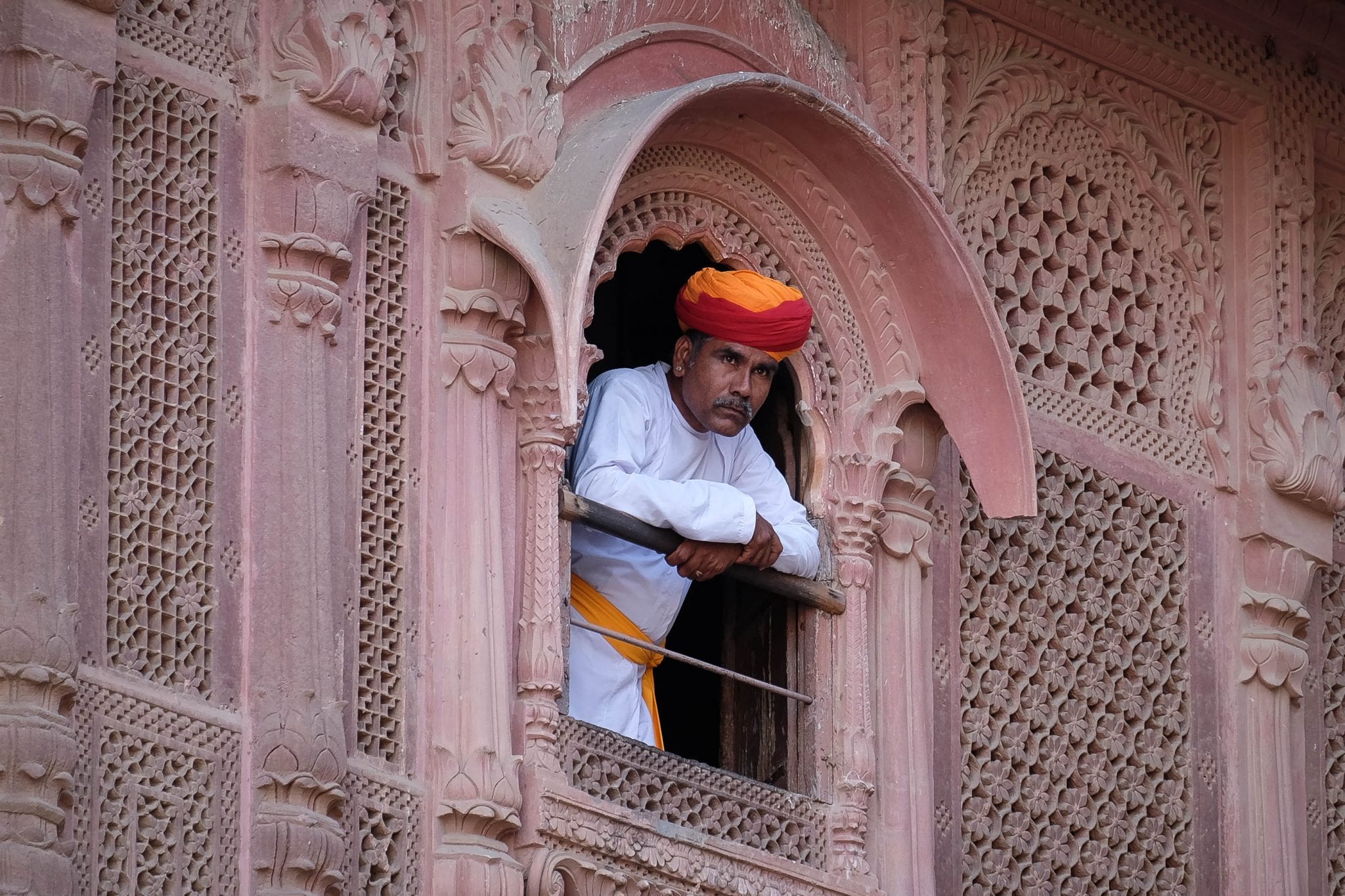
The Fort’s old palace is now home to the Mehrangarh Museum where you will find a network of beautiful courtyards surrounded by intricately carved facades. Inside the palace itself are a number of galleries, filled with textiles, armour, weapons and paintings, such as the gallery of miniature paintings, Daulat Khana Chowk and the Phul Mahal (Flower Palace). After visiting the museum, you are able to wander the ramparts of the fort, giving you a spectacular view over Jodhpur.

The Fort’s old palace is now home to the Mehrangarh Museum where you will find a network of beautiful courtyards surrounded by intricately carved facades. Inside the palace itself are a number of galleries, filled with textiles, armour, weapons and paintings, such as the gallery of miniature paintings, Daulat Khana Chowk and the Phul Mahal (Flower Palace). After visiting the museum, you are able to wander the ramparts of the fort, giving you a spectacular view over Jodhpur.
Just a short walk from the fort is Jaswant Thada, a spectacular white marble monument to Maharaja Jaswant Singh that is worth visiting. Following this, head into the nearby Jao Jodha Desert Rock Park, a 72-hectare area has been lovingly created to showcase the vast array of native flora and fauna species present in the region. The park itself is a brilliant example of the growing eco-tourism trend in India and you can spend a couple of hours wandering the marked trails that zigzag around the area, giving you a little respite from the chaos of the city itself. For a more in-depth insight into the park, a local guide/ranger will give you a tour for 200 rupees and if you visit around sunset, they will take you to a viewpoint that gives incredible views over Jaswant Thada, Mehrangarth and Deity Pond.

Come evening time, make your way to Indique. It may be a little more expensive than most restaurants in Jodhpur, but not many eateries in the city are as atmospheric. Set on the candlelit rooftop of the Pal Haveli Hotel, you can dine with a view of the illuminated Mehrangarh Fort on one side and the clock tower of Sardar Market on the other. The food more than lives up to the scenery, with the restaurant dishing out a good range of traditional Rajasthani dishes and thalis. The well-stocked bar will whip you up a great cocktail too.
Day 10 Itinerary
As the majority of the city’s main sights were covered yesterday, you can spend the day exploring the city centre on foot. Start with a coffee and light breakfast at Cafe Sheesh Mahal, located just outside the northern gate of Sardar Market in the upstairs of a narrow building before heading through the gates and exploring the market square itself. The market can be a little chaotic, dirty, and filled with vendors hassling you to make a quick buck. However, if you head there when the stalls first open in a morning, you should be able to wander the vegetable, spice and handicraft bazaars in relative peace. At the centre of the square is one of the city’s more iconic landmarks, a century-old clock tower.
Make sure to pay a visit to the Shri Mishrilal Hotel just inside the southern gate of Sardar Market. It may not look like much from the outside, but this nondescript, 90-year-old food spot is known to serve one of the best makhaniya lassis in Rajasthan. Their secret is that they add a huge dollop of white, unsalted butter to make it that little bit richer and creamier. Apparently, the cafe can become packed later on in the day but when I visited mid-morning, it was easy to find a seat and be served.

The nearby Toorji Ka Jhalra Stepwell makes for a fun diversion. Built in 1740 but until recently, it was in a state of disrepair. The zig-zagging steps, built to follow the fluctuating water table had been completely submerged by stagnant, debris-filled water. Now that the well has been drained and cleaned, it is once again the centre of the community in Jodhpur, not as a source of drinking water, but as an open-air swimming pool for the local kids and you can watch as they show off with death-defying leaps from the well’s rim into the pool below. For the best view of the action, sit on the balcony of the Stepwell Café with a coffee or beer.

When I heard that Jodhpur is known as the ‘Blue City’, I was expecting to see something along the lines of Chefchaouen in Morocco, but ultimately, the city isn’t quite as blue as its moniker suggests. However, I did enjoy spending an afternoon wandering some of the central neighbourhoods in search of blue streets. I started at Chandpole Gate and from there, spent a couple of hours wandering the winding streets towards Ranisar Lake. Although this is predominantly a residential area with narrow, labyrinthine streets, I felt perfectly safe wandering around and met plenty of lovely people that were happy to point me in the right direction. When you’ve finished exploring, head to the rooftop of Cosy Guesthouse for an ice-cold beer in the company of their friendly pet tortoises to enjoy a view over the city.

End your time in Jodhpur with a delicious Rajasthani thali at Nirvana. Overlooking Tambaku Bazar, it wasn’t an easy place to find but as guidance, Nirvana shares a building with a Rama temple and a kitsch hotel of the same name. Although there is both an outdoor and indoor dining area, I recommend heading up to the roof for your meal.
DAY 11 - 13
Jaisalmer
Rising from the desert like a magnificent sandcastle, the Thar Desert town of Jaisalmer is a golden hued marvel that appears to be plucked straight from the pages of Arabian Nights. Founded as far back as 1156 by the Bhati Rajput clan who ruled here until independence in 1947, this enchanting desert citadel’s fort and golden-hued ramparts are the main attraction, but equally travellers use the Golden City as a base and entry point for camel treks deeper into the Thar Desert.

Arriving in Jaisalmer
Direct buses leave Jodhpur for Jaisalmer multiple times each day and take around 5 and a half hours. Alternatively, trains take around the same amount of time and leave Jodhpur at 12am, 6.45am, and 5pm.
Where to Stay in Jaisalmer
Although there are numerous hotels and hostels located inside Jaisalmer’s atmospheric fort, it is thought that the influx of tourism is doing permanent damage to the monument and as such, it is best to stay at one of any number of great places outside the fort. Hotel Nachana Haveli, a sumptuous 280-year-old haveli set around 3 beautiful courtyards is the best of the bunch and contains the city’s best restaurant, Saffron. For the budget conscious, you won’t find much better than Moustache or Zostel.
Day 11 Itinerary
If you opted to take the 6.45am train from Jodhpur, it’s likely that you will arrive in Jaisalmer just after lunchtime. Use this as an opportunity to explore the city and its fort before heading out to a desert camp tomorrow.
Unlike many forts in Rajasthan, Jaisalmer Fort hasn’t been transformed into a museum, rather it is still a living city, with over 3,000 people still residing in the narrow, winding lanes that weave within it. Work your way from the east gate along the paved road, passing four huge gateways towards the central square, Dashera Chowk. Along the way you will find interesting diversions in the form of cafes, handicraft shops and temples. However, the Fort Palace dominates the square. It’s 5-storey façade is one of the finest buildings in Jaisalmer and contains a museum (500 rupees entry) which offers an intriguing snapshot of the life of Jaisalmer’s rulers through the ages. End the day with dinner at Saffron, an atmospheric restaurant on the spacious roof terrace of the Nachana Haveli Hotel.
Day 12 & 13 Itinerary
Most travellers make their way to this northern Rajasthan outpost specifically to go on a Jaisalmer camel safari, making their way across the barren sands of the Thar Desert and sleeping under the stars in one of the remote and romantic desert camps. Although trips can last for anywhere between 2 and 4 days, one night is usually enough, with tours leaving Jaisalmer at around early in the morning and returning to the city at noon the next day.
Although most hotels and hostels in Jaisalmer will offer to organise an expedition for you, ideally you should do your own research and book directly with your tour operator of choice, as many of the low-budget agencies will cut corners and give you a less than enjoyable experience.
The best-known dunes near Sam and Khuri can be overcrowded so ensure that your tour includes a 4WD ride to a less frequented area as well as that you will be provided with your own camel, adequate blankets, food, water and a campfire. Also check that the operator is committed to removing all litter and rubbish when you are finished with your camp. Both Sahara Travels and Trotters come highly recommended but ensure that you book your tour as soon as you arrive in Jaisalmer as the vehicles leave town at 9am and 6.30am respectively.
If you have to be in Delhi to catch a flight the next day, you will be back in Jaisalmer in time to catch the 5pm overnight train, arriving in the capital at 10.55am the next day. Otherwise, enjoy one final night in Jaisalmer before moving on to your next destination.
DAY 14
Head Back to Delhi or Travel Further Afield
Most people will decide to end their Rajasthan adventure in Jaisalmer, taking the overnight train to Delhi in order to fly home. However, if you intend to carry on your adventure, a train leaves at 11.55pm each evening to the vibrant and off-the-beaten-track desert town of Bikaner. Although less spectacular than Jaisalmer, it is much less dominated by tourism so is the perfect place to take a camel safari without the hassle.
WHERE TO NEXT?
Arriving back in Delhi, this is the perfect opportunity to spend a couple of days exploring the nations chaotic and sprawling capital. Air and rail connections from here also provide ample opportunity to travel further afield and extend your stay in india. Of the tourist highlights, Agra is obviously the most popular option but the pilgrimage town of Varanasi or the sumptuous Golden Temple of Amritsar and the wider Punjab region are excellent choices.