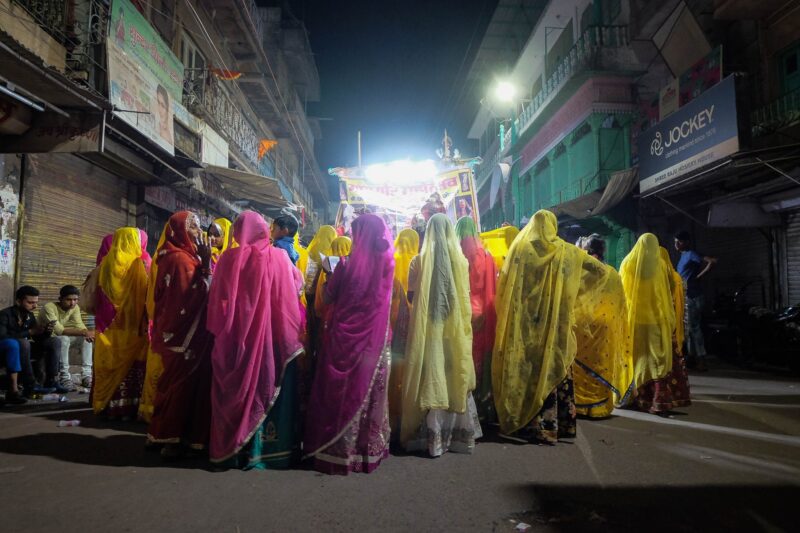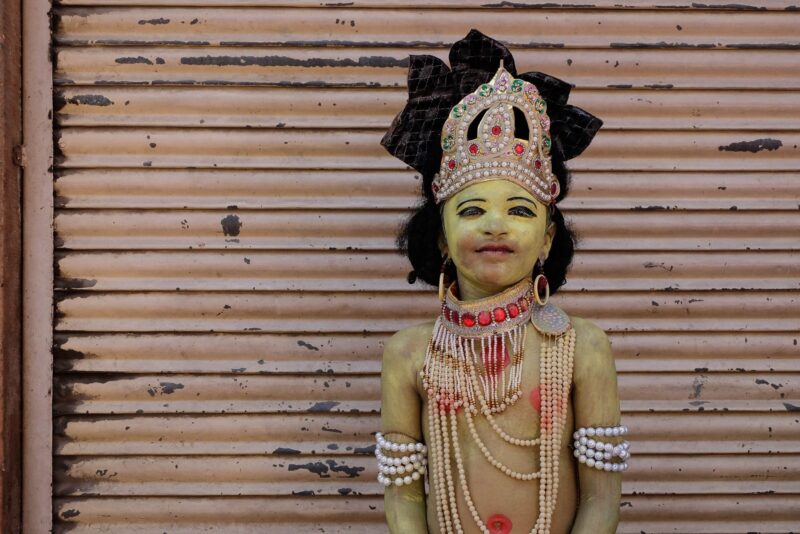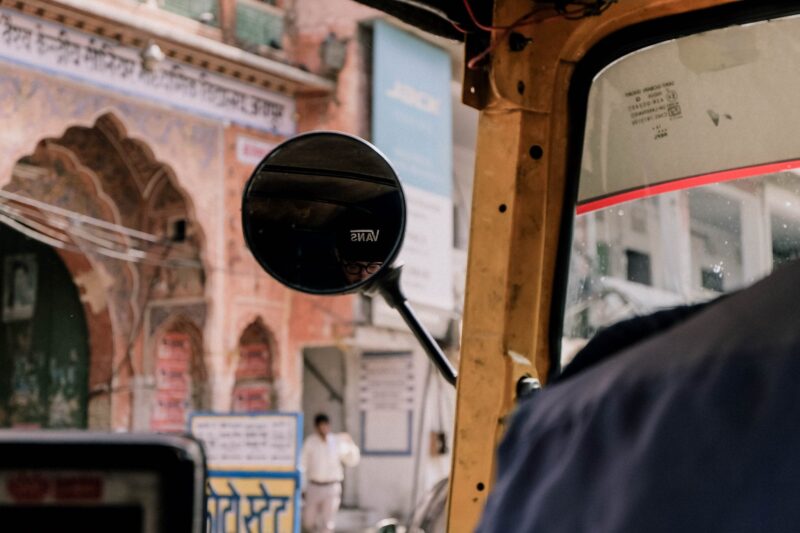
Delhi is a fascinating place. As well as being a melting pot of ethnicities and religions, it is a city of contrasts. In the south, wide tree-lined avenues are surrounded by colonial mansions and expansive gardens dotted with vast monuments and ancient tombs. As you move towards the chaos of Old Delhi, you find claustrophobic, narrow streets overflowing with people and traffic.
Think colourful spice markets, world-renowned cuisine, creative hubs and centuries of fascinating history. I think that Delhi has something to offer everyone, you just have to give it a chance.

Where to Stay in New Delhi
Deciding where to stay in a city the size of Delhi can be a mind-boggling task. Not only are there a huge number of hotel options, ranging from budget-friendly fleapits to lavish five-star palaces, it can also be difficult to decide which are of the city to bed down in.
Many of the city’s hostels are located in Paharganj, the noisy and bustling backpacker hub close to the city’s railway station. However, in my opinion, it is an area that’s best avoided. Alternatively, the area around Connaught Place is near to a vast majority of the tourist sights and is much quieter with a higher standard of accommodation.
During my stay in Delhi, I stayed in the south of the city. Not only is it a little more convenient for getting an Uber to/and from the airport, but you’re also much more likely to catch a good night’s sleep without the fear of being kept awake by the constant honking of car horns. While it may take longer for you to reach the sights of Central and Old Delhi, I think that the trade-off is worth it.
Bed and Chai
Although not particularly fancy, this French-owned guesthouse has a mix of private and dorm rooms and has a few quirky design touches. It is located in a relatively quiet neighbourhood and offers a roof terrace and an excellent breakfast.
Madpacker’s Hostel
This cool and relaxed hostel has a huge hangout area adorned with grafitti and seating in which to meet and relax with fellow travellers. The staff are also incredibly friendly, offering walking tours each day and help with everything from onward transport to city tips. I found the private rooms to be comfortable but the only issue is that there are far too few shared bathrooms.
Things to do in New Delhi
There is a lot to see and do in Delhi, from museums and monuments to bustling markets and trendy neighbourhoods. Although most of the city’s main sights are easily accessible by metro, it can be hard to fit everything that the city has to offer into just a few short days. Here are a few of my favourite things to do in Delhi.
See the City Through the Eyes of its Street Kids with the Salaam Baalak Trust
It’s estimated that there are around 100,000 homeless children living on the streets of Delhi. Many of them eke out a living by begging for scraps, pickpocketing and stealing, while others find themselves joining gangs to survive or using drugs as a way to numb the boredom or stave off hunger.
Luckily, the Salaam Baalak Trust offers them a lifeline. The SBT is a charitable organisation that aims to take in street kids in order to give them an education and a second chance at life, as well as training some children to become tour guides in the city, aiming to improve their language and communication skills.
During their 2 hour-long tours, former street children show the life of the city through an orphans eyes and tell you their own experiences of Delhi that are far removed from the usual tourist attractions, leading you around the old walled city of Delhi, down hidden alleys, and up on to the city’s rooftops.
The tour costs just Rs. 400 per person and all funds raised are used to continue the Salaam Baalak Trust’s program of educating children.

Take a Street Food Tour of Old Delhi
For a foreigner, no meal in India is without its risks. Each stomach rumble or bowel movement is met with a mix of misgiving and unease. If you tell people that you plan on visiting India, each and every one of them will jokingly tell you that they “hope you don’t get Delhi Belly.”
Due to conversations like this, I had resigned myself to the fact that the ailment was inevitable. Afterall, when something is so common amongst travellers that it has been given a jaunty nickname, you know that there is no chance of avoiding it.
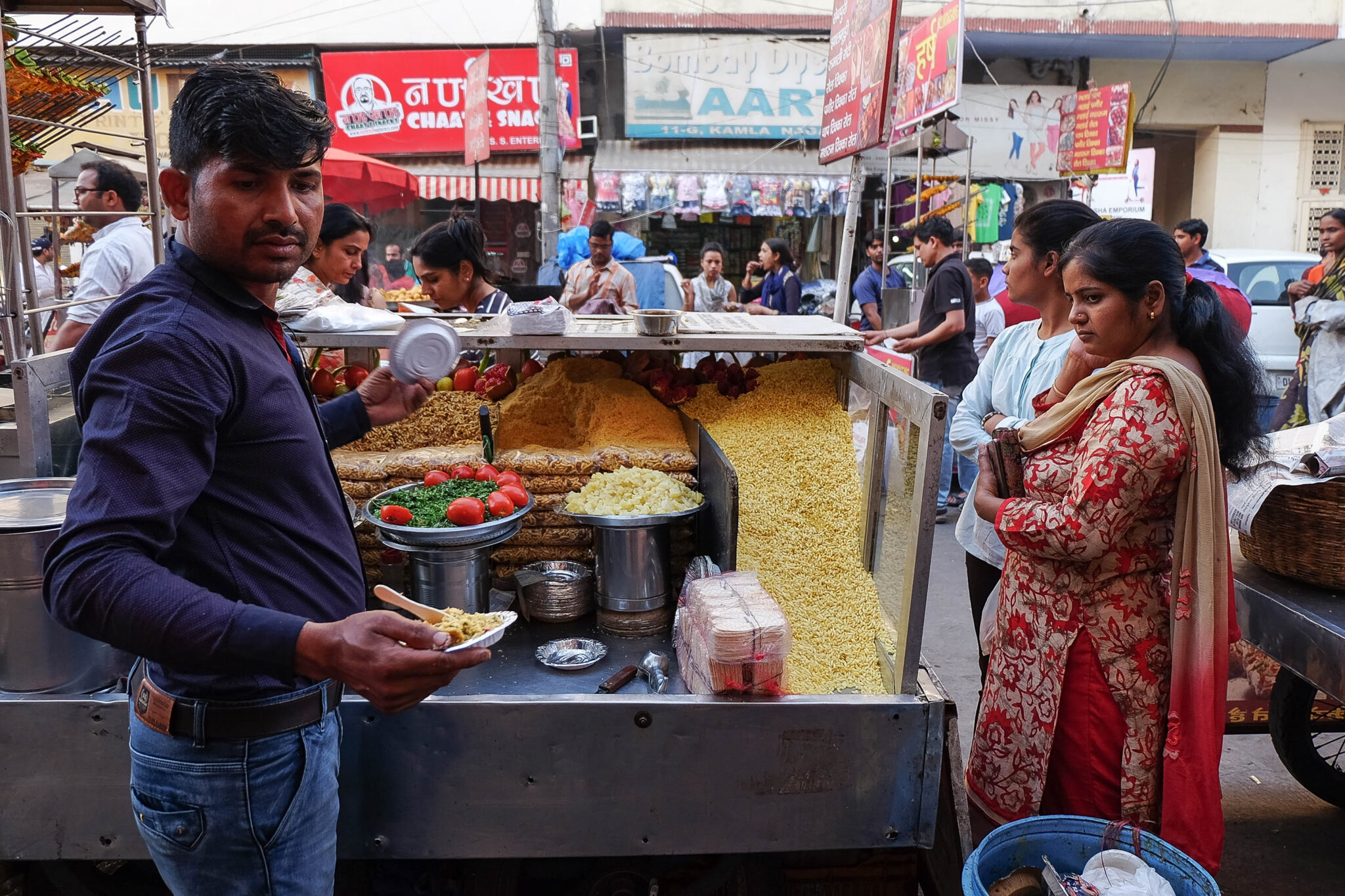
I decided that the best solution was to enlist some local knowledge and take a guided street food tour with Urban Adventures on their popular Delhi Street Food Walk. This is a great way to introduce yourself to the city’s most-loved dishes and during the 3-hour long tour, you will explore the streets of Old Delhi and Kamla Nagar market, sampling everything from shawarma and bhelpuri to chaat and kulfi.
Meditate at the Lotus Temple
Designed by Iranian-Canadian architect Fariborz Sahba in 1986 to resemble a lotus flower, with 27 white-marble petals, this Bahai house of worship was designed as a place to bring all religions together. People of all faiths are welcome to pray or meditate silently inside according to their own beliefs. Even if you’re not religious, time spent in silence, meditating inside the temple can be a welcome break from the chaos of the city.

Safdarjung Tomb
This impressive sandstone and marble mausoleum, built in the 18th century by Nawab of Avadh as a grandiose tomb for his father, Safdarjang, is surrounded by palm-lined gardens and long, decorative pools. It is one of the most underrated attractions in the city, meaning that it doesn’t get too crowded. For best results, arrive around sunrise or sunset to catch it in all it’s sun-kissed, golden glory.
Jama Masjid
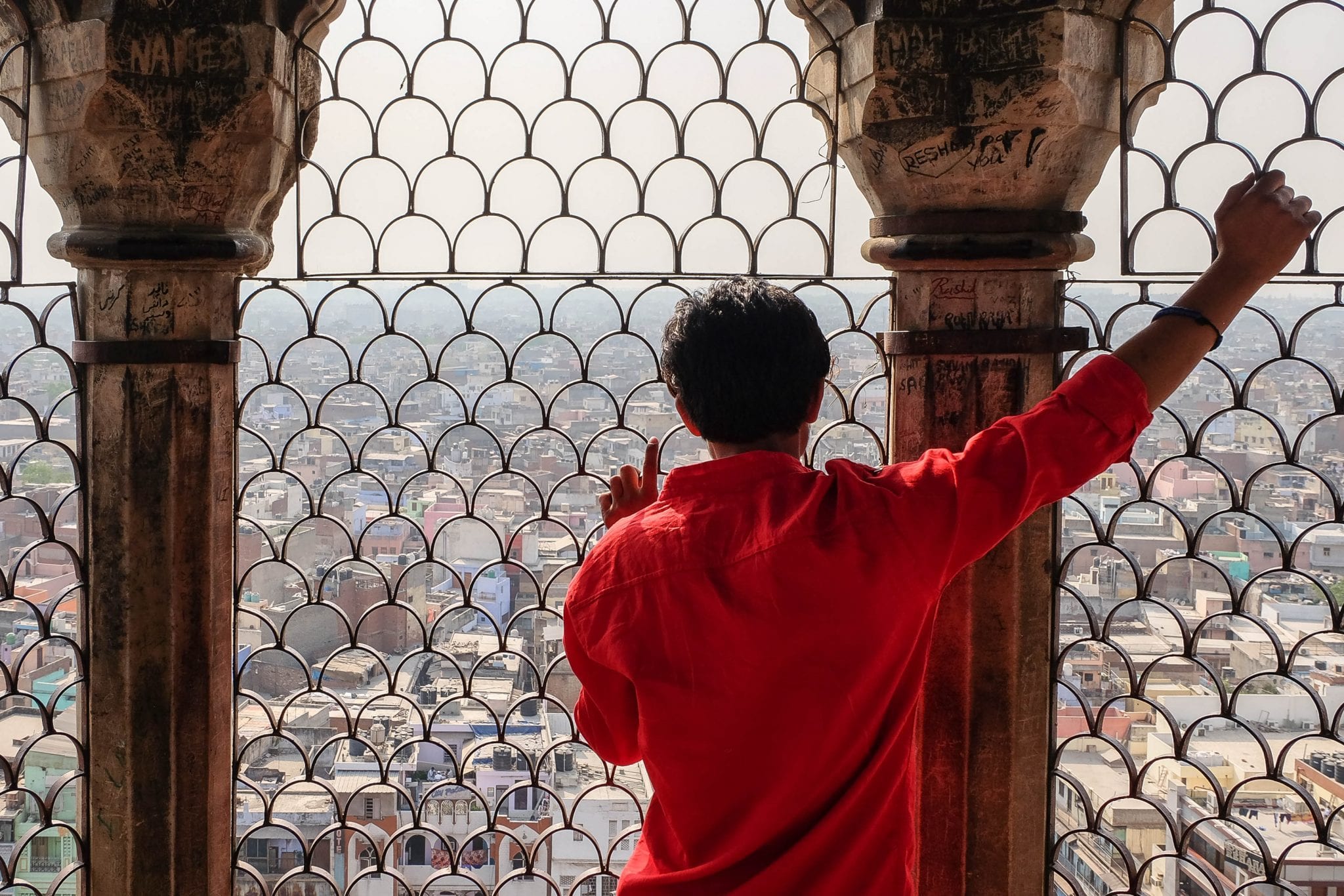
Jama Masjid, stands like a proud red island in the centre of Delhi’s pandemonium, a magnificent walled mosque adorned with minarets and gigantic onion domes. The building has been here as long as Old Delhi itself, built by Mughal Emperor Shah Jahan in 1644. It’s said to have cost over 1 million rupees and remains India’s largest mosque. At capacity, it can hold 25,000 people. Although the mosques vast courtyard provides the perfect spot to take photos of people and the buildings elegant domes and archways, you can pay an extra Rs.100 to climb the minaret and get a fantastic view of Old Delhi from above.
Humayun Tomb
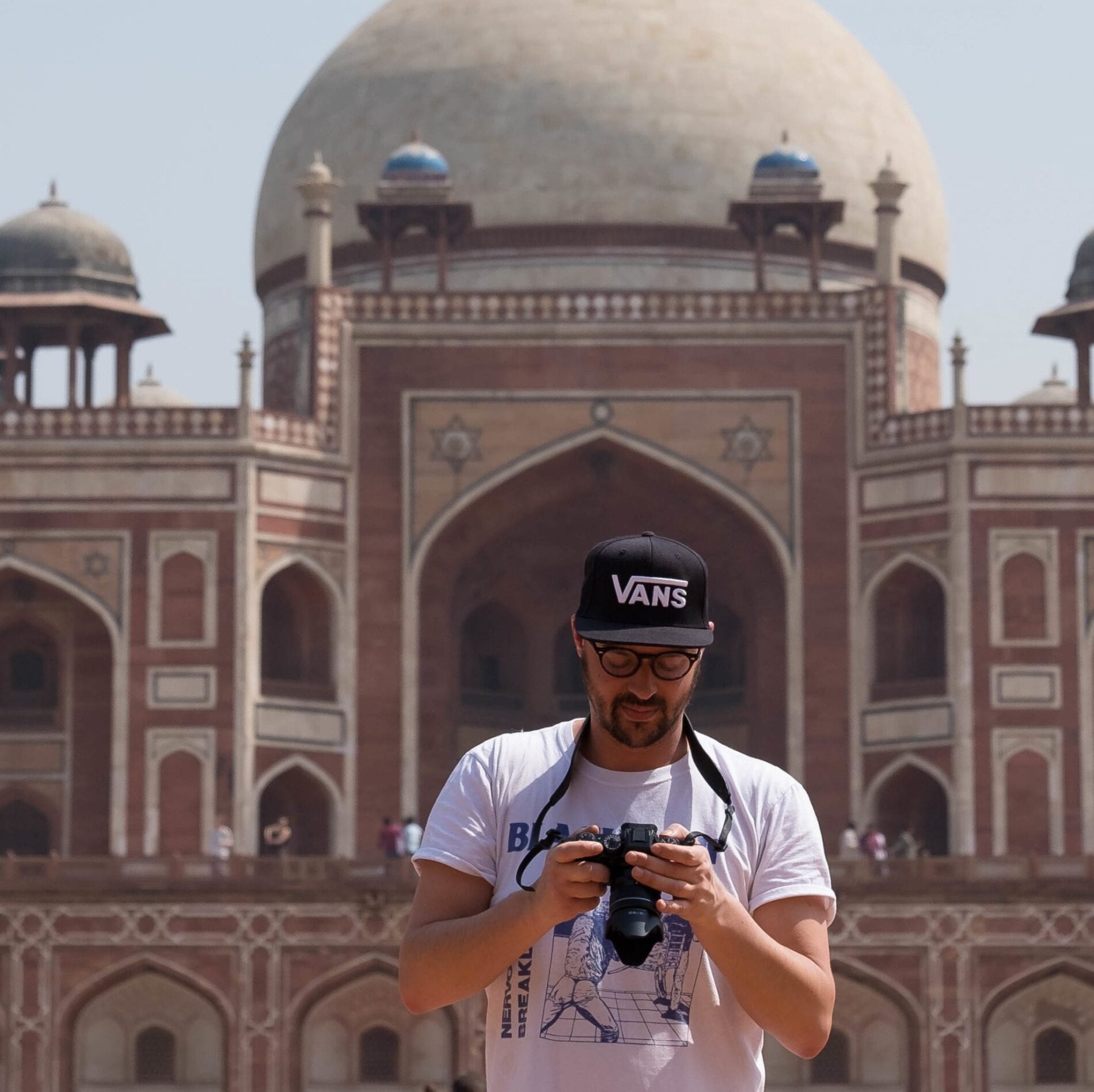
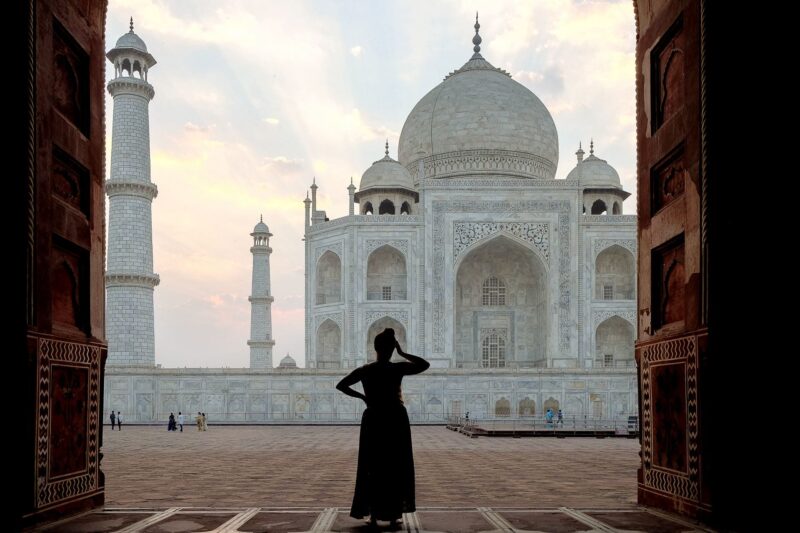
The tomb of Mughal Emperor Humayun is a real architectural wonder and one of the most impressive buildings in the whole of Delhi. Predating the Taj Mahal by around 60 years, it is thought to have inspired India’s most famous structure, although, rather than being built entirely from in white, the marble is reserved for the enormous dome and the inlays of the red sandstone arches, all of which follow the strict rules of Islamic geometry. The complex and its perfectly manicured gardens contain a number of other monuments and tombs, but none are quite as impressive or Instagram-worth as the tomb of Humayun.

Check out the Street Art of Lodhi Art District
Back in 2015, the St+art India Foundation, an organization dedicated to making art more accessible, teamed up with the Indian government to allow street artists to use the buildings in this inner-city neighbourhood as enormous canvases. As a result, what was once a rather dull stretch of government housing blocks is now home to over 50 vibrant murals created by local and foreign artists, covering themes ranging from Indian culture and celebrities to social issues.
Khari Baoli Spice Market
Men sit in tiny, dimly lit, tiled alcoves with all manner of spices and ruby red chillies laid out in front of them, spilling from the top of open hessian sacks. Some of them bark orders to the labourers that move bags of leaves and spices from stall to stall, heaving them up onto enormous weighing scales. Others huddle in groups, gossiping and playing cards in clouds of cigarette smoke, crumpled roll-ups clenched between their teeth. Some are fast asleep. Khari Baoli is home to Asia’s largest spice market and the Gadodia Market building is the epicentre.

India Gate
Constructed in 1921 in order to pay tribute to around 90,000 Indian Army soldiers who died in WWI, the Northwest Frontier operations and the 1919 Anglo-Afghan War, this imposing 42m high structure was modelled on Paris’ Arc de Triomphe. There is a constant buzz in the park and pools surrounding the gate as families picnic on the grass and swim in the water, especially in the early evening. Vendors selling street food, budhdhi ke bal (candyfloss or ‘old lady’s hair’) and toys mill around beneath the arch and on the long road that leads from the presidential palace towards the gate.
Agrasen Hi Boli
Although Connaught Place is one of New Delhi’s busiest areas, bustling both locals and tourists that head here to take advantage of the shops and restaurants, take a quick detour down a side street to find one of the city’s centuries-old, subterranean marvels. Thought to have originally been built by the legendary king Agrasen, and rebuilt in the 14th century by the Agrawal community, the stepwell was a centre point for the community, used as a water source, bathing pool and for washing clothes. The geometric staircases are a stunning combination of ingenious Indian engineering and architectural beauty.
Eat at Gurudwara Bangla Sahib Temple
Gurudwara Bangla Sahib Temple is an island of tranquillity in the centre of one of the world’s most hectic and populous cities. Like all Sikh temples, everyone and anyone is welcome to wander inside to soak in the serene spirituality of the Gurudwara.
It is the most prominent Sikh house of worship in Delhi. First built as a small shrine in 1783 to honour the eighth Sikh Guru, Guru Har Krishan, the gurdwara stands on the site where he was thought to have performed a small miracle. Guru Hari Krishan used to distribute sanctified water to the sick, believing it had a miraculous healing effect on their mind, body, and soul, and people still treat the contents of Gurudwara Bangla Sahib’s pools as holy water.

The best way to experience the Gurudwara Bangla Sahib Temple is to sit and eat with other visitors. Every day, Langar (a free vegetarian meal) is served to all the visitors who sit on the floor and eat together. It is thought that the temple serves around 10,000 of these meals each day.
At this Sikh Temple, like all others, everyone is welcome, regardless of your denomination. The Gurudwara Bangla Sahib even has a visitors centre where you can learn more about the cornerstones of the Sikh faith: Sewa (service to community and God) and Simran (remembrance of God) as well as the ten Sikh gurus and the five Ks, items that Sikhs have on them at all times.
Take a walk through Chandni Chowk and Old Delhi
Chandni Chowk cuts through the centre of Old Delhi, from the magnificent Red Fort in the east, to Jama Masjid. It is one of the area’s busiest thoroughfares; The air is suffocating. There are people everywhere. The narrow streets feel claustrophobic and overflow with workers, stray animals and stray children. Mopeds weave by, while rickshaws push through the chaos, their passengers sunk back in resignation at the impenetrable mass of humanity. Among them are the Tourists that whizz by, their faces full of wide-eyed delight or frightful dismay. It can be a long stretch to handle in one sitting, but the most intrepid and persistent of travellers will make it south to Dariba Kalan, Old Delhi’s ancient silver jewellery alley, or Paranthewali Gali, where hawkers have been selling paratha, an Indian flatbread, since the 1870s.
Chandi Chowk itself has existed since 1653. The street is built up of layers and layers of history, and traversing it is like peeling an onion. Behind the dishevelled 20th-century apartment blocks covered in reams of tangled telephone wires and drying laundry, are crumbling colonial mansions. Look a little harder and you will find yourself wandering among the central courtyards of gorgeous havelis or stumbling upon centuries-old temples hidden away on cramped backstreets. Although the hidden lanes and buildings make for great photos, the real joy in visiting Chandi Chowk is discovering just how great it’s chaos is for taking wonderful street photography.

Visit Yamuna Ghat at Sunrise
You will find ghats all over India. For centuries these stone steps leading down to the water have been used for bathing or ceremonial purposes in sacred rivers or lakes. Yamuna Ghat at Kashmere Gate is still very much in use and can provide one of the most stunning experiences in the city. Each morning at dawn, thousands of seagulls flock here to feed as men use the ghat as a launching spot for taking passengers across the river in boats. The people and birds, mixed with the orange hues of the sunrise, make for a breathtaking sight.
Where to Eat & Drink in New Delhi
While Delhi’s history and culture draw in visitors, it is the capital’s food scene that lingers in the memory of most tourists. Delhiites love to eat, and food can be found on every street corner, literally. Stalls spill out of buildings and onto the street where people gather, often up to the roadside, leaving no space for walking. From crispy samosas to chaats smothered in spicy chutneys, stuffed parathas fried in desi ghee to syrup-soaked desserts, Delhi will leave you spoilt for choice, eschewing those fancy restaurants in search of some of the best street food you will ever taste.

Alongside the abundance of roadside eateries, Delhi has a huge number of wonderful cafes, bustling bars, and fine dining options. In fact, there are far too many for me to do the city’s food scene any justice in this article. For those looking for a whirlwind tour of the city’s classic eateries, I really recommend booking a food tour of Old Delhi, but if street food isn’t your thing, the hubs of Connaught Place or Kahn Market offer a good mix of Indian and International Cuisine.
Old Delhi
Wandering the labyrinthine lanes of the Old City, or the busy shopping streets of Kamla Market and Chandni Chowk, it is easy to see why Delhi is known to churn out some of the best street food that India has to offer. On every street corner of the capital, you will find an enterprising cook, armed with just a hotplate and some pans, sliding a variety of battered or pastried vegetables into a pot of bubbling ghee and dishing it out in small, aluminium containers. There isn’t a single street devoid of at least some kind of delicious cuisine. A city of 19 million takes a lot of feeding, and street food is the fuel that keeps Delhi ticking over.
Many of the street food stalls come and go, making it difficult to give suggestions, but a mainstay of Old Delhi is Gali Paranthe Wali, a narrow street off Chandni Chowk noted for its parantha makers. For those that are unacquainted with paranthas, they are a type of Indian flatbread, normally fried in desi ghee and stuffed with anything from vegetables to besan methi. These are then served with a sweet side such as chutney or potato curry.
The street was originally established in 1650 as a silverware market, and it wasn’t until the 1870’s that the paratha shops moved in, the first being Pandit Gaya Prasad Paranthewala in 1872. Some of those originals still remain, such as Kanhaiyalal Durgaprasad Dixit (est. 1875), Pt Dayanand Shivcharan (est 1882) and Pt Baburam Devidayal Paranthewale (est. 1886) and are being run by the sixth generation of the same family.


If you prefer having a bit more choice, the area around Kamla Nagar Market has a huge number of stalls offering everything from momos to samosas, as do the streets around Jama Masjid, especially as evening prayers approach and the neighbourhood fills with people. However, I’m told that the momos from Momo’s Point (27 UB Chattori Lane, Kamla Nagar, Open 11 am – 10 pm) are some of the best in the city.
Elsewhere, Bishan Swaroop (1421 Chandni Chowk, 10 am – 9 pm), hidden away in one of Chandni Chowk’s unruly side streets, apparently has the best aloo chaat in the city and has been in business since 1923, and Vaishno Chat Bhandar (93-E Kolhapur Road. open 10 am – 10 pm) is the perfect place to try both aloo chaat and poa bhaji at the same time.
For those with a sweet tooth, Old Famous Jalebi Wala (1795 Dariba Kalan Road, open 8 am – 10 pm) in Chandni Chowk is known as having some of Delhi’s best jalebi – syrup-soaked spirals of fried batter – frying them in pure desi ghee rather than oil.
Connaught Place
Being the centre of Delhi’s financial and business districts, as well as hosting some of the city’s main sights, Connaught Place is often a hive of activity bustling with most locals and tourists. Obviously, this means that there are a huge number of Indian and international restaurants in the area.
All around the area, you will find the usual multinational chains like KFC, Nandos and Starbucks, but keep an eye out for some of the local eateries that set up shop in CP decades ago.
For coffee lovers, Indian coffee house is a classic, where waiters in spotless white uniforms and turbans take orders from old men that sit readings their daily newspapers while chain drinking coffee and chai. If you’re feeling fancy, United Coffee House is like stepping into another world, with high, wood-panelled ceilings and sparkling chandeliers. Apparently, they serve the best eggs benedict in the city.
Hauz Khan
Despite originally being a residential neighbourhood, Hauz Khan Village has become a creative hub and a popular hangout spot for young Delhiites and expats alike. This grid of narrow lanes hugging the perimeter of the nearby deer park is home to boutiques, galleries, cafes and a number of great spots to eat.
Social or Kunzum Travel Café are perfect places to grab a coffee, while Coast Café is a good place to grab a bite to eat. Although I didn’t visit myself, I’m told that the TLR Café is the place to visit for a nightcap.
Getting Around New Delhi
Delhi’s Metro system is very efficient, cheap and easily the fastest way to get around the city. Signs and announcements are in English as well as Hindi and tickets/tokens can be bought from counters and machines in each station. If you are planning on taking the Metro a lot during your stay in Delhi, it may be worth purchasing a 1 – 3 day tourist card (₹150-300 with a ₹50 rupee deposit).
There are parts of the city that the Metro doesn’t cover. In these cases, you can take an autorickshaw. Drivers tend to ignore the fitted metre so make sure to decide on a price before your journey (fares are often elevated for foreigners so make sure to haggle). I found Uber to be the best bet for short journeys within the city as the price is fixed and you are unlikely to be ripped off.
Getting In and Out
Most visitors to Delhi will likely land at Indira Gandhi International Airport. The Delhi Metro runs an airport express line every 15 minutes between the hours of 5.15 am and 11.40 pm which takes around 20 minutes to reach New Delhi Train Station (₹60). Alternatively, shuttle buses run from outside Terminal 3 to Kashmiri gate every 10 minutes.
If like me, you arrive too late to catch public transport, there are pre-paid taxi counters in front of Terminal 1 and Terminal 3. It will cost ₹350 to reach central Delhi or ₹450 to get to the southern suburbs. Payment is made at the counter in exchange for a voucher before you get into your taxi. some travellers report taxi drivers trying to scam passengers by taking them to the wrong hotel or refusing to go to the intended destination so ensure that you don’t give up your voucher before reaching your actual hotel.