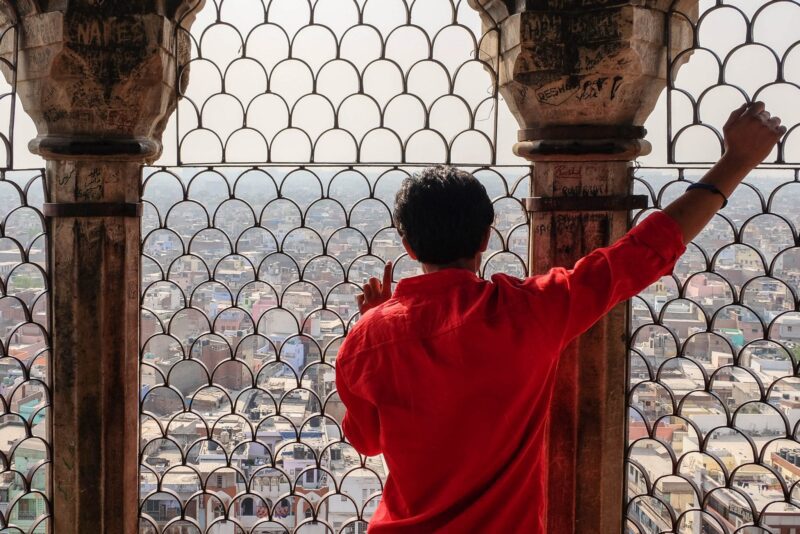
Jaipur is often referred to by one of its many nicknames; The City of Gates, The Pink City or The Paris of India. In my mind, the comparisons to France’s capital do Jaipur a disservice. It is just as enthralling, historic, and beautiful as the ‘City of Lights’ but couldn’t be further from it in terms of atmosphere.
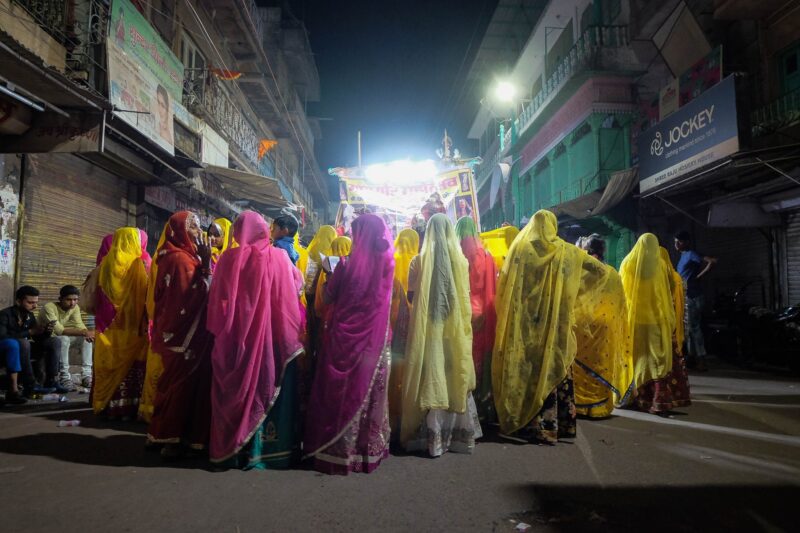
The city’s bustling streets burst with colour and chaos. Cycle rickshaws weave among clouds of exhaust and soot as they dodge camels, cars and the occasional dawdling elephant. Swarms of motorbikes honk and buzz through the city’s vibrant marketplaces and grand gateways.

However, the present-day metropolis that is modern Jaipur has been built on centuries of history. This is the ‘Land of the Kings’, the realm of maharajas, where majestic forts and opulent palaces are more numerous than anywhere else in India. The splendours of Rajasthan’s past are still here to explore. At the centre of Jaipur, the elegant City Palace, still housing the former royal family, is an island of tranquillity; the marvellous honeycomb facade of the Hawa Mahal looms over a traffic-clogged thoroughfare; and the city’s pink-tinted walls are punctuated with 7 imposing, decorative gates. Look further still and you will find sprawling hilltop fortresses, Escher-like step wells, and temples left to the care of roaming packs of monkeys.
Where to Stay in Jaipur
Jaipur isn’t short of high quality, budget guesthouses and hostels. Many of the best properties are concentrated along MI Road or 2km away from the Old City in the peaceful Bani Park area.
Krishna Palace
Situated in a beautiful heritage property on the edge of the Old City with stunning traditional Rajasthani architecture, a lush garden and a roof terrace, I spent 3 nights in Krishna palace and had a wonderful stay. the rooms are fairly basic, but the incredibly friendly staff and stunning building more than make up for it.
Zostel Jaipur
If you have read my other India guides, you will know that I’m a fan of the largest hostel chain on the Indian subcontinent due to the fact they’re usually clean, reasonably priced and have friendly, helpful staff. Zostel tends to be the safe choice for a place to stay in India and the Jaipur branch is no exception.
Located in the heart of the Pink City, Zostel Jaipur is close to all the major attractions with colourful interiors that mirror the flamboyance of Rajasthan.
The Hosteller
Situated on MI Road within walking distance of Jaipur’s Old City and it’s myriad attractions, Hosteller is a mid-sized, 70-bed hostel decked out in vibrant colours complete with a beautiful roof terrace and common areas. Each dorm bed comes with its own light, power socket and privacy curtain.
Things to do in Jaipur
Colourful, chaotic and brimming with history, Rajasthan’s capital of Jaipur has been enthralling visitors for centuries. It is every bit as disorderly as India’s other major cities; traffic-clogged streets awash with autorickshaws and honking tuk-tuks, only here there are the added obstacles of lanky camels and plodding elephants dawdling through the labyrinthine streets of the Pink City.
It is known as the Pink City for a reason; to impress the visiting Prince Albert during his 1876 tour of India, the Maharaja (Sawai Ram Singh) decided to paint the whole city a shade of terracotta pink. Even today, 140 years later, a law still stands that makes it illegal for buildings to be daubed in any other shade.
It’s a city brimming with the remnants of Jaipur’s royal heritage. Amongst the mayhem of the city lie palaces, forts, and gardens that are little islands of opulent beauty and tranquillity. There is enough to keep a visitor busy for weeks, but as most people will only stop here for a few days at a time, here are some of the highlights:
Hawa Mahal
One of Jaipur’s most iconic and distinctive landmarks, the Hawa Mahal was constructed in 1799 by Maharaja Sawai Pratap Singh as a way to allow ladies of the royal household to watch life on the streets below without being seen themselves. The five-storey tall honeycomb hive facade consists of 953 latticework windows for the ladies viewing pleasure.
Where: Sireh Deori Bazaar (entry is round the back of the complex).
When: 9am – 5pm daily
Entry Fee: Indian – 50 rupees / Foreigner 200 rupees. Free entry with a valid Amber Fort composite ticket

Amber Fort
The Amber fort is not only Jaipur’s most popular tourist attraction, it is also one of the most magnificent buildings in all of Rajasthan. Built with pink and yellow sandstone then embellished with white marble floors and walls, it is infinitely photogenic, especially as the sun fades on an evening, giving the whole fortress an orange and pink hue.
Amber was the former capital of Jaipur state, with the fort being built in 1592 by Maharaja Man Singh. Subsequent extensions have lead to the fort comprising of an enormous and expansive network of palaces, temples and courtyards that will take the best part of a day to explore fully.

Note / Elephants are used to carry tourists up the winding, hilly, switchbacks from the main road to the fort, but due to the mistreatment and abuse that these animals go through to be trained, as well as the health impact of carrying passengers please do not pay to ride an elephant to the entrance. It is just a short, 10-minute climb to the top or 4WD vehicles are available (40 rupees return for 5 passengers) if you are unable to walk.
Where: Devisinghpura, Amer
When: 8am – 6pm daily
Entry Fee: Indian ₹100 / Foreigner ₹500
Jal Mahal
It says a lot about the sheer quantity of beautiful buildings on display in Jaipur that the Jal Mahal, or ‘Water Palace’, isn’t overrun with visitors peering across Man Sagar Lake in the hope of glimpsing it. In any other city, it would be the main tourist draw. At the moment, the palace is undergoing extensive renovations meaning that it cannot be accessed but it is worth stopping off on the road between Jaipur and Amer to take a look and capture a few photographs.

City Palace
The City Palace is one of Jaipur’s star attractions, and with good reason. Situated right in the centre of the old city, you enter through the pink outer walls to find a maze-like complex of gardens, courtyards and buildings. It was here that I stumbled upon doorways that I had seen popping up on my Instagram feed for years but really gave a second thought to where the pictures were taken. That’s right, the doors here are so famous that they are instantly recognisable. The original outer wall was built by Jai Singh but the interior has been added to and enlarged over the years, with different buildings and palaces deriving from different centuries.
Although the parts of the palace that you will see for the regular entrance fee are not all that exciting, you will have to pay the eye-watering extra ₹2,500 (around £27.50) for entrance to the palace’s most impressive rooms. I couldn’t justify the expense but for that price, but you will get a personal guide, a cup of chai in a private courtyard, and an entrance to the palace gardens.
Where: Tulsi Marg, Gangori Bazaar
When: 9.30am – 5pm daily
Entry Fee: Indian ₹130 / Foreigner ₹500
Panna Meena Ka Kund
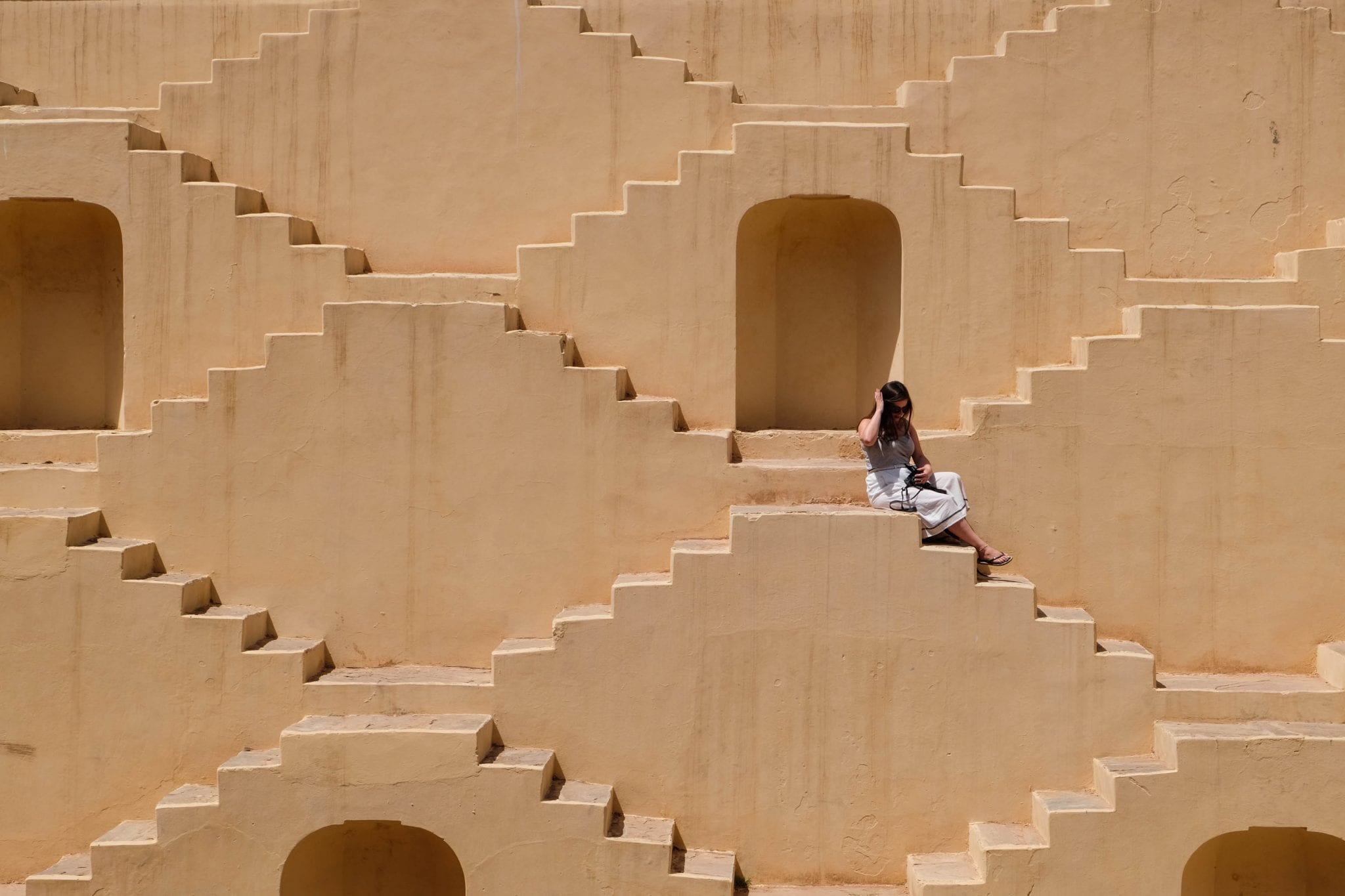
Panna Meena Ka Kund has become something of an internet darling as of late. It doesn’t feel like a single day goes by without me seeing a dozen photos of it cropping up in my Instagram feed. Built in the 16th century as a way of collecting the monsoon rains, the stepwell was a centre point for the community, used as a water source, bathing pool and for washing clothes. The geometric staircases are a stunning combination of ingenious Indian engineering and architectural beauty, making it a perfect backdrop for your Instagram snaps. To find the well, you will have to travel a fair way out of Jaipur’s centre to the town of Amer. However, it is just a 10-15 minute walk from the hilltop Amber fort so I recommend hitting up both spots in one trip. The well is free to enter but you may encounter an over-zealous security guard attempting to charge 100-200 rupees to unsuspecting tourists.
Jawahar Circle Garden
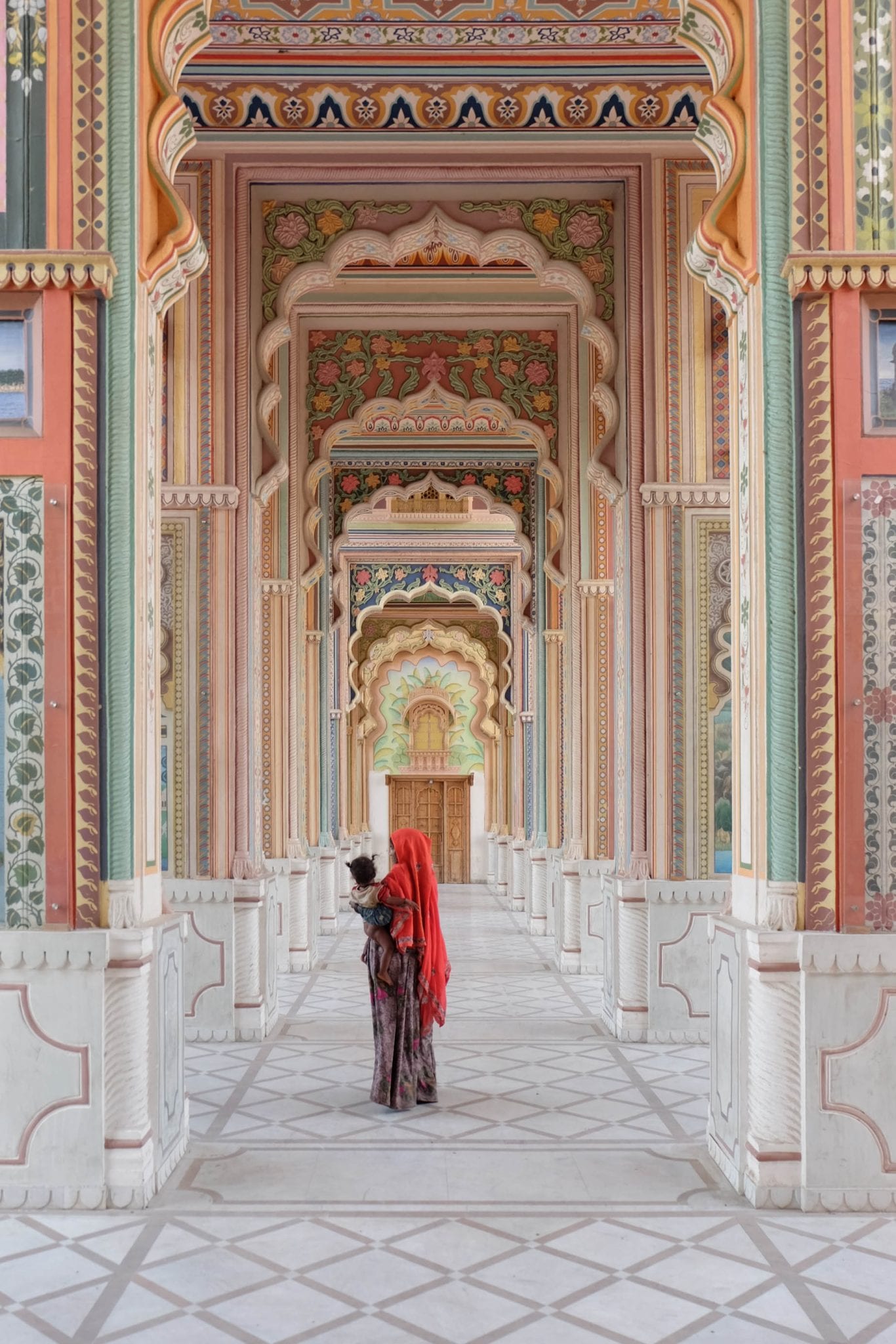
Jawahar Circle Garden is another location that has become Instafamous as of late. It seems that everyone that is anyone in the blogosphere just has to capture an image of themselves nonchalantly frolicking through its brightly coloured archway and concourse in a billowing dress and floppy-rimmed hat. Believe it or not, this isn’t an opulent palace, tomb, or one of Rajasthan’s many magnificent forts but the inside of Jawahar Circle Garden’s entrance gate. While the park is nice for a 10-minute stroll, I very much doubt that many people would visit if it wasn’t for the thousands of Instagram images snapped in this corridor. In fact, it was so busy when I visited that I had to wait for around 15 minutes in a queue of photographers just to get a clear shot. What you can’t see in this image are the dozens of other Instagrammers hiding behind the pillars, waiting their turn.
Where: Jawahar Circle, Malviya Nagar
When: 5am – 10pm daily
Entry: Free
Jantar Mantar
Although Jantar Mantar may just resemble a sculpture park filled with enormous, geometric statues, it is actually an observatory built by Jai Singh II in 1728 in order for him to measure the night sky (the name means ‘instruments of calculation’) that was added to the UNESCO world heritage list back in 2010. The complex features the world’s largest sundial.
Where: Gangori Bazaar, J.D.A. Market
When: 9am – 4.30pm
Entry Fee: Indian ₹50 / Foreigner ₹200
Nahargarh Fort
Built in 1734, Nahargarh Fort stands high above the northern limits of Jaipur, casting an imposing shadow over the city. The fort was originally named Sudarshangarh, but it became known as Nahargarh, which means ‘abode of tigers’. Local legend says that the fort was named for Nahar Singh, a dead prince whose spirit was thought to be disrupting construction only sated once a temple was built within the grounds. While the labyrinthine corridors and maze of courtyards within the fort itself are impressive, the main attraction is the view of the city from the ramparts.
A word of warning: Nahargarh Fort can be a pain to reach. One way is to climb the steep, 2km path that winds up towards the fort from Nahargarh Fort Road. Alternatively, you can take an Uber or taxi, but it is an 8km round trip.
Where: Krishna Nagar, Brahampuri
When: 10am – 6pm daily
Entry: Indian ₹50 / Foreigner ₹200


Galta Ji
Although Galta Ji Temple is situated right on the edge of Jaipur’s city centre, it feels desolate and is incredibly evocative. Squeezed between two cliff faces in a deep valley and accessible by taking a winding, hilltop path, Galta Ji is most commonly known as the ‘Monkey Temple’ as hundreds of macaques and langurs call the crumbling buildings their home, running riot on the temple steps or playing in the sacred tanks.
It’s claimed that the sacred tanks of Galta Ji are ‘many elephants deep’. When I visited, I didn’t see many pilgrims taking the plunge so I couldn’t judge for myself, instead, the pools were full of frolicking macaques. Small bags of peanuts are available to purchase at the entrance, but only do so if you are prepared to be mobbed by macaques. If you would rather keep the monkeys at a distance, it is worth waiting for the temple’s self-proclaimed ‘Monkey Master’ who arrives sporadically with bowls of fruit with which to feed the monkeys.

Getting to Galta Ji: A hilly, rugged path of steep climbs and switchbacks winds its way from Galta Gate, on the eastern edge of Jaipur, to Galta Ji. I rode by tuk-tuk to the gate from Jaipur’s city centre, and then it took me approximately 25 minutes to follow the clearly marked path and reach the temple.
While the pedestrian route may seem like a slog, you are rewarded with hazy views of the bustling city from Surya Mandir, a temple sitting on a ridge 100m above Jaipur.
Alternatively, you can reach Galta Ji by car or Uber. Although the temple is only a few kilometres from the city centre, it is approximately 10km from the City Palace by road. You should be able to visit by tuk-tuk for around 300 rupees, including waiting time. A taxi will be more expensive, charging 500 – 700 rupees.
When: Sunrise until sunset
Entry Fee: There is no admission charge for entering the temple, however, you will be expected to pay 50 rupees for a photography permit if you have a camera or phone. You will be provided with a receipt/ticket as proof of purchase.


Where to Eat & Drink in Jaipur
While I am an advocate for mostly eating street food for a fix of delicious but budget-friendly fare in India, there are scores of cheap restaurants and cafes in Jaipur catering for the backpacker crowd. Most of these are concentrated around the MI road and Old City areas and there are so many great restaurants that it can be difficult to compile them all here. Instead, I’ve put together a list of my favourites that were recommended to me by fellow backpackers and locals

Lassiwala
In business since way back in 1944, Lassiwala is the city’s most famous and popular lassi establishment, dishing out hundreds of creamy drinks each day in single-use clay pots that are unceremoniously dumped and smashed once the lassi is finished. A number of copycat places have popped up along the MI Road to try and capitalise on Lassiwala’s popularity so just ensure that you head to the shop numbered ‘312’ or alternatively, look for the queue outside.
Where: 312 MI Road, Jayanti Market
When: Daily 7am – 4pm
Indian Coffee House
Hidden away down a short alleyway just a 5-minute walk down MI road from Lassiwala is Indian Coffee House, a Society for Indian Coffee Workers-owned cooperative with two branches in Jaipur.
It’s dingy inside, with pale green walls and fans running constantly to cool the interior but this outdated, 70’s decor only adds to the appeal as uniformed waiters, complete with Nehru topi or a Pathan turban on their heads, go from table to table dishing out enormous dosas, crispy pakoras, omelettes and egg dishes that are some of the cheapest you’ll find in the city. The filter coffee isn’t too bad either. I discovered Indian Coffee House on my first day in Jaipur and ate breakfast there every day.
Where: Mirza Ismail Road
When: 8am – 9pm
Cafe & Bar Palladio
Although this guide ostensibly claims to be for those on a budget, sometimes you just need to treat yourself and Cafe Palladio is the perfect spot. Bar Palladio describes itself as a place that delights in fantasy, a candle-lit wonderland and a floating world. Owned by Barbara Miolini and designed by Dutch designer Marie-Anne Oudejans, Bar Palladio sits beside the Narain Niwas Palace Hotel and spreads out into the daringly restored garden belvedere. Wander amongst the peacocks and tented pavilions and through the doors into a cobalt blue dreamland that appears to be modelled on the City Palace’s summer room, although the owner claims that the decor is inspired by the iconic Caffé Florian and Harry’s Bar in Venice. Either way, it really is an enchanting place to come for an early evening cocktail. The bar itself opens at 6 pm but tables fill fast. I recommend arriving at opening time or pre-booking.
Both the Cafe and bar have been subject to features in Vogue, CN Traveller and National Geographic Traveller due to their beauty.
Where: Kanota Bagh, Narayan Singh Rd
When: 6pm – 11pm Daily
Peacock Rooftop Restaurant
Situated on a rooftop terrace on the Hotel Pearl Palace, this quirky and fun restaurant offers romantic, candlelit, 360 views of Jaipur that reach all the way towards Hathroi fort. The cuisine is varied and inexpensive, although the Rajasthani thali is probably the best thing on the menu.
Where: 51, Hathroi Fort, Hari Kishan Somani Marg, Ajmer Road
When: 7.30am – 11pm Daily
Handi
In business since 1967, Handi serves up a great range of barbecue and tandoori dishes. Although it’s not particularly cheap, with main dishes costing between ₹400 and ₹500, it was one of the best curries I ate in Rajasthan.
Where: Opposite GPO, MI Road
When: 12pm – 3.30pm and 6pm – 11pm
Ganesh Restaurant
For those looking for a purely vegetarian restaurant, look no further than Ganesh. It’s not easy to find, but located in the Old City atop the city walls, it is worth seeking out for their creamy butter masala.
Where: Shop No 3, 1st Floor, Nehru Bazar, Pink City
When: 9am – 11.30pm

Getting Around Jaipur
Jaipur does have a metro line, the pink line, that operates 9 stations running from Mansarovar and terminating at Chandpole. Fares cost anywhere between ₹5 and ₹15. However, the best way to get around the city is by autorickshaw or Uber.
Getting In and Out
To/from Delhi
Buses to Delhi run every hour between 6 am and 7 pm and cost around ₹270 for the 5 and a half hour journey. Alternatively, around 10 trains leave Jaipur for Delhi each day, taking between 4 and a half and 6 hours, depending on which one you choose. These can cost anywhere between ₹200 and ₹1000 depending on which class and train you choose.
To/From Agra
There are 9 trains leaving for Agra each day, taking 4 and a half hours and costing around ₹185 for 3rd class. The faster 3 and a half hour train will cost you around ₹500.
To/from Ajmer (nearest station for Pushkar)
20 trains leave for Ajmer each day, taking 2 hours to reach the destination and costing just ₹100 for 3rd class.