
Sri Lanka was once described by famed explored Marco Polo as the ‘finest island of its size in the world’. While this is undoubtedly true, he may also have been understating its appeal. In my opinion, the Teardrop Isle may be one of the world’s finest of any size.
Sri Lanka squeezes an extraordinary amount into its small size in terms of culture, natural diversity, and wildlife. While the idyllic and underdeveloped palm-lined beaches that ring the island are reminiscent of a remote tropical paradise, the interior is a mix of dense jungle, vast, dusty plains teeming with elephants and leopards, as well as a mist-covered hill country blanketed in a sheet of perfectly manicured tea plantations. If natural wonders aren’t your cup of tea, Sri Lanka boasts over 2,000 years of history, which can still be seen in well-preserved ruined cities and the great monuments of the cultural triangle.
With this in mind, planning a trip to Sri Lanka that spans anything less than a few months can be a daunting task as there is far too much to pack into a couple of weeks. This 2-week itinerary hopefully covers the Island’s major highlights in a manageable introduction to Sri Lanka’s varied landscapes, myriad cultures, and multilayered history.
When is the Best Time to Travel to Sri Lanka?
Due to its location just north of the equator, Sri Lanka is temperate all year round. However, it is affected by two separate monsoon seasons during the year. With southeast being hit from April until September and the northeast from November until March. Head to the south and centre of the country between December and March for the best chance of some sun.
Is Sri Lanka Safe to Visit?
Tourism in Sri Lanka took a sharp hit following the Easter bombings of April 2019 and as a result, many governments issued warnings against travel to the country. Thankfully, increased security both on the streets of Colombo and at the city’s major hotels – there are now airport-style checks at the entry points to the majority of Colombo’s hotels – as well as an increased police presence all around the country have meant that many of the warnings have been downgraded and Sri Lanka is once again seen as reasonably safe to visit. Travelling around the country by public transport feels secure and you shouldn’t have too many issues in destinations away from Colombo either.
From my point of view, Sri Lanka is an incredibly welcoming country and I generally feel safer wandering the streets here than I do in many other destinations. As always, use your head and take precautions when it comes to carrying valuables, but I would give that same advice to people travelling anywhere in the world.
ITINERARY OVERVIEW
THE TEARDROP ISLAND: THE BEST OF SRI LANKA IN 2-WEEKS
Day 1: Colombo
Day 2: Dambulla & Minneriya National Park
Day 3: Sigiriya / Habarana
Day 4: Polonnaruwa
Day 5 & 6: Kandy
Day 7 & 8: Nuwara Eliya
Day 9 & 10: Ella
Day 11 & 12: Mirissa
Day 13 & 14: Galle
DAY ONE
Colombo
Colombo can seem a far cry from the tea bush-covered hills of Sri Lanka’s interior or the palm-lined beaches of the island’s south, however, Colombo is a little hard to ignore. It is Sri Lanka’s largest city, with a population of 750,000. Despite this, it’s not the country’s capital – that title goes to Sri Jayawardenepura Kotte, although the two areas are so close that they practically merge together. Maybe that’s fitting as Colombo doesn’t feel like a large city, certainly not in the same scale as other Asian capitals like the sprawling metropolis of Bangkok or chaotic and claustrophobic Delhi. Instead, it feels like a patchwork of smaller neighbourhoods whose sum is somehow greater than its parts. Neighbourhoods with intriguing and storied names like Fort, Slave Island, Cinnamon Gardens and Mount Lavinia that once were filled with spice plantations and palm trees but now form part of this commercial capital.
Unless you decide to head north to Negombo from the airport, most visitors to Sri Lanka find themselves in Colombo at some point. All roads lead here. It’s the perfect place to start your journey as it gives you a chance to be thrown straight into Sri Lankan culture and can easily be explored in a single day. It’s not a place that, as a visitor, you will love – It doesn’t inspire the same rush of emotions that other major cities do. Then again, it still has something to offer, as all places do. It’s a city with history, a city with culture, and a city that you shouldn’t go out of your way to avoid.

Arriving in Colombo
Bandaranaike International Airport is located 35km north of Colombo on the edge of the beach-front town of Negombo. It is possible to hail an Uber and do the journey for around £10 for the 40-minute ride., A metred cab hailed from outside the terminal will set you back a little more. Buses leave the airport at a rate of approximately one every 15 or 20 minutes. The bus journey takes 1 hour.
Where to Stay in Colombo
Accommodation isn’t in short supply in Colombo, with lavish skyscraping hotels being added to the city’s shifting skyline all the time in order to cater to the constant influx of business travellers. Dorm beds are a little harder to come by but hostel numbers are on the rise and there are still plenty of chic boutiques and guest houses dotted around the city.
BUDGET / Bunkyard Hostel
This hostel, located in Cinnamon Gardens and just a short walk from Viharamahadevi Park, isn’t anything fancy – the dorm rooms are a little basic – but the private rooms are clean and modern, offering a very good budget alternative to some of the city’s more expensive hotels.
MIDRANGE / Cinnamon Red
Cool and chic, this modern, highrise hotel towers all the way up to the 25th floor of a skyscraper where you will find a stunning infinity pool that gives some of the best views in the city. Even if you’re not staying here, the rooftop bar is the perfect place to relax with a sundowner cocktail.
LUXURY / The Kingsbury
Speaking of sundowner views, the cool Skylounge at the Kingsbury offers a fantastic vista overlooking Galle Face Green and the skyscrapers that line the seafront. The hotel itself is nice and lavish, albeit in the style of old-world chic: think uniformed busboys, shimmering marble lobby and little touches of colonial charm. The pool area is fantastic and the hotel’s restaurant has the best Chinese-fusion food in the city.
Day 1 Itinerary
Start your day in Colombo by heading to Gangaramaya Temple (61 Sri Jinarathana Rd; Open daily 6am – 10pm), one of Sri Lanka’s most important and the focus of the city’s annual Navam Perahera festivities, before the crowds arrive. Gangaramaya is a little unique and unusual. The temple hosts quite an eclectic array of objects, mostly things you wouldn’t normally expect to find in a Buddhist place of worship: display cases filled with vintage cameras, enormous taxidermied elephants, model dinosaurs, stamps, watches and even swords. In fact, parts of the temple – particularly the two-room museum – are more reminiscent of a thrift store than a shrine, stuffed with knick-knacks that were donated to the temple by prominent Buddhists and well-wishers. It also contains a wide range of Buddha statues (including the world’s smallest), Hindu deities and sacred objects, one of which is claimed to be a hair from Buddha himself.
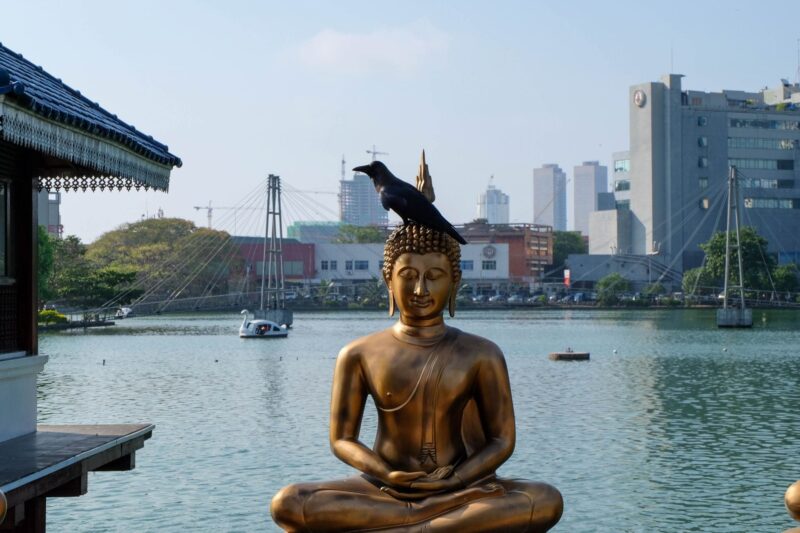
From Gangaramaya Temple it is just a 3-minute walk west along Sri Jinarathana Rd to the edge of Beira Lake. Here you will find the serene floating temple of Seema Malakaya. The temple contains 3 connected platforms containing beautiful wooden pavilions inspired by the design of Sri Lanka’s forest monasteries and roofed with vivid blue tiles. In contrast to Gangaramaya, the temple is relatively quiet and a peaceful place to wander amongst the rows of Thai Buddhas while watching the pelicans and egrets that fish in the lake.

After visiting the temples, it’s time to explore the rest of the attractions in the city centre. Viharamahadevi Park is just a leisurely 15-minute walk from Seema Malakaya and as Colombo’s largest expanse of green space, its perfectly manicured lawns and palm-lined paths are a pleasant place to walk or picnic with locals as a way of escaping the city’s busy streets. Viharamahadevi Park was formerly known as Victoria Park in honour of the British monarch but patriotically renamed in the 1950s after the mother of King Dutugemunu.
Colombo’s town hall – a neoclassical structure reminiscent of the US Capitol that was built in 1927 – to the north of the park is worth a quick look, but I would recommend heading to Viharamahadevi’s southern edge and visiting Sri Lanka’s National Museum which contains a whole host of artefacts and objects that give an insight into the island’s storied history, from the prehistoric times all the way up to the colonial era and beyond.

For more insight into the Dutch history of Colombo, stop by the Dutch Period History Museum that occupies the old Dutch Town Hall, a slightly dishevelled colonial building from 1780. Here you will find a mix of Kandyan and Dutch artefacts and displays outlining what Ceylon was like during the Dutch colonial era. The museum is situated in a region of the city known as Pettah. The streets of Pettah, with its busy markets, shops, and bazaars have been a trading outpost for centuries. This dizzying market district, with maze-like streets still configured in a traditional bazaar layout, feels unlike anywhere else in Colombo, yet, it is the beating heart of the city. The area can be rather chaotic: fruit and vegetable stands piled high with produce and porters pushing through the crowds of shoppers and street food stalls with barrows loaded full of boxes. While the district probably isn’t the best place to go souvenir shopping, it is worth walking around here in order to catch a glimpse of local life in Colombo.
While you are in Pettah, make sure to stop at Jami Ul-Alfar Masjid mosque as it is rather eye-catching. Following its construction in 1908, the building’s brash red and white design – a mesmerising mix of checkerboard brickwork, candy stripes and swirling lines – was seen as a landmark for sailors approaching Colombo’s port.

Spend the remainder of your afternoon wandering around Fort, the historic heart of Colombo. The area was once the site of the city’s Portuguese defences but during British rule, it was the administrative centre of Ceylon, filled with lavish neoclassical architecture, banks and municipal buildings.
Sitting at the district’s centre is the beautifully refurbished clocktower lighthouse, constructed by Governor Henry ward in 1857 and just west of the tower is Fort’s most elegant address – formerly Queen Street, Janadhipathi Mawatha is home to the grandiose president’s house as well as the fancy colonial façade of the city’s general post office. Elsewhere you will find an abundance of grandiose buildings on Chatham Street and York Street, including the red frontage of Cargill’s department store. Now standing empty, it is one of the Fort’s most famous landmarks.
It is a half-hour walk along the seafront from the edge of Fort to Galle Face Green, one of the city’s most-loved open spaces. Built by Colombo’s former Governor Sri Henry Ward, the park and its seafront promenade are were locals come to hang out, picnic and play. Along the benches at the back of the park, you will find love-struck teenagers smooching under the cover of well-placed umbrellas while beside the waterfront street food vendors cook up fresh delights and salesmen peddle helium-filled balloons. It’s a pleasant place for a seaside stroll, where out to sea you can see container vessels and tankers queuing to enter the city’s port while behind you are the modern, high-rise hotels that makeup Colombo’s constantly shifting skyline. It is also a good opportunity to grab a street food snack if you can’t quite wait until dinner time.

As the daylight begins to fade, make your way to the Kingsbury Hotel, situated nearby on the northern edge of Galle Face Green. It is one of the city’s most upmarket hotels and is home to 7 restaurants, ranging from Sri Lankan buffets to a steak bar. I am told that Yue Chuan, their Cantonese & Szechuan eatery, is the best (I can confirm that the food is great, although I didn’t try all of the Kingsbury’s restaurants).
However, I recommend taking the elevator all the way up to the hotel’s top floor to CÉ LA VI Restaurant and Lounge. Here you will find a menu of modern Asian cuisine but the real reason to visit is to sip elegant cocktails in the sky bar while enjoying sweeping sunset vistas of Colombo and the shimmering Indian ocean. The perfect way to end a busy day of sightseeing.
Read More: The Best Things to do in Colombo
DAY TWO
Dambulla & Minneriya National Park
Cut into an overhang 150 metres above the town of the same name, the 5 caliginous grottoes of Dambulla Cave Temple are filled to the brim with Buddhist paraphernalia and painted with intricate Sinhalese murals. They date back to the reign of Vattagamini Abhaya (89-77BC) who was driven from his capital, Anuradhapura, by Tamil invaders and forced into hiding for 14 years. He took refuge in these caves and when he finally reclaimed his throne, commemorated his hiding place by converting them into temples. Over the centuries that followed, various kings added embellishments such as statues and paintings to create the temples as we see them today. The temples have now become a UNESCO World Heritage site and one of the country’s most visited tourist attractions.

Getting to Dambulla
The easiest way to reach Dambulla is to catch a train Colombo Fort Station to Habarana (2 daily) and then take a taxi or tuk-tuk onwards to Dambulla. The train takes just over 5 hours to reach Habarana and cost you anything between Rs. 100 & 300. The onward journey from Habarana by taxi will take about half an hour and cost up to Rs. 600 – 800.
Day 2 Itinerary
Wake up early and hop in a tuk-tuk to Colombo Fort station. You’ll be catching the 6.05am train towards Trincomalee, but alighting at Habarana. Hopefully, you’ll arrive at the station sometime around 11am.
If you’re in need of a quick lunch, there aren’t too many good lunch spots around the train station so you will need to take a 5-minute tuk-tuk ride into the centre of the town. It’s a relatively small place and most of the eateries are clustered around or along Kandy Road. there is nowhere that is a particularly stand-out restaurant so just take your pick from the bunch and hope for the best. From there you can catch another tuk-tuk for the half an hour ride to Dambulla. If possible, hire a driver to wait for you at the temple and drive you onwards to your hotel afterwards (it shouldn’t cost you much more than booking two separate drivers), that way they can look after your luggage while you explore.

It’s 364 steps and a 10 to 15-minute walk from the car park up to the caves so make sure that you purchase your entry ticket before starting the climb. Try to visit the caves in reverse order, beginning at Cave 5 and ending at the most impressive and largest, Cave 2, known as ‘the Temple of the Kings’ and lined with a huge array of Buddha statues.
If you have time, it may be worth visiting the Golden Temple and its museum at the bottom of the hill. This rather kitsch building is topped with a 30m tall golden Buddha which a nearby sign claims is the world’s largest. In truth, it is not even the tallest in Sri Lanka and is actually just a quarter the size of the world’s actual tallest, at Henan in China.
Read More: A Visit to Dambulla Cave Temple

The visit to Dambulla Cave Temple should only occupy a couple of hours, so upon arriving back at your accommodation in Sigiriya or Habarana, you should have the rest of the afternoon and evening to kill. This gives you the perfect opportunity to visit either Kaudulla or Minneriya National Parks, some of Sri Lanka’s most rewarding nature reserves and the two best locations on the island for elephant spotting (book ahead for hotel pick up and transport to the park).
Minneriya National Park is just a 10-minute drive along the highway from Habarana, and 25 minutes from Sigiriya. One of a network of 22 national parks and nature reserves that are scattered throughout Sri Lanka (taking up a whopping 15% of its landmass), the park centres around the vast Minneriya tank, built by King Mahasena over 1,800 years ago. Although it was abandoned not long after it was constructed, it is one of the few places in the country that regularly survives the drought of the annual dry season. I suppose that’s why, despite its relatively small size, Minneriya is one of the best places in the country for wildlife spotting. Elephants, deer, langur monkeys and sloth bears can all be found here, making the most of the permanent water supply.
However, it is elephants that are the park’s main attraction. Minneriya forms part of the elephant corridor that joins both Kaudulla and Wasgomuwa national parks. During the summer months, when the tanks elsewhere dry up, one of the country’s most incredible natural wonders takes place. Up to 300 of the beasts, from as far away as Trincomalee, descend on the waters of Minneriya in an event dubbed ‘The Gathering’ – the largest meeting of Asian elephants anywhere in the world. Kaudulla National Park, located 22km north of Habarana, connects with Minneriya as another vital point in the elephant corridor. Like Minneriya, it centres around a lake where elephants can be found in their hundreds. Depending on the time of year, or even the time of day, the number of elephants can vary in each of these two parks, so it is best to consult a safari operator before deciding which to visit. As a rule of thumb, August and September are the best time to visit Minneriya while Kaudulla is best up until December.
Most hotels in the region will be able to offer a Jeep Tour to either park, with prices starting at around Rs. 3500.

Where to Stay Near Dambulla, Sigiriya or Habarana
With the ease of travelling around the local area on public transport, you can easily stay in any of the towns or villages surrounding Lion Rock such as Dambulla, Habarana and Sigiriya village itself. Sigiriya is the most popular as many people choose accommodation close to Lion Rock to allow them to visit easily upon opening in the morning.
BUDGET / Jaana Guest
For the budget-conscious, Jaana Guest is a wonderful little guesthouse in the centre of the village. While it may be a little basic, the family that runs the guesthouse are incredibly welcoming and I highly recommend sitting down with them for dinner in an evening as Jaana is a chef at a nearby luxury hotel and creates wonderful meals while his wife cooks exceptional Sri Lankan fare.
MIDRANGE / Jetwing Lake
On my second stay in the region, I spent the night at Jetwing Lake near Dambulla. This beautiful hotel set within the solitude of 18-acres of land beside Siyambalaweva lake is the perfect getaway.
LUXURY / Jetwing Vil Uyana
Jetwing Vil Uyana is possibly the best hotel in the area and one of the country’s most ambitious. The accommodation is made up of luxurious thatched villas surrounding man-made wetlands and forests that are perfect for wildlife-watching in serene surroundings.
DAY THREE
Sigiriya
Ask anyone in Sri Lanka about Sigiriya Rock and they will proudly declare it the ‘8th wonder of the world.’ It is easy to see why the Sinhalese hold such reverence for the hilltop fortress. The last resort of King Kasyapa, Sigiriya is possibly the most picturesque battlefield that the world has ever known and the crowning jewel in the country’s ‘cultural triangle’.
The story behind Lion Rock began in 477AD with the regicide of King Dhatusena. Dhatusena had two sons, Mogallana, born to his most important queen, and Kasyapa, born to a lesser consort. Upon hearing that Mogallana was heir to the throne, Kassapa rebelled. He drove Mogallana from the city and captured his father, demanding to know the whereabouts of the kingdom’s treasure. The king had just finished a stupendous reservoir – the great Kala Wewa tank – and declared its water to be all the treasure he needed. Furious with this answer, Kasyapa entombed his father – still alive – in a chamber and left him to die. Kasyapa fled down the old Anuradhapura road and chose Sigiriya as his last resort.


Day 3 Itinerary
Lion Rock isn’t the only outcrop emerging from the jungle in this area. Just a few Km from Sigiriya is Pidurangala Royal Cave Temple. It is the remains of a hardened magma plug from an extinct volcano that has long since eroded, just leaving its solid centre behind. It is thought that the monastery here dates back to the reign of King Kassapa who displaced the monks of Sigirya to make space for his royal palace. As compensation, they were relocated to Pidurangala and provided with a temple that still sits at its base.
It is thought that Kasyapa spent eighteen years preparing for his brother’s arrival. Ledges for sentries were carved all along the outer walls and a grand fortress was constructed atop the rock. In that time, he worked hard to redress his guilt, taking a vow of asceticism. At its base, he built public pools, moats, farms, hospitals and even poor houses. The ramparts spread for miles into the forest. It seems that Sigiriya could have survived an eternal siege.
Named a UNESCO World Heritage Site in 1982, Sigiriya is one of Sri Lanka’s most memorable attractions and the reason that most people venture this way. However, the town of the same name is the perfect base for exploring the myriad temples, ancient cities, and national parks of the Cultural Triangle and central Sri Lanka.
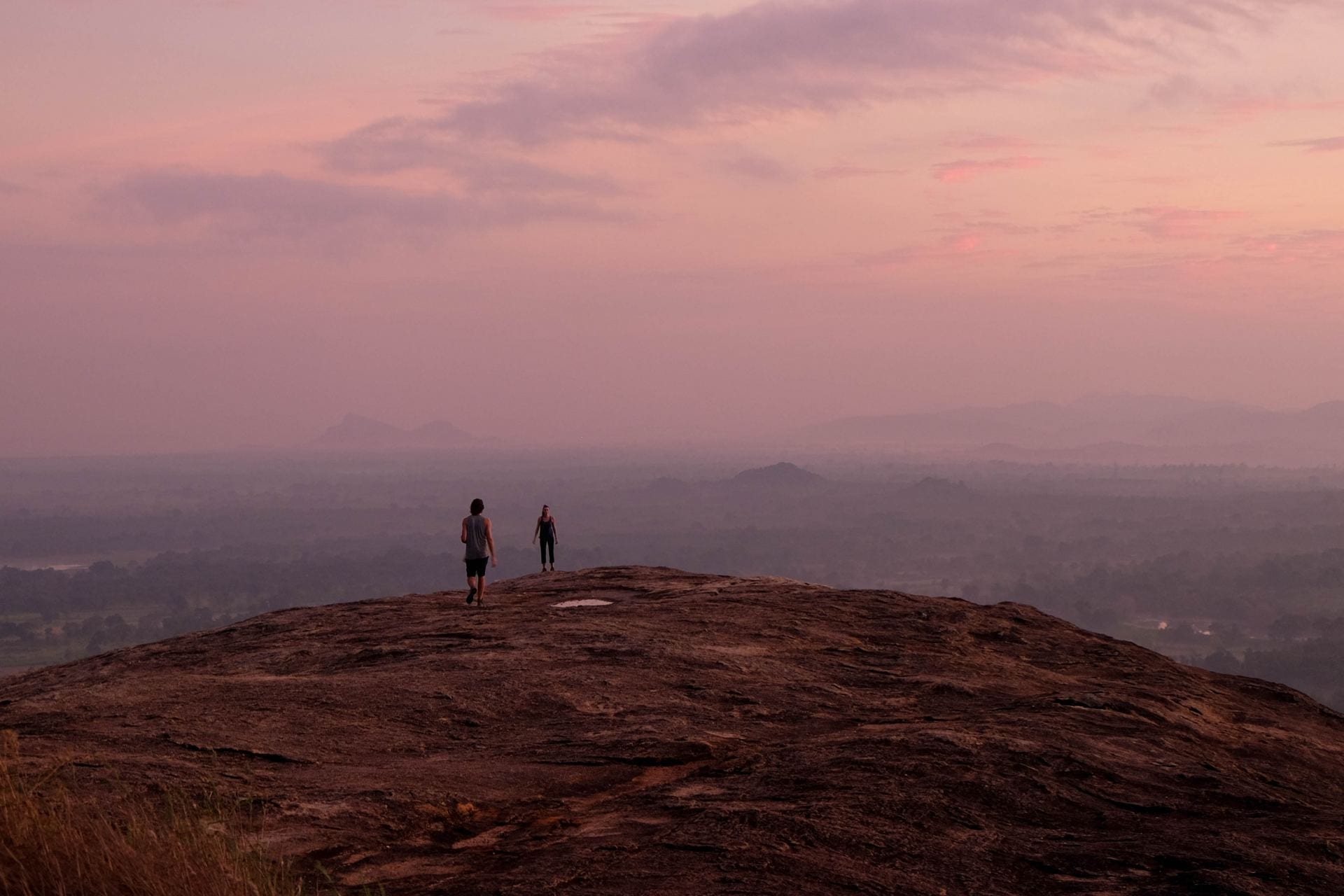
The main draw of Pidurangala is the view from its summit, particularly at sunrise, where the vista shows nearby Sigiriya in all its glory, a view that’s unparalleled unless you go to the expense of chartering a balloon. To catch the sunrise, you’ll have to start the day early (I left my accommodation at 5am) and catch a tuk-tuk to the entrance. It only takes around 20 minutes of climbing to reach the top, although the last hundred metres resembles more of a scramble than a leisurely walk. The effort is worth it though, once you reach Pidurangala’s flat top and see Sigiriya rising hundreds of metres from the jungle, its smooth sides illuminated in the glow of the morning light. You should have enough time to climb Pidurangala and be back at your hotel/hostel in time for breakfast.
Read More: Sunrise from Pidurangala Rock
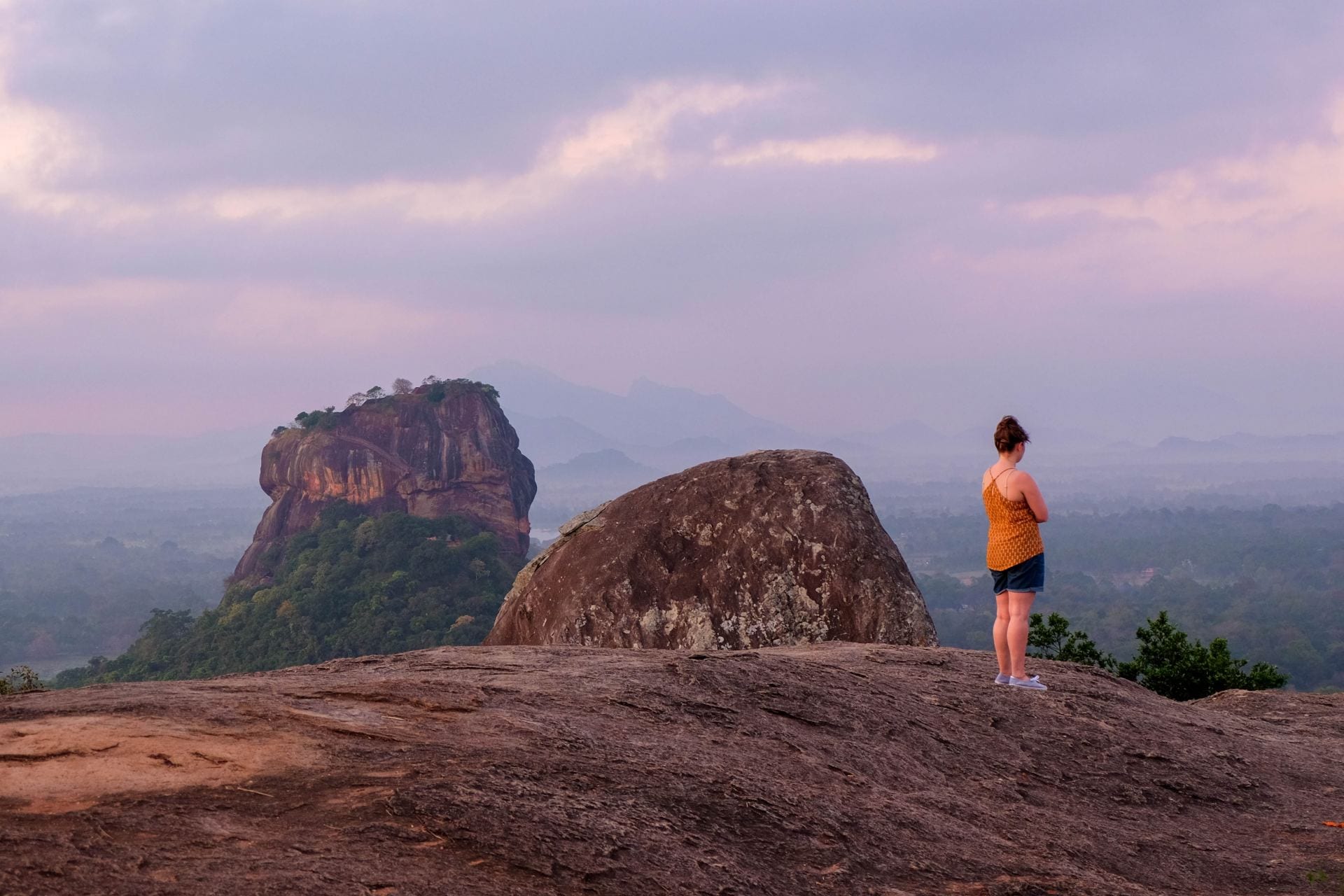
After breakfast, it’s time to visit the area’s main attraction: Sigiriya, or Lion Rock. From the entrance, you will pass the gardens and pools built by King Kassapa – they are thought to be some of the world’s oldest landscaped gardens – and even today, they are meticulously kept. Passing the fairly underwhelming Sigiriya museum (entry included with ticket) the path towards the rock passes the outer moat and through the water gardens – an area of four pools – and into the boulder gardens. This area of the site was once the centre of monastic practices, with over 20 caves, some inscribed with etchings dating back as far as the 1st century BC.
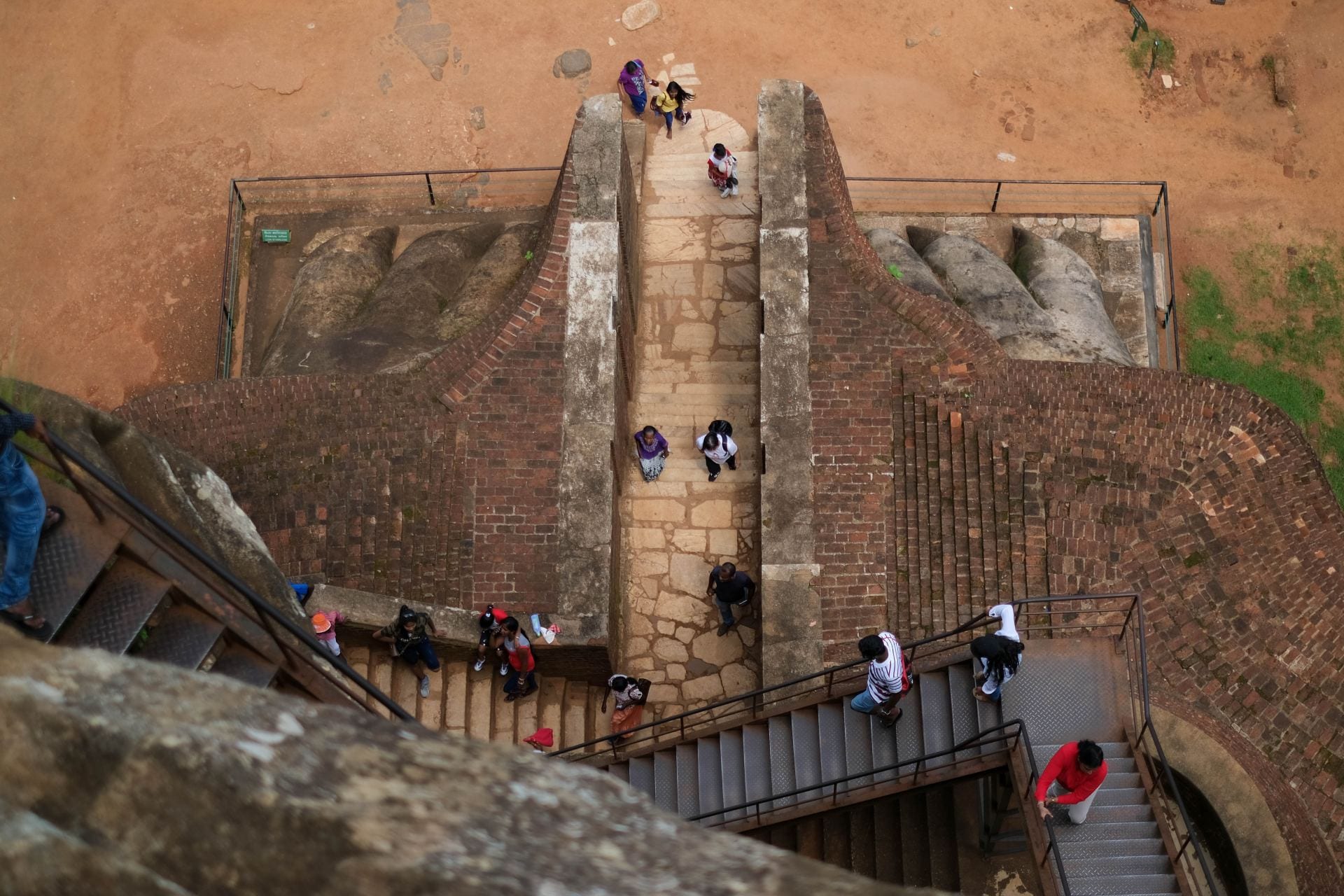
From here it’s a 1200 step climb to the top of Lion Rock. Luckily, the stairs are narrow – cut for tiny medieval feet – and quickly become clogged with tourists, giving you a few minutes respite between each ascent. Occasionally the steps give way to rusting ladders and gangways, bolted to the rocky side. About 25 metres up, you will find a cavern filled voluptuous women. There are about a dozen of them painted on the walls, life-sized and half-naked from the waist up. It is thought that these pictures once covered the whole outcrop, from top to bottom. One of the largest murals ever created, the colourful images were visible from miles around. Some say that these maidens depict members of Kasyapa’s hareem but with his vow of aposaka, it is more likely that they are celestial nymphs, painted to protect the fortress in the battle that was to come.
Higher up are Kasyapa’s more practical defences. During his reign, the king had built a giant lion sculpture – giving Lion Rock its name – with the stairs leading into its mouth. Only the 50-tonne brick paws are left, which visitors must funnel through to reach the top.
At the top are the ruins that remain of Kasyapa’s fortress. Not much is left but a few walls, Kasyapa’s throne and some bathing pools. However, the view is worth the climb: a lush, emerald carpet as far as the eye can see.
It’s possible to spend the entire day marvelling at this ancient wonder, but chances are that you will be done with your visit by midafternoon. After 3 non-stop days of tourist attractions and travelling, you will probably be in need of a rest so head back to your hotel and relax for the rest of the day. With this in mind, I recommend booking a hotel with a pool, such as Jetwing Lake near Dambulla or Jetwing Vil Uy in Sigiriya if you’re feeling particularly flush. For those on a budget, Sigiriya Village Hotel, just a short distance from Lion Rock itself is a great option, offering spectacular views of Sigirya from its poolside.
DAY FOUR
Polonnaruwa
The ancient city of Polonnaruwa was the final gasp of the Island’s tank building kingdom and is undoubtedly one of the highlights of the cultural triangle, if not the whole of Sri Lanka. First established in the 3rd century AD after the building of the Minneriya Tank, the city reached its golden age in when it was taken over by King Vijayabahu in 1056 who went on to declare it his capital. However, most of the ruins that you see today are from buildings built by Vijayabahu’s successor, Parakramabahu who imported engineers from India to extend the city on a lavish scale, creating enormous stupas and statues.
Although the city’s development eventually bankrupted the state, the well-preserved ruins offer a fascinating snapshot of medieval Sri Lanka. Stretching 4km from north to south, the site is too large to explore by foot, but by renting a bike for just a few rupees at the entrance, you can easily see everything Polonnaruwa has to offer in a day.
Getting to Polonnaruwa
The easiest way to reach Polonnaruwa from Sigiriya, Dambulla or Habarana is to take a taxi/private car. I chose to save a bit of money and catch a tuk-tuk, although 90 minutes bouncing around on dirt roads can be a little harsh on your posterior. Upon leaving the site, you should be able to hail down a tuk-tuk from the main entrance.
There is no direct bus between Polonnaruwa and Sigiriya, so you’ll have to go first to Inamaluwa (Inamaluwa junction) by bus, where you can change for the bus to Sigiriya. The bus ride from Polonnaruwa to Inamaluwa junction will cost 20 LKR and takes 90 minutes.
DAY FIVE & SIX
Kandy
Situated in the heart of Sri Lanka and surrounded by lush green forest, scenic Kandy is many people’s entry-point to the Island’s stunning hill country. It’s home to one of Buddhism’s most important religious shrines and the nation’s most exuberant festival, making it Sri Lanka’s undisputed cultural capital.
Kandayans have always referred to their home as Mahu Navara; The Great City. Now, after centuries of expansion into the surrounding hills, it finally lives up to that description, if just in size more than anything else. Second only to Colombo in terms of population, 2 million people now live here, helping it spread into the surrounding mountains where its wealthier residents cling to the forested, mango tree-lined slopes in their lavish villas and sprawling estates. It is now a dense convergence of roads, railways and ramshackle buildings that disseminate like arteries towards its hilly outskirts, only with a centre made up of lavish palaces, colonial architecture and golden-roofed shrines.
As the 18th century rolled into the 19th, Sri Vikrama Rajasini, the last king of Kandy, set about making the city his masterpiece and lasting legacy. He flooded the valley, creating the lake that is now the city’s focal point. He built vast temple complexes and the royal palace. By the time he was done he had drained all of Kandy’s wealth. Without any money, he lost all authority and wasn’t to last much longer. In a matter of years, Kandy and its kingdom fell under British rule.
Ironically, it’s Sri Vikrama Rajasini’s legacy that makes Kandy such an essential stop on anyone’s Sri Lanka itinerary. Thanks to him, it is an atmospheric and noble place, retaining a small-town atmosphere in its centre, with the king’s elegant Kandyan buildings and lake ensuring that the city doesn’t become overwhelmed by the narrow, traffic-clogged streets that define so many other big cities.
Read More: The Best Things to do in Kandy

Arriving in Kandy
The easiest way to reach Kandy from Sigiriya is to get a private taxi. The journey will take anywhere between 1 hour 30 and 2 hours 30, traffic dependent, and cost approximately RS. 6000 (£25). This isn’t too bad if there are 4 people to split the price, but a more cost-effective way of reaching Kandy is by public bus.
There are just two direct buses from Sigiriya to Kandy each day, leaving early morning and taking 2 and a half hours. Timings vary so it is best to check the day before. Otherwise, you can catch a bus to Dambulla (30-minute ride leaving every half an hour) and change for the onward journey to Kandy (every 20 minutes; 2 and a half hours).
Where to Stay in Kandy
Kandy has a good range of both budget and luxury accommodation, with many of the higher-priced hotels located atop the surrounding hills with stunning views over the city. Amaya Hills is one of the best – and also the highest – with Kandyan décor, a beautiful swimming pool and expansive views out over the region’s hills. Just be warned, you will need to take a tuk-tuk or taxi from the city centre to reach it.
If you want to stay in the city centre, the Queen’s Hotel is one of the city’s most famous landmarks and dates back to the 1860s and the time of British rule. The building has a lot of colonial character to match its prestigious history.
Day 5 Itinerary
Arriving in Kandy around lunchtime will give you a good day and a half to explore the city, which is plenty of time to see everything that it has to offer. The best place to start is with a climb up the Bahiravakanda Buddha to get an overview of Kandy. Perched on the top of Bahirava Kanda, literally meaning Devil’s Hill the 88-foot tall concrete deity was constructed by President Premedasa. Premedasa was a religiously minded leader who built, as well as this, the ornate golden covering over The Temple of The Tooth. He eventually met his end in 1993, blown up by a Tamil Tiger suicide bomber, his pious acts doing little to protect him from the separatist group.
It’s a 15-20 minute walk uphill to reach the base of the statue, so I would recommend hailing a tuk-tuk to reach it. If you do decide to walk, the view is worth the effort. From here, you can see the whole of Kandy spread out in front of you; the loop of the mighty Mahaveli river and the surrounding peaks as well as Sri Vikrama Rajasini’s milk sea.


From the statue, descend back towards the town, taking an anticlockwise loop around the city’s ornate central lake, Kiri Muhuda, until you reach the British Garrison Cemetery. Once left to ruin and dereliction but now painstakingly restored, the Kandy Garrison Cemetery was established in 1817 shortly after the British colonisers seized the city and offers a memorial to the country’s former rulers. The majority of the people buried here were soldiers that met fairly grizzly ends due to tropical diseases or hostile Kandyans but it also contains the grave of Sir John D’Oyly, the diplomat that orchestrated the bloodless coup of Kandy in 1815 and eventually succumbed to cholera in 1824. His memorial is the largest in the cemetery, close to the entrance and topped with a broken Greek pillar.
If all that walking has put you in the mood for some food, stop off at the Empire Café beside the Temple of the Tooth. This colourful little café on the ground floor of the Olde Empire Hotel has good food and serves a range of both Sri Lanka and international dishes. Alternatively, if you are just in need of a coffee or snack, Natural Coffee serves up a good brew and has great (but pricey) cakes. However, the profits go towards supporting local farmers.

Late afternoon/early evening, head to one of the daily Kandyan dance shows that takes place in the city. Kandyan dancing is one of Sri Lanka’s most revered and iconic artforms and no visit to its city of origin is complete without watching a performance. It isn’t too difficult to catch a glimpse of these troupes, clad in extravagant traditional costumes, twirling and spiralling in all their finery, as they are known to perform throughout the city at temples as well as performing arts centres. The show at the Kandyan Arts Association (daily; 5pm) is the biggest and glitziest but for a more intimate performance, try the show at the YMBA (daily; 5.30pm).
The dance show should only last one hour, so afterwards, walk back into town to Kiri Muhuda. the lake makes for a magical centre point to the city and a perfect place to wander in the cool evening air. Blossom trees bloom bright pinks around its perimeter, flocks of birds danced above the water and as night descends, fruit bats unfurl in the surrounding trees, readying themselves for the evening ahead. The great royal pleasure house that the king had built for his queens still remains in its centre but now stands empty, although the lake is still used for pleasure of a different kind: A cluster of rowing boats and swan-shaped pedalos are moored at the jetty waiting for passengers and hundreds of colourful fish thrash at the surface as passers-by through in handfuls of fish food for them.
If you’re in need of food, Sharon Inn serves a hearty buffet of typical Sri Lankan dishes, otherwise, the atmospheric drinking hole at the back of the stately, colonial Queen’s Hotel is the perfect place for a nightcap before bedtime.
Day 6 Itinerary
Begin your day at the Temple of the Sacred Tooth. The temple contains one of the tiniest, yet holiest, relics in Buddhism – A single tooth, thought to be over two and a half thousand years old and the last remnant of Buddha. It is protected by layers upon layers of steel casings and fortified within the Temple.

Legend has it that the tooth was retrieved from Buddha’s funeral pyre in 543AD and smuggled to Sri Lanka in the 4th century, hidden in the hair of an Orissan princess. As a symbol of Sinhalese Sovereignty, it was generally always housed wherever the Sinhalese king of the moment held their capital; moving from Anuradhapura to Polonnaruwa, Dambadeniya and Yapahuwa before being finally arriving in Kandy in 1592 where it was placed in a specially constructed temple beside the Royal Palace.
Try to arrive before 9.30am when, each morning, devotees gather for Puja, in which drumming and music precede a ceremony, mostly hidden from the public, focused on the Tooth. The Tooth Relic chamber remains off-limits but the worshippers are permitted to file past, glancing at the gold case but not seeing what is inside. Puja is the busiest time of day, but it is worth braving the crowds as this is when the temple is its most atmospheric.

As well as the temple and the tooth relic, there are a number of interesting diversions within the temple complex. Formerly the city’s high court, the Museum of world Buddhism building is hidden away behind the Temple of the Sacred Tooth and contains a number of interesting galleries explaining Buddhist beliefs in Sri Lanka and across Asia. Nearby is possibly one of Sri Lanka’s more unusual museums: the Raja Tusker Museum contains the stuffed remains of Raja, Sri Lanka’s most famous elephant. Elephants have always been an integral part of Sri Lanka’s history: For much of it, they were seen as a symbol of power and authority, as well as a convenient asset. In medieval times they were used to build the nation’s great cities and even today, they are unfortunately still used in religious events and festivals.
For 37 years this Maligawa elephant carried the Tooth Relic casket during the annual Esala Perahera, a colourful pageant that dates back to the 4th century. Raja died in 1988 and such was the nation’s devotion to Raja, the government declared a day of national mourning upon his passing.

Following your visit to the Temple, you will have the rest of the day to explore the city or relax at your hotel. Located 6km from Kandy, the Peradeniya Botanical Gardens are a good way to pass the time. Covering 150 acres, these gardens are the nation’s largest, brimming with a huge variety of both native and foreign plant species. The site itself has existed since the 14th century when it was the royal residence of Wickramabahu III but the park wasn’t established until 1821 when British governor Edward Barnes transformed King Kirti Sri Rajashina’s pleasure gardens into a botanical garden.
DAY SEVEN & EIGHT
Nuwara Eliya
Sri Lanka’s highest town and the heart of the country’s most beautiful region, the southern hill country, Nuwara Eliya sits beneath the towering Pidurutalagala mountain in a bowl of verdant, tea-covered hills. Although the region was once occupied by the Kandyan kingdom, the town itself is very much a British creation. It was established in the mid-19th century as a retreat by Sir Edward Barnes and touted as Sri Lanka’s ‘Little England’ for the way this Victorian relic resembles a quaint English country village.
Arriving in Nuwara Eliya
Nuwara Eliya is easiest to reach by train with regular services from Kandy. Although it doesn’t have its own station, Nanu Oya is just 5km away. Local buses arrive to meet each train and ferry passengers onwards to Nuwara Eliya, but a tuk-tuk will be quicker and costs around Rs. 500 – 600 (between £2 and £2.50).
Where to Stay in Nuwara Eliya
BUDGET / Laughing Leopard Hostel
There aren’t many backpacking hostels in Nuwara Eliya but of the few that exist, Laughing Leopard is the best. Located just 10 minutes from the central bus station, this hostel has a focus on sustainability, furnished with colourful upcycled materials in an early 20th-century bungalow.
MIDRANGE / The Blackpool
The Blackpool stands at an altitude of 1876m, surrounded by vast tea estates, carefully tended vegetable plantations and beautiful mountainous terrain. The décor is a little dated but certainly gives off colonial vibes, particularly the wood-panelled bar area complete with billiard tables. There is even a heated, outdoor pool to help you warm up from the chilly hill country weather.
LUXURY / Heritance Tea Factory
Set on a hilltop away from the town, the 5-star Heritance was built within the wonderfully preserved shell of the Hethersett Estate Tea Factory. Despite the exterior, the inside of the hotel is cosy and modern, with many of the old plantation’s machinery being incorporated into the stylish design.
Day 7 Itinerary
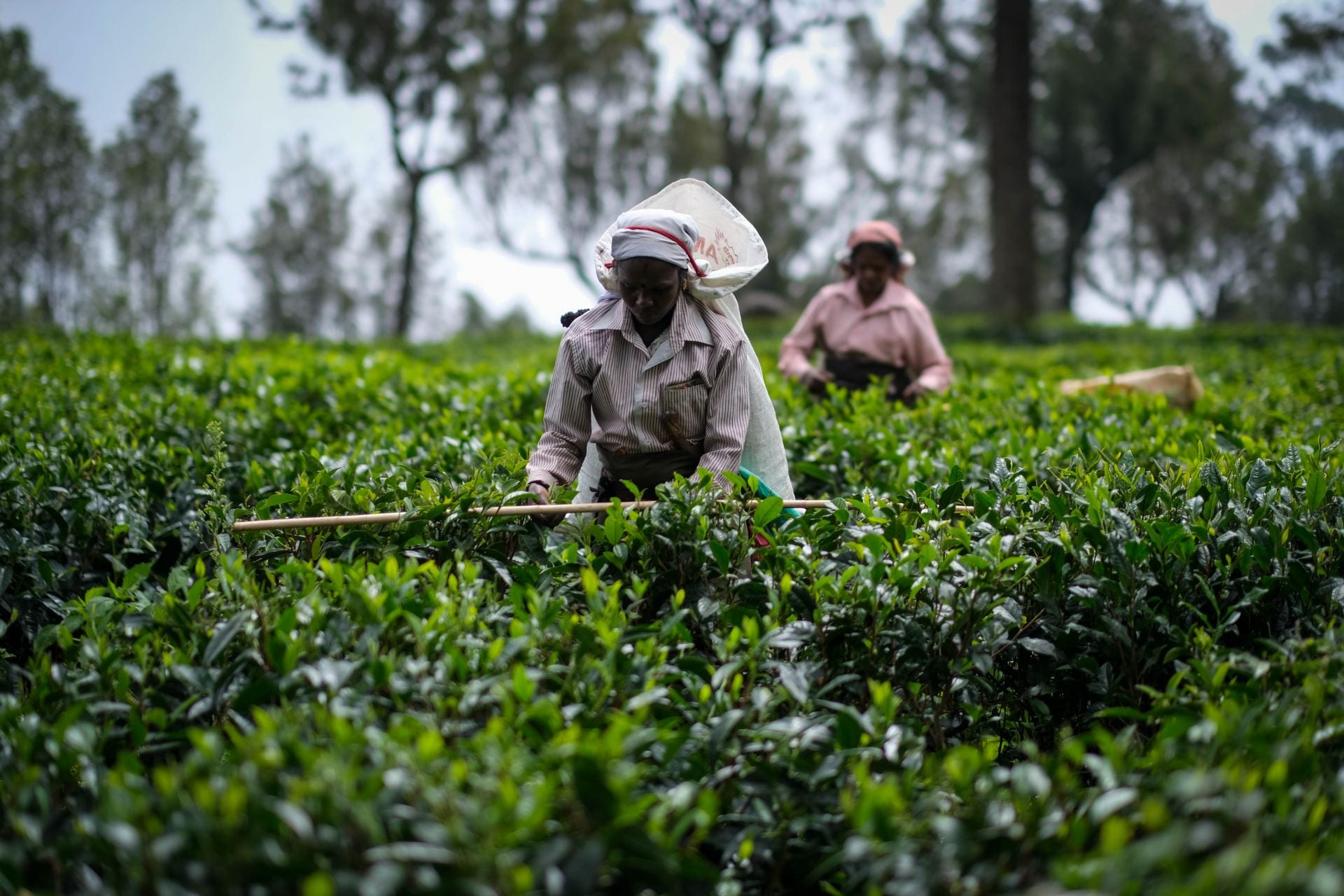
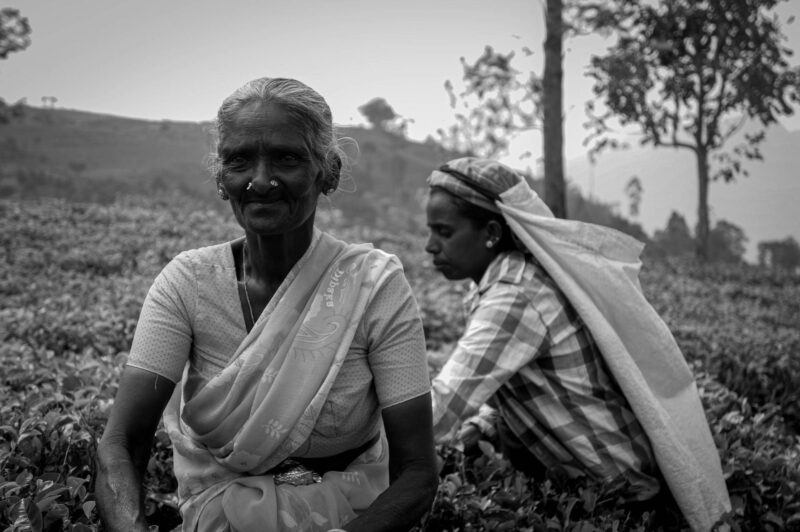
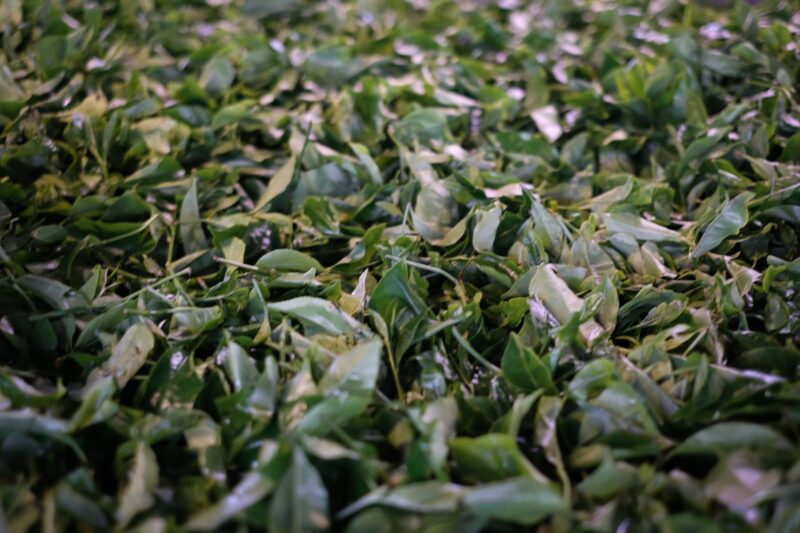
The real draw of Nuwara Eliya is its oddly British air: the sprawling faux-Tudor landmarks, misplaced architecture and strange, English country village kitsch. The unpredictable weather does have the tendency to put a dampener on your ability to explore the town and its adjacent lake but the charming architecture and stunning heritage hotels make it a fantastic base for exploring the stunning southern hill country landscapes and tea estates. After arriving from Nanu Oya and settling in at your accommodation, get a tuk-tuk to one of the region’s many tea estates. the Damro Labookelie Tea Estate, around 20km north of the town is the best of the bunch. Set high in the gorgeous rolling countryside at an elevation of around 2000m, the factory offers free tours in which you will be guided step-by-step through the production process, finishing with a tea tasting session at their on-site café. However, the best reason to visit is the opportunity to wander the Labookelie tea gardens amongst the Tamil women as they fill their sacks with leaves.


For dinner, head over to the sprawling and luxurious Grand Hotel. The main dining hall may be a little overpriced and stuffy – men are required to wear a dinner jacket and tie – so try the Grand Indian, a small, casual, Indian restaurant at the foot of the Grand Hotel’s winding driveway. This is probably the best option in the city for Indian cuisine and despite being part of the exclusive Grand, all the dishes are reasonably priced. It does get busy so make sure that you arrive early to guarantee a table.
Day 8 Itinerary
Spend your morning exploring Nuwara Eliya’s town centre and its quirky faux-Britishness. Start at the quaint mock-tudor post office and cross the road to Victoria Park. Named for the former ruler of British Ceylon, Victoria Park is a little slice of Britain, with pristine lawns and a number of beautiful ornamental gardens. Located just off the main road and next to the noisy, bustling bus depot, the gardens are a surprisingly peaceful place to wander amongst the enormous eucalyptus trees and rose bushes. From there you can walk out of town towards Lake Gregory. Stretching from Nuwara Eliya’s southern end all the way to the foot of the surrounding hills, Lake Gregory was created by the governor, Sir William Gregory, in 1873. While not wildly impressive or exciting, the footpaths and lawns that line the western shore are a relaxing place to walk.
If you fancy a slightly more exciting walk, there’s a pleasant, short hike starting near the racecourse that heads uphill through tea plantations out towards Single Tree Mountain where, on a clear day, you get a stunning birds-eye view out over the surrounding hills.
On your return to town, it is worth popping into the small Central Market on New Bazaar Street. Set up during the colonial era, the stalls are very much as they were in those Victorian times; rows upon rows of fruit and vegetable stalls sold by men bundled up in woolly hats and labourers jackets, with only the sari-clad Tamil women shopping for onions and potatoes breaking the illusion of an old English market.

Nowhere in Nuwara Eliya is more evocative of Britain than the brash, half-timbered Grand Hotel. This sprawling, luxurious, century-old pile gives of serious country club vibes and with its splendid wooden décor, historic bars, and billiards room, there is no better place in town to immerse yourself in colonial-era Nuwara Eliya. For the full experience, come for high tea. At 3.30pm sharp every day, high tea – complete with dainty cakes and triangular sandwiches – is served either out on the lawn or in the tea room by stoic waiters in waistcoats and white gloves.
If you feel up to it, stick around for drinks in the hotel’s fancy bar before settling down for dinner at Grand Thai, next door to where you had dinner the previous evening. Otherwise, walk back towards New Bazaar Street where you will find Sri Ambaal, a cheap, south Indian spot with a menu of delicious vegetarian curries, short eats and string hoppers. The dosas are particularly popular.
IF YOU HAVE MORE TIME...
If you have a few more days to spend in Sri Lanka and want to explore the hill country further, then Horton Plains National Park may be worth a visit. The park covers a wide stretch of high altitude grassland punctuated by dramatic, plunging cliffs that mark the edge of the hill country, including the famous World’s End with its one-kilometre long drop to the lowlands below.
DAY 9 & 10
Ella
Ella is the hill country’s main tourist draw but it hasn’t always been this way. Just a decade ago, this was a sleepy hilltop village but has mushroomed over recent years thanks to its idyllic green hills covered in picturesque tea plantations, temperate climate and scenic hikes that offer up some of the best views that the island has to offer.
The village still feels remote, with a single track of cafes and hostels meandering down the hillside and through its centre and it is still relatively easy to get away from it all and escape the crowds on the numerous treks that stretch out from its centre.

Arriving in Ella
The train ride from Nanu Oya to Ella is considered one of the world’s most beautiful. The journey takes anywhere between 3 and 4 hours, stopping off at all manner of delightful hill country towns and railway stations along the way. At each destination, locals scurry out onto the platform only to be replaced by a new influx of passengers, joined by men that squeeze their way down the packed carriages with baskets of fruit, freshly cooked rotis and urns of steaming Sri Lankan tea that they sell for just a few rupees.
A few intrepid passengers sit in the open doorways, their dangling legs swaying with the carriage’s motion and their heels beating against the train’s metal body, only pulling them inside to avoid battered railway signs or approaching tunnels. As you look from the windows at the countryside unfurling before you like lush green blanket tumbling across hills and valleys, speckled with plantation houses, tea fields and lanky, lurching palms, it’s easy to see why people hold this route in such high regard. Occasionally the scenery gives way to villages and hamlets where local life is in full swing: children running and laughing on the side of the rails, farmers tending to their fields and women preparing their washing. Eventually, they fade into view, once again being replaced with waterfalls and mountains.
This is quintessential Sri Lankan experience and, in a world where hyperbole seems so commonplace, one that actually lives up to the hype.

Where to Stay in Ella
BUDGET / Tomorrowland Hostel
Being a tourist and backpacker hub, there’s a glut of budget hostels in Ella, with many being fairly sub-par. Of the bunch, Tomorrowland Hostel is often the best rate. It’s fairly basic, as well as quite an uphill trek from the main road, but they have an on-site bar and the views across Ella from the hostel are stunning.
MIDRANGE / Laura
Also located high above the town, Laura is particularly good value, with large, modern rooms that are exceptional for the price that you pay. A highlight is being able to enjoy breakfast on their large terrace while enjoying the mountain views.
LUXURY / 98 Acres
A stunning eco-resort set amongst the rolling hills of the Uva Greenland Tea Estate, 98 Acres features 6 beautiful cabanas, some with their own private pool. However, the communal pool is nice enough and their on-site facilities include a gym, spa and yoga sessions. Although I didn’t stay at 98 acres, I did stop by to eat at their café, Café 98, and can confirm that the hotel is probably one of the best in town.
Day 9 Itinerary
Catching the early train from Nanu Oya, you should hopefully arrive in Ella by lunchtime. This should give you enough time to hike up to Ella Rock in the afternoon. Looming over the village from up high, the rock is one of the most rewarding walks in the area, although it is also one of the most strenuous. There are several routes up to the top, but most trailheads begin by following the railway tracks south out of the village for 1.5km up until you reach the bridge near Little Rawana Falls. From here the hike is signposted. In total, the hike should take around 4 hours there and back so make sure to take plenty of water and snacks.
On your return to town, you’ll probably be in need of an ice-cold beer and food. I recommend Café Chill: It’s probably the liveliest spot in town as the beers are reasonably priced and they actually serve decent coffee. You can also find good pizza and delicious Sri Lankan curries here.
Day 10 Itinerary
Before the temperature begins to soar, head out for an early morning hike. The walk to the Instagram-famous Demodara Bridge – also known as the Nine Arch Bridge – is an easy enough start to the day. Heading out along Passara Road past the Newburgh Tea Factory, take the lower fork in the road and after 20 minutes or so, you should reach the railway tracks. Where you can wander across the bridge for those all-important Instagram snaps.

From here you can either continue along the railway tracks back to Ella village or go back on yourself for a hike up to Little Adam’s Peak. It’s a beautiful short walk and is mostly flat until the final climb up to the summit. Walking back past the Newburgh Tea Factory, you should eventually see a signpost for the trail (just before you reach Adam’s Breeze Restaurant). In all the walk should take a couple of hours and it is worth it for the marvellous views of Ella Rock, Ella Gap and Rawana Ella Falls. On your way down, stop off at the stunning 98 Acres eco-resort for a lunch at their café.

After lunch, catch a bus out of town that’s heading towards Wellawaya. After 6km of travelling down Wellawaya Road, you should reach the dramatic Rawana Ella Falls, which plunge 90m down a series of pools and rock faces.
On your return to town, try AK Ristoro for dinner. They do a good range of international dishes such as tapas, pasta and even Japanese food but their curry and rice is some of the best in town.
IF YOU HAVE MORE TIME...
Close to Ella is the small town of Bandarawela. Despite being described by Lonely Planet as having ‘little to attract tourists’, I feel like the global guide book purveyors have done Bandarawela a disservice. This is a quintessential rural Sri Lankan commercial centre – it consists of just a couple of traffic-clogged roads lined with 4 and 5 story buildings making it a little claustrophobic, while at street level, the hustle of markets, shops, and street food vendors give it a typically chaotic air – but the surrounding countryside is stunning.
From the Dambatenne Tea Factory – established by Thomas Lipton in 1890 – just outside of town, you can walk through the plantations to Lipton’s seat. Perched high above Dambatenne and named after its owner, is one of the finest viewpoints in all of Sri Lanka, so much so that Sir Thomas Lipton often came up here to admire the scenery, usually bringing business associates so he could wow them with the splendour of his plantation. The winding road up from Damatenne leads you through hillocks of perfectly manicured tea plantations where Tamil women in colourful saris work their way up the slopes with hessian sacks on their back filled with carefully picked leaves.
As Bandarawala isn’t a mainstay on the tourist trail through Sri Lanka’s hill country, accommodation options can be few and far between. However, the time-warped Bandarawela Hotel may be worth a visit in and of itself. One of the only hotels in town, the Bandarawela began life as a planter’s clubhouse 1893 and still sits atop a long and winding driveway at the entrance to the town like a rambling wooden reminder of the past.
It’s been over 90 years since the owners stopped updating the décor and furniture, meaning that the hotel is a veritable time capsule – you half expect to see a group of men in pith hats and Gurka shorts to come rambling through the lobby, elephant guns in hand – with wrought iron beds, polished wooden floors and faded sepia photographs adorning the walls. It certainly is unique and the perfect place to stay if you have even a passing interest in the area’s colonial history.
DAY ELEVEN & TWELVE
Mirissa
Of all the beaches that line the island’s southern coast, the laidback town of Mirissa has possibly the finest stretch of sand, hidden in a pretty bay and backed by thickets of coconut palms. Although it is busiest than it once was, the beach remains relatively unspoiled despite the influx of new hotels and resorts.

Arriving in Mirissa
The easiest way to reach Mirissa from Ella is to hire a driver for the 4 and a half hour journey, although this can cost upwards of Rs. 10,000 and be prohibitively expensive.
Otherwise, you can hop on the number 31 Eliya – Matara bus as it makes its way through Ella. There are multiple each morning, with the first one passing through the village at around 7am, with the last service at approximately 11am. The journey takes around 5 hours and you will be able to alight as the bus takes the coastal road through Mirissa.
Where to Stay in Mirissa
BUDGET / Why Not Hostel
The dorms at Why Not are fairly basic but if you’re staying at this hostel, just 300m from the beach, you probably won’t be getting a great deal of sleep anyway: This is very much a party hostel, boasting its own bar serving boozy cocktails beside its very own pool.
MIDRANGE / Paradise Beach Club
One of the town’s only resort hotels, Paradise Beach Club benefits from being directly on the beach with rooms ranging from basic cabanas to deluxe rooms in their four-storey apartment block. Unfortunately, half board is compulsory but the beach-front pool makes it worthwhile.
LUXURY / The Spice House
This gorgeous rural hideaway is just 100m from the beach. Each room in The Spice House is completely unique with cabins set within a lush, terraced garden and deluxe rooms within the beautiful main house.
Day 11 & 12 Itinerary
Being a beach town, there isn’t a great deal to do in Mirissa other than relax on the beautiful beach and occupying your time sipping cocktails, swimming or snorkelling. There is also good surfing on the far west side of the bay.
One thing of note is that Mirissa is known to be Sri Lanka’s leading whale watching destination as an annual migration of blue and sperm whales passes Sri Lanka on its way between the Bay of Bengal and the Arabian Sea (heading west in April and returning in December/January). Most of the trips last 3-4 hours and leave early in the morning. Raja and the Whales are the most reputable outfit in the area, focussing on seeing the whales in an ethical and responsible manner – unlike many other operators – with a strong focus on conservation. If your trip fails to spot any whales, half of your fee will be refunded.

Come evening time, the beach bars come alive and the strip of sand at the centre of the bay becomes lively, although pleasantly so, in a manner that is neither rowdy or excessive. Bonfires and fairy lights illuminate the small beach shacks serving up the days catch, allowing you to choose your own fish, lobster or squid before it is barbequed before your eyes.
DAY THIRTEEN & FOURTEEN
Galle
Occupying Sri Lanka’s south-west corner, Galle is thought to have been an important trading port for millennia, with a history dating back to the reign of King Solomon in the 10th century BC and remained as Ceylon’s most important harbour until the 19th century until it was overtaken by the growing commercial exploits of Colombo. It has expanded from its early origins and expanded inland to become the modern city that it is today, Sri Lanka’s fourth-largest.
While the majority of the city has little to differentiate it from other towns, tourists flock here to visit the old Dutch Quarter, Fort, an area strangely detached from the rest of Galle on a small peninsular surrounded by impressive stone walls and a chain of bastions. What you will find inside the fortifications is Sri Lanka’s best-preserved colonial town; a grid of streets lined with beautiful white and pale, pastel yellow villas topped with red-tile roofs. In stark contrast to the busy, tuk-tuk-filled streets of the main city, Fort is like stepping back in time to an ambiguous European settlement. At the right time of day, it is a magically serene place to amble around, taking in the atmospheric old streets, quaint churches and wonderful seafood scene.


Arriving in Galle
Buses from Mirissa to Galle stop on Mirissa’s main drag every 15 minutes or so during the day time, but become less frequent after 5pm. The journey takes between 45 minutes and 1 hour.
Where to Stay in Galle
Galle has a good range of accommodation, from budget to more luxurious boutique hotels. I would recommend staying in the enclosed Fort area of the city, as there isn’t too much of interest outside of its walls.
BUDGET / Fairway Sunset
Located 10-minute’s drive along the coastal road from the Fort’s entrance, this hotel overlooking Dewata beach is one of the area’s best budget options. All 65 rooms are clean and modern with a large number of them offering perfect sea views over the bay. The on-site, rooftop restaurant serves a good mix of local and western cuisine and is ideal for sundowner cocktails.
Check Prices & Availability
MIDRANGE / Antic Guesthouse
Embracing Galle’s newly-found influx of artists, this beautifully renovated colonial mansion has shutters and doors spattered with paint and communal areas bursting with rustic, local art. Each room in this boutique guesthouse is individually styled with the higher-priced accommodation featuring open balconies strewn with cushions and hammocks where you can relax with a view of Fort’s narrow, cobbled streets.
Check Prices and Availability
LUXURY / Galle Fort Hotel
The Galle Fort Hotel is a boutique hotel with 13 rooms. They all have four-poster beds and are unique. The Loft Suites are split level; the Admiral Cheng Ho suite is dedicated to the Chinese explorer who visited Galle in the 14th century; the Porcelain Suite has a collection of Dutch pottery, and the ornate Grand Apartments used to once be the home of a gem merchant.
Check Prices and Availability
Day 13 Itinerary
Arriving in Galle around midday, spend the afternoon wandering around the grid of cobbled streets to gather your bearings and marvel at the beautiful colonial-era buildings that line the lanes of the Fort. If you need a lunch stop, pop into Poonie’s Kitchen. Hidden away in a cool little boho-styled courtyard beside the adjoining Mimi Mango lifestyle store, Poonie’s is the place to visit for health nuts and those that have had their fill of curries and string hoppers. Elsewhere on Pedlar street are myriad boutiques and shopping opportunities. Make sure to visit Stick No Bills, a store selling incredible Ceylon themed prints and artwork.
There are a few points of interest in the town, the main one being the Dutch Reformed Church, constructed in 1755 on the site of an earlier Portuguese Convent and is possibly one of the town’s most striking buildings. There are actually 2 churches – the old Kerk and the stone-clad British All Saints – that are worth a visit, as well as a Buddhist temple whose white stupa stands out amongst the colonial low-rises, and even a beautiful mosque that looks more like a baroque church than the usual building with a dome and minarets.
Galle has a number of quirky – and often quite dismal – museums, however, the idiosyncratic Historical Mansion Museum is the most entertaining of the bunch. Originally set up by Mr Gaffar, who spent half a century building up this eccentric collection of junk, bric-a-brac and trinkets, the exhibits are more a weirdly compelling collection of curiosities than a coherent showcase of local history. Nearby is the rather lacklustre Maritime Archeology Museum, a rather cheerless and dull assemblage of old rope, pots, and waxworks that is best avoided.

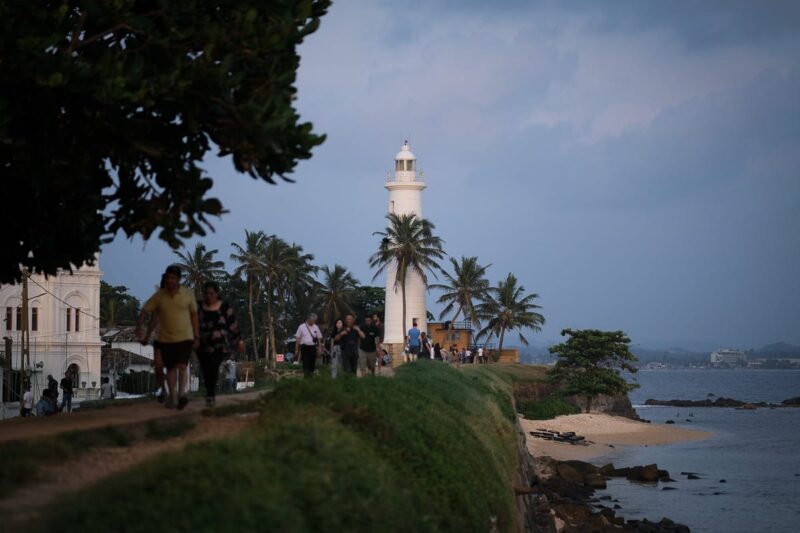
Come evening time when the sun hangs low in the sky over the Indian ocean, tourists and locals alike clamber up on top of the walls to walk or sit and stare out at the ocean. From the main gates and clock tower, added by the British in 1873 on the spot where the Dutch built 3 brutally impressive bastions named Sun, moon, and star, it’s possible to walk almost the entirety of the wall in one continuous path past all 14 of the towns bastions, most of them still with archaic names like Clippenberg, Akersloot and Zwart.
Finish your walk at Flag Rock in view of Galle’s historic lighthouse, where local teenagers leap backwards from the bastion, arms outstretched and legs tucked up to their stomachs, plunging into the waves below. It’s the perfect spot to end your day and watch the sunset.
Once the show is over, head to the Old Dutch Hospital which has been painstakingly renovated and now houses a number of great restaurants. The most notable has to be The Tuna and the Crab in the complex’s eastern wing. Owned by former Sri Lanka cricket captain Kumar Sangakkara and the island’s most renowned chef Dharshan Munidasa, this is the sister restaurant to Colombo’s Ministry of Crab, serving up a mix of seafood, from lagoon crab to sushi, in an elegant setting.
Finally, for a nightcap, step inside the luxurious Galle Fort Hotel and retire to their atmospheric colonial-era veranda bar for a whiskey or one of their signature cocktails while watching the night unfold on the street outside.

Day 14 Itinerary
It’s possible that you managed to see most of what Galle has to offer the previous day, so have a relaxing final day in Sri Lanka by taking a bus or tuk tuk to Unawatuna, 15 munites away along the coastal road, and enjoy a day at the beach. This small, horseshoe-shaped cove not much more than a kilometre in length, terminated by the picturesque Rumassala, a grand outcrop of rock thought to have been left by the monkey god Hanuman. Both Unawatuna and nearby Jungle beach – a quieter spot with clear turquoise sea backed by dense jungle – are great for snorkelling and the perfect place to spend an afternoon, drinking at beach bars or enjoying a meal of freshly-caught fish while gazing out into the Indian Ocean.
If you choose to return to Galle Fort for the evening, spend your last night in Sri Lanka back on the ramparts enjoying the sunset before heading back to the Old Dutch Hospital for dinner. A Minute By Tuk Tuk is my recommendation. This restaurant specialises in luxurious, contemporary variations of classic Sri Lankan dishes in the form of tapas or sumptuous main courses such as Wild for a While, black pork & thibbotu mallum served with cashew ghee rice and tempered manioc and Takka Takka, the restaurants own take on kottu roti.

WHERE TO NEXT?
If you have a few more days to spend in Sri Lanka and want to stop off at another beach destination on your way back to Colombo, then Bentota, with its wide stretch of sand backed by dense thickets of corkscrew palms is one of the island’s best. Bentota village itself doesn’t offer much in the way of sights but the string of luxurious hotels and villas – many of which were designed by famed local architect Geoffrey Bawa such as The Taj Bentota Resort & Spa – that line the shore offer a luxurious and aesthetic end to your time in Sri Lanka.
If you have the time, you can take a river safari along the river that meanders inland for a few kilometres past tiny islands – some with unique island temples or coconut and cinnamon plantations – and tangled mangrove swamps until it reaches the enormous Bentota lagoon. Although the cruise may not be particularly exciting, it offers the chance to see some of the region’s wildlife such as herons, cormorants and kingfishers, as well as crocodiles and water monitors.
DAY 14 OR 15 ITINERARY
Head Back to Colombo or Travel Further Afield
A train line runs from central Galle back to Colombo, making your return to the island’s commercial capital – and possibly onwards to the airport – relatively easy. This also provides good transport links to destinations directly north of Colombo or further still, into the relatively tourist-free northern region of the country.
I travelled to Sri Lanka as a guest of Sri Lanka Tourism. However, all views expressed are my own.

One Response
Great article with stunning photographs.! So grateful for showing the true beauty of Sri Lanka.