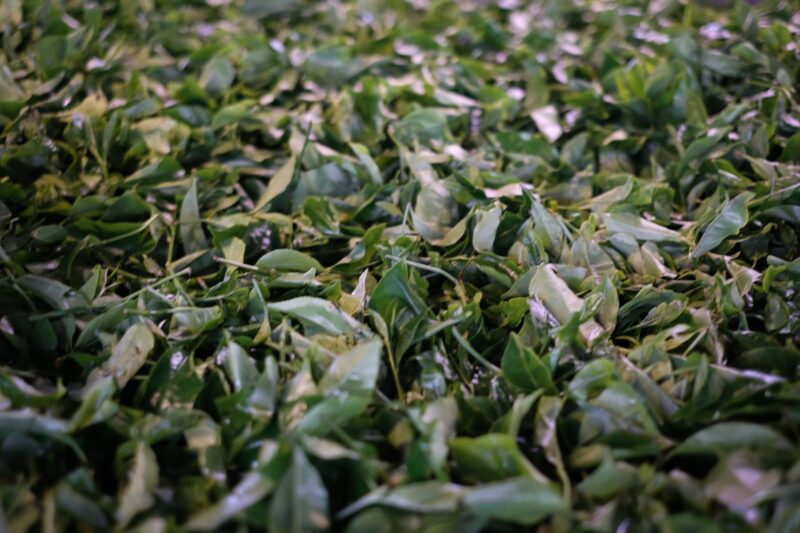
Head into the southern highlands of Sri Lanka and you will find misty green hills swelling up around you, each covered with row upon row of deep green tea bushes that stretch out as far as the eye can see. Looking closely, you will see that these mountainsides are speckled with colour and alive with activity: women carefully work their way along the pristine rows of shrubs, barefoot with a basket strung across their backs, as they pluck, pick, bag and weigh the tea leaves.
Of all the cultural and commercial exports that Sri Lanka has given to the world, it is tea that is synonymous with the island. Since the Victorian era, tea cultivation has underpinned Sri Lanka’s economy and was the main driving factor for prosperity during the British colonial period. The industry remains important today and after surviving a disastrous nationalisation (followed by swift re-privatisation) Sri Lanka remains one of the top 3 producers in the world, with tea products accounting for a quarter of the Island’s earnings.
The majority of these estates are found in Sri Lanka’s Southern Hill Country. While the region has countless charms – waterfall-covered mountains and jaw-dropping scenery where rattling railway stock clunks its way through old-world colonial towns and country piles seemingly copy-pasted from Middle England – it is the tea plantations that are the main draw of these highlands.

The History of Tea in Sri Lanka
Although Sri Lanka is famed for its tea, coffee was once the main product of the nation’s hills. It was brought here by the Arabs, long before Europeans set foot on the island, with the Sinhalese using the leaves to flavour their curries rather than brewing the beans. When the British arrived on the island, after failed attempts at growing both sugar and indigo, they decided to give coffee a try, inspired by its success in the other colonies of Jamaica, Guyana and Dominica
Ceylon saw a coffee rush as military men, civil servants and even civilians invested in plantations, lured by the promise of wealth and exoticism. Unfortunately, after months at sea followed by long treks through the hills on foot, most found that the ‘estates’ that they had purchased were nothing more than patches of virgin forest that had been stolen from the Kandyans.
Despite this, the British managed to oversee successful coffee production until the 1880s when the crop was devastated by hemileia vastatrix ‘ known as ‘Devastating Emily’ – a fungus of the leaf that was laying waste to plantations all over the world. Thankfully James Tayor, a bearded Scotsman known by his men as Samy-dor – The Master God – had already turned his hand to tea production, planting a few shrubs in 1967 at a modest 19-acre estate in Loolecondera. Following the coffee blight that swept Ceylon, coffee states were purchased on the cheap and transformed into tea plantations. By 1940, other 1,200 tea estates existed across the country, transforming Ceylon’s economy and making the nation the world’s greatest tea exporter.


The Best Tea Estates & Factories to Visit in Sri Lanka
Pedro Tea Estate
Sitting in the shadow of the lush greenery of Pidurutalagala, 3km east of Nuwara Eliya, Pedro Tea Estate was established on the very spot that James Taylor planted his first tea bushes and kick-started the Ceylon tea industry. Established in 1885, the factory was under British ownership until it was nationalised in 1975, before being reprivatised just a decade later. Despite its plantations and tea fields being less picturesque than others, it is one of the most easily accessible estates in the hill country and the 20-minute long tours take you through the entire manufacturing process, from grading to packaging, where you will see plenty of pieces of colonial-era equipment that is still in operation.
Overlooking the factory building is the picturesque Lovers Leap Ethical Tea Boutique where you can enjoy sipping on the local produce amongst a lush mountainous backdrop with a splendid view of the Bomburella Reservoir. Nearby, you will also find the Lover’s Leap Waterfall which plunges over a cliff face at the foot of Pidurutalagala and can be reached via a relatively serene 2km hike from the Pedro estate.
Where: Just off the A5, South of Nuwara Eliya
When: Daily 8.30 am – 5.30 pm; Tours cost Rs. 200
Damro Labookelie Tea Estate
The expansive Damro Labookelie Tea Estate, set in 5000 acres or gorgeous rolling hillside 20km north of Nuwara Eliya, is much more scenic than Pedro Tea Estate with the surrounding countryside feeling much more unblemished and unspoilt. The factory was originally part of the MAckwoods conglomerate, founded in 1841 and nowadays contains a rather modern and visitor centre complete with a café where you can sample the estate’s teas. Due to its easy to each location on the main road between Kandy and Nuwara Eliya, the factory can become busy during the high season but the brief free tour gives a good overview of the production process.
Where: Just off the A5, between Kandy and Nuwara Eliya
When: Daily 8 am – 5 pm; Tours are free.
Dambatenne Tea Factory
The name Lipton is now synonymous with tea worldwide, but the Lipton empire had humble beginnings in Ceylon. In 1890, Thomas Lipton stopped at the island en-route to Australia where he purchased a number of small, failing tea plantations in order to cut out the middleman in the burgeoning tea business that eventually grew into a global empire. Of all his plantations, he held Dambatenne in the highest regard.
The factory can still be found between Haputale and Bandarawela, equidistant from both. While many of the tea factories around Sri Lanka have modernised, the slightly disheveled Dambatenne site still produces tea much the same as it did when it was first built in 1890, with the old machinery and process remaining unchanged for 130 years. Tours are available, however, there is no tea for sale on-site. If you want to see the whole factory in operation, it is best to arrive before noon.

Around 7km by curving hillside roads from the factory is Lipton’s seat, perched high above Dambatenne and named after the estate’s owner. It is one of the finest viewpoints in all of Sri Lanka, so much so that Sir Thomas Lipton often came up here to admire the scenery, often bringing business associates so he could wow them with the splendour of his plantation. It will take around 2 hours to hike up to the hill’s peak, although rather than trekking around wide hairpins, it’s possible to speed up the journey by taking shortcuts up stone steps that are hidden between the rows of tea bushes.
Gradually, as you get higher, the views become more expansive until you reach the highpoint at the statue of Thomas Lipton at the hill’s summit where the 360-degree vista of the surrounding countryside stretches all the way to the coast on a clear day. as mist and clouds can obstruct the view on most afternoons, I would recommend reaching the summit early morning. Even if you don’t fancy the uphill slog, you can reach the Seat by tuk-tuk for a few hundred rupees and enjoy a leisurely walk back to Dambatelle.
Where: Distretto di Badulla
When: Daily 8 am – 6 pm; Tours cost Rs. 250


Halpewatte Tea Factory
Being one of the biggest factories in the hill country, Uva Halpewatte tea factory is the perfect staring point for people looking to get to grips with Sri Lankan tea production. Dating from 1940, Halpewatte runs one of the best and most informative tours on the island, taking you through the process from picking to the final product.
The factory is located just 5km north of Ella and most local tuk-tuk drivers will be able to take you there, although they can charge up to RS. 1000 for a return trip. Alternatively, the factory can be reached by taking two buses, first catching the bus towards Bandarawela and alighting at Kumbawela junction before hopping on an onward bus to Badulla. You will need to get off just after the 27km post at Halpe Temple and walk the rest of the way.
Tours take place every day except Mondays and the day after public holidays since there is no tea plucking on Sundays.
Where: Badulla Road, Hela Halpe
When: Daily 8 am – 5 pm; Tours do not take place on Mondays.
Blue Field Tea Factory
Located in Ramboda, 20km north of Nuwara Eliya on the road to Kandy, Blue Field Tea Garden was founded in 1921 is known for its high grown tea that it produces on its 193-acre site situated 1285 meters above sea level in the misty mountains. It’s estimated that Blue Field produces around 30,000 kg of tea each month. Although the tours of the factory are short, they are professional and highly informative if not as in-depth as others on offer around the island. However, the onsite restaurant is worth a visit if you are passing on your way to or from Nuwara Eliya and visitors are free to wander the surrounding terraces and watch the tea pluckers at work.
Note: There is no tea processing on Sundays.
Where: Nuwaraliya, road, Ramboda
When: Daily 8 am – 6.30 pm; Tours are free.

Where to Stay in the Hill Country
Nuwara Eliya
There aren’t many backpacking hostels in Nuwara Eliya but of the few that exist, Laughing Leopard is the best. Located just 10 minutes from the central bus station, this hostel has a focus on sustainability, furnished with colourful upcycled materials in an early 20th-century bungalow.
For a more upmarket experience, consider a couple of nights at the 5-star Heritance Tea Factory. Set on a hilltop away from the town, the Heritance was built within the wonderfully preserved shell of the Hethersett Estate Tea Factory. Despite the exterior, the inside of the hotel is cosy and modern, with many of the old plantation’s machinery being incorporated into the stylish design.
Bandarawela and Haputale
As Bandarewala isn’t a mainstay on the tourist trail through Sri Lanka’s hill country, accommodation options can be few and far between. However, the time-warped Bandarawela Hotel may be worth a visit in and of itself. One of the only hotels in town, the Bandarawela began life as a planter’s clubhouse 1893 and still sits atop a long and winding driveway at the entrance to the town like a rambling wooden reminder of the past.
It’s been over 90 years since the owners stopped updating the décor and furniture, meaning that the hotel is a veritable time capsule – you half expect to see a group of men in pith hats and Gurka shorts to come rambling through the lobby, elephant guns in hand – with wrought iron beds, polished wooden floors and faded sepia photographs adorning the walls. It certainly is unique and the perfect place to stay if you have even a passing interest in the area’s colonial history.
Ella
Being a tourist and backpacker hub, there’s a glut of budget hostels in Ella, with many being fairly sub-par. Of the bunch, Tomorrowland Hostel is often the best rated. It’s fairly basic, as well as quite an uphill trek from the main road, but they have an on-site bar and the views across Ella from the hostel are stunning.
Also located high above the town, Laura is particularly good value, with large, modern rooms that are exceptional for the price that you pay. A highlight is being able to enjoy breakfast on their large terrace while enjoying the mountain views.
A stunning eco-resort set amongst the rolling hills of the Uva Greenland Tea Estate, 98 Acres features 6 beautiful cabanas, some with their own private pool. However, the communal pool is nice enough and their on-site facilities include a gym, spa and yoga sessions. Although I didn’t stay at 98 acres, I did stop by to eat at their café, Café 98, and can confirm that the hotel is probably one of the best in town.
A Guide to Buying Tea in Sri Lanka
You may think that buying tea from the estates that are dotted around the country – essentially direct from the source – would be the cheapest option but unfortunately, the shops at most factories add a rather severe mark up to most of their products. The small tea emporiums in local towns and the larger retailers in Sri Lanka’s major cities offer the same tea for a lower price. In Colombo, the Sri Lanka Tea Board Shop and Dimlah Tea Shop sell a wide range of teas while Withered Leaves and Orchid House in Galle offer high-quality produce. The best option in the hill country is the large Mlesna Tea Centre in Bandarawela, opposite the Bandarawela Hotel.
It is worth considering the variety and grade of tea you wish to purchase. Black tea is ubiquitous in Sri Lanka and is the most widely produce variety but green tea is also popular and white tea – known here as Silvertip tea – is the most expensive.
Within these three different varieties, the tea is graded by size and quality. Tea ‘dust’ and broken leaves are the cheapest while whole leaves are considered higher quality and the tips (the youngest, delicate leaves that are plucked from the top of the bush) are reserved for the most expensive products.
Staying in a Tea Estate Bungalow
Although the indelible mark that Britain’s colonial rule of Sri Lanka left on the nation is – as with most of the Empire’s lasting legacy – mostly negative, the luxurious tea estate bungalows that dot the southern highlands now make for an atmospheric stay that gives guests an unforgettable taste of old Ceylon’s colonial lifestyle. The majority of the estates were originally built in the 19th century for British Estate managers and perch in the higher reaches of Sri Lanka’s hills and cloud forest where dramatic views, sprawling gardens, and walking trails that wiggle through the rolling plantations are all begging to be seen. Here are the best places to experience Sri Lanka’s old-world hospitality.
Ceylon Tea Trails
A series of 5 tea-planter bungalows, each individually designed, dating back to 1888 and set amongst the luscious terraces of Bogawantalawa. Sitting high above Castlereagh Lake near Adam’s Peak, the estate has a beautiful infinity pool and each bungalow comes with its own butler and executive chef.
Ashburnham Estate
An hour’s drive east of Kandy in the rugged peaks of the Knuckles Range, Ashburnham Estate is a boutique bungalow-cum-guesthouse dating back to the 1930s sitting within a 100-acre working tea estate. The estate is perfectly placed for visitors to both Kandy and the Cultural Triangle.
Rosyth Estate House
Although the original three-bedroom bungalow at Rosyth Estate House dates back to 1926, a number of new pavillions have since been added, bringing the room count to 10. Its intimate size adds to the welcoming atmosphere and there is a small pool, spa, and yoga pavilion on site.
A Note on Working Conditions for Tea Pickers
Tea production is incredibly labour intensive and low tech, with much of the process still using Victorian era technology (in some cases, still using the very same pieces of 150-year-old machinery). The entire operation – from plucking the leaves to packing the finished product – takes around 24 hours.
It is thought that almost 5% of Sri Lankans work in the nation’s multi-billion-dollar tea industry with around 300,000 people, mostly Tamil women, working the fields of estates where they pluck the two youngest leaves and bud from the end of every branch by hand.
Migrant Tamil Laborers were initial brought to Sri Lanka from Sri Lanka due to the lack of workers in the highlands and were employed to work the coffee plantations on a seasonal basis, six months a year. When production skewed towards tea, where production is continued year-round and the leaves are plucked every seven days on the dry season (twice as often when it is wet), thousands of expatriates, so-called “Tea or Plantation” Tamils settled permanently. Within a decade, almost a million qulis arrived, shipped over in cramped, dank conditions and forced to walk from the coast to the highlands. By the turn of the century, 7% of Sri Lanka’s population was made up of Tea Tamils.


Their descendants still work the island’s fields today and remain one of the poorest, most marginalised groups in Sri Lanka. Unfortunately for these poorly paid workers, many Sinhalese still regard them as Indian, foreign, and low-caste despite living in the country for many generations.
Head to one of the many plantations listed above and you will see these women standing amongst the bushes of the leafy hillsides, tarpaulin sacks strapped to their heads and shauls draped over their shoulders to protect them from the sun. According to the BBC, the average tea plucker earns 600 Sri Lankan Rupees (LKR), which is approximately £2.20, if they reach the desired quota of 18kg a day. This is reduced to 300 LKR if they do not reach it. An investigation by the Thomson Reuters Foundation in 2019 found that wages can be as low as 26 rupees a day (£0.11) after the deduction of debt repayments, salary advances and other fees. Often ethical brands pay no better than others.
Living conditions can be poor, with some of the barrack-style housing being located in the very same buildings built by the British in the 1920s. Often, the homes only have electricity or running water for a few hours each day
Demonstrations by civil society groups have recently askied for an increase of the minimum wage to 1,000 rupees a day (£3.60).