Heading into Sri Lanka’s hill country, the island’s stuffy, humid interior is quickly replaced by a chill. The roads wind precariously up the swollen green hills into the cool wisps of cloud and mist that hang between them.
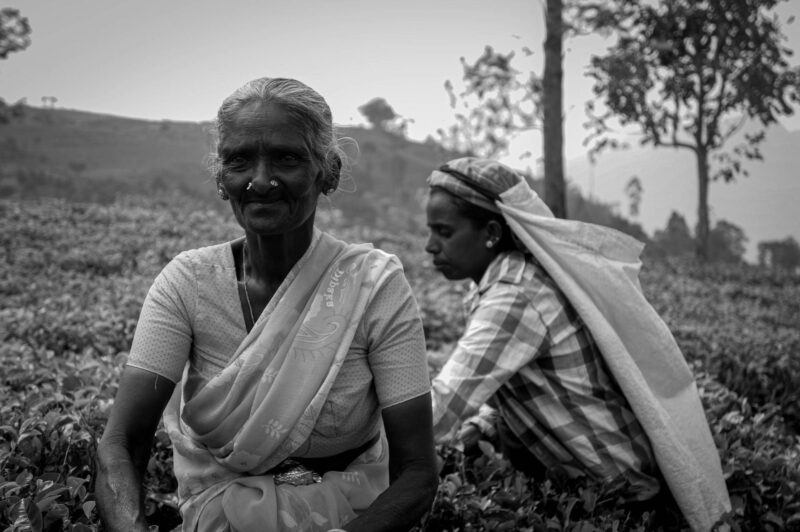
Specs of colour move slowly along the red dirt paths crisscrossing the patchwork of green as tea pluckers diligently pick the newest sprouting leaves from each bush. As they nip the leaves, they fling them over their shoulders into the heavy sacks that rest on their backs, secured with a single strap around their foreheads. Some wear colourful saris while others resort to long overshirts in the hope that it will protect them from the sun during long days in the fields.
Moving south-east into the epicentre of this tea-producing region, the smog and pollution of Kandy is replaced by fresh, dew-filled air; palms and wetlands soon become forests of towering, delicate eucalyptus; and gradually the concrete buildings begin to thin out, first replaced by wooden hovels with corrugated roofs that are in turn supplanted by stone walls, cottages and rustic churches surrounded by manicured gardens filled with shrubs and colourful bouquets. A few of the estates have familiar names: for every Sinhalese-named building, there is a multitude of sprawling estates with titles like Lavander house or Warwick Gardens, Stafford Bungalow or Somerset. This is England, but not as we know it.


Before the British came to Ceylon, there was nothing where Nuwara Eliya now stands. The high plain was first spotted by a group of English officers who were out in the hills on an Elephant hunting expedition. Sir Edward Barnes, the island’s governor wasn’t instantly drawn to the region, enraptured by the bleakness, drizzle and mist-covered landscape that reminded him so much of home. He decided to transform the hills into a sanitary retreat where troops could recover from the tropical diseases they had picked up in the muggy lowlands. In doing so, he created his own little England.
While much of my travels are spent searching for something different, searching for a place to break the mundanity of home, Nuwara Eliya feels incredibly English. Disconcertingly so. Mock-Tudor buildings dominate the town, half-stone and half-timber piles enclosed by wrought iron fences with neatly mown lawns and pristine flower beds. Wander the streets and you will find rose gardens, clock towers, tea shops, a quaint little post office and a Holy Trinity church. There is even a boating lake, golf club, and racecourse at Nuwara Eliya’s northern edge. If you didn’t know any better, you could be in Windermere or Keswick.
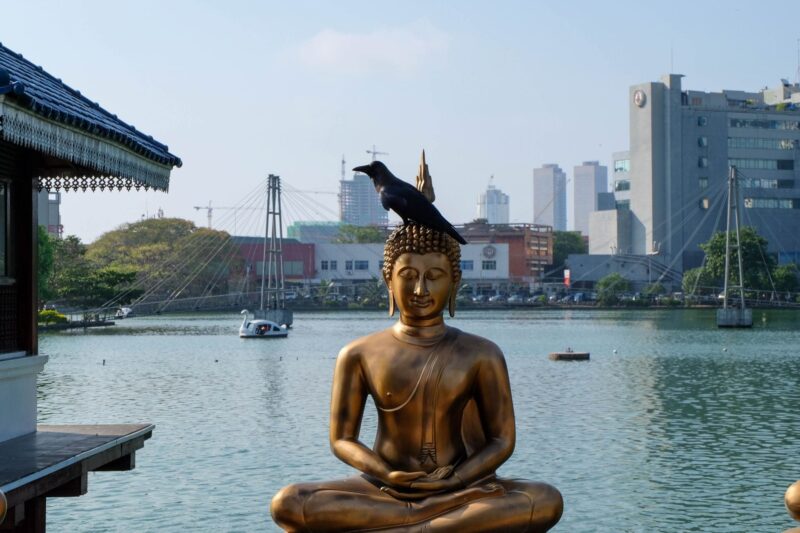
Yet, there is something a little off. Spend any amount of time in Nuwara Eliya and you will see beyond the surface, that the Englishness is mostly a superficial façade, an uncanny valley depiction of ol’ Blighty. At heart, this is still very much a Sri Lankan Town. The bus station is dusty and noisy, tuk-tuks whizz around the streets honking their horns, and monks in orange robes gather outside the town’s temple with its enormous, colourful statue of Lord Buddha.

Yet it does feel English. It could be the flower-covered roundabouts and WWII memorials or is it the white-washed cottages and semidetached homes? The town’s market is a prime example of this dichotomy. The moustachioed men chain-smoking and listening to Sinhalese music are as Sri Lankan as they come, but they are wrapped in woolly hats and padded, off-brand Barbour coats to protect against the cold and wouldn’t look out of place as barrow boys in Covent Garden as they gather at a kiosk, sipping a concoction for which both our nations are famous: Tea.

Although the region is synonymous with tea, coffee was once the main product of Sri Lanka’s hills. It was brought here by the Arabs, long before Europeans set foot on the island, with the Sinhalese using the leaves to flavour their curries rather than brewing the beans. When the British arrived on the island, after failed attempts at growing both sugar and indigo, they decided to give coffee a try, inspired by its success in the other colonies of Jamaica, Guyana and Dominica
Ceylon saw a coffee rush as military men, civil servants and even civilians invested in plantations, lured by the promise of wealth and exoticism. Unfortunately, after months at sea followed by long treks through the hills on foot, most found that the ‘estates’ that they had purchased were nothing more than patches of virgin forest that had been stolen from the Kandyans.
Despite this, the British managed to oversee successful coffee production until the 1880s when the crop was devastated by ‘coffee rust’, a fungus of the leaf that was laying waste to plantations all over the world. By the end of the 19t century, many planters had uprooted their coffee plants and replaced them with tea bushes imported from china. The plants thrived and the rest, they say, is history.


The forests that these early coffee and tea pioneers were cleared by planters almost two centuries ago and now, almost every possible hillside is covered in a leafy carpet of squat, green tea bushes, rippling across the landscape as far as the eye can see. It’s hard to see where one estate ends and another begins, with each looking identical to the others and only narrow dirt paths and handwritten signs separating the Damros from the Pedros.

Turning through the gates of the Damro Labookellie tea factory, I find myself stood before a large, 4-story factory, concrete with a faded green tile roof. It looks as though it hasn’t changed in the 2 centuries since its construction if it wasn’t for the shiny new visitor centre and café that has been attached to the building’s side. The tour of the factory is interesting and the tea tasting afterwards is welcome, but the real reason to venture into the hills is for the scenery. All around the factory, the land drops off into the valley below where tea pluckers stand on the terraces with scarves draped across their heads to protect from the rain, full bags of leaves ready to be weighed and valued.
Behind the main building, narrow roads lined with eucalyptus connect a series of villas that wouldn’t look out of place in surrey, villas that were built by the pioneers on ridges high above the plantations so that they could survey their estates and their growing wealth.
For a century, Nuwara Eliya was the hub of country life for wealthy colonists and in a way, still is. Some parts of the town have remained willfully unchanged in the intervening years to appeal to a certain type of person that rues the passing of the ‘good old days’. Nowhere exemplifies this quite like the Hill Club. Built in 1867, this building was upper-class Victorian England in microcosm: A gentleman’s club for coffee and tea planters; blazing fireplaces in every wood-panelled room, billiard tables, elephant foot umbrella stands and hunting trophies adorning the walls. It only designed to allow women entry in 1967, a – full century after its construction, but at least one of the gentlemen only bars has been amended to a mixed-sex venue. It is like stepping into a Harris Tweed sponsored time warp.

For me, both the Hill Club and the town’s equally plush Grand Hotel are a little too extravagant and instead I find myself at the aptly named Blackpool. While it isn’t quite as kitsch as the northern seaside town of the same name, it may be just as dated. It stands high above the town with sweeping views of the nearby landscape, set against the hazy backdrop of the surrounding hills. From here, with the drizzle pounding against the hotel’s windows, it is easy to see why the region reminded Sir Edward Barnes so much of home. I settled in for my single night in Nuwara Eliya at the hotel’s bar, cradling a local Lion Lager. I get the impression that the room is designed to resemble the sort of gentleman’s bar you would find at the Hill Club but the sticky carpets, pool tables and mobile DJ in the corner banging out cheesy pop hits while 3 drunken Sri Lankan’s throw themselves around the otherwise empty room gives more ‘mid-week Weatherspoon’s’ vibes. This certainly does feel like England after all.
Where to Stay in Nuwara Eliya
Laughing Leopard Hostel
There aren’t many backpacking hostels in Nuwara Eliya but of the few that exist, Laughing Leopard is the best. Located just 10 minutes from the central bus station, this hostel has a focus on sustainability, furnished with colourful upcycled materials in an early 20th-century bungalow.
The Blackpool
The Blackpool stands at an altitude of 1876m, surrounded by vast tea estates, carefully tended vegetable plantations and beautiful mountainous terrain. The décor is a little dated but certainly gives off colonial vibes, particularly the wood-panelled bar area complete with billiard tables. There is even a heated, outdoor pool to help you warm up from the chilly hill country weather.
Heritance Tea Factory
Set on a hilltop away from the town, the 5-star Heritance was built within the wonderfully preserved shell of the Hethersett Estate Tea Factory. Despite the exterior, the inside of the hotel is cosy and modern, with many of the old plantation’s machinery being incorporated into the stylish design.
Things to do in Nuwara Eliya
The real draw of Nuwara Eliya is its oddly British air: the sprawling faux-Tudor landmarks, misplaced architecture and strange, English country village kitsch. The unpredictable weather does have the tendency to put a dampener on your ability to explore the town and its adjacent lake but the charming town and its stunning heritage hotels make a fantastic base for exploring the stunning southern hill country landscapes and tea estates.
Sample Ceylon Tea at a Historic Tea Estate
Sri Lanka is so synonymous with tea, it’s hard to believe that before the mid-1800s, it was mostly a coffee-growing nation. It wasn’t until James Taylor planted his first tiny tea plantation in 1867 and further developed the production process with Thomas Lipton (yes, of Lipton Tea fame) that Ceylon tea made a name itself.
Sri Lanka’s tea production has definitively come a long way since those initial 19 acres that Taylor planted, but not much has changed in the way that it is harvested: In the numerous plantations that surround Nuwara Eliya, women weave their way across the verdant green hills each day, using their well-trained and nimble fingers to pick the new leaves and buds from the top of the tea bush.
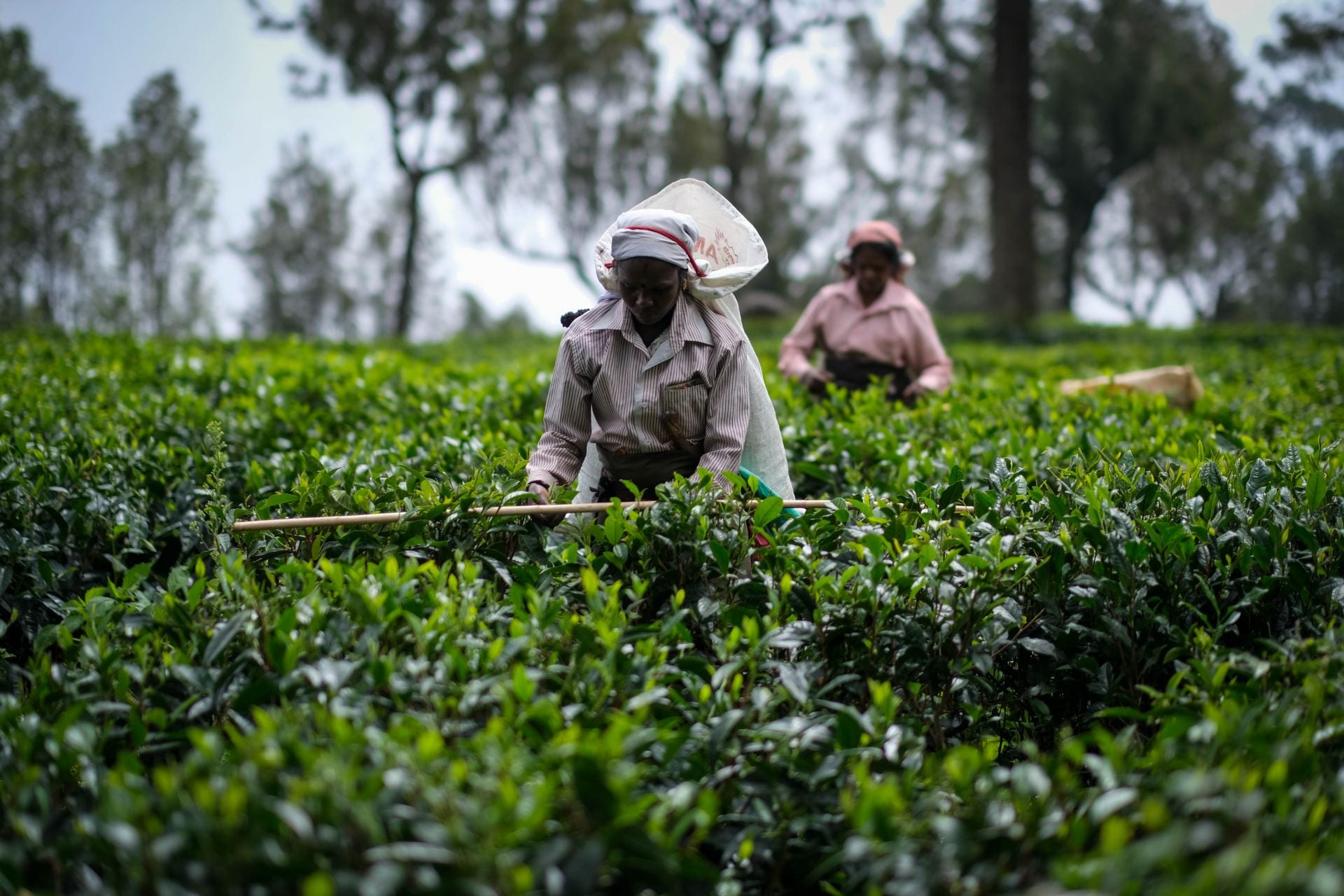
It wouldn’t be a visit to Nuwara Eliya without a visit to one of the factories churning out the nation’s most famous export and the Damro Labookelie Tea Estate, around 20km north of the town is the best of the bunch. Set high in the gorgeous rolling countryside at an elevation of around 2000m, the factory offers free tours in which you will be guided step-by-step through the production process, finishing with a tea tasting session at their on-site café. However, the best reason to visit is the opportunity to wander the Labookelie tea gardens amongst the Tamil women as they fill their sacks with leaves.
Take a Ride on the World's Most Beautiful Train Journey
First constructed by the British in the mid-19th century as a way to transport the produce of the regions bountiful tea plantations, the line that weaves its way from Nuwara Eliya through the lush hill country to Ella, Haputale, and Bandarawela in the east or to the nations cultural capital of Kandy in the west is said to be one of the most beautiful train journeys in the world.
The trip from Nanu Oya, near Nuwara Eliya, to Ella takes a couple of hours, stopping off at all manner of delightful hill country towns and railway stations along the way. At each destination, locals scurry out onto the platform only to be replaced by a new influx of passengers, joined by men that squeeze their way down the packed carriages with baskets of fruit, freshly cooked rotis and urns of steaming Sri Lankan tea that they sell for just a few rupees.

A few intrepid passengers sit in the open doorways, their dangling legs swaying with the carriage’s motion and their heels beating against the train’s metal body, only pulling them inside to avoid battered railway signs or approaching tunnels. As you look from the windows at the countryside unfurling before you like lush green blanket tumbling across hills and valleys, speckled with plantation houses, tea fields and lanky, lurching palms, it’s easy to see why people hold this route in such high regard. Occasionally the scenery gives way to villages and hamlets where local life is in full swing: children running and laughing on the side of the rails, farmers tending to their fields and women preparing their washing. Eventually, they fade into view, once again being replaced with waterfalls and mountains.
This is quintessential Sri Lankan experience and, in a world where hyperbole seems so commonplace, one that actually lives up to the hype. I’m in no doubt that this may be the most beautiful train journey in the world.
Shop at the Central Market on New Bazaar Street
While the mock-Tudor mansions and sprawling green spaces that surround Nuwara Eliya are beautiful, the town’s main thoroughfare, New Bazaar Street has little of interest other than rows of local shops and food spots. However, the small Central Market is definitely worth a look. Set up during the colonial era, the stalls are very much as they were in those Victorian times; rows upon rows of fruit and vegetable stalls sold by men bundled up in woolly hats and labourers jackets, with only the sari-clad Tamil women shopping for onions and potatoes breaking the illusion of an old English market.

Pidurutalagala
Pidurutalagala towers high over the town with its peak rarely seen through the cloud cover and mist that often hovers over the hill country. At 2555m it is Sri Lanka’s highest mountain. Although the summit was once closed due to the military base that sits atop it, a section is now open to the public. However, hiking is still off-limits due to the array of military communication masts that are still used by the army so you will have to catch a tuk-tuk or taxi there (45 mins; Rs. 3000 return). Make sure to bring your passport to ensure you are allowed past the security gates.
Have High Tea at the Grand Hotel
Nowhere in Nuwara Eliya is more evocative of Britain than the brash, half-timbered Grand Hotel. This sprawling, luxurious, century-old pile gives of serious country club vibes and with its splendid wooden décor, historic bars, and billiards room, there is no better place in town to immerse yourself in colonial-era Nuwara Eliya. For the full experience, come for high tea. At 3.30pm sharp every day, High tea – complete with dainty cakes and triangular sandwiches – is served either out on the lawn or in the tea room by stoic waiters in waistcoats and white gloves.
Lake Gregory
Stretching from Nuwara Eliya’s southern end all the way to the foot of the surrounding hills, Lake Gregory was created by the governor, Sir William Gregory, in 1873. While not wildly impressive or exciting, the footpaths and lawns that line the western shore are a pleasant place to walk, particularly in an evening when locals and Sri Lankan holidaymakers flock here to picnic, ride horses, or float along in swan-shaped pedalos.


Victoria Park
Named for the former ruler of British Ceylon, Victoria Park is a little slice of Britain, with pristine lawns and a number of beautiful ornamental gardens. Located just off the main road and next to the noisy, bustling bus depot, the gardens are a surprisingly peaceful place to wander amongst the enormous eucalyptus trees and rose bushes. Its even prime bird-watching territory with a number of rare species such as the Kashmiri flycatcher and Indian blue robin stopping by on their migration routes.
Where to Eat & Drink in Nuwara Eliya
The majority of Nuwara Eliya’s best restaurants are confined to the town’s larger, upmarket hotels which offer a range of fine dining and international options as well as having fantastic colonial-era bars, particularly the Hill Club’s atmospheric ‘Mixed Bar’.
There are plenty of local, Sri Lankan cafes dotted along the town’s main drag and while many of them serve up the same mix of curry, rice and short eats, they can provide a cheap but tasty meal. Make sure to check out the small kiosks lining New Bazaar Road where you can find wonderful rotis, samosa and prawn dumplings for as little as Rs. 10 (4p) each.


The Hill Club
If you want to throw yourself headfirst into the past and re-live the colonial era, then the Hill Club is the atmospheric throwback that you need. Formal dress – meaning a jacket and tie for men – is required in the main dining room where waist-coated waiters in pristine white gloves serve classic, British cuisine. While the food may not be of a standard befitting the surroundings, it is worth stopping by for the atmosphere, even just to sip a whisky in the old-fashioned ‘Casual Bar’. Visitors are required to pay a temporary club membership fee of Rs. 100 to use the facilities.
Where: 9 Grand Hotel Rd
When: Daily 12pm – 10.30pm
De Silva Food Centre
Of the numerous Sri Lankan Cafés that occupy New Bazaar Street, De Silva Food Centre is probably the best. They serve a few western and Chinese dishes but the cheap vegetarian rotti and range of curries make this the best place in town to stop for a budget lunch or dinner. Try their ulundu vade because it is apparently the best you will find in this region of Sri Lanka.
Where: A/2 Building New Bazaar Street,
When: Daily 7am – 10pm
Grand Indian
A small, casual, Indian restaurant at the foot of the Grand Hotel’s sprawling driveway. This is probably the best option in the city for Indian cuisine and despite being part of the exclusive Grand, all the dishes are reasonably priced. It does get busy so make sure that you arrive early to guarantee a table.
Where: Grand Hotel Rd
When: Daily 12pm – 3.30pm and 6.30pm – 10pm
Grand Thai
Another in the Grand Hotel’s fairly large selection of restaurants, the Grand Thai offers a good range of South-East Asian cuisine such as curries, stir-fries and noodle dishes for around Rs. 600 – 800 per main.
Where: Grand Hotel Rd
When: Daily 12pm – 3.30pm and 6.30pm – 10pm
Indian Summer
Although a little overpriced, the north Indian curries served at this ‘fusion restaurant’ are as good and as authentic as anything found at the Grand Indian, with the added bonus of being lakeside with beautiful views over Lake Gregory.
Where: 96 Gemunupura, Mahagastota
When: Daily 10am – 10pm
Sri Ambaal
Another mainstay of New Bazaar Street, Sri Ambaal is a cheap, south Indian spot with a menu of delicious vegetarian curries, short eats and string hoppers. The dosas are particularly popular.
Where: New Bazaar Street
When: Daily 7am – 10.45pm
Coffee Bar
Sharing a building with the Grand Indian, this modern café situated on the driveway of the Grand Hotel is one of the few places in town where you can find a decent cup of coffee, along with decent cakes and a few underwhelming sandwiches.
Where: 5 Grand Hotel Rd
When: Daily 7am – 9pm
When is the Best Time to Visit Nuwara Eliya?
Nuwara Eliya gets consistent rainfall throughout the year due to its high altitude, although February is usually the least rainy month. Just be warned, winter can be a little chilly here, especially at night. It is best to avoid the Sinhalese-Tamil new year in April when people flock here from Colombo to enjoy the onset of spring when the city is beginning to bloom. During this time accommodation can be hard to come by and prices tend to skyrocket.
Getting to Nuwara Eliya
Nuwara Eliya is easiest to reach by train. Although it doesn’t have its own station, Nanu Oya is just 5km away and has regular services to Ella, Haputale and Badulla to the east and Kandy or Colombo in the west. Although local buses arrive to meet each train and ferry passengers onwards to Nuwara Eliya, a tuk-tuk will be quicker and cost around Rs. 500 – 600 (between £2 and £2.50).
Nuwara Eliya’s bus station is right in the centre of town and as well as running services to the destinations mentioned above, there are also buses to Bandarawela or Galle (1 daily; 8 hours) and Matara (1 daily; 9 hours) on the southern coast.
I visited Nuwara Eliya as a guest of Sri Lanka Tourism. However, all views are my own.