
Wandering the labyrinthine lanes of the Old City, or the busy shopping streets of Kamla Market and Chandni Chowk, it is easy to see why Delhi is known to churn out some of the best street food that India has to offer. On every street corner of the capital, you will find an enterprising cook, armed with just a hotplate and some pans, sliding a variety of battered or pastried vegetables into a pot of bubbling ghee and dishing it out in small, aluminium containers. There isn’t a single street devoid of at least some kind of delicious cuisine. A city of 19 million takes a lot of feeding, and street food is the fuel that keeps Delhi ticking over.
Stalls spill out of buildings and onto the street where people gather, often up to the roadside, leaving no space for walking. Most stalls are borderless, the queues blending into one another leaving you questioning where the person next to you bought their delicious-looking dish. From crispy samosas to chaats smothered in spicy chutneys, stuffed parathas fried in desi ghee to syrup-soaked desserts, Delhi will leave you spoilt for choice, eschewing those fancy restaurants in search of some of the best street food you will ever taste.
Bhelpuri
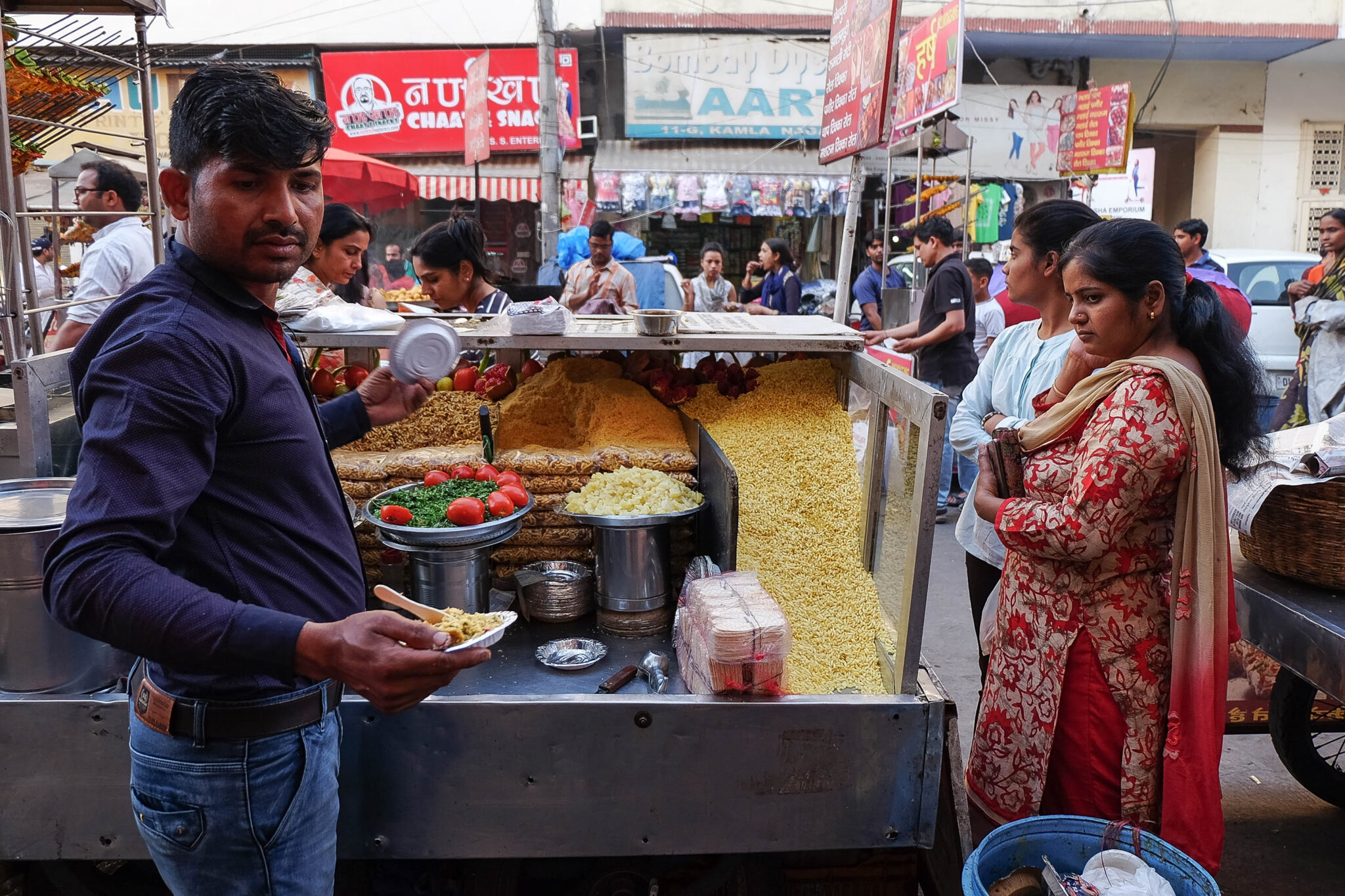
Bhel puri may not seem all that appetising at first glance. The vendor stands behind his stall, picking disparate ingredients from dozens of different pots and mixing them all together in wide stirring motions in a large, metal mixing bowl; puffed rice, sev, vegetables (potatoes, onions, cucumber), chat masala, tomatoes and fruits all stirred with a spicy tamarind sauce before being heaped onto a plate. This brown mix of spicy and sweet, crisp and soft shouldn’t be pleasing to the palate, but it quickly became my favourite Indian street food.

Parathas
Parathas, or stuffed parathas to be specific, are so intrinsically linked to eating out in Delhi that the city even has a street dedicated to their consumption. Gali Paranthe Wali (literally the “lane of parantha-makers”) is a narrow street off Chandni Chowk noted for its parantha makers.
The street was originally established in 1650 as a silverware market, and it wasn’t until the 1870’s that the paratha shops moved in, the first being Pandit Gaya Prasad Paranthewala in 1872. Some of those originals still remain, such as Kanhaiyalal Durgaprasad Dixit (est. 1875), Pt Dayanand Shivcharan (est 1882) and Pt Baburam Devidayal Paranthewale (est. 1886) and are being run by the sixth generation of the same family.
For those that are unacquainted with paranthas, they are a type of Indian flatbread, normally fried in desi ghee and stuffed with anything from vegetables to besan methi. These are then served with a sweet side such as chutney or potato curry.
Where to Try It
Gali Paranthe Wali in Old Delhi is the best place to start. The food here is strictly vegetarian and doesn’t include onion or garlic, since the owners are Brahmins. Close by is Kake di Hatti, cooking their paranthas in a tandoor and stuffing them with cheese or aloo pyaaz, gobi and methi.
Pani Puri
As you wander the streets of Delhi, you will see carts stacked high with puri, a hollow, spherical crisp that is then filled with chutneys, chaats and yoghurts. Eating pani puri can be a difficult undertaking for non-Indians. The idea is to take the full, oozing ball into your mouth in one go without spilling its contents down both your chin and t-shirt, which I certainly didn’t manage to do.
Where to Try It
We bought ours from a stand beside Kamla Nagar Market, opposite Hansraj hostel. The stand doesn’t exactly look permanent, but I’m told that he is there every day without fail.

Samosas
Pretty much everyone is familiar with samosas, the little fried savoury triangles with spiced fillings, however, what I wasn’t prepared for was the sheer variety of them on offer in Delhi; Paneer samosa, japani samosa, kachori style samosas, and even keema samosas. I found them to be larger and fatter than the ones we are used to at home, and they often come served with a small bowl of spicy sauce or mint chutney.
Where to Try It
Bangla Sweet House (115-117 Bangla Sahib Marg, Gole Market, Open 8 am – 10.30 pm) serves up great Matar Paneer samosas and mini samosa as well as gulab jamun and jalebies for those looking to follow up their pastries with a desert. Alternatively, Kumar Samose Waala (2/31 Phase 3, New Moti Nagar, Open 10 am – 8.30 pm) has as many as 25 different varieties of samosas including Chocolate Samosas.


Aloo Chaat
Chaat is available on practically every street in Delhi’s old town; mashed lentil dumplings smothered in sweet yoghurt and spicy chutneys, or crumbled samosas covered in the same heady mix of toppings. However, aloo chaat seems to be the most popular, at least from what I saw. Everywhere you look are men watching over vast, blackened skillets of smoking oil, pushing cubes of potato around until they are golden brown and crisp.
Where to Try It
Bishan Swaroop (1421 Chandni Chowk, 10 am – 9 pm), hidden away in one of Chandni Chowk’s unruly side streets, apparently has the best aloo chaat in the city and has been in business since 1923. They only have 3 dishes on the menu – aloo chaat, aloo kulla, and fruit chaat – but it is a must-visit for potato lovers. Alternatively, I visited Vaishno Chat Bhandar (93-E Kolhapur Road. open 10 am – 10 pm) as it’s the perfect place to try both aloo chaat and poa bhaji at the same time. As you can see from the picture below, it gets incredibly busy, which can only be a good sign.


Momos
I have been told by some that the momo could be considered Delhi’s state food, despite their Nepalese/Tibetan origin. Such is the popularity of these little balls of joy, a stall can be found in every corner of the city, dishing out these dumplings in their various styles. You will find them fried or steamed, vegetarian or stuffed with meat and served with a wide variety of different sauces.
Where to Try It
While most street stalls only serve two or three different styles of momo, Momo’s Point (27 UB Chattori Lane, Kamla Nagar, Open 11 am – 10 pm) has an incredibly vast menu serving chicken, pork, paneer or veggie varieties that come either steamed or fried and in a variety of styles (masala, tandoori, Afghani and even honey glazed).
Kulfi / Icecream
In a country that takes its desserts pretty seriously, Kulfi is most people’s go-to sweet snack. Often described as “traditional Indian ice cream”, it is denser and creamier than the ice-cream that we are used to in Europe and is normally found in pistachio, cardamom, saffron, and rose flavours. Kulfi vendors can be seen pushing their refrigerated karts around most of the city’s parks or streets, and Delhi certainly isn’t short of ice cream parlours dishing out the nation’s favourite desert.

Where to Try It
Dhani Ram Kulfi Wale (93 Madanlal Narula Marg, Kamla Nagar, open 10 am – 10 pm) serves a wide variety of kulfis as well as more traditional ice cream. If you wait outside the shop, you can watch as the cream is smeared on an ice-filled drum and covered in colourful sauces until is it frozen.
Jalebi
The artery-clogging sweetness of a jalebi can be a fine thing, it’s just best that you don’t think of their calorific content as you shovel these syrup-soaked spirals of fried batter into your mouth. they come in many forms; Doodh jalebi (jalebi soaked in milk), Kesar Jalebi (mixed with saffron), and much more.
Where to Try It
Old Famous Jalebi Wala (1795 Dariba Kalan Road, open 8 am – 10 pm) in Chandni Chowk are known as having some of Delhi’s best jalebi, frying them in pure desi ghee rather than oil.
Poa Bhaji
A dish that’s more synonymous with Mumbai than Delhi, it is still incredibly popular on the streets of India’s capital city. the bowl of brown mush may not be much to look at, but behind its sloppy veneer is a tantalising mix of sour, spicy and buttery tastes. Pao (or ‘pav’ and ‘pau’ as it is sometimes known) is the Portuguese word for bread and refers to the rolls that are often griddled with substantial amounts of ghee. The bhaji part of the name is the vegetables; a mix of anything that could include cauliflower, carrots, bell peppers, green peas and potatoes that are cooked with onions, tomatoes and a mix of spices before being beaten to a pulp with a potato masher. While that might not sound appetising, it is one of the best dishes you will eat in the whole of Delhi.
Where to Try It
Vaishno Chat Bhandar (93-E Kolhapur Road, Kamla Nagar, open 10 am – 10 pm).

Kaju Katali
Kaju katli, also known as kaju barfi, is a cashew flavoured dessert that comes in the form of a diamond-shaped slice. It’s made by mixing a cashew paste with sugar and milk that is thickened and left to solidify. Kesar kaju katli, a version made with saffron, is also a pretty popular variation. Spend any amount of time in India and you’ll soon see that the nation has an insatiable sweet tooth but these deserts often have more significance than the simple desire to have ‘meetha’, they’re also a popular gift at various festivals and celebrations where you will find the slices decorated with edible silver foil.
Where to Try It
Kaju Katali is available all over the city, but Chaina Ram Sindhi Confectioneries (499 Fathepuri Chowk, open 8 am – 8 pm) in the Chandni Chowk area is especially renowned for its sweet treats.
India Essentials
When travelling, there are certain brands and resources that I always rely on when booking things like flights, accommodation and tours. Here are my recommendations.
Mobile Data and SIM Cards
Prepaid eSIM’s are a great way of accessing affordable data and staying connected while travelling. I use and recommend Airalo.
Booking Accommodation in India
When securing accommodation abroad, I almost always rely on Booking.com as they have everything from rental properties to homestays and luxury hotels.
Most cities in India also have a good range of hostels for the budget traveller and some of the country’s largest chains such as Moustache and Zostel have outposts here. I always use Hostelworld when booking my bed in hostel dorms.
Train Travel in India
Thanks to India’s extensive rail network, the country is best explored by train, however, booking rail tickets in India can be slightly confusing when using local booking services. The cheapest and easiest way of securing tickets is via 12GO, who allow you to search for journeys and book trains easily.
Tours in India
Many of India’s cities are vast, sprawling and chaotic, meaning that they are best seen with the help of a local guide. Whether you are planning an adventurous day trip or a delectable food tour, Get Your Guide and Viator have a huge number of options.
Travel Insurance
I explored Delhi’s food scene on Urban Adventure’s Delhi Food Walk, which I would highly recommend to anyone looking to find some of the city’s best dishes.



2 Responses
wow, nice post it’s really good to know about Indian food
I visited India earlier this year (including Delhi) but the itinerary was so tightly packed, and didn’t include a food tour – but that’s something I’d like to experience more on a future trip, hopefully.🔆