Age-worn canary yellow houses, silk lanterns strewn across every passageway bathing the streets in a colourful glow and a bustling waterfront where fishermen unload their hauls of glistening fish for the waiting market traders. Add to this the lush green rice fields surrounding the town, the nearby beaches, and its laid-back ambience, it is easy to see why Hoi An is one of Vietnam’s most popular destinations.
It is a place that exudes old-world charm and atmosphere. Granted UNESCO World Heritage status in 1999, visitors have begun flocking to its ancient town centre. Tourism is now Hoi An’s main means of income, but it hasn’t always been that way. For centuries the town, once known as Faifo, was the principal port of the Cham Kingdom and then, in the 17th century, its coastal position on the Thu Bon River delta allowed it to become one of the busiest ports in South East Asia.

With the traders came ships from as far away as Europe and East Asia. The Nguyen rulers even allowed Chinese, Japanese and Dutch communities to settle here while keeping their own customs, building houses, shops and even streets. It’s this melting pot of east meets west that really makes Hoi An so fascinating and an essential to be included on any Vietnam tour packages.
Although the shipping trade has long since moved to nearby Da Nang, this cultural mishmash still remains. Firstly, there is the town’s famous cuisine – a mix of traditional recipes with culinary influences from as disparate regions as France, Japan, and China – and then there is the jumble of differing architectural styles. Over 1,000 wooden frame buildings in the form of temples, shops and assembly halls make up the stunning historical centre.

It’s this historical centre that is Hoi An’s star attraction. The Old Town exudes charm and oozes character. Much of the centre has remained the same for centuries, with the exception of the occasional lick of paint and a few new lanterns being added to the hundreds that sway above your head. There is nothing better than wandering the waterfront and weaving down the narrow lanes between the yellow buildings. However, Hoi An has plenty to offer beyond its history. Here are my favourite things to do in the city.

The Best Things to do in Hoi An
1. Delve into the history of Hoi An’s Old Town
2. Indulge in Vietnam’s Most celebrated Food Scene
3. Take a Day Trip to the Cham Ruins of My Son
4. Take a Cooking Class
5. Assembly Hall of the Fujian Chinese Congregation
6. Cross the Japanese Covered Bridge
7. Walk the Waterfront
8. Take a Bicycle Tour of Hoi An’s Outskirts and Rice Paddies
9. Have an Outfit Tailor-Made
10. Wander Around the Night Market
11. Shop at the Central Market
12. Relax on An Bang Beach
Delve into the History of Hoi An's Old Town
Strewn with strings of paper lanterns and daubed in a vibrant, golden hue, the old town of Hoi An is easily one of Vietnam’s most delightful tourist centres. Unesco World Heritage status has meant that so much of the grand Chinese and Japanese architecture (over 800 buildings have been earmarked for protection) that has been painstakingly preserved, meaning not much has changed in the city – at least superficially – for hundreds of years.
Some of the town’s old houses have been opened as museums for visitors and offer short tours, although they can feel a little stale and not all that interesting. The best of them though is Tan Ky House which has stood for two centuries and has been lovingly preserved by the 7 generations that have lived there since.

For those wanting to visit the old town and its attractions, you will need to buy a ticket at one of the various entry points to the centre. Tickets cost 120,000 VND, cover the entirety of your stay in Hoi An (and as many visits to the historic centre as you wish) and include 5 coupons that you can use for entry to various attractions. These are The Japanese Covered Bridge’s pagoda, the Precious Heritage Museum, Museum of Folk Culture, Museum of Trade Ceramics, Hoi An Museum of History and Culture and any of the old houses or congregation halls.
Depending on the time of day and your entry point to the town, you may not be asked for your ticket or asked to buy one, just be prepared to purchase one at any point that you are approached. The way I see it, 120,000 VND is a small price to pay to contribute to the preservation of Hoi An.

Indulge in Vietnam's Most Celebrated Food Scene
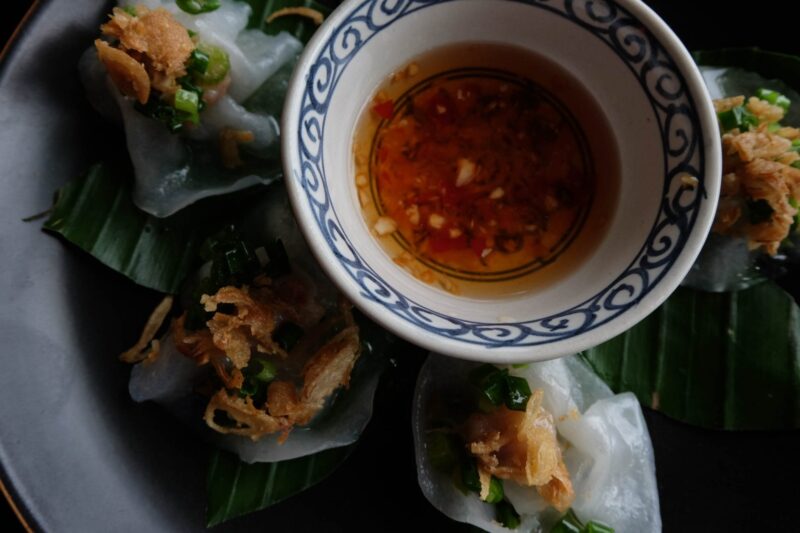
Hoi An is considered by many to be Vietnam’s foodie capital and with good reason. With culinary influences from as disparate regions as France, Japan, and China, Hoi An’s cuisine combines this mix of traditional recipes with fresh ingredients; the fish and shrimp come to your plate from both the nearby East Vietnamese Sea and the Thu Bon river, the vegetables from local organic gardens, and the flour is freshly milled from the rice paddies encircling the town. Then there’s the water; Most of Hoi An’s noodle dishes use alkaline water drawn from ancient local wells, meaning that certain dishes like white rose dumplings (banh bao banh vac) and cao lầu are not found anywhere else in the country.

White rose dumplings are small rounds of rice paper that are filled with meat or shrimp and carefully folded to resemble a rose before being steamed. The water must be taken from the ancient Ba Le Well and purified 15 times before use. The recipe for banh bao banh vac is a closely guarded secret, held by one single family in the town that supplies all the restaurants. Many would say that you haven’t sampled Hoi An’s cuisine until you’ve had a taste of these airy dumplings.


In my other Vietnam guides, I have mostly eschewed restaurants in favour of street food. However, while there are many great pavement eateries dotted on the banks of the Thu Bon River and scattered throughout the old town, Hoi An is one of the few places that I would recommend sampling a few indoor spots. That’s the beauty of Hoi An. With its great culinary tradition you can grab a quick bite at the market, snap up a cheap meal at a cafe, or splash out on a high-end dining experience and you know that it will be delicious.
Read More: Where to East & Drink in Hoi An
Take a Day Trip to the Cham Ruins of My Son
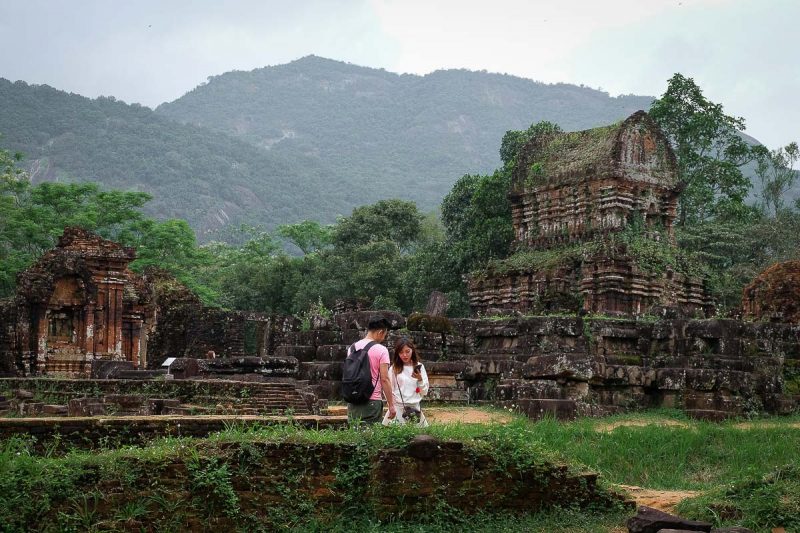
Constructed between the 4th and 13th century, My Son was once the most important religious site in the kingdom of Champa. Most of the temples were dedicated to Cham kings and their associated Hindu deities and served as burial sites for the monarchs. While there were once almost 70 structures here, severe American bombing during the American War means that only 20 have survived and are in fairly poor condition. That doesn’t mean that you should skip this place though, the lush surroundings of jungle and babbling brooks mean that the site is still enchanting. My Son was declared a UNESCO World Heritage Site in 1999.
Most hotels in Hoi An will organise trips to the ruins with the transport costing anywhere between £5 and £10 and leaving at around 8 am. I recommend hiring a moped and driving the 55km yourself as the ride through rice paddies and smaller villages gives you a greater sense of what the region has to offer. The route is well signposted and driving yourself means that you can arrive before the tour buses. Entry costs 100,000 VND and the site is open from 6.30 am to 4 pm.

Take a Cooking Class
Do you know your Bánh mì from your cao lầu? Do you want to learn to cook and eat like a local? Hoi An is a hotbed of Vietnamese cuisine, so what better place to learn culinary craftmanship than here. Cooking schools in the town are a dime a dozen and come in all manner of varieties. Some are a couple of hours long and held in local restaurants, while others last the whole day and are combined with market tours. It is best to do a little research and choose your course based on how much time you have and your own preferences, however, both Vy’s Market Restaurant & Cooking School and the course at the longstanding Morning Glory Restaurant come highly recommended.
Assembly Hall of the Fujian Chinese Congregation
As Chinese immigrants began to populate central Vietnam, assembly halls sprang up all around the country as a place for these newcomers to socialise, do business, and preserve Chinese traditions. There are 5 such halls in Hoi An (Fujian, Chaozhou, Hainan, Cantonese, and Chinese), all on Tran Phu Street.
The most famous and grandest of these buildings is the Fujian assembly hall. Originally constructed by the town’s Fujian Chinese community, the hall was later transformed into a temple for the worship of Thien Hau. A huge, ornate gateway decorated with carvings of mythical figures greets you as you enter the vast courtyard as locals light incense and pray, apparently for luck in conceiving children.

Cross the Japanese Covered Bridge
The symbol of the city, this ornate bridge was first constructed in 1590 by the Japanese as an act of goodwill between them and the Chinese merchant community. Despite being restored in 1986, its design and ornamentation are still pretty faithful to the original and it remains the only covered bridge in the world to contain a Buddhist temple. You will have to give up a ticket to enter the temple itself, but it is hardly worth it, I’d recommend crossing for free without entering the inside rooms.

Walk the Waterfront
“Want a boat?” comes the constant cry from the oarsmen and women lining the edge of the Thu Bon, hoping to gain the custom of a tourist in need of boat ride down the river. I spent a lot of my time in Hoi An sat in one of the cafes lining the waterfront, watching them accost passers-by. Despite this light harassment, Hoi An’s riverside has to be the most enchanting part of an already beguiling town. At dusk, it becomes bathed in the golden hour’s warm glow and the crowds gather on the banks, waiting for the sunset and snapping photographs of the now orange-hued buildings. Then at night time, the town is transformed once again. Gradually the paper lanterns strung around the town begin to illuminate one by one and people float candles down the Thu Bon in a trail of flickering flames.

Take a Bicycle Tour of Hoi An's Outskirts and Rice Paddies
One of the many things that make Hoi An so enticing is that it strikes a perfect balance between an urban hub and lush countryside. Just on the outskirts of town – in fact, running all the way to the roadside at the edge of Hoi An proper – are acres of green rice paddies.
Most hostels and hotels will allow you to rent or hire a bike, so make the most of it and spend the afternoon cycling around the paddies. For me, it was a photographer’s dream to sit on the roadside and capture images of the people working the fields.


Have an Outfit Tailor-Made
With its history as a merchant trading town, it’s no wonder that Hoi An has a reputation for flogging fabrics and textiles. The clothing trade has boomed here, and much of the old town is crammed with tailors and leather shops. Although many of the shops produce top quality garments, be aware that some are just a storefront, outsourcing the tailoring to nearby workshops. Try to use a trusted name like Vanda Tailors, Yaly Couture and Thu Thuy that have in-house production. This means that you will have multiple fittings, refittings, and the tailors will take their time over your pieces.
Ensure that you have exact specifications for what you would like, including examples and/or samples and give yourself enough time in Hoi An to have the garments made. A suit knocked up in 24 hours is bound to be of much poorer quality than one that takes 3 days with multiple re-fits. Other than that, make sure to shop around and do some research online before selecting a tailor.

Wander Around the Night Market
On an evening, as the streets come alive with the glow of colourful lanterns, the night market across the river in An Hoi gets underway. Constant cries of “Mister, buy something!”, “Look Here!” and “Special price, just for you!” can become a little irritating, but only add to the atmosphere.
Although prices are somewhat inflated, it is still one of the cheapest spots in the town to buy yourself a souvenir, especially your own paper lantern. Be prepared to negotiate but only haggle if you are serious about making a purchase and always be good-natured about it.

Even if you are not looking to buy anything, the town’s signature lanterns are what really set this market apart from the countless others around Vietnam. Just strolling through the stalls is a pleasant evening in itself. So arm yourself with your camera, grab some street food and soak up the atmosphere.
Shop at the Central Market
Hoi An’s central market is considered one of the best in Vietnam. It is an assault on the senses as fragrant aromas emanate from the fresh herbs and spices on display and colourful sheets of silk hang from the stalls. The market is renowned for its tailors, who will knock you up a suit or dress for a lower price than elsewhere in the town, although I cannot vouch for the quality of the garments. Elsewhere you will find exotic fruits, locally made handicrafts and plenty of souvenirs as well as an abundance of cheap street food.
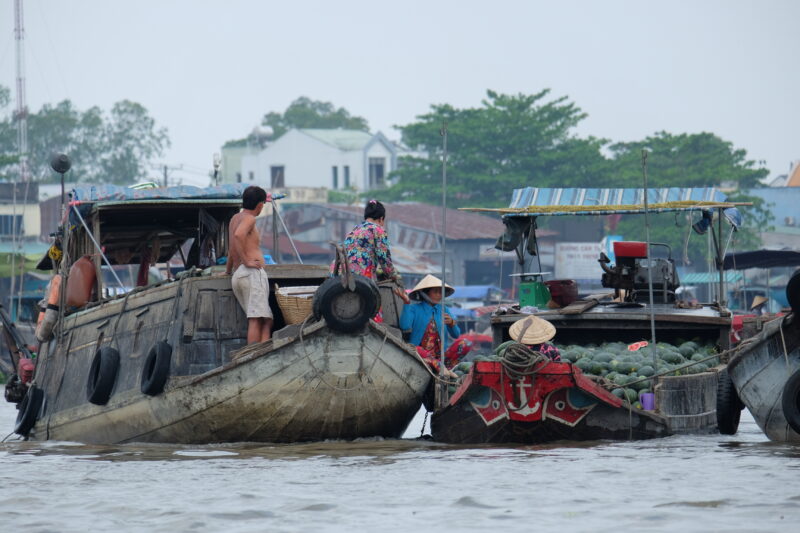
The market runs all the way down to the edge of the Thu Bon River, so it is worth heading to the waterfront for an authentic slice of Vietnamese life. Arrive early in the morning to watch the fishermen unload their catch and the local buyers descend to get their hands on the best fish.

Relax on An Bang Beach
While Cua Dai may be the prettier local beach, An Bang is popular with backpackers and a little quieter than its neighbours. There is still a lovely expanse of pristine white sand surrounded by lush casuarina trees and a number of restaurants dotted around. If you can, borrow a bicycle from your hostel as the beach is only a 10-15 minute ride from the edge of town.
Where to Stay in Hoi An
Deciding where to stay in Hoi An can be a tough choice. There is the Ancient Town, where the majority of the attractions, restaurants, and bars are located, its immediate surrounds such as Cam Nam and Tan An, or the beach. The decision really comes down to personal preference.
If your main reason for visiting Hoi An is to sample the history and culture of its ancient centre, then staying in the old town and its surrounds would be best. As most central hotels can be expensive, I recommend booking a hostel in nearby Tan An or Cam Nam. Tan An is the newer, more modern part of the city, but has the benefit of being surrounded by lush, green rice paddies and is only a short walk (20-30 mins) or cycle (5-10 mins) from the riverside. Again, Cam Nam is close-by, but a bicycle makes trips into town a little easier.
For beach lovers that only intend on visiting the town once or twice, An Bang Beach may be the best option. It is a long bike ride from the centre so a shuttle or taxi is probably required to reach the Ancient Town. Failing that, you can always hire a moped to make the 10-15 minute journey.
Vietnam Backpacker Hostel
One of the latest offerings from the trusted chain of hostels, Hoi An Backpacker Hostel has everything a traveller could need. It is centrally located halfway between the historical town and Cửa Đại beach. As well as having a huge pool, the hostel offers a free breakfast, nightly themed parties and has an on-site bar. For those looking to get out of town, trips to My Son and the Cham Islands, as well as further afield, are organised by the hostel.
Sunshine Hotel
After slumming it in sketchy Saigon hotels, Sunshine Hotel felt like a backpacker’s dream to me. Hot, powerful showers, a spacious room, and expansive, free breakfast meant I was in my element. It is situated a little far from the action (around a 30-min walk to the riverside) on the edge of town but they offer a free shuttle to the historic centre and have bicycles that you are able to borrow to explore the surrounding rice fields. . The outdoor pool is a lovely bonus.
Under the Coconut Tree
Situated, yes you guessed it, in a lush grove of coconut trees, Under the Coconut Tree is a stark contrast to the bustle of Hoi An’s historic centre. It is fairly rustic; bamboo and rattan huts clustered around a huge communal dorm, each bed coming with mosquito nets, power outlets and an under-bed locker. The private rooms aren’t too fancy but it is also just a short walk down a private path to the beach, making this the place to stay for backpackers in An Bang
Getting In & Out
By Air
The nearest airport to Hoi An is in Da Nang International. From there you will find plenty of domestic flights to Hanoi, Hue, Ho Chi Minh City and Can Tho at fairly reasonable prices (I paid around £25 to fly in from Can Tho with Vietjet), as well as international flights to China, Thailand and Cambodia.
A private car from Dan Nang Airport to Hoi will cost you anywhere between £10 – £20 and take approximately 45 minutes. I have been told that the fixed price displayed at the airport – 400,000 VND – will always be cheaper than going by the meter, which is worth taking into account when choosing your driver. Make sure to agree on a price before you set off. Some hotels in Hoi An offer a cheaper, private shuttle service.
There is no public bus to and from the airport, however, the ‘yellow bus’ #1 runs frequently from the centre of Da Nang to Hoi An and back. You can get a taxi to Da Nang train station to catch it, or walk 15 minutes to the nearest stop at the crossroads of Nguyễn Tri Phương and Điện Biên Phủ streets.
By Train
There is no railway station in Hoi An, the nearest is in Da Nang. Once again, you will have to take the #1 bus from the train station to reach Hoi An. To catch it, find the bus stop at 299 Le Duan road with a blue and white sign for bus #01 and #09. Bus #01, just a couple of minutes walk from the station. The bus stops here every 20 minutes until 6 pm.
If you are heading North, trains leave Saigon at 7.30 pm and 10 pm, arriving in Da Nang at 12.30 pm or 2 pm the next day. There are morning trains but it is always better to travel at night and save on paying for a hostel.
Southbound trains leave Hanoi at 7.30 pm, 8.10 pm and 10 pm, arriving around lunchtime the following day. The same train departs from Hue at 8.56 am, 9.34 am and 10.35 am, taking around 2 and a half hours.
By Bus
Shop around in the town centre at various travel agencies to find the best prices onwards to Hue, Hanoi, Saigon, Dalat and Nha Trang. Your hostel may even offer transport and be able to book the journey for you.