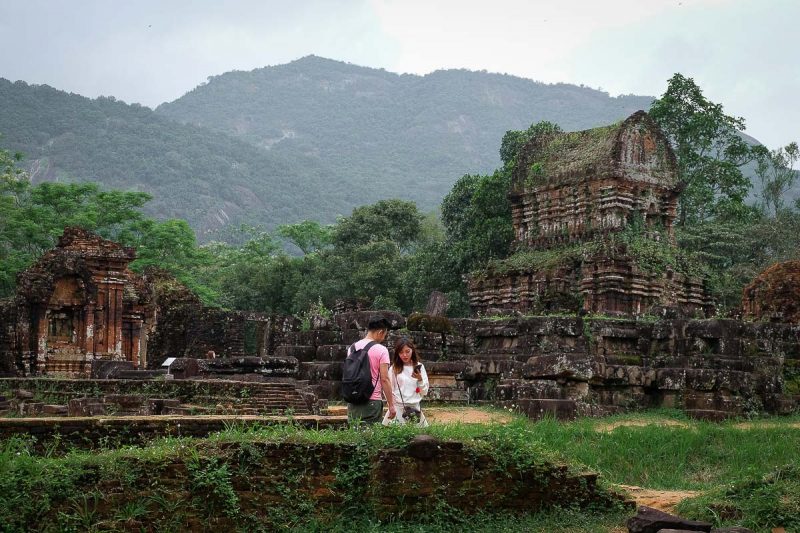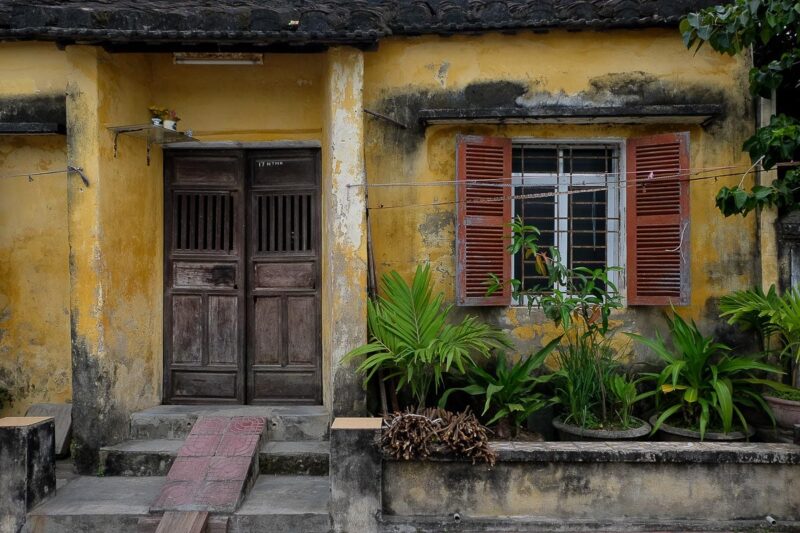
“I can’t say what made me fall in love with Vietnam – that a woman’s voice can drug you; that everything is so intense. The colors, the taste, even the rain. Nothing like the filthy rain in London. The smell: that’s the first thing that hits you, promising everything in exchange for your soul. You could be forgiven for thinking there was no war; that the gunshots were fireworks; that only pleasure matters. A pipe of opium, or the touch of a girl who might tell you she loves you. And then, something happens, as you knew it would. And nothing can ever be the same again.”
Graham Greene, The Quiet American
Look at the shelves of any bookshop and you will be forgiven for thinking that the Vietnam War, or American War as it is known in Vietnam, is the only aspect of Vietnamese history that is worth writing about as the bookshelves groan under the weight of war diaries, fictionalised accounts of battles, or enormous tomes that aim to explain every aspect of America’s failed intervention in Mainland Southeast Asia.
While there is no denying that the conflicts of the mid-20th century played an important role in the nation’s history, it is almost 50 years since the American withdrawal from Vietnam and literature about Vietnam has much more to offer than tales of past conflicts. Obviously, some of the books listed here will talk about the war or use it as a backdrop – something that is apparently difficult to avoid – but through this list’s mix of Vietnamese and English-speaking authors, you will hopefully gain a greater insight into the nation’s history, as well as what makes modern Vietnam such a wonderful, beguiling country.
Vietnam Travelogues

Catfish and Mandala by Andrew Pham
Catfish and Mandala tells the story of its author Andrew Pham, a young Vietnamese-American man (or Viet Kieu, the Vietnamese who escaped living outside Vietnam during the war) as he travels back to his hometown in an attempt to find himself and calm the struggle between his two cultural identities. Part memoir and part travelogue, Pham uses vague flashbacks of the war, when Pham’s family were imprisoned in Vietnam, intercut with his bicycle voyage across his country of birth while exploring similarities of American and Vietnamese culture and family, which intertwines with the search for cultural identity.

A Dragon Apparent by Norman Lewis
Despite spanning a swathe of Southeast Asia, the 1951 book by travel writer Norman Lewis is predominantly set in Vietnam and sees Lewis documenting his travels through the nation at a turbulent time, immersing himself in local culture while giving insight into the French Colonialists, presenting an intriguing look at the meeting and clashes between these two groups.
Books About the Vietnam War
The Things They Carried by Tim O’Brien
Following 1979s Going After Cacciato, The Things They Carried is Tim O’Brien’s second work of fiction about Vietnam. This is not so much a novel as a series of interconnected stories about young men in their late teens and early twenties doing their best to carry the weight of a brutal war on their shoulders while exploring their childhoods, their time-fighting in the harsh Vietnamese jungles, and their return to America.

The Sorrow of War by Bao Ninh
Many of the accounts of the Vietnam War (or the American War as it is known to the Vietnamese) read in the west are predominantly seen from the American perspective but Bao Ninh’s The Sorrow of War is a rare account from a North Vietnamese army veteran. Despite being a fictional novel, it is thought that the protagonist, Kien, is a surrogate for the author’s own experiences. Bao Ninh fought in the war as part of a youth brigade. Of its 500 members, only 10 survived.
Beginning after the war, the book depicts Kien’s war-haunted life as he struggles to overcome his terrifying memories of combat and salvage his sanity that has been threatened by his brutal experiences during the war.
The book was initially banned by the Vietnamese government but went on to become a bestseller in the country.

Last Night I Dreamed of Peace by Dang Thuy Tram
Written between 1968 and 1970, Last Night I Dreamed of Peace is the real-life diary of Dang Thuy Tram, a 24-year-old doctor in a Viet Cong hospital that was killed by American Forces.
Her diary was never meant to be published but was saved by the American officer that discovered it and was under strict orders to destroy all documents without military value. Against regulations, he kept the diary for 35 years, with a copy eventually finding its way to Dr Tram’s elderly mother in Hanoi. It was published soon after.
While much of the book paints a raw and harrowing picture of the horrors of war and the crimes committed by foreign armies, it is also a heartfelt ode to youthful sentimentality and courageous hope in the face of terrible hardship as she rights lovingly about her family, friends, and country.

Fiction

The Quiet American by Graham Greene
Graham Greene’s ‘The Quiet American’ is not only one of my favourite books about Vietnam but one of my favourite books full stop. Written in 1955, it presciently foretells the inevitable doom of the American intervention as they seek to uproot French colonialism and it is shocking to see how very relevant the book still is today, perhaps even increasingly so.
The novel implicitly questioned the growing American involvement in the country through its 3 main characters; Fowler, a cynical opium-addicted British journalist; Pyle, a calamitous US agent blinded by American exceptionalism; and Phuong, Fowler’s Vietnamese lover – casting the individuals as representatives of their nations or political factions.
The Quiet American is a masterpiece of multi-layered plot and meaningful, carefully written prose and it should be added to everyone’s ‘to be read’ pile if they are planning on travelling to Vietnam.

The Sympathizer by Viet Thanh Nguyen
The Sympathiser is a book of contradictions. Sometimes charming and funny, sometimes brutal and dark. While it is occasionally a gripping page-turner, it can also be a chore and slog. This isn’t to say that Viet Thanh Nguyen’s Pulitzer Prize-winning novel isn’t a joy to read; it is evocative, informative and essential for giving insight into the machinations that followed the Fall of Saigon.
At its heart, The Sympathiser is a gripping spy novel that follows the Captain, a man secretly observing and reporting on a South Vietnamese Army general and his compatriots as they look to start a new life in the US.

The Mountains Sing by Nguyễn Phan Quế Mai
The Sympathiser is a book of contradictions. Sometimes charming and funny, sometimes brutal and dark. While it is occasionally a gripping page-turner, it can also be a chore and slog. This isn’t to say that Viet Thanh Nguyen’s Pulitzer Prize-winning novel isn’t a joy to read; it is evocative, informative and essential for giving insight into the machinations that followed the Fall of Saigon.
At its heart, The Sympathiser is a gripping spy novel that follows the Captain, a man secretly observing and reporting on a South Vietnamese Army general and his compatriots as they look to start a new life in the US.

Paradise of the Blind by Thu Huong Duong
During the 1980s, Vietnamese author Duong Thu Huong used a trilogy of novels to denounce the Vietnamese government, with Paradise of the Blind being her most well-known. In it we follow Hang, a 20-something woman that has grown up in the slums of Hanoi, struggling to live in a society where subservience to men is expected Communist rule results in the constant violation of human dignities.
As a result of her writing, Duong Thu Huong – who was a Communist Party member and fought against the US during the war – has spent time in prison, was expelled from the party and has had her books banned.

Dumb Luck by Vu Trong Phong
Non-Fiction
Vietnam: Rising Dragon by Bill Hayton
BBC journalist Bill Hayton’s fascinating and readable account of Vietnam is an essential text for those looking to understand contemporary Vietnam. While most (western) books on Vietnamese history delve no deeper than the two-decade-long war that ravaged the nation between 1955 and 1975, Hayton reveals the political, economic, and cultural events that followed the conflict and made Vietnam the country that it is today, where the modern pressure of capitalism meets a communist society.