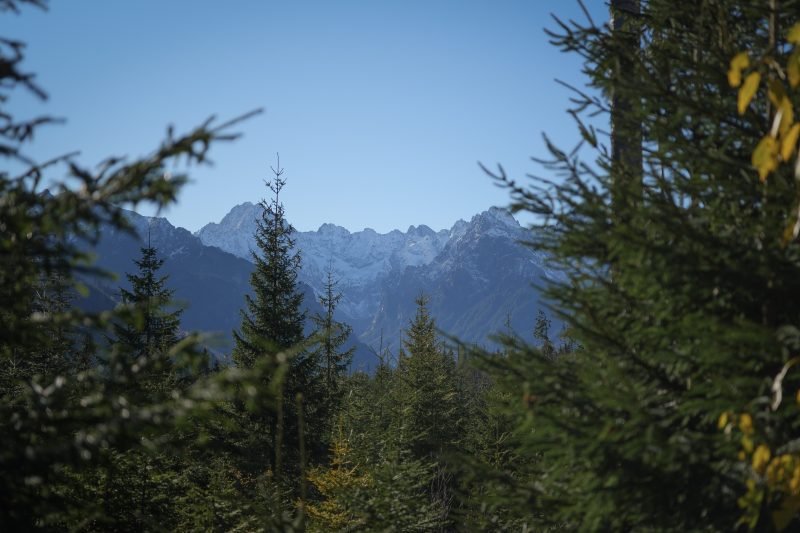
Somewhere on the green pastures above Zakopane, in a shepherd’s hut blackened by a century of woodsmoke, small spindles of cheese sit on a metal grate above flickering, glowing embers. Sitting in the sooty cloud and gradually darkening to a shade of gold, it emanates a smell that manages to be both faintly sweet and smoky, a scent that seems omnipresent in the air around these mountains. Behind the hut, the Tatras rise in grey ridgelines, and you can’t help but consider that this very meal has been made the same way for centuries, and is a continuation of a very old tradition.


Highland cooking is closely tied to the mountain landscape and its produce. Ingredients include sheep’s milk, smoked meat, potatoes, cabbage and flour are found in most dishes, and there’s little that is delicate about it, but these hearty meals were once made to sustain workers and shepherds and are also deeply satisfying after a day on the trails. They’re designed for long, harsh winters and long walks.

If you’re wondering what to eat in Zakopane, the previously mentioned mountain huts are the place to begin. It’s in this rustic setting that the Górale, the highlanders of Podhale, a people shaped by sheep and scarcity, forged the dishes that are now traditional to the region. This guide covers the dishes worth seeking out in Zakopane and the wider Tatra region, what to drink alongside them, and how to find the real thing among the souvenir stalls.
Must-Eat Dishes in Zakopane and the Tatra Region
The twelve dishes below are the ones that are well worth seeking out while you’re in Zakopane. Ranging from an iconic smoked cheese to sour soups, potato breads, mountain lamb and trout, each is something emblematic of the region. Some are seasonal, and a few of them appear on almost every karczma menu in town, so they are easy to find.
Oscypek: Smoked Sheep’s Cheese
If there’s one food that you have to try in Zakopane and that defines the region, it’s oscypek. You will see it everywhere. This spindle-shaped cheese is made mostly from sheep’s milk, and it has held EU protected designation of origin status since 2008. The curd is scalded and kneaded, pressed into carved wooden moulds, brined and then smoked until the rind turns the colour of old amber. Each cheese is pretty hefty, typically 600 to 800 grams, and traditionally it was made on the high pastures from May to September. Although you can now find mass-produced versions, the best examples still are.


It’s an old tradition, with the earliest written mention dating from the fifteenth century, in the founding documents of a village in the Gorce hills, and for generations the cheese was a way for shepherds to preserve summer milk.
Generally, it comes grilled with a spoonful of tart cranberry jam. The salt, smoke and sharp-sweet fruit work well together, and the texture is dense and slightly squeaky, with a gentle chew, not too dissimilar to Halloumi.

Genuine oscypek is a seasonal product, made by shepherds in their huts and sold there and at markets, so it is worth asking where a cheese was made. A dedicated Oscypek Trail links traditional shepherds’ huts in the region if you want to see the process at its source.
Where to Try it: At a bacówka (shepherd’s hut) in the Kościeliska or Chochołowska valleys, or at a reputable stall in Zakopane. If you’re buying from a stall in town, make sure to ask where the cheese was made; factory-produced lookalikes are common along Krupówki.
Kwaśnica: Sauerkraut Soup
I’ll admit it now; saurkraut soup is far from one of my favourite dishes. While I don’t outright dislike it, there’s something about the sour-tasting broth that just doesn’t do it for me. Kwaśnica, the soup of the high country, is sour as expected, but also has a smoky hint. Sauerkraut simmers for hours with smoked pork ribs until the broth turns a pale colour and the meat slides from the bone.

I found the first spoonful to be startlingly sharp and salty. But this eased by the time I had swallowed a few mouthfuls. It is simpler and sourer than the lowland cabbage soup kapuśniak, with little to soften the acidity, though some people add potatoes and others use mutton. You can understand why highlanders have eaten it for generations, as it was food for hard physical work, and sauerkraut kept through the winter without the need for fridges. You will find it on the menu of almost every karczma in Zakopane, usually with bread or boiled potatoes on the side. Everywhere makes it slightly differently, so it’s worth trying it in a few different places.
Moskole: Highland Potato Flatbread
Poland has a deep affinity for the potato pancake, and almost every region has its own way of making one. Grated and fried until crisp, folded around goulash, served with sour cream or scattered with sugar, the placek ziemniaczany appears on menus everywhere. I have eaten a few different versions around the country, including in Podlaskie and Poznań, although in Podlasie, the most popular potato dish contains potatoes that are grated and baked into a dense babka instead. You can read about them in my regional food guides.
Moskole are a little different to the rest. Where most potato pancakes use raw grated potato and are fried in fat, moskole are made from boiled potatoes mashed into a soft dough with flour and salt, then cooked on a dry, hot surface rather than in oil. What you get is something that reminded me of an Irish potato cake rather than other Polish versions.


A well-made moskol has a slightly crisp crust and a soft centre, and it is at its best with garlic butter and a pinch of salt. Other toppings include bryndza, sour cream and lard.
Originally, the flatbreads were made with oat or rye flour, and potatoes later became the main ingredient in a region with little land for growing grain. A well-made moskol has a slightly crisp crust and a soft centre, and it is at its best with garlic butter and a pinch of salt. Other toppings include bryndza, sour cream and lard. They sit somewhere between bread and a side dish, but also make an excellent starter, or a vegetarian alternative to the region’s meat-heavy menus.
Where to Try it: Żabi Dwór, a traditional wooden inn decorated with frogs and known for home-style highland cooking, have moskole made to a traditional recipe. The best I had were at Gazdowo Kuźnia in the town centre, where they come filled with Oscypek. It’s also worth noting that the fries that come with their meat dishes are actually made from sliced and deep-fried moskole, and may be the best fries I have ever eaten in my life, which is really saying something.
Placek po Zbójnicku: The Highwayman’s Pancake
Speaking of potato pancakes, this dish, lacek po Zbójnicku, also has a name that nods to the brigand legends of the Tatras, and it has the swagger to match. A large potato pancake, crisp at the edges, is folded around a rich meat goulash and finished with a spoonful of sour cream. You will also see it called placek po węgiersku, a nod to the Hungarian roots of the goulash.

Presentation varies. Some kitchens fold the pancake over the filling, others pour the goulash on top, and some restaurants add pickles or a slice of grilled oscypek. It is a traditional highland dish that is now popular across Poland, but it is on the menu of nearly every karczma in Zakopane.
Baranina: Highland Lamb
You will see sheep grazing pastures all over the highlands, so it makes sense that lamb is the preferred meat in these mountains, whether slow-cooked, grilled over open flame, or simmered into a stew. Sheep have been part of highland life for generations, brought to the Polish mountains, according to local tradition, by Wallachian shepherds. The flavour of the mountain lamb here is apparently distinctive, flavoured by the herbs and grasses that the animals graze on.


In the traditional highland kitchen, meat was rare and reserved for holidays and weddings, which is partly why lamb still feels celebratory. I didn’t see it on too many menus around town, but during the Redyk celebrations that I attended in Czarny Dunajec, it was widely available from street food stalls, where it was being grilled on skewers or roasted in huge chunks on spits over a fire.
Where to Try it: I tried highland lamb at Leśniczówka u Zięby, a family-run guesthouse and restaurant in a forester’s lodge at the entrance to the Chochołowska Valley in Witów, slow-roasted and served in a light broth with vegetables.
Bryndza Podhalańska: Soft Sheep’s Cheese
Bryndza is soft, tangy and spreadable, sharper than ricotta and creamier than feta. In Podhale it is made from sheep’s milk, with some cow’s milk permitted, during the grazing season, and it begins life as fresh bundz, which is mashed again and kneaded with salt until smooth. It was registered as a protected designation of origin in 2007, and it is milder and creamier than oscypek.
You will meet it in many guises: crumbled over moskole, spread on bread, stuffed into pierogi, or served with potato dumplings known as hałuski. The flavour is salty and tangy, which makes it a good pairing with rich or sweet foods.
Redykołka and Bundz
Redykołka is oscypek’s ‘younger sister’, in the way that it’s a smaller smoked cheese, often hand-moulded into hearts, birds, wreaths or tiny spindles, and traditionally made from leftover bundz from oscypek production. It was made and given in pairs as a gift, and the name is tied to the redyk, the autumn return of the sheep from their mountain pastures.
Bundz is the soft, fresh cheese that is the first stage of sheep’s cheese-making, made from curdled milk straight after milking. It is mild and delicate, and it can be cut and eaten much like cottage cheese. Left to mature and then mashed with salt, it becomes bryndza, and the whey from its making is the basis of żentyca, the traditional drink described below.
Where to Try it: Markets and shepherd’s huts in the valleys around Zakopane
Pstrąg: Mountain Trout
After a few entries on this list that are so focused on meat and cheese, fish seems like the ideal palette cleanser. Trout is the most eaten one in this area, coming from cold mountain rivers and local farms, and it is typically served in a pretty basic way, grilled or fried with butter and simple herbs, or baked.
Look out for highland variations. Some restaurants bake the fish with bryndza and serve it with potato dumplings and horseradish sauce; others fry it and then bake it in a cream sauce, or finish it using traditional smoking methods.
The most intriguing name on the menu is trout po zbójnicku. It borrows the brigand folklore that also gives the region placek po zbójnick.
Where to Try it: Pstrąg Górski on Krupówki, tout is in the name and their outdoor terrace has a lovely stream running beside it. They even brew their own beers. NABOO Ryba z Ognia on ul. Przewodników Tatrzańskich, also centres around on trout cooked over a fire; or Karczma Sywor in Kościelisko, where you can watch the fish swimming beneath a glass floor.
Kiełbasa Góralska: Highland Sausage
Smoked highland sausage, grilled over charcoal and served with mustard and bread, is best eaten outdoors: at a market stall, a mountain hut, or on a terrace in the cold air with the smell of woodsmoke around you. Góralska belongs to a southern Polish family of sausages smoked at relatively high temperatures, and works well with a side of oscypek, pickles and a cold beer.


It is also the centrepiece of the highland campfire evening, where sausages are grilled over an open fire and served with bread and cheese, often to the sound of a folk band.
Pierogi z Jagodami: Bilberry Pierogi
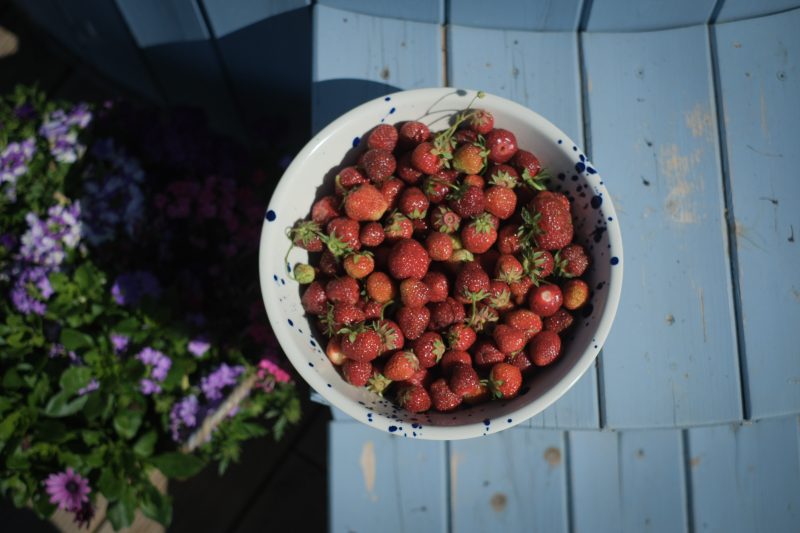
In summer, the forests of the foothills fill with wild bilberries, and while this is time to get fresh-baked jagodzianki in most of Poland, the kitchens of Zakopane turn them into sweet pierogi served with sour cream and a dusting of sugar. The berries are czernice, or bilberries: smaller and darker than blueberries, with a deeper flavour and a dye that stains the fingers.
The season runs through July and August, and in Polish households the pierogi are as likely to be eaten as a main course as a dessert.
Where to Try it: Home-style karczmy such as U Ryśka (Marzanna), below Nosal, where blueberry dumplings have appeared on the menu, or Karczma Zapiecek on Krupówki, which specialises in a wide range of pierogi. Fruit pierogi are a seasonal dish, so ask what is available; the best chance is July and Augus
Sweet Treats: Krówki and Karpatka
Krówki, literally “little cows”, are soft milk fudges, sold in paper wrappers from stalls along Krupówki and eaten on the move. Hand-made ones are crisp on the outside and softer within, and most Poles have a firm opinion on whether they prefer them crunchy or soft. Karpatka is a custard-filled cake of choux pastry whose craggy, sugar-dusted top is often likened to the Tatra ridgeline.
Neither is exclusive to the mountains, but both are part of the Zakopane experience. For something closer to the highland tradition, look for yeast buns served with honey and butter, and for honey cakes and apple pie in the cafes around town.
Where to Try it: Cafes and pastry shops around Krupówki
Chleb ze Smalcem: Bread with Lard and Pickles
This is something I have eaten all over Poland, and it isn’t exclusive to Podhale, yet it’s the simplest dish on this list and may also be the most honest. Thick slices of country bread, spread with lard and served with pickled cucumber, are the Highlander’s snack and a classic starter on karczma menus. Many kitchens make the lard themselves, sometimes folding in apple and crackling, which elevates it from plain fat to something that’s a little more flavourful and slightly sweet.


Where to Try it: Most traditional karczma serve it as a starter
What to Drink in Zakopane
The drinks of Zakopane are more about their warming qualities than anything else. Winters here are long, and the local repertoire runs to spirits, hot spiced drinks and a few surprises that reward the curious.


Herbata z Prądem: Tea with Current
Herbata góralska, or highlander tea, is the drink most closely tied to Zakopane’s winters. It is hot black tea stirred with a shot of spirit, usually vodka or rum, and often sweetened with honey and brightened with lemon or orange. Some cafes add warming spices as well.
You will also see it called herbata z prądem, which translates as “tea with current”. The current in question is the alcohol, which adds a jolt of warmth that reaches the throat and stomach before the rest of you. It’ss the classic after-hike drink, served at mountain huts, cafes and winter stalls along Krupówki. Expect it to be hot, sweet and stronger than it looks. If you would rather skip the alcohol, ask for plain tea with honey and lemon instead.
Where to try it: A highland folk evening (góralska biesiada), where highlander tea is typically on the drinks list; a mountain hut such as Murowaniec on Hala Gąsienicowa, for a hot drink after the climb; or Góralska Tradycja on Krupówki, for a highland-style setting.
Grzaniec: Mulled Wine and Beer
I didn’t realise this was a thing until I started wandering around the main streets of Zakopane and seeing hot metal urns sat on the counters of food stalls. Grzaniec is the winter warmer of the Polish mountains: wine or beer heated with honey and spices such as cloves, cinnamon and orange peel, and sometimes finished with a spoonful of raspberry syrup. It is sold at the winter stalls on Krupówki and in mountain huts, and it does as much for cold hands as it does for the throat.
The beer version, piwo grzane, was more of a surprise to me. However, it is apparently a Polish tradition and a good alternative to mulled wine, both rounder and maltier, with the honey coming through.
Żentyca: Sheep’s Whey
Żentyca is the whey left over from making sheep’s cheese, and it was once a staple drink of shepherds. Fresh, it is faintly sweet; left for a few days, it turns sour. Either way, it is distinctly unusual, a drink for the adventurous traveller, rather than someone who just wants to have a small taste of local drinks. Highlanders traditionally credit it with restorative powers, and it holds a place on Poland’s list of traditional products.
It is generally found only in shepherd’s huts during the grazing season, so look for it on a summer visit to the valleys rather than in town restaurants. I didn’t see it on offer anywhere in Zakopane, but did see wooden buckets atop a horse and cart during my trip to Redyk in Czarny Dunajec.
Śliwowica Łącka: Plum Brandy
This protected plum brandy comes from the orchards of Łącko, a district in the foothills a short journey from Zakopane. It is strong, fragrant and best sipped slowly after a meal, ideally with a plate of cheese.
Nalewki: Fruit and Herb Tinctures
Nalewki are infusions of fruit, herbs and spices steeped in spirit, and they are a staple of Polish home production. In Zakopane, you will find them sold in shops and served after dinner, and they make excellent gifts.
Local Craft Beer
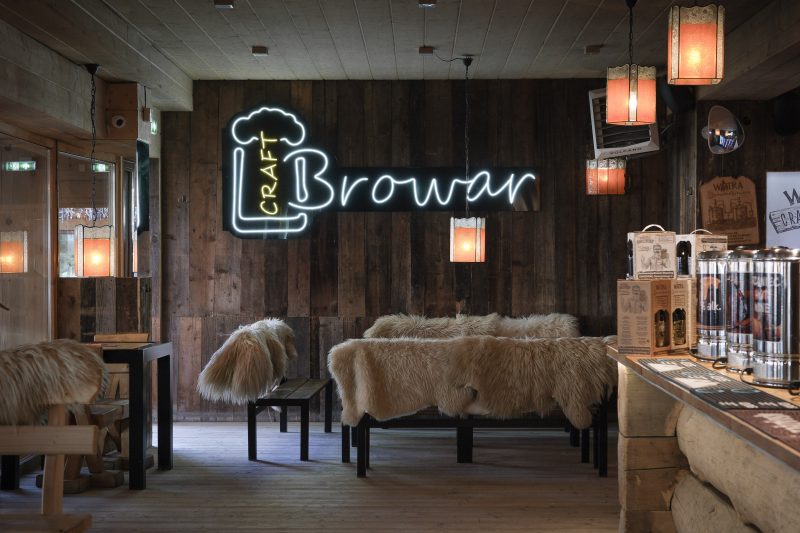
Zakopane’s craft beer scene isn’t as developed as in Poland’s larger cities, but it does have a small scene of brewpubs and breweries that pour local beers alongside their vodkas and local spirits. A cold pour is a natural partner to grilled oscypek, smoked sausage and bread with lard, and a good way to end a day on the trails. Read our full guide to the best craft beer in Zakopane for breweries, taprooms and bars worth visiting.
Where to Eat and Drink in Zakopane
The best way to sample all of the dishes above is to try a range of different kinds of restaurants and eateries around Zakopane. Karczmy, the cosy, traditional wooden taverns, are the best place to try hearty dishes like kwaśnica, lamb and placek po zbójnicku, which often come with folk music performances in the evening. Bacówki and shepherd’s huts in the surrounding valleys offer cheese made on site. Market stalls and street vendors are best for oscypek, moskole and sweet treats.
Krupówki, the main street that runs through the town, is a good place to start as it is lined with bars, cafes and restaurants; just be aware that the quality of food varies. For the best meals, you may have to wander a little further, with the help of the following list:
Bąkowo Zohylina Wyźnio
Where: Józefa Piłsudskiego 28A, 34-500 Zakopane, Poland
When: Daily 1pm – 10pm
Bąkowo Zohylina Wyźnio is the upper of two sister restaurants on ul. Piłsudskiego, the other being Niźnio, which sits lower down the same street. I ate here on my first night in Zakopane, and it feels like the perfect way to get a feel for highland tradition: a traditional timber inn with sheepskins on chairs, all manner of taxidermied animals squeezed into every nook and cranny, and woven tapestries hanging on the walls. There’s even live folk music on weekend evenings (make sure to book for this, as the place fills quickly. Yes, it’s a little kitsch, but that’s the appeal.


The menu sticks to the traditional theme and is filled with highland classics, so it’s a really good place to get to grips with the region’s most popular dishes. I went for Oscypek karmelizowany na złoto, tradycyjny moskol opiekany na blasz, a bowl of Kwaśnica na wędzonych żebrach and a huge plate of goulash, which is quite the stomach-expanding selection of very heavy dishes, but worth it.
Leśniczówka u Zięby
Where: Witów 306 Dolina Chochołowska, 34-512 Witów, Poland
When: Tuesday to Thursday 1pm – 7pm; Friday 1pm – 8pm; Saturday to monday 1pm – 9pm
At the entrance to the Chochołowska Valley in Witów, a short drive from Zakopane, Leśniczówka u Zięby occupies a forester’s lodge that the Zięb family turned into a guesthouse in 1991. It still has that timber highlander feel, but in a more cutesy way, like the interior was taken straight from a Pinterest board.
Again, the restaurant serves Polish cuisine, with a focus on regional dishes, but they are slightly more elevated than at some of the more basic karczmy mentioned here. The highland lamb was a highlight for me, but you can also find serwatka, kwaśnica with goose broth, and locally sourced trout.


It’s a little drive outside of town, but this means that the valley’s forests are at the door, and it makes this place a natural stop before or after a walk into Dolina Chochołowska. It can get incredibly busy as the dining room is small, so make sure you arrive early or book. The family also runs a second restaurant nearby, Ziębówka.
Gazdowo Kuźnia
Where: Krupówki 1, 34-500 Zakopane, Poland
When: Daily 11am – 11pm
Gazdowo Kuźnia stands at the foot of Krupówki, opposite Gubałówka, in a building dating from 1891 that is among the oldest in Zakopane and once housed Pod Giewontem, the town’s first hotel.


Like Bąkowo Zohylina Wyźnio, the rustic interior is as much the draw as the food, with heavy timber, a stove, and highland music in the evenings. It’s in the touristy centre of Zakopane, but the prices are still reasonable, and the food is better than most places on Krupówki Street, which makes it a great place to try kwaśnica, pierogi and grilled meats under one roof. They also made some of the best moskole that I had on the multiple times I ate it. Because it sits on the promenade, book ahead at weekends and in high season.
Leśniczówka Resto Bar
Where: Kuźnice 15, 34-500 Zakopane, Poland
When: Monday to Thursday 5pm – 11pm
Leśniczówka Resto Bar occupies a restored forester’s lodge once used by Tatra National Park staff, at Kuźnice 15, beside the lower station of the Kasprowy Wierch cable car and at the junction where the trails to Kalatówki and Hala Kondratowa begin. To reach it, you’re best off parking closer to the centre and walking 20 or 30 minutes to get there (just be warned that it is uphill), as there is no parking around the restaurant, but the woodland setting is worth it and the surrounding streets are particularly cute.


Spread over two minimalist floors, the bistro serves a menu inspired by regional and Alpine cooking, so highland staples such as kwaśnica, lamb and potato pancakes sit alongside dishes like hałuski with pumpkin sauce, with an emphasis on game, mushrooms and fresh herbs. There is craft beer, wine and cocktails to go with it, vegetarian options, and quite a large garden terrace for sunny days, but it was a little too cold to sit outside during my visit. If you have a sweet tooth, make sure to try their iconic berries and burnt milk dessert topped with fluffy candy floss.
It makes an easy stop before or after a mountain walk and a more relaxed alternative to the town-centre karczmy. It’s also a pretty good après-ski stop for Kuźnice.
Bubuja Bistro
Where: Wenantego Piaseckiego 1, 34-500 Zakopane, Poland
When: Tuesday to Sunday 1pm – 10pm
Bubuja Bistro is the go-to choice for more of a special dinner that goes beyond the highland classics. At Piaseckiego 1, a short walk from the railway station, head chef and owner Sławomir Kardaś calls the restaurant a manifesto of culinary freedom: a playful variation on regional cooking, with local produce as the starting point and two guiding principles: that the food should be delicious and authentic.
The menu is a little more diverse than elsewhere in town, including beef tenderloin tartare with pickles and mushrooms, grilled octopus with tomato and black lentils, steaks of Polish beef with truffle sauce, and pork ribs with kalbi sauce, and a lunch-of-the-day menu keeps the budget in check.
Kawiarnia Filiżanki
Where: Grunwaldzka 4A, 34-500 Zakopane, Poland
When: Daily 8am – 6pm
Kawiarnia Filiżanki is a cute, vintage-style café on ul. Grunwaldzka, decorated with old photographs of Zakopane and books on the region’s history to browse. The teas, coffees, hot chocolates and infusions, as well as the homemade cakes, are the reason to stop by, but they also do breakfast and brunch all day, which includes vegetarian, vegan and gluten-free options. The beef toast, a wheat-rye bread topped with slow-cooked beef, mushrooms, chimichurri and garlic butter, was a highlight.
LA MANO Speciality Coffee & More
Where: Władysława Orkana 1F, 34-500 Zakopane, Poland
When: Wednesday to Thursday 9am – 5pm; Friday & Saturday 9am – 7pm; Sunday 10am – 5pm; Monday 9am – 5pm
I love Le Mano. In a town with plenty of cafes but very few good speciality coffee shops, it is like a paradise island in a sea of mediocrity. La Mano opened in 2016 and is regarded as the first speciality coffee shop in Zakopane, and they make each cup with care and attention. Alongside carefully prepared coffee, it offers a curated list of wines and homemade desserts such as tiramisu, brownies and Basque cheesecake, but you will have to step inside to see what that day’s selection is.


It’s a cool place, and I found myself stopping by for a flat white or matcha almost every morning. Tables are topped with stylish photo books, and shelves are stacked with beans and brewing equipment for taking the habit home. It is a good counterpoint to the wooden taverns and tourist-filled cafes of the town centre if you just want a calm place to sit with an excellent coffee and relax.
How to Get to Zakopane
Zakopane is just a short hop from the Slovak border and sits about 105 kilometres south of Kraków. It’s more than likely that if you’re heading to the Tatra Mountains, you’re coming via Kraków.
By Bus
Buses and minibuses leave Kraków’s main bus station, beside Kraków Główny railway station, and run directly to Zakopane in roughly two to two and a half hours. MajerBus and FlixBus are the main operators, with departures every half hour or so during busy times of year.
If you are flying into Kraków, there’s no direct bus from the airport to Zakopane. You will have to travel via Kraków, which increases your journey time.
By Train
Direct trains run from Kraków Główny to Zakopane, but they are less frequent than the bus, and reported journey times vary widely, from about two hours to three and a half hours, depending on the service and any changes required. That makes the train the slowest and least predictable of the three options on this route, which is unusual in Poland, where trains are normally one of the better ways to travel.
By Car
The route follows the S7 expressway out of the city, then the DK47, known locally as the Zakopianka, which winds south through the foothills and climbs towards the Tatras. It’s a really beautiful route to travel, and I often found myself gawping out of the window, with the peaks appearing all at once. However, during peak seasons, this is also a notorious bottleneck. Weekends, public holidays, the ski season (December to March) and the summer hiking season (June to September) are all plagued with heavy traffic, and the final stretch from Nowy Targ can take an hour on a busy weekend morning. It is worth leaving early to beat the queues, or travelling midweek if your plans allow it.
Car hire companies are plentiful at John Paul II Kraków Balice International Airport, and the pick-up is simple – the rental desks are on the concourse just above the departure area, and cars are collected from the multi-storey car park, just a few minutes’ walk away. I tend to use Discover Cars for my car rental when travelling, as they allow you to book in advance and compare multiple providers for the best deal. In winter, check that a hire car has winter tyres.
Practical Tips for Eating Out in Zakopane
- When to go: Summer for bilberries and hut-made cheese; winter for kwaśnica, grzaniec and the full cosy atmosphere.
- Book ahead: Popular karczmy fill up in peak season, particularly at weekends.
- Carry some cash: Mountain huts and market stalls often prefer it.
- Vegetarians: Oscypek, moskole, cheese or bryndza pierogi and potato pancakes are the easiest options.
- Avoid the tourist traps: Souvenir stalls on Krupówki can be overpriced. Ask where cheese was made and look for producers who sell directly.