
It was 6 am and we found ourselves stood on an unlit street on the edge of central Havana, colourful yet dilapidated townhouses rising from the rubbish-strewn streets on either side of us adding to the claustrophobic feeling of the avenue. This didn’t seem to be the most sensible place to be waiting at this time in the morning but our guide had assured us the previous evening that, come 6 am, he would be there.

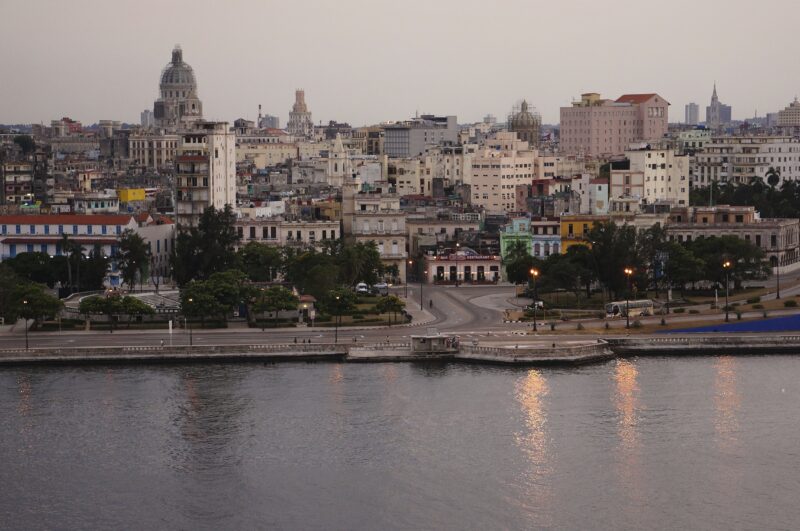
The previous evening had started as a fairly civilised goodbye to our little group that we had been with for the last week of our trip around western Cuba. We had gathered at a rooftop restaurant overlooking Castillo de Los Tres Reyes Magos del Morro so that we could eat while watching the 9 pm cannon firing, getting more confident in our choice when we were told that this is one of the places Jay Z and Beyoncé had dined on their much publicised holiday to the island. Judging by the quality of the food, I’m not sure the world’s premier pop-star power couple would have been satisfied with the cuisine. It didn’t matter, the Mojitos and Piña Coladas began to flow, Cochibas were smoked, mock Che Guevara berets were worn and before long we found ourselves on the roof of our homestay being taught salsa by our over-enthusiastic host. Although he spoke almost no English it became apparent that he was fairly happy to have four women in his rooftop bar semi-willing to have one-on-one dance lessons and take advantage of his seemingly bottomless supply of straight Havana Club. A few hours later here we were on this pitch-black street, slightly hungover, waiting for our guide, Wilmer.
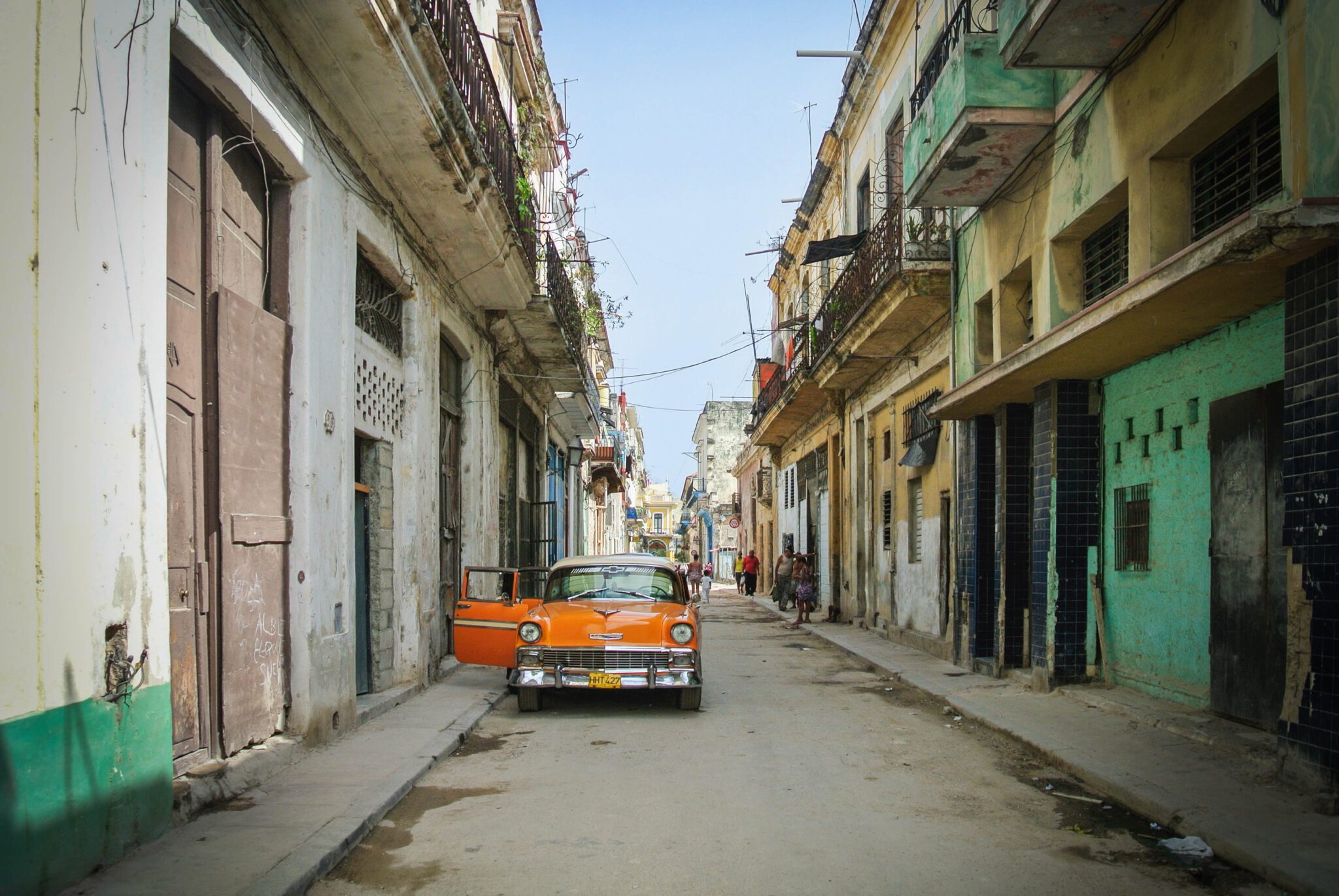
When you think of Havana you think of immaculate, brightly painted Pontiacs and Studebakers cruising down the Malecon. This image was swiftly shattered when we saw the rust-with-a-hint-of-blue Chevy roll up to us. The 1962 US embargo against Cuba meant that the cars in the country could no longer receive new replacement parts when something broke or failed completely. Currently, the only way to keep these cars on the road is by using Cuban ingenuity to adapt household products and Soviet technology into these vehicles. Our taxi for the day belonged to a friend of our guide – he had apparently just got it back on the road after 3 months of waiting for replacement parts. It’s surprising that the owner was willing to ferry tourists around in his newly ‘restored’ pride and joy. However, this is Cuba – the proposition of a tip in CUCs was enough to secure his service.

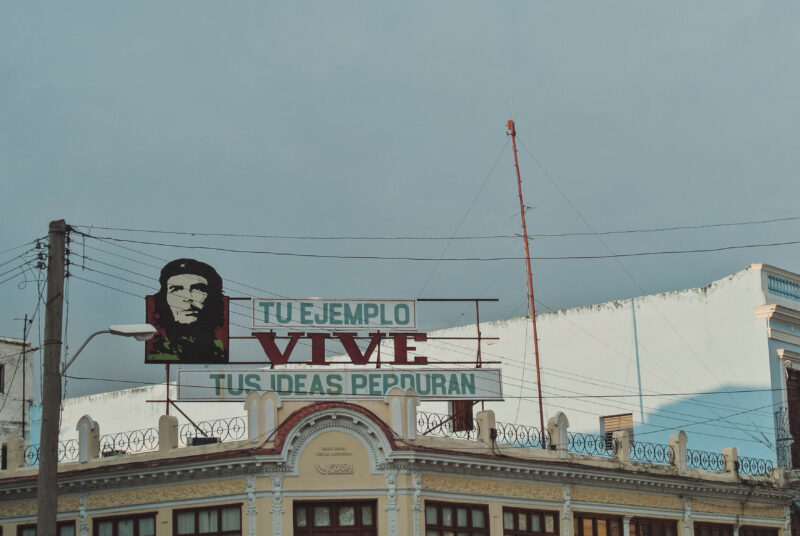
We crawled at a snail’s pace towards Plaza de la Revolucion, voices on the radio chattering excitedly in Spanish, the only words clear to me were the repeated shouts of “Viva Cuba”, “Revolucion!” and “Uno de Mayo!”. May the 1st, or International Worker’s Day, is a big deal in Cuba – We had spotted workers erecting the stages under the watchful eye of the plaza’s huge Che mural over a week before and flags and streamers had already covered the streets. There had been a week-long build up on all the front pages, state-sponsored news and posters around town. Each year over a million workers from all over Cuba are bussed into central Havana in order to march on Revolution Square where musical and cultural events are held and Cuba’s leading figures speak to the masses from the foot of the colossal monument to Jose Marti, the godfather of the Cuban revolution.
The streets were bumper-to-bumper with taxis and buses carrying workers, flags and streamers hanging from windows. Pavements were littered with food and drink stalls, people dancing to small, ancient-looking stereos blasting out salsa and reggaeton. Even at this time in the morning, the crowds were enormous, and we looked to be the only gringos in attendance – our Cuban T-Shirts and Cuban flags not doing much to help us blend in with the Habaneros.


We had no need to worry, as we squeezed through the heaving mass of revellers they were quick to point to our Cuba paraphernalia, giving us thumbs up, pats on the back and hearty “Viva Cuba”s. A lot is said about the living conditions and poverty-stricken lives of some Cubans but I felt like I was been welcomed with open arms by the parade’s participants, many of them proud of their country and proud to be marching.
A lot is said about how the Unions and government force workers to attend, threatening to dock pay and slash bonuses of abstainers. It is all a show to demonstrate how happy the population is with both the regime and their working conditions. I don’t doubt this. As we finally made it to the main thoroughfare, standing against the metal barriers to watch groups of workers parade past us. Nurses, doctors, firemen, teachers, police dog units – practically any profession you can think of – was represented with many of them looking to be going through the motions. They weren’t all here because they wanted to be, they were here because their particular union wanted them to be. Their placards and slogans the work of a committee beyond the front lines of their profession.

There were many non-uniformed attendees interspersed between them, flags waving and placards held aloft above the pulsing mass of bodies. This was the crowd that wanted to be there. Chanting, chatting happily and taking swigs from bottles of Rum. As we pushed into the passing river of people to join the plaza-bound march, I caught a glimpse of the Jose Marti monument, towering 100 metres over the square. I was taken in by the buzz of the crowd. Smiles were plastered on everyone’s faces as the chanted, sang songs, danced and waved their flags, all the while giving us pats on the back and encouraging us to join in.


Plaza de Revolucion is huge, measuring 72,000 square metres, but the parade had filled every inch of ground. The centre is dominated by the memorial tower where government officials overlooked the crowds and Raul Castro was preparing to make his annual speech to the million people waiting patiently below. He occasionally walked to the edge of his platform to wave to the crowd and each time was met with rapturous applause and shouts of “Viva Cuba!” The enthusiasm was infectious and I found myself joining in the shouts and straining my eyes to catch a glimpse of Raul.

Within half an hour we had already passed the watching officials and were being squeezed out of the Plaza by the crowd – only a lucky few thousand get to see the president’s speech and today wasn’t our day – which was maybe lucky because the speeches have been known to last one or two hours. Back in Fidel’s day, he managed to talk for three whole hours when he was feeling particularly loquacious.

Away from the main parade people continued to celebrate. May Day seems to be used as a secondary carnival and people in costumes danced and posed for photographs with us and we watched as drag queens samba’d past. Antipathy towards LGBT people is Cuba is historically high with a past of persecution and imprisonment. However, Fidel began to speak out against discrimination in the 90′ taking full responsibility for the persecution of LGBTT communities and the tide of public opinion is quickly changing thanks to Mariella Castro, President Raúl Castro’s daughter, and her LGBT educational programs. May Day is a perfect opportunity for people to promote LGBT issues, particularly the current fight against gender identity discrimination in the country, so sections of the crowd became a mini Pride march.


As we walked away from the main party area the crowds began to die down, the remnants of the celebrations littering the streets as people dispersed home or to the roadside bars set up for the occasion. I had a smile plastered on my face and was thankful that we got to experience an occasion that not many outside of Cuba get to see. The Cubans are so welcoming and the fact that our presence at this little slice of Cuban life was embraced by people made me feel blessed. My favourite day of our Cuba trip was over and now there was just one thing to think of – How the hell are we supposed to get back to the homestay.
Even if many were forced to attend, they were making the most of a day away from the factories or offices and enjoying themselves. It is hard to get a real grasp of how many people actually agree with and support the Cuban government – anyone with a dissenting opinion chooses to keep quiet and won’t voice their real views, especially to an outsider like me. Even Wilmer, who I had spent a week with at this point chose his words very carefully and refused to criticise the county’s leaders outright. I was frustrated not to be seeing the truth – anything mildly political that you hear from a Cuban has to be taken with a pinch of salt – and although I felt I was missing out on seeing the true picture of life in Cuba, they know why they won’t speak out so it is not my place to push them.


16 Responses
It’s fascinating to know that people in Havana do so much of fun. I have always wanted to visit this place. Hope to make it soon.
I love this non-typical Cuba travel post where you share your genuine experience about the May celebration in the city of Havana. It is not surprising to learn that many people were forced to march and celebration by the government and unions, given that it is a communist country. Same thing happens in China, where the government just want to paint the picture to the public that everyone is happy and satisfied with the country. But what is nice is that speaking about LGBT is no longer a taboo there!
We have always dreamt of visiting Cuba, riding those vintage cards and watching the process Cigar making. We have heard a lot about the culture and people of Havana and what’s better to know them than to attend one of those amazing festivals where we can get a chance to shake a leg with the locals. Glad to got to witness one such festival.
It is my dream to see one such celebration in Cuba and may be ride one of those vintage cars.
I had done an extensive study to write a post on things to do in Cuba and you seem to have lived it! 🙂
The cars are beautiful, although the one we rode to the march in was a bit of a rust bucket! It definitely had potential though.
Wow. Loved your impressive opening paragraph. It is like a scene any where in India during a big festival. Thanks for breaking the myth of the image we generally have of Cuba. That’s what travel does to us. Travel teaches us like no book can.
Thank you for the compliment Abhinav! Exactly, you hear a lot about Cuba but it is better to go and see for yourself – although, even then I struggled to get the true story.
Never know May Day was such a large scale affair in Cuba, with such extravagant celebrations. Must have been quite and experience, witnessing all this celebration on the streets.
I didn’t realise either until I arrived. I think it fits with the government’s socialist message so it is really pushed.
Havana looks like so much fun. I have dreamed of seeing Cuba for a long time so this article made me really jealous. Thanks for sharing your pictures and experiences and igniting my Cuba wanderlust again!
That would have been such a unique experience for an outsider tourist. So good that you documented it in both words and photos – both of which I really enjoyed. Cuba is a place that I have always found interesting and I would love to visit one day.
Thank you Nicole! It is a fascinating country so I really recommend visiting.
This is definitely something that is rarely known by people outside of Cuba, it sure sounds like a very fascinating experience! Thank you for sharing!
I wasn’t even aware that they made such a huge deal of May day until we visited! It was a surreal but wonderful experience!
Aww I feel sorry for the cars. The chevy looked like something from my grandpa’s collection. Even if the place wasn’t really what you pictured in mind, I still see you have captured beautiful photos. This looks like a very busy day for the people too.
It was very busy but it was also a wonderful experience, something I never expected that I would do!