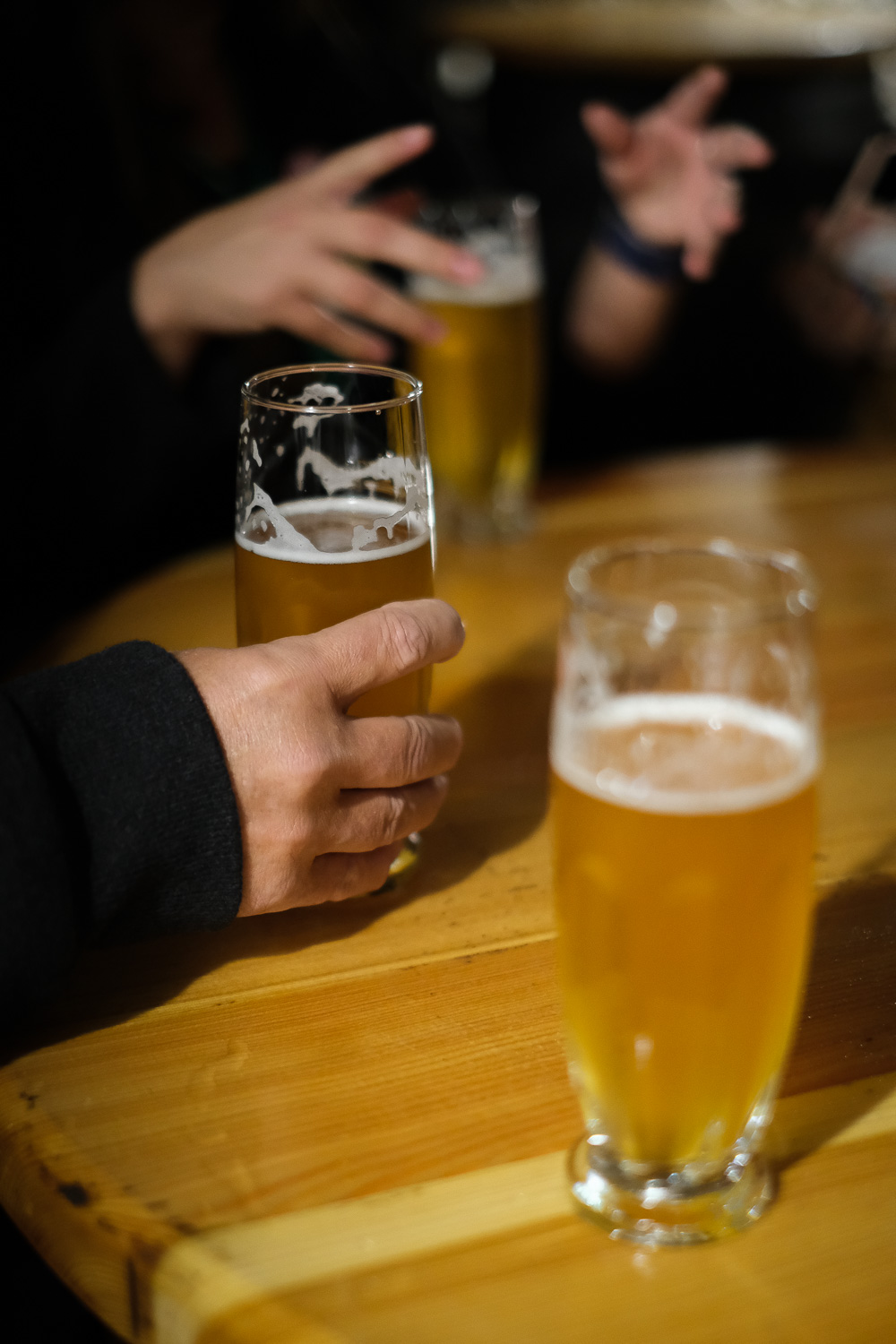
Even as an ardent beer enthusiast – a person that could equally be described as both a beer nerd and beer snob – I can’t help but think that 10.30 am is a little early to be imbibing glass after glass of lager, particularly when it is 10.30 am on a Tuesday Morning. I watch as the brewmaster tilts my glass towards the tap and it slowly fills with a golden, hazy liquid, all topped off with a thick layer of white foam. Taking my first sip, I soon shake off these more sensible thoughts when I realise where I am. It is not every day that I get to stand in the damp, dark cellars of the Pilsner Urquell Brewery drinking its famed lager directly from an enormous wooden cask. As our guide explains, “This is the best beer that you can get, so enjoy it. Na zdraví.”

Those unfamiliar with the Pilsner Urquell Brewery may at least know of pilsner lager. Even if you previously didn’t join the dots and associate the beer with the name of the Czech town of Pilsen, situated about 90 kilometres from Prague in western Bohemia, the style that is now the most brewed and most imbibed worldwide, spawning equally popular adaptations like German Pils and American light, was first produced here. However, the story behind the creation of Pilsner begins with a town square covered in terrible beer.
Pilsen has had a brewing heritage since its inception. When the city was founded in 1295, King Wenceslas II gave Pilsen’s burghers his permission to brew and sell beer in their homes. There was a time when almost all of the houses in the city’s historic centre either brewed or sold the stuff. At the time, brewers top-fermented their beers, meaning that the wort was pitched with yeast on the surface to get the fermentation process rolling. Brewing this way required higher temperatures and could often result in varying quality or off-flavours. The ales were prone to spoilage either by wild yeasts or bacteria. Even with 800 years of experience, the brewers of Pilsen didn’t know how to withstand contamination.
This eventually came to a head in 1838 when a batch was so bad that local citizens rolled 36 barrels of ale into the street, opened them up, and poured the beer across the cobbles of the main square in protest.

Something had to be done. Local architect Martin Stelzer was sent on a scouting mission to study the breweries in Munich and returned with plans to build Pilsen its perfect brewery. Thankfully, he also brought with him Josef Groll, a master Bavarian brewer, who would go on to change beer history forever. On October 5, 1842, Groll and the other brewers of Pilsen gathered for their first taste of this new beer. They were instantly impressed. Its straw-like golden colour and clarity were unlike anything they had ever seen and the brewers of Pilsen knew that they had made something special. With this, the Pilsner Urquell Brewery was born.
What made this beer in particular so appealing? Pilsen sits at the confluence of two rivers, the Mze and the Radbuza, which, along with an abundance of natural springs, provide a steady supply of soft water that has low mineral content. Combine this with locally sourced Saaz hops that grow in northern Czechia and you have something refreshing and drinkable.
All of this Information can be found in the Pilsner Urquell Brewery Museum and tour at the site that has grown enormously in the 180 years since Groll was in charge. Crossing the Radbuza and entering through the Neo-Renaissance gateway, I found myself inside the sprawling complex where I spend some time perusing the various exhibits, toured the modern and historical breweries, and had a view of the bottling room that has the capacity to fill 120,000 bottles per hour. Like most major breweries, the Pilsner Urquell Brewery Tour is a fairly touristy – but interesting – experience. You will walk through a museum of various beer-related objects, watch a film on a 180-degree video screen and ride the Czech Republic’s largest lift before getting to the best part of the tour: the underground beer cellars.


There are 9km of lime-washed tunnels that run almost 20m beneath the site. It is here in this cavernous labyrinth of dark, dank passageways that brewers of the past would leave their huge oak barrels of beer to condition, aided by the cool temperatures and large blocks of ice carved from a nearby lake each winter.
It’s in this chilly basement that I find myself supping a Pilsner Urquell Nefiltrovany Lezak – an unpasteurised, unfiltered version of Urquell’s finest straight from the barrel under the vaulted ceiling of an underground room. The brewery still maintains a few dozen of these barrels and uses them to carry out the original fermentation process. It’s a way to see if the properties of the beer in the newer brewery at ground level still adhere to the company’s founding standards. However, mostly this is for the tourists – a unique place to do a tasting session that, I am told, can be rented out for corporate events with each attendee receiving unlimited pours.


Speaking of old barrels and using traditional methods, Pilsner Urquell is one of the last places in Europe that still preserves and develops the traditional craft of coopering, or barrel making. There are currently only eight coopers in Pilsen and their knowledge is passed down orally from master to journeyman. We were lucky enough to be taken around the workshop to catch a glimpse of the art of coopering for ourselves and although it is not part of the regular tour, it can be witnessed year-round at special brewery events.
Pilsner Urquell Brewery Tour
A guided tour of the Pilsner Urquell Brewery (CZK 300 per person) lasts around 80 minutes with another 30 minutes for beer tasting in the cellars. However, the beer tasting included in the tours is available only to visitors ages 18 or older. The brewery is open daily from 9 am – 6 pm from May to September and 10 am – 6 pm between October and April.
The next morning, I found myself once again in the subterranean world, donning a hard hat at the Pilsen Historic Underground. As previously mentioned, historically, almost all of the houses in the city centre once brewed or sold beer and these were all connected by a 20 km-long labyrinth of tunnels that were built under the Pilsen during the 14th century. They were mostly used to access underground wells for beer-making as well as storing beer in cold conditions with most of the brew houses having (now blocked) doorways that opened up into these corridoors. Nowadays many of the passageways have flooded or collapsed but around 800 metres of the underground is still accessible via a guided tour. I should warn that it’s not for the claustrophobic – the ceilings are low and the walls are damp and narrow – but it is at least well-lit so that you can view the numerous water wells and displays of historical objects found in the caverns; cannonballs and swords left behind during times of siege, as well as pottery, glassware and various trinkets carelessly discarded by Pilsen’s medieval residents.
At ground level, above the Historic Underground, is Pilsen’s Brewery Museum. It’s housed in a 15th-century brewing house that has been preserved in its original form and takes you through the history of beer, not just in Pilsen, through displays of old bottles, labels and drinking paraphernalia. While these may not be interesting to anyone other than the most ardent beer aficionados, the dioramas and faithful reproductions of mill houses and pubs of the past that occupy entire rooms are a fun diversion even if the mannequins of old-timey drinkers feel a little creepy.
As you can probably tell from the sheer number of beer-related attractions, the people of Czechia – and by extension, the people of Pilsen – take beer incredibly seriously. It is said that the Czech Republic consumes more beer per capita than any other nation in the world. On average, a Czech citizen will put away a whopping 181.7 litres of beer a year. This roughly translates to almost a pint per day. Compare this to other countries with a strong beer-drinking culture such as Austria (96.9 litres), Poland (96 litres), and Germany (92.6 litres) and it is easy to see how the nation’s love of lager has spawned some of the world’s most popular breweries in Pilsner Urquell, Staropramen and Budweiser Budvar.
It is due to this passion for ales that Pilsen’s beer scene extends far beyond the mainstream producers and has spawned a number of independent craft breweries that coexist alongside the Asahi Group-owned Pilsner Urquell. However, I will put in a disclaimer here that the first brewery I visited isn’t technically a craft brewery in the usual sense, or independent for that matter.


Renovation to turn this space into a tap room is still in its initial steps. The broken tiles on the walls and the Soviet-era control panel that is fixed to a wall halfway down the cavernous room are a reminder of the building’s power-generating past, a past that gave the brewery its name; Proud meaning ‘current’ in Czech.
Thanks to the funding from Pilsner Urquell, the main area of the brewery is rather grand for one that is considered ‘craft’. Dozens of gleaming steel tanks line the main room and a brand-new canning line has just been installed at one end. However, through talking to Michal and tasting a few of Proud’s specialist beers, I find that they are able to run somewhat independently from their owners. While most of the major breweries (and even some of the microbreweries) in Czechia produce almost exclusively lagers, Proud is able to be more experimental with the recipes they brew. Head brewmaster Lenka Straková joins us as we try a smokey coffee stout, deep-red plum sour, and a West Coast IPA.


To get a sense of the truly independent beer scene in Pisen, I head to Pivovar Raven on the outskirts of the city, where I meet owner Filip Miller, an Australian ex-pat who has lived in Pilsen for 16 years, mostly spent homebrewing until he opened his own brewery in 2015. It is a much more ramshackle affair than Proud and more of what I would expect of a small brewery; reams of labels are barely organised on straining shelves and bottles lie around haphazardly. As we all try to squeeze past a brewer that is diligently mashing in, we struggle to hear Filip over the sound of industrial metal booming from a speaker in the corner.
It turns out that Filip knows a thing or two about beer and given his Australian background, he is less reverential about styles, experimenting wildly rather than produce multiple variations on pilsner like many Czechs. He slowly walks us through the back of the brewery taking samples of his latest creations straight from the tanks: a sour that has yet to be fruited and a selection of IPAs. This is when things start to turn south. Keen to show more of his wares, Filip cracks open a few large bottles for us to taste, most of them sours, and we ended up tasting four – the highlight being a margarita-style beer named ‘Brutal Lime and Salt’. It lives up to its name and by the end of our session, my head was beginning to spin.


After Raven, I’m keen to both line my stomach with a hearty Czech meal and have the chance to see what claims to be Pilsen’s oldest brewery. Purkmistr, a brewpub based on the site of an old farmhouse in the south of the city, traces its roots all the way back to 1341 when they were known as Domažlice Brewery. Although Purkmistr, which took over the space and opened anew 2007, is a different brewery from the original, they still produce some of the orginal beers using the same recipes. It has quickly become one of the largest and most important microbreweries in the country; every year it hosts Slunce ve skle (Sun in the glass), a festival of small breweries that attracts thousands to this quiet suburb.
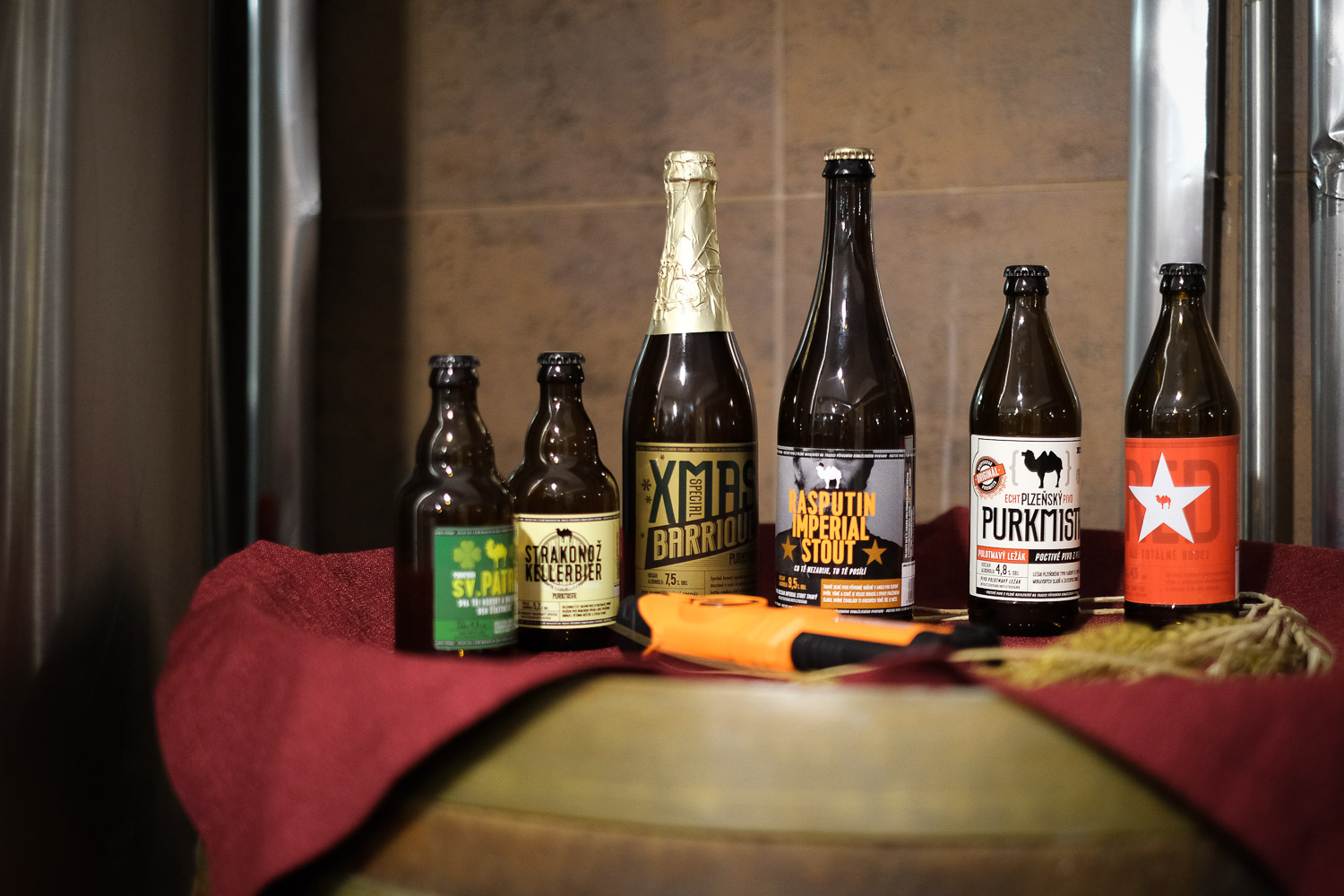
We pass through the bustling old-fashioned dining hall into the back of the building where the brewery is based. After a day of touring breweries of varying size and capacity, there becomes a point when a brew kit is just another brew kit, but this does give us a chance to sample Purkmistr’s pilsner in a variety of serving styles.
You see, unlike with British beer, there are several styles of tapping in the Czech Republic. The classic Czech style is the hladinka, a large beer with a thick and foamy head that takes up the top third of the glass. Contrary to what we have come to expect at home, the volume of foam doesn’t mean that you are being ripped off and instead acts to protect the beer and ensure that it keeps its zest. A snyt is a small beer poured into a large glass that is more foam than beer, which is perfect for tasting. Then there is the cochtan which is poured in the British style without any foam. Finally, the most unusual style is the mliko. Here the glass is filled entirely with foam, resembling a glass of milk that is intended to be downed in one gulp. I opted to sip instead, but it is thought that this particular pour gives the ‘beer’ a smooth, sweet flavour.

Back in the main restaurant, I settle down at a long wooden table with a beer flight in front of me. There are a couple of pilsners, an IPA, wheat beer and stout along with a very malty non-alcoholic beer. They’re all excellent, which is to be expected from the Czech Republic’s largest microbrewery.
Tucking into a plate of pork knuckle, I reflect that times are changing in the Czech Republic and beyond the large producers, even the most traditional microbreweries are creating interesting drinks that are bound to win around the Czech public.
If not, that doesn’t matter. Even supping a pint of mass-produced Pilsner Urquell in its unfiltered, unpasteurised form is a joy in the Czech Republic and Pilsen is undoubtedly the greatest place in the world to sample it.


Breweries in Pilsen
Although the world-famous Pilsner Urquell Brewery is the most well known of Pilsen’s beer producers, it is far from the only brewery in the city. There are a good number of small-scale microbreweries that have appeared in and around Pilsen since its foundations as the home of modern beer in 1842 pffering a mix of classic pilsners and creative takes on modern, craft beer.
Pivovar Raven
Owned and operated by Australian ex-pat Filip Miller, Raven eschews more traditional Czech beers (although it does those very well) in favour of the weird and wonderful. Pivovar Raven is, in my opinion, the essential brewery to visit in Pilsen.
They have two pubs; one located directly next to the brewery at Mozartova 1 in Pilsen Bolevec and another in the centre of Pilsen just a short walk from the monument on Americká Street. Both offer 6 taps serving Raven’s beers alongside a well-stocked fridge of bottles.
Purkmistr Brewery
Sitting on the outskirts of Pilsen in the Pilsen-Černice district and occupying a former farmyard dating back to the 17th century, you will find Purkmistr, the second largest of the city’s breweries. However, stepping down the stairs into the basement of their restaurant to wander amongst the brew kit, you will see that this is nowhere near the scale of Pilsner Urquell and is very much a microbrewery. They brew around 1,600 hectolitres per year and while traditional unfiltered and unpasteurised beers such as light, semi-dark and dark lagers their most popular, they also brew modern IPAs, sours, bocks and smoked lagers, among others. While most people come for the beer, their on-site restaurant serves exceptional Czech food and they even have their own hotel and beer spa.
Time your visit in September and you may be able to attend their ‘Sun in a Glass’ festival where the yard fills with breweries from all over Czechia.
Pivovar Proud
While a brewery owned and funded by Pilsner Urquell can’t necessarily be called a ‘craft brewery’, Pivovar Proud is Pilsner Urquell’s more experimental arm and has free reign to create all manner of weird and wonderful brews. Occupying a former power plant at the confluence of the Mže and Radbuza rivers, Pivovar Proud is crafting award winning beer that is available in pubs and fridges all over the city of Pilsen.
Rodinný Pivovar Radobyčice
This tiny microbrewery in the village of Radobyčice began life with the purchase and reconstruction of a decrepit, 200 year old barn. After 5 years of toil and hard graft, the owners have managed to create a compact and intimate space in the historical village that holds a mere 25 drinkers. Like many Czech breweries, everything is brewed with the highest quality humn malts and Žatec hops and they always aim to have 4 different beer on tap at any one time. Booking is recommended.
Zlatá Kráva
Located south of Pilsen in the picturesque town of Nepomuk, Zlatá Kráva (the Golden Cow in English) was born in 2018 when two local families – the Sochors and the Sladkýs – came together in a mission to restore the charm of the local, almost forgotten local brewery.
The brewery building has its roots in the second half of the 19th century, when it originally was originally the site of Turk’s brewery until 1938, when it took on a new life as a bottling plant for the Pilsen brewery. The two families bought the dilapidated building from the original owner, Ferdinand Jiskra, who at the age of 84 oversaw the first brewed batch of Zlatá kráva beer. A half-dark 13 Spark is now brewed in his honor. The head brewer of our beer is now Žaneta, who took over the craft from her father, Petr Petružalek.
The brewery now has its own wellness spa, beer-themed hotel, restaurant and tap room.
Gambrinus Brewery
With a history dating back to 1869, Gambrinus is one of the most popular beers in the Czech Republic and brews only traditional Czech Pilsners in various forms. You’ll find their brewery just a short hop from Pilsner Urquell where you can take a tour (CZK 200/2 hours) of their brewhouse and brewery cellars, as well as learn the history of the brewery. At the end of the tour, you will get a tasting session where an experienced bartender will teach you how to pour the perfect glass of Czech beer.
Traditional Pubs in Pilsen
Pilsen’s city centre is packed with beautiful, historic pubs. As expected, most of them specialise in lovingly poured pints of local pilsner alongside extensive menus of Czech delicacies. Here are some of the best for beer lovers and fans of Bohemian cuisine:
Na Parkánu
Attracting a steady stream of both tourists and locals, Pivovarský šenk Na Parkánu occupies one of Pilsen’s original brewing houses and is directly connected to the city’s Brewery Museum. Sitting at the edge of the old town at the end of picturesque Veleslavínova Street, Na Parkánu recently underwent an extensive renovation and is now a must-visit for beer lovers. While it can get a little rowdy on an evening, the food is as much of an attraction as the traditional lager and unfiltered pilsners – expect wonderful soups, plump dumplings, and some fantastic meat dishes.
U Salzmannů
The oldest pub in Pilsen has been serving cold glasses of foamy-headed beer since 1637. It oozes classic Bohemian character and the skilled barmen will happily serve you a glass of pilsner in one of four traditional styles: Hladinka, Šnyt, Mlìko, or čochtan. Alongside great beer, the menu features an extensive list of Czech specialities.
Na Splice
There is no better place to sample Pilsner Urquell than at the source and so Na Spilce is an essential stop when visiting Pilsen. Occupying a former fermentation cellar in the courtyard of the Pilsner Urquell Brewery – the ‘spilka’ – the vaulted ceilings of Na Spilce can host up to 550 diners, making it the largest gastropub in all of Bohemia. Here you can sample eight different draught beers while gorging on a menu of Czech classics such as beer goulash, rolled Přeštice pork brisket, and rabbit ragu.
U Mansfelda
Like many Pilsner Urquell gastropubs, a round, copper bar sits at the centre of U Mansfelda, surrounded by a laidback, cosy interior where the walls are adorned with framed beer advertisements and old, black and white images of Pilsen of times gone by. If the weather allows, take a seat outside on the terrace that overlooks a section of the pretty parkland which encircles the old town.
Craft Beer Bars in Pilsen
Although Pilsners are unsurprisingly the dominant beer style on offer in Pilsen, there are a growing number of specialist beer bars around the city offering a variety of craft beers either from one single microbrewery or from the hundreds of small-scale producers that can be found throughout Czechia.
Beer Club ‘The Blue Star’
If you don’t find the time to journey 15km southwest of Pilsen to the Blue Star Brewery in the nearby town of Dobřany, their city centre pub has 24 taps serving almost entirely their own beers, with a few reserved for guest ales from local microbreweries.
Zlatá Kráva Bandaska
Just off Republic Square, you will find this city centre outpost of Nepomuk-based farmhouse brewery Zlatá kráva (Golden Cow). Expect to find plenty of their own brews on tap where alongside classic pilsners and wheat beers, they offer up seasonal specialties including fruited sours, IPLs and NEIPAs.
Pivstro - Brewhemian Beer Bistro
A cool beer café serving up beer from a number of local microbreweries alongside a menu of international bar food such as burritos, burgers and fish and chips. Make sure to try their house beer brewed by Zhůřák micro brewery.
Klub Malých Pivovarů
A haven for craft beer lovers, the ‘Club of Small Breweries’ has 8 taps that regularly rotate with beers from nearly 250 different microbreweries across Bohemia. If there is nothing on tap that takes your fancy, they have a well-stocked fridge of international beers.
Francis Beer Café
This snug, retro bar on Náměstí Republiky has just four taps from which they are always pouring beers from Pilsner Urquell, Zhůřák and Raven breweries with a 4th on constant rotation. However, their fridge is always well stocked with a mix of Czech and Belgian bottles.
Beer Festivals in Pilsen
Unsurprisingly, being the home to Pilsner lager, the town of Pilsen has a number of events throughout the year celebrating its foamy, golden creation. These range from small beer festivals run by craft breweries to celebrations that take over the entirety of the city’s main square. Like elsewhere in central Europe, the festivities really begin to take hold at the end of summer and start of autumn to coincide with the traditional hop harvest.
The Sun in a Glass
Held in the beer yard of the Purkmistr Brewery in Pilsen- Černice, Sun in a Glass brings together up to 70 domestic and international microbreweries serving over 150 beers. Alongside the beer, there is a program of music and dance performances, competitions, and tours of Purkmistr brewery itself.
Pilsner Fest
Each year on the first weekend of October, Pilsner Fest takes place on the premises of the Pilsner Urquell Brewery to commemorate the anniversary of the first brewing of its pils-type beer. This was a rather historic event that is worthy of celebration; Not only did the beer style completely change the future of the city of Pilsen, but it also altered the future of beer brewing worldwide. The Pilsen recipe is now used for around 70% of the world’s beer production.
The festival usually spills from the grounds of the brewery into the historic city centre of Pilsen and features musical performances across several stages.
Raven Fest
Each year, one of Czechia’s most beloved craft breweries close off the streets around their Bolevec brewery to host a 3-day festival serving up their own beers. There is live music from local bands as well as a host of street food stalls.
Gambrinus Day
This is a beer festival in which the historic square of Pilsen and all of the surrounding streets are transformed into an enormous beer garden for one full day in celebration of the founding of the city’s Gambrinus brewery. Gambrinus beer is served directly from tanks while musical performances provide a soundtrack to the live finals of the Gambrinus Master Bartender competition.
Where to Stay in Pilsen
Being Czechia’s 4th largest city and a major business/industrial hub, there is no shortage of large hotels and accommodation options in Pilsen’s city centre. However, a number of Pilsen’s breweries also offer a place to stay, often with the option of an adjoining beer spa for those really wanting to theme their entire stay in the city around its famous amber nectar.
Hotel
Courtyard by Marriott
Brewery & Beer Spa
Hotel Purkmistr
As well as brewing some of Pilsen’s finest beer, Purkmistr brewery has an onsite hotel of 32 rooms with adjoining beer spa where you can bath in a concoction of hops and yeast while enjoying an unlimited supply of 12° Purkmistr beer.
Beer Hotel
Pivni Hotel
Located south of Pilsen in the picturesque town of Nepomuk, this beer-themed hotel attached to Zlatá Kráva brewery features 16 designer rooms – each named after their own beers – with their own beer tap (and 5 litres of complimentary ale). Their beer spa and wellness centre features a whirlpool, Finnish sauna and the opportunity to take a beer bath in the old cellar of the brewery. A unique experience.
How to get to Pilsen
Most people visiting Pilsen will arrive via Václav Havel Airport in Prague (90km away/50mins by car). From the airport, you can take the no. 100 bus to Praha-Zličín (40 Czk) and from there, catch the yellow Regiojet buse or the green-orange Flixbus buse to Pilsen (every hour/100 Czk). It is also possible to catch the airport shuttle to Prague railway station where you can transfer to the Západní Express. The Express leaves every hour and takes approximately 1 hour 15 to reach Pilsen.
There are also direct trains from České Budějovice, Klatovy (Železná Ruda), Domažlice, Cheb and Žatec.