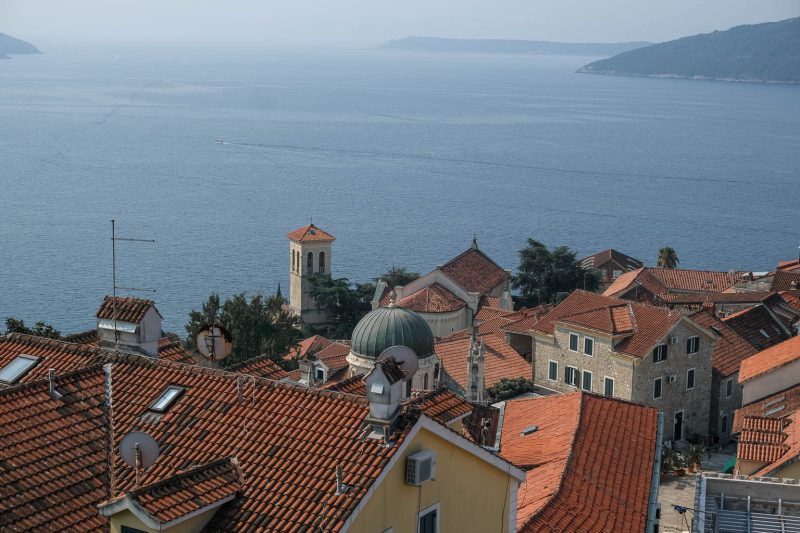
You sometimes step foot in places in the world that make you wonder how they were slowly built over time, with centuries of construction coming together to create something so beautiful, rather than being composed. Places where architecture, landscape and light seem to have conspired to create something so utterly extraordinary that it is hard to believe that it wasn’t conceived and spirited together in one fell swoop. Perast is one of these places.
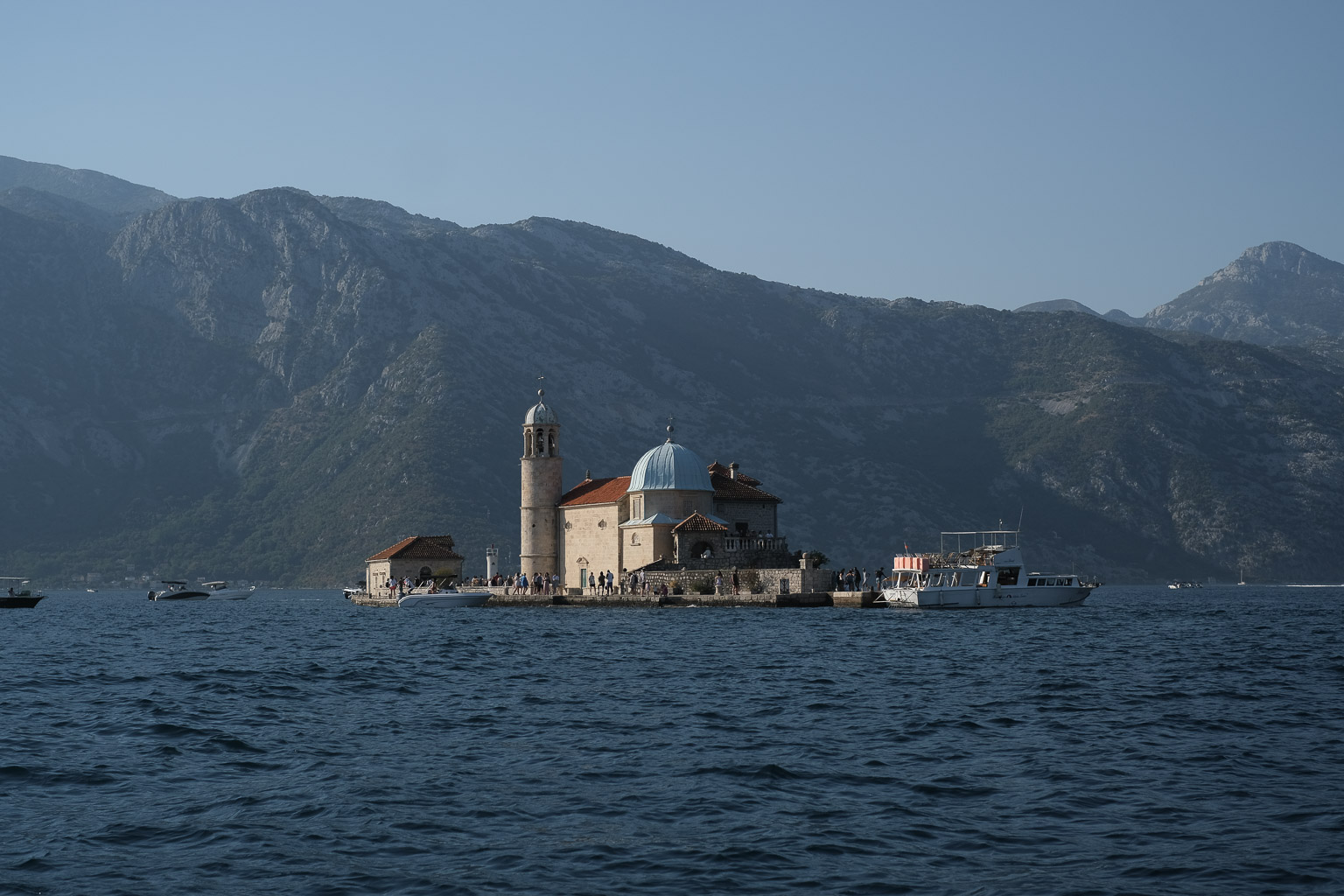
Set along the northern coast at the heart of the Bay of Kotor, this tiny Montenegrin village appears almost impossibly stunning: a procession of honey-coloured stone palaces and church towers facing still, fjord-like waters, with rocky mountains rising dramatically behind. Just off its coast, two islets punctuate the view, one crowned with cypress trees with a historic curse, the other with a pale blue dome. However, despite its diminutive size and postcard perfection, Perast has a history shaped by ambition, empires and seafaring prowess.
Though modest in size, Perast was once one of the most important maritime settlements in the Adriatic. Its fortunes rose during the centuries of Venetian rule, beginning in the 15th century, when the Republic of Venice recognised the village’s strategic position at the narrowest point of the bay. From here, Perast’s sailors could monitor and defend access to the inner waters, protecting the wealthy trading ports beyond.


Under Venetian patronage, the town flourished. By the 17th and 18th centuries, Perast had become a proud naval centre, home to skilled captains, shipbuilders and merchants. At its height, it is said to have had dozens of ships and a population far larger than today’s. Wealth flowed back into the village in the form of grand baroque palaces that were ostentatiously built and symbols of status as well as an allegiance to Venice.
Families such as the Bujović, Zmajević and Smekja constructed elegant stone residences along the waterfront, many of which still stand today. Their façades were carved coats of arms, arched windows and graceful balconies and remain some of the finest examples of baroque architecture on the eastern Adriatic.
Perast’s loyalty to Venice was famously unwavering. When the Venetian Republic fell to Napoleon in 1797, legend has it that Perast was the last town to lower the Venetian flag, and even then, it did so with mourning, burying the banner beneath the altar of its church rather than surrendering it lightly.
In a way, the sea has always shaped Perast’s identity, both economically and spiritually. Nowhere is this more visible than in the story of Our Lady of the Rocks, the man-made island just offshore. According to local tradition, fishermen discovered an icon of the Madonna and Child on a reef in 1452. In gratitude for safe returns from sea, sailors began dropping stones at the site after each voyage, gradually creating an artificial island upon which a church was built. The tradition continues today during the annual Fašinada festival, when local boats circle the island at sunset, casting rocks into the water in symbolic preservation of the town’s foundations.


Opposite lies St George Island, a natural islet shaded by dark cypress trees and home to a Benedictine monastery. Despite being offshore, together the two islands form the symbolic heart of Perast.
Unlike nearby Kotor, which developed into a fortified medieval town, Perast never enclosed itself in defensive walls, instead using its ships and sailors as defence. As maritime trade declined and empires shifted from Venetian to Austrian, French and eventually Yugoslav control, Perast’s prominence faded. What remained, however, was its architecture and its atmosphere.

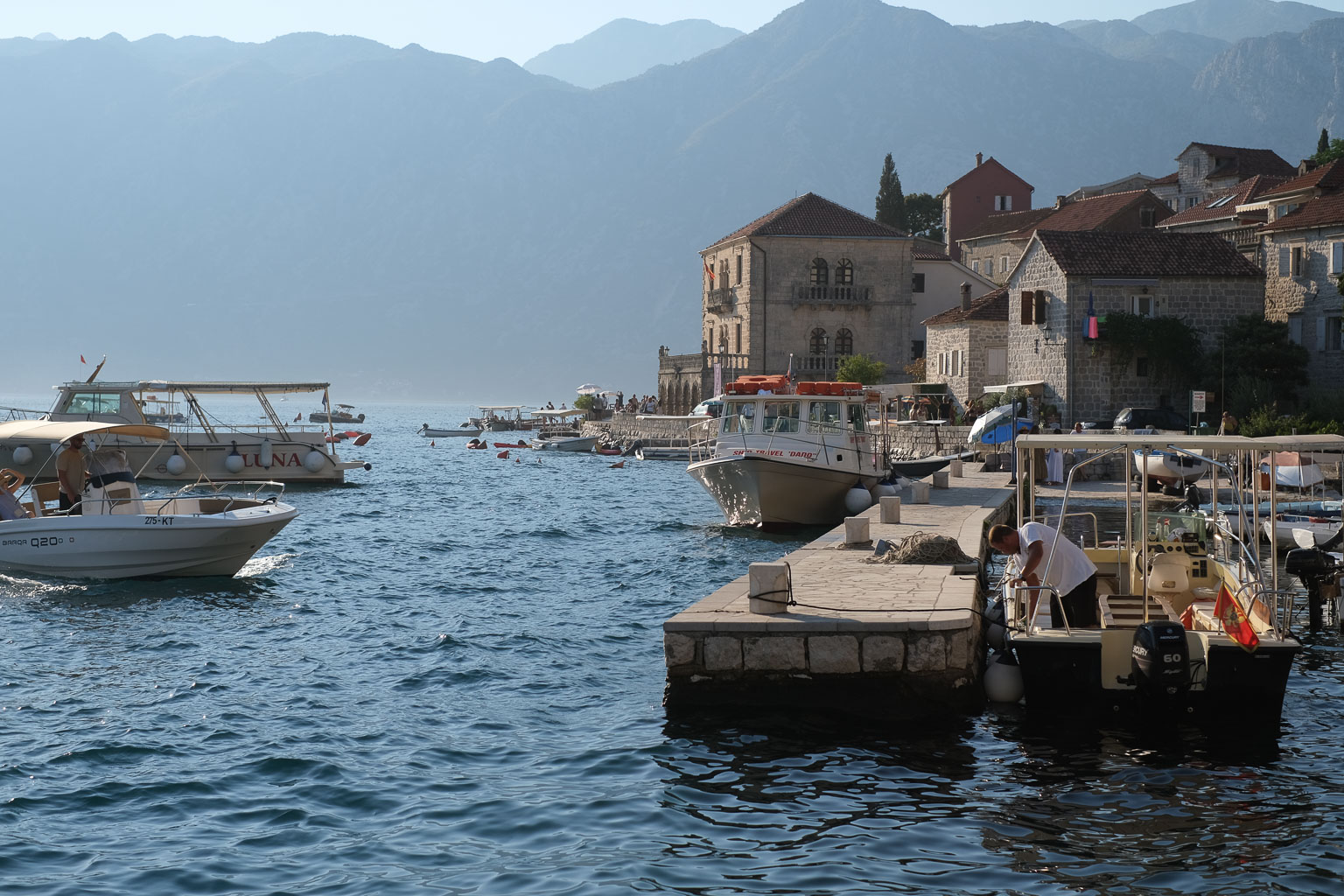
Today, the village is home to only a few hundred residents. There are no sprawling resorts like elsewhere along the bay’s coast, and because of this, Perast feels perfectly preserved. Cars are largely restricted, and the waterfront promenade remains almost as it has for centuries, with the exception of a scattering of bistros and restaurants.
Morning light washes the stone façades in soft gold. Church bells echo across the bay. Small boats ferry visitors to the islands. And as evening falls, the mountains cast long shadows over glassy water. It’s a wondrous place to spend a day or an evening.
While Perast is not the most exciting of destinations, it certainly feels like a place to slow down and to trace the outlines of history in its buildings and waters; to swim where sea captains once anchored their ships, and to sit quietly as the sun sets over the bay. This is one of Montenegro’s most evocative and atmospheric corners; essentially a peaceful baroque jewel in an otherwise busy tourist hotspot.
Where is Perast & Why Visit?
Set on a narrow curve of shoreline in the heart of the Bay of Kotor, Perast lies just 12 kilometres northwest of Kotor in southwestern Montenegro. The village faces a dramatic sweep of water enclosed by steep limestone mountains, part of a UNESCO-protected landscape often described as Europe’s southernmost fjord. Though tiny and home to just a few hundred residents, Perast occupies one of the most striking positions in the entire bay.
Unlike Kotor’s fortified old town or Budva’s beach resorts, Perast unfolds in a single, elegant line along the water. There is no maze of alleys or busy squares here like in nearby towns; instead, a graceful promenade of honey-coloured baroque palaces, church towers and stone jetties stretching for just over a kilometre. Offshore, two small islands, one natural, one man-made, give the village its postcard-perfect silhouette.
The Best Things to Do in Perast
Perast is small, and it is more about its atmosphere rather than the amount of sightseeing there is to do, but there is enough to keep you occupied for a day. Most of the highlights sit within a short waterfront stretch, but each one reveals a different layer of the town’s maritime past.
Visit Our Lady of the Rocks
The small, man-made island crowned by a pale blue dome is Perast’s defining image. A short boat ride (just five minutes) takes you from the promenade across shimmering water to Our Lady of the Rocks, a 17th-century Catholic church built on a reef gradually expanded by local sailors.
According to legend, fishermen discovered an icon of the Madonna and Child here in 1452 and began dropping stones into the sea after successful voyages, slowly creating an island. That tradition continues today during the annual Fašinada festival, when locals row out at sunset to add more rocks to the foundation.

Inside, the church is richly decorated, with marble altars, silver votive tablets and an extraordinary embroidered tapestry created by a local woman who waited 25 years for her sailor husband to return at sea, weaving strands of her own hair into the thread as she aged. The attached museum displays maritime artefacts, paintings and navigational instruments that reveal just how wealthy and influential Perast once was.
You’ll easily find companies willing to ferry you across from Perast’s waterfront, with services generally leaving every 15 minutes and costing around €5 for a return journey. Expect to spend around 30 minutes on the islet before being shuttled back.
On top of this, you can expect to pay €3 per person to enter the church and museum.
For the best experience, make sure to go early in the morning or late in the afternoon for softer light and fewer visitors, and take time to circle the island’s edge for uninterrupted views back toward the mountains.
St George Island
Directly opposite Our Lady of the Rocks lies the darker, more mysterious St George Island. Unlike its neighbour, this natural island is not open to the public, which only adds to its intrigue.
Crowned by a Benedictine monastery and encircled by tall cypress trees, St George has served as a monastic retreat and, historically, as a burial site for prominent Perast families and most respected citizens, from sea captains, members of noble families, and others who shaped the town’s history. This has even earned it the nickname of ‘the Island of dead captains.’
Inside the church, there are 72 tombs bearing family crests and inscriptions from some of Perast’s most prominent dynasties, including the Zmajević and Brajković clans. Outside, the graves of lesser-known citizens rest beneath the trees.

And as if that wasn’t enough to add to its dark reputation, legend has it that a Pope once cursed the island after a priest was murdered there. Whether true or not, this story added to the island’s mystique, with many people choosing to now avoid it entirely.
From the water, its stone walls and dense greenery create a striking contrast to the bright façade of Our Lady of the Rocks. It’s fitting then, that it is also known as the ‘island of the dead’ owing to the fact that all its inhabitants through the centuries have been temporary. Although Illyrian Queen Teuta, Roman Emperor Diocletian, Austro-Hungarian Emperor Franz Joseph, and even King Edward VIII of Britain have all set foot here, the long-term occupants such as monks, Ottoman soldiers and caretakers have long gone.
It’s no longer open to the public, but most boat tours circle the island, offering atmospheric views and photo opportunities.
Visit the Perast City Museum
To truly understand Perast’s significance, step inside the Perast Museum, housed within the elegant 17th-century Bujović Palace on the waterfront.
This small but fascinating museum tells the story of Perast’s golden age under Venetian rule, when its seafarers commanded fleets and defended the bay from Ottoman forces. Inside, you’ll find portraits of sea captains, ornate uniforms, weapons, navigational instruments and detailed ship models that reveal the town’s naval prestige.
Although the museum itself is small, the palace is worth admiring thanks to its baroque façade and stone balcony overlooking the bay, which are among Perast’s most photographed architectural features. Allow around an hour in there.
Climb the Bell Tower of St Nicholas’ Church
The skyline of Perast is dominated by the elegant tower of St Nicholas’ Church. Rising around 55 metres high, it’s one of the tallest church towers on the Adriatic coast, and climbing it offers the best panoramic view in town.

The ascent involves narrow stone steps and wooden ladders, but from the top, the reward is worth it: red-tiled rooftops below, the twin islands floating offshore, and the mountains of the bay rising sharply behind them. It’s especially spectacular in late afternoon when the water shifts from deep blue to gold.
Wander the Baroque Palaces & Churches
Perast flourished between the 15th and 18th centuries, and its prosperity is still visible in the grand palaces lining the seafront. As you stroll the promenade, look up at carved crests, arched doorways and elegant balconies, which are reminders of noble families who built fortunes at sea.
Unlike nearby towns with winding medieval streets, Perast is mostly confined to a single graceful line along the water, making it easy to see it all in no time at all.
Swim from the Stone Jetties
There are no sandy beaches here, and instead, swimmers slip straight into the bay from stone platforms and small jetties. In summer, the water is warm and calm, perfect for floating on your back beneath the mountains.

Choose a quieter stretch away from restaurant terraces and boat launches, bring water shoes if you prefer extra grip, and embrace the tranquillity.
Take a Boat Trip Around the Bay of Kotor
To appreciate Perast’s setting fully, head out onto the water. Small boats and organised tours depart regularly from the promenade, offering a wider view of the Bay of Kotor’s dramatic coastline.


From the deck, you’ll see medieval towns clinging to hillsides, hidden coves and church domes rising from the sea. Arriving back into Perast by boat, with its row of pale palaces facing the water, is quite the experience
Best Restaurants and Cafés in Perast
Perast may be tiny, but its waterfront setting and Adriatic cuisine draw the crowds as well as making it a delightful place to eat, meaning that a range of fantastic dining spots have popped up along its shoreline. Whether you’re stopping for a casual lunch after exploring the bay or savouring a long dinner as the sun sets over the water, many of the best spots are right on the promenade, where alfresco tables and sea views enhance the platters of Montenegrin seafood on offer.

Restaurant Conte
Where: bb Ul. Marka Martinovića, Perast 85336, Montenegro
When: Daily 8am – 12am
Possibly Perast’s most celebrated restaurant and attached to the historic Conte Hotel, this waterfront restaurant delivers classic Mediterranean and seafood dishes with a bay view that’s hard to beat. It’s well-known for its fresh fish platters, grilled octopus and pasta with shellfish, all paired beautifully with Montenegrin white wine. Generous portions and attentive service make it an excellent choice for a leisurely lunch or an elegant evening meal as the sun dips behind the mountains. Make sure to book ahead for sunset tables as this is one of Perast’s most sought-after spots.
Restoran Armonia
Where: FPP3+449, Perast, Montenegro
When: Daily 8am – 12am
A favourite for both lunch and a relaxed dinner, Armonia combines simple Mediterranean flavours with fresh local ingredients. Think bruschetta, salads, light pasta and seafood plates that are ideal for a midday break or an early evening meal when you want something satisfying without feeling too heavy.
Konoba Otok Bronza
Where: Perast, Montenegro
When: Daily 8am – 11pm
For a more traditional Montenegrin experience, this charming konoba (tavern) tucked near the old Bronza Palace dishes up hearty grilled meats, seafood and seasonal specialities in a relaxed, vine-covered setting. Expect wooden tables, local wines and an unpretentious service that make Otok Bronza feel authentic and like a favourite local stalwart.
Riva Patisserie & Brasserie
Where: bb Marka Martinovica, Kotor 85336, Montenegro
When: Daily 7.30am – 11pm
Perfect for a coffee and pastries or a light lunch, this patisserie-style café pairs sweet treats with savoury bites and excellent coffee. With tables facing the water, it’s a lovely spot for a late morning break or afternoon indulgence before returning to your wanderings.
Perast Pizza Bocalibre
For a laid-back dining spot, Bocalibre is the place to grab a pizza or a cold beer right on the seafront. It’s less formal than many waterfront restaurants but beloved for its relaxed vibe, friendly service and satisfying Neapolitan pizzas. It seems like there is a lot of crossover between Italian and Montenegrin cuisine, so this is a great choice if you want something simple that still tastes great with bay views.
LOCANDA Perast Ristorante Pizzeria
Where: bb Marka Martinovica, Kotor 85336, Montenegro
When: Daily 7.30am – 11pm
Another for those craving Italian flavours, Locanda serves artisan pizzas, pasta dishes and fresh salads in generous portions with a scenic backdrop. It’s a relaxed, family-friendly option that’s particularly satisfying after a day of sightseeing or swimming, and well-liked for its friendly service and classic Italian comfort food.
Where to Stay in Perast
Being a small village, Perast’s accommodation scene doesn’t feature any large resorts and sprawling complexes, but instead offers properties that are more intimate in scale: a lovely selection of boutique hotels and guesthouses that hint at the place’s timeless character.
While Perast isn’t as convenient and offers fewer amenities than other locations along the bay, staying here means waking up to incredible views of the Bay of Kotor each day and provides a slower-paced holiday where morning espresso by the sea, late strolls under church bells and sunsets beside the water set the tone.
Heritage Grand Perast
Where: MARKA MARTINOVICA, Perast 85336, Montenegro
Best for: couples or longer stays where luxury, setting and full-service amenities are priorities.
One of Perast’s most atmospheric and luxurious hotel experiences, Heritage Grand Perast occupies a restored 18th-century Venetian palace right on the waterfront, with panoramic views across the Bay of Kotor and the islets of St George and Our Lady of the Rocks.
Set within historic stone buildings that once belonged to nobility, the hotel blends baroque character with contemporary comforts such as spacious suites and elegantly furnished rooms, many with private balconies or expansive bay views.
As well as being a place to rest your head, it has multiple dining spots (including a panoramic breakfast terrace and a waterside restaurant), a spa with an indoor pool, sauna and hammam, plus a soothing outdoor pool and beach club area.
Conte Hotel
Where: bb Obala Kapetana Marka Martinovica, Perast 85336, Montenegro
Best For: Authentic local charm and excellent food right in Perast’s historic heart.
Tucked into a cluster of charming Baroque stone buildings along Perast’s seafront, Hotel Conte spreads across several historic buildings, some with private entrances, courtyards or outdoor jacuzzi options. It’s full of character and brimming with local, traditional architectural features such as thick stone walls and timber beams, while still having modern comforts.
Perhaps one of Hotel Conte’s biggest draws is its onsite restaurant and wine bar, Restaurant Conte, which specialises in Montenegrin and Mediterranean cuisine using local ingredients.
Santa Boka
Where: Perast bb, 85336, Montenegro
Best For: Couples, honeymooners or travellers craving a boutique-style experience
Santa Boka is relatively small compared to the previous two hotels, but it more than makes up for it in bespoke luxury. Also set in a carefully restored historic building, the hotel blends elegance with heritage, from finely furnished rooms to bespoke decorative details that nod to Boka Bay’s seafaring past.
The hotel’s signature restaurant, Bokone, focuses on Mediterranean cuisine crafted from the finest local produce, while Santa Boka’s wellness and spa area comes complete with a sauna, jacuzzi and tailored treatments, making it a strong choice for travellers who want relaxation and romance alongside cultural exploration.
Guesthouses & Homely Options
Aside from its heritage hotels, Perast also has a good range of family-run guesthouses and B&Bs that offer a more local welcome, often cosier and witha touch of old-world character. Popular choices include family-hosted rooms with terraces overlooking the bay, and properties with gardens tucked slightly uphill for a quieter stay away from the promenade.
- Guesthouse Žmukić – Near the centre with excellent reviews and a friendly feel; some rooms look straight over the water
- Bluemarine Rooms & Apartments – Simple but comfortable rooms with air conditioning and hospitable hosts
- BellaVista Zmukic Guesthouse – Stylish rooms with exceptional bay views and free parking – a great option if you’ve rented a car
Where We Stayed: Hyatt Regency Kotor Bay
Where: Donji Stoliv bb, Kotor 85330, Montenegro
Best For: Those who want luxury seaside comfort and resort facilities while still being close to driving distance from Kotor’s historic heart and other popular villages around the bay
Across the water from Perast, the five-star Hyatt Regency Kotor Bay Resort offers a very different take on a Bay of Kotor stay, swapping traditional stone buildings for a sleek and modern resort of expansive terraces, private beaches, and full-service resort ease. Set in Donji Stoliv, directly on the water and framed by steep, fjord-like mountains, it’s a sleek, contemporary base that still manages to feel connected to the area.


Rooms and suites are light-filled and modern, with floor-to-ceiling windows designed to draw the eye straight to the bay. Many come with private balconies or terraces, and higher-category options add whirlpools or generous outdoor space that is an ideal place to spend some time over morning coffee. The aesthetic is polished and understated.
Dining is varied and spread across a few different restaurants, from generous buffet breakfasts (one of the best I’ve ever had) to Mediterranean-inspired dinners by the shore and terrace cocktails at sunset. The Ole! Bar, right beside the water, is a particularly lovely spot for lunch and offers a menu packed with Latin American flavours. The private beach area and infinity pool provide plenty of space to unwind between excursions, while the spa complex, complete with indoor pool, sauna and treatment rooms, makes it easy to lean fully into holiday mode. Kayaks and paddleboards are available for those tempted to explore the bay independently, and towel rental is free for guests.

Location-wise, the hotel sits at the other side of the bay from Perast, but it is only a 15-20 minute drive from Kotor’s old town, making it a practical base for exploring the UNESCO-listed Bay of Kotor while retreating each evening to a quieter stretch of coastline. Boats can be taken from the harbour directly across to Perast, which makes for an exciting evening excursion. It’s particularly well-suited to travellers who want the romance of the bay with the comfort of a large-scale resort. Whether that’s couples looking for indulgence, families wanting facilities, or anyone planning a longer Montenegro stay with a touch of luxury.
How to Get to Perast
Perast is relatively easy to access and sits on the main coastal road that loops around the Bay of Kotor. However, the final stretch is a little different from most destinations. To get into the centre of the village, its pedestrianised waterfront has limited vehicle access, and the journey tends to end with a short walk along the bay, which honestly feels like part of the experience.

From Kotor
Perast is just 12–14km northwest of Kotor, making it a relatively easy day trip from the bay’s most popular town. The drive takes around 20 minutes along a scenic coastal road, and taxis are quick, affordable and widely available. Local buses run between Kotor and nearby towns throughout the day and usually stop on the main road above Perast.
From Tivat Airport
Tivat is the closest airport, around 20–30 minutes away by car or taxi via Kotor. Rental cars are easy to arrange at the airport, but keep in mind that you won’t be able to drive directly into the historic centre during peak season.
From Dubrovnik
Although Dubrovnik’s airport isn’t particularly close to Perast, it is sometimes the easiest airport to arrive at due to the fact that there are more frequent flights to Croatia from the UK than to Tivat. Driving takes roughly 2.5–3 hours, depending on border queues, while private transfers and organised tours are common and often include stops in Kotor along the way. Public transport is less direct, typically involving a bus to Kotor or Risan before continuing locally.
By Car
Perast is largely car-free. During the main tourist season, non-resident vehicles must park in designated lots at either end of town and continue on foot. Streets are narrow, and parking is limited, so arriving early during peak months is a must.
Getting Around
You won’t have too much trouble getting around Perast, mainly because there isn’t very far to go. The entire village stretches for just over a kilometre along the waterfront, and most of the historic centre is either pedestrianised or restricted to local traffic. A slow wander along the stone promenade reveals baroque palaces, tiny jetties and wonderful views across the bay, so there’s little reason to rush or rely on transport once you’ve arrived.
Comfortable shoes are useful if you plan to climb the occasional set of stone steps or head uphill for viewpoints, but the terrain is generally flat along the seafront. For those staying outside the centre, you can take short local taxi rides to nearby villages such as Risan and Kotor, while cycling is also a great way to explore the wider shoreline: the coastal road is largely level, though traffic can be heavy in summer. Boats are another practical and scenic way to move around the Bay of Kotor, with regular water taxis and excursions linking Perast to Kotor, Prčanj and the nearby islands.
When is the Best Time to Visit Perast?
The best time to visit Perast depends on whether you’re looking for languid swims and long waterfront lunches, or quiet mornings when the bay feels like it’s almost entirely your own.
As with much of the European coastline, I always recommend visiting in late spring (May–June) and early autumn (September–October) when the weather is warm but not too oppressive, the crowds are noticeably thinner, and prices are lower. It’s warm enough for swimming by late May, restaurants and boat services are fully open, and it’ll be easier to get a seat in a cafe for a waterfront coffee.


I last visited in August, and while this almost guarantees sunshine and lively energy, it also brings the highest visitor numbers. Day-trippers arrive steadily from Kotor and cruise excursions, and the narrow waterfront can feel busy from late morning through mid-afternoon. Having said that, it didn’t feel overwhelming, even in the height of summer, compared to Kotor. At this time of year, staying overnight is a good idea as the early mornings and late evenings are the most peaceful times to be here, especially once the last boats have departed from Our Lady of the Rocks.
Tips for Visiting Perast
Although Perast is a tiny waterfront village and visiting is wonderfully straightforward, here are a few practical details that will help you make the most of your time here.
Bring cash
Most restaurants and hotels accept cards, but smaller cafés, boat operators and market stalls may prefer cash. ATMs are few and far between, so it’s a good idea to withdraw money in Kotor or elsewhere around the Bay of Kotor before you arrive.
Allow Time for the Islands
Boats run regularly to Our Lady of the Rocks, and the short trip is one of the highlights of any visit to Perast. If you’re visiting, make sure that you factor in time for a boat trip, while also factoring in the waiting time for boats during peak season. Bring a light cover-up if you plan to enter the church, as modest dress is encouraged.

Bring Your Swimming Gear
There aren’t any sandy beaches in the village, but people still swim from the stone jetties and small platforms along the waterfront. Water shoes are recommended, and bring your own towels, as there isn’t anywhere to rent them and they are rarely provided unless you’re staying at a local hotel.
Arrive early (or stay overnight)
Perast is a fairly popular day trip from Kotor, and between late morning and mid-afternoon, the promenade fills up with day trippers. Arriving before 9am (early, I know) or staying overnight allows you to experience the village when it’s peaceful.
Plan for limited parking
The historic centre is mostly car-free, and non-resident vehicles must park in designated areas at either end of the village. Spaces fill quickly in July and August, so arrive early if you’re driving.
FAQs
Planning a visit to Perast? Here are answers to some of the most common questions travellers ask before arriving in this tiny Bay of Kotor village.
Is Perast worth visiting?
In my opinion, yes, especially if you’re drawn to historic architecture, nice coastal scenery and a somewhere a little quieter than Kotor. While it doesn’t have the scale or sights of Kotor itself, it was one of the most quaint and beautiful spots that I visited during my time in the country. There are baroque palaces, church towers and fantastic views across the Bay of Kotor. It’s ideal for a half-day or overnight stay.
How much time do you need in Perast?
Most visitors spend 3–5 hours in the village, which is more than enough time to wander the waterfront, visit Our Lady of the Rocks and enjoy a long lunch. Otherwise, arrive around midday and enjoy the village, finishing with a dinner and a glass of wine or two by the sea.
Can You Stay Overnight in Perast
There are several boutique hotels and guesthouses in restored stone buildings along the waterfront.
Is Perast better than Kotor?
I feel that they offer very different experiences and aren’t really comparable. Kotor is larger, busier and packed with sights such as medieval lanes and the fortress hikes, while Perast is smaller and more intimate. It completely depends on what you are looking for in your holiday.
Is Perast walkable?
The historic centre stretches for just over a kilometre along a flat waterfront promenade. Most of the village is pedestrianised or restricted to local traffic, making it easy to explore on foot.
Can you swim in Perast?
Yes. While there are no sandy beaches, you’ll find stone jetties and small platforms along the waterfront where locals and visitors swim directly into the clear waters of the bay during summer.