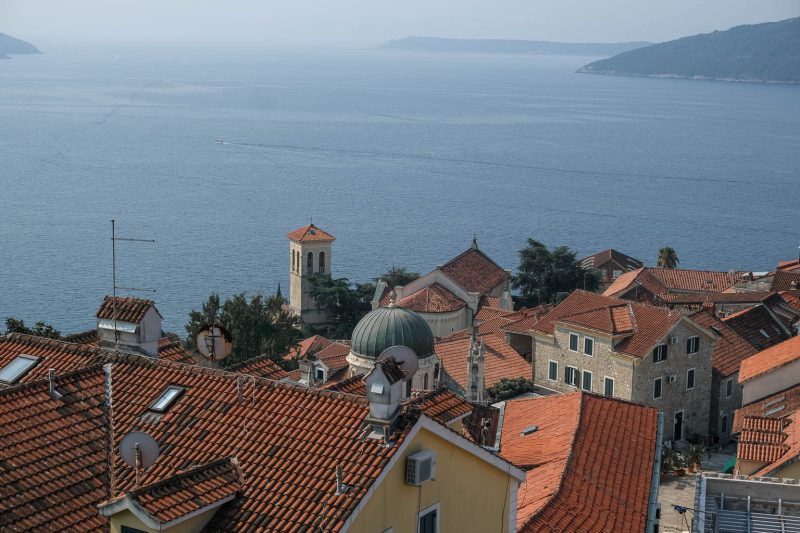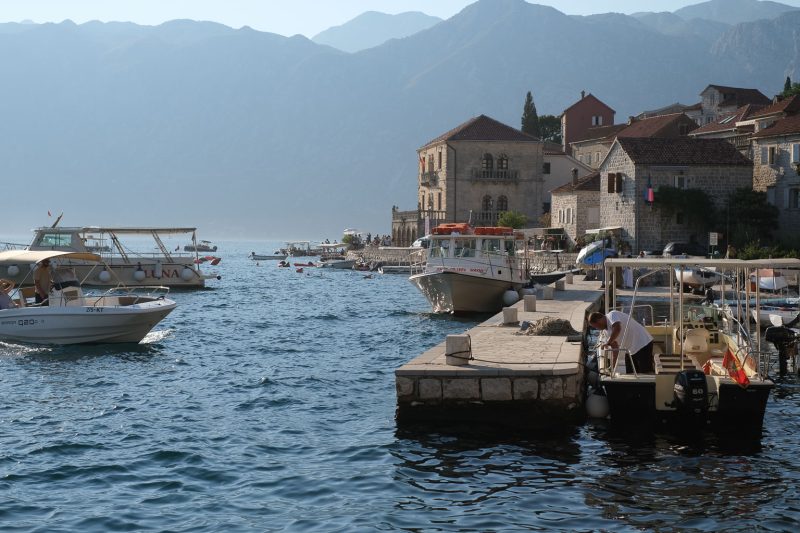
The path winds steeply from the shoreline of Boka Bay, seeming to disappear into a tangle of Cyprus branches. Everything was silent but for the wind threading through the forest’s branches, the crunch of gravel under my boots, and the steady hum of our jeep’s engine in the distance.
I had left the Adriatic coastline below, sunlit and serene, to climb toward a village that doesn’t really appear on many maps, where the stone buildings sit empty and time has chosen to stand still. Gornji Stoliv, founded in the 14th century by seafaring families and olive growers, once thrived high above the Bay of Kotor with a view as commanding as it was strategic. Built deliberately away from the shoreline to evade pirate raids, this hillside hamlet was a place where life slowly to the rhythm of the land, particularly its olive groves and chestnut forests.

Not much is left of this hanging village that sits 240m above the bay. The buildings are beginning to crumble, left empty as ghosts of the past.
Generations of villagers carved terraces into the mountain slope, planting olive and chestnut trees that would feed their families, anchor the soil, and sustain local trade. Groves and forests still surround the hamlet, now even beginning to encroach on his narrow pathways and gardens.
Although possibly apocryphal, many say that the Stoliv is related to the trees that the village became known for, a contraction of ‘one hundred olive trees’, in Montenegrin ‘Sto Oliva’. It was once custom that when a man planned to marry a local woman, he would plant 100 olive trees. It was not only a deeply symbolic act representing new beginnings, prosperity, and a bond between family and earth, they were also a means of supporting the new family.


Some of these trees still stand today, gnarled and silver-leafed, many of them hundreds of years old. They line the overgrown paths and encroach on dilapidated walls.
Our ascent had begun in Donji Stoliv, the lower, coastal half of the village, where figs hang heavy over garden walls, fishermen mend their nets in the shade, and holiday makers lounge by the shimmering shores. I was happy to be climbing the slopes in a 4×4, rather than walking it like the past residents. The trail was steep, the switchbacks frequent, and the sea grew smaller with every turn. As the bay receded behind olive trees and thick underbrush, we entered a world that felt untouched by modernity.

At the top, we were alone with the remnants of a once-vibrant community. The sun spilt over tiled rooftops and broken lintels. Ivy curled around old doorframes. And in the courtyard beside the weatherworn Church of St. Ilija, dedicated to the prophet Elijah, I sat on a stone bench to listen to the silence that replaced the bells that once rang here.
There’s no knowing when this parish church was first consecrated. What is known is that the first mention of Stoliv in the history books dates from the beginning of the 14th century, with the church being restored in 1553 and it is one of the nine sacral objects in the upper and lower villages. The bell tower of one of the most beautiful churches in Boka was constructed much later, in 1833.

Unlike the surrounding village, the inside of the chapel is anything but untouched. It remains as beautiful and as pristine as it would have been when it had a congregation living beside it or within earshot of the bells that called them to prayer. Although their hymns and orisons no longer echo within the stone walls, a steady stream of tourists and the careful maintenance of local caretakers keep its history alive.
This has long been the way in Gornji Stoliv; It was a local captain, Gaspar Ivanovic, who funded the reconstruction of St. Elijah, as well as the construction of a stone road that connects Gornji Stoliv and the village on the coast. Even today, residents of nearby villages are fighting for its preservation and for Boka Bay’s cultural heritage to be protected.


They have resisted the attempts by local authorities to pave part of the hillside road and allow vehicular access, despite the forests here being designated a Natural and Cultural Historical Area of Kotor, which enjoys UNESCO protection. The current pathway to Gornji Stoliv leads through the centuries-old chestnut plantation, which once, before the construction of a coastal resort, had been planted all the way to the sea.
It’s the biggest chestnut plantation on the Adriatic coast and existed when the village was first documented in 1332, but could go back even further, planted with the arrival of the Venetian Republic or the Roman Empire. It seems that this isn’t a forest, but a planned plantation.
Chestnut is today, along with the flower of the camellias, the beloved symbol of Stoliv.

As I exit the church into the blinding midday sun, I look across the top of the plantation’s verdant canopy to a view across the Bay of Kotor that artists could spend years chasing; a shimmering expanse framed by mountains leaning inward on all sides as if struggling like the rim of a rocky, steep-sided bowl. It’s said that Gornji Stoliv was once home to sailors, olive farmers, and craftsmen, but as the coast modernised and roads replaced footpaths, the village slowly emptied. What remains is a haunting memory of the past, a place that has now become quiet, wild, and somehow sacred.
How to Get to Gornji Stoliv
You will find Gornji Stoliv mid-way up the verdant slopes of Mount Vrmac, high above the shoreline of Boka Bay in southwestern Montenegro. It sits directly above the coastal village of Donji Stoliv, overlooking the narrowest stretch of the bay where the waters begin to fold inward between the peninsulas of Vrmac and Luštica. From its elevated vantage point, the village offers sweeping, panoramic views across the bay towards the historic towns of Perast in one direction and Kotor itself in the other.
On Foot
The trail from Donji Stoliv to Gornji Stoliv takes around 30–45 minutes. Make sure to wear sturdy shoes and bring plenty of water as the path is steep.
By Car
The coastal road from Kotor to Stoliv takes around 25 minutes. Park near Donji Stoliv’s church and follow the signposted hiking trail.
By Bus
Local services from Kotor to Tivat stop at Stoliv on request. You will ask the driver if you want to alight here.
Visiting Gornji Stoliv on a Tour
While there are very few formal tours that operate with the sole intention of visiting Gornji Stoliv, the village is featured in quite a few bespoke hikes and cultural itineraries:
Boka Bay Walking Tours
Led by local historians, these hikes link several forgotten villages in the bay’s hinterland. Includes stories of Venetian rule and Montenegrin folklore.
Price: From €25
Read more: bokabayoutdoors.me- Kayak and Hike Combos
Operators in Tivat offer full-day adventures combining a paddle along the bay with a climb to Gornji Stoliv. A unique way to see the coastline from sea to summit.
Price: From €40
Read More: montenegroadventurecompany.com
We visited Gornji Stoliv as part of a Jeep tour with Go Baloo. Their Stone Village Jeep Tour is a 3-hour off-road expedition that takes in the historic village as well as the coastal charm of Kotor Bay.
The adventure began with a scenic drive along the coast, followed by an exhilarating off-road ascent through chestnut forests, leading to Gornji Stoliv. Here, we had a guided tour of the village’s ancient stone buildings and the Church of St. Ilija before the tour culminated with a delightful tasting of homemade Montenegrin delicacies: local cheeses, cured meats, fresh bread, and freshly-squeezed pomegranate juice, all served on a terrace offering panoramic views of the bay.
The tour is priced at €79.99 per person, which includes transportation in a comfortable 4WD vehicle (maximum of 6 guests per car), guided exploration of the village, and the food tasting experience.
Where to Eat & Drink Near Gornji Stoliv
It’s worth noting that there are no permanent cafes or restaurants in Gornji Stoliv itself, so you should make sure that you bring food and water with you if you are hiking up to the village.


However, if you’re lucky, you will find the unnamed establishment dishing out fresh juice, charcuterie, and local cheeses from one of the dilapidated stone houses. It has an outdoor terrace that offers stunning views of the bay. Opening hours are sporadic, and it is never guaranteed that the owner will be home, so don’t hold out hope of being able to stop by for an ice-cold beer.
Closest dining options — Donji Stoliv (at the base of the trail):
Olé! Beach & Bar
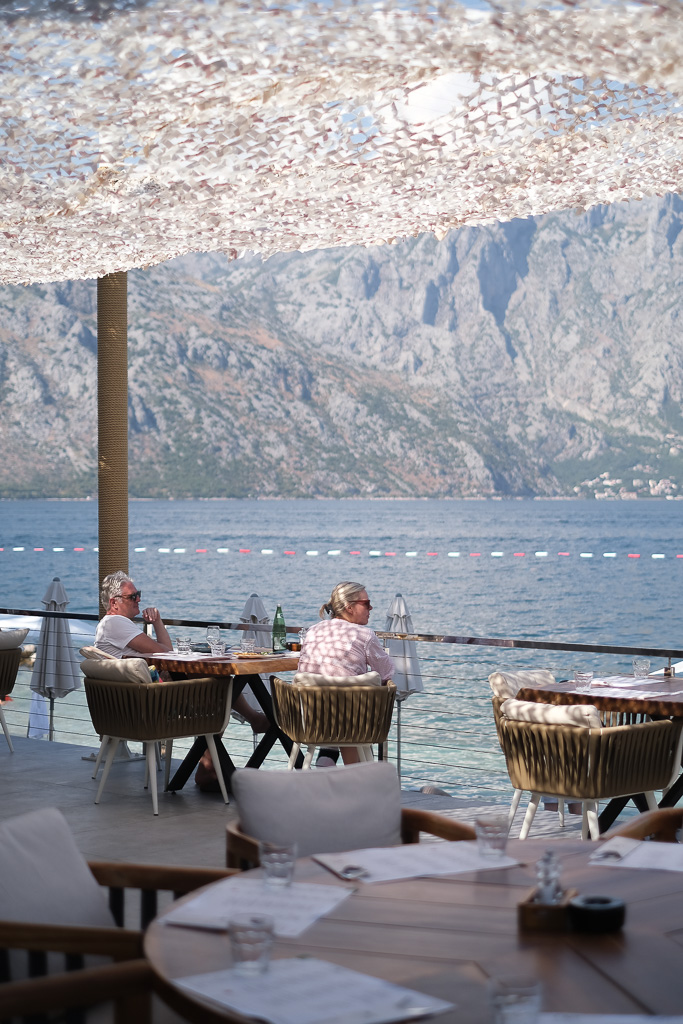
Olé! Beach & Bar at the Hyatt Regency Kotor Bay, just a short distance from the trail head, dishes out vibrant Latin American flavours and fantastic cocktails right beside the water. It’s the perfect post-hike spot.
The menu features a variety of dishes, including shrimp tacos, Black Angus burgers, and vegetarian quesadillas. Desserts like churros provide a sweet finish to your meal.

Nearby towns with more variety
- Prčanj and Tivat have a greater choice of restaurants and cafés within 10–15 minutes by car.
- Kotor Old Town, about 25 minutes away, has the widest selection of dining, from rustic konobas to modern Mediterranean bistros.
Where to Stay Near Gornji Stoliv
While Gornji Stoliv itself is abandoned and has no accommodation to offer, the coastline below is dotted with hotels all within easy reach of the trailhead.
Hyatt Regency Kotor Bay
Where: Donji Stoliv
Best for: Stylish and minimalist luxury with access to a private beach on Boka Bay
Tucked between the forested slopes of the Vrmac Peninsula and the crystalline waters of Boka Bay, the Hyatt Regency Kotor Bay blends contemporary elegance with Montenegro’s rugged natural beauty. This sleek, low-rise resort makes the most of its dramatic setting; floor-to-ceiling windows and sea-facing terraces offer uninterrupted views of the fjord-like bay.
The style is modern and minimalist, softened with natural textures and Mediterranean tones, while the atmosphere is tranquil. With over 200 rooms and suites, many featuring private balconies, and the most expensive rooms including plunge pools or direct beach access, the hotel is designed for quiet luxury.
Guests can choose from a variety of dining options, from fresh Adriatic fare at the waterside restaurant to Latin-inspired bites on the hotel’s private beach at Olé! Beach & Bar. The rooftop Hedonist restaurant adds a theatrical flair with its reinterpretations of Balkan cuisine.
Wellness also takes centre stage, with a serene indoor spa, open-air pool deck, and a health retreat offering holistic treatments inspired by the local landscape.
Where else to base yourself near Gornji Stoliv
While the Hyatt Regency is by far the best hotel on the Donji Stoliv coastline, it comes at a relatively high price. For more budget-friendly options, check out the below accommodation options:
Hotel Galathea
Situated a little further along the coastal road towards Kotor in the village of Prčanj, this boutique is housed in an 18th-century stone building, combining traditional architecture with modern amenities. Its rooms and suites feature rustic decor with exposed walls, flat-screen satellite TVs, and fully equipped bathrooms. The hotel is located approximately right by he beach and is within walking distance of local restaurants and attractions. Free public parking is available nearby.
Casa del Sol Rozalija
Located almost directly next to the trailhead, Casa del Sol Rozalija is a boutique bed and breakfast set directly on the waterfront. The property offers guests a private beach area with a small stone dock, providing easy access to the bay’s calm, clear waters.
Local Apartments in Donji Stoliv
Seafront stone cottages and B&Bs offer rustic charm with home-cooked breakfasts and private jetties. Try Airbnb or Booking.com for options starting at €60 per night.