There aren’t many buildings that are a more fitting host for a beer festival than Leuven’s De Hoorn, its grand, tiled hall dominated by 6 enormous antique brewing kettles, light from the floor to ceiling windows shimmering off their polished, copper surfaces. It was in this building that Stella Artois was first brewed back in 1926, way before it became the global behemoth that it is today.

Then again, there aren’t many cities more suitable to host a beer festival than the city of Leuven itself; In a country famed for its beer, Leuven is considered by many to be Belgium’s beer capital. As a city with just over 100,000 inhabitants, with an additional 50,000 students from the local university on top of that, Leuven has a particularly youthful air about it. This may explain why the beer flows so freely, particularly around the Oud Markt. This beautiful central square is home to around 40 bars (every building, with the exception of 2 chemists, is a bar or cafe) and in summer, their outdoor terraces take over a long continuous section. It is for this reason that it has become known locally as the ‘longest bar in Europe’.
I think that to truly understand Leuven, you need to understand its brewing history. It’s a city that has beer flowing through its veins. It’s a city that, thanks to the huge Ab Inbevs brewery on its outskirts, literally smells of beer. On certain days, the sweet aroma of yeasts, malt, and wort can invade your nostrils if the wind is blowing in the right direction.

The brewing tradition here dates back to the days of the crusades in the 12th century, a time when the water had to be fermented in order to make it safe to drink, a practise that was perfected by the monks living in the abbeys surrounding the city and the women living in the city’s beguinages. Even students at Leuven’s long-standing and famed university, founded in 1426, were known to brew their own; students at the Pauscollege were given a strict curfew to help them avoid the sin of sampling the city’s nighttime vices and so set about brewing their own drinks, which they gradually made stronger and stronger. It’s thought that these students may have produced Belgium’s first-ever tripel, centuries before it became a common pub staple.
Brewing is a trade that flourished here unlike anywhere else. During the middle ages, breweries of all shapes and sizes were popping up all along the banks of the Dijle, which they used as the primary water source for their brews. Even as recently as the start of the 20th century, there were almost 30 active breweries or brewpubs in the city. Gradually though, these were bought up and disbanded by Inbev. Today, Domus Brauhaus is the only microbrewery that remains in the city centre, serving its creations in its own brewpub next door.

Nowadays, Leuven’s claim to fame is that it is home to AB Inbev, the largest brewery group in the world, and owner of Stella Artois. Stella was first brewed at Brouwerij de Hoorn, a brewery that has existed in one form or another since 1366. However, despite the prominence of Stella and its ilk, locals in Leuven still embrace the city’s micro-brewing traditions. As a result, you will find that Leuven’s craft beer scene is booming.
One such brewery leading the craft beer revolution in the city is Hof Ten Dormaal. Situated in a farmhouse 12km north of Leuven, the Jenssen family-run brewery is the very definition of farm-to-table brewing. They grow all of the ingredients themselves, from cereals to fruits, as well as being one of the few breweries in Belgium to produce their own hops.
As well as being completely self-sufficient, Hof Ten Dormaal also prides itself on being innovative, experimenting with new ingredients in its recipes and with new techniques, thanks to having an on-going collaboration with Leuven University. They are currently working on a scheme to allow them to grow hops year-round using techniques previously seen in marijuana production, thus ending the issue of only being able to produce and harvest their crop in the spring and summer months.

Speaking to André Janssens – the patriarch of the Hof Ten Dormaal family – is clear that he is aware that his brewery is fairly unique in comparison to other Lowland beer producers. Innovative craft beers can be a hard sell to a public in Belgium that are set in their ways and view anything other than the standard dubbels, tripels, pils, trappist and lambic beers with suspicion.
It’s this love of experimentation that compelled André to create the Leuven Innovation Beer Festival. Each year, Hof Ten Dormaal hand-selects 16 breweries from across the globe, their only rules are that there is only one brewery per country (with Belgium being the only exception) and that they are doing something that André considers unique. Past guests include household names like Goose Island, Tiny Rebel and Wild Beer Co.

Now in its 5th year, LIBF has gained a reputation as a must-visit festival in the Belgian craft beer scene and continues to gain followers despite being much smaller than the enormous Zythos Beer Festival that also takes place in Leuven each April as part of the Leuven Beer Weekends programme. However, André says that the small size of the festival is entirely intentional. The number of brewers is severely limited so that they have the ability to spend time meeting each other, sharing information and forming potential collaborations. The number of tickets is also kept low so that attendees are able to actually meet and chat to the exhibitors. Also, he doesn’t want the event to be about drinking to get drunk. The festival is more of a gustation event. He wants people to try as many of the beers as possible and sample all of the aromas and flavours on offer. He wants to show people that beer can be as varied and complex as many consider wine to be. For that reason, servings are limited to a small 0.1l glass and glass washing stations are dotted around the De Hoorn building.

The De Hoorn building, following Inbev’s move to bigger premises on the outskirts of the city, was converted into a business centre with numerous offices, a cafe-restaurant and a large space event space that still contains a large amount of brewing equipment as a centrepiece. To me, it’s an unbeatable setting for a beer festival.
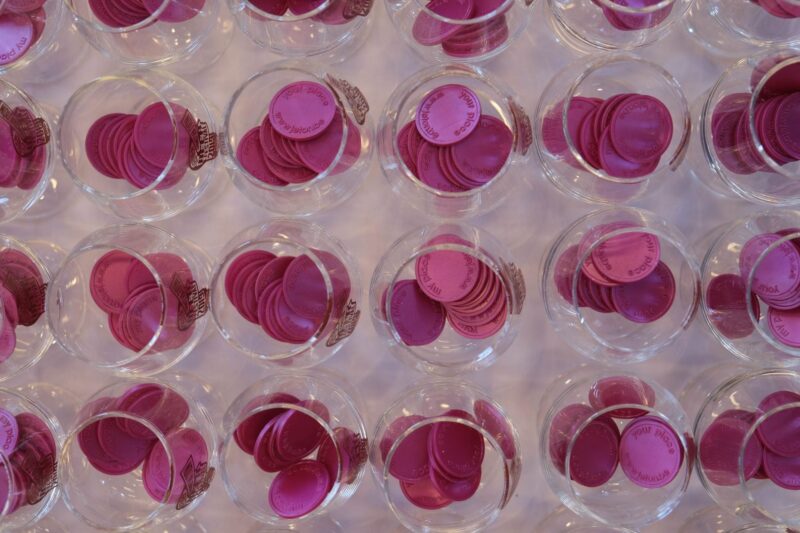
I take one of the tiny glasses filled with beer tokens and begin to work my way around the exhibitors. It seems to me that Hof Ten Dormaal has done a fantastic job of sourcing a huge variety of brewers and beers for this year’s festival, meaning that any beer lover is likely to find a new favourite drink, no matter their beer preference. I start by sampling a strong, hoppy DIPA (Pionero) from Barcelona’s Edge Brewing Co. and an APA (Prohibition) from Kent Brewery to whet my appetite before moving onto some of the festivals more obscure brews.


Some of the beers on offer are incredibly experimental; there is G’Bräu, who brew cold fermented, lager-type gruit beer using wild herbs rather than hops. It’s a concept so unique that their drinks aren’t legally allowed to be called ‘beer’ in their native Germany. On the other end of the spectrum are breweries that are reviving traditional drinks rather than pushing new boundaries. Bøgedal Brew, from Denmark, are continuing the Danish tradition of brewing Godtoel or “the good beer”. It is a rich, full-bodied brew with many of the natural sugars still intact. Then there is Lammin Sahti from Finland, brewing a traditional Finnish beer which is a low-carbonated and sweet farmhouse drink. Filtered with juniper twigs and fermented with baking yeast, sahti is cloudy beer with fruity aromas and phenolic flavours. Other breweries are just pushing the boundaries with the flavours that they use. Israel’s Dancing Camel uses a vast collection of fruits, herbs and spices indigenous to their home country to flavour their beer.

I find that it is incredibly easy to get a few minutes to speak to each brewer, and even easier to make conversation the more I drink. After a couple (or 8) tasters, the halls around De Hoorn are becoming a little more packed as the evening crowd descends and, feeling a little unsteady on my feet and full of beery joy, I decide to head back towards the city centre with the scent of Inbev brewery in my nostrils and feeling a whole lot more knowledgable about the world’s most innovative breweries.
This post contains affiliate links. By clicking a link and making a purchase, I may receive a small commission at no extra cost to you.