Most of my time in Leuven was spent in a beer-fuelled haze; a stumbling booze safari through the cobbled streets of this Flemish Brabant city on a quaffing quest that would make even the most qualified cicerone jealous.
Although that may give you the impression that I’m a raging drunk, there is a much more legitimate reason for me to be boozing my way around the city. You see, Leuven is considered by many to be the beer capital of Belgium – which is no mean feat in a country that is known to be the world’s greatest beer-producing nation – and I intended to see why.
Brewing is a trade that flourished here unlike anywhere else. During the middle ages, breweries of all shapes and sizes were popping up all along the banks of the Dijle, which they used as the primary water source for their brews. Even as recently as the start of the 20th century, there were almost 30 active breweries in the city. Although, most of these have now disappeared.
Nowadays, Leuven’s claim to fame is that it is home to AB Inbev, the largest brewery group in the world, and owner of Stella Artois. Stella was first brewed at Brouwerij de Hoorn, a brewery that has existed in one form or another since 1366 and is still going strong. Even today, you’ll be hard-pressed to find bar or café without a Leffe, Jupiler or Stella Artois logo plastered on its facade. However, despite the prominence of Stella and its ilk, locals in Leuven still embrace the city’s micro-brewing traditions. As a result, you will find that Leuven’s craft beer scene is booming.
Brouwerij Stella Artois
Ab Inbevs roots, and the roots of its most famous product, Stella Artois, lie in the brewery of Sebastien Artois. In 1708, he became the master brewer of De Hoorn and in 1717, after purchasing the brewery outright, he christened it the Artois Brewery.
The founding of Sebastien’s brewing family at Den Horn would culminate, in 1926, with a special Christmas brew named ‘Stella’ because of its clarity. The beer was such a success that it was soon brewed all year long, becoming one of Belgium’s most popular lagers.
You can visit the brewery every Saturday and Sunday, and take an interactive tour Dutch tours are at 1 pm, English at 3 pm). Tours cost €8.50 per person.

Hof Ten Dormaal
As a sharp contrast to the brewing behemoth that is Ab Inbevs, Hof ten Dormaal is very much a small-scale, family-run affair just 10 km outside of the city centre. It’s the rural setting that makes Hof Ten Dormaal a little special. It is set within a beautiful farmhouse surrounded by sprawling, green countryside. From the outside, the only indication that it is a brewery at all are the branded crates being stacked in the yard.

The location is no accident; Hof Ten Dormaal is a working farm as well as a brewery. It is one of the only Belgian breweries to grow its own barley and hops. Anchored within the Belgian tradition, their main beers are blond, amber and brown, although they brew a Wit Goud, or white gold, replacing half the hops with locally grown chickory to produce a blond copper beer. However, it’s the more experimental beers that set this place apart. They do this with their barrel-aged beers and their Taste Lab series; beers brewed using unusual local produce such as fruit – local raspberries from a farmer – and reed from a nearby pond. I started my tasting at the brewery by choosing ‘Summer of ’67’, a psychedelic labelled bottle with contents made of hemp.
The tasting room is open every Saturday between 2 and 6 pm
If you ask at the bar, a member of the Janssen family will be more than happy to give you a free tour of the brewery.
Brouwerij De Hoorn
According to Leuven’s city records, Brouwerij de Hoorn has existed in one form or another since 1366. Over the next 400 years, de Hoorn flourished, thanks in part to the poor quality of the drinking water at the time, meaning Leuven’s residents drank between 300 and 400 litres of beer a year, rather than risk supping tainted water. In 1708, Sebastien Artois became the master brewer and the rest is history.

Although Stella has since moved to the huge Ab Inbevs brewery nearby, it is still possible to drink a pint of Leuven’s most famous creation in the spot where it was originally brewed. After years of inactivity, a complete renovation of the building was completed in 2012. The stylish Grand Cafe de Hoorn sits on the first floor of the old brewery, with floor-to-ceiling windows offering a view of the Sluispark and the old brew kettles while you tuck into a modern take on Belgian cuisine. If you don’t fancy eating, a ground floor bar and terrace dishes out freshly tapped Stella.
Sluisstraat 79
Open 11 am – 11 pm, Tuesday to Sunday
If you plan on eating, I would recommend booking in advance as the restaurant is very popular.

De Fiere Margriet
‘De Fiere Margriet’ on the Margarethaplein has no fewer than 280 different beers on the menu, including local specialities like Hof Ten Dormaal and Wolf. Such is the bar’s appeal, it was even named as one of the world’s best Belgian beer bars by The Guardian.
Margarethaplein 11
Open 2 pm – 2 am, Tuesday to Sunday
Huisbrouwerij Domus
While the international might of AB InBev and its gleaming Stella brewery have put Leuven on the map, it’s the city’s abundance of micro-breweries that really help it stand out. Of them all, Huisbrouwerij Domus is one of the most popular and well regarded. Operating since 1985, this brewery produces good, old-fashioned Belgian beer that is tapped directly to its adjacent restaurant/cafe. There are usually 3 different beers on the go at any one time: The Con Domus (an unfiltered Pilsner 5% ABV lager) and Nostra Domus ( a red-amber tinted 5.8% ABV ale) brews are served throughout the year alongside a seasonal offering. Tours of this crooked and quirky brewery are often led by Gert Christiaens, the brewer himself, and end with a generous in-house sampling.
Tours of the brewery can be arranged (8 people minimum) and take around 45 minutes. English language tours take place Tuesday to Sunday from 10 am to 8 pm.
Guided tour of the brewery + 2 Domus beer samples – €8
Guided tour of the brewery + 3 Domus beer samples – €10

The Capital
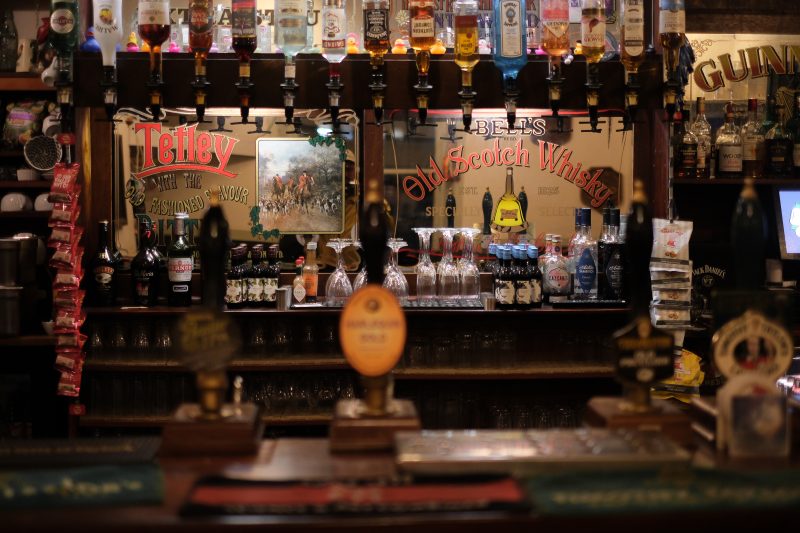
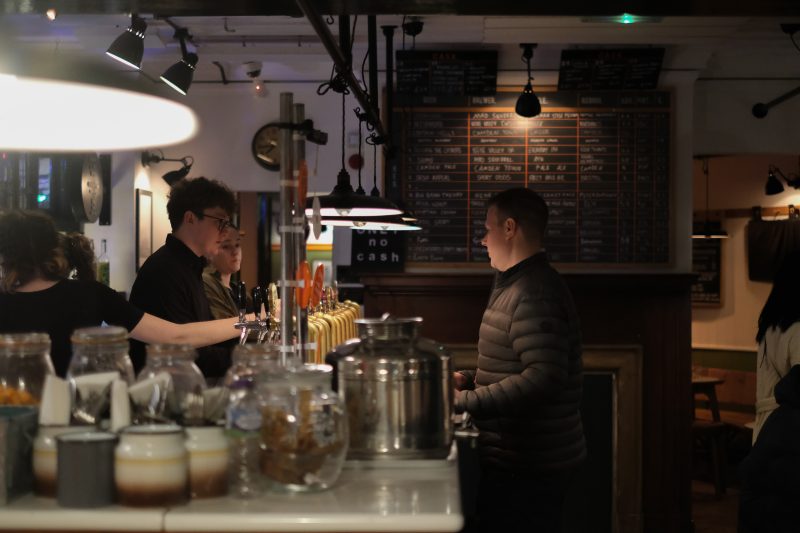
The Capital doesn’t have a beer menu as such, it has what it calls its ‘beer library’; a heavy tome that lands with a thud when brought over to your table. It’s thought that the 2000 varieties of tipple on offer in the Capital constitute the largest in-bar beer collection in the world.
With so many beers on offer, it’s no surprise that most have to be kept in the pub’s specially designed cellar which you can view through glass floor tiles and watch as your drink of choice is delivered upstairs in a small lift. Alternatively, the outside seating area is situated on the edge of the Grote Markt, making it the perfect place to people-watch in the shadow of the city’s magnificently gothic town hall.


Oude Markt
Possibly the best and most vibrant place to drink in Leuven is the heart of Belgium’s self-styled beer capital; the Oude Markt. This beautiful central square is home to around 40 bars (every building, with the exception of 2 chemists, is a bar or cafe) and in summer their outdoor terraces take over a long continuous section of it. It is for this reason that it has become known locally as the ‘longest bar in Europe’.

Quantity doesn’t always equate to quality. Some of the establishments are cheesy dance bars and identikit tourist-traps, however, there are a few hidden gems amongst the crowd. Café Belge has a great selection of beers in a tradition ‘brown-cafe’ setting and De Kroeg claims to be the oldest café on the square. That doesn’t matter too much though as the outdoor seating of one bar merges with another and as the square fills on an evening, you may as well join the city’s huge student population, take any seat you can find, and soak in the atmosphere.


Aspects of this trip, including my meal at Brouwerij De Hoorn, were facilitated by Visit Flanders and Visit Leuven. However, all views expressed are completely my own.