
With cobblestone streets, picturesque canals and beautiful squares surrounded by ornate medieval architecture, it is easy to see why people are quick to draw comparisons between Ghent and Brugges. However, Ghent is a much more low key affair. The tourist hordes haven’t quite discovered this hidden gem yet and also unlike Brugge, its western compatriot, Ghent has a somewhat youthful and counter-cultural air. In a city of 250,000 people, 70,000 are students, bringing with them an alternative edge. You have to look a little harder to find it than in most cities.
In its centre, Ghent is beginning to embrace the influx of tourists. Boats line up on the side of the Leie, ready to ferry tourists back and forth along the waterways that weave themselves like arteries through the city. Big-name hotels such as Marriott and Novotel have set up shop along Graslei and Korenlei and the streets are awash with by-the-numbers rib joints offering all you can eat plates of meat.

That’s not to say that the town has been kept in a museum-like, medieval state like other cities with a similar historic air. Just off the busy thoroughfare of Hoogpoort is an alley that is a sharp contrast to this old Ghent – every inch of the 3 story high walls were covered in layers upon layers of paint. Murals, tags and scrawled pieces of writing daubed on every available surface.
In an attempt to keep the old town pristine, local authorities have sacrificed certain spaces to spare the walls elsewhere in the city. Although murals appear in other places, most of it is concentrated here in Werregarenstraat – or graffiti alley as it is more commonly known. It is an ever-changing canvas. As soon as a mural is painted, there is a chance it will only last a day or two before another enterprising artist will tag or paint over it. No two visits to Werregarenstraat will be the same.

Mostly though, it is on the fringes of the city where the youth are getting creative. As you walk south towards the University and art schools, you find more and more walls spattered with paint and murals. On Tweebruggenstraat you will find multiple pieces that were actually commissioned by the city. Since 2005, an annual graffiti jam takes place in the city, organized by the Graffiti Youth Council in an attempt to make Ghent more colourful and inviting. It’s this even-handed approach to street art that has allowed native artists such as Roa and Bue the Warrior to flourish. So far there are 4 legal graffiti zones in the city and it is even possible to take a self-guided tour of the best works by picking up a free Concrete Canvas map in the Ghent Tourist Information Center.


The artistic move outwards has been supported whole-heartedly by the local council. In the harbour to the north of the city, what was once a run-down and decrepit railway station has become a hub for artists. It has been earmarked by local authorities for development but in the meantime has been handed over to DOK, an experimental art collective to use as an exhibition and concert space.
DOK regularly hosts a temporary beach, skate park and displays of art. It even puts on gigs and cinema screenings. While we were in the city the 2-day ‘Sorry, Not Sorry’ festival was taking place. What started as an event organised by the CIRCA Culture Department in 2015 to celebrate 192 days of street art in the city saw artists coming from all over to paint their work and create an art trail. This year DOK put on a festival of skating, slam poetry, street art and concerts along the quays of their harbourside home.


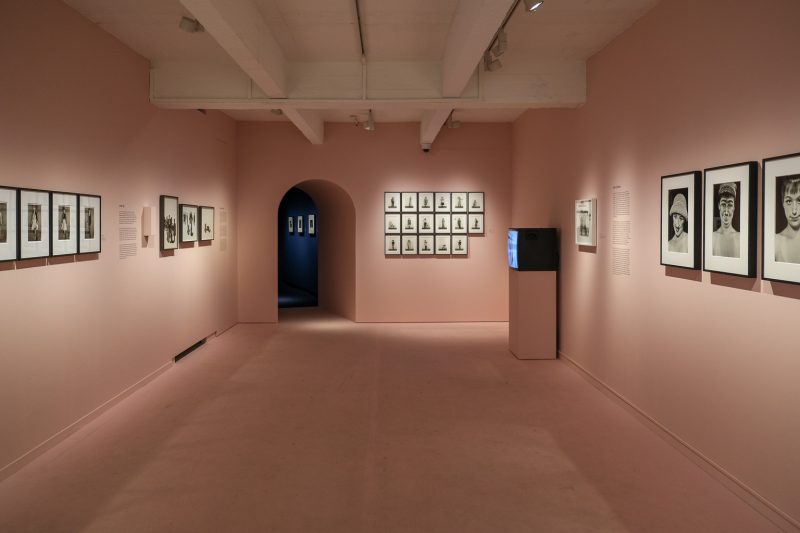
That isn’t to say that street art is the be-all and end-all of Ghent’s creativity. Just south of the city centre is the Arts Quarter where you can find the Museum of Fine Arts (MSK) and the more avant-garde S.M.A.K, the Municipal Museum of Contemporary Art, tucked away in the leafy confines of Citadel Park. As much as I like contemporary art, I couldn’t help but feel the exhibition I was walking around – ‘How beautiful it is and how easily it can be broken’ – was a little over my head. cracked mirrors, pornographic magazines folded into flowers and taxidermied animals seemingly dotted at random around the show floor. At one point I found myself staring at a radiator, unable to determine if it was an exhibit or just a regular radiator.

I wandered through DOK when the festival was over to see how the once-neglected collection of warehouses had been transformed into a collection of bars, stages and community spaces. However, Ghent’s music scene isn’t restricted to temporary spaces like this. It is thriving on its own. Most people will have heard of the city’s most famous sons, 2ManyDJs, and anyone with a passing interest in black metal will be aware of local genre-bending band Oathbreaker. However, there is a burgeoning noise rock scene blossoming with the likes of Raketkanon (who have even found themselves being produced by alternative stalwart Steve Albini) and their Flemish compatriots Brutus. Just walking down Vlasmarkt on an evening I was shaken by the competing drones of feedback and guitars reverberating from the neighbouring bars, Charlatan and Kinky Star as bands performed one of the venues nightly gigs. The city is even home to its own independent record label and store in the shape of Consouling Sounds.


I was told that these free shows are the reason that Ghent is producing so much great music. No matter what night of the week, there is a chance you can find a gig somewhere in the city and it gives musicians plenty of chance to hone their craft. In Vooruit, a former socialist consumer cooperative building that fell into disrepair until a group of volunteers turned it into an arts centre in order to save the building, Ghent’s cultural scene has a centre. It is now the heart of the city’s alternative side, offering gigs by local and world-renowned artists as well as theatre, performing arts and literature events. Even if you are not stopping by for the music, it is worth visiting for the beautiful art deco cafe or summer terraces tacked onto the side of the building.
It is not just the outskirts of Ghent that are seeing major changes, parts of the centre are too. As I walked through Sint Veerleplein with my Airbnb host, he took a moment away from asking me puzzled questions about Brexit, to point me in the direction of his favourite eateries. He nodded towards Meme Gusta, a cosy, modern eaterie a short walk from the medieval castle of Gravensteen. “This place has just opened,” he said “but it is constantly busy. There are so many new places popping up all the time with young owners. They’re so much more popular than the tourist traps.”

Patershall used to be a fairly run-down area of the Ghent. As the industrial revolution gripped the city, factory workers and merchants moved into what was once home to magistrates and lawyers. Once the textile trade wound down, they were replaced by students and artists looking for cheap, central accommodation. Like in cities throughout the world, this only made Patershol more desirable and house prices rocketed.
It is the perfect place to get away from the tourist hordes and enjoy a slower pace. The narrow, cobbled lanes are dotted with hidden bars and cafes housed in colourful brick buildings. On an evening it oozes atmosphere as the soft lighting of gas lamps and fairy lights illuminate the alleyways. It is easy to see why Ghent’s creatives decided to call this home and much of the creative spirit still lives on here. It is the perfect place to find cool, independent eateries and stores, bustling bars and vibrant cafes. Carry on through the neighbourhood down Sleepstraat and you will find yourself among dozens of cheap restaurants serving everything from vegetarian to Indian and Turkish cuisine.
As I devoured a huge plate full of Lebanese meze that had cost me just a few euros – in a place inventively named ‘Lebanese’ – that was a far cry from the rib joints and expensive Flemish places in the centre, I couldn’t help but reflect on how, if you just look for it, Ghent is incredibly cool. It’s a coolness that, for short-term visitors, is just out of sight but its always there, lingering at the edges.




2 Responses
This is a great post! I went to Ghent last summer and felt like there was a cool/young side to it. I’ll definitely check out some of the places you mentioned when I go back there next month.
Thank you! I think the huge student population adds a really youthful air to the city and means there’s so much to do in terms of art and culture. I’d love to visit again and I’m so jealous that you get to go back!