There is a sense of tranquillity in Cavtat. It is a quiet coastal fishing town that hugs the coastline of the horse-shoe-shaped Tija bay, hemmed in by pine-covered mountains that drop suddenly to meet the glistening Adriatic. Here, terracotta-roofed houses with traditional green shutters are tightly packed on the seafront promenade in the shae of swaying palms.
Like so many villages and towns in this part of Dalmatia, Cavtat (pronounced sav-tat) was founded as a Greek colony in the 4th century BC. At the time it was known as Epidaurum, which was later changed to Epidaurus when the village came under Roman control in 228 BC. When the Slavs invaded the area in the seventh century, refugees from the town established Dubrovnik. As Dubrovnik grew in prosperity, it soon surpassed Cavtat, which was reabsorbed into the thriving city in 1426.


Nowadays, Cavtat’s disconnect from Dubrovnik is its main selling point. The town acts as a quiet escape from a city swarming with tourists, drawn by its connection to the popular TV series Game of Thrones. Here, rather than competing with guided tours jostling for a look at filming locations, you will find fishing boats calmly bobbing by the shore, artisan shops and peaceful coves. The sandstone-coloured streets are dripping in purple bougainvillaea and are made to be wandered. Away from the main promenade, the condensed old town is a maze of cobbled alleyways and steep, stepped streets that occupy a peninsula hemmed in by harbours on either side.
That isn’t to say that Cavtat is devoid of the cultural and historical points of interest of its nearest neighbour – It just has less. The town is dominated by the beautiful baroque Church of Saint Nicholas which, along with Our Lady of the Snow Monastery that sits at the northern end of town, host a wonderful array of artefacts and renaissance artwork, as well as pieces by famed Croatian artist and Cavtat native, Vlaho Bukovac.

How to Get to Cavtat
Cavtat is Croatia’s most southern resort, located about 20 kilometres south of Dubrovnik and only 22 kilometres from the Montenegrin border. This makes it a great place to stay if you want to see all the sights and culture of Dubrovnik but don’t want to deal with the crowds. Travelling by bus or boat between Cavtat and Dubrovnik is relatively simple.
At just 6 km away, Cavtat is actually closer to Dubrovnik airport than Dubrovnik’s old town itself. Unfortunately, there are no direct bus routes between the airport and Cavtat so you may need to take the airport shuttle to Dubrovnik (55 Kuna) and transfer to a Cavtat-bound bus. The airport shuttle leaves 30 minutes after the arrival of each flight. If you opt for a taxi, the journey takes around 10 minutes and usually costs no more than €15.
To get to Cavtat from Dubrovnik, take the number 10 bus from the Dubrovnik Bus Terminal. The journey takes approximately 30 minutes and buses depart every 45 to 60 minutes. Expect to pay around 25kn each way. Alternatively, a taxi will cost around 230 kn to 280 kn.
VISITING DUBROVNIK'S OLD TOWN FROM CAVTAT
From April to November, there are regular water taxi services from Cavtat harbour to the old port of Dubrovnik. While this may not be the quickest route, it is certainly a scenic way to start of a day of sightseeing as the coastline between the two towns is speckled with beautiful islands and picturesque towns. Departures for the hour-long trip are every hour and cost 60 Kuna one way and 100 for a return trip. If you board somewhere along the line in Plat, Mlini, Srebreno it will be a bit cheaper. Children under 5 travel free while those between the ages of 5 and 12 get a half-price ticket.
Getting Around Cavtat
With the main promenade wrapping its way around a horse-shoe harbour, Cavtat’s centre is compact and much easier to navigate than the narrow, labyrinthine streets of Dubrovnik’s old town. The entire town can be explored from one end to the other on foot in less than 20-minutes. Those looking to wander a little further can keep on walking beyond the end of the promenade, following the trail that wraps around the Rat Peninsula. It’s an easy-going walk that can be completed in around 30 minutes.
It is a steep climb up the hillside to some of the town’s larger hotels, but most will offer a shuttle service to the harbourside.
Where to Stay in Cavtat
Due to its proximity to Dubrovnik, Cavtat is a popular base for holidaymakers, meaning there is no shortage of accommodation options. There are three large hotels that sit on the outskirts of the town centre, while beside the harbour, there is an abundance of boutique bed and breakfasts as well as rental options.
5 STAR LUXURY
Hotel Croatia
Sitting on its own peninsular high above the blue waters of Cavtat Harbour, the sprawling, modernist complex that makes up 5-star Hotel Croatia is one of the Dubrovnik Riviera’s most luxurious accommodation options. The hotel was designed by architect Slobodan Miličević in 1973 and is surrounded by lush woodland and trails, with two of its own private beaches, spa facilities, and superb dining options.
BOUTIQUE
Hotel Villa Pattiera
Set back from the bustle of the main promenade and overlooking a pretty square, Villa Pattiera occupies a 19th-century villa that has been transformed into a quaint 12-room boutique hotel. While this building is the birthplace of Croatian opera singer Tino Pattier, it is more well-known for the ground floor restaurant, Dalmacija, that was opened by the Mandić family in 1979 before they renovated the rest of the villa in the hope of accommodating holiday makers. While the hotel may not have a pool like some of the town’s larger hotels, the first and second floors both have secluded stone terraces where you are able to relax with a drink.
MIDRANGE
Hotel Cavtat
Hotel Cavtat is a modern, seaside hotel just 5 minutes’ walk from the old town. Overlooking the sheltered Tiha Bay, this 130-room hotel offers a rooftop pool and waterfront terrace as well as both a buffet and a la carte restaurants.
Things to do in Cavtat
House of Vlaho Bukovac
Cavtat’s most famous son, painter Vlaho Bukovac, spent the first eleven years of his life in this house in the town before leaving with his uncle for New York. On returning to Croatia at the age of fifteen, he decided to focus on art as a career, training in Paris before coming home to Croatia in 1893 and establishing himself at the centre of a new Croatian art scene. Here he set up shop in his former childhood home, which he turned into a painting studio. His daughters converted the home into a public museum following his passing in 1922 and In 2004, it reopened as a part of Konavale’s Museums & Galleries.
Racic Family Mausoleum
Sitting at the end of a small peninsula, the imposing mausoleum of the Račić family was designed in bronze and white stone by Croatian sculptor Ivan Meštrovic and can be seen looming high above the town from anywhere along Cavtat’s waterfront.
Ivo Račić – who earned his fortune in ship building – followed by his two children, died a sudden death in 1919 due to the Spanish Flu. At the request of Marija, Račić’s widow, Meštrović constructed a votive cemetery chapel consecrated to Our Lady of Angels. You will find it in the Saint Rocco Cemetery, on the highest point of the Rat Peninsula. While the climb is a little strenuous, the cemetery is quite moving and the view out across the bay towards the centre of Cavtat is worth the aching legs.


Our Lady of the Snow Monastery
Sitting at the northernmost end of Cavtat harbour, this monastery was recently converted into a bed and breakfast but the adjoining church is still open to visitors. The medieval altarpieces and 16th-century triptych by artist Vicko Lovrin are worth a look, as is a piece by Bukovac depicting the Madonna and child. Each August 5th, Cavtat hosts the festival of Our Lady of the Snows in which the church plays an important role.
The Baltazar Bogišić Collection
19th-century jurist and sociologist Baltazar Bogišić was born in Cavtat on December 7 1834, and led a rather storied life: not only was he a polymath and legal historian of international renown, but he was also a founding member of the Yugoslav Academy of Sciences and Arts (today Croatian Academy of Sciences and Arts).
Throughout his career, he amassed a library of 15,000 books and brochures, 200 journals, 66 incunabula, 164 manuscripts and 165 geographical maps that were left in the care of his sister, Marija Bogišić-Pohl following Bogišić’s death in 1908. Later, in 1955, the collection became part of the Institute for Historical Sciences of the Croatian Academy of Sciences and Arts in Dubrovnik.
Today, Bogišić’s library is housed in the ancient Rector’s Palace in Cavtat, together with an archaeological collection. Here you will also find a wonderful gallery of works by Vlaho Bukovac, a contemporary of Bogii.
Tours & Day Trips from Cavtat
Although there are not many sights and activities based around Cavtat, one advantage of the town’s proximity to Dubrovnik is that the majority of tour agencies operating out of the old town will organise pick-ups from Cavtat. Although this is a given for tours that pass through Cavtat on their way to Montenegro or Konavle, it also applies to boat tours leaving from Dubrovnik itself. However, reaching Dubrovnik to begin a tour is relatively easy via public transport.
Take an ATV Safari of Konavle
An adrenaline-fueled ATV tour of the countryside around Cavtat is the perfect way to see more of the Konavle region. Kojan Koral offers a heart-stopping two-hour tour that takes you on an exhilarating ride through the Ljuta River, passing through the wetlands and the vineyard-filled plains of the Konavle field before entering the picturesque village Čilipi through the Konavle rocks geomorphological and hydrographic reserve where you can stop for stunning views of the turquoise Adriatic Sea. Tours cost 700 HRK per person or 600 HRK per person sharing one quad. Helmets, goggles, and overalls are provided but I recommend wearing shoes that can withstand mud and water.
Visit the Elaphiti Islands
The picturesque Elafiti Islands, also known as the Elaphite Islands, are located just off the coast of Dubrovnik. There are a total of six major islands and a large number of little islets make up the archipelago known as Elaphite. Koloep, Lopud, and Ipan are all inhabited, albeit with fewer than 1,000 residents in total. Two of them, Koloep and Lopud, are car-free. Island-hopping tours to the Elaphiti Islands from Dubrovnik usually include visits to the 3 main islands.
Spend the Day in Ston and Mali Ston
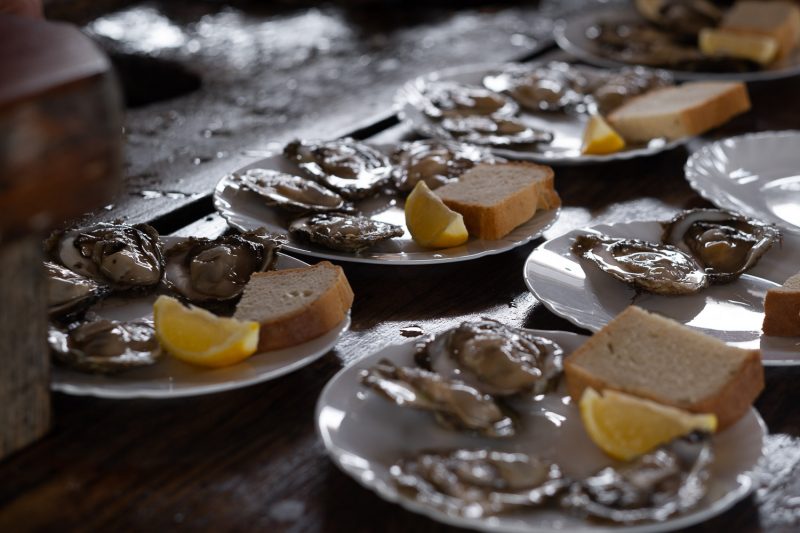
Two quaint coastal towns linked by an imposing defensive wall, the underrated gems of Ston and Mali Ston are known for three things; Fortresses, salt, and being home to some of the best oysters in the World. The main draw in Ston & Mali Ston are the 7km of fortifications that stretch the hillside between the two towns. From the highest point, visitors can enjoy spectacular views of across the 58 shimmering salt pools and out across the peninsular to the Adriatic on one side and Mali Ston Bay on the other.
Nowadays the walls are a little redundant. Ston and Mali Ston are sleepy fishing villages known for their quaint streets and world-renowned seafood, particularly Mali Ston’s oyster beds which can be visited via a boat trip that includes wine and oyster tasting. Tours to Ston and Mali Ston can be found here.
Read More: A Guide to Ston and Mali Ston, Croatia
Explore Mljet National Park
Mljet is one of the greenest islands in all of Croatia, with a third of the forested land taken up by the stunning Mljet national park, home to two beautiful lakes that are perfect for those ooking to swim and kayak. The larger of the two lakes is home to St Mary’s Island and the stunning Crkva Sveta Marije, a beautiful 12th-century Benedictine monastery and adjoining church that has been transformed into a restaurant.
Ferries leave Dubrovnik for Mljet each morning and return in the early evening, although times vary throughout the year. Full-day tours, including entry to the national park and catamaran ticket, are available.
Where to Eat & Drink in Cavtat
Despite its small size, Cavtat has a surprisingly vibrant restaurant scene crammed with cafes, wine bars, and Mediterranean restaurants dishing up exquisite Croatian cuisine. Its bustling port means that seafood figures highly on menus around town but the numerous vineyards surrounding Cavtat mean that the wine lists won’t disappoint.
Ludo More
Overlooking the harbour on Tiha bay, Ludo More – meaning ‘Crazy Sea’ in Croatian – is a family-run restaurant with a menu that is dominated by Adriatic seafood prepared according to traditional recipes, just with a slightly modern twist. The fish is all supplemented by vegetables and herbs grown in Ludo More’s own garden. Although the dishes are simple, the focus is on fresh ingredients and the 3-course lunch menu was one of the culinary highlights of my time on the Dubrovnik Riviera.
Where: Put Tihe 22
When: Daily 9am – 12am


Konavoski Dvori Eco Green Restaurant
Konavoski Dvori Eco Green Restaurant isn’t in Cavtat but rather 20km east in Konavle, a region of steep hills and deep valleys that lines Croatia’s border with Montenegro. However, it is worth the taxi ride to get there. This restaurant sits amidst lush countryside next to the Ljuta River on the grounds of an ancient mill, complete with a functioning waterwheel. Konavoski Dvori focuses on classic Croatian dishes such as lamb or octopus ispod peke, slow-cooked in hot embers under a bell-shaped lid, or peka. All of this is served in a wonderfully romantic setting by wait staff in traditional outfits.
Where: Ljuta b.b, 20217, Ljuta
When: Daily 11am – 11pm
Beach Bar Banac
A simple beach bar and cocktail spot nestled beside the water below Hotel Croatia. This is probably the best spot in town for sundowners or a nightcap before heading back to your hotel for the evening.
Where: Cavtat Seaside Promenade
When: Daily 9am – 12pm
Leut
Opened by the Bobić family in 1971, Leut is one of Cavtat’s longest-running restaurants and a favourite amongst politicians and celebrities. It is mostly known for its seafood, all of which is sourced from local fishing vessels and displayed on the Cavtat promenade to catch the eye of hungry tourists. While the cosy, Dalmatian-style restaurant is fairly compact, it spills out onto a wonderfully romantic terrace with views of the entire bay.
Where: Trumbićev put 17
When: Daily 11am – 12pm
Peco
On the road that leads from Cavtat’s main square towards the Rat peninsula, you’ll find Peco, the town’s best bakery and the perfect place to sit with a pastry and coffee each morning. Vegan-friendly coffee spots can be a little difficult to find outside of Dubrovnik but Peco offers up both oat and almond milk coffees. Stop by at lunchtime for a selection of savoury pastries, homemade desserts, sandwiches and pizza slices.
Where: Kneza Domagoja
When: Daily 7am – 12am
Beaches Near Cavtat
There are a number of beaches around Cavtat and the water in the bay is clean, tranquil, and a beautiful shade of turquoise. However, be warned that these beaches are not sandy, rather they are mostly either covered in small pebbles or require you to sunbathe on the rocky outcrops that are dotted around the town. If you don’t fancy laying your towel on the rocks or beside the promenade, there are a number of Beach clubs and bars that provide sunbeds and comfy chairs so that you can relax between dips and enjoy a steady supply of cocktails.
On the northern end of the Rat peninsula, you will find Kljucice Beach, while around Tija Bay you will find Zal Beach, Obod Beach, as well as a public beach in front of Hotel Croatia. Sustjepan Beach is the most popular swimming spot and can be found on peninsula of the same name with fantastic views of the port.


When is the Best Time to Visit Cavtat?
There is no getting around the fact that the old town of Dubrovnik is the most popular tourist destination in Europe and simply due to its close proximity to the historical walled town, Cavtat is also filled with holidaymakers year-round.
If you’re planning to visit during the summer months when the weather is at its best – typically June, July and August – you will have to expect higher-priced accommodation and limited availability. Thankfully, the shoulder season on the Dubrovnik Riviera can still provide a bit of sun, with the temperatures remaining reasonably high until late October.
From April to late may or mid-September to late October, you will find fewer tourists, cheaper hotel rates and all bars, restaurants, and services are still operating.
As with many other coastal towns, Cavtat hosts a summer festival between June and September and there is also a Summer Carnival that takes place at the beginning of June each year.