
Located just 30 minutes from both Brussels and Antwerp, it is easy to see why the picturesque city of Mechelen is erroneously missed by most visitors to Belgium. Luckily this means that when the crowds are flocking to the tourist hubs of Bruges or Ghent, you can wander around Mechelen in peace, feeling like you are the only person to have stumbled across Flander’s underrated gem.
Not only is the city charming and beautiful, but its streets are also surprisingly packed with history for a city of its size; The highly lucrative cloth trade gained Mechelen wealth and power during the Late Middle Ages and it even became the capital of the Low Countries in the first half of the 16th century under Archduchess Margaret of Austria. As the current seat of Belgium’s Catholic primate, it is overloaded with fine churches (including eight gothic and baroque churches from the 14th-17th century) as well as 336 listed buildings.
I knew little to nothing about Mechelen before I visited, but I was soon won over by its charms. Whether you are visiting on a day trip from the Belgian capital or in Mechelen for a long weekend, I found that there is plenty to keep you occupied.
The Best Things to do in Mechelen
1. Climb to the Top of St. Rumbold’s Tower
2. Visit the Beautiful Grote Markt and its Weekly Market
3. Get Lost in the City’s Picturesque Beguines
4. Visit the Winter Garden
5. Sample the local Tipple at Het Anker Brewery
6. Take a Stroll Along the Dijle Path
7. Party the Night Away at the Vis Markt
8. Relax on the Banks of the Haverwerf and Melaan
9. Take in the Street Art of Mechelen Muurt
10. Get a Taste of Sense-sational Mechelen
Climb to the Top of St. Rumbold’s Tower
The Saint Rumbold’s Tower is the symbol of Mechelen and dominates the skyline. Look up from anywhere in the city, and you are bound to see it.
Construction of the 97-metre tall tower began in 1472 but was never finished owing to lack of funds. Plans to add a 77-metre tall spire on top were abandoned, giving it a distinctive flat top. The tower once housed the world’s largest clock, even surpassing Big Ben’s. While the clock is no longer there, the Carillion still chimes every 15 minutes, with another, smaller chime sounding every 7.5 minutes, known as the Mechelen Halfke, or ‘Little Mechelen Half’.
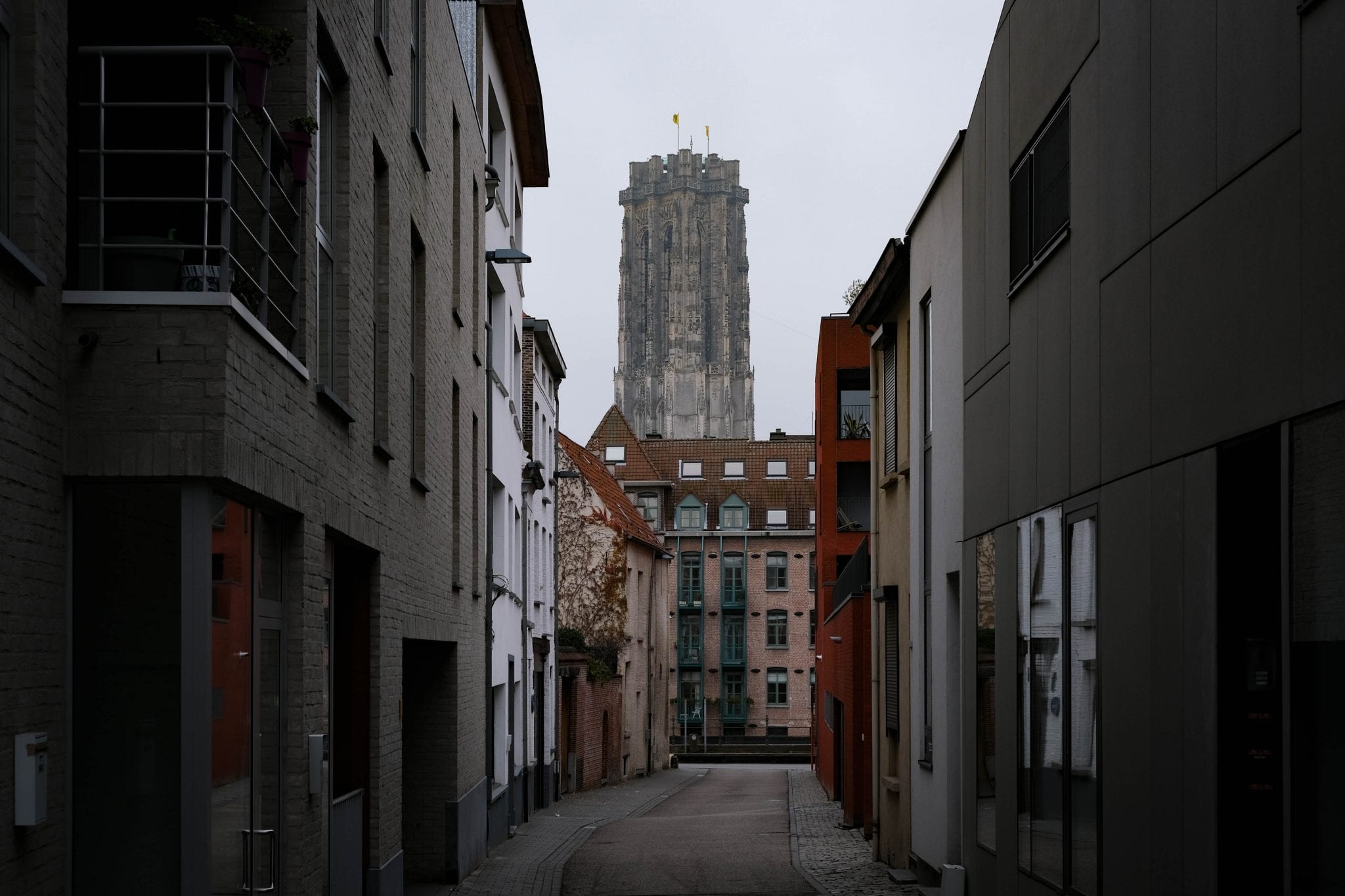
It’s a 500 step climb to the summit but at the top, you will find the tower’s skywalk, offering views all the way to both Brussels and Antwerp on a clear day.
Entry to the tower is 8 Euros
The tower is open daily from 1 pm to 6 pm (except Christmas day and New Year’s Day) or between 10 am – 6 pm on Saturdays.
Visit the Beautiful Grote Markt and its Weekly Market
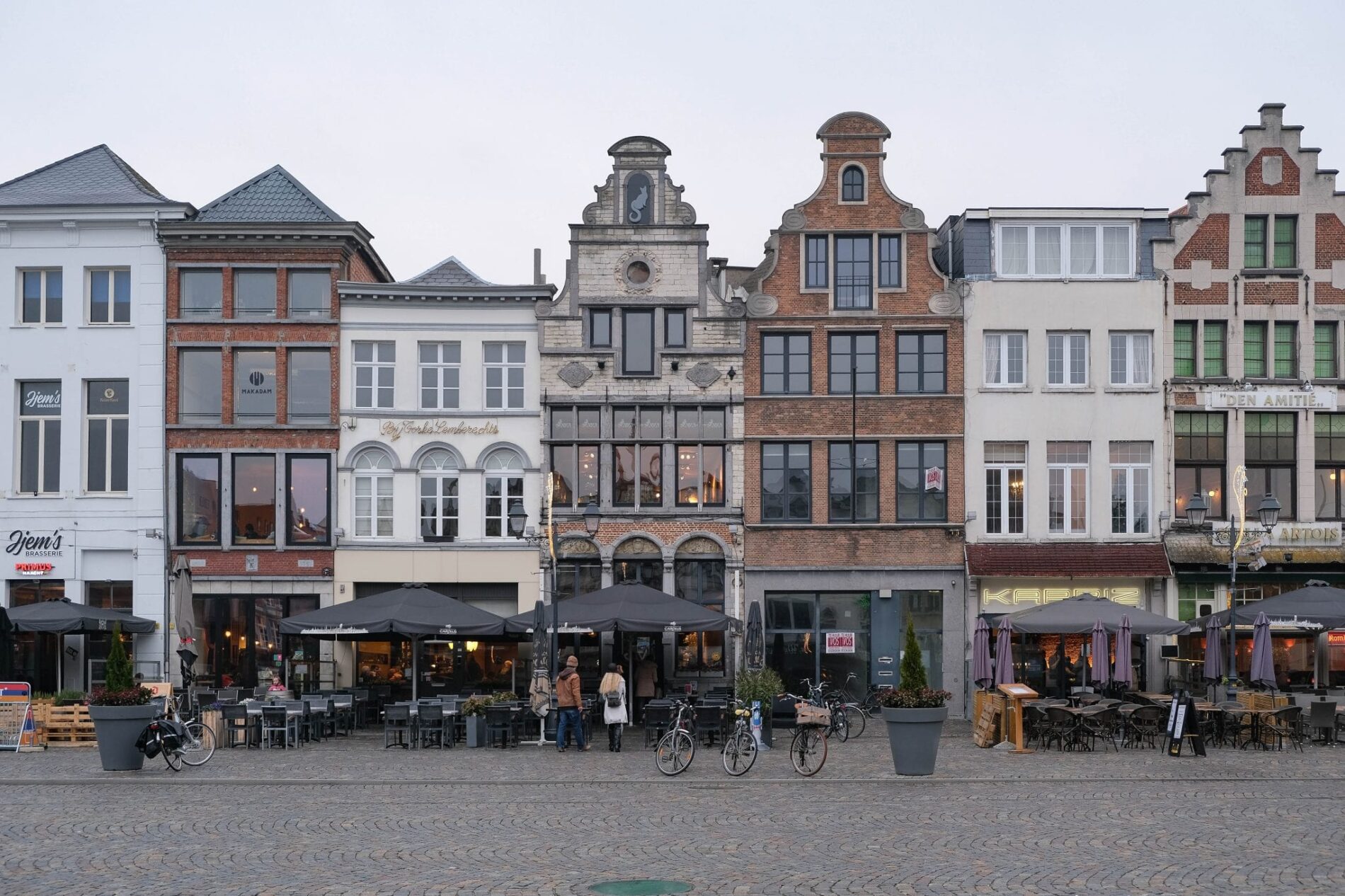
The historic Grote Markt, or market square, has been Mechelen’s centrepiece for centuries. Bookended by St. Rumbold’s Cathedral at one and the town hall at the other, the square is surrounded by 18th century Renaissance and 18th century Rococo buildings on all sides, many of them with typical step-gabled Belgian roofs.

The town hall was originally used as a cloth hall in the 14th century. Although the hall was supposed to have a belfry like the cloth hall in Bruges, it was never completed, with the tower of St. Rumbold’s being used as a clock tower instead. To the left of the town hall is the stunning Palace of the Great Council, that we never actually used as a meeting point for the Great Council.


Just across the square is the Gothic Alderman’s hall, which is one of the oldest in all of Flanders. After the town hall was moved to its current location the building was subsequently used as a theatre, a fencing school, a prison and a museum. Standing watch outside the Alderman’s Hall is a statue of Margaret of Austria, or ‘Our Margaret’ as the locals like to call her due to the huge impact that she had on the city.
Since 2004, the Grote Markt has been pedestrianised and now hosts a bustling market on Saturday mornings where you can people watch and pick up your breakfast.
Get Lost in the City’s Picturesque Beguines
Beguinages were founded around the time of the crusades when many men did not return home from war, leaving their wives as widows and their children as orphans. Rather than join a convent, many women decided to form their own communities and become self-sufficient. The beguinages became small villages within a city, run exclusively by women containing their own bakeries, breweries, hospices and churches.
Mechelen contains two such villages, the small and the large beguinage, with the oldest dating as far back as the 13th century. Another beguinage was eventually built outside of the city walls but the old and infirm continued to live in the city centre. In 1578, when the outside beguinage was destroyed, the women moved into the city, creating the large beguinage. They built new buildings and closed off the beguinage with gates and walls. As a result, Mechelen’s two beguinages are even more unique than the beguinages in other cities.
Mechelen’s Large Beguinage has now been added to the UNESCO World Heritage List along with the beguinages in 12 other Flemish cities.

Visit the Winter Garden
The creators of Mechelen’s Beguines weren’t the only pioneering women to create a lasting legacy in the city. Located 10-15 minutes outside the city, The School of the Ursuline Nuns was founded as a boarding school for well-off girls at the end of the nineteenth century. Although the school became internationally famous, it is the art-nouveau architecture that really impresses, particularly the beautifully preserved winter garden that acted as a reception room for prominent visitors.
Entry fee for the winter gardens is 12 Euros
Tours take place at 2.30 pm except between 15th December -15th January, as well as on Easter Sunday and on Heritage Day (2nd Sunday of September). Tours take 2 hours and reservations must be made at least a week before.
Sample the local Tipple at Het Anker Brewery
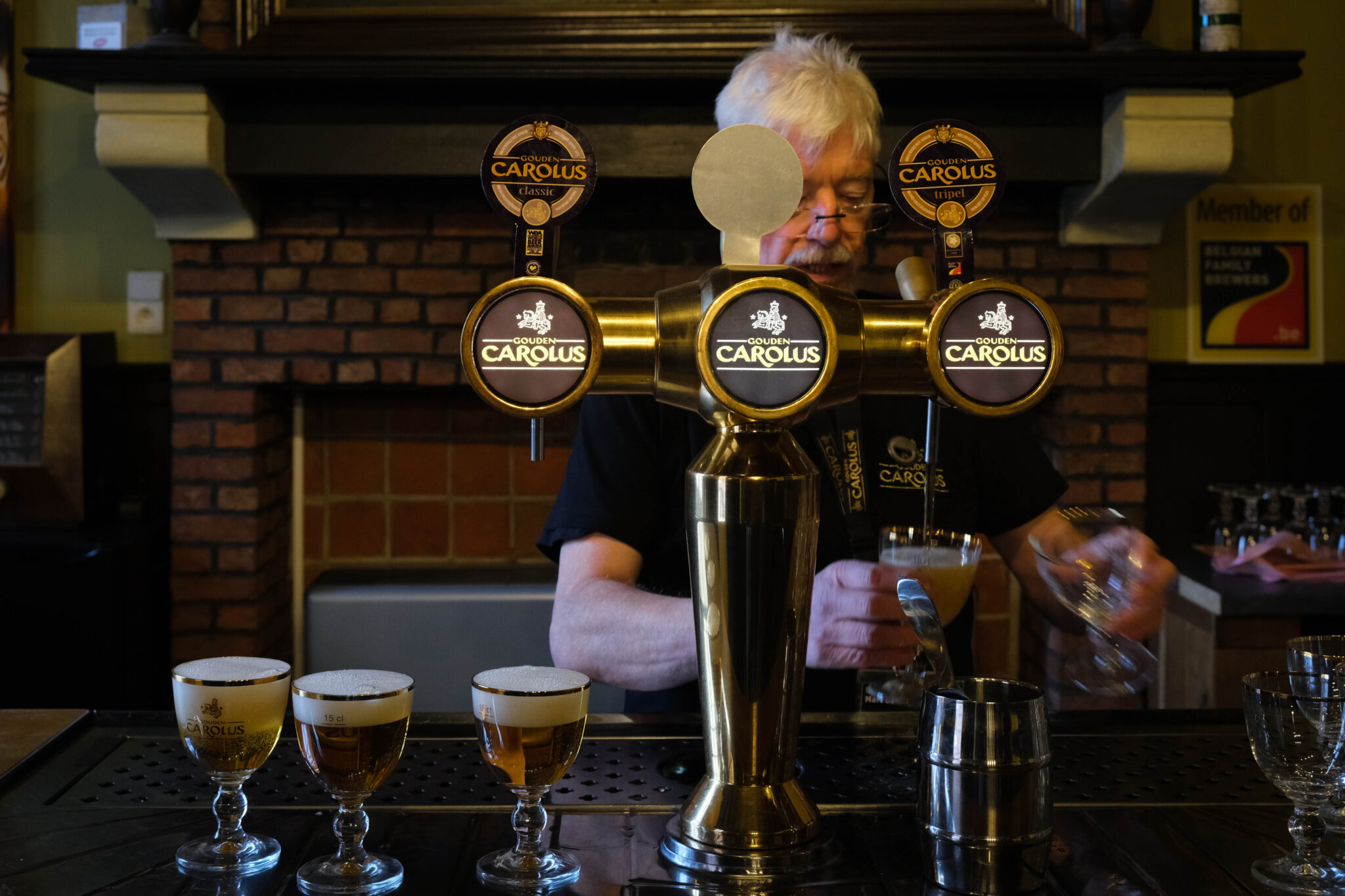
One of Belgium’s oldest breweries, and certainly Mechelen’s most famous, Het Anker can trace its pedigree all the way back to 1471. Nuns from a Mechelen convent set up the Hospice de Beaune to treat those that were ill or near to death. Naturally, as the water at the time was such poor quality, they turned to a spot of on-site brewing to both treat and comfort their patients. In 1865, Louis van Breedam bought the site from the nuns and began modernising it for mass production. The brewery is now run by the 5th Generation of the Van Breedam family, Charles Leclef, who has continued to innovate, restoring the building, expanding their range of brews and even moving into whisky and sake production, using the beer as feed-stock for their own Gouden Carolus Single Malt.
Despite modernisation, during a tour of the brewery, you get a chance to see some of the older brewing equipment such as the three vast copper brew-kettles in the brew-room that date from after the Second World War as well as the wort cooling tanks on the breweries rooftop. The tour ends with a tasting session of the beer that Het Anker is most well known for – the Gouden Carolus (or Golden Charles), named after Charles V, the Holy Roman who was said to enjoy imbibing a bit of Mechelsen Bruynen.
Het Anker Tour Information
Tours cost €9 per person (€2 for children under 12) and take approximately 2 hours.
A tasting session of two 2 beers is included.
Tour times
Tues, Weds & Thurs: 11am
Friday: 11am and 1pm
Saturday & Sunday: 11am, 1pm and 3pm
Tours must be booked in advance on Het Anker’s website
Take a Stroll Along the Dijle Path
As part of the restoration of Mechelen’s historic waterways, a floating wooden walkway known has the Dijle Path has been installed, stretching from the Haverwerf, all the way to the city’s Botanic Garden. The Dijle path is a beautiful way to see the city from a different perspective, taking you under Hoogbrug – the city’s oldest bridge dating from the 13th century towards the Zoutwerf – or salt port, where boats would moor and offer their salt for sale before moving on to other cities in Flanders.

If you look carefully, you’ll also spot In den Grooten Zalm – the former guild house of the fishmongers – with a scroll bearing the name of the house wound around a carved, gilded salmon above its door.


Party the Night Away at the Vis Markt
This former fish market on the banks of the Dijle has seen a resurgence in recent years and has gone on to become a symbol of Mechelen’s resurgence as a hip, cultural hub of Flanders. The area had become run-down and dilapidated since the hulking Lamot brewery on the opposite bank closed its doors in 1995 and the surrounding area a little unsavoury. Now, the Canals, bricked over for centuries to avoid the threat of cholera, have been reopened and the Vismarkt is bustling once again. One a sunny day, people sit outside and drink on the terraces of bars such as the excellent Gouden Vis. Next door is Café Pilchard, De Gouden Vis’ sister pub aimed at the student crowd, and just across the street are the equally fantastic Pintxos and Cafe de Wei. Two upmarket hotels have opened – the Novotel and Mercure Vé – as well as t’ Ankertje aan de Dijle, Het Anker’s city centre outpost. If you’re looking for something a little more sedate, you can stop for brunch or lunch at the cool Sister Bean cafe.
Relax on the Banks of the Haverwerf and Melaan
The Melaan, a tributary of the River Dijle, was one of the last visible canals in Mechelen and only covered in 1913. Thanks to a European project to restore the city’s waterways, Melaan was uncovered in 2007, providing a beautiful waterside spot to spend a lazy afternoon.
Just a short walk away is the Haverwerf, originally a spot where oats where unloaded and traded. Historically, skippers had to stop at the Haverwerf and offer their goods for sale for at least three days before moving on. Whatever wasn’t sold was then loaded back on the barge to be sold elsewhere.
Nowadays, trading here has stopped, but the Haverwerf is a lovely place to stroll and see some beautiful 16th and 17th-century houses, including the most famous trio of them named St. Joseph, The Little Devil and Little Paradise.

Take in the Street Art of Mechelen Muurt
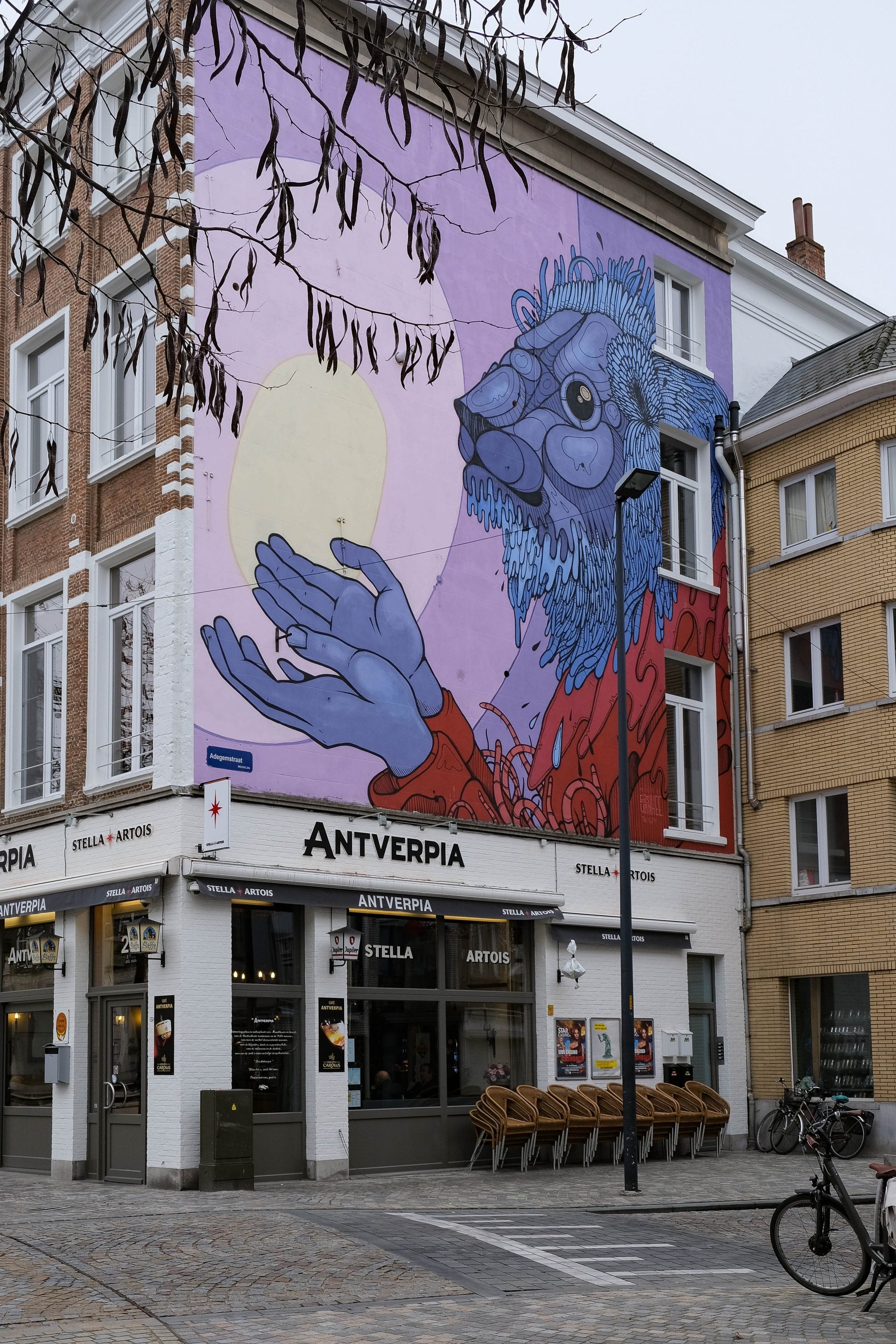
The picturesque, historical town of Mechelen isn’t the first place you would think of when you’re looking for world-class street art, but as you stroll the streets, chances are that you’ll come across one of the 10 huge murals hidden throughout the city.

Mechelen Muurt is a project that was started by local artist Gijs Vanhee. in 2013. His idea was to invite three national, three international and three local artists to brighten up 10 walls across the city centre. Gijs knew which artists he wanted to work with for the project, everyone presented their ideas and he chose the best place for each artist to paint their mural. The project was finished with Gijs’ closing act, the painting of his own mural, ‘The Gift’, which symbolically represents how the murals are giving the streets back to the people who live there.
If you want to visit all 10 murals, a map with the location of all the pieces is available at the Mechelen Tourist Information Office.

Get a Taste of Sense-sational Mechelen
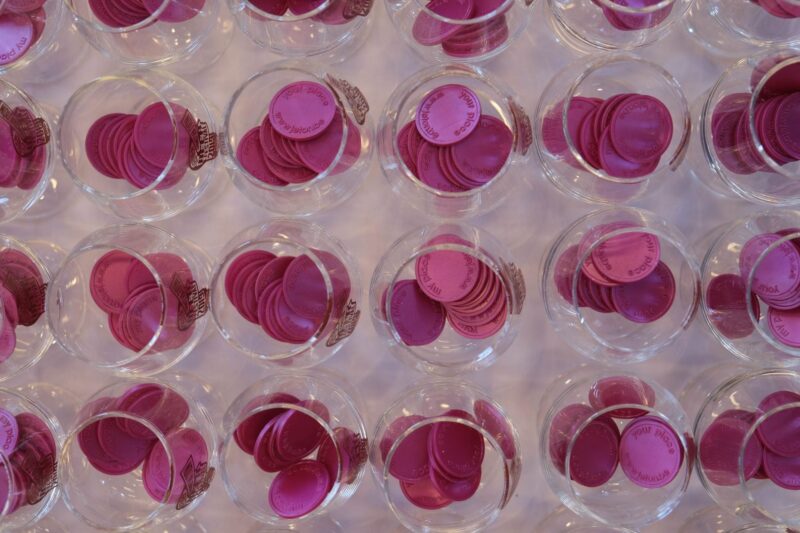
One of the great schemes run by the Mechelen Tourist Office is Sense-sational Mechelen, a journey through the senses of the city, its sights, sounds and tastes. For €4.50, you can pick up a booklet from the tourist information office that includes a map so that you can smell, feel and taste your way through the city independently and at your own pace, whether it’s the sounds of the carillon, the smell of freshly brewed beer, the stunning panoramic view from the Skywalk, or the unique atmosphere of the historical churches, Kazerne Dossin or the museums.
Best of all, the booklet includes vouchers entitling you to samples of local produce at a number of the city’s best independent shops and cafes such as a free beer at Het Anker, moon-shaped ‘maneblusser‘ chocolates from a chocolatier, cheeses, pastries, and coffee.
Where to Stay in Mechelen
Mercure Vé
No hotel in Mechelen could be better located for a weekend of bar-hopping than the Mercure Vé. Situated right at the heart of the bustling Vismarkt, this former fish smokehouse from 1923 has been converted into a stylish and contemporary hotel, retaining many of its original architectural features.
Hotel Brouwerij Het Anker
If you’re a fan of Belgian beer, then what better place to stay than within an actual, working brewery.
My visit to Mechelen was facilitated by Visit Mechelen and Visit Flanders. However, all views expressed are my own.




2 Responses
Loved this post! Mechelen looks like such a hidden gem. I can’t wait to explore the cathedral and try the local chocolate. Thanks for the tips!
Great list! I had no idea Mechelen had so much to offer. Can’t wait to explore the Cathedral of Saint Rumbold and try out the local beers. Thanks for the recommendations!