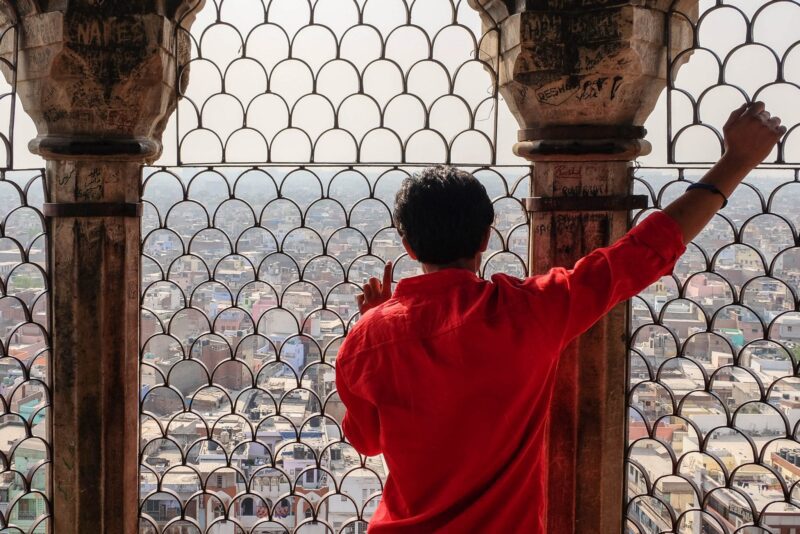
New Delhi is a fascinating subject, both for traditional photography and Instagram shots. In the south, wide tree-lined avenues are surrounded by colonial mansions and expansive gardens dotted with vast monuments and ancient tombs. As you move towards the chaos of Old Delhi, you find claustrophobic, narrow streets overflowing with people and traffic, making it a street photographers dream.
Think colourful spice markets, orange marigolds scattered across the pavement as a woman threads them into fragrant necklaces, bangle shops sparkling and shining in every colour imaginable and people dishing out delicious street food. Behind the dishevelled 20th-century apartment blocks covered in reams of tangled telephone wires and drying laundry, are the remains of extravagant architecture. Look a little harder and you will find yourself wandering among the central courtyards of gorgeous havelis or stumbling upon centuries-old temples hidden away on cramped backstreets. Every corner of the city has you grasping for your camera. Here are some of my favourite photography spots in the city.
Lodhi Art District
Back in 2015, the St+art India Foundation, an organization dedicated to making art more accessible, teamed up with the Indian government to allow street artists to use the buildings in this inner-city neighbourhood as enormous canvases. As a result, what was once a rather dull stretch of government housing blocks is now home to over 50 vibrant murals created by local and foreign artists, covering themes ranging from Indian culture and celebrities to social issues.
Chandni Chowk
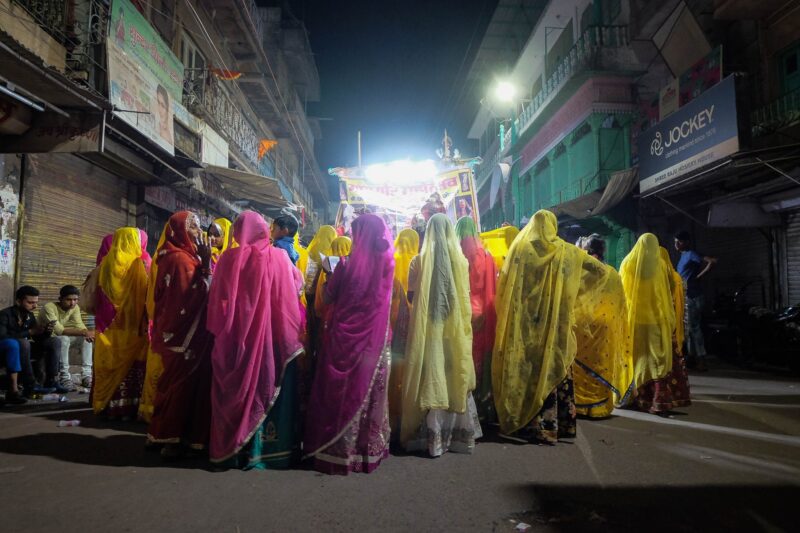
Chandni Chowk cuts through the centre of Old Delhi, from the magnificent Red Fort in the east, to Jama Masjid. It is one of the area’s busiest thoroughfares; The air is suffocating. There are people everywhere. The narrow streets feel claustrophobic and overflow with workers, stray animals and stray children. Mopeds weave by, while rickshaws push through the chaos, their passengers sunk back in resignation at the impenetrable mass of humanity. Among them are the Tourists that whizz by, their faces full of wide-eyed delight or frightful dismay. It can be a long stretch to handle in one sitting, but the most intrepid and persistent of travellers will make it south to Dariba Kalan, Old Delhi’s ancient silver jewellery alley, or Paranthewali Gali, where hawkers have been selling paratha, an Indian flatbread, since the 1870s.

Chandi Chowk itself has existed since 1653. The street is built up of layers and layers of history, and traversing it is like peeling an onion. Behind the dishevelled 20th-century apartment blocks covered in reams of tangled telephone wires and drying laundry, are crumbling colonial mansions. Look a little harder and you will find yourself wandering among the central courtyards of gorgeous havelis or stumbling upon centuries-old temples hidden away on cramped backstreets. Although the hidden lanes and buildings make for great photos, the real joy in visiting Chandi Chowk is discovering just how great it’s chaos is for taking wonderful street photography.
Humayun Tomb
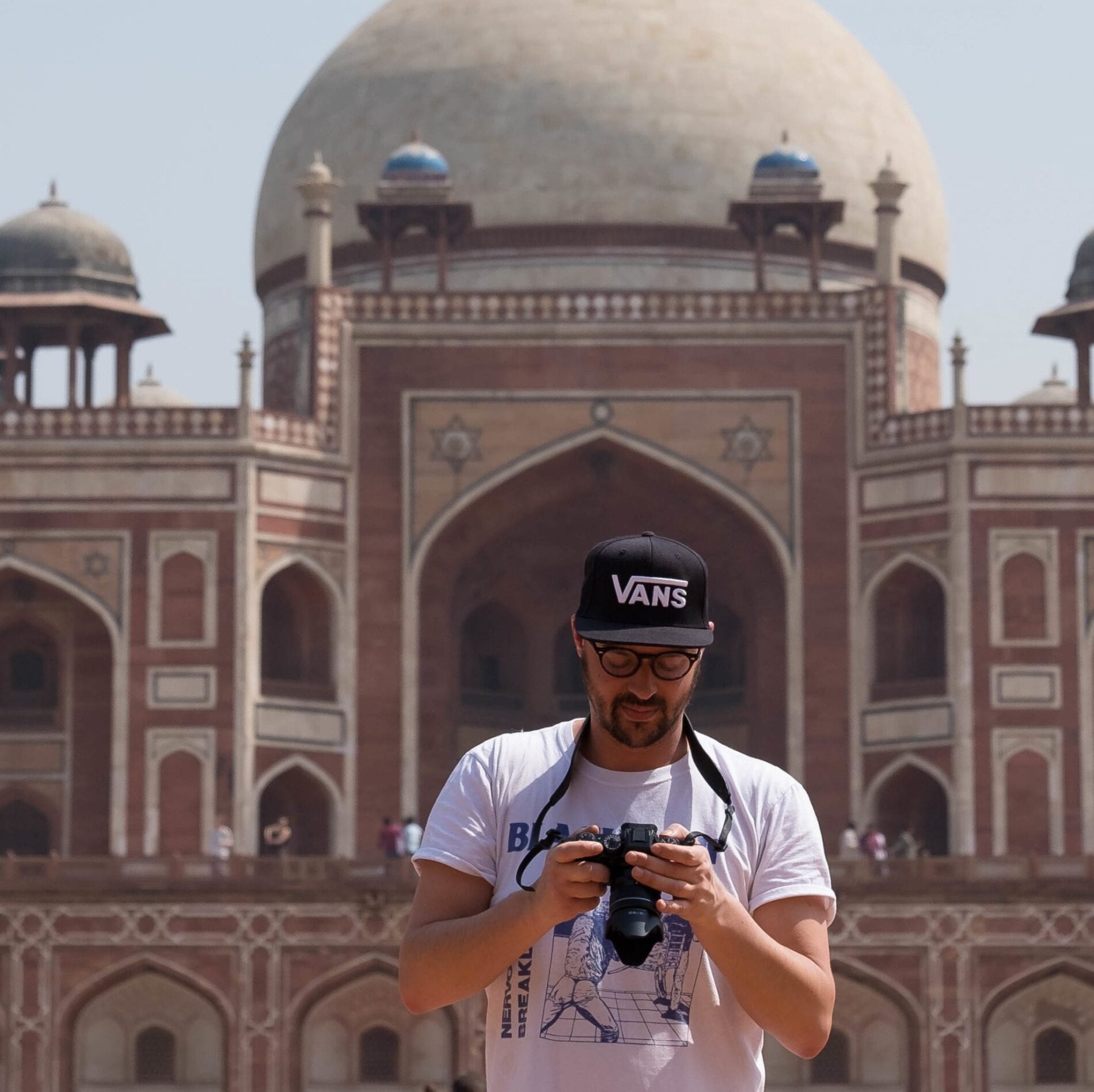
The tomb of Mughal Emperor Humayun is a real architectural wonder and one of the most impressive buildings in the whole of Delhi. Predating the Taj Mahal by around 60 years, it is thought to have inspired India’s most famous structure, although, rather than being built entirely from in white, the marble is reserved for the enormous dome and the inlays of the red sandstone arches, all of which follow the strict rules of Islamic geometry. The complex and its perfectly manicured gardens contain a number of other monuments and tombs, but none are quite as impressive or Instagram-worth as the tomb of Humayun.

Khari Baoli Spice Market
Men sit in tiny, dimly lit, tiled alcoves with all manner of spices and ruby red chillies laid out in front of them, spilling from the top of open hessian sacks. Some of them bark orders to the labourers that move bags of leaves and spices from stall to stall, heaving them up onto enormous weighing scales. Others huddle in groups, gossiping and playing cards in clouds of cigarette smoke, crumpled roll-ups clenched between their teeth. Some are fast asleep. Khari Baoli is home to Asia’s largest spice market and the Gadodia Market building is the epicentre. The piles of colourful, fragrant spices are perfect for adding a splash of colour to your Instagram feed, but like with Chandni Chowk, the best photos you can take here are of people, specifically the spice porters working away in the bustle of the market.
India Gate
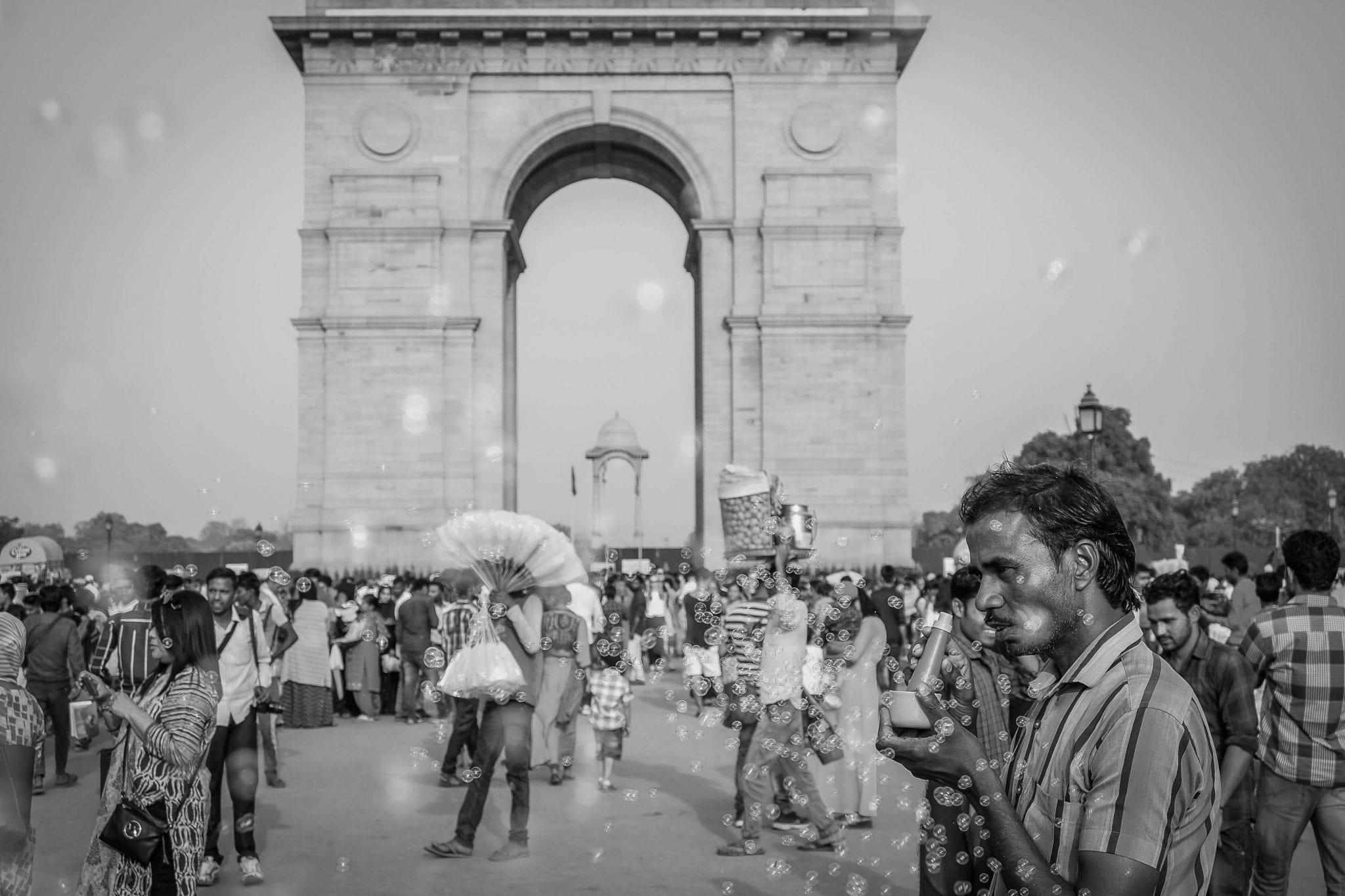
Constructed in 1921 in order to pay tribute to around 90,000 Indian Army soldiers who died in WWI, the Northwest Frontier operations and the 1919 Anglo-Afghan War, this imposing 42m high structure was modelled on Paris’ Arc de Triomphe. There is a constant buzz in the park and pools surrounding the gate as families picnic on the grass and swim in the water. Vendors selling street food, budhdhi ke bal (candyfloss or ‘old lady’s hair’) and toys mill around beneath the arch and on the long road that leads from the presidential palace towards the arch. The best time to visit is on an evening when the surrounding area really comes alive with people and the light is perfect for dreamy shots in front of the gate.
Jama Masjid
Jama Masjid, stands like a proud red island in the centre of Delhi’s pandemonium, a magnificent walled mosque adorned with minarets and gigantic onion domes. The building has been here as long as Old Delhi itself, built by Mughal Emperor Shah Jahan in 1644. It’s said to have cost over 1 million rupees and remains India’s largest mosque. At capacity, it can hold 25,000 people. Although the mosques vast courtyard provides the perfect spot to take photos of people and the buildings elegant domes and archways, you can pay an extra Rs.100 to climb the minaret and get a fantastic view of Old Delhi from above.
Read More: A Walk Through Old Delhi
Agrasen Hi Boli
Although Connaught Place is one of New Delhi’s busiest areas, bustling both locals and tourists that head here to take advantage of the shops and restaurants, take a quick detour down a side street to find one of the city’s centuries-old, subterranean marvels. Thought to have originally been built by the legendary king Agrasen, and rebuilt in the 14th century by the Agrawal community, the stepwell was a centre point for the community, used as a water source, bathing pool and for washing clothes. The geometric staircases are a stunning combination of ingenious Indian engineering and architectural beauty, making it a perfect backdrop for your Instagram snaps.
Lodhi Garden
There’s no denying that central Delhi can become a little overwhelming at times; the sheer volume of traffic and people, the noise, and the pollution. Lodhi Garden is a peaceful oasis in the chaos. Located in the south of the city, the 90-acres of sculptured garden and monuments were created at the behest of Lady Willingdon, who had two villages cleared in 1936 to make space for her project. It’s an incredibly popular spot for locals. You will find students lounging on the grass, couples picnicking and even people participating in group yoga sessions. While the gardens are beautiful in themselves – they are home to more than 100 species of trees and 50 species of birds and butterflies – it is the 15th-century Mughal monuments (the twin tombs of Bada Gumbad and Sheesh Gumbad, Mohammed Shah’s tomb, and the walled complex of Sikander Lodi’s tomb) that steal the show.
Lotus Temple
Designed by Iranian-Canadian architect Fariborz Sahba in 1986 to resemble a lotus flower, with 27 white-marble petals, this Bahai house of worship was designed as a place to bring all religions together. People of all faiths are welcome to pray or meditate silently inside according to their own beliefs. Photography isn’t allowed within the temple, but the exterior design is so stunning that it makes for a perfect Instagram shot.

Yamuna Ghat
You will find ghats all over India. For centuries these stone steps leading down to the water have been used for bathing or ceremonial purposes in sacred rivers or lakes. Yamuna Ghat at Kashmere Gate is still very much in use and can provide one of the most stunning photographic experiences in the city. Each morning at dawn, thousands of seagulls flock here to feed as men use the ghat as a launching spot for taking passengers across the river in boats. The people and birds, mixed with the orange hues of the sunrise, make for a breathtaking sight.
Safdarjung Tomb
This impressive sandstone and marble mausoleum, built in the 18th century by Nawab of Avadh as a grandiose tomb for his father, Safdarjang, is surrounded by palm-lined gardens and long, decorative pools, making it a great photo stop in the south of the city. It is one of the most underrated attractions in the city, meaning that it doesn’t get too crowds and you can capture photos without people milling about in the background. For best results, arrive around sunrise or sunset to catch it in all it’s sun-kissed, golden glory.
Gurudwara Bangla Sahib Temple
Gurudwara Bangla Sahib Temple is an island of tranquillity in the centre of one of the world’s most hectic and populous cities. Like all Sikh temples, everyone and anyone is welcome to wander inside to soak in the serene spirituality of the Gurudwara.
It is the most prominent Sikh house of worship in Delhi. First built as a small shrine in 1783 to honour the eighth Sikh Guru, Guru Har Krishan, the gurdwara stands on the site where he was thought to have performed a small miracle. Guru Hari Krishan used to distribute sanctified water to the sick, believing it had a miraculous healing effect on their mind, body, and soul, and people still treat the contents of Gurudwara Bangla Sahib’s pools as holy water.
It’s not just the pools that make the temple so photogenic; the glistening white marble and the shimmering golden dome of the temple itself make for fantastic photos. Just be wary not to take photographs of worshippers bathing in the water.