The wine glass catches the light and reflects the light beaming off the cathedral. It arrived so cold that the glass is clouded with condensation, and when I tilt it towards the sun, it glows the pale gold of late-September stubble. It’s Grüner Veltliner, sharp with green apple at first, then a pinch of white pepper at the back of the throat, like a polite introduction that gradually builds to a slight burning at the back of the throat.
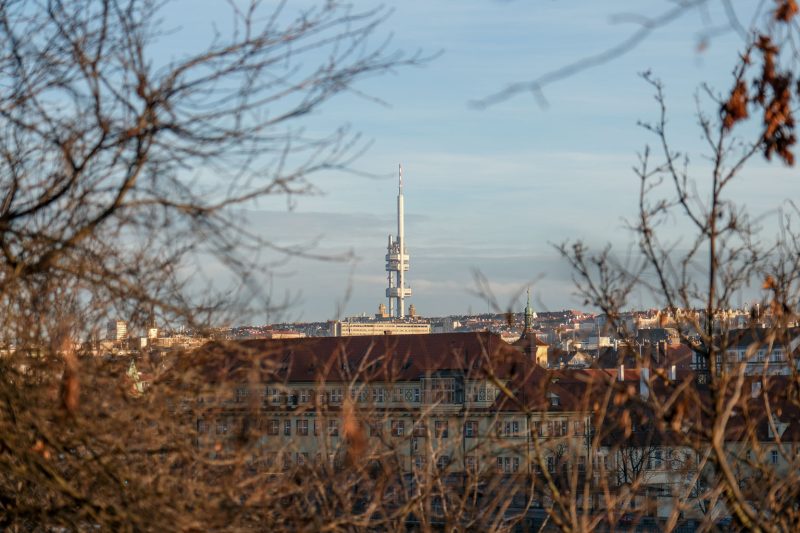
Ahead of me, the old town seems to tumble down the hillside in a mass of terracotta roofs, and above them all rises the Church of St Nicholas, a building with the bearing of a cathedral, its tower lifting into the haze, dominating the entirety of the town. Beside it, less imposing but just as striking, stands the town hall tower, standing tall and peeking out above the skyline.


This is Znojmo, in the far south of Moravia, a stone’s throw from the Austrian border and, for a good part of the twentieth century, a whole world away from it. It’s a funny thing that a place this beautiful rarely features on itineraries for the Czech Republic, especially for people who barely make it beyond the boundaries of the capital. The Czech’s know about it and come in droves to experience the beauty and drink the local wine, but for others, Prague is a grand opera, while Znojmo is the quiet chamber recital in the next room. However, that is the draw.
The castle has earned its view. It sits on a promontory of rock that the river has been gnawing at for millennia, a natural fortress that the Přemyslid rulers of Bohemia recognised as a gift. What stands there now is more a patchwork of ruins and abandoned buildings rather than a single fortification, a palimpsest in stone, with each century writing over the last. These days the rooms belong to the South Moravian Museum, and they smell faintly of beeswax and old timber.


The real treasure is a few steps from the terrace: the small Romanesque rotunda of the Virgin Mary and St Catherine. Step inside and the noise of the present drops away. The walls are painted, and have been since the early twelfth century, with a procession of Přemyslid dukes and their families, their faces solemn, their robes still faintly glowing in ochre and red. They are among the oldest murals of their kind in the Czech lands, one stern portrait at a time.
I finish my glass and leave to wander the town that sprawls out in front of me. The path down is a cobbled spiral, steep enough to make the wine feel like it wasn’t the best idea.
Reaching the streets beyond the castle, Znojmo’s old town unfolds: tight lanes, sharp turns, and narrow snickets that lead to beautiful squares. In a way, it reminds me of the Tuscan hilltop towns if it weren’t for the more dour Czech buildings, as colourful as they are in pastel shades.

The alleys here are narrow and slightly crooked, hemmed in by Baroque façades in butter-yellow and faded rose, their plaster peeling in places like old varnish and revealing the older, rougher stone beneath. Doorways are low and arched; courtyards sit between them and are best glimpsed through gateways. In the distance, the church bells begin to ring.
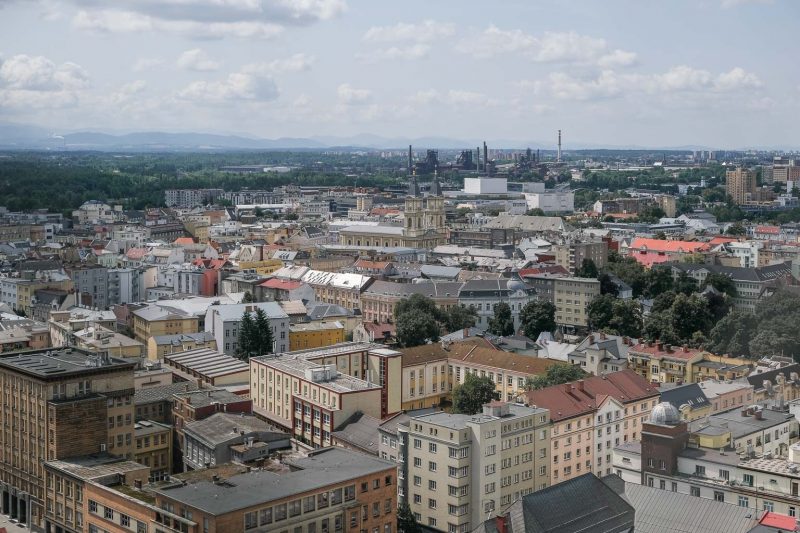
Before long, I find myself in the main square, Masarykovo náměstí, which slopes gently. Merchants’ houses crowd its edges, each one a different height and colour, shoulder to shoulder. Café tables spill out onto the pavement, and the air carries the smell of coffee and, from somewhere I can’t pin down, fresh bread. Over everything stands the Gothic town hall tower, raised in the middle of the fifteenth century and still the town’s compass needle, almost visible from every angle. I climb its stairs, a wooden ascent of creaks and narrow turns, and emerge into the sunlight. From up here the town is clear to see: the red roofs, the church tower, the green cut of the Dyje valley, and past it, the vineyard slopes rolling away in long, combed rows. On a clear day the horizon is a soft blue line, and beyond it lies Austria.


Back at ground level, the Church of St Nicholas is the kind of building that makes you stare in awe. From the outside, it’s an imposing mass of Gothic bulk, yet inside, the light falls in slow, tinted shafts across the pews, and the vaults draw the eye upward.
I think, to understand Znojmo, you need to understand that it has always lived at the edge of things – on the fringes and borders. Founded as a Přemyslid stronghold on that defensible rock, it grew from a frontier outpost into a prosperous royal town in the thirteenth century and became a centre of trade. Merchants came with salt and cloth and wine; craftsmen settled and, as a result, castle walls were built. The town was a stop on the road between Bohemia, Moravia and the Danube, and people, as they tend to do, passed through it continuously.

Its history is a long run of kings and soldiers. In 1437, the Holy Roman Emperor Sigismund, crowned king of Bohemia and weary from a lifetime of politics, died here on the road to Prague, an imperial footnote that gives the castle’s rooms a certain importance. The Habsburgs ruled from afar, and the town prospered under them. Then, the Thirty Years’ War rolled over the region like a storm front, leaving the town battered but still standing. In the summer of 1809, the fields around Znojmo, then known by its German name, Znaim, became the stage for one of the last great clashes of the Napoleonic Wars, ending in an armistice signed in the town’s shadow. History, it seems, has always liked to hold its negotiations here.
For centuries, Znojmo was a place of two languages, Czech and German, living side by side. The town’s German-speaking merchants and winemakers shaped its architecture and its appetite, even its famous pickled gherkins, the sharp, crunchy cucumbers that still turn up on menus throughout the town, travelled the length of the old empire in barrels bearing the town’s name.


In a way, this was a mild blessing as the river gorge was left almost untouched, and today it is the Podyjí National Park, a green sanctuary of oak woods, rock walls and meadows. The barbed wire is long gone, replaced by hiking trails.
Wine is the thread that runs throughout all of this history. Monks and townspeople have been tending vines on these slopes for the better part of eight centuries, and the habit is as deep-rooted in the town as the vines themselves. The Znojmo wine region is a warm, sheltered corner of Moravia, and its limestone and loess soils give the whites a crispness that is clean, with a little flush of fruit.

Grüner Veltliner is the local star, but Riesling, Müller-Thurgau and Sauvignon Blanc hold their own, and in the right hands the whites have a lovely mineral snap. Every September the town celebrates the harvest with the Znojmo historical wine festival, when the streets fill with costumed processions, music and stalls, and the whole centre becomes a celebration of local produce. If you can time a visit to catch it, this is when the town is at its most exuberant.
But it is the everyday wine culture that charms me most, as it does in most of South Moravia. Wander around the town, and you will find wine bars tucked under vaulted ceilings in cellars, glasses poured generously, and winemakers who talk about their vintages with passion. In a country better known for its beer, Znojmo makes a persuasive case for the grape.

Partly because of this history of wine production, beneath the old town lies a second city: a labyrinth of passages, cellars and chambers cut into the sandy rock, stretching, by most estimates, for around 27 kilometres. Much of it was dug in the fourteenth and fifteenth centuries, when the townspeople needed somewhere cool to store their goods, somewhere safe to hide in times of war, and somewhere dark to age their wine. The result is a web of tunnels that threads under houses, streets and squares.
Visitors now can join a guided tour and descend a flight of steps that seems to go down a good deal further than I expected. I didn’t go myself, but I’m told that this is where grain and barrels of wine were stored, and people used the chambers during times of siege – the hidden corners where, according to legend, the townspeople took shelter when invading armies swept through the valley. Standing in the dark, you can apparently feel the weight of the town above you, the church and the square and the café tables, all of it resting lightly on a honeycomb of hollows.

Back in the daylight, the square is still there, the café tables are still full, the bell is still ringing. Nothing has changed, and yet the town now is very different to how it was in centuries past; it now becomes packed with Czech tourists during the weekend, those in search of the local tipple, and empties out midweek, giving it such a quiet, peaceful feel.
I end my 48 hours in Znojmo back where I began, on the castle terrace, with another glass of Veltliner and the evening settling over the valley. The sun has dropped behind the vineyards, and the sky above the Church of St Nicholas has turned the colour of apricot jam. The river has gone silver, then slate. Lights are coming on in the windows below, one by one, like an illumination in a steady constellation.
In that, I find the beauty of Znojmo. For people who want to get away from Prague or Vienna, the curious and the slightly thirsty, it’s a place with almost as much history, but at a much slower pace. Raise your glass to it.
How to get to Znojmo
Znojmo is a town of about 33,000 people in the South Moravian Region, close to the Austrian frontier. The royal town was founded shortly before 1226, although its castle is older. It sits at the heart of the Znojmo wine sub-region, and it’s the gateway to Podyjí National Park and the Dyje valley.
In a way, Znojmo has always been a place that people passed through on their way elsewhere. The town thrived thanks to its position along the imperial road between Vienna and Prague, and the Austrian border lies only about a fifteen-minute drive away. Despite being on the edge of the heavily touristic South Moravian wine region, Znojmo can still feel like somewhat of a discovery to most tourists from outside Czechia. It isn’t too close to any major cities (Brno is the closest, sitting an hour away by road), but it can still be reached from four different airports relatively easily. Which starting point you choose will be heavily dependent on flight schedules and your starting point.
From Vienna
Being such a major international hub, Vienna is the obvious gateway of choice for most international visitors. It’s the nearest large airport, and it puts you on the previously mentioned old imperial route.
By Car
The drive from the airport takes about 1h 20m. The road is the E59 the whole way, following the A22 as far as Stockerau and becoming route 38/E59 once you cross the Czech border. You’ll need an Austrian motorway vignette for the expressway sections, so check before you set off.
By Train
Of course, travelling by train from Vienna into Czechia feels like the most romantic option and allows you to settle in and enjoy the scenery, rather than being stuck staring at other cars on the motorway. However, it isn’t the simplest way when you add in arriving at Vienna Airport.
There’s no direct service, and the journey requires a change, taking 2h 17m at its fastest, though around three and a half hours is more typical. The smarter plan is to take a train into Vienna and pick up the direct regional service from there. The route follows the Northwest line through Stockerau and Hollabrunn to Retz and on to Znojmo. Trains from Vienna Hauptbahnhof take about 1h 46m. Retz, the last Austrian stop, is just 17 minutes from Znojmo.
By Bus
FlixBus runs three departures a day from Vienna’s International Bus Terminal (VIB), taking about 1h 20m. Allow around 2.5 hours door-to-door. If travelling from the Airport into central Vienna first.
From Brno
For a wider itinerary in South Moravia or the eastern part of Czechia, Brno is an ideal starting point. There are good bus connections between the airport and the city, and landing here allows you to enjoy a few days in the country’s second-largest city, exploring its culture and history-packed streets before heading for a gentler time in the wine country of South Moravia.
By Car
I drove this very route and found it to be simple enough. The journey is about 45 miles and takes around 50 minutes to an hour. Take the R52 motorway towards Mikulov, leaving at Pohořelice for route 53, which takes you the rest of the way.
By Bus
This is the dependable public transport option. There’s no direct link from the airport, but you can take the line 77 bus towards central Brno and change for Znojmo, taking about two hours in total. IDS JMK runs the onward bus from ÚAN Zvonařka, leaves hourly, takes around 1h 15m and runs every day.
From Prague
If you have a general Czechia itinerary, I think it’s safe to say that you will be starting your trip in Prague. After all, this is the country’s capital and most heavily visited city, as well as being home to the main international airport. Although a trip from Prague is the longest of the three main routes, it is also the country’s most well-connected city, with frequent trains and buses to anywhere and everywhere in the Czech Republic.
By Car
Driving directly is 126 miles (202 km), which takes about two and a half hours in normal traffic. Follow the D1 motorway as far as Jihlava, then leave onto route 38 (still the E59), which runs all the way to Znojmo. The D1 requires a Czech motorway vignette, and the villages beyond Jihlava, such as Moravské Budějovice, are well-known enforcement hotspots, so keep to the speed limits.
By Public Transport
The direct rail route is slow and awkward, with a journey of nearly five hours and a few changes. A better compromise is to take a fast train to Brno and change onto the hourly bus. FlixBus and other operators run several services a day from Prague to Brno and other destinations in South Moravia.
From Ostrava
Ostrava is a bit of an outlier here; this industrial city isn’t the prettiest and isn’t really on the tourist map, but if you are travelling by bus or train from Poland, it’s likely that you will have to pass through Czechia’s third-largest city. It also has its own airport with regular flights to and from London Stansted Airport and Warsaw.
From the airport at Mošnov, an Airport Express bus runs into Ostrava, and it has been free to passengers since April 2026. From there, the usual public route is a train to Brno, followed by the hourly bus on to Znojmo, and you should allow for or 4 hours door to door. If you’re hiring a car, it’s easier: the road runs down through Moravia to Brno and then follows the Route 53 approach described above.
Arriving in Znojmo
Once you get to Znojmo, getting to the old town is relatively easy. Znojmo’s bus and train stations are next to each other, and the old town is within walking distance.
Parking
If you’re arriving by car, it’s worth knowing that Znojmo’s historic centre is a protected zone, and you can only park within marked spaces, so keep an eye on the zone signs at the entrances to the old town. Some spaces on Horní náměstí and Masarykovo náměstí are reserved for residents with permits, and the two squares are also the most expensive places to park, so to save money, it’s best to leave the car on the edge of the centre and walk in. Once there, the old town is small enough that nothing is far.
Paid parking is cheap, even by Czech standards, and charges are designed to encourage short stays:
- Náměstí Svobody: 10 CZK for the first hour, 30 for the second and 40 for each additional hour, with a daily maximum of 320 CZK.
- Jana Palacha Street: 10 CZK for the first hour, then 20 CZK for each hour after, with a daily maximum of 170 CZK, which makes it the better choice for a full day of sightseeing.
- Náměstí Republiky and Tovární Street: 10 CZK per hour.
- Pražská and Dvořákova Streets: free, but a little further out.
You can pay at the meters or on your phone through the city’s online parking system (look for ParkSimply), where you enter your registration number and can extend your time without returning to the car.
The Tourist Train
If you want to save your legs and have a little fun, you can hop aboard the town’s sightseeing train. It makes a loop of nearly nine kilometres in about 90 minutes, with eight stops along the way. The official start is at the Louka swimming pool and Louka Monastery, and the route runs past the Dyje valley and its reservoir, St Nicholas Church, the Rotunda of St Catherine, the castle, the old spa and Masarykovo náměstí, before finishing at the railway station. There is a commentary throughout, and you can get off at any stop and rejoin a later train. It’s particularly if you want to see everything Znojmo offers without having to drive, so that you can enjoy a few of the local wines.
The train runs daily from the 1st May to 30th September, including Sundays and holidays, with departures from Louka at 9am, 10.45am, 12.30am, 2.45pm and 4.30pm. The standard fare is currently 120 CZK (or 90 CZK for children aged 3 to 15 and students). Children under three and prams travel free. The train carries wine from the Znovín winery on board, so you can taste as you go. During the September wine festival, it has an adjusted timetable, so check before you plan around it.
Where to Stay in Znojmo
You’re unlikely to find large or chain hotels here, and that can only be a good thing. What you will find are small, personal stays and boutique properties dotted around the old town, from rooms in sixteenth-century townhouses, wineries amongst vineyards, and early-twentieth-century villas with views over the national park. Alongside this, there are a scattering of family-run pensions and guesthouses.
Hotel Clemar
Znojmo’s old town was declared a protected urban monument in 1950, and thankfully that means it has an incredibly well-preserved sense of its past. However, some of its buildings carry that history more lightly than others, and Hotel Clemar wears it well. A house has stood on this site since the thirteenth century, back when much of the town was built of timber, and the two linked townhouses that stand here today – dating from the sixteenth century – have been so beautifully renovated that they now hold the town’s most considered address.


The hotel takes its name from Clemens Maria Hofbauer, a figure threaded through Znojmo’s story, and it has the same sense of belonging that makes this place tick. Where many conversions strip an old house of its character, Clemar keeps what it can. Period details are left to speak for themselves, and the contemporary design is added with a light touch, so that old and new sit together without competing.
A prime example of this is in the room I stayed in – the luxurious Royal Suite – where the ceiling that sits above the sprawling master bed has been there since the 13th century. However, the rest of the apartment has been carefully updated while still keeping the classic character. Spread across two rooms, the first contains an enormous, bowl-shaped tub in full view of the four-poster bed, perfect for a romantic soak after a day of exploring, while the second is the master bedroom. However, this feels more like an upmarket apartment, complete with a kitchenette (the wine fridge is well stocked with a variety of local bottles from nearby wineries), dining space and one of the most comfortable beds I have slept in for a long time.


However, it’s the little touches that make it: the porcelain lampshades, comfortable armchairs, and an entire wall that has been hand-painted with flowers that are endemic to the nearby national park.
There are 21 rooms in all, eleven Standard and ten Superior and De Luxe, and no two are alike. Each has air conditioning, a desk, a coffee machine, a minibar and a safe, and the beds have a reputation for sending guests off very happily (I fell asleep almost instantly in mine).
Mornings begin slowly. The breakfast is a homemade buffet, consisting of simple yet hearty options like breads, sausages, ham, cheese, eggs and fresh pastries, and it can end, if you’d like, in the Moravian manner, with a small glass of local spirit. The communal areas and terrace are the ideal places to linger in summer, and in the evening the renovated wine cellar, which seats around 40, hosts private tastings and celebrations.
While this opulent stay may not offer the same features as 5-star properties in large cities – there’s no pool, restaurant, or spa – it more than makes up for all of this in terms of service and personality. The staff are wonderful, and the enclosed courtyard car park out back is a godsend in a town where parking is fairly restrictive.
The Town Hall Tower, the castle and the entrance to the Underground are all a short stroll away. For a romantic weekend or a night to mark a special occasion, there’s no need to look elsewhere.
Hotel Lahofer
The obvious choice for wine lovers. It occupies a renovated 14th-century house in Znojmo’s former Jewish ghetto, with the castle and the Underground both within a five-minute walk. It also has a wine shop and information centre for the Lahofer winery, meaning you can sample wines while relaxing on the sunny terrace.
Boutique Hotel Katerina
A stylish boutique hotel in a historic villa from the early 20th century, with views of Podyjí National Park. It’s also home to Restaurant Panorama, which I didn;t get a chance to visit, but I hear that it comes highly recommended.
Budget and Central Options
On top of these named hotel recommendations, you’ll find that there are a whole range of pensions (czech guesthouses or B&Bs) as well as plenty of small hotels near the centre, including Hotel U Divadla, which sits a short walk from the main square. It’s worth spending a little bit of time researching these as they all vary in value and quality.
Note: Keep in mind that, although Znojmo is relatively quiet during the week, you will need to book well ahead for weekends in summer and especially for the September wine festival, when the best rooms disappear months in advance.
The Best Things to Do in Znojmo
A great thing about Znojmo is that there are enough sights and activities to keep you busy for a few days, but if you prefer to just relax and soak in the town’s atmosphere while sipping a few local wines, it is ideal for that too.
Above ground, there’s the Gothic tower that rises over a picturesque square of pastel townhouses, a Romanesque rotunda containing frescoes almost nine centuries old, and one of Czechia’s most stunningly placed churches, perched above the Dyje gorge. Below ground, a labyrinth of cellars and passages runs for nearly 27 km beneath your feet. Most of it can be covered on foot in a day, but ideally, you should explore at a leisurely pace, with a stop for a glass of wine every so often.
Znojmo Underground (Znojemské podzemí)
Beneath the old town lies one of the largest labyrinths in Central Europe. Its passages and cellars stretch for nearly 27 km across up to four levels. The tunnels here began as cellars for storing farm produce and wine, and in times of war they formed part of the town’s defences. Made up of ventilation shafts, flues and wells built into a sprawling network, they’re an impressive thing to explore.
There are two main ways to see it. The classic route is an hour-long tour with fourteen stops, taking in coffins, skeletons, a torture chamber and goblins, with light and sound effects bringing the history to life. For something a little more exciting, the adrenaline tours involve climbing walls and crawling through tunnels, with hard hats and outer gear provided. One highlight is a two-aisled hall reminiscent of a medieval hall of justice, which now serves as a wine cellar.
The entrance is on Slepičí trh (the old Hen Market). Booking is required, and the tour isn’t recommended for children under four or for people with claustrophobia or mobility difficulties.
The Town Hall Tower and Masarykovo náměstí
Znojmo’s old town has two great squares, and between them lies the soul of the town, showing what it has to offer. Masarykovo náměstí is the livelier of the two, and just above it, on Obroková street, you’ll find the tower that has been Znojmo’s emblem for almost six centuries. A good idea is to start your exploration in the square and finish it at the top of the tower, to give you a good understanding of how the town fits together.

This was once the Dolní náměstí, the Lower Square, and it’s now named after Czechoslovakia’s first president. For centuries it was one of the town’s most prestigious addresses, and everyone with ambition (and a bit of money) wanted a house here. The facades that line it today are a mix of architectural styles, from Renaissance and Baroque to Classicist, which only adds to its beauty, and outdoor tables spill out of the cafés and, on some days, market stall set up shop. A century ago it hosted the town’s great gherkin markets, and today it’s where the wine festival’s main stage stands during the town’s busiest weekend, and where the Advent market and Christmas tree appear each winter.
At the centre stands the Baroque plague column, built between 1679 and 1682 in thanks for the end of an epidemic that had killed 778 townspeople. It’s among the oldest plague columns in the Czech Republic. A figure of the Madonna crowns it, and four saints stand on the pedestal: St Sebastian, St Roch, St Florian and St Nicholas, the patrons people prayed to in times of plague and fire. The column stands on a site that was once an execution ground, and later the town’s pillory, and the Capuchin friars who nursed the sick during the epidemic are remembered here too, since their monastery covers the southern part of the square.


The lower end of the square belongs to the Capuchins. The Church of St John the Baptist and its monastery were founded in 1628 in the presence of Emperor Ferdinand II, and a Mount of Olives chapel from 1754 is set into the monastery wall. Next to it, at the lower corner of the square, stands the Wolf Tower (Vlkova věž), a massive prismatic tower that guarded the Lower Gate, the main entrance to the town, and is named after a castle commander called Vlk. It was the largest tower of Znojmo’s fortifications, and you can reach the surviving walls by walking through the monastery gardens. Today the tower is also the VOC Znojmo wine information centre, with a tasting bar and a viewing gallery.
At the upper end, the most prominent building is the Daun Palace, on the corner. Also at this end stands a less loved neighbour: House Dyje, a concrete department store built in 1969 to a design by Bohuslav Fuchs on the site of the old town hall, which was destroyed in the Second World War. It remains controversial, and the contrast with the surrounding facades is part of the square’s story. Personally, I didn’t hate it too much, but it is definitely an outlier in a town of beautiful architecture.
The tower exists because of a fire. The old town hall, which had stood since at least 1260, burned down in the great fire of 1444, and its tower, built on top of the roof, fell with it. When the town rebuilt, the council decided that the new tower should stand on its own. The master mason Mikuláš of Sedlešovice built it between 1445 and 1448 in the late Gothic style, and it rises about 67 metres above the rooftops. It’s a slim, elegant tower with a roof of nine small spires and a wooden gallery, and most of the beams that support the roof are still original, more than 500 years old. It is actually quite beautiful and distinctive.


The tower served as the town’s lookout for centuries. Guards watched over Znojmo from a small room in the middle of the tower, and the gallery was only added during a major reconstruction in 1592 to 1594. The guards kept watch until 1924, and in the 19th century a telephone line was installed to connect them with the town below. The tower survived the Second World War, though not unscathed: in a raid on 20 April 1945 a bomb struck it, damaging the gallery and sliding off the roof to destroy the old town hall beneath.
It has just been through the biggest repair in its history. The tower closed in the spring of 2022 for a restoration that was meant to take eighteen months and ended up lasting almost four years. The cost doubled from an initial estimate of 35 million crowns to more than 70 million. The work covered the roof, the trusses, the gallery, the spires and the clock, which has four faces, and new domes were fitted that contain artefacts left for future generations. The tower reopened on 2 April 2026, when the mayor symbolically opened it with a large golden key, and it was later named the best restored monument in the South Moravian Region.
I didn’t get a chance to climb it myself, but I’m told that this is one of the best things you can do in the old town. The gallery, about 60 metres up, runs all the way around the spire, and small windows frame the view: the red roofs of the old town, the Church of St Nicholas, the castle hill and the Dyje valley, and beyond them the vineyards and the Pálava hills. On a clear day, the peaks of the Alps can be made out. The new exhibition at the entrance tells the story of the tower and its restoration, with some of the old roof timbers on display, and there’s now an info point at the entrance with luggage storage, which is handy if you’ve arrived by train.
Znojmo Castle and the Rotunda of St Catherine
At the edge of the old town, on a rocky outcrop high above the Dyje gorge, you’ll find one of Znojmo’s most important landmarks, as well as the best view in the town. This is where the Moravian Přemyslids ruled, where a Romanesque chapel was painted with one of the most important fresco cycles in Central Europe, and where a Baroque chateau later rose on the ruins of a medieval fortress. To find it, walk from Horní náměstí to Václavské náměstí and on along Přemyslovců street, then pass through the old brewery on Hradní street, one of the town’s most picturesque walks.

The castle began as a Přemyslid stronghold in the 11th century, built to guard the southern frontier of Moravia against Austria. The first castle was made of wood, and after it was destroyed in a siege in 1140 it was rebuilt in stone towards the end of the 12th century, with a deep moat. When King Ottokar I founded the royal town of Znojmo in the early 13th century, the castle became its stronghold, joined to the town walls and defended by a strong garrison.
Its military importance faded in the late 17th century, once the Turkish threat had been turned back. In 1710 Emperor Joseph I redeemed the castle, and it was then divided in two. The front section was sold to local citizens and became the town brewery, which is why you walk through brewery buildings to reach it. The rear passed to the Lords of Deblín, who demolished the medieval palace and moat and built a Baroque chateau between 1711 and 1721. The three-winged chateau that stands today is the result.
The collections of the South Moravian Museum, one of the oldest museums in Moravia, have been kept here since 1910. The first tour circuit, on the ground floor, covers the history of the castle itself, and the upper floor gives a picture of life in the chateau for both its owners and their servants. The castle also hosts temporary exhibitions and events.


Opposite the museum, the rotunda is the real treasure of this part of town. It’s the only fully preserved part of the Přemyslid castle and was built as a ducal chapel at the end of the 11th century, probably by Duke Conrad I or his son Litold, as a showpiece sanctuary dedicated to the Virgin Mary. It became a national cultural monument in 1962, and it is among the oldest buildings in the Czech Republic. It wasn’t open when I visited, and from the outside it’s a modest, circular stone building with a small eastern apse that’s easy to miss, but inside, it holds something extraordinary.
In 1134 Duke Conrad II of Znojmo, who ruled the Znojmo principality from that year until 1161, commissioned the frescoes that cover the walls. They were probably painted to mark his marriage to Maria, daughter of Uroš I of Serbia, and the inscription tells us the chapel was rededicated to St Catherine at the same time. The paintings are Byzantine in inspiration, which was unusual for the Europe of its day. They combine biblical scenes with a gallery of Přemyslid dukes, a portrait of the ruling dynasty that was meant as much as a statement of power as an act of devotion.
Even if you can’t go inside, the walk is worth it. A signposted path beside the old brewery leads to a viewpoint with a sweeping view over the Dyje valley, and the café-bar TeraZa u Rotundy on the cliff edge next door is the best place for a drink once you’ve seen it.
Church of St Nicholas
Across the gorge from the castle, on a rocky spur above the Dyje, the Church of St Nicholas has watched over Znojmo for the better part of a millennium. It’s the town’s main parish church, and the building that appears in almost every photo of the place: a long Gothic nave rising from the cliff edge, with a neo-Gothic tower attached, unusually, to its east end.


The first church on the site was Romanesque. It was dedicated to St Nicholas, the patron saint of merchants, probably because a settlement of traders had grown up around it. Its earliest known trace is an image on silver denarii minted in Znojmo under Prince Litold, around 1100, the earliest record of it.
The Romanesque building was badly damaged by fire in 1335, at the time of the wedding of Anna of Luxembourg, and in 1338 the town began a far grander replacement. It took until the end of the 15th century to complete. The result is a Gothic hall church of three naves, borne on massive cylindrical columns and covered with net vaults influenced by the work of Peter Parler. The oldest surviving part is the north porch, dating from the first half of the 14th century, and the music gallery, inspired by St Stephen’s Cathedral in Vienna, was added in the 1480s. The church was important enough that when Emperor Sigismund of Luxembourg died in Znojmo on 9 December 1437, his body lay in state here for three days.

The interior is worth a visit, particularly the presbytery, where fragments of frescoes with scenes from the Passion are preserved, alongside a moving Gothic sculpture of the scourged Christ tied to a post. A late 15th-century statuette of the Virgin Mary, the Bread Madonna, carved from linden wood in a Brno workshop, stands on the altar of St Sebastian and is still venerated by pilgrims. The church also holds the relics of St Boniface, the town’s patron.
Then there is the pulpit, which you’ll almost never see anywhere else in the Czech Republic. Carved in 1760 by the sculptor Josef Winterhalder the Elder, it takes the form of a golden globe, a symbol of the world held in God’s hands.


It’s free to go inside, although donations are welcome. Opening times are the one thing to check, because they vary: the church is open mainly around services (Sunday at 9am) and special events, and in summer it often takes part in the Open Churches scheme.
If you can, time your visit for one of the events when the church throws open its normally closed corners. During the Night of Churches, held in late May, guided tours take in the sacristy, the organ, the attic and the crypt, and the Znojmo Music Festival fills the church with concerts.
Louka Monastery
Not far from the town, you’ll find one of the great monastic complexes of Central Europe. Duke Conrad II founded the Premonstratensian Louka Monastery in 1190. Today, the winery Znovín Znojmo, described as the largest wine producer in the Czech Republic, is based here, with around 650,000 bottles stored in its cellars.
You can tour the cellars and taste wine, and the monastery also houses a picture gallery, a barrel and winemaking museum and a wine shop. After the tasting, it’s worth seeing the massive Baroque Church of the Ascension.
Podyjí National Park
Podyjí became Moravia’s first and only national park in 1991, and at 63 km² it’s the smallest in Czechia. It adjoins Austria’s Thayatal National Park on the other side of the border. The black stork is its symbol.
The best-known stop is Šobes. It’s one of the oldest and most renowned vineyard tracks in the Czech Republic, and it lies within the park. Znovín Znojmo owns it and runs daily tastings from a stand in the vineyard each summer. Buses 817 and 818 connect Znojmo with trailheads, and a viewpoint looks over the Šobes vineyards in a bend of the Dyje.
Local Wine Villages and Cellars
In Nový Šaldorf, the Modré sklepy (Blue Cellars) complex has a cellar lane among the most picturesque in the Znojmo region, with at least one cellar open in season. At Havraníky, the Old Vineyard wine trail has unusual grape varieties and a tasting kiosk.
Where to Eat in Znojmo
The old town is relatively compact, and while it doesn’t have the culinary might of Brno or some other nearby towns, there are enough good dining spots to keep you happy for a few days, with most of its best restaurants or cafes within a few minutes’ walk of one another. The town also has a strong winemaking identity, so many restaurants pour local wine by the glass. Here is where to eat, from historic cellars to a terrace at the edge of a cliff.
Restaurace Na Věčnosti
Where: Velká Mikulášská 463/11, 669 02 Znojmo 2, Czechia
Tucked into a Renaissance house in the historic quarter, Na Věčnosti is a vegetarian and vegan restaurant that doubles as a gallery. It opened in May 2001 and has been part of Znojmo’s cultural life ever since, hosting a daily lunch menu, concerts, wine tastings and a new exhibition each month. The oldest part is a 16th-century cellar with an entrance to the Znojmo Underground, which now houses a small pub. It’s a rare thing in a meat-heavy region to find a place where vegetarians can eat as well as everyone else.
Tusto Znojmo
Where: Dolní Česká 300, 669 02 Znojmo 2, Czechia
When: Friday & Saturday 11am – 12pm; Sunday to Thursday 11am – 11pm
Tusto is the modern option, a risto pub in an Italian spirit that has fitted into the old town easily. The kitchen is built around homemade pasta and a seasonal menu, with tank-fresh Radegast beer on tap and a wine shop stocked with local producers. You’ll find dishes as varied as a fried pizza-dough panzerotto with pulled pork to risotto. It’s relaxed, reliable and a good pick when you want something lighter than a plate of roast meat and dumplings.
Cantina Pizza
Where: Dolni Ceska 22 CANTINA, 669 02 Znojmo, Czechia
When: Thursday & Sunday 4pm – 9pm; Friday & Saturday 4pm – 10pm
A short walk from Tusto on the same street, Cantina Pizza is a small pizzeria that does things relatively simply: They make traditional Neapolitan pizza with clean, natural flavours. Sitting in there one evening, I got talking to a well-travelled Znojmo local who made the bold claim that this is the best pizza in the Czech Republic, and although I’m far from trying all of the slices that the country has to offer, I’m struggling to find a reason to argue with him.


The dough was the standout for me, made with quality Italian flour, and the toppings rely on creamy mozzarella, meaty San Marzano tomatoes and extra virgin olive oil. The ingredients come from carefully chosen suppliers, and in season the kitchen uses local produce too.
The menu contains most of the Italian classics: Marinara, Margherita, Funghi, Capricciosa, Prosciutto crudo con rucola, Diavola, Quattro formaggi and Salame mortadella e pistacchio, along with a salmon and spinach pizza. There are several vegetarian options and one vegan pizza, made with tofu instead of cheese, which is welcome in a region where meat is on most menus. I know that most international visitors will aim to sample South Moravian dishes when travelling the region, but if you have the urge for a carb-heavy dinner, then this is the place to come.
Restaurace Lahofer
Where: Veselá 149/13, 669 02 Znojmo, Czechia
When: Monday to Saturday: 11am – 10pm;
The restaurant at Hotel Lahofer is where the town’s best-known winery meets dining. The kitchen serves Czech and international cuisine paired with wines from local vineyards, with a list that’s broad and varied. Wines on tap, sold by the glass, make it easy to try several without committing to a bottle. In summer, sit in the courtyard garden.
Bistro Mikuláš
Where: Staré Město 109/1, 669 02 Znojmo 2, Czechia
When: Tuesday – Thursday 11am to 9.30pm; Friday & Saturday 11am to 10.30pm; Sunday 11am – 9pm
In the oldest part of the old town, a few steps from the Church of St Nicholas, Mikuláš is a must-visit. This place manages to be a café, a bistro and a wine bar at once. The menu is simple, with a mix of Czech dishes and international cuisine, but hot dishes made from local ingredients, coffee is Montecelio, and desserts come from local pastry makers and wines from growers around Znojmo. I really recommend stopping here for a slow lunch as well as a late-afternoon glass of wine.


It’s the town centre setting that’s the real draw; In summer the courtyard looks like something from a Mediterranean seaside town, and you can sit in the garden or in the house itself, or take your food or wine out to the viewpoint over the Dyje valley. Come evening time, the interior is a cosy escape, and the garden occasionally hosts live music, which adds to the atmosphere on a warm evening.
I opted for a very traditional Czech starter of crackling spread with onions and pickles, followed by a burger topped with local pickled cucumber. It’s also one of the more flexible kitchens in town, and the menu includes gluten-free bread, burgers, salads, spreads and soups, with a gluten-free dessert and a lactose-free dessert on the daily list. The mixed selection also means that a good range of both meat and vegetarian dishes is on offer.
TeraZa u Rotundy
Where: Hradní, 669 02 Znojmo 2, Czechia
It may be a relatively simple place, but the setting is the point here. At the end of Hradní street, this rustic café-bar sits on the edge of a cliff above the town and the Dyje gorge, just beside the Rotunda of the Virgin Mary and St Catherine. You won’t find a full meal as it’s more a place for a drink and a snack than a full meal, but they serve beers from the Znojmo Town Brewery, along with homemade fruit lemonades and quality coffee. The brewery itself is a hundred metres away, so the beer has hardly travelled. It closes early, so some in the late afternoon, when the light on the valley is at its best, and you can relax with a Hladinka after a day of exploring South Moravia.
Where to Drink South moravian Wine in Znojmo
Znojmo’s vineyards are a few minutes from the town centre, and the old town has several places where you can taste their wines without leaving it.
Veltlínské zelené is the region’s flagship white: peppery and mineral, with notes of white pepper, lime and apple and a zippy acidity. It also makes fine ice wine, a Znojmo speciality that suits the local climate. Riesling and Sauvignon Blanc complete the VOC trio, and both are worth trying side by side. Beyond the appellation, look for Pálava, Müller-Thurgau and Pinot Gris, and among the reds, St Laurent, Pinot Noir and Zweigelt. The nearby village of Dolní Kounice is known for St Laurent grown on granite soils, with a deep mineral character. Since 2013 the VOC Znojmo association has also released a Royal Line of wines, created because the standard VOC wines were so popular that they often sold within a year, leaving no chance for them to age in the bottle.
Enotéka Wine Gallery
Where: Hradní 2, 669 02 Znojmo 2, Czechia
When: Monday to Wednesday 10am – 9pm; Thursday 10am – 10pm; Friday & Saturday 10am – 12pm; Sunday 10am – 8pm
This is the best single introduction to the region’s wines. It’s the largest by-the-glass tasting room in Czechia, set in the brewery premises in the historic centre, where about 100 samples from nearly 30 local wineries are poured from self-service machines.


It’s a fairly simple process; at the bar, you can load a payment card with Czech Koruna and then head into a room lined with bottles. Select your preferred tipple, insert your card into the machine and hold out your glass to receive the pour size of your choice. It’s the perfect way to sample a range of classics, new regional varieties, natural wine, ice wine or straw wine. It also has a fine view of St Nicholas from the terrace outside, making it a perfect sunset spot or the most picturesque place in town to have a drink.
The Cellars of Louka Monastery
Where: Klášterní 5, 671 81 Znojmo 5, Czechia
When: Monday to Sunday 9am to 6pm
For a wine tasting with atmosphere, there’s nothing quite like sampling Znovín’s wines in the vast medieval cellars of Louka. Znovín is described as the largest producer in the Czech Republic and is known for its ice wines, made here from Veltlínské zelené and Riesling. Its VOC Riesling has won gold at the national wine salon. The monastery is open daily from April to September, and by reservation the rest of the year. It’s especially welcome on a hot day, when the cellars are pleasantly cool.
Winery Lahofer
Where: Vinice 579, 671 82 Dobšice, Czechia
When: Monday to Thursday 9am – 8pm; Friday & Saturday 9am – 10pm; Sunday 9am – 6pm
For a quieter evening, the wines on tap at Hotel Lahofer let you try several by the glass, and the hotel holds regular tastings with expert commentary.
However, to see Znojmo wine at its most ambitious, make the short trip to the winery itself, just outside town at Dobšice. Lahofer was founded in 2003, and it now farms 430 hectares of vineyards exclusively in the Znojmo sub-region, making it one of the biggest growers in the country. It has been a regular winner of the national competition for the best Czech wines, and its wines are sold only in the Czech Republic and a few selected shops abroad.


The winery opened to the public in 2020 in a prize-winning concrete building by Chybík + Krištof that is shaped like a giant wave, with the rows of vines as its central motif. The ceiling of the tasting room is covered with an abstract mural by the Czech artist Patrik Hábl, and the roof is a walkable terrace with a view across the vineyards, which doubles as an amphitheatre for summer concerts, plays and screenings.
You can taste in the modern tasting room, in the barrique cellar, among the oak barrels in the traditional cellar, or out among the vines. Guided tastings are available by arrangement, so book ahead.
Šobes Vineyard
Within Podyjí National Park, the Šobes vineyard is one of the oldest and most scenic in Europe, and Znovín runs an outdoor tasting stand there in summer. Pinot Gris and Riesling taste better than usual with a view of the Dyje valley, and it makes a natural stop on a walk through the park. See the Day Trips section for more.
Small, Family-Run Wineries
If you want to meet the people who make the wine, a number of smaller producers offer tastings by appointment. Špalek, a family winery, was reported to be the only organic and biodynamic producer in the VOC Znojmo, and its wines have a pronounced minerality. Piálek & Jäger make wines with special designations in small batches of around 3,000 bottles, concentrating on Veltlínské zelené, Sauvignon and Riesling. Thaya has been recognised in national competitions, and its VOC Sauvignon Blanc has been singled out as a standout. Many wineries in the villages around Znojmo, such as Nový Šaldorf, Hnanice and Vrbovec, also open their cellars to visitors, and the cross-shaped cellars of Přímětice are among the region’s best-known sights. The Wolf Tower can tell you which are open on the day.

Where to Get a Coffee in Znojmo
Znojmo has a more serious coffee culture than you’d expect from a town of its size. I checked a speciality coffee guide to the town that lists seven cafés, and several of them roast their own beans. Many also double as wine bars or galleries, which suits a place that’s equally happy at ten in the morning and ten at night. Here’s the best of the bunch.
BALANCE coffee & wine
Where: Velká Mikulášská 37/10, 669 02 Znojmo 2, Czechia
When: Tuesday to Sunday 8am – 7pm; Monday 10am – 5pm
The original BALANCE is a breakfast café in the historic centre that brings together speciality coffee and local wines. The coffee is roasted in-house, and breakfast is served until 2pm. The café has a terrace with a panoramic view, and a sheltered courtyard garden suits an afternoon coffee or a glass of wine. They take their coffee seriously here, but it is also worth stopping in for brunch, as dishes such as their hummus and avocado sourdough or mango smoothie bowl are a perfect start to the day. In the evening, there’s a fireplace, and the café hosts wine tastings, so it works as well for a nightcap as for a morning flat white.


Another BALANCE café is perfectly placed for a stop before or after a tour of the tunnels. It’s in the courtyard of the Znojmo Underground at Slepičí trh 2, where the café serves its own roasted speciality coffee among the galleries of the old buildings.
GaP (Galerie a Prostor)
Where: Kollárova 27, 669 02 Znojmo, Czech Republic
When: Monday to Saturday 8am to 6pm; Sunday 9am – 1pm
GaP is a gallery first and a café second, which gives it a different character from the others. The café and bar inside serves breakfast, has a display case full of cakes and keeps local wines in the fridge. It’s a good choice if you’d like to take in an exhibition along with your coffee.
Káva na Knopp
Where: Malá Michalská 198/6, 669 02 Znojmo 2, Czechia
When: Monday to Saturday 9am – 6pm; Closed Monday
Tucked into Malá Michalská, a lane that may be the smallest alley in Znojmo, Káva na Knopp is the town’s most devoted coffee house. It’s one of the seven speciality cafés on the Znojmo coffee map, and it roasts its own beans, a small selection of traceable speciality coffees prepared by people who have judged barista competitions. The care towards the coffee shows in the cup. Order a flat white or a cortado, or ask for a filter coffee if you’d like to taste the character of the bean.


On a cold day there’s a soup of the day and a few small dishes, but the cake display is the real draw. Everything is homemade, based on old family recipes, and the selection changes daily. You might find a gluten-free honey cake, a sponge with mascarpone and grapes, a chocolate Míša dessert, a fluffy cocoa cake with lemon glaze, tiramisu or a lime cheesecake.
Where to Get a beer in Znojmo
You’re in the Czech Republic, so it goes without saying that a cold glass of pilsner is never far away, and Znojmo’s brewing tradition goes back a long way: a charter of 1278 restricted brewing to within a mile of the town. What has changed in recent years is the amount of beer being produced here. The town’s original brewery has recently been restored in local hands, a new craft brewery has opened within sight of the old walls, and a pub in the historic centre pours beer from a small brewery in Kroměříž. All of it is walkable in an afternoon if you fancy a pub crawl, and Hostan Hradní 11° still appears on taps across town.
Znojmo Town Brewery (Znojemský městský pivovar)
Where: Hradní 87/2, 669 02 Znojmo 2, Czechia
This is the obvious first stop, and one of the most attractive breweries in the country thanks to its location, standing only a few metres from the Rotunda of St Catherine. Znojmo has brewed beer for centuries. King Rudolf granted the town its brewing right and its mill right in 1278, and in 1720 the town converted the outbuildings of the castle forecourt, ruined in the Thirty Years’ War, into its municipal brewery.


Beer was made on the site until 2009, when production stopped after the Hostan brand passed to an international brewing group based in Brno. The town acquired the site, restored it, and in 2015 brewing returned under a new company, Znojemský městský pivovar. The old engine house and boiler room have become the Enotéka wine gallery, and across the street there’s a brewery shop and a stylish brewery restaurant with a large garden.
It wasn’t open during the few days that I was in town, but visitors who are luckier than me can see the steps that turn hops and water into beer, then visit the cellar where it rests for 30 to 60 days. The range runs to eleven beers, including unfiltered, dark and lager styles and six specials brewed year-round. Names to look for include Znojemská 11°, Zetko 14° and Bombaztic 15°. The terrace, with a view over the town, is open seven days a week from May to September.


The Brewing Exhibition (Expozice pivovarnictví), opposite the working brewery, in the original brewhouse, is Znojmo’s brewery museum, a branch of the National Agricultural Museum that opened in 2017. The centrepiece is the brewhouse equipment itself, made in 1930 at the Škoda works in Plzeň and declared a cultural monument in 2010. Around it, the exhibition tells the story of brewing and drinking in the Znojmo region, from the three essential ingredients, water, malt and hops, to the way beer has been made from the earliest times to today.
If you’ve visited breweries or museums of this kind in the past, it may not be worth it, but there are some quirks; You can step inside one of the huge copper vats, where a short film on the history of the brewery is projected around you. A children’s corner lets younger visitors compete with a beer yeast, which makes this a rare museum that works for the whole family. The exhibition is run by the cultural organisation Znojemská Beseda and is open all year.
Old Cock Brewery (Old Cock Beer House)
Where: Na Valech 1560/15, 669 02 Znojmo 2, Czechia
When: Monday to Thursday 8am to 3pm; Friday 8am – 10pm; Saturday 2pm – 10pm
The newest brewery in town sits just outside the historic centre. Old Cock opened its doors in the summer of 2023, and because it stands next to historic buildings, the brewhouse was sunk almost entirely underground, hidden beneath grassy banks, stone walls and the glass walls of the pub. It’s fully automated, with a maximum annual output of 4,000 hectolitres.
The founder is Stanislav Hahn, and his surname, which means “rooster” in German, explains the name, the logo and the running joke. Hahn brews alongside brewmaster Vojtěch Mrkvička, and their motto is a playful promise of beer with a bit of a peck. The lineup includes classic lagers and around ten beers in total, with specials that have names such as Vývar (broth), Kosa (scythe), Brzda (brake), Skalp (scalp) and Kulka (bullet). The Vývar 11° lager is the one to start with.

The Beer House has a tasting area inside but features a spacious terrace outside. You can also buy bottled beer, kegs, glasses and rooster-themed clothing, and the shop is open on weekdays from 8am to 4pm. Groups can book brewery tours and tastings by phone. Next door, in a neighbouring First Republic villa, the brewery’s Old Cock Castle guesthouse opened in 2025, with eleven rooms and a garden, so you can stay within a few steps of the taps.
Čepárna Old Cock
Where: Velká Mikulášská 4/40, 669 02 Znojmo 2, Czechia
When: Monday to Thursday 2 – 10pm; Friday & Saturday 2pm – 12pm; Sunday 2pm – 8pm
If you’d rather sample Old Cock’s beers in the centre of town, the brewery also has a taproom. It opened Čepárna in 2024, a short walk from the main square, and has a huge selection of their beers on tap – at least 10 at any one time – which stray from the usual Czech pilsners (although they have these too) in the form of sours, IPAs and a number of seasonal specials. There’s always something small to eat with the beer, and a small outside terrace/courtyard which is a nice escape from the streets outside.


Hospůdka Maxwilliam
Where: U Brány 435/1, 669 02 Znojmo 2, Czechia
When: Monday to Thursday 1pm – 11pm; Friday & Saturday 1pm – 12am; Sunday 12pm – 8pm
Just steps away from Old Cock’s taproom, this stylish little pub is the place for a proper Czech evening. It’s a little ramshackle inside, but in a cool, modern way: a dark and dingy ‘dive-bar’ interior with furniture either upcycled or built from disused pallets.


The beers are from the Maxmilian brewery in Kroměříž, a small brewery on the edge of that Haná town. First brewing in 2012, the brewery named itself after Max Švabinský, the painter born in Kroměříž. Its special beers carry the titles of his paintings, such as Polibek (The Kiss) and Skrytý Satyr (The Hidden Satyr), and occasionally stray away from traditional pilsners (I sampled a rather tasty milkshake NEIPA on my visit). The brewery uses Žatec hops, Moravian malt, and the beer is both unpasteurised and unfiltered, so you’ll rarely find it outside of Czechia.
Order a knuckle and a glass of the 11°, and you’ll see why locals come.
Pivnice U šneka
Where: Zelenářská 1, 669 02 Znojmo 2, Czechia
When: Monday to Thursday 1pm – 12am; Friday & Saturday 2pm – 1am; Sunday 2pm – 10pm
On the corner of Masarykovo náměstí, Velká Mikulášská and Zelenářská streets, in an old townhouse in the middle of the historic centre, the “Snail” is the pub that helped bring beer life back to central Znojmo after the Hostan brewery closed. It opened in 2010, and it was one of the first places in town to focus on regional beer, so it did much to fill the gap that was left by the departing brewhouse.
It has the atmosphere of a typical Czech pub, including surly bar staff that will bark at you to take a seat rather than prop up the bar, while providing equally gruff table service. However, it pours around 600 litres a week, which tells you something about how popular it is.


The draw is the choice. Eleven taps carry beers from small, medium and micro-breweries across Bohemia and Moravia, from lagers and ales to stouts, wheat beers and fruit beers, and the lineup rotates regularly. The pub also has its own beers. In 2015 the owner, Petr Vachek, opened a small brewery under the same name, based at the Restaurace Viktoria near the ice stadium on Dvořákova street. The flagship is Šnekova 11°, a pale lager, and there are also 12° and 13° versions, a semi-dark 13° and seasonal ales such as the Snail APA.
A Few More Pubs
Beyond the breweries, Znojmo has a scattering of smaller pubs. There’s a cellar bar tucked into medieval vaults, a café that turns into a pub as the afternoon wears on, a hockey fans’ haunt and a quiet local on a side street. Although none of them are as much of a destination as the places listed above, any of them makes for a good place to finish an evening.
Hospůdka Na Věčnosti
Below the vegetarian restaurant of the same name, this small cellar pub is tucked into the old town’s 16th-century vaults, with an entrance to the Znojmo Underground. It’s an atmospheric spot for a beer in a room that has been standing for five hundred years.
Beer Haus / Gastro Bar
A relaxed café, pub and restaurant in one, serving Varesina coffee and tank-fresh Kozel beer, which makes it handy if your group can’t agree between a coffee and a pint.
U Slimáka
A local’s pub for hockey fans. It’s recommended for anyone who follows Znojmo hockey and likes Hostan beer, and the town’s hockey club, Orli Znojmo, plays nearby. Come on a match night if you’d like to see the locals at their most animated.
Hospůdka U Koně
A fairly new and pleasant pub on Polní street that serves Hostan beer. It’s a good option for a quieter drink away from the main tourist streets.
What to Eat & Drink in Znojmo
The food found in Znojmo is typical of South Moravia’s cuisine and pairs well with a glass of the local wine. There are a handful of things that define the menus here: a gherkin with its own legend, a braised roast built around it, a pork dish that only pretends to be a bird, and sweet pastries that appear at every celebration in almost all the town’s bakeries. Here’s what to order while in the town.
Znojmo Gherkins (Znojemské okurky)
Few towns are so closely identified with a single vegetable, but if you mention Znojmo to a Czech, the first thing that likely comes to their mind is a small, crisp and bumpy gherkin, steeped in a sweet-sour brine with dill. They are the town’s best-known product; they have their own festival, and they give the local cooking its sharp edge. They also come with a good story.
The tale begins in the late 16th century at Louka Monastery. Šebestián Freytág, the abbot, was a generous patron who restored the neglected monastery buildings, and he is also credited with bringing cucumber seeds from Hungary to plant in the monastery gardens. Some versions say they were meant as a cure for the plague, which they did not turn out to be. The date varies with the teller, with accounts giving 1571 or 1572. What is not in doubt is that the Znojmo region’s soil and microclimate suited them perfectly. The harvest was so abundant that the locals began preserving the surplus, first in salt or vinegar water flavoured with dill and marjoram, and from the 19th century in the sweet-sour brine that defines the gherkin today.


The truth is, they aren’t so different from gherkins found anywhere else. A Znojmo gherkin is small, usually 7 to 9 centimetres long, with a firm crunch. Until the late 19th century, the gherkins were grown only in gardens. Then field cultivation began, canneries opened, and around 1900 Znojmo gherkins were being exported to Poland, Germany and eventually America. In 1945, local farmers and the town formed a cooperative, and in 1953 it became the company Znojemská Fruta, which built a state-of-the-art canning factory at a time when the regime’s priorities lay with heavy industry. The industry was prosperous until it wasn’t. Fruta closed its Znojmo operations in 2002, and 120 people lost their jobs.
Nowadays, the trademark and recipes were taken over by the company Hamé, and production of the jars sold under the Znojmia brand moved to Bzenec in 2003. Hamé later passed into foreign ownership, and the brand has since passed to the Norwegian food group Orkla, with some production in Turkey. However, each August the town still celebrates its famous product with a festival on Hradní street, around the Rotunda of St Catherine. It’s a lively mix of market stalls, cooking shows and competitions for the best pickle, the best recipe and the fastest jar filler.
Moravian Koláče and Fruit Dumplings
You’ll find Koláče all over Czechia, but it’s roots are in Moravia (as well as Bohemia) and in the past, they were typical for celebrations. They are rounds of dough, soft-crumbed and filled with sweetened curd cheese, poppy seed or plum. For something more substantial, look for fruit dumplings, typically served hot with melted butter, sugar and a dusting of curd cheese, which taste like a Moravian grandmother’s kitchen.


Znojmo Roast (Znojemská pečeně)
The Znojmo gherkin’s finest hour on the plate is when it’s used in Znojmo roast. It’s typically made with beef, though pork shoulder is sometimes used, braised with mustard, sliced sausage, hard-boiled eggs and the local gherkins, then served with rice or dumplings. It’s thought that the gherkins lift what would otherwise be a heavy meal, adding a sharp, savoury twist to the gravy. Look for it on the daily lunch menus in the old town.
Moravian sparrow (Moravský vrabec)
Despite the name, no birds were harmed in the making of this dish. Moravský vrabec, or Moravian sparrow, is made from small chunks of pork, said to be about the size of a sparrow, which is where the name comes from. A shoulder or another fatty cut is seasoned with garlic and cumin before being roasted or braised slowly until it’s tender and the fat has melted into the gravy. It usually comes with dumplings and braised cabbage, whose sweet-sour tang cuts through the richness. Further south and east, the cabbage is sometimes swapped for spinach. It’s a staple of South Moravian menus and it’s best washed down with a half-litre of local beer or a glass of white wine.
Burčák
Visit the region in autumn, and you will find burčák everywhere, sold from stalls at the roadside and in squares, or dished out at almost every winery and bar. The cloudy, sweet, lightly fizzy young wine is made from the first pressing of the harvest, with the grape must caught partway through fermentation, when the yeast has turned some of the sugar into alcohol but hasn’t finished the job, and it typically contains about 4 to 7 per cent alcohol. Only young wine made from Czech grapes can legally be called burčák, and the season is short, running from late summer until early November. You’ll find it at harvest festivals and in wine cellars across South Moravia, including Znojmo’s September wine festival.
It tastes like a sweet, slightly sparkling grape juice, which is the trap, because the sugar hides the alcohol and it’s easy to drink more than you planned. Drink it fresh, ideally within a day or two of buying, since it keeps fermenting and turns bitter as it ages. If you take a bottle home, never screw the cap on tight, because the gas can build up and burst the bottle. The best burčák usually comes from a proper cellar or wine shop rather than a street stall.
when is the best Time to Visit Znojmo?
Spring is quieter, with fewer crowds and the vineyards coming into leaf. It’s also when the town’s attractions reopen for the season: the Rotunda of St Catherine opens at weekends in April and fully from May, and Vranov Chateau from April to October. In early May, newly certified VOC Znojmo wines reach the market at the VOC Znojmo Wine Festival, a day of tastings of the appellation’s wines with a programme of folk and dulcimer music. Check dates before you plan around it, as they vary from year to year.

As to be expected, Summer brings the warmest weather. Znojmo is reputed to be the sunniest place in the Czech Republic, so the cool Underground makes a welcome refuge on a hot afternoon, and the cellars at Louka Monastery are just as refreshing. The town’s own festival season begins in July with the Znojmo Music Festival, which usually runs for about two weeks in the first half of the month.
In early August, the Gherkin Festival (Slavnosti okurek) takes over Hradní street and the area around the Rotunda of St Catherine. The programme usually includes tastings of more than forty kinds of pickled gherkin, cooking shows, competitions, concerts, farmers’ markets, craft workshops and a children’s programme. The competitions have included a contest for the best home-pickled gherkin and a brine-drinking challenge.
However, in my mind, Autumn is the best season, and September is the best month. As the harvest begins, winemaking takes over Znojmo and its surroundings. Burčák, the young, partly fermented wine, is on sale from late summer until early November; the cellars open their doors, and the vineyards turn gold. October is calmer than September but just as beautiful, and the cellars and wine bars are in full swing.
If one event defines Znojmo’s calendar, it’s the Znojmo Historical Vintage Festival (Znojemské historické vinobraní). It’s the biggest wine and history festival in the Czech Republic, and for three days each September the old town becomes a medieval stage, with tens of thousands of visitors from across the country and abroad. When I visited, it was the weekend following the festival, and I was told that up to 100,000 people attended this year’s event.


The festival is held every year on the second weekend of September; it fills the whole historic centre, with 14 multi-genre stages, hundreds of events and dozens of vintners. The main music stages are on Masarykovo náměstí, Na Káře and Horní náměstí, and historical scenes are staged on Václavské náměstí, Mikulášské náměstí, the Kolbiště jousting ground, the Alley of the Poor and the courtyard of the castle.
The history. The festival’s centrepiece is a procession that commemorates the visit to Znojmo of King John of Luxembourg in 1327, when he came to celebrate his political successes. The wine festival tradition was interrupted by the communist regime in 1974 and was revived in the 1990s. Since then, it has grown into the town’s signature event.
The grand procession on the Saturday is the heart of the festival. King John of Luxembourg and Queen Eliška Přemyslovna lead hundreds of costumed performers through the streets, including knights, nobles, musicians, dancers, standard-bearers and the royal retinue. Each year brings small changes, from a new princess to adjusted costumes for the drummers and the Bacchantes, and in recent years Martin Kraus has played Otto of Habsburg in the Saturday parade.
The wine programme is the other half of the festival. Local vintners sell wine and burčák from stalls throughout the centre, and there are tastings of wines certified under the VOC Znojmo appellation system, a wine market, the traditional mázhaus tastings (held in the old townhouse halls) and a tasting experience called Wine with All the Senses. The festival is the best single opportunity to sample the Znojmo sub-region’s wines in one place.