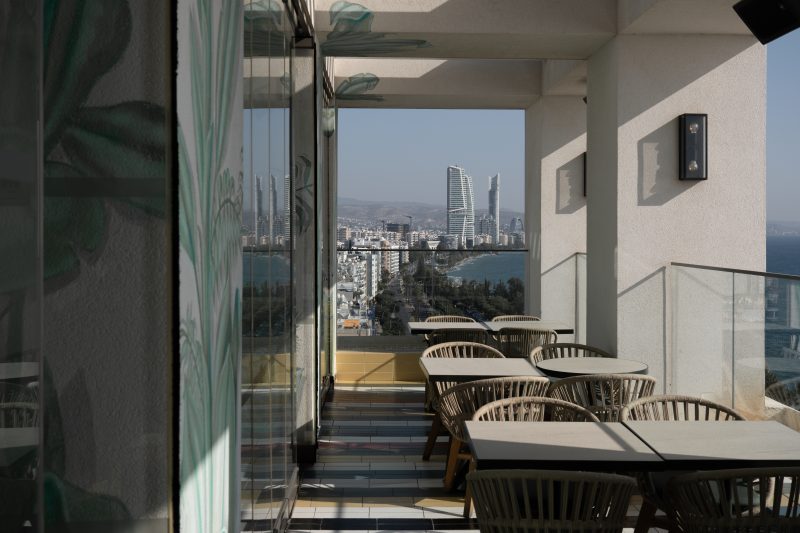
I’ve learned over the years that in travel, there’s something particularly and surprisingly satisfying in the art of doing not much at all. Whether that is lounging at a table on a sun-drenched pavement on an inner-city corner with an iced cup of something caffeinated in hand, watching the world go by, or just walking aimlessly around streets that you’ve never seen before.
I spent my first hour or so in Larnaca doing pretty much this, pounding the pavement in the humidity of a mid-May afternoon, slightly sodden in sweat, with just enough absorbency left to soak in the atmosphere of one of the Island’s most overlooked cities.
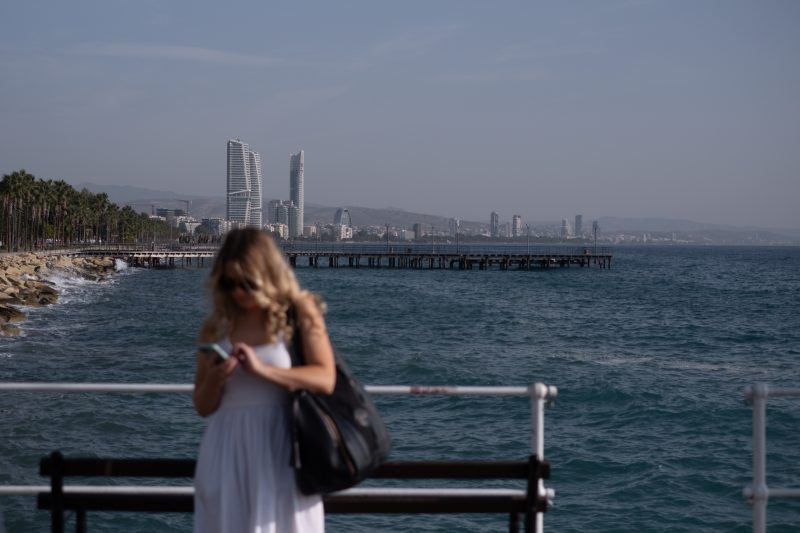
From the palm-lined waterfront of the Finikoudes Promenade, I begin walking towards Larnaca’s fort, watching the waves steadily lap the shore and people baking in the springtime sun on the narrow ribbon of sand that separates the city from the sea. When I get there, I navigate the winding stone staircases of this ancient Ottoman fortification until I reach the ramparts and see the same view, this time from above.
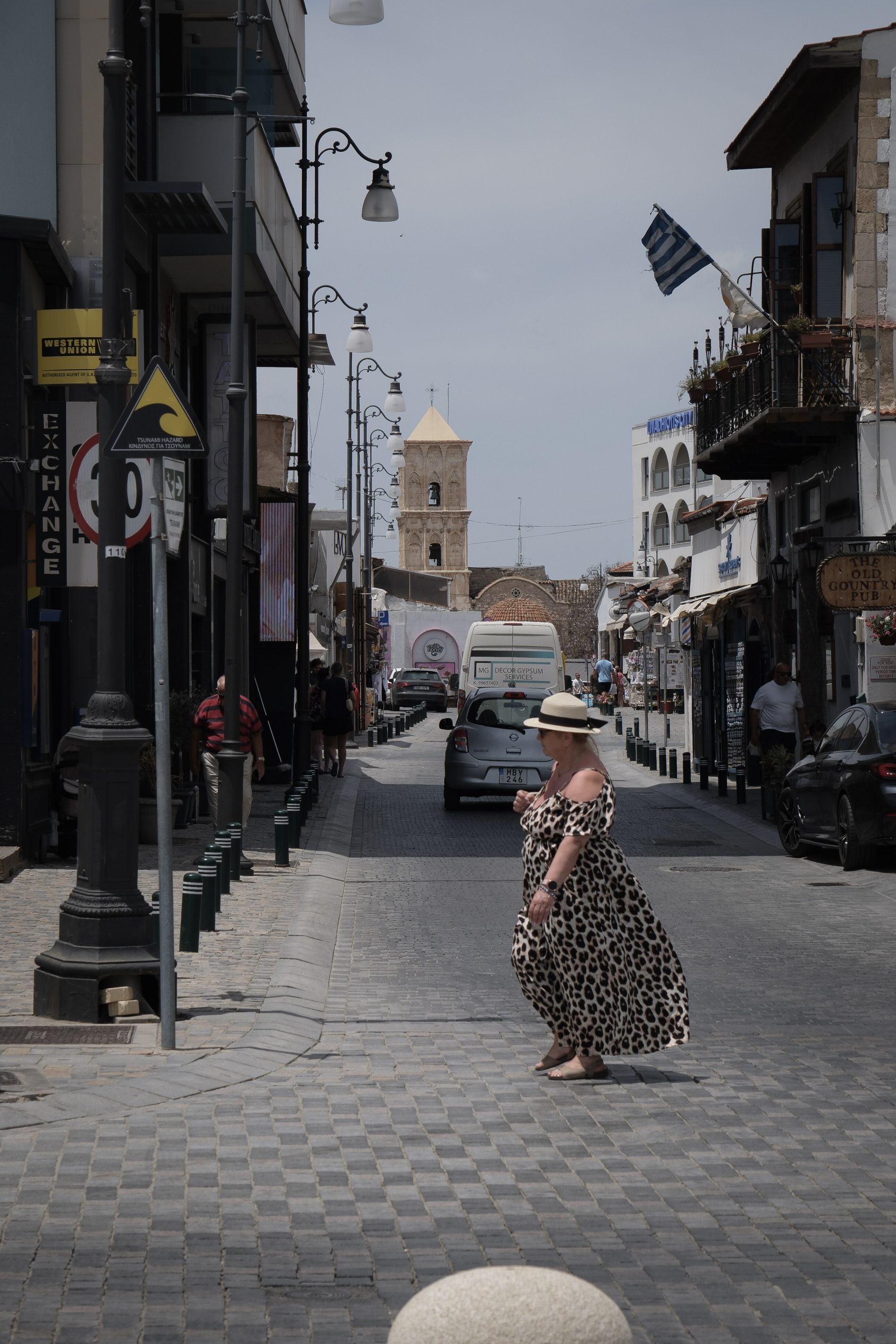
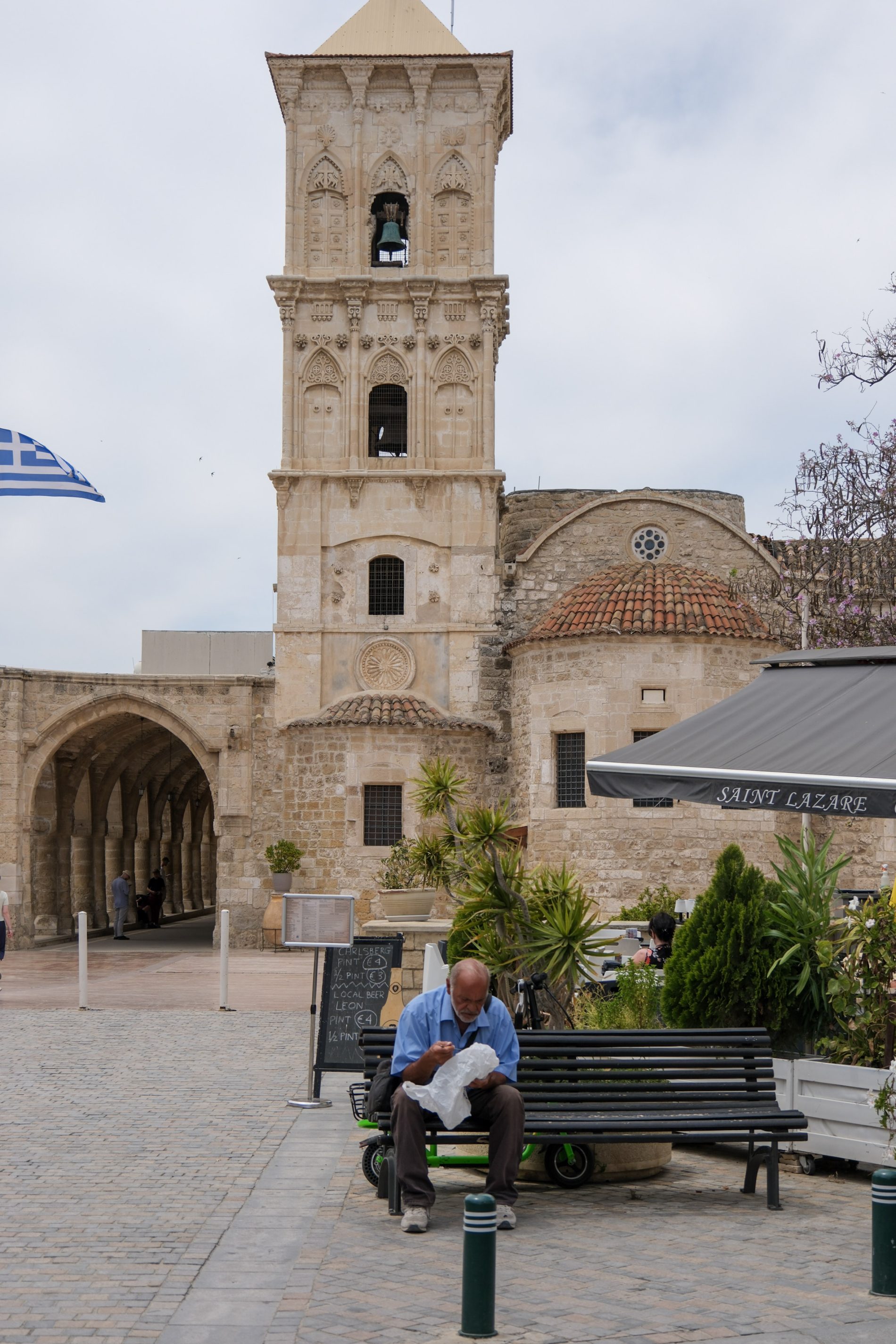
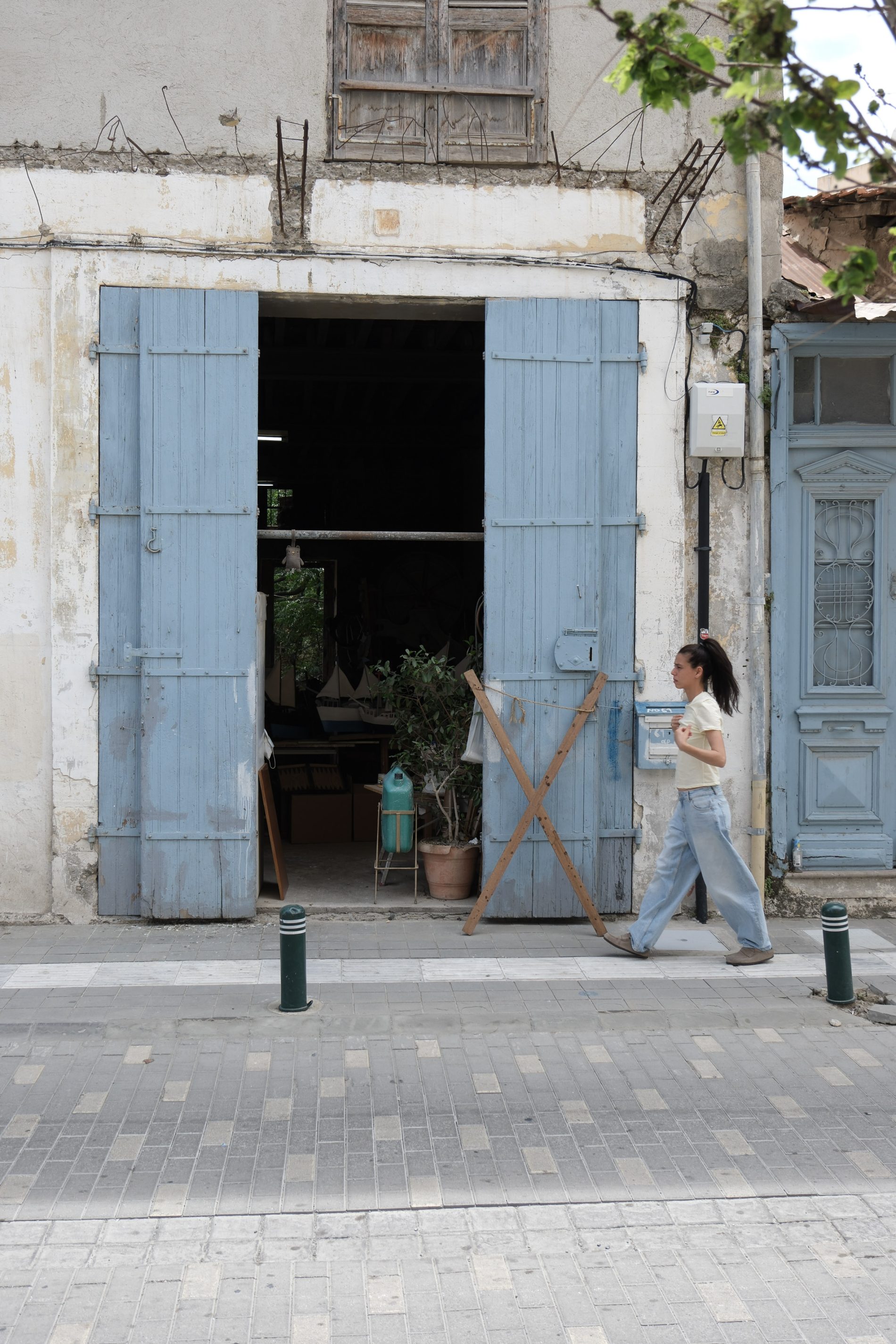
From there I just wandered, with no real route, letting the old town’s narrow streets decide where I went next. In the shadow of the towering 9th-century Church of Saint Lazarus, where the remains of a once-resurrected man lay, the local cats lounge and snooze with no real sign of revival.
The street corners and alleyways all seem slightly more alive, with gaggles of old men gathered beside cafes, and Larnaca’s locals going about their everyday life, but still more at ease than the busy resort towns that I have just come from.
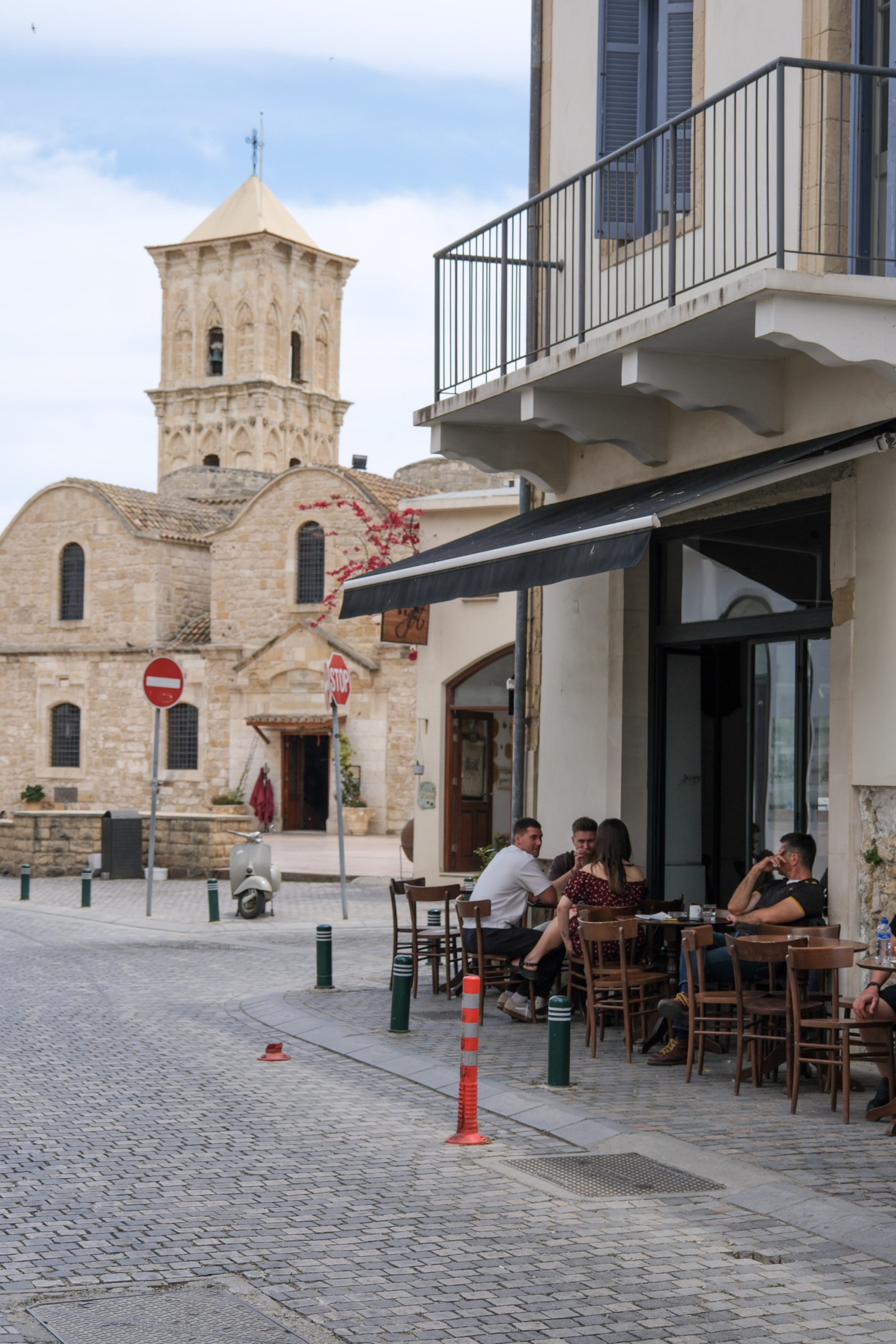
Larnaca is often treated as a bit of a stopover for people heading elsewhere in Cyprus. For many, like those occupying the planes I have just seen, it’s the place you land and the place you leave. In part, this is due to Larnaca having the nation’s busiest airport, but in other ways, it’s kind of understandable; the city doesn’t necessarily have the cosmopolitan pull of Limassol, the beaches and resorts of Protaras, or the reputation for nightlife and partying that Ayia Napa has.


However, spend a day here properly, and you’ll find a city with layers upon layers of things to offer, quite literally: Ottoman minarets sit beside Venetian forts, a marina full of retired fishing boats turned restaurants, and laundry hanging between balconies above the coffee shops on quaint lanes. Wander far enough, and the modern streets give way to older ground entirely: the buried remains of Kition, the Bronze Age city-kingdom Larnaca grew out of, still surface in excavated corners of the centre, a reminder that people have been living and trading on this stretch of coast for over three thousand years. Ayios Lazaros presides over it all from the heart of the old town, its bell tower marking the spot where, tradition holds, a man once raised from the dead came to spend the last decades of his life.

Thankfully, Larnaca doesn’t dress all of this up for the benefit of tourists, and that’s part of the appeal. Unlike some other cities and tourist resorts, Larnaca feels very much lived in. There’s no polished heritage trail and no costumed guards at the fort gates. It is simply a city going about its day-to-day life, and that’s precisely what makes time spent here feel refreshing.
Getting to Larnaca
You shouldn’t have too much trouble reaching Larnaca, particularly from the UK or any of Europe’s main transport hubs. It has the advantage of being home to the country’s main airport, and Larnaca International Airport is just a short 8 and a half kilometre drive from the city centre, which means that unlike if you’re staying in Ayia Napa or Paphos, you can be strolling the city centre within twenty minutes of collecting your luggage.
By Public Transport
The airport bus, Route 425, connects Larnaca Airport directly to the city centre and the Finikoudes waterfront. Run by the local operator Zenon (also written Zinonas), it goes from early until late (the last bus from the airport typically departs just before midnight, with the first of the morning around 6.30am, so even a late arrival or an early flight is catered for. It’s slower than a taxi, but at a fraction of the cost, and it’s a good, budget-conscious way to get into the city centre.
By Taxi
This is the easiest option, but it will obviously cost you a little more. However, especially if you’re short on time or travelling with luggage, it is the most practical choice. Taxis are available 24/7 and are located right at the arrivals hall exit, with a fare of around €20 from the airport to the city centre. Licensed taxis run on the meter, though several private transfer companies also offer fixed-price bookings if you’d rather know the cost in advance. Bolt also operates in Larnaca, and tends to be the cheapest on-demand option if you have data and the app ready to go.
By Car
If you’re just visiting Larnaca as part of a wider Cyprus itinerary, then I would highly suggest hiring a car rather than relying solely on public transport. Cars can be picked up upon landing at Larnaca Airport, and I tend to use Discover Cars for my car rental when travelling, as they allow you to book in advance and compare multiple providers for the best deal. This makes it easy to combine the day trip with excursions further along the coast.
From Elsewhere in Cyprus
If you’re based in Ayia Napa, Limassol, Nicosia, or Paphos and coming to Larnaca as a day trip, intercity buses connect the main towns, with tickets costing between €4 and €9 depending on distance. Journeys from Nicosia take around an hour, and from Limassol around ninety minutes. Timetables change throughout the year, depending on demand, so it’s worth checking evening and early morning services before committing to a plan that relies on getting the last bus back.
Getting Around
Once you’re in the city itself, Larnaca’s old town and seafront are small enough that you can easily get around on foot; The Finikoudes promenade, the fort, Ayios Lazaros church, and the Old Town in general are all within walking distance of each other. It’s really only the Salt Lake and Hala Sultan Tekke, a little further out, that will require a car or public transport.
Alternatively, Larnaca’s public bus network offers a reliable and low-cost way to get around. Routes cover the waterfront, the fort, the Salt Lake area, and the surrounding residential suburbs. Day passes cost around €5 and weekly passes around €20, and it’s worth carrying exact change or small notes since drivers don’t always carry change for larger notes.
Bicycle rental shops are also dotted throughout the city, and the flat coastal stretch along Finikoudes is ideal for an easy, scenic ride.
Where to Stay in Larnaca
If you plan on extending your stay and stopping over in the city, it’s worth knowing that Larnaca’s hotel scene is spread throughout a few neighbourhoods and where you choose to sleep can determine the sort of city break you have.
Finikoudes and the seafront is the most obvious choice, as it’s Larnaca’s most picturesque area with a curve of golden sand that’s backed by palm trees and a long promenade that runs from the fort at one end almost to the marina at the other. Hotels here put you within sight of the water and within walking distance of the Old Town, especially beneficial if you don’t have a hire car.
The Old Town can feel a little more claustrophobic, without the sea views, but it more than makes up for it with its atmosphere. You’ll find a warren of narrow streets around Ayios Lazaros, the fort, and the Skala quarter, where accommodation and boutique hotels tend to be on the smaller side, but you’re also getting all of Larnaca’s main sights within walking distance.
Mackenzie Beach, just south of the centre near the airport road, has a livelier, slightly younger energy after dark, with the added bonus of beach bars and casual restaurants along its own stretch of sand. It’s a little further from the Old Town’s sights, but still well within range for a day trip, and it tends to offer better value if you want a beachfront stay without venturing to Ayia Napa or Protaris.
Lokal Boutique Hotel
A small, design-forward hotel tucked just steps from both the Old Town and the sea, built around a distinctive rooftop hot tub pool that’s become something of a signature feature. Rooms are compact but stylishly finished, and the location puts you within easy walking distance of Ayios Lazaros, the fort, and the Skala quarter
The Ciao Stelio Deluxe Hotel
An adults-only boutique property directly on the beach, built around a sleek, monochrome design aesthetic that sets it apart from Larnaca’s more traditional seafront hotels. Rooms come with sea or mountain-view balconies, and the smaller scale means a more personal stay than the bigger resort properties nearby.
Mercure Larnaca Finikoudes Beach
A dependable, mid-range choice sitting directly on the Finikoudes promenade, with private balconies overlooking the sea or the city and the beach essentially on the doorstep. It’s part of a recognisable international chain, which means consistent standards without a high price tag.
Qbic City Hotel
A compact, stylish hotel that is in an ideal location, favouring bright, modern, no-fuss rooms over resort extras. Its well-regarded breakfast and central position make it a practical choice for a city break.
The Best Things to Do in Larnaca
There’s a surprising amount to see and do in Larnaca, and it can be a tight squeeze if you’re only here on a day trip. Its sights span thousands of years, and many of them are in a single walkable area: from an ancient city-kingdom buried beneath modern streets and a Byzantine church built over a saint’s tomb, to an Ottoman fort turned prison, turned museum. Alongside the history, you’ll find a wetland that draws flamingos by the thousand and a handful of hands-on experiences that let you take a piece of the culture home with you.
Larnaca Fort and the Old Town
Sitting at the far end of the Finikoudes promenade, Larnaca Fort has been through a few upheavals over the centuries. Although its origins are still contested (one account credits the Lusignan king James I with building it in the late 14th century to defend the harbour, on the site of an earlier Byzantine stronghold, while other sources point to a Turkish rebuilding around 1625, a date still recorded on a plaque above the entrance), what’s clearer is that the fort as it stands today is largely an Ottoman-era structure, with a two-storey northern wing built in a style confirmed by an inscription over the doorway, layered onto older Venetian and medieval foundations to the east and south.

After Ottoman rule ended, the British converted it into a prison, using one of its ground-floor chambers for executions, and the gallows installed there remained in use until as late as 1948. During the Second World War, it took on yet another role, becoming a fortified lookout and anti-aircraft position defending Larnaca’s coastline. It was only after Cypriot independence in 1960 that the fort was finally handed over for peaceful use, becoming the museum it is today.


That museum, officially the Larnaca Medieval Museum, occupies three or four rooms on the upper floor, and is a genuinely worthwhile stop if you want to delve deeper into the city’s history, as it traces fifteen centuries through Early Christian artefacts, Byzantine wall-painting photographs, Venetian arms, and glazed medieval pottery made using the same sgraffito technique still practised in the city’s ceramics studios today. Make sure to head up to the ramparts themselves for a view over the bay and the whole city.
From the fort, make your way through the knot of narrow streets, low stone houses, and small squares that make up the Old Town and are perfect for wandering aimlessly. Plan for perhaps half an hour at the fort itself, then let the old town’s backstreets take up the rest of your morning.
Church of Saint Lazarus
According to Orthodox Christian tradition, Lazarus of Bethany was raised from the dead by Jesus, and by then, as the story goes, fled Judea under threat and sailed to Cyprus, where the apostles Paul and Barnabas ordained him as the first Bishop of Kition, the ancient city on whose ruins Larnaca now stands. He is said to have lived out his remaining thirty years here, dying a second and final time and being buried in the city he’d come to lead.
The exact location of his tomb was lost during the Arab raids that swept Cyprus from 649 AD onward, and it stayed lost for over two centuries. Then, in 890 AD, a marble tomb was uncovered bearing the inscription ‘Lazarus, four days dead, friend of Christ’. Byzantine Emperor Leo VI ordered a church to be built over the site to mark the discovery, which was completed in the late 9th or early 10th century; this is the building that you see today.


As something of a consolation for the honour, Leo also had Lazarus’s relics transferred to Constantinople in 898; they were later looted during the Fourth Crusade in the early 13th century, carried off to Marseille, and eventually lost to history, leaving Larnaca with the tomb but not, in the end, the remains.
Remains or no remains, the church itself is still worth visiting. It’s one of the finest surviving examples of Byzantine architecture in Cyprus, consisting of an elongated limestone basilica, its central nave topped with domes that were largely destroyed in the early years of Ottoman rule and only partially rebuilt. Its standout feature today has to be the ornate, gold-plated iconostasis, carved between 1773 and 1782 by the craftsman Chatzisavvas Taliadorou and gilded over the following decade, which is a genuine masterpiece of Baroque woodcarving housing icons painted, in part, as late as 1797. Beneath the sanctuary, a narrow staircase descends into the crypt itself, where the saint’s reputed sarcophagus can still be seen alongside other tombs cut into the rock. Directly across the courtyard, the Byzantine Museum adds some context on the church’s long and storied history for anyone who wants to dig a little deeper.
The Turkish Cypriot Quarter (Skala)
Just inland from the marina, Skala is Larnaca’s oldest neighbourhood (its name comes from the Greek word for ‘steps’ or ‘landing’, which is a reference to the coastal spot where boats once moored. In the Middle Ages it was known as Les Salines de Saint Ladre, after the nearby salt lake and Saint Lazarus, before being largely destroyed by the Mamelukes in 1425.


There isn’t a great deal to see here, but it is worth a wander to take in another aspect of the city’s history. The district as it is today took shape during the Ottoman period, when it developed as a distinct Turkish Cypriot quarter of narrow lanes and low stone houses, separate from Larnaca proper until the population growth of the late nineteenth century gradually joined the two.

Skala remained a predominantly Turkish Cypriot neighbourhood of fishermen, craftsmen, and traders for generations, but that changed after the conflict of 1974, when most of its Turkish Cypriot residents relocated to the north, many of them settling in a town later renamed Iskele in the quarter’s memory. The houses they left were taken over by the Republic of Cyprus’s Interior Ministry and largely resettled by Greek Cypriot refugees displaced from the north, giving the area its present-day mix of communities. The fascinating history can still be seen in the architecture and street names even as the neighbourhood has changed, and while some buildings have fallen into a state of disrepair, many of the houses have been restored and are home to small tavernas, artisan workshops, and art studios, making it a worthwhile place to explore on foot.
Hala Sultan Tekke
On the western shore of the Salt Lake sits a mosque considered one of the holiest sites in Islam outside the Middle East, built in the place where tradition claims that the Prophet Muhammad’s aunt was buried. Its palm trees, whitewashed dome, and lakeside setting make it one of the most photographed spots in the city, and it’s every bit as striking to visitors, whether you are religious or not.
Take a pottery class at Studio Ceramics
If you’ve visited any of Cyprus’ museums or archaeological sites, you’ll be aware that the Island’s relationship with clay and ceramics runs deeper than almost anywhere else in the Mediterranean. Pottery on the island stretches back to the Neolithic period, and by the Bronze Age Cypriot potters had developed techniques and styles so distinctive that their work became a sought-after export across the eastern Mediterranean, traded alongside the island’s famous copper.


Cypriot craftsmen continued hand-building many of their finest pieces, and later periods brought their own signatures, such as the striking Bichrome and White Painted wares of the Iron Age, and, after Frankish rule took hold in the medieval period, the island’s first glazed pottery, worked using the sgraffito technique still practised by potters here today. It’s a tradition that never really stopped: Larnaca and the surrounding region remain home to a small but active community of working ceramicists.


Studio Ceramics, run by potter Efthymios Symeou in the Piale Pasa district near the fort, is a living embodiment of that heritage. The studio produces contemporary handmade stoneware alongside close-copy replicas of ancient and medieval Cypriot pottery, made in collaboration with local museums and using traditional techniques like sgraffito glazing.


Beyond browsing (and buying) the beautiful, finished pieces, we booked a hands-on lesson with Efthymios himself, who, thankfully, was incredibly patient and good-humoured despite my complete lack of pottery talent. In our hour-long session, he guided us through shaping our mass of clay into whatever we wanted – in my case, a mug that looked like the work of an enthusiastic 5-year-old that I’m certain is incapable of holding liquid of any kind – that was then fired by Efthymios so that it is ready to be collected or shipped. It made for a lovely, if somewhat wobbly, piece of Cyprus for me to take home and gave me a greater appreciation for the craft and skill involved.
Pierides Museum
Housed in a handsome old family mansion near Europe Square, the Pierides Museum holds one of the most important private archaeological collections in Cyprus, where you can browse thousands of years of pottery, sculpture, and everyday objects assembled by the Pierides family to preserve the island’s heritage. It’s a small museum, but a worthy stop if you’re already in the Old Town.
Archaeological Site of Kition
Larnaca’s modern streets sit directly on top of Kition, the ancient city-kingdom from which it grew. The excavated site, founded by the Mycenaeans in the 13th century BC and later home to Phoenician settlers, includes the remains of the Temple of Astarte and sections of the old city walls. It’s a good reminder that Larnaca’s history runs back even further than its Byzantine churches and Ottoman quarters.
Take a Brandy Sour Cocktail Making Class at Sunmoon Creatives
No trip to Cyprus is complete without indulging in a brandy sour, a cocktail so loved here that it is considered by many to be the Island’s national drink.


The cocktail traces back to the Forest Park Hotel in the mountain village of Platres in the late 1940s, where a regular royal guest, King Farouk of Egypt, had developed a taste for Cypriot brandy but, as a Muslim monarch, preferred to keep his drinking discreet. According to local legend, he asked the hotel’s barman, Stelios Sourmelis, to create something that looked like iced tea but delivered more of a kick. Mixing local brandy, lemon cordial, a dash of Angostura bitters, and a top of soda water, poured over ice in a tall glass, the brandy sour was born. It did the trick so well it spread from the mountain resorts down to Nicosia, Limassol, and the coast, to the extent that it’s now sipped everywhere.
The cocktail traces back to the Forest Park Hotel in the mountain village of Platres in the late 1940s, where a regular royal guest, King Farouk of Egypt, had developed a taste for Cypriot brandy but, as a Muslim monarch, preferred to keep his drinking discreet. According to local legend, he asked the hotel’s barman, Stelios Sourmelis, to create something that looked like iced tea but delivered more of a kick. Mixing local brandy, lemon cordial, a dash of Angostura bitters, and a top of soda water, poured over ice in a tall glass, the brandy sour was born. It did the trick so well it spread from the mountain resorts down to Nicosia, Limassol, and the coast, to the extent that it’s now sipped everywhere.


The cocktail traces back to the Forest Park Hotel in the mountain village of Platres in the late 1940s, where a regular royal guest, King Farouk of Egypt, had developed a taste for Cypriot brandy but, as a Muslim monarch, preferred to keep his drinking discreet. According to local legend, he asked the hotel’s barman, Stelios Sourmelis, to create something that looked like iced tea but delivered more of a kick. Mixing local brandy, lemon cordial, a dash of Angostura bitters, and a top of soda water, poured over ice in a tall glass, the brandy sour was born. It did the trick so well it spread from the mountain resorts down to Nicosia, Limassol, and the coast, to the extent that it’s now sipped everywhere.
I had the pleasure of heading to Sunmoon Creative Space, where I was offered a proper, hands-on introduction. Tucked away in a converted space in the heart of the Old Town, just a few minutes’ walk from Ayios Lazaros church, this small, informal creative space is effortlessly cool, decked out in gig posters and an industrial chic style. One evening per week, it operates as a bar serving creative drinks and a fantastic range of local craft beers, while the rest of the time, they host classes and workshops.


The cocktail-making class a local bartender who talks you through the basics of mixology before setting you loose to make your own drinks. Over the few hours that we were there, we picked up tips on flavour-building and fermentation, sipped our own concoctions and learned all about the Cypriot spirit Zivania, even sampling some of the owner’s own produce.
Larnaca Salt Lake
Just outside the city, to the southwest of the city, four interconnected lakes form Larnaca’s Salt Lake, a Ramsar-listed wetland that was once a working harbour for the ancient city of Kition, and later a source of one of Cyprus’s most valuable exports, salt that was shipped as far as Venice until harvesting finally ended in 1986.
Today it’s known for its wildlife. Between November and March, thousands of flamingos descend to feed on the brine shrimp that give the lake its seasonal pink colour, drawing birdwatchers to the three-kilometre trail that rings around its edge. Visit in summer instead and the water’s gone entirely, leaving a cracked, shimmering salt flat that’s an eerie, beautiful sight in its own right. It’s free to enter, open year-round, and easily combined with a stop at Hala Sultan Tekke on the western shore.
Larnaca Municipal Market
For a slice of everyday city life, the municipal market and the surrounding streets around Zenonos are worth a short detour. When I visited, at least, it felt a little more modern and less bustling than markets you will find in other cities. However, it’s a really good place to pick up fresh produce, local cheeses, Cypriot snacks, or a souvenir to take home.
Beyond the City Centre
If you have extra time, Larnaca is also a great base for reaching further-flung sights such as Kamares Aqueduct, an 18th-century Ottoman structure just outside town; the Tree of Life and Larnaca’s small Natural History Museum for a quieter afternoon; If you’re into diving, the Zenobia, regularly ranked among the world’s best wreck dives, is just off the coast.
Where to Eat & Drink in Larnaca
One thing that is good about Larnaca’s food & drink scene is that it is more subdued than some of the neighbouring resorts. There isn’t a strip of competing beach bars or laminated picture menus that you may find in Ayia Napa; instead, eating and drinking here is woven into its neighbourhoods, and getting a feel for where to look is part of the fun.
The fishing harbour and Piale Pasa area, just south of the marina, is where you’ll find Larnaca’s more traditional seafood tavernas, many of them within sight of the boats that bring in the fish you’re eating. Generally, they’re unpretentious, unfussy, and the kind of place that you’ll find plastic tablecloths rather than anything fancy. This doesn’t mean they’re bad; the fact that they’re loud, busy, and built around the fish meze is enough to know that you’ll find some of the best seafood in the city here. Sit back and accept a rolling procession of small plates that can easily run to eight or ten courses if you let it.
The Old Town and Skala, radiating out from Ayios Lazaros church, have a more varied mix of restaurants and cuisine. You’ll find small bakeries turning out Lebanese flatbreads and pastries, no-frills souvlaki grills with queues around the corner each lunchtime, and a growing scene of speciality coffee shops and craft cocktail bars in restored stone buildings and old khans. This is where Larnaca’s food culture feels freshest, blending old-style Cypriot cooking with a newer wave of small, independent, quality-focused spots.
Finikoudes Promenade and the marina, meanwhile, are the city’s more established areas and cater mostly to tourists. It’s palm-lined and offers sea views, meaning that dining here is aimed as much at a relaxed evening drink as it is at a full sit-down meal. The ideal place for a sundowner.
Zephyros Restaurant
Where: Piale Pasa 37, Larnaca, Larnaka 6027, Cyprus
When: Daily 11.30am – 10.30pm
Set within Larnaca’s fishing harbour in the Piale Pasa district, Zephyros has been a fixture of the local dining scene since 1976, and it wears that history comfortably. It’s relatively basic, and there’s little in the way of decor or ambient music, but the room can get genuinely loud and chaotic when it’s full, which is often.

None of that seems to matter. The fish meze is the reason people come and keep coming back. We experienced a long, generous run of dishes built around whatever’s freshest that day, from crisp whitebait and grilled octopus to sea bream and swordfish cooked simply over charcoal with little more than olive oil, lemon, and salt. Portions are large enough that ordering meze for fewer people than intended is a genuine risk, and the pace is brisk, with a small army of waiters keeping tables turning even at the busiest hour.
Stou Rousha Taverna
Where: Nikolaou Laniti, Larnaca, Larnaka 6022, Cyprus
When: Monday to Friday 1pm – 11pm; Saturday 1pm – 5pm & 7pm – 11pm; Sunday 7pm – 10pm
Tucked into a quiet street near the Town Hall, away from the tourist-facing seafront, Stou Rousha is the kind of taverna people point to when they’re asked where locals actually eat. The setting is a leafy, informal courtyard and far from polished, but the simple food more than makes up for it: generous, unfussy meze built around charcoal-grilled meats. It’s a good counterpoint to the seafood-heavy meals served down by the harbour.
Militzis
Where: Piale Pasa 42, Larnaca, Larnaka 6026, Cyprus
When: Daily 12.15am – 11.30pm
This is something of a Larnaca institution in its own right, and Militzis is best known for one dish above all others: sheftalia, Cyprus’s distinctive pork sausage, wrapped in caul fat and grilled over charcoal until the outside crisps and the fat renders through the meat. It’s simple, smoky, deeply satisfying food, usually served alongside pitta, salad, and a scoop of tzatziki, and it usually draws a local crowd rather than tourists. Having said that, if you’re visiting the city, it’s worth seeking out this place specifically for the sheftalia.
Art Café 1900
Where: Stasinou 6, Larnaca, Larnaka 6023, Cyprus
When: Wednesday to Monday 6pm – 2am
Tucked into a side street in the heart of town, Art Café 1900 pairs a two-storey bar-and-restaurant layout with a strong vintage aesthetic, where antique furnishings, old photographs, with a sense of stepping back in time to a century or so that make it so atmospheric. Beyond the food, they have a decent beer list, making it a good option for an evening with more atmosphere than the average taverna, whether you’re after a full meal or just settling in for a few drinks somewhere with real character.
Paul's Coffee Roasters
Where: Armenian Church Street 35A, street, Larnaka 6022, Cyprus
When: Daily 8am – 6.30pm
A specialty coffee shop and in-house roastery in the heart of the Old Town, Paul’s has built a loyal following among locals, with beans roasted on-site and a menu that goes well beyond the standard Cypriot frappé. The staff are genuinely knowledgeable about their beans and are happy to talk you through options if you’re not sure what to order. Plus, the café’s setting inside the old town’s narrow streets makes it an easy, natural stop between the fort and Ayios Lazaros.
Nick's Coffee Bike
Where: Grigori Afxentiou 25, Larnaca, Larnaka 6021, Cyprus
When: Monday to Thursday 7.30am – 2pm; Friday 7.30am – 2.30pm; Saturday 8.30am – 2pm
A specialty coffee shop and in-house roastery in the heart of the Old Town, Paul’s has built a loyal following among locals, with beans roasted on-site and a menu that goes well beyond the standard Cypriot frappé. The staff are genuinely knowledgeable about their coffee and are happy to talk you through options if you’re not sure what to order. Plus, the café’s setting inside the old town’s narrow streets makes it an easy, natural stop between the fort and Ayios Lazaros.
Bardo Specialty Coffee
Where: Constantinou Kalogera 72, Larnaca, Larnaka 6021, Cyprus
When: Monday to Saturday 8am – 2pm; Sunday 9am – 1pm
One of Larnaca’s newer arrivals, Bardo occupies a restored stone building given a minimal, contemporary fit-out, and positions itself as much as a community gathering spot as a straightforward café. I popped in on a whim between my cocktail-making class at Sunmoon, and found it to be incredibly friendly and welcoming.


The espresso-based menu covers the usual flat whites and cold brews alongside more distinctive options like an Italian matcha latte and lavender lemonade, and the small kitchen turns out handmade cookies, brownies, and beautiful pastries, making it as suited to a light brunch as a mid-afternoon coffee stop. There’s a really lovely garden out back if you want to sip your coffee alfresco.
The Brewery
Where: Athenon 77, Larnaca, Larnaka 6022, Cyprus
When: Daily 8am – 12am
An all-day pub and restaurant right on the Finikoudes promenade, The Brewery has been a fixture on Larnaca’s seafront for close to two decades, serving its own beers alongside a broad all-day menu that runs from breakfast and brunch through to burgers, grilled dishes, and a genuinely strong showing of vegan and vegetarian options.
I would recommend ordering a litre of one of the house beers; it arrives in a tall glass tube for you to decant yourself, which is a quirky touch if you’re out drinking with friends. The real draw is the setting, situated as it is on the promenade with the sea a few steps away, which makes it ideal for sipping a beer while people-watching, though it’s worth noting that the atmosphere leans more towards that of a laid-back seafront pub than a serious craft-beer destination.
The Brewing Hand
Where: Spyrou Kyprianou 24, Larnaca, Cyprus
When: Tuesday to Sunday 9am – 2am
I’m always on the lookout for local breweries when travelling and, despite Cyprus having a few fantastic microbreweries dotted around the island, they are few and far between. In Larnaca, The Brewing Hand is the closest you’ll come to a dedicated taproom.
It’s a multi-concept space on Spyrou Kyprianou street that combines a fantastic beer selection (typically around nine rotating taps alongside a well-stocked fridge of bottles and cans) with speciality coffee, a menu of street food and sharing platters, and even an in-house barbershop and workspace area. It’s the kind of all-day, multi-purpose space that’s become increasingly common in Cyprus’s larger towns or cities.
For a deeper dive into the Country’s food and drink scene, including everything you should be eating while on the island, see my full guide to 25 dishes you must try in Cyprus.
Practical Tips for Visiting Larnaca
A few common questions worth answering before you set off, covering timing, cost, and how to fit everything else in this guide into a single day.
Is one day enough for Larnaca?
One day is more than enough to see all of the city’s major sites such as the Salt Lake, Old Town, fort, and Finikoudes promenade in one day. However, if you want to do everything at a relaxed pace and soak up the atmosphere while squeezing in one of the hands-on experiences mentioned here, either a pottery lesson or a cocktail workshop, it’s worth allowing for an overnight stay.
What's the best time of year to visit?
Spring (April–May) and autumn (September–October) offer the most comfortable weather for walking the Old Town and the Salt Lake trail, without the peak summer heat. Visit between November and March if seeing the flamingos is a priority, since they’re absent for the rest of the year.
Is Larnaca Expensive?
Larnaca is generally affordable by Mediterranean standards. Most museums and archaeological sites charge only a few euros for entry, the Salt Lake and Old Town wandering are free, and a sit-down meal at a taverna typically runs to €15–€25 per person, even for a full meze dinner. Public transport is inexpensive, with bus fares in the €1.50–€2 range and day passes around €5.
Do I need to book anything in advance?
Not for most of the sights in this guide. The fort, church, and museums can all be visited without pre-booking. It’s worth reserving ahead for popular restaurants like in peak season, and for the pottery or cocktail workshops if you want a guaranteed slot on a specific day.