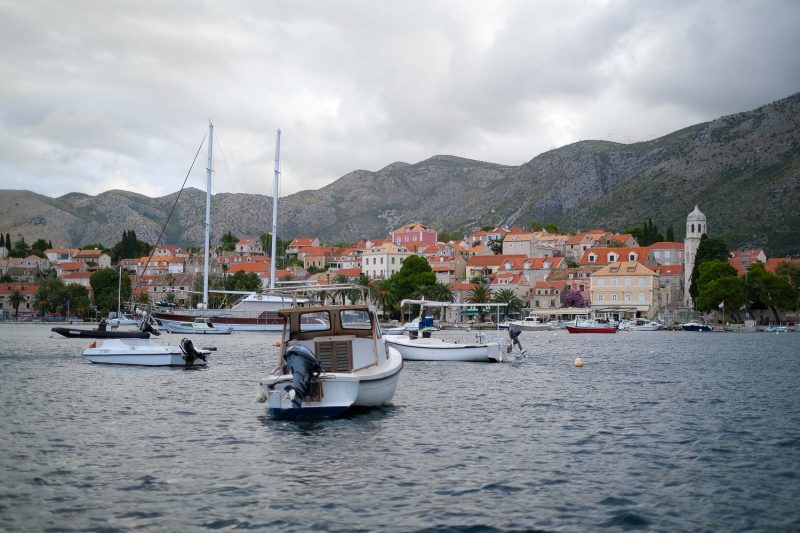
As our catamaran slows and rounds the headland, Jelsa gradually appears.I sit at the bow, salt covered and sun-kissed, feeling that almost unique joy of arriving somewhere by sea as the day begins to end; the light going amber, the shadows lengthening across the water, land finally being in sight and the prospect of firm ground steading my sea-weary legs.
The town curves around the water in a horseshoe of pale Dalmatian stone, its buildings stepping gently upwards from the harbour front: terracotta rooftiles, cypress trees darken the hillside in a deep green, and the tower of the old parish church rises above the roofline, dominating the scene has it has been doing since the 13th century. I expect that it will for several centuries more. Pine forests frame the headlands on either side. The bay itself shimmers like pale glass.

The boat noses into the harbour and cuts its engines. I step across the gangway and I’m already, immediately, in the heart of Jelsa. From our mooring, the riva stretches away to either side, the smell of jasmine blends with that of salt and the sound of someone’s dinner being prepared in a kitchen somewhere above rings out.
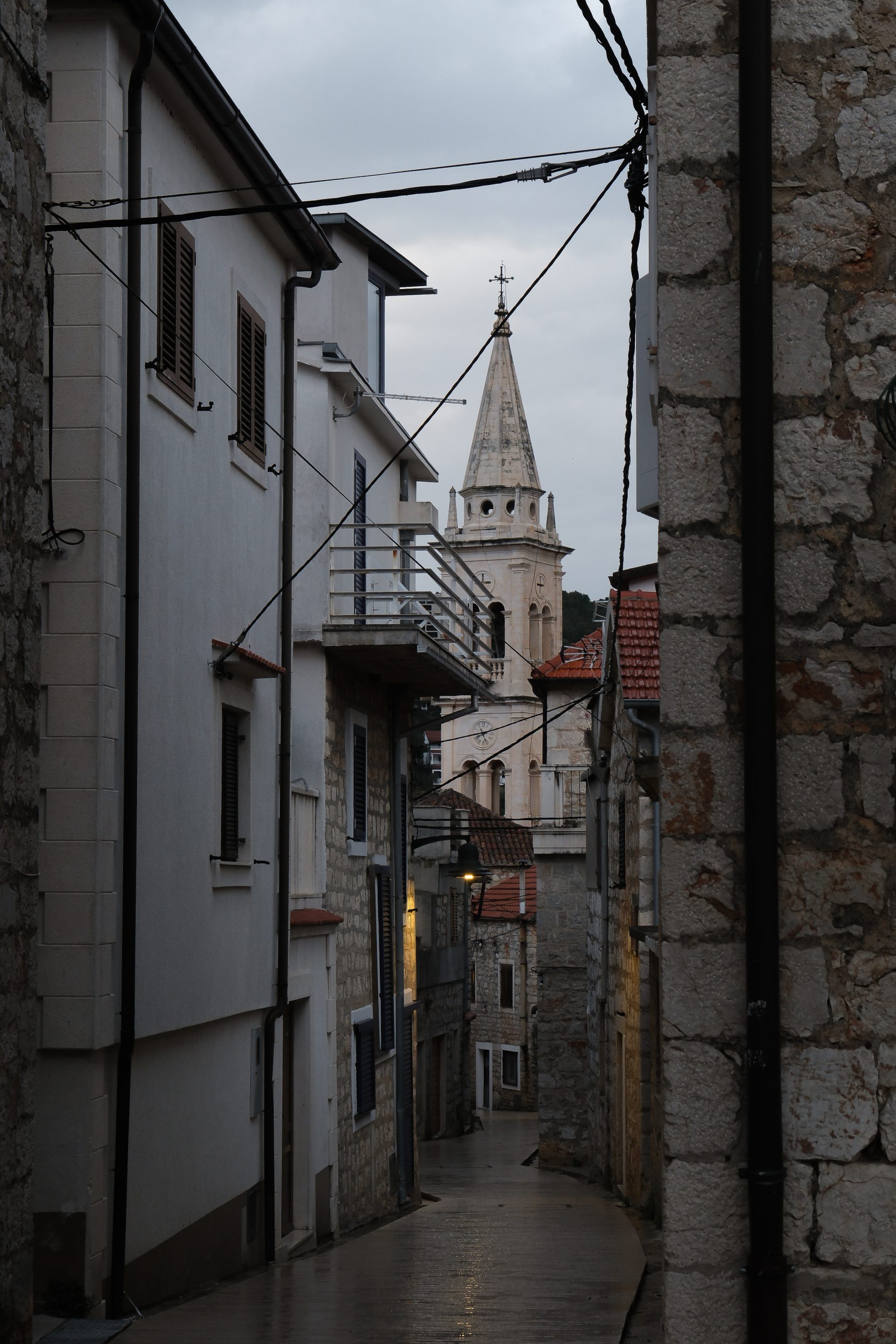
Leaving everything on the boat, I walk. This is, it turns out, the only correct way to experience Jelsa. The old town’s stone backstreets are narrow enough that you can reach out and touch both walls simultaneously, and they twist and climb in the particular way of streets that were not designed to go anywhere in specific, instead, the town grew, over centuries, according to the logic of wherever people needed to build next. Jelsa was founded in the 14th century as a port for the inland village of Pitve, and you can still feel that original use in the bones of the place: a working town and harbour first, incidentally so beautiful, that it found itself welcoming tourists and visitors as the 20th century wore on, although it has never quite got around to reordering itself for the convenience of guests.
The town’s old name was Civitas Vetus Ielsae, and the name Jelsa itself first appeared in the Hvar Statute of 1331, a reference to the alder trees, jalša in Croatian, that once grew in the swampland near the harbour. The swamp is long gone, drained in the 19th century and replaced with the Perivoj gardens, but the name lives on, long after the thing they originally described has vanished. It’s fitting, really, as this is a town that manages to preserve its past without particularly making a fuss about it.
That evening, as the sun gradually fades, I decide on a whim and with a rough sense of direction, to walk east along the harbour front and out towards Gradina. It’s a headland whose name, in Croatian, simply means fort. The path is easy enough, skirting the edge of the marina and then climbing gently through scrub and rosemary towards the promontory’s tip. I had not gone looking for history. History found me anyway.


This headland, still scattered with remnants of strong fortified walls stretching from one side of the peninsula to the other, belongs to a fortress covering more than six and a half hectares, with walls whose guards’ openings are still visible in the stone. Between 1605 and 1787, an Augustinian monastery stood here, of which only the church with its bell tower from 1605 has survived, the order having ceased to function in Jelsa in the 18th century, the monastery dissipating slowly and without ceremony.
Today, there sits is a cemetery, and it is one of the more remarkable places in the town; flowering trees standing in rows among ornate graves, most of them topped with freshly laid flowers and flickering with candles of remembrance that are seemingly lit daily. Not to be too morbid, but I can’t really picture a more picturesque place to be laid to rest, the Adriatic visible through the gaps between stones, and the whole place feeling serene and embodying the stillness of a place that has been, in various forms, consecrated ground for seven centuries.

I wandered among the tombs reading names and dates, making no sense of the Croatian inscriptions beyond the years. The oldest stones were worn smooth, their inscriptions retreating back into the rock. Then the sky, which had been threatening since mid-morning, made good on its promise. The rain came suddenly and with gusto, in the kind of Adriatic downpour that arrives without warning and departs whenever it chooses. I duck under the broad canopy of a tree at the edge of the promontory and wait it out. The rain came down through the branches in fat, irregular drops. The sky turned dark and the sea below echoed this sentiment with its own blackness.
Both the headland and the fortress above the town are thought to have been founded at roughly the same time, probably during the reign of the Roman Emperor Justinian in the 6th century, creating a pair of defensive positions, one by the sea and one commanding the high ground, that watched over this bay for a thousand years before the Statute of 1331 thought to write any of it down. Its real test came in 1571, during the Cyprus War, when Turkish naval forces swept through Hvar. Hvar Town and Stari Grad were destroyed and burned. Vrboska, just three kilometres along the coast, was devastated. Jelsa, sheltering behind its fortress-church and its walls, held. Standing on the headland in the rain, watching the water, I didn’t find this difficult to believe.


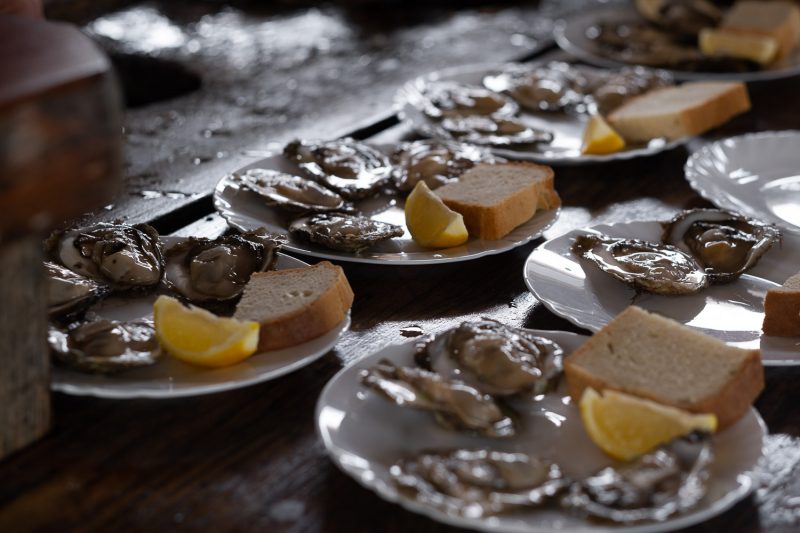
The shower ended as abruptly as it had started. I walked back along the harbour front as the evening lights began to flicker on in the waterfront restaurants and bars. The passing of rain brings a certain freshness to the humid, summer air and the long, golden light of the evening makes every sodden stone surface appear to be lit from within. Finding a table at a harbourside konoba that had the good sense to face west, I sit with a gold and frost glass of Karlovačko alongside a plate of grilled fish with olive oil and lemon and nothing else. The boats in the harbour rocking gently. The lights on their decks come on, one by one, and reflect in the water.


Like many small Croatian towns, these small pleasures are what make Jelsa so appealing. They are places were nothing, and everything, happens. It is calm, peaceful and as patient as its own historic buildings. Even in one short evening, you find by the time the second glass of beer or wine is poured, that you are already, without quite having decided to be, entirely won over by the place.
Getting There
As you probably already know, Jelsa sits on an island, which means getting here requires crossing water. However, this is all part of the adventure.
Flying to Split
The gateway to Jelsa, and to the whole of Hvar, is Split. The average flight time from the UK is around two and a half hours, with easyJet, British Airways, and Wizz Air all operating direct services from London. For those travelling from beyond the capital, easyJet also flies direct to Split from Bristol, Glasgow, and Manchester, and Jet2 and TUI serve the route from a wider range of regional airports across the UK. Split Airport sits approximately 24 kilometres west of the city centre, with shuttle buses connecting to Split’s main bus terminal. Taxis are available for a faster transfer but will set you back a few more euros. Allow an hour to reach the ferry port comfortably from the airport.
By Catamaran (Foot Passengers)
For those travelling without a car, is often the wiser choice for Jelsa, the catamaran is the straightforward option. Jadrolinija operates a daily, year-round catamaran service from Split to Jelsa, stopping at Bol on the island of Brač along the way, taking around one hour and thirty minutes in total. A second service is operated by Krilo (Kapetan Luka), runs in high season with two departures per day each way, connecting Jelsa directly to Split via Bol.
In peak season, the departure from Split is at 12:15, arriving in Jelsa at 13:55. This is ideal for a relaxed afternoon arrival after a morning in the city. Adult one-way tickets cost around €25; children aged 3–12 pay half price, and under 3s travel free. Book in advance in July and August, when services fill quickly. Tickets are available through FerryHopper, the Jadrolinija website, or at the ticket booths along Split’s port. Timings are subject to change, so don;t take my word for it and make sure to check timetables before you travel.
The catamaran docks directly in Jelsa’s harbour, so onward transfer is needed. Just step off the boat, and you’re already in the middle of the town.
By Car Ferry
Bringing a car to Hvar is possible, but it does require a little more planning. There is no direct car ferry from Split to Jelsa, meaning you need Jadrolinija car ferry to Stari Grad on Hvar’s north coast, then drive the 14 kilometres east along the island road. The Split to Stari Grad car ferry takes roughly two hours and runs several times a day, year-round.
In peak summer, car spaces on the ferry sell out. Make sure you book as far ahead as possible, and arrive at the port with time to spare. Vehicle queues at Croatian ports can be checked in real time on the Croatian Motoring Association (HAK) website, which can help you decide when to head to the dock.
Note: There are only three petrol stations on the entire island of Hvar, with none between Sućuraj and Jelsa, so fill up on the mainland before you cross if you need to.
Getting Around
Once in Jelsa, the old town itself is entirely walkable. However, for reaching beaches beyond the centre, neighbouring villages, or the hillside vineyards, some additional transport really helps.
By Scooter or Car
Even if reaching Jelsa by car can be a pain, the simplest way to Hvar Island is by car or scooter, even though you may not need wheels every day, but they open up the island considerably. Several rental agencies operate directly in and around Jelsa, including Antonio Rent Hvar, Luka Rent, and Fontana Tours, offering cars, scooters, e-bikes, and boats for hire. From Jelsa, you can reach Hvar Town by scooter in around 30 minutes, taking the newer road one way and the scenic old hilltop road back, passing through pretty villages and lavender fields that the main road bypasses entirely.
Note: parking in Jelsa’s centre costs €1.40 per hour from June to September, with a daily cap of €14.
By Bus
Buses link Hvar Town, Stari Grad, Stari Grad ferry port, Jelsa, Vrboska, and Sućuraj. It is reliable in summer but frequency drops sharply outside peak season. Ensure you check timetables on arrival, and don’t rely on the bus for early mornings or late evenings.
By Boat
No getting-around section for a Dalmatian island is complete without mentioning the sea itself. Boat hire is available directly in Jelsa, and renting a small motorboat for a day to explore the coves, islets, and hidden bays that no road will take you to is, frankly, the finest thing you can do on Hvar. The Pakleni Islands, just west of Hvar Town, are a particular highlight.
Where to Stay in Jelsa
One of Jelsa’s main selling points is that it has never been swallowed by huge, sprawling resorts. Accommodation here ranges from family-run stone apartments tucked into the old town’s backstreets to larger, beachfront complexes fringed by pine. Jelsa offers better value than Hvar Town, with a chilled harbour atmosphere while still giving good access to beaches and nearby villages.
Aminess Younique Senses Resort
Best for: couples and those wanting the resort experience of amenities on tap
Situated between Jelsa and the neighbouring village of Vrboska, the Aminess Younique Senses Resort sits beachfront, right beside the sea, set among aromatic pine trees and Mediterranean plants. It has a lush, contemporary feel that distinguishes it from more traditional hotels on the island. The property offers several dining experiences including a main restaurant with sea views, two bars, a wellness and spa area, and a pool. A water taxi service connects guests to both Jelsa and Vrboska, making it easy to explore the area without a car.
Fontana Resort
Best for: families and longer stays
Nestled in Jelsa’s terraced bay between pine at the edge of town, Fontana Resort is a relatively laid-back and intimate resort with its own beachfront and sea access, while still remaining within walking distance of local restaurants and the old town. The resort’s location is the consistent highlight, directly by the sea, with easy access to a pebbly family-friendly beach and sweeping views of the Adriatic from the pool bar and restaurant. Accommodation ranges from hotel rooms to two-bedroom suites with kitchenettes, and children are well catered for with a mini club, animators, and activities. A short, scenic ten-minute walk along the seafront brings you into Jelsa’s charming old town.
Villa Riva
Best for: couples wanting a more intimate, stylish stay
Set in Jelsa within 700 metres of Fontana Beach and less than a kilometre from Mina Beach, Villa Riva offers accommodation with a terrace, free WiFi, and free private parking, which is a rarity on Hvar. All units are air-conditioned with soundproofing, a private bathroom with walk-in shower, and some rooms feature a balcony with sea views.
Apartments & Guesthouses
Best For: independent travellers, those staying a week or more
The best way to experience Jelsa is to stay as the locals do, in a stone apartment, waking to the smell of the sea and a neighbouring fig or orange tree. Options like Apartments and Rooms Dobrila put you surrounded by nature, with simple kitchenettes that allow you to shop at the local market and cook for yourself. Guesthouses like Villa Volga offer something warmer: welcoming hosts who can point you to the best local restaurants and hidden spots that you won’t find on Google.
What to See in Jelsa
The thing about Jelsa, is that there isn’t really a great deal to do within the town itself. This could be either a good or a bad thing, depending on your travel style.The joy really comes from walking around and soaking in the atmosphere, discovering historic stone carvings here and there, enjoying the harbour light, or finding a hidden square that you almost miss because it is tucked behind a taller building and nobody has seen fit to signpost it. As you navigate through the narrow stone streets and impressive architecture, it is impossible to ignore the feeling that this is an historic place packed with centuries-old buildings, ruins, monuments and artefacts telling the story of a town that has been here for a long, long time.
The Harbour Promenade (Riva)
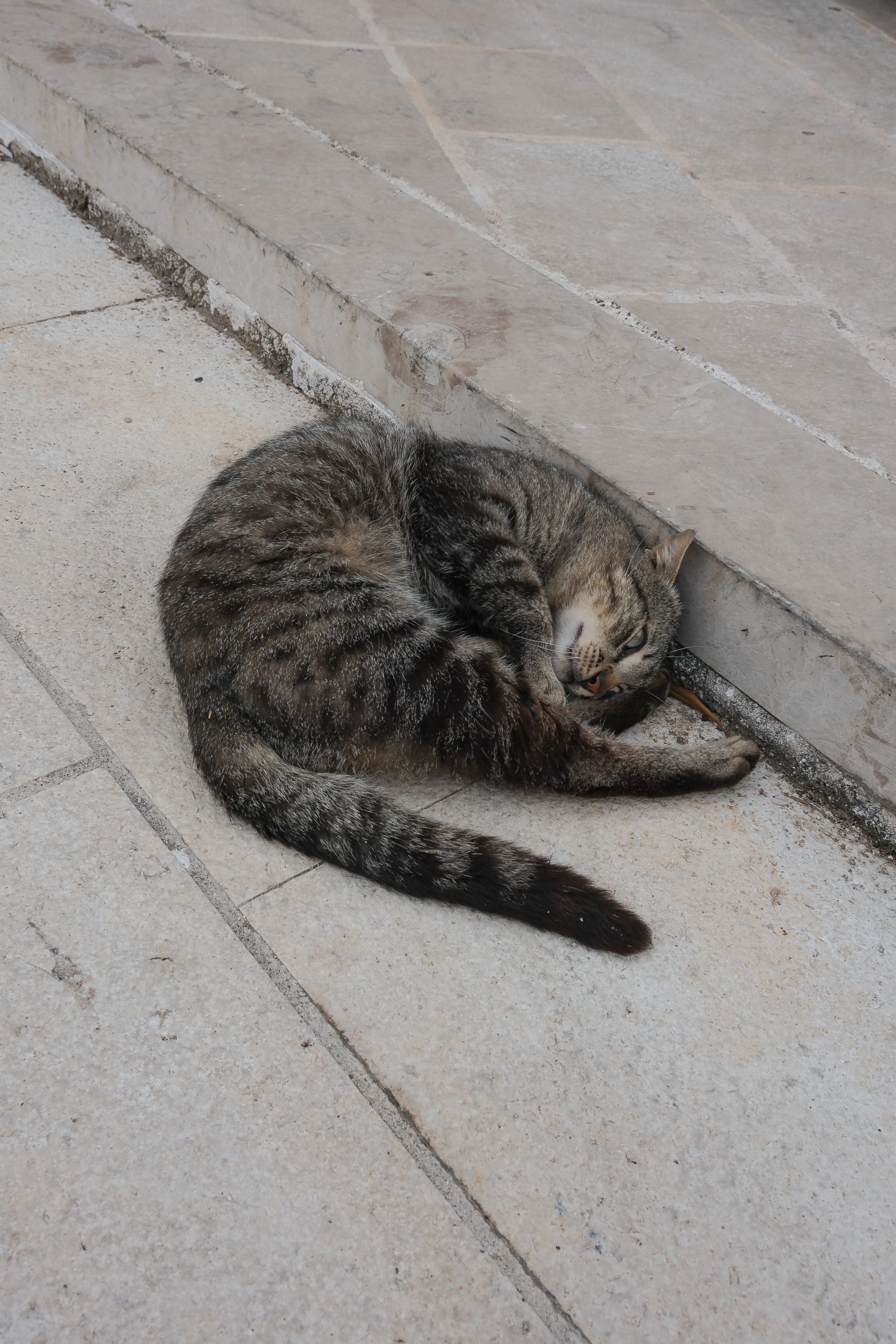
The ideal place to start any exploration of Jsla is the water’s edge, especially as this is probably your introduction to the town and where many of the locals (and local cats) congregate. The absolute highlight of Jelsa is its charming harbour promenade, a waterfront lined with old Dalmatian stone houses, intimate squares and the entrances to winding alleyways that draw. In the early morning, before the sun becomes unbearable and while the boat engines are still silent, the riva is at its best: the water perfectly still, people lounge at tables beside cafes amongst the smell of coffee and freshly baked pastries, and the entire place feels calm.
The Pjaca
A few steps back from the water lies the Pjaca, the town’s main square, which was created in stages between the 16th and 19th centuries On its western side a freshwater stream called the Slatina flows down a small channel to the sea and has been a natural spring used by local inhabitants since ancient times. Nowadays, the Pjaca is ringed by cafés, restaurants, little shops and ice cream parlours, and while it can seem touristy, sit here long enough and it becomes clear that this is fundamentally a local square that has graciously made room for visitors, not the other way around.
St John's Church & Square
In the very centre of Jelsa, not far from the Pjaca, there is a beautiful renaissance-baroque square of St John with a small baroque church surrounded by quaint houses with picturesque balconies built as far back as the 16th century. It is miniature in size, but was one of two centres around which the future settlement would develop. The square in front of the church is the most beautiful outdoor stage in Jelsa, on which cultural events such as concerts, plays, and literary evenings are held throughout the summer months.I stumbled upon it by accident, which I think is by far the best way to discover something so beautiful.

The Church of St Mary's Assumption
Much more imposing and towering over the harbour, the Parish Church of St. Fabian and Sebastian, known more commonly as St Mary’s Assumption, is Jelsa’s oldest and most impressive place of worship. It is mentioned in the Hvar Statute of 1331, and under threat of Turkish attack in 1535, the church was made into a fortress, later further fortified in 1573.

Thanks to this fortress-church, the people of Jelsa successfully defended themselves from an attack in 1571 by the Algerian beg Uluç Ali, which is a remarkable piece of history embedded in what now appears to be a modest parish church. Inside, a painting by the 17th-century Flemish artist Pietro de Coster depicts the Virgin Mary, alongside a wooden statue of Our Lady brought to Jelsa from Bosnia in 1539, and an altar triptych by the Bavarian Urban de Surge, dating from between 1636 and 1645. Entry is free; so feel free to step inside, although I couldn’t during my visit as a late evening wedding was taking place.
The Gradina Peninsula & the Augustinian Monastery
A short walk east of the harbour brings you to Gradina, a headland whose very name means ‘fort’, and which has served, in various forms, as a place of defence, worship, and finally remembrance. At the beginning of the 17th century, a church and monastery dedicated to St Augustine were built here; one of four Augustinian centres on the island of Hvar.


The order ceased to function in Jelsa in the 18th century, and the monastery fell gradually into disrepair; with the expansion of the municipal cemetery in the 20th century, much of it was absorbed into the hillside. Historians have suggested that the Gradina headland is most likely the site of the ‘Civitas Vetus Ielsae’, the Ancient Town of Jelsa mentioned in the Hvar Statute of 1331, making this quiet promontory, with its tombs and sea views, one of the oldest continuously significant sites in the town. It is only a short walk from the harbour – maybe 15 minutes at most – but the view back to the town is superb, and the cemetery’s cypress trees look beautiful against the glowing sky.
Perivoj — The Public Gardens
One of the largest and most beautiful parks in Dalmatia, the Perivoj was created in 1870 on alluvial terrain. Its large poplars, pine and palm trees, acacias and oleanders, bay laurel and other Mediterranean plants make it a genuinely beautiful place to sit and relax, as well as being a reminder that where the old alder swamp once stood, from which the town takes its very name, something green and living still grows. On summer evenings, the park gets busy as it fills with families and elderly residents on their constitutional.
Where to Eat & Drink in Jelsa
In Jelsa, as there is a great deal to do in terms of sights to see, eating can be an event in and of itself. Meal times don’t necessarily have to be something you schedule around the day, it can make up a vast chunk of the day. Mornings can be spent by the harbour with a coffee and a freshly baked pastry, while an unhurried dinner will begin at dusk and end when the last bottle is empty. In a sense, it very much follows the Mediterranean way of life, with a diet that matches, after all, this way of eating has been listed by UNESCO as an intangible cultural heritage, recognised for the care and knowledge embedded in its relationship with land and sea.
The meals here is shaped by three things: the Adriatic, which gives its fish; the stone-terraced hills above town, which give their wine; and the ancient olive groves, which give an oil of such quality that Hvar produces some of the most expensive olive oil in the world. What follows is not an exhaustive directory but a considered guide to the places worth your time, from a morning espresso by the water to an evening nightcap on the old town’s backstreets.
Cafés & Breakfast
Mornings in Jelsa seem fairly unhurried. The harbour is quiet as the sun rises and remains that way until mid morning. Gaggles of old men sit outside cafes, chatting about nothing in particular while chain smoking and cradling their cups of coffee. Cats wind their way through the alleyways and the scent of food from the town’s cafés and bakeries lingers in the air. It is all about strong coffee, fresh pastry, and the unspoken agreement that nobody needs to be anywhere just yet.
Eis Caffe Jelsa
Where: Hvar, Trg hrvatskog narodnog preporoda, 21465, Jelsa
When: Daily 6.30am – 12am
A beloved institution on Jelsa’s waterfront since 1962, Eis Caffe has the perfect combination of generous portions, excellent coffee, and homemade ice cream. It sits on a corner of the town’s main square, making it a natural place to start any morning on the island. Order an espresso, pull up a chair facing the water, and switch off.
Bakery San Antonio
Where: Jelsa 414, 21465, Jelsa
When: Daily 6.30am – 11pm
Every good town has a bakery that locals would rather you didn’t know about. In Jelsa, it’s San Antonio. It’s a simple place, but they have every kind of pastry or bread that you can imagine, freshly baked, and lined up in cabinets waiting for you. I recommend picking up a few treats and enjoying them by the water with your morning coffee. Asking the owner what she recommended, I grabbed a poppy seed cake, sour cherry strudel and a cheese pie – all of which were excellent. The various kinds of börek also came highly recommended if you want to get a taste for something a little more local.
Caffe Bar Dalmatino
Where: Vrboska b.b, 21463, Vrboska
When: Daily 6.30am – 12am
In you venture further afield on your morning walk, to nearby Vrboska, this is an ideal spot for both a morning coffee or even a relaxing evening cocktail, Dalmatino is the kind of easy, unhurried place that every small Dalmatian town does well and that visitors always end up returning to more than once.
Lunch & Casual Dining
By midday, the serious business of eating begins. Jelsa’s lunch spots range from linen-tablecloth harbourside restaurants to easy, no-fuss bistros
Bistro Obala
Where: Riva 508, 21465, Jelsa
When: Daily 7am – 12am
The undisputed anchor of eating in Jelsa. Set right by the sea with beautiful views of the bay and a relaxing atmosphere, Obala is a more refined dining spot, with linen tablecloths and immaculately presented plates, making it ideal if you want to splash out on a midday meal. A family affair, with the father serving breakfast and lunch at the ice cream bar while the sons wait tables. It is all super friendly, and most importantly of all, attentive. The fish is the thing to order and the seafood risotto runs it close. The wine list is excellent too.
Me and Mrs Jones
Where: Mala Banda 247, 21465, Jelsa
Set in the middle of the old harbour, opposite the hydroplane seaport and named after the owners’ favourite song, Me and Mrs Jones brings some creative ambition to the Jelsa dining scene. While the menu is still focussed on seafood, the restaurant brings some non-traditional twists in cooking and a little flair to the presentation.
Dinner & Konobas
As the heat softens and the harbour lights come on, Jelsa starts to shine and show its best side. The town’s konobas, traditional Dalmatian taverns, often family-run and tucked into backstreets are the places that showcase the best of traditional Dalmation cuisine.
Konoba Murvica
Where: Jelsa 373, 21465, Jelsa
When: Daily 12pm – 2pm & 6pm – 11pm
A family business run since 1990 by a German-Croatian family, located in a quiet street of the old town just 300 metres from the main square and marina, Murvica offers Dalmatian specialties in the peaceful atmosphere of a restaurant that genuinely cares what it puts on the table. Order the peka, but give them 24-hours’ notice. It is worth the planning.
Konoba Turan
Where: Jelsa 373, 21465, Jelsa
When: Daily 12pm – 2pm & 6pm – 11pm
Hidden amongst the winding, narrow streets of the old town, Konoba Turan has earned a reputation for being a place that feels genuinely local rather than tourist-facing.
Pelago
Where: Jelsa 724, 21465, Jelsa
When: Daily 5pm – 11.30pm
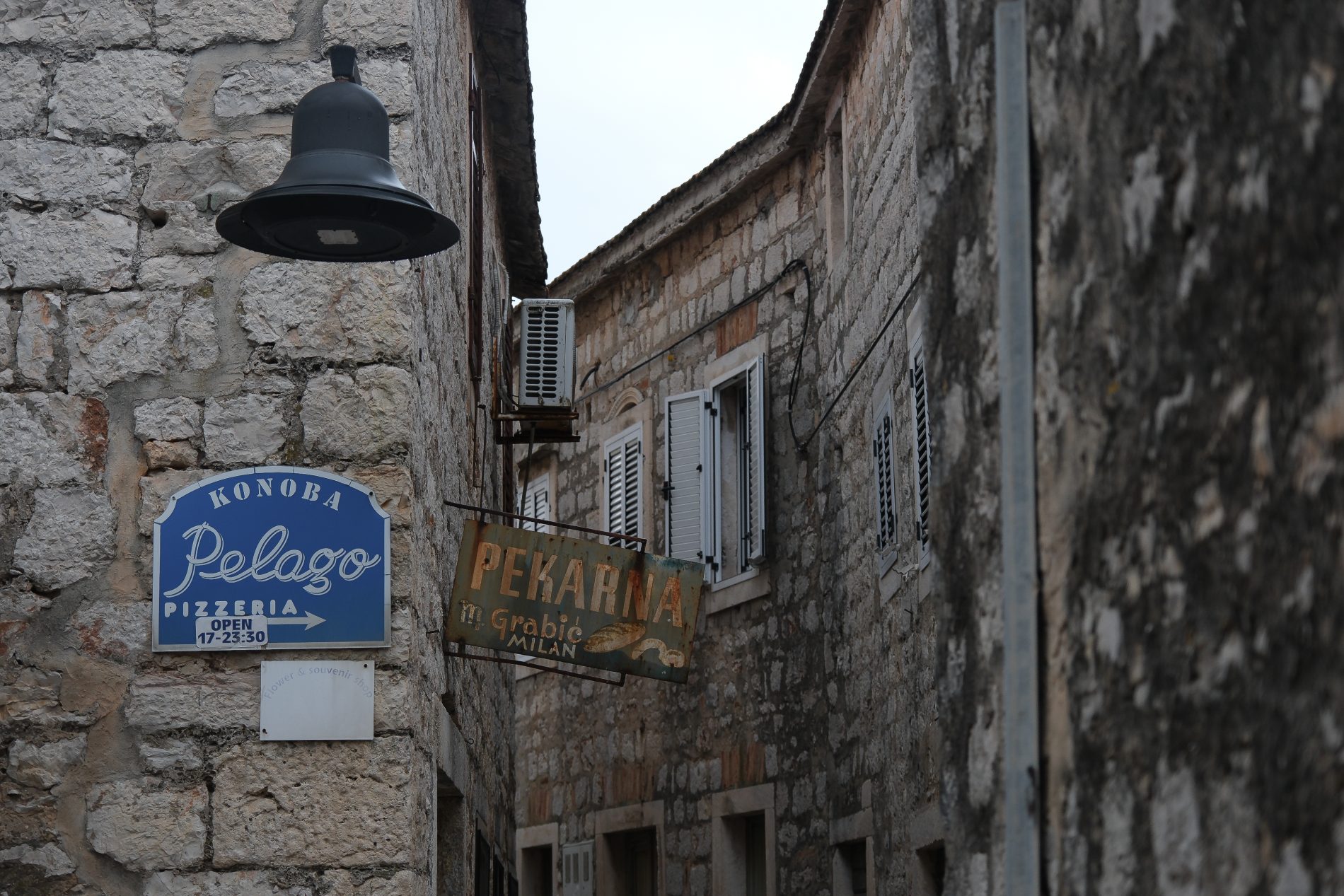
When the catch of the day isn’t calling, Pelago is Jelsa’s answer for something more casual: good pizza, fresh pasta, honest Dalmatian staples and all round comfort food. It’s popular with locals, which is always a promising sign.
Konoba Huljić
Where: Braće Batoš, 21465, Jelsa
The Huljić family has been making wine and serving food in Jelsa for six generations; the current winemaker Teo continuing the tradition through his own wine shop and restaurant, combining modern and traditional approaches in a way that feels organic rather than self-conscious. Come for the homemade wine as much as the food. Peka, smoked ham, local cheeses, and a glass of something that the family grew themselves:
La Petit Paradis
Where: Jelsa 90, 21465, Jelsa
A charming newcomer that opened in 2025, perched directly above the water at Vitarnja Beach. Chef and owner Mijo turns out honest, flavour-packed Dalmatian classics with the kind of care that suggests decades of love for what he does. It’s a 10- ten-minute walk from the town centre, and well worth the trip.
Bars & Evening Drinks
Jelsa doesn’t do nightlife in the Hvar Town sense — and that, for most who find their way here, is precisely the point. What it does do is the long, golden, nothing-in-particular evening: a cocktail on the waterfront, music drifting from somewhere nearby, the lights of Brač reflected on the water. These are the places to let that happen.
Mojito Bar
Where: Mala Banda, 21465, Jelsa
When: Daily 8am – 2pm
I only came across Mojito Bar as our catamaran’s skipper waxed lyrical about it as our vessel pulled into dock. It’s a harbourfront gem that locals are almost reluctant to share. It does exactly what it says on the tin, serving up mojitos in over 15 different variations, with perfect cocktails and a setting that makes it easy to lose track of the evening entirely. The drinks are fresh and strong; the music low and easy; the view waterfront setting is lovely. Arrive as the sun drops, stay longer than planned.
Monade
Where: Jelsa 757, 21465, Jelsa
When: May to June Monday to Saturday 9am – 1pm & 6pm – 10pm; July to September daily 9am – 2pm & 7pm – 1am
Part café, part art gallery, part jewellery store, part wine bar, Monade wears a few hats and does it all well and with inimitable style. It is the sort of place that is difficult to categorise and easy to love: a glass of local wine, interesting things on the walls, good company, and the feel of somewhere that is unique amongst a flurry of tourist friendly spots and has decided exactly what it wants to be.
Tirkiz Lounge Bar
Where: Šetalište, vitarnja, 21465, Jelsa
When: Daily 10am – 8pm
A beachside lounge bar just a few minutes from the heart of Jelsa, whether you’re starting your mid-morning with espresso, enjoying an afternoon spritz, or watching the sun go down with something cold in hand, Tirkiz is ideal. One of the finest spots on the island for doing absolutely nothing.
Beyond Jelsa: Day Trips & Island Exploration
Although it is tempting enough just to spend a few quiet days in Jelsa with no thought of escape, its position at the geographical centre of Hvar’s northern coast makes it a very practical launching pad for the rest of the island. With the mountains to the south, the ancient plain to the west, the tiny fishing villages to the east, everything is within reach.
Vrboska (3km West)
Before you venture further afield, start close. Vrboska lies less than fifteen minutes from Jelsa by bike or scooter, which is close enough to visit on a whim, and thankfully, it’s a place that most day-trippers from Hvar Town never find. Known affectionately as the ‘Little Venice of Hvar’ for its narrow canal crossed by a network of stone bridges, Vrboska is a picturesque former fishing village that still brims with vibrant life.
At the heart of the village stands an intriguing fortress-church built in the 16th century and, for those who make the short climb, the views looking down over the village, the bay, and the Pakleni Islands beyond are stunning. It is arguably worth the trip from Jelsa on its own.
Stari Grad (14km west)
Although Stari Grad is larger than Jelsa, it feels modest in comparison to glitzier and louder destinations like Hvar Town. It curves around a deep, protected inlet that drew the first Greek settlers here in 384 BCE, and that same unhurried quality has somehow survived intact. Cafés and fishing boats line the palm-fringed promenade. Ancient limestone lanes wind through an old town that dates back to antiquity.
The reason to come here is not only the town itself, but what lies just beyond it: the Stari Grad Plain. The Plain, which stretches approximately six kilometres from Stari Grad to Vrboska, was first colonised by Ionian Greeks from the island of Paros in the 4th century BCE, and the agricultural landscape has remained virtually intact ever since, making it the single most untouched example of ancient Greek land division in the entire Mediterranean. The landscape features ancient stone walls and small stone shelters called trims, bearing witness to the same geometrical system of land division the Greeks used 24 centuries ago, with the same crops, grapes and olives, still being grown in the same plots today. It became a UNESCO World Heritage Site in 2008, and it earns the designation entirely.
Hvar Town (30km west)
Every visitor to Jelsa will eventually make the trip to Hvar Town , and it is worth it, at least once, for the contrast alone. Where Jelsa is peaceful, Hvar Town consists of baroque squares, white yachts, and the particular energy of a place that knows exactly how popular it is. The Fortica Fortress, also known as Španjola, looms above the town on the site of an Illyrian settlement that predates 500 BCE, with panoramic views over the town’s red rooftops and the Pakleni Islands below that are among the finest in all of Dalmatia.
The main square of St Stephen’s, the Cathedral, the Arsenal, and the Hvar Theatre (one of the oldest public theatres in Europe) established in 1612, are all within easy walking distance of the harbour. Plan to arrive in the morning before the day-trippers boats disembark from their boats, explore through the middle of the day, and aim to be back in Jelsa for dinner. By scooter from Jelsa, the journey takes around 30 minutes on the newer road.
The Pakleni Islands
Just across the channel from Hvar Town, the Pakleni Islands stand in the Adriatic, a scattered archipelago of pine-forested islets with crystal-clear water and secluded coves,. This is the day trip that tends to be the most popular and becomes the defining memory of many people’s trip to Hvar.
Water taxis run regularly from Hvar Town harbour throughout the summer, departing when full to Jerolim, Marinkovac, and Palmižana on Sveti Klement, the largest island in the group. Palmižana’s story began at the start of the 20th century when Eugen Meneghello bought land here and began creating a spectacular botanical garden, later welcoming tourists to what he called Villa Palmižana after the palm trees surrounding it; the third generation of the Meneghello family continues the tradition today. There are restaurants, beach bars, and boardwalks.
If you’re based in Jelsa, the simplest approach is to rent a small boat for the day from Jelsa harbour and make the trip at your own pace.
Top Tip: The island’s interior is best explored in the shoulder seasons – May, June, & September – when the roads are quieter and the lavender fields are either in bloom or recently harvested. In August, the heat inland can be significant; start early, bring water, and be back on the coast by early afternoon.
When to Go
It is often claimed that Hvar is Croatia’s sunniest island, receiving over 2,700 hours of sunshine annually. This means the question is less whether the weather will be good and more which version of Jelsa you want to find when you arrive.
June and September
The weather is warm, the sea is swimmable, the restaurants fully open, and the harbour still has has the easy, unhurried quality that it has out of season, before it becomes full of yachts and catamarans. Accommodation prices during these shoulder months are considerably lower than peak summer, spots at restaurants are available without booking, and the island is relatively quiet.

July and August
These months bring the full heat of the Adriatic summer, with average temperatures reaching around 28 to 33°C, the sea temperatures reaching 25°C, and calm, brilliantly clear conditions for boat trips and long days on the water. Jelsa doesn’t get as crowded as Hvar Town, and although it is busy, it manages to retain much of its character even at the height of the season. The last weekend of August brings the Jelsa Wine Festival, three days of local wine, live music, and the legendary pole-climbing contest. If you want to be here for it, book accommodation months in advance.
April, May and October
For the more independently minded traveller, these months give you the island largely to yourself. The sea is cool in spring but it made up for in the fact that the landscape is at its most vivid, as wildflowers cover the hillsides, lavender begins to bloom, and the Za Križen Easter procession makes its way between six villages through the night if your timing is right. October is golden, warm enough for swimming if you’re feeling brave, and peacefully quiet.
November to March
In the off-season, most seasonal businesses close and ferry services reduce. The island is peaceful, but confirm what’s open before you book.
Za Križen
If you are in Jelsa at Easter, you will get to witness something special and rather unique. The procession known as Za Križen, or ‘Following the Cross’, has been taking place between six settlements in the centre of Hvar Island for some 500 years. Six parishes take part: Jelsa, Pitve, Vrisnik, Svirče, Vrbanj and Vrboska. From each of the six parish churches, groups set out in procession on Maundy Thursday evening, walking in a clockwise direction between the six settlements through the night, carrying a veiled wooden cross, accompanied by religious chants and prayers, returning to their home church before dawn on Good Friday.
The processions cover 25 kilometres in 8 hours, led by a barefoot cross-bearer who never rests and may have been waiting up to twenty years for the privilege of carrying the cross. In Jelsa specifically, the ending is particularly dramatic, as the exhausted cross-bearer runs the final metres across the packed main square before kneeling at the feet of the awaiting priest. The Za Križen procession was inscribed on the UNESCO Representative List of Intangible Cultural Heritage in 2009. It is a deeply religious event, and although visitors are welcome, make sure to be respectful.
The Jelsa Wine Festival
The Jelsa Wine Festival is a big deal in this corner of Croatia. Not only does it lay claim to being the longest-running festival on the Adriatic, its origins stretch back as far as 1952, when Jelsa’s Community Cooperative Committee hosted the very first event under the name Regional Cooperative Rally. It was originally a gathering used to boost community spirit, as well as promote the practical business of finishing last year’s vintage and making room for the new. Over the decades it evolved, changed name several times, and eventually became the Wine Festival that fills the town today.
The festival has returned in recent years to its original intentions: a showcase promoting Hvar’s wines, especially the best of them, produced in the area around Jelsa which is a remarkably fertile area for growing grapes where different producers work to their own unique methods, resulting in a delightful variety of red and white wines, opolo rosés, and prošek dessert wine.
Tastings of award-winning wines from local winemakers occir alongside showcases of indigenous grape varieties like Bogdanuša and Plavac Mali, traditional dishes with a modern Hvar twist, and live music that spills across the waterfront into the early hours. During the days preceding the main weekend, organised trips run to some of Hvar’s finest wineries, olive oil mills, and family farms.
What makes the festival worth planning a trip around, is that it is not a tourist event with sponsorships and all that comes along with this. This is a community event celebrating the island’s agricultural identity, shaped by the families who have been growing these grapes for generations. Thankfully, it does make space for visitors. The programme across the main festival days runs from afternoon into the small hours with wine stalls opening on the waterfront, brass bands making their promenade through the crowd, and klapa harmony singers filling St John’s Square.
Practical Information
Jelsa is a visitor-friendly town that is well-suited to tourists and has everything you need close to hand. Other than getting there, there’s very little of the administrative friction that can accompany travel to more remote destinations. What follows is the essential information to have before you arrive, so that once you are here, you can concentrate entirely on the business of being there.
Currency & Money
As of January 2023, the euro is the official currency and legal tender in Croatia. Cash is useful for small purchases, market stalls, boat taxis, and the occasional konoba that has not yet caught up with card payments, but credit cards are widely accepted across hotels, restaurants, and larger shops. There are two banks in Jelsa – PBZ Jelsa and OTP Banka Jelsa – both with ATMs.
A small note that saves considerable frustration: many of the island’s boat taxis, smaller beach bars, and market vendors operate on a cash-only basis. Carry a modest amount of euros in small denominations whenever you are heading for the water or exploring beyond the town centre.
Language
Croatian is the official language, spoken by essentially everyone you will meet in Jelsa. That said, English is widely and confidently spoken throughout the island — particularly in restaurants, hotels, and tourist-facing businesses, and you are unlikely to encounter any meaningful language barrier. A few words of Croatian, however, are warmly received. Hvala (thank you), molim (please), and dobar dan (good day) will be appreciated.
Weather
Jelsa enjoys a classic Adriatic Mediterranean climate: long, hot, dry summers and mild, wetter winters. Sea temperatures are comfortably warm for swimming from late May through to early October.
Responsible Travel
Jelsa is a living community, not a resort, and it functions best when visitors treat it as such. A few things worth keeping in mind: the old town’s stone streets and squares are shared by residents going about their daily lives; noise between the hours of 2pm and 5pm (the traditional afternoon rest) and after 11pm is genuinely antisocial and legally restricted.
The Jelsa Tourist Board office is located on the main harbour and is an excellent first stop on arrival. It’s well-stocked with maps, local event listings, and advice from staff who know the island in the way that only people who have lived here their whole lives can.