
I passed through the crowds of umbrella-carrying tourists as I made my way along the promenade. The air was filled with the smell of freshly frying doughnuts and punctuated by the drawn-out notes of an accordion wheezing sea shanties into the fine mist of morning rain. Just ahead of me the sound of ‘I Saw Her Standing There’ crackled from a tinny amp as a man dressed in Chelsea boots and a sharp suit did his best John Lennon impression – circular spectacles and all – to the gathering crowd circled around him.
I can’t put my finger on why, but I immediately felt at home in Hamburg.
It may be that I am also from a town built on the spoils of an illustrious seafaring past. It could be that with its waterfront of historic buildings perched on the edge of a wide estuary and strong connection with the Beatles, I was reminded uncannily of Liverpool. Maybe there is just something typically British about huddling in the rain and eating chips on a seafront.
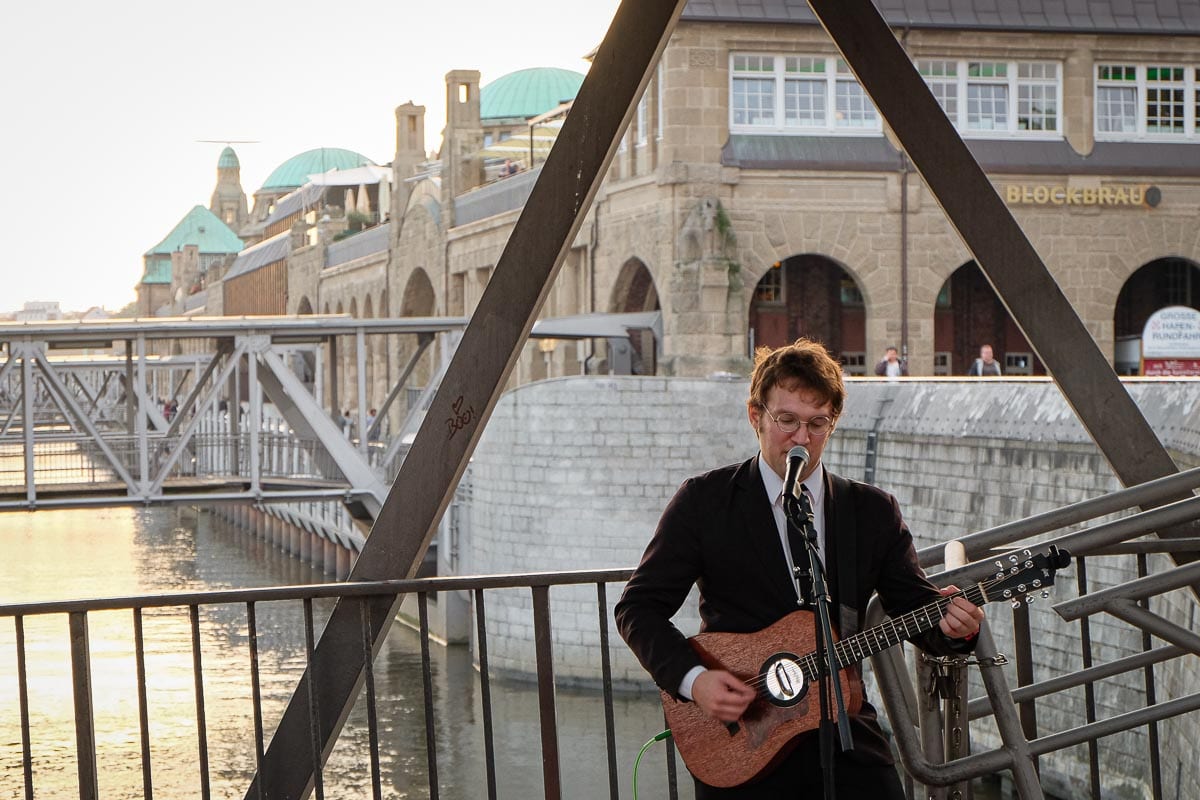
The Beatles connection is one that Hamburg still clings to, although obviously not as strong as Liverpool, with small reminders of their visits scattered around the city. It was in 1960 that Allan Williams, the band’s booking agent, decided to send the group to Hamburg to play in the seedy bars and strip clubs of the Reeperbahn. They began their apprenticeship playing 10-hour shifts at the Indra Club as a backing band to strippers, sleeping in the cold concrete storeroom. As they improved they were promoted to larger venues such as the Kaiserkeller, Top Ten and Star Club.
“The whole area was full of transvestites and prostitutes and gangsters, but I couldn’t say that they were the audience… Hamburg was really like our apprenticeship, learning how to play in front of people.”
John Lennon
Despite their relatively short stay in the city – it lasted just 2 years – their time there has become the stuff of legend. It was here that they met Ringo Starr, adopted their famous Beatles haircuts and recorded their first single under the guise of the Beat Brothers. Small signs of the Beatles still remain scattered around the St. Pauli neighbourhood; discrete plaques outside the clubs in which they played, small references in bar and shop names, and most prominently Beatles Platz – a small square at the entrance to Große Freiheit where metal silhouettes of the fab four stand in tribute.

The Reeperbahn still runs through St. Pauli like a mile-long river of neon and sin. Parties of stags and hens stagger beneath the iridescent glow of signs advertising table dances, drag shows, and ‘Sexy Sexy Girls’. A mix of cheesy Europop, bad karaoke and football chants echo from the bars of Hans-Albers Platz. The Reeperbahn was originally a refuge for the sailors and traders passing through the city’s ports – a place to while away their shore leave in the multitude of insalubrious bars and brothels. Although those days are long gone, the strip clubs and legalised prostitution remain.


Down Große Freiheit (“The Great Freedom”) illuminated lettering arches over the road promoting The Safari, the only live sex theatre left in Germany until its closure in 2013, and the Dollhouse, a popular table dancing venue. A few minutes walk from here, tucked away beyond Davidstraße lies Herbertstraße, almost as famous as the Reeperbahn itself. Historically, this was the only area where prostitution was tolerated in Hamburg and even during the Nazi regime it continued to thrive, only now blocked with barricades to protect the sensibilities of passing pedestrians.
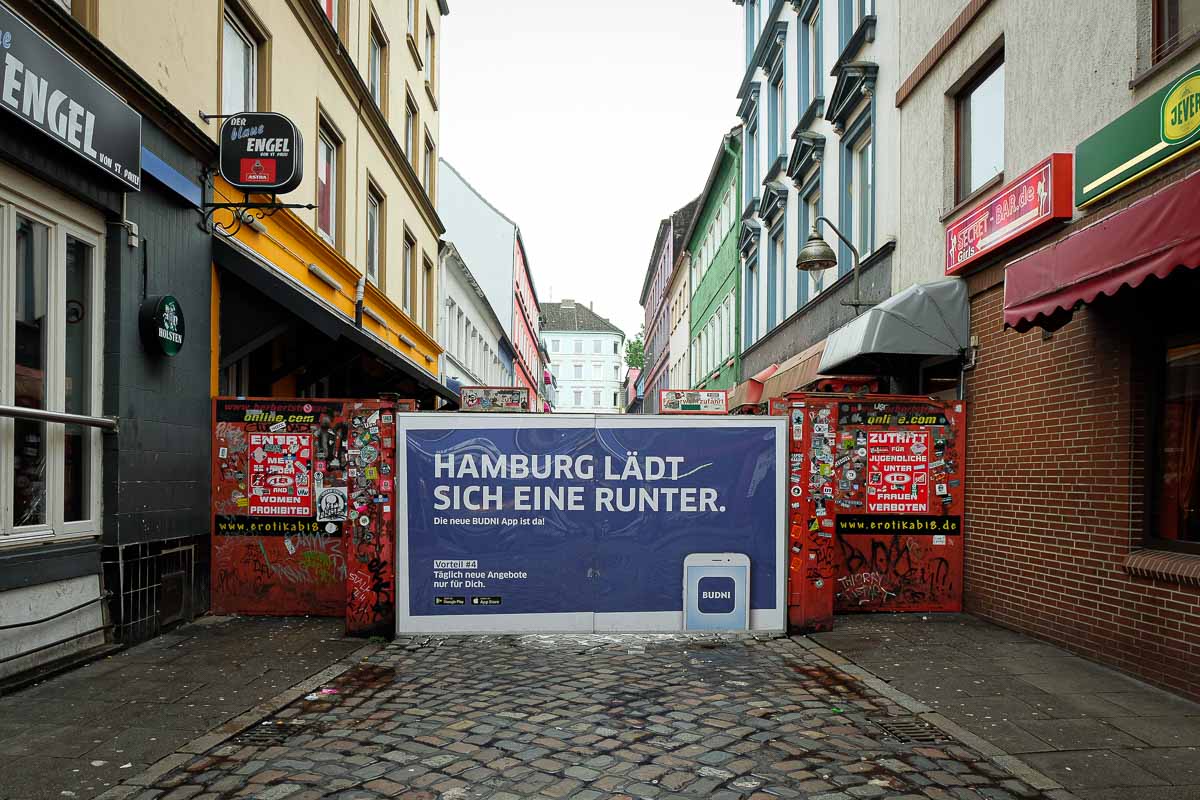
Despite its sordid past and occasionally sordid present, the Reeperbahn is very much a vibrant space that is embraced by the city’s residents both young and old. They come here to while away their evenings in the bars, clubs, and restaurants that lay alongside the sex kinos and strip clubs. Along the street’s central reservation, the locals mingle with groups of tourists at a street food market while well-dressed couples make their way to the elegant theatres and music halls that populate the Reeperbahn’s eastern side. Families dine at fancy restaurants that sit side by side with sex shops and brothels. This is the strange dichotomy at play in St. Pauli that makes it one of Hamburg’s most beguiling neighbourhoods.
Among the sex tourists, party goers and stag dos this is a working, living neighbourhood. People shopping for fruit and fish at the market, having an alfresco coffee or attending the theatre while gluttonous hedonism plays out all around them. Alongside Sternschanze, St. Pauli is the countercultural heart of Hamburg, a hip neighbourhood to rival Berlin’s Kreuzberg, where you will find the best bars and coolest coffee shops. Street art festoons every street corner and you are never far from live music.

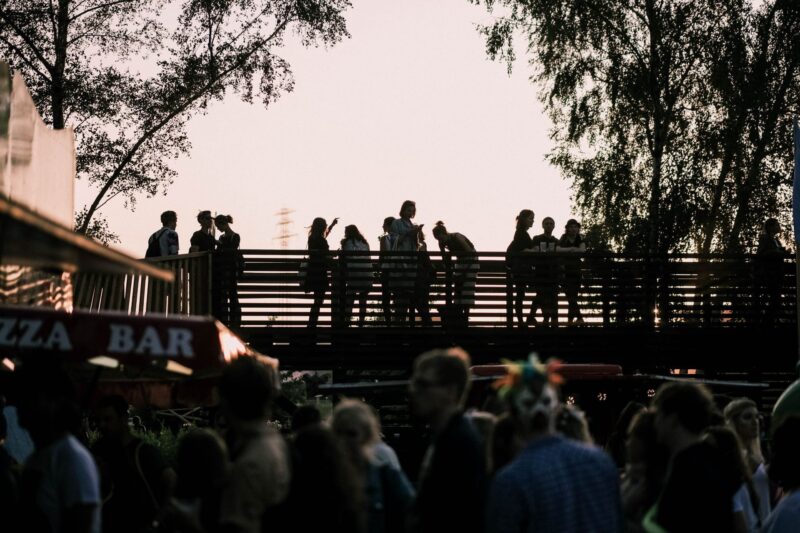
On my first afternoon in the city, I was lucky enough to combine two of Hamburg’s passions – art and music – with its one true love; Football. FC Sankt Pauli’s stadium was playing host to the Millerntor Gallery, an annual art, music and culture festival where the ground was filled with works by local and international artists. I moved through the crowds, gawping at the stunning mix of traditional street art and more avant-garde performance pieces. In one corner of the stadium, you could strip naked and have your Polaroid taken by Ali Altin and Jochen Goerlach to add to their wall of nudes, in another you could have a spur of the moment tattoo etched into your skin at the tattoo bar.


The following morning I experienced the city’s love of music in the most unexpected of places; The fish market. Every Sunday morning between 6 and 9 am, crowds gather at the point where St. Pauli meets the Elbe for shopping and, surprisingly, drinking. Partygoers making their way home from the bars of the Reeperbahn stop by the stalls to peruse the rows of fish sandwiches while the early risers head here to shop for groceries and have a coffee, rather than anything stronger.
Inside the 100-year-old market building, the party is getting started despite the early hour. Bars line the perimeter of the room and picnic tables fill its centre to become a makeshift beer hall. At either end, ageing rockers take to the stage and play classic rock numbers to the already half cut crowd that are far too energetic, and far too drunk, for 7am.

In the Elbphilharmonie, Hamburg finally has a venue to match its illustrious musical heritage. A jagged glass wave rising from the Elbe, the Elbphilharmonie took almost 10 years to construct and opened its doors at the start of this year. Now it is the pride of the city and a major tourist attraction. I took advantage of the free entry and began my ascent up its long cavernous escalator tunnel into the airy reception halls. Floor to ceiling windows fill the building with light and orbs of glass hang from the undulating curves that mirror the waves sitting atop its roof. It’s an elegant homage to the cities two true passions – music and the sea.

Muffled orchestral sounds meandered through the airy halls as besuited patrons made their way up the stairs to the concert hall. Unfortunately, I didn’t have the foresight to buy tickets so made do with my Plaza pass and wandered the perimeter of the building, taking in the full 360-degree vista of a misty Hamburg from my vantage point 36 metres above the city.
In sharp contrast to Hamburg’s most modern of structures, the UNESCO World Heritage site of Speicherstadt, the world’s largest warehouse district, is a more tangible reminder of the city’s connection to the waves. Here a sprawling network of red brick, neo-gothic buildings tower over the canals like industrial canyon walls. Despite how this sounds, there is something both beguiling and beautiful about the uniformed rows of brick, topped by cylindrical spires and flourishes of oxidised copper. So beguiling that I found myself coming back once the clouds and rain had passed, just so that I could wander its wrought-iron bridges – Hamburg is said to have more bridges than Venice and Amsterdam combined – and photograph the facades as the evening sun receded, bathing the buildings in a glow of orange and pink.


The Speicherstadt, literally meaning ‘City of Warehouses’, was built between 1883 and 1927 as a free zone for the city’s extensive imports of cocoa, coffee and spices. Like most outward-looking ports, Hamburg has welcomed immigrants and sailors for hundreds of years, seeing itself as a gateway to the world rather than a city tied to the dealings of distant Berlin. For centuries as one of Europe’s largest and busiest ports, Hamburg has had connections to 170 countries with which it traded in cocoa, fabrics and tobacco. With the constant influx of sailors and traders, the city has always been a melting pot, a constant influx of settlers from all over the world setting up shop and calling Hamburg home.

It is no surprise then that nestled a few short steps from the harbour is an area where you are more likely to be greeted with an “!Hola¡” instead of the customary “Moin” – Hamburg’s own word for hello – and served a pastéis de nata rather than currywurst. Portugiesenviertel – or the Portuguese quarter – developed in the 1960s as immigrants moved to the city looking for work at the bustling port. Even today the Bandeira das Quinas hangs from almost every Tapas bar or Brazilian barbeque restaurant that populated this small Portuguese enclave. It is a little piece of Lisbon, picked up and deposited in the centre of a north German city.

With that in mind, it seems fitting that Hamburg’s most popular attraction is ‘Minitur Wunderland‘, a unique display of the world in pocket-size; shrunken down and squeezed into 2500 square metres of Speicherstadt warehouse space. Within these red-brick walls, you are transported across the globe with tiny scale models of Rome, Las Vegas, Cinque Terra and Scandanavia.


At a track length of over 15,000 meters, it is the world’s largest model railway and, although this may not sound particularly enthralling, I was spellbound from the moment I walked through the door. Each city scene is painstakingly detailed and wherever you look, there are witty little dioramas of life being lived in its miniature streets. Music festivals, football games and family picnics all shrunken down and frozen in time.
With my urge to loom over cityscapes not yet sated, I took advantage of the improvement in weather to climb the spire of St Michael’s church. Situated between the inner-city and the piers of Landungsbruecken, this baroque gem is possibly the most beloved of Hamburg’s collection of churches. It’s copper roof and 132m high clock tower rising above the surrounding buildings, making it visible from the Elbe, a welcoming sight for returning sailors and fishermen. The church that occupies this area today is the 3rd incarnation, built in 1912 and a survivor of the WW2 Allied bombing campaigns. It seems somewhat luckier than the previous two, destroyed by a lightning strike and a catastrophic fire centuries later.

I found the church eerily empty and silent, dark except for the light of dozens of candles illuminating its grand organ. A couple of worshippers prayed quietly before the church’s centrepiece, a 20-metre high altar.
From the spire I took in the arresting views of Hamburg; the clusters of clock towers rising from the city centre, the glass spikes of the Elbphilharmony perched on the river edge and the turquoise spike of the Rathaus, the city’s beautiful neo-renaissance Town Hall. In the distance, ships cruised their way along the Elbe to the sound of an anti-G20 protest chanting and singing in the shadow of the Rathaus tower. I watched voyeuristically as people picnicked and walked in Michelwiese Park, one of the array of spaces that makes Hamburg one of Europe’s greenest cities. It is said that approximately 15% of Hamburg is parkland, with open spaces cutting their way from the sprawling perimeters into the inner city towards Alster lake.


Almost the whole perimeter of Alster Lake has been given up as public Parkland. I walked a small section of the lakeside path just as the last light of the day was fading, watching the kayaks, toppers and rowing boats cruising its calm waters. It’s a public space that Hamburgers take full advantage of. Groups of teenagers gathered with drinks and watched the mighty spray of its geyser-like fountain, joggers passed by with a nod and a “moin”, and couples huddled on the benches to take in the view as the evening drew in.

I spent my last afternoon in Hamburg seeing the city from a whole new perspective, aboard a boat tour on the mighty Elbe, viewing it as so many people have done over centuries of fishing and trade. The sun had finally decided to show itself and I now sat baking on the top deck, a beer wobbling precariously on my table as I breathed in the warm maritime air. The tour was in full swing, the other passengers already chuckling along to the German commentary before I could get my audio guide working. I prodded half-heartedly at the touchscreen and fiddled with the headphone jack to no avail. It didn’t matter. Even without the facts and history, this was the perfect way to spend an hour; cruising the Elbe in the glorious sunshine, beer in hand and a view across the whole of Hamburg’s waterfront.


We were halfway through the tour before I managed to prod my audio guide to life. Finally, it synced up with the sights I was seeing; People jogging and walking their dogs along the beach at Elbstrand and the beautiful traditional houses of Blankense, their white wooden structures poking out from the green, spacious, parkland of one of Hamburg’s richest neighbourhoods. The city faded into the distance as we made our way seaward, tracing the route towards the North Sea that so many sailors had taken before us.
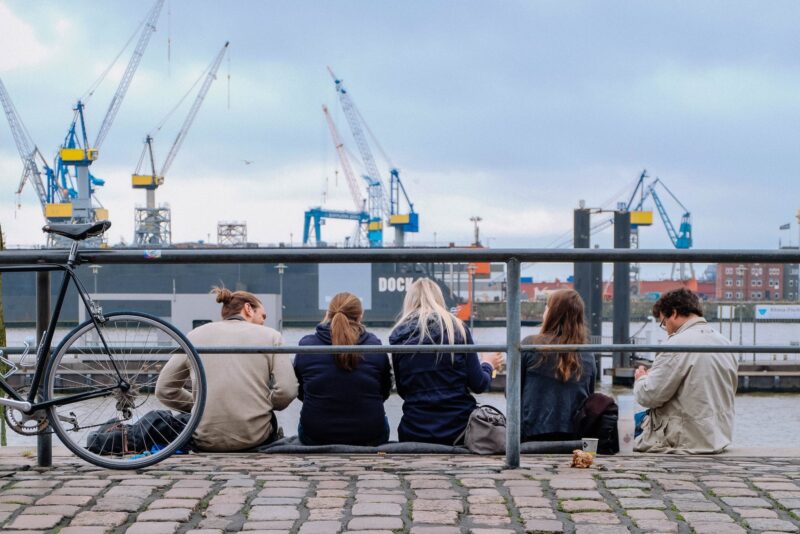
A swift left turn and we were suddenly among towering walls of multicoloured shipping containers, stacked 5 high along the docks, ready to be lifted onto the waiting ships. It was a far cry from the parks and gardens of Blankense, still visible across the water. It struck me that this is what made Hamburg the city that it is today. The monstrous vessels and looming cranes are a continuation of what Hamburg has always done; open itself up to the world in the hope of accepting goods, people and culture from anywhere that it can.
In doing this Hamburg has forged its own identity. For centuries all manner people have been drawn here, gradually moulding it into something unique, something distinctly Hamburgian. As more people make the city their home it will continue to change and continue to look to the future – always retaining its singular identity.
Maybe that is why I felt so at home here – because everyone feels at home here.

Where to Stay in Hamburg
If a vibrant nightlife, cafe culture and super cool neighbourhoods are your things, then look no further than Superbude St. Pauli Hostel. Located between the hip areas of St. Pauli and Sternschanze, Superbude oozes style and embraces the offbeat nature of this part of Hamburg. Furniture in its airy reception/dining area is made from upcycled wheelbarrows, the headboards in its rooms from old goal nets – a nod to St. Pauli’s famous football team – and clothes hangers come in the form of plungers stuck to the walls. It is quirky and humorous without being pretentious. Despite styling itself as a hostel, this is more of a boutique hotel in terms of quality and customer care but without the extortionate prices. They also have a hostel located in St. George if you need your bed to be a little more central.
Check out my review here.

Just a stone’s throw away from Superbude on a quiet St. Pauli sidestreet is St. Pauli Backpackers, a small, family-run hostel that is a little more subdued but still has plenty of charm. The dorm rooms are spacious, each coming with a large en-suite bathroom and there is ample space – both indoor and outdoor – for socialising with other travellers. I loved the quiet and cosy bar/cafe area that doubles as the hostel’s reception but wasn’t so keen on the fact that they do not provide luggage storage, meaning I had to leave my backpack in the communal kitchen while I waited to check-in.
For something a little more upmarket, the 25hours Hotel brand has three quirky and fun properties in Hamburg. I didn’t get to stay there myself but have heard nothing but praise for their unique take on accommodation.
Where to Drink in Hamburg
The epicentre of Hamburg’s nightlife is situated on the Reeperbahn; a mix of brothels, sex kinos and stag parties. However, among the sleazy venues are a wide array of regular clubs and bars that you can frequent to avoid the crowds of teenage Hamburgers and rowdy lads on tour. Our guide took us for a bottle of Astral at Zum Silbersack (Silbersackstraße 9), a charming little piece of old St. Pauli, barely changed since the day it opened in 1949. This smoke-filled, local kiez tavern was free from crowds, the only group of tourists sat quietly in a corner with the stag trying to avoid the gaze of locals as he sat in his ‘No to EU’ t-shirt and Margeret Thatcher hat combination while drinking his beer from a David Cameron mug that his ‘friends’ had kindly made him wear.

Closer to the main drag lies the Zur Ritze (Reeperbahn 140), a legendary Kiez bar with distinctively shaped entrance door. Once you’ve gone through the spread legs of the “receptionist”, you’ll find yourself in one of St. Pauli’s most original drinking spots. The Beatles once drank here and it was the favourite haunt of actors such as Ben Becker and Jan Fedder as well as gangsters, hustlers and pimps. The basement still contains a boxing ring in a nod to the old days of it being a smoke-filled gambling den but nowadays you’re more likely to find athletes training down there for their next big bout.
Perpendicular to the Reeperbahn is Talstrasse, a permanent fixture in Hamburg’s gay scene and home to some of the more upmarket bars in the area. 3-Zimmerwohnung (Talstraße 22) is like sitting in a moodily lit living room with its orange-hued lighting and furniture that wouldn’t be out of place in your grandparents living room – if your grandparents had an illuminated painting of sperm swimming across their wall. It’s no accident, 3-Zimmer-Wohnung literally means ‘three-room flat’ and the interiors are deliberately designed to make you feel at home. It’s a relaxed, cosy place and even has its own photo automat for you to capture a few memories of your night.
Heading a little deeper into St. Pauli you will find a scattering of great bars at the junction of Paul-Roosen-Straße and Am Brunnenhof, the best of which being Clockers. This isn’t a place to go for cheap drinks, but if you are looking for high quality, expertly made long drinks, this is ideal. If the drinks don’t draw you in, the decor definitely will – The owners have created a veritable fairy tale forest with moss-covered walls and illuminated trees.
Tours in Hamburg
Beatles Tour
Stefanie Hempel is the originator of Hamburg’s musical Beatles tour and should be your first port of call if you are interested in the Fab Four’s infamous period playing the seedy bars and clubs of St. Pauli’s red-light district. The tour takes you to all those sites that breathe Beatles history: Indra, Kaiserkeller, Top Ten, Star-Club, Bambi Kino and more.
Tours depart from Feldstrasse Subway Station at 6 pm every Saturday and last approximately 2.5 hours. €28 per person.
Check out Stefanie’s website and book online here.
St. Pauli & Reeperbahn Tour
St. Pauli is the heart and soul of Hamburg and what better way to see it than with the guiding hand of a local resident. The St. Pauli Tourist Office offers a tour through the off the beaten path spots, the city’s history and a little about the present issues of gentrification and tourism in this little quarter of Hamburg. Not to be forgotten, the Reeperbahn also features heavily, with the tour taking you through locations such as Herbertstraße, Große Freiheit and Davidwache.
English language tours depart from the tourist office every Friday and Saturday at 6.30 pm and last approximately 2 hours.
Book online here.

Open Top Bus Tour
If you want to get around the city but also take in the major sights, then what better way than an open-top bus tour. Multiple routes are available in either German or English and day tickets start at €18.
For more information, visit the Stadtrundfahrt website.
Harbour Boat Tour
One of the Hamburgs most distinctive features is its historic, bustling harbour. Barkassen-Meyer is one of the few companies that offer English language tours (albeit via an electronic audio guide) and take passengers on a tour through the “Hamburger Elbbrücken”, sluice gates and container terminals, the large docks of “Blohm + Voss”, the “Köhlbrandbrücke” before heading back to dock via the Speicherstadt and the Elbphilharmonie.
Tours leave hourly between 10 am and 5 pm each day from St. Pauli Landungsbrücken, Bridge 2 or 6. Tours last an hour and cost €18 per person. Visit their website or book online.
Disclaimer: My trip to Hamburg was facilitated by Come to Hamburg and I was provided with a free entry to a number of attractions. However, all thoughts and opinions expressed in this article are my own

10 Responses
Hamburg is a beautiful city! I knew, of course, about Reeperbahn, Speicherstadt, and Elbphilharmonie. But the Portugieserviertel was new to me. Obrigada, for sharing! Happy continued travels! C
I was surprised by it too. It’s not immediately obvious until you realise that the street you are standing on has so many Portuguese and Brazilian restaurants and that most have a Portuguese flag hanging above the door!
This was such a descriptive article. Loved reading it. Your photos are amazing. Minitur Wunderland looks so good. Loved how you covered the small little details too. Thanks for sharing 🙂
Minitur Wunderland was a surprise highlight for me. I wasn;t expecting to enjoy a what is essentially a huge train set but it was so detailed and such good fun!
Seriously where was this post when I was in Hamburg 3 years ago? haha I love it! I also took advantage of awesome weather and scaled the spire at St. Michael’s Church. If I remember right, there was a really awesome gelato place just around the corner. San Pauli is a really fun neighborhood to explore too. I wish I knew about the Beatles history. That would be such a fun tour to explore!
It’s a good excuse to go back and explore a little more then! I must have missed that gelato place – I wish I’d spotted it as gelato would have been a good reward for climbing the steps!
I had no idea about the Beatles history, that’s very interesting to read and I can see why Hamburg are proud to keep that association alive, so to speak. I like that much of your visit was themed around music. I visited Hamburg in the early 1980s, on a school language exchange, and I’d love to go back — there’s so much I want to see and so much that’s changed, as well. Saving your post for when I go.
You should definitely go back – I imagine it is completely different from how it was in the 80’s. It seems to be an up and coming city, one that is incredibly cool and embracing its outsider identity. Music is everywhere in the city so if that is your thing, you will be completely at home in Hamburg!
What an interesting city! Would you suggest a visit during Winter, or is it better from Spring on? We’re still planning our travel schedule for next year!
I was there in early July and it was pretty rainy but I still enjoyed it so I assume it would be good all year round. With all the green open spaces it would be great to visit in good weather so maybe summer would be best!