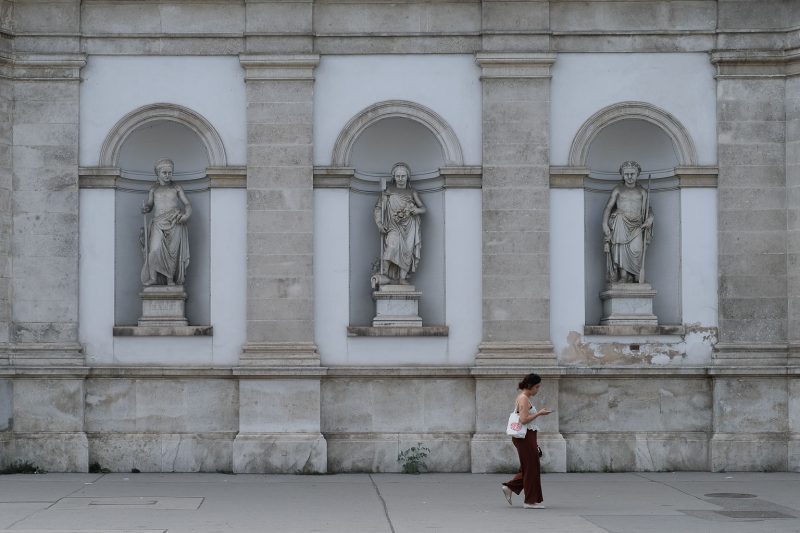
Whether you fully intend to twirl or are more of a don’t-re-mi, discover the movie locations that are even more technicolour in real life. Sixty years after it was released, The Sound of Music remains one of the most-watched films of all time, apart from in Austria, where many have never heard of it. More than 350,000 wannabe Fräulein Marias flock to the Alpine jewel of Salzburg every year, to follow in the footsteps of our favourite misunderstood nun, confusing locals as they go.
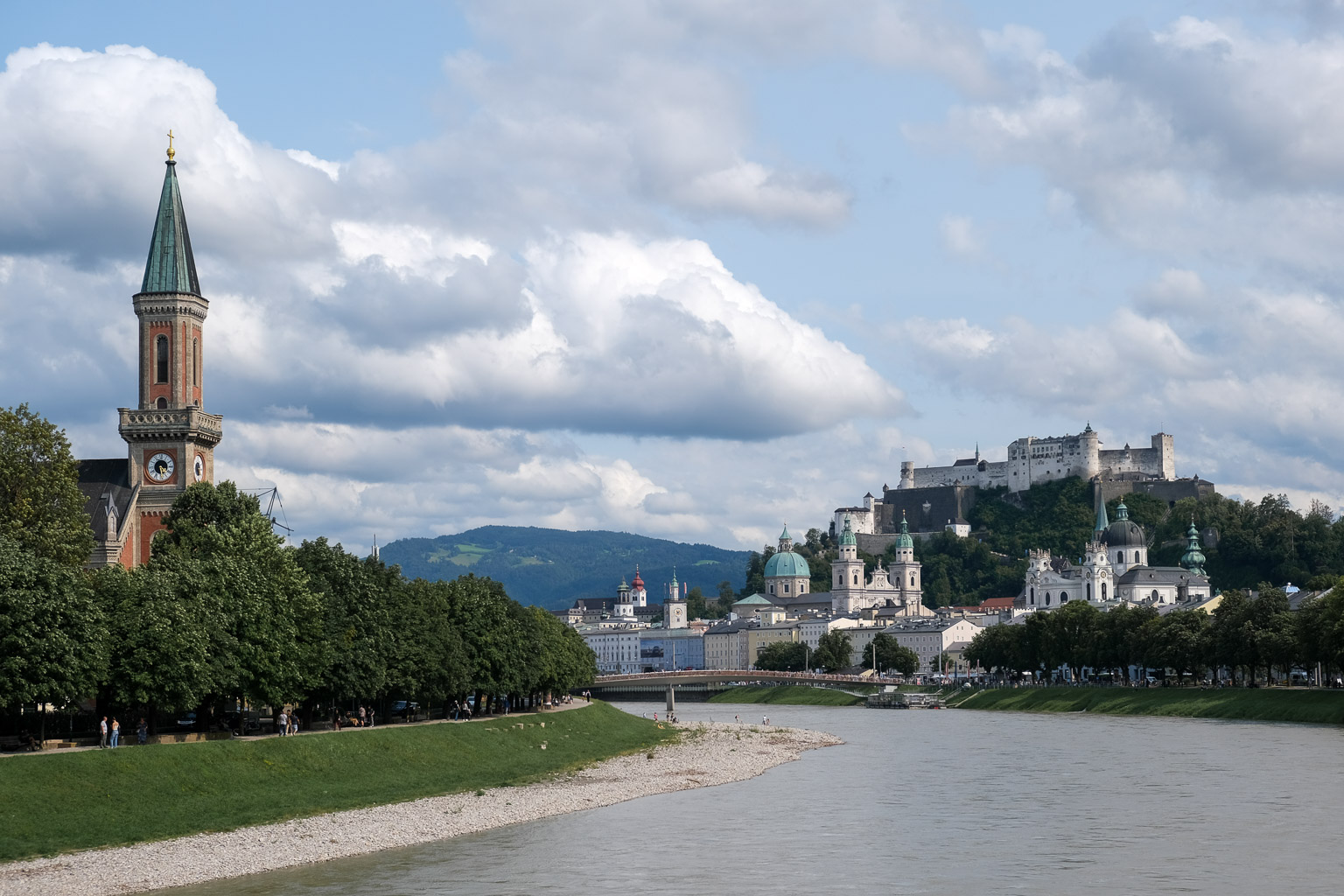
The City of Mozart has an ancient musical history that predates Hollywood. Visit the cathedral where the classical child prodigy was baptised, take a tour of the “Edelweiss” concert hall carved from a cliff, and watch a puppet concert in a theatre that inspired “The Lonely Goatherd”. You’ll be struggling not to sing along in Salzburg’s cinematic time capsule of cobbled streets and Alpine peaks.
The setting of the Oscar-winning classic is a treasure trove of historical landmarks and unbeatable panoramas that formed the backdrop to unforgettable songs. From the nunnery where the real-life Fraulein Maria lodged, to the poetic licence of the Von Trapp family escape, you’ll walk along the paths that both Maria Augusta Kutschera and Julie Andrew took, with fact and fiction intertwining with every turn.
To chase the silver-screen magic of Salzburg, you can walk, skip and spontaneously burst into song where the Von Trapps danced, prayed, splashed in fountains and accidentally capsized children. Every corner feels plucked straight from the film: from frolicking in Mirabell Gardens, the grand wedding in Mondsee Basilica, the lakeside serenity of Leopoldskron and the breathtaking views from Hohensalzburg Fortress, Salzburg and its charming countryside bring The Sound of Music to life. The city is a real-life fairytale where you can relive one of cinema’s most beloved stories in the landscapes where it all began.
Sound of Music Filming Locations
From the city’s cobbled streets to the sweeping Alpine meadows, the film’s iconic scenes are scattered across Salzburg and the surrounding peaks. Most spots in the old town are within easy walking distance, but to chase the wildflower meadows where it all began, take a car or book a guided tour into the Bavarian Alps. You’ll find the region as enchanting as the movie itself. Sing-alongs and cosplays are optional.
Fuschl am See & Fuschlsee
Where: Fuschl am See, 5030, Austria
Famous for: The lake in the open aerial montage title sequence (1:33)

So, “let’s start from the very beginning, a very good place to start”. This glistening glacial lake, half an hour east of Salzburg, shimmers in the opening montage. Fuschlsee has been a retreat for Austrians for centuries, loved for its crystal-clear waters that are one of the cleanest mountain lakes in Austria, with a quality of drinking water. Today it’s home to the Red Bull Global HQ and famous for walking trails, watersports and spa retreats. Hike up Schober-Frauenkopf for views of the emerald water, then kick back in a sauna.
To get to Fuschl am See, take the 150 bus directly from Salzburg, or hop in a taxi.
St. Gilgen, St. Wolfgang & Wolfgangsee
Where: St. Gilgen, 5340, Austria. St. Wolfgang im Salzkammergut, 06138, Austria.
Famous for: Lakeside towns in the aerial montage title sequence (1:45) and mountain railway scene during “My Favourite Things” (53:45)

One hour from Salzburg, Mozart’s mother, Anna Maria, was born in St. Gilgen, giving the town a rich musical heritage that film producers couldn’t resist for the opening scenes. Take the cable car up Zwölferhorn 5,000ft above sea level before you explore the Mozarthaus Museum dedicated to the child prodigy’s mutter and schwester.
Twenty minutes down the road, the hundred and thirty-year-old Schafbergbahn Steam Railway in St. Wolfgang still runs on the tracks that Maria and the children rode through the mountains singing “My Favourite Things.” Ride the vintage train up Schafberg for sweeping panoramic views over Wolfgangsee and even Germany on a clear day.

The alpine towns of Austria’s lake district are as picturesque in real life as in the aerial shots and begging to be seen up close. Stroll along the charming streets that are lined with picture-perfect Alpine lodges, lakeside promenades and traditional bakeries perfect for a mid-morning strudel.
To get to St. Gilgen from Salzburg, get on the 150 bus, then to St. Wolfgang, take a boat across Wolfgangsee or follow the two hour walking trail. You can also book day tours to both of the towns and further south to the UNESCO-protected Hallstatt.
Haus am See Hoglworth
Where: Mooshäuslweg 4+6, 83454 Anger, Germany
Famous for: House in the aerial montage title sequence (01:51)
This lakeside house appears briefly in the sweeping opening sequence and lies west of Salzburg in Germany. While privately owned, it embodies the Bavarian charm that filmmakers couldn’t resist with its glistening water and domed tower.
Half an hour from Salzburg, you’ll need to take a couple of buses or hire a taxi, but you can’t enter the house.
Water Palace Anif
Where: Schlossallee 1, 5081 Anif, Austria
Famous for: Palace in the aerial montage title sequence (2:00)
With its Baroque architecture and pondside gardens, Schloss Anif has laid peacefully beneath the Alps since the 15th century until Hollywood helicopters captured its fairy-tale quality central to The Sound of Music.
Fifteen minutes south of Salzburg, you can take a few buses or book a taxi, but you can’t visit the palace.
Mehlweg Meadow
Where: Mehlweg, 83487 Marktschellenberg, Germany
Famous for: Meadow in the “The Hills are Alive” opening scene (2:12)

The iconic opening scene of The Sound of Music was filmed over the German border, half an hour from Salzburg. Framed by the majestic Untersberg with a breathtaking panorama, you can see why Julie Andrews broke into song on the meadows of Mehlweg, and why Robert Wise fell in love with the region.
Sadly, the Bavarian field is now on private land, so you can’t recreate Maria’s iconic spins in her debut. However, you can access nearby vantage points on a tour or hike on nearby public trails that’ll make you want to whip out your dirndl in no time. You can also easily visit a similar picnic spot in Werfen where “Do-Re-Mi” was filmed, which is open to the public and also included in private tours. Early morning light is particularly cinematic over the postcard-perfect scenery of Bavaria, so set your alarm clock.
To reach Mehlweg, you’ll need to take a couple of buses and lace up your walking boots for an hour’s hike from the town, or rent a car and combine with Eagle’s Nest for a historical day out. Werfen is another 30 minutes south of Mehlweg, you can walk from the meadow to Hallein and catch a train to Werfen, or if leaving from Salzburg, hop on a 45-minute train and then take a 35-minute walk along the “Sound of Music Trail” to Werfen’s meadow. To get closer to Untersberg, a Salzburg icon featured throughout the movie, take a bus from Salzburg to the cable car that takes you up to 6,500ft above sea level.
Hohensalzburg Fortress
Where: Mönchsberg 34, 5020 Salzburg, Austria
Famous for: Castle in the title sequence (7:04), in the background of “My Favourite Things” (52:27) and“Do-Re-Mi” (57:01)

Featured throughout The Sound of Music, Hohensalzburg Fortress has dominated Salzburg’s skyline for over 900 years. One of Europe’s largest preserved castles, you can’t miss the fortress no matter where you are in the city. Perched on Festungsberg mountain, Hohensalzburg has watched over centuries of history and Hollywood filmmakers, offering 360° views over the Alps and beyond. Today you can take the funicular up 500m to enjoy a brass concert on the trumpet tower, ancient dungeons or famous Mozart concerts. You’ll also find the Marionette Museum here, which inspired “The Lonely Goatherd” puppet concert. Sunset is particularly romantic at the fortress, the perfect spot for a picturesque evening with your Captain.
St. Margarethen Chapel
Where: Sankt-Peter-Bezirk 1, 5020 Salzburg, Austria
Famous for: Church in the title sequence where nuns are praying (07:45)
Nestled in St. Peter’s Cemetery, this chapel was the perfect setting to evoke the quiet contemplation on nunnery life at the start of the film. The Gothic architecture of Margarethenkapelle has been a site of worship since the Middle Ages and is open to the public today. You’ll find it nestled in the old town.
Stift Nonnberg Abbey
Where: Nonnberggasse 2, 5020 Salzburg, Austria
Famous for: Nunnery first seen in “How Do You Solve a Problem Like Maria” (10:30) and throughout, including when the Von Trapp children look for Maria (1:43:18), the inspiration for the “Climb Every Mountain” studio scene (1:48:30) and when the Von Trapps hide from the Nazis (2:35:10)


Stift Nonnberg’s most famous novice, Maria Von Trapp, was a real-life nun at this abbey. Follow Mrs Von Trapp’s footsteps where she walked, prayed and learned the ways of the abbey before she met her Georg. The most ancient convent in the Germanic world was used for exterior shots throughout the film, including the backdrop for “Maria” where she runs late through the gates. It also inspired the interiors for multiple scenes, including when Mother Abbess sends the novice nun to her future husband’s home, and the soaring “Climb Every Mountain”, with the actual footage shot in studios.
Sitting above the city at the foot of Festungsberg, the short climb to this nunnery rewards you with panoramic views over Salzburg and the Alps. If you want to absorb the authentic atmosphere of the Gothic church and cloisters, arrive early at 6.45am to hear the nuns sing Gregorian chants every day. Entry is free to the courtyard and church, but there’s no access to the convent buildings, Maria should’ve been locked out too, TBH.
Panorama Aldstadt
Where: Sankt-Peter-Bezirk 10, 5020 Salzburg, Austria
Famous for: Panoramic view of Salzburg’s old town in “I Have Confidence” (18:42)

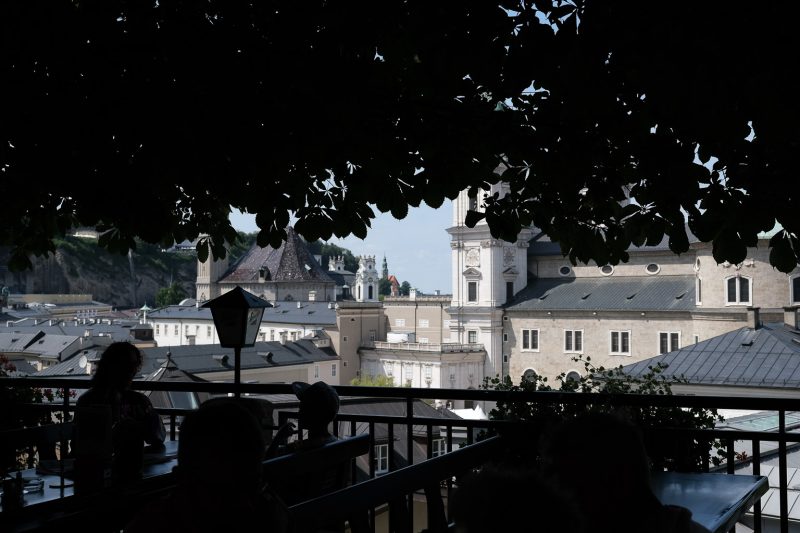
After Maria is sent to the Von Trapps, she leaves the abbey and belts out “I Have Confidence” with an expansive view of Salzburg’s old town as the backdrop. You’ll see three of Salzburg’s prominent churches, including where Mozart was an organist every Sunday. You can recreate these scenes at the top of a staircase above Toscaninihof courtyard where Felsenreitschule Theatre lies, the home of the Von Trapp’s final performance.
Domplatz Square & Salzburg Cathedral
Where: Domplatz 1a, 5020 Salzburg, Austria
Famous for: Archway in “I Have Confidence” (19:09), square in “My Favourite Things” (52:46)

As Fraulein Maria makes her way from the nunnery to the bus stop, she passes under the archways in Cathedral Square with a little too much “confidence”. Wolfgang Mozart was baptised in the exquisite Baroque masterpiece 275 years ago, and today you can soak up the mythical musical legacy by visiting the marble interiors, the thousand-year-old crypt and catch a daily organ recital at 12pm.
The cathedral to the public is open 9am to 6pm every day, and after mass on Sundays. In the surrounding Domplatz Square, lug your suitcase (and guitar?) like Maria and the Von Trapp children as you think about your “favourite things”.
Residenplatz Square & Fountain
Where: Residenzpl. 7, 5020 Salzburg, Austria
Famous for: Fountain in “I Have Confidence” (19:25) and setting of Nazi parade (21:05)
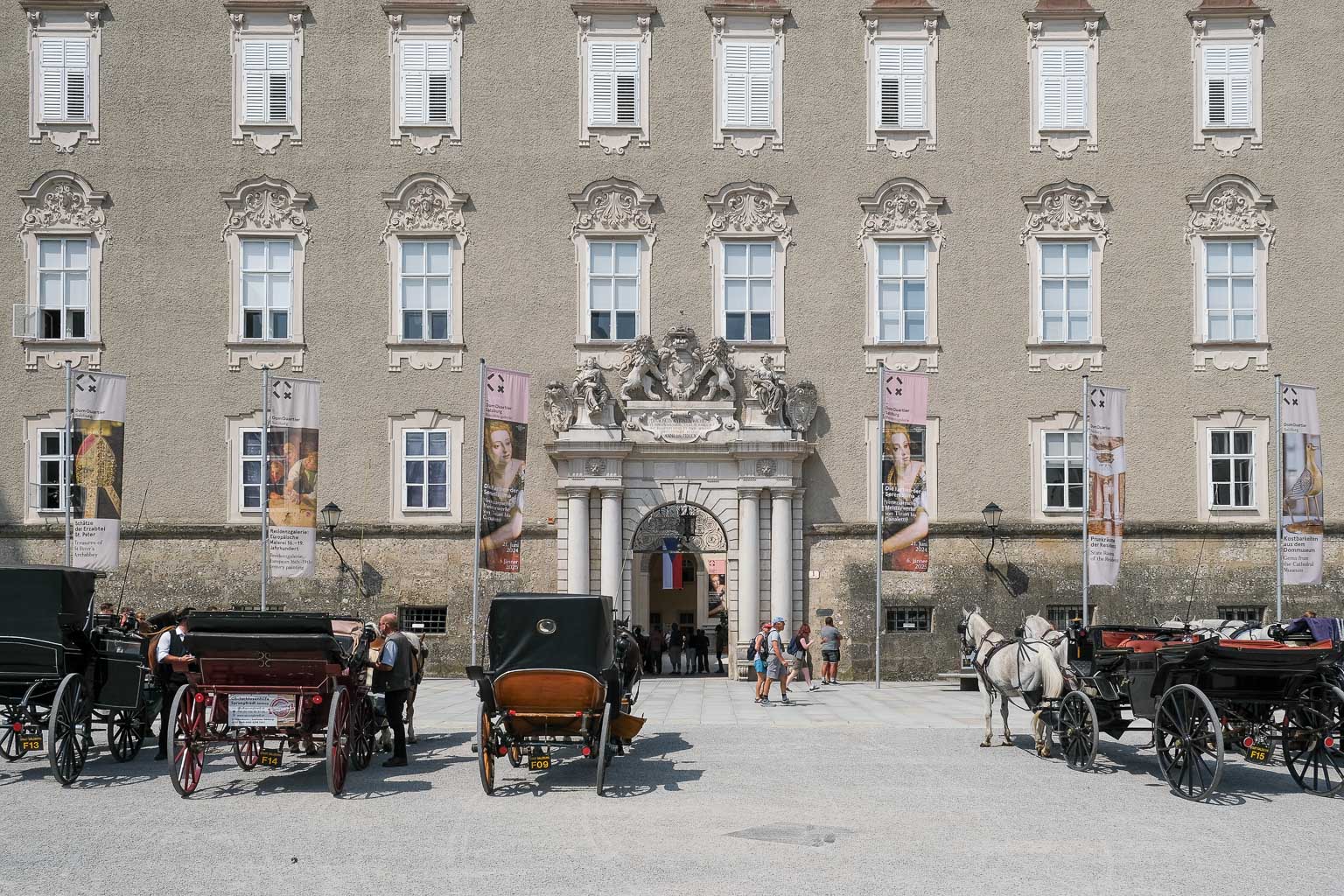
In “I Have Confidence”, the governess splashes through this grand square before getting the bus to the Von Trapp villa. Julie Andrew’s accidental stumble was kept in the film as Robert Wise insisted it added to Maria’s charm, but you might not find a broken ankle so charming. With the largest Baroque fountain in Central Europe and Salzburg Cathedral as a backdrop, the platz is one of the film’s most atmospheric locations.
The square is in the heart of the old town and open 24/7, making it a perfect spot to people-watch. If you visit in winter, you’ll find it transformed into the Christmas Market; in summer, it turns into an open-air cinema, although don’t hold your breath for Plumber & Co. to be on the programme. Warning: you’ll need a leg up to reach the water in the Residenplatz Fountain and splash the horse, don’t fall in!
Kapitelplatz & Kapitelschwemme Horse Pond
Where: Kapitelpl., 5020 Salzburg, Austria
Famous for: Square in “I Have Confidence” where Maria gets the bus to the Von Trapp villa (19:47)

Home to our favourite problem nun’s last stop in the city before getting the bus to the Von Trapps, this square boasts one of the city’s ornate horse ponds with intricate stonework. You’ll “have confidence” to find this central platz where parade ponies were washed centuries ago in the heart of the old town.
Mondsee & Mondsee Basilica
Where: Wredepl. 3, 5310 Mondsee, Austria
Famous for: Lakeside bus ride in “I Have Confidence” (19:55), cycling by the lakeside in “Do-Re-Mi” (58:24), Von Trapp children danging from the trees (1:01:40) and Maria & Georg’s wedding (2:08:08)
Lake Mondsee was used for multiple scenes throughout the film, including the bus ride in “I Have Confidence” and the cycle tour in “Do-Re-Mi”. Mondsee, a lakeside town east of Salzburg, was also the location of Maria and Georg’s wedding, in the Basilica of St Michael, its pastel yellow façade and soaring Baroque interior were irresistible to filmmakers. Although in reality, Maria married Georg at Nonnberg Abbey years earlier.
Half an hour from town, you can get a couple of buses to Mondsee, or find it included in numerous Sound of Music tours. Just make sure you don’t “waltz on your way to mass and whistle on the stair” or you might not be allowed back in the church. Entry is free to the Basilica and the charming Alpine town is perfect for a lakeside stroll followed by a coffee break, or “a drink with jam and bread”.
Schloss Frohnburg
Where: Schloss Fronburg, Hellbrunner Allee 53, 5020 Salzburg, Austria
Famous for: Front exterior of Von Trapp family home, first seen when Maria arrives (21:00)

We first cast our eyes on Schloss Fronburg when the free-spirited nun nervously arrives at the Von Trapp family home clutching her guitar, right before her life is about to be transformed by a certain Naval Officer. The front exterior scenes of the home were shot here, while the interior was recreated in a studio, and the back was filmed at Schloss Leopoldskron. In reality, Maria left the abbey to tutor one child, not all seven, and married Georg years before the Nazi occupation.
Nowadays, the 17th-century palace houses the dorms of Mozart’s School of Music, but you can still admire the famous yellow exterior from along Hellbrunner Allee as you walk or cycle to Hellbrunn Palace to see that pavilion.
Hellbrunn Palace & Gazebo
Where: Schloss Hellbrunn, 5020 Salzburg, Austria
Famous for: Pavilion in “I Am Sixteen Going on Seventeen” (35:22) and “Something Good” (1:59:55)


Now for “something good”. Famous for the location where both Liesl and Rolf, then Maria and Georg share their first kisses, Schloss Hellbrunn is a 17th century palace that houses the glass gazebo of romance. The pavilion was gifted to the city after filming and later moved from Schloss Leopoldskron to Hellbrunn’s gardens to reduce tourist congestion at the hotel. The Baroque villa is well loved for its trick fountains that catch visitors out with water jets bursting from the ground, as well as its Italian gardens and 60 acres of greenery.
Surrounded by ponds, meadows and mountain views, the palace grounds are a serene escape from the city and just a twenty-minute bus ride away. Be warned, the pavilion is visible to visitors, but you can’t go inside. Charmian Carr injured her ankle when she fell through the glass during filming, so it’s probably for the best.
Mozartsteg Mozart Bridge & River Salzach
Where: 5020 Salzburg, Austria
Famous for: Maria and Von Trapp children run over the bridge and along the river in “My Favourite Things” (52:27)

This art nouveau pedestrian bridge has straddled Salzach river since 1903, with the fortress as its backdrop, and was the first stop in the city that Maria took the children. Follow in their footsteps as you run and skip along the riverbanks and over the bridge, soaking up Salzburg’s “favourite things”, but preferably not dressed in old curtains. Find it after a stroll south of Mirabell Palace as you make your way back to the old town over the water.
Karajan Square & Pferdeschwemme Horse Pond
Where: Herbert-von-Karajan-Platz 11, 5020 Salzburg, Austria
Famous for: Maria and the Von Trapp children walk past the pond in “My Favourite Things” (52:52)

The historic horse bath was briefly captured during “My Favourite Things” where Maria showed off her curtain couture. Located in the festival district, you can enjoy centuries-old stone carvings just a short stroll from St Peter’s Abbey.
Kajetanerplatz
Where: 5020 Salzburg, Austria
Famous for: Market in “My Favourite Things” (53:00)
Salzburg’s farmers’ market on this central square was the setting for Maria and the children juggling fruit and vegetables. Still running every Friday from 6am to 2pm and a ten-minute walk from the abbey, you can pick fresh organic produce and even drop a pepper like Gretl, just try not to cry.
Werfen Meadow & Hohenwerfen Castle
Where: 5450 Werfen, Austria
Famous for: Picnic meadow in “My Favourite Things” and “Do-Re-Mi” (53:53)

Above the village of Werfen, “a drop of golden sun” shines over the wildflower meadows, against sweeping Alpine peaks and a medieval rock castle. It was here that echoes of “Do-Re-Mi” and “My Favourite Things” rang out against the hills 60 years ago. Nowadays, the field is known as the “Sound of Music Meadow” by fans and Gschwandtanger Meadow by locals. Recreate the cinematic gold of running around with picnic hampers while you learn about philosophy via upholstery.
Accessible to the public and part of a number of tours, Werfen Meadow can be reached by a 45-minute train ride from Salzburg, followed by a 35-minute hike along the “Sound of Music Trail”. To follow the route, start at the tourist office and cross the car park, then head up the small set of stairs to the signposted entrance gate. Walk past the tumble drum that plays the familiar tune of “Do-Re-Mi”, then continue to the viewing area where benches are decorated with lyrics from “The Lonely Goatherd”. After a quick yodel, stroll past a shed with wooden cubes that spell out “The Hills Are Alive” until you reach the gate “that will bring us back to” your screenworthy destination, the glorious meadow of Gschwandt Anger. You’ll spot Hohenwerfen Castle in the background, just as the Von Trapps did in the picnic scene. You can download an audio guide to accompany your trek, nostalgically narrated by the actor who played Friedrich Von Trapp.
While you’re in the area, why not visit the world’s largest ice cave, Eisriesenwelt, ten minutes down the road from Werfen, and Hohenwerfen Castle, which has overlooked the Austrian market town since the 11th century, and was the filming location for another blockbuster set in WWII, Where Eagles Dare.
Winkler Terrace
Where: Am Mönchsberg 32, 5020 Salzburg, Austria
Famous for: Backdrop of Salzburg in “Do-Re-Mi” (57:01)
Perched on Mönchsberg overlooking the Old Town, Salzach River and Hohensalzburg Fortress, Winkler Terrace was the location for “Do-Re-Mi”. In front of the Museum der Moderne and M32 restaurant, it’s not a “long long long way to run” from Pferdeschwemme. You can reach it via the Gstattengasse public lift or by strolling up the hill. The combination of castle, city and mountain views made it a perfect filming backdrop for learning musical scales.
St. Erhard Church
Where: Nonntaler Hauptstraße 12A, 5020 Salzburg, Austria
Famous for: Horsedrawn carriage ride in “Do-Re-Mi” (58:50)


The future Mrs Von Trapp takes the children on a horse-drawn carriage during “Do-Re-Mi” and passes by this church. The surrounding square in Salzburg’s Nonntal district made an ideal setting to encapsulate bustling village life to make mischief in. Built in 1689, it’s one of the city’s oldest Romanesque buildings.
Mirabell Palace & Gardens
Where: Mirabellplatz 4, 5020 Salzburg, Austria
Famous for: Palace scenes of “Do-Re-Mi” (59:21) including Pegasus Fountain (59:21), Hedge Tunnel (59:28), Borghese Fencers (59:35), Dwarf Garden (59:42) and Do-Re-Mi Steps (59:45)

Mirabell Palace is a must for any visitor to Salzburg. The Baroque palace gardens that were the setting for the end of the joyful Do-Re-Mi sequence are one of the city’s most iconic attractions as well as a UNESCO World Heritage Site.
To do the film justice, start from the main southern-facing entrance of Mirabell Gardens and twirl around Pegasus Fountain, admiring one of the city’s most beloved views of Hohensalzburg Fortress. Pass the rose garden and hop up the Do-Re-Mi steps, then walk west before you skip under the leafy archway of the Hedge Tunnel. You’ll then spot the pair of Borghese Fencers statues facing each other near the path, after you salute them you’ll reach the Dwarf Garden to find 18th-century stone sculptures tucked in the northeastern area of the site.

You’ll reach Mirabell Palace across the river from the old town, and it’s free to enter. In summer, don’t miss the brass bands playing in the promenade and catch the illuminated fountain concerts on Wednesdays.
Schloss Leopoldskron & Lake
Where: Leopoldskronstraße 56/58, 5020 Salzburg, Austria
Famous for: Rear exterior of Von Trapp family house by the lake (1:01:52), including the famous scene where they fall off the boat (1:08:08) and when the Baroness’s ball catching skills leave something to be desired (1:38:16)

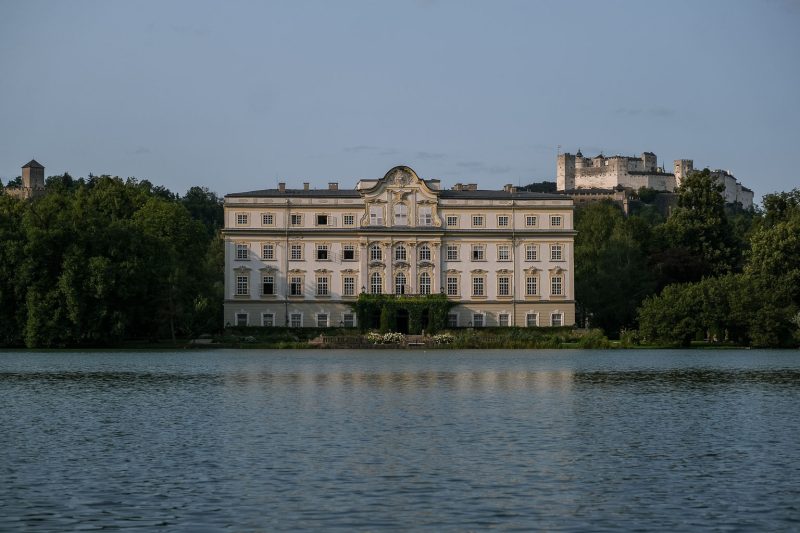
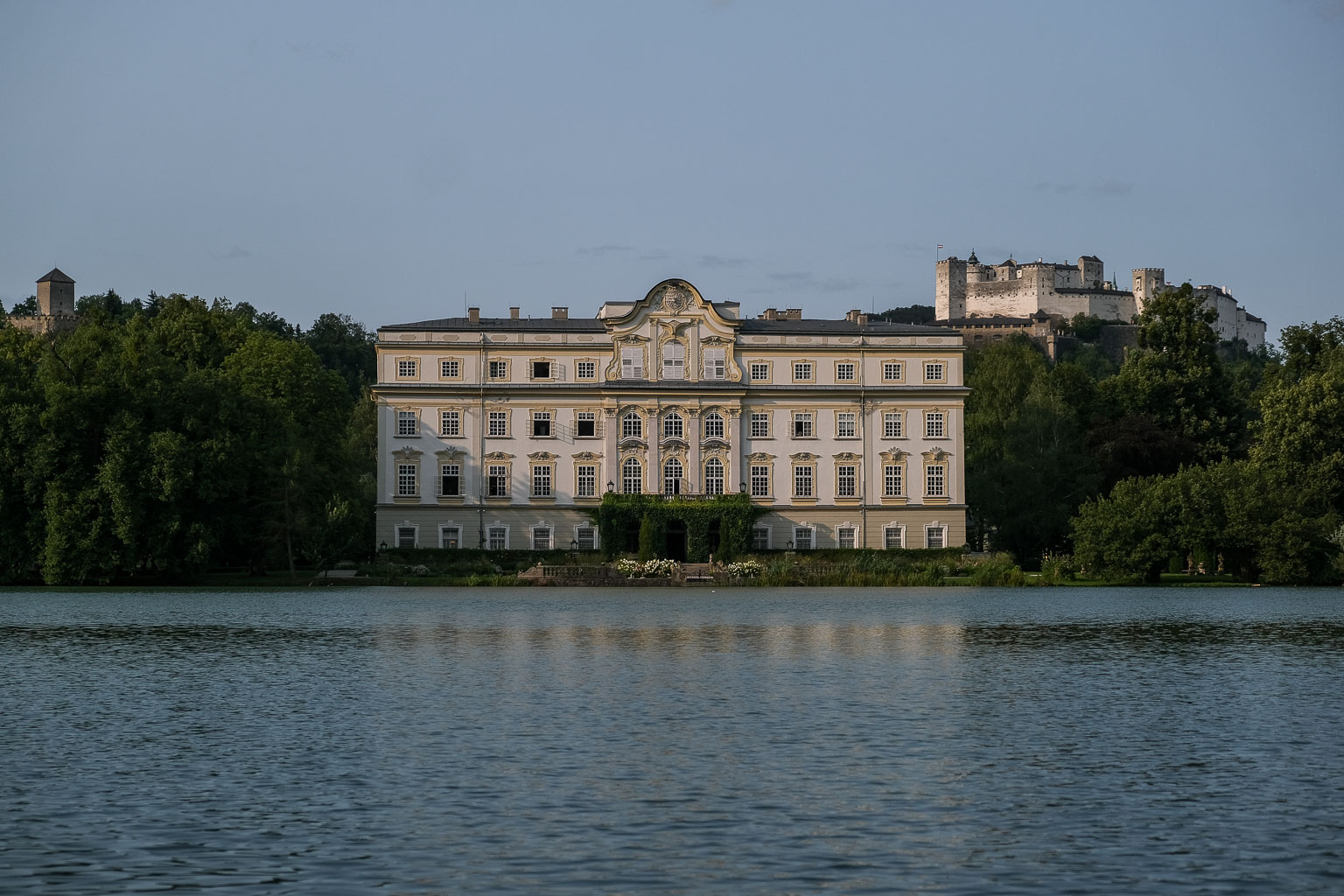
This three-hundred-year-old palace was the location for the lakeside garden of the Von Trapp villa, including where Maria & Co. fell off the boat. The interior was produced in a studio, with the gilded Venetian Salon entirely re-created for the ballroom scene. The pavilion used to live in the palace gardens until flocks of tourists forced it to relocate to Hellburn.
Now a private hotel within a nature reserve, visitors can book breakfast or a guided tour of the palace and lake. You might even catch an open-air performance of The Sound of Music in their Picnics in the Park events. Half an hour walk or a similar bus ride south of Salzburg, visit Leopoldskron on the way to Hellbrunn.
Marionettentheater
Where: Schwarzstraße 24, 5020 Salzburg, Austria
Famous for: Puppet performance of “The Lonely Goatherd” (1:15:36)
Salzburg’s award-winning puppet theatre was the inspiration behind “The Lonely Goatherd” scene, which was re-created in a studio. Puppetry in Salzburg has deep roots, with Marionettentheater being one of the longest-running in the world, launched in 1913 by sculptor Professor Anton Aicher. Nowadays, you can watch handcrafted marionettes perform plays, operas and musicals at this UNESCO Intangible Cultural Heritage site, including a rendition of The Sound of Music itself.
Near to Mirabell Palace, book a guided tour on your way to the gardens, or head over to Hohensalzburg Fortress to see the Marionette Museum.
Felenreitschule Theatre & Toscaninihof Square
Where: Felsenreitschule, Hofstallgasse 1, 5020 Salzburg, Austria
Famous for: Von Trapps rehearse (2:11:44) and perform at Salzburg Festival (2:26:06)

This open-air theatre carved into Mönchsberg’s rock face was originally a riding school before it became Salzburg’s, and arguably one of the World’s, most famous theatres, when the Von Trapps rehearsed and performed “Edelweiss” before fleeing for their escape. Today, it’s still used for Salzburg Festival concerts and operas, with unbeatable acoustics in a unique atmosphere.
Composer Oscar Hammerstein wrote Edelweiss last minute before the Broadway trial, but audiences ever since have been convinced it’s a traditional Austrian folk song. Christopher Plummer was reportedly so nervous to perform it that he was drunk during filming. Book a guided tour to relive the Captain’s nerves or attend the yearly festival for the full experience. Outside Felsenreitschule, you’ll recognise Toscaninihof square as the setting of the Nazis arriving by car to the festival rehearsal, with Rolf confronting Liesl with a telegram for her father from Berlin at the end of the scene.
St Peter’s Abbey & Cemetery
Where: Sankt-Peter-Bezirk 1, 5020 Salzburg, Austria
Famous for: Cemetery where the Von Trapps hide from the Nazis (2:36:25)

The dramatic scene where the Von Trapps hide from the Nazis was inspired by St Peter’s Cemetery, although it was actually recreated in a Californian studio. The real Petersfriedhof, with ivy-covered catacombs and cliff-carved chapels, is hauntingly beautiful and the perfect theatrical hiding spot. Founded in 696, the abbey is the oldest Germanic monastery still active today. Free to enter, explore its serene cloisters and the most ancient library in Austria, right in Salzburg’s old town.
Roßfeld Panoramastraße
Where: Roßfeldstraße, 83471 Eck, Germany
Famous for: Mountains where the Von Trapps escape Austria (2:43:24)
The dramatic closing scene of the Alpine escape was shot on the slopes of Roßfeld Mountain in the Obersalzberg region, with Untersberg and Eagle’s Nest in the background. The exquisitely Austrian landscape was actually mostly German. Some guided tours pass through this panoramic route, including ones to Kehlsteinhaus, Hitler’s hilltop chalet that’s fifteen minutes away.
Forty-five minutes from Salzburg, this mountainside road in the Bavarian Alps can also be reached by train and bus. The real von Trapps followed similarly and left Austria by train to Italy, avoiding the hills altogether, as hiking to Switzerland would have meant walking hundreds of miles while avoiding Hitler’s mountain retreat. But why let reality spoil movie magic? You’re here to “hold a moonbeam in your hand”.
The Perfect 4-Day Sound of Music Itinerary
Most of the musical was filmed in Salzburg itself, and you could easily spend a few days strolling around the old town and soaking up the magic. However, if you’re short on time, you could squeeze the central locations into a day if you’re a disciplined fanatic, leaving time to explore the outskirts, the surrounding Lake District and German hilltops.
Day 1 – Salzburg Old Town: “I Have Confidence”
Morning
Start your day at 9am with a pre-booked guided tour at the Felsenreitschule, the historic open-air theatre where the Von Trapps performed Edelweiss in The Sound of Music.
Cross over the river to Mirabell Gardens, aim to get there for 10:30 in summer to catch the brass bands playing along the promenade, before you twirl around the Pegasus Fountain, Do-Re-Mi Steps and more.

Walk over the Mozartsteg Bridge, an Art Nouveau pedestrian crossing that has straddled the Salzach River since 1903, with the fortress as its backdrop. It was the first stop on Maria’s adventure with the children in the city. Continue under the archways of Domplatz and into Salzburg Cathedral, where Mozart was baptised. If you arrive before noon, you can catch the daily organ recital.
Afternoon
Wander through Residenzplatz, home to the grand baroque fountain where Maria has “confidence” as she splashes through the square. Before lunch, head towards two “Do-Re-Mi” spots, Karajan Square with its Pferdeschwemme horse pond, and Winkler Terrace with its showstopping hilltop panorama.
Head back down the hill and grab a quick Bosna sandwich from the legendary Balkan-Grill Walter kiosk, a Salzburg institution tucked into a narrow alley. Or, sit down with a view over the rooftops at Restaurant Stiegl-Keller, where hearty Austrian grub and cold beer are served with a panoramic backdrop of the old town. Be warned, you may see “men drinking beer with the foam afloat heard”…

After lunch, potter over to St Peter’s Cemetery, the inspiration for where the Von Trapps hide from the Nazis, and peek into St. Margarethen Chapel, where the nuns prayed in the abbey. Continue past Kapitelplatz, where Julie Andrew caught the bus to the Von Trapp villa. If it’s a Friday, you might want to check out Kajetanerplatz market before it closes at 2pm, to see where Maria juggled fruit and veg. Then repent your sins as you follow the path uphill to the unmistakable Nonnberg Abbey, the real convent where the historical Maria lived. From here, enjoy views across the Altstadt from the Panorama Terrace showcased in the “Do-Re-Mi” montage.
Evening
Take the funicular up to Hohensalzburg Fortress, one of Europe’s largest medieval castles. Explore its armoury, dungeons and Marionette Museum that showcases the puppet inspiration behind “The Lonely Goatherd”, while taking in sweeping views of Salzburg and the surrounding Alps.


For dinner, end with a musical finale. Stay atop the fortress for a candlelit dinner and concert with a view of the city lights. Or dine in the atmospheric St. Peter Stiftskulinarium, Central Europe’s oldest restaurant, and enjoy an 18th-century menu paired with a Mozart concert. Want something more Maria than the Baroness? Try the low-key local wines and seasonal dishes at Weinstöckl Stadtheuriger.
Day 2 – Villas & Palaces: “Something Good”
Morning
Begin your day with “Something Good”. Start like the Baroness with breakfast and pink lemonade at Schloss Leopoldskron, the grand lakeside palace used for the Von Trapp villa’s garden and boating scenes. The palace is now a boutique hotel, so if you’re not staying overnight, check ahead for breakfast reservations.
From here, stroll or cycle along the tree-lined Hellbrunner Allee, one of Europe’s oldest avenues. Midway down, you’ll pass Schloss Frohnburg, which served as the front exterior of the Von Trapp home and is now part of the Mozarteum music academy.
Continue along the same path to Hellbrunn Palace, famous for its trick fountains and lush parkland, and most importantly, for housing The Sound of Music pavilion featured in “Sixteen Going on Seventeen” and “Something Good.”
Afternoon
After exploring the palace grounds, take the Untersbergbahn cable car up Untersberg Mountain, whose snow-capped peaks appear in the film’s opening and closing scenes. Soak up panoramic views across the Alps before lunch at the mountain hut Hochalm am Untersberg, serving hearty Bavarian dishes and cold beer with an unbeatable view.
Evening
Back in town, stop by Sporer Likör- & Punschmanufaktur before it closes for one of their century-old recipes of spiced punches and handmade herbal liqueurs.
End your evening at the cosy Pauli Stube, a local favourite dishing up dumplings, schnitzels and strudel. If there’s still a song left in your step, pull up a pew at the Whisky Museum, a family-run gem where the shelves are lined with rare bottles and the glasses are full with a generous measure of charm.
Day 3 – Meadows & Alpine Panoramas: “The Hills Are Alive”
Morning
Rent a car and leave Salzburg behind as you head south to Werfen, a 45-minute drive into picture-postcard Austria, with rolling green valleys framed by the Tennengebirge peaks. Start at the Sound of Music Trail from the Werfen Tourist Office, and follow in Maria’s twirling footsteps to Gschwandtanger Meadow, where the “Do-Re-Mi” picnic scene was filmed (curtain outfits optional).
Afternoon
Pause for lunch at Café Obauer, next to Restaurant Obauer, whose Michelin stars shine as brightly as the snow-topped peaks in winter. If you have the time and the stamina, explore Hohenwerfen Castle, the dramatic fortress seen in the background of “Do-Re-Mi”, or delve underground into the Eisriesenwelt, the world’s largest ice cave.

Next, drive to Mehlweg Meadow near Marktschellenberg, the “The Hills Are Alive” field from the film’s iconic opening scene. Although it’s on private farmland, nearby public trails offer the same panorama across the Untersberg range.
Continue along the Roßfeld Panoramastraße, one of Austria’s loftiest and most cinematic drives, tracing the mountain route the Von Trapps took in their Hollywood escape. Just fifteen minutes away lies Eagle’s Nest, Hitler’s hilltop retreat, where Bavarian views frame the remnants of a turbulent past.
Evening
Round off your day with wheat beer and schnitzel at Die Weisse, Salzburg’s oldest brewery restaurant, followed by a glass of natural wine at bar-cum-bookstore Antiquariat Weinek, before you dream of finding your Captain.
Day 4 – Encore: Lakeside Extras
Morning
Get to know Austria’s lake district today, heading east from Salzburg to Fuschl am See, whose glassy waters shimmer through the film’s opening aerial montage.

Savour the sumptuous breakfast with a lakeside view at the historical castle grounds of Rosewood Schloss Fuschl, or pause for coffee and strudel at the charming Mr. Bartholomäus Frauenlob bakery.


Next, drive along the lakeside road to St. Gilgen, Mozart’s mother’s birthplace and a town that feels like it’s perpetually dressed for a photoshoot. Explore the Mozarthaus museum where the mother of Salzburg’s most famous son was born.
Afternoon
For lunch, breathe in the lakeside breeze beside the sparkling waters of Wolfgangsee at See Cafe Brandl, before you take the Zwölferhorn Cable Car to the summit for a view so sweeping it feels scripted, with mountains, lakes and storybook villages unfolding like a backdrop straight from the opening credits.


Next, make your way to St. Wolfgang to ride the nostalgic Schafbergbahn Railway, a vintage steam train that puffs its way up 1,700 metres with all the romance of a Technicolour travel reel.
On the drive back to Salzburg, take one last theatrical detour to Mondsee’s Basilica of St. Michael, the fairytale church where Maria and Georg’s wedding was filmed. The butter-yellow façade is instantly recognisable and said to be so spiritual it’s known to solve problems like Maria.
Evening
Return to the city for a well-earned finale, with the exquisite The Glass Garden, where small plates meet expansive views over Salzburg. Prefer something more Maria than Baroness? Head to Augustiner Bräu Mülln, Austria’s largest beer inn, housed in a former monastery with market stalls and its own house-brewed beers.
Finish at Imlauer Sky Bar, for a nightcap with sweeping views over Salzburg’s rooftop
Sound of Music Tours in Salzburg
With filming locations sprinkled across both city and countryside, a guided tour is the easiest way to take in all the silver-screen magic. You can choose between private excursions, cycling adventures, or the original bus tour, depending on how deep into the hills you want to go.
Bike tours cover the key city sights, bus tours whisk you out to Mondsee, and private trips venture further to the meadows. Just note: tours are not allowed inside St. Peter’s Cemetery, so you’ll need to pay your respects there in your own time.


The Original Sound of Music Bus Tour
If you’d rather hum along than hike, hop on the original bus tour, which whisks you through the film’s most scenic backdrops, including the wedding church in Mondsee. You can even extend the experience with themed extras, from an Edelweiss cooking school to a Schnitzel dinner and concert, or a day trip into the Bavarian mountains.
Duration: 4 hours
When: Daily at 9.15am & 2pm
Cost: €60 per adult
Highlights: Mirabell Gardens, Leopoldskron, Hellbrunn Gazebo, Frohnburg, Mondsee Basilica. Includes sing-alongs and behind-the-scenes stories.
Fraulein Maria’s Bicycle Tour
For a closer spin on Salzburg, pedal like our favourite nun with the fun on the Fraulein Maria Bike Tour, which winds through spots buses can’t reach. From the nunnery gates to villa doors, you’ll get up close and personal with Salzburg’s theatrical heart. Pedalling down Hellbrunner Allee with the alps rising behind you and “Climb Every Mountain” blasting from your basket, you’ll be half expecting Mr. Plumber to pop out from behind a tree and propose.
This scenic ride circles the city letting you see Salzburg in the way the Von Trapps did… if they’d swapped hills for handlebars. The tour runs rain or shine, but takes a break for winter.
Duration: 3.5 hours
When: Twice daily Apr–Oct at 9:30am & 3:00pm
Cost: €45 per adult
Highlights: A gentle cycling route through the city to Mirabell, Leopoldskron, Hellbrunn, and Nonnberg Abbey. Ideal for families and small groups.
Private Tours to Werfen & Beyond
Step off the beaten track with a private excursion to Werfen, where the Von Trapps learned their Do-Re-Mis. You can delve further into the lake district with trips to Hallstatt, St Gilgen and Wolfgang, or cross the border to Eagle’s Nest and the surrounding Alps. For a personal touch, join a walking tour with Elisabeth von Trapp, the granddaughter of Maria and Georg, to hear the family stories of behind Salzburg’s most cinematic corners.
Duration: 6–8 hours
When: On request
Cost: From ~€100 per person
Highlights: The “Favourite Things” meadow above Werfen, Mondsee Basilica, Untersberg, and lakeside villages. Flexible and crowd-free.
Schloss Leopoldskron & Lake
Step into the world of the Von Trapps with a guided tour of Schloss Leopoldskron and its glimmering lake. Saunter through Rococo palace rooms that inspired the ballroom scenes, where gilded ceilings and sweeping staircases transport you back to that Laendler scene. Then stroll the lakeside paths and manicured gardens where Maria and the children capsized.
In winter, the Alpine peaks glint in the water; in summer, lavender lines the way to the water. The palace and lake offer a storybook setting in any season. “You’ll hate to go and leave this pretty sight”.
The Sound of Music Marrionette Performance
Step into Salzburg’s historic puppet theatre that inspired “The Lonely Goatherd”. Watch our favourite Austrian couple dance and sing in exquisitely crafted marionette form, in a concert hall that’s been dosing out pocket-sized magic in the heart of the Alps since 1913.
Duration: Evening, ~1 hour 45
When: Selected dates from April to Dec
Cost: From €20 per person
Highlights: A puppet performance of our favourite musical, in one of the longest-running marionette theatres in the world.
And finally… how do you hold a moonbeam in your hand?
You can’t. But you can chase it across meadows, mountains and lakes that have lived rent-free in your imagination for decades. Pack your playlist. Wear twirlable clothing. So long, farewell.
The Sound of Music Filming Locations Map
Whether you are planning on doing a full Sound of Music trail or just want to locate one of the filming spots mentioned above, this map includes everywhere featured in this guide.
Using this map: This map shows all of the filming locations mentioned in this guide (green icons). The list can be seen and filtered by toggling the icon on the top left-hand-side of the map, and each location can be explored further by clicking them. Expand the map by clicking the icon on the top right-hand side.