It’s early evening in Santa Luzia and there doesn’t seem to be any fishing happening. Despite the descending sun still fiercely beating down on the town, the wind is strong and steadily increasing, as it tends to do on these far reaches of Portugal’s southern shores.
The vessels are all tied up close to shore, bobbing in time with rapidly moving, jagged tips of the waves that are whipping up the surface of the Rio Formosa’s water. The sound of rigging clattering against masts rings out like Sunday morning church bells. It’s a rapid change from the still waters I had seen earlier in the day.

Even with the bells sounding, not many people are answering their call to prayer; The docks are mostly empty, save for a few children screaming with joy as they leap from the pier into the water; The few restaurants that are open at this time of only seem to be serving regulars; The narrow, maze-like streets of one-storey houses that radiate inland from the waterfront are mostly empty, save for a few groups of men enjoying beers on their doorsteps while deep in conversation.
I spend a bit of time wandering this network of narrow alleyways to admire the ubiquitous tilework on the homes and public buildings. Every pattern and colour imaginable is present, and no two facades appear to be decorated the same. These aren’t the famed blue and white Azulejos you see in guidebook pictures of Porto and Lisbon, adorning the walls of churches, palaces and São Bento railway station. These are brightly coloured, geometric designs, depictions of saints, and sea-themed motifs to represent the town’s main industry and lifeblood.


Santa Luzia, found east of Faro and just 3km from the historic town of Tavira, is a place that is built on fishing and the fishermen that reside here. It sits directly on the shores of the Rio Formosa Natural Park, a labyrinth of canals, islands, marshland and sand bars that stretch 60 km along the Algarve coast between Garrão and Manta Rota.
The estuary and its diversity of ecosystems have provided jobs and sustenance for the people of this region for centuries if not millennia. The Moors extended their wealth by extracting salt from these waters and the gathering of shellfish and bivalves (mussels, oysters, clams, razor etc) has been developed with great skill and art in order to create delicious regional gastronomical specialities.

Santa Luzia’s history doesn’t go back as far as the days of Moorish occupation, Instead, it can be traced back to around 1577 when it was settled by local fishermen who promptly built a chapel and dedicated it to Santa Luzia (Saint Lucy), a Sicilian martyr born in Syracuse who is the patron saint of sight (a fitting connection, with ‘luz’ meaning ‘light’).
The story of Santa Luzia is a particularly gruesome one, as most tales of martyrdom are. This particular one involves her being confined to a brother, surviving a fire, her eyes being plucked from her skull, and finally being beheaded. If you keep your own eyes peeled (no pun intended) as you head into Santa Luzia, you will spot the small shrine dedicated to her on the village’s edge.
Although this may seem an unconventional choice of patron for the seamen, the town was named for her following the local fisherman finding her holy relic at sea. It had previously been lost in a storm.

It’s no surprise that a village formed by fishermen has always retained strong connections with the sea. Although it was tuna fishermen that originally occupied the area – mainly centred around Praia do Barril, a now abandoned tuna fishing village where the fleet’s anchors have been placed in the dunes as a lasting memorial – they have had to move with the times. The fishing was initially carried out by hook on traditional xávegas until around 1842 and the appearance of the barrel frame. As of 1927, local fishermen began to dedicate themselves to the lucrative fishing of octopus, and have stuck with it ever since, which led to Santa Luzia being considered Portugal’s ‘Octopus Capital’.

This is a badge that the locals seem to wear with honour, and despite dwindling octopus numbers, it is a relatively lucrative business. Sardines and other tinned fish are normally synonymous with Portugal but the country consumes over 15,000 tonnes of octopus a year, which is the highest amount of any country in Europe. More than half of Portugal’s octopus landings occur in the Algarve region and a huge amount of these are in and around Santa Luzia.


Many of the fishermen still prefer to haul in their catch the traditional way using age-old methods. They lay clay pots, known as alcatruz in the water. Each terracotta pot is identified with the fisherman’s name and a rope is tied around the neck. They are then laid around four metres on the flat sea bed up to 30 metres deep in the hope that an octopus will climb inside seeking shelter and not be able to escape.
As some modern fishermen don’t like to wait for the molluscs to find refuge in the alcatruz, they have traded this method for baited, plastic pots, which can be manufactured cheaply at scale. Yet clay pots remain popular. Not only can they act as a weather gauge – shattering in stormier weather and therefore warning fishers that conditions are too rough, but the old timers also claim that the octopus caught the old-fashioned way tastes much better than the one caught using modern techniques.

With dinner time fast approaching, this is something I had to see for myself. As well as being known as the Octopus Capital of Portugal, it’s also said that the restaurants of Santa Luzia serve the best polvo dishes that the country has to offer and there isn’t a shortage of restaurants with them on the menu.
Along Avenue Eng. Duarte Pacheco, the strip that lines the waterfront, every other building hosts an eatery on the ground floor and each of them has octopus on the menu. I walked the promenade, browsing the menus while hurried waiters and kitchen staff fussed to get tables and dining rooms ready for service and, hopefully, an influx of guests.
Even amongst a crowded market, it’s Casa Do Polvo – the House of Octopus – that draws visitors from all over Europe. It’s the only restaurant in Santa Luzia to earn a coveted and enviable Michelin Guide mention, and despite not having a reservation, I made my way there with my stomach rumbling and my fingers crossed.

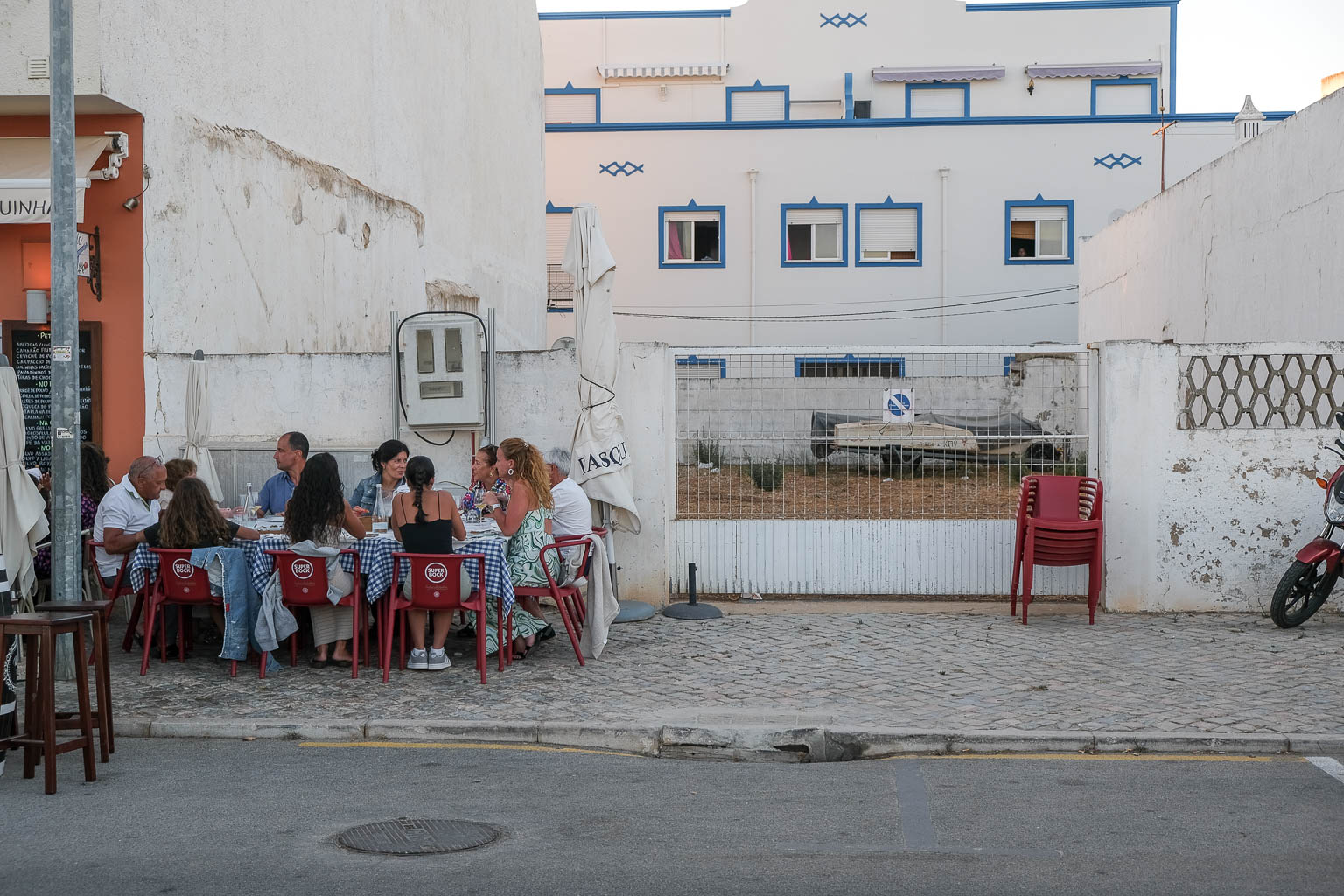
I arrive a little too early. Although the smell of grilling fish is emanating from the kitchen inside, the tables on the terrace are still being laid. The creases are being carefully smoothed out of checkered tablecloths and cutlery is neatly placed. Plates are straightened and wine glasses are polished. At the entrance, a sign reads “There are three types of men: the living, the dead and those who walk in the sea”, next to one of the famous anchors of Armação do Barril. Beside the door, a plaque proudly displays the Michelin logo and announces their mention in the guide, one that highlights “the cuisine and the fishing atmosphere”.
I’m told by the front of house staff that I may be in with a chance. I just need to wait until the restaurant opens. We take a seat on a bench opposite, watching the boats as they sway in the shallow water between Santa Luzia and the outlying islands. The air smells of seaweed and gulls call out overhead. Already, the sun is lowering over the Rio Formosa and an orange glow bathing the harbour. Despite the cawing birds and the whipping wind, it feels remarkably peaceful for the Algarve in the height of summer.


On the opposite side of the street, there is slightly more movement. I see other hopeful diners milling around and a disorganised queue begins to form. Leaping to action, I manage to get the attention of the Maître d’ who, after some sighs and a few agonising minutes of shuffling through her reservation list, making notes and crossing out names, instructs the wait staff to set up another table for two on the terrace. I’m in luck and we’re seated. Within minutes the restaurant is full.
In the kitchen, the first dishes are already being prepared as I sip on my house white and peruse the menu. It’s an endless list of octopus cooked in every way imaginable. From appetisers of octopus fried in spicy balls, rissoles, croquettes, and even Indian spiced samosas, to carpaccio, stews and soups.

We opt to share dishes to get more of a taste of what Casa do Polvo has to offer. The fried platter of samosas, balls and croquettes seems like an obvious choice to start, and it does the job of whetting the appetite, even if the taste of octopus is hard to find amongst the flavour of deep-fried breadcrumbs.
Our main course is a little more traditional. Amongst the slightly stranger and more diverse takes on preparing cephalopods, there are certain mainstays on Casa do Polvo’s menu that are ever popular and frequently ordered. Grilled octopus is a Santa Luzia speciality while octopus royal – octopus roasted with potatoes and bathed in a house sauce – is one of the most requested dishes. I go for the Octopus Amêndoas, made with potatoes, toasted almonds and apricots, and my dinner partner chooses the octopus à lagareiro, a dish served with potatoes, sautéed greens, and enough garlic to prevent you from worrying about vampires for the rest of your lifetime.

This is one of the great things about Casa Do Polvo’s excessively long menu; While they do try to offer the most traditional dishes they also manage to innovate and provide some slightly more interesting delicacies.
We swapped plates and shared dishes. The Octopus was tender and delicate, the tentacles and suckers giving way at even the gentlest bite while the crisp edges from the roasting provided a little more texture. It was far from the chewy, toughness that you come to expect from Octopus.
In the time it takes us to sink an entire carafe of white wine, we manage to clear our plates and shuffle away from our table to make way for the ever-present queue of impatient diners that lines the pavement outside hoping for a seat at Casa Do Polvo’s table.
While it may not be the best octopus I have ever eaten, we leave satisfied and full, happy in the knowledge that we have just eaten octopus at the finest octopus restaurant in Europe’s octopus capital. Such was the speed of the meal that we hail our taxi just as the sun is about to set.
The gusts have died down and the fisherman are finally heading out into the Atlantic aboard their colourful vessels, anticipating that they will bring in a good catch in time for Santa Luzia’s early morning fish market. As their silhouettes pass across the orange sky, I can finally see why the town’s original settlers chose to dedicate their church to a martyr whose name hints at a connection to light.
Santa Luzia's Octopus Route
If you’re looking for an indepth look at Santa Luzia’s connection to octopus fishing, The Octopus Route was set up in March 2020 as part of the Mediterranean Diet Safeguard Plan.
It is an that itinerary invites visitors to wander through Santa Luzia on a ten-stop route, revealing the history of the fishing village over the centuries through a series of information boards. Each point features text about the village’s rich heritage, as well as informative diagrams of the fishing gear, boats, and maritime traditions.
Where to Eat Octopus in Santa Luzia
If you are visiting Santa Luzia, you can’t leave without trying the local speciality. There are a few spots around town where you can taste the various traditional mollusc-based dishes such as Portuguese octopus rice, octopus à lagareiro (octopus roasted with garlic and potatoes in the oven), octopus salad (Portuguese style) and octopus soup. Here are some of the best places to sample it:
Casa do Polvo Tasquinha
Anyone in the know will tell you that if there’s one place to sample octopus in Santa Luzia, it’s Casa do Polvo Tasquinha. This is the only place in town to feature in the Michelin guide, with a particular mention of their huge array of dishes that feature the 8-limbed mollusc. Unless you book in advance or arrive at opening time, you’ll have to fight for a table as it’s incredibly popular and fills fast, but it’s worth it to sample octopus served in a variety of ways; in soups, stews, grilled, roasted with garlic or fried in croquettes and even spicy samosas.
Where: Av. Eng. Duarte Pacheco 8
When: Wednesday to Sunday 12pm to 2.45pm; Monday 12pm – 2.45pm; Closed Tuesday

Restaurant A Casa
Sitting at the opposite end of Av. Eng. Duarte Pacheco to Casa do Polvo Tasquinha, it’s much easier to grab yourself a table at A Casa due to its more isolated location. They’re famed for their cataplana de marisco, but do a mean octopus fritter alongside menu staples such as octopus with beans, grilled octopus, succulent garlic prawns and a range of pasta dishes.
Where: Av. Eng. Duarte Pacheco 78
When: Thursday to Monday 12pm to 4pm; Tuesday 12pm – 4pm; Closed Wednesday
Tasquinha do Bruno
If you’re looking for a quieter dining experience away from the waterfront, you’ll find the homely A Tasquinha do Bruno on the backstreets of Santa Luzia. While the cod and crayfish are highlights of the menu, it’s also one of the best places in town to stop off for a drink, with a good range of gins and wines adorning the menu.
Where: R. Mal. Gomes da Costa 5
When: Monday to Saturday 12pm to 11.45pm; Closed Sunday

Taberna Amaro
It feels a little unfair that while the terrace of Casa do Polvo is constantly heaving and queues wind out onto the pavement, tables and chairs outside nearby Taberna Amaro remain relatively quiet. Although it may not be as famous for its seafood, the quality is almost as good with friendly, attentive service to match.
Unlike most dining spots that sit along the main road, Amaro gives its Portuguese cuisine a slightly more modern twist, with fantastic tapas and cocktail offerings that can be enjoyed on the rooftop terrace.
Where: Av. Eng. Duarte Pacheco 32
When: Tuesday 5pm -10.30pm; Wednesday to Sunday 12pm – 10.30pm; Closed Monday
Sol E Mar
A little more rustic and unfussy than others on this list, Sol E Mar still delivers when it comes to classic Mediterranean cuisine, even if you’re likely to find better-cooked octopus just a few doors down the street. This is home cooking with no pretentions but most people are drawn here for the restaurant’s reputation for great service and its reasonable prices.
Where: Av. Eng. Duarte Pacheco 56
When: Daily 12pm – 11pm; Closed Tuesdays

Meia Pipa Bar
This is the place to stop off for a drink while exploring Santa Luzia. Although the outdoor space allows you to sit outside and sip your Super Bock in the sun, the inside has a vibrant and buzzy atmosphere, particularly as they have frequent live music performances.
Where: R. Mal. Gomes da Costa 6B
When: Mon to Thurs 6pm – 2am; Fri & Sat 6pm – 3am
How to Get to Santa Luzia
You will find Santa Luzia in the Algarve region of Portugal, just a few kilometres west of the popular town of Tavira and sitting on the shores of the Parque Natural da Ria Formosa.
Faro Airport serves the entire Algarve region of Portugal and there are regular scheduled flights from the majority of major UK airports. To reach Santa Luzia from the airport by public transport, you will likely have to first travel to central Faro (via the number 16 or 56 bus that departs from outside the terminal building), and then catch an onward bus (no 67) or train to Tavira.
The direct Alsa service is a little less regular and more expensive (€19 per person) but will get you to from the airport to Tavira in less than an hour.
From Tavira
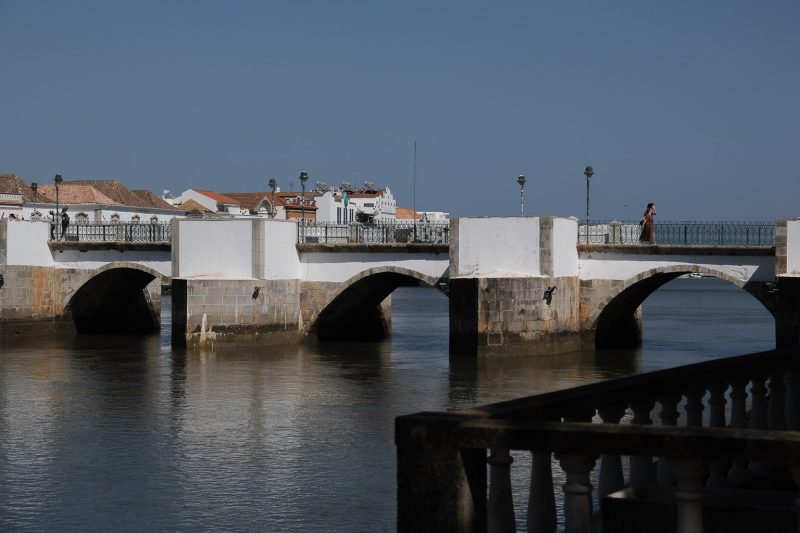
Santa Luzia is within walking distance from Tavira. At around 3km along the M515 road that runs between the two, the journey will take you 40 – 45 minutes if starting from a central location, close to Tavira’s Old Roman Bridge. Having said that, an Uber will get you there in less than 10 minutes and costs just a few euros, so it may be worth saving your legs and hailing a cab.
Alternatively, there is a semi-regular bus. The 105 takes 10 minutes to make the journey between Tavira’s Estação CP and Santa Luzia’s centre.
Although the Algarve’s public transport system is extensive and reliable, I found that the region is best explored in your own vehicle, meaning that you aren’t relying on bus and rail timetables as well giving yourself the ability to get off the beaten track, which Santa Luzia certainly is. I tend to use Discover Cars for my car rental when travelling, as they allow you to book in advance and compare multiple providers for the best deal.
Pre-booking a private transfer from Faro Airport to Santa Luzia is also a good option. The service often costs around the same price as an Uber, with the bonus that you will not need to wait for your pickup or potentially have to traipse to a meeting point. This is particularly useful if arriving late at night, meaning that you won’t have to worry about the stress of finding a taxi when you’re tired. I usually use Get Transfer, who will arrange for a driver to meet you on arrival. They will always arrive at a specified time or check the latest flight arrival times in case of delays. Pick-up at the airport with a nameplate is also included in the service price.

Where to Stay Near Santa Luzia
Santa Luzia is off the usual tourist trail for visitors to the Algarve, and most only make their way here as part of a day trip from nearby Tavira, or to come for an evening meal of local octopus. As such, there are no large hotels or even many guesthouses. A few rental properties are scattered around the village but the majority of people opt to stay in Tavira instead.
Santa Luzia
Casinha Secreta
This rental property in the heart of Santa Luzia is equal parts modern, stylish and spacious. Situated just a short walk from the coastline, it comes with a bedroom, bathroom, kitchen/diner and as lovely patio overlooking an inner courtyard, which is the perfect spot to enjoy a glass of wine after a busy day exploring the Rio Formosa.
Alvisquer
Hospedaria
This one-storey, traditional, white-washed former post office and general store dates back to 1917. It sits in the quiet countryside on the outskirts of Tavira and has been lovingly re-imagined into a stunning, five-room boutique hotel with a reto/vintage vibe.
Tavira
Altanure Almatere
A secluded escape in the heart of Tavira, this hotel feels like an oasis of foliage and greenery, despite being just a few minutes’ walk from the port city’s historic centre. Each of the 8 rooms is decorated in a rustic-chic style: walls lined with panels woven from river cane, shutters made from palm leaves, and fabrics made from organic Portuguese wool while most of the furnishings are fabricated from re-purposed and upcycled urban objects.
When is the Best Time to Visit Santa Luzia?
Although I would usually recommend avoiding the Algarve during the peak summer months when the temperatures are high and visitors flock to the tourist-heavy resorts, Santa Luzia is generally off the radar of most people and doesn’t attract the same crowds. At the same time, prices will be cheaper during the shoulder months of Spring and Autumn.
If you do happen to be in town during the summer, then the ‘Festival do polvo’ is held each year on the 2nd weekend in August, where the town celebrates its connection to all things octopus.
This is a time when residents and tourists alike can celebrate and the town pulsates to the rhythm of music, dancing and parades that take place on Avenida Engenheiro Duarte Pacheco, the road lining the harbour front. There’s a full cultural program on offer in the form of live music, fado and artisan markets as well as plenty of delicious polvo dishes being served.