There’s a sense of dissonance upon arriving in Olhão. Just a few miles from Faro’s airport, where the Algarve’s holidaymakers spill into rental cars bound for manicured resorts and cliff-backed beaches, this old fishing town appears stubbornly resistant to polish. Its low-slung, whitewashed houses, many peeling, patched with pastel doors or streaked with salt stains, cluster in a winding labyrinth of alleys, their Moorish, cubist geometry a far cry from the 5-star hotels and golf resorts found elsewhere in the region. There’s beauty here, though it’s not the curated kind: it’s the beauty of life continuing, quietly, against the shifting tides of history and tourism.

I’m sitting in an upmarket restaurant, Cestaria Bistro de Artesão, with my back to the clatter and splash of the fish market. Behind me, there’s the hum of scooters from the waterfront and the clinking of small glasses of Sagres lager from the market’s simple cafes, which seemingly keep bustling until late into the night. It’s a good picture of Olhao’s different personalities:. While this plays out in the background, I have glasses of beautiful local wine in front of me and dig into a perfectly grilled octopus tentacle – the best I’ve ever eaten – served on a bed of sweet potato, drizzled in spiced honey. Alongside it, a blackened pork loin, braised and smothered in chimichurri.
As the light fades and the panoramic sky darkens, the island-dotted Rio Formosa spreads towards the horizon, the last remaining sunlight glinting off the calm waters. I sip a cocktail or my nightcap and watch the boats bobbing, the wind rattling their rigging in a constant alarm on the across ebbing tide. It’s a sight and experience I could get used to: the romanticism of the sea and the calm of the coast.

The story of Olhão is inseparable from the water that surrounds it. For centuries, men have pushed their boats into the Ria Formosa lagoon at first light, chasing sardines, octopus, and clams across waters that shift at a constant pace. The town’s name itself, derived from the Arabic al-hain, or little spring, echoes back to Moorish rule, when these coastlines bristled with watchtowers and the scent of spice and citrus drifted inland. In 1808, it was fishermen from Olhão who defied Napoleonic occupation, slipping across the Atlantic in a small wooden boat, Bom Sucesso, to carry word of Portugal’s resistance to the exiled royal court in Brazil. Their vessel, improbably, survived the journey; today a replica rests by the waterfront, a reminder that this town’s fortunes have always been lashed to the whims of the sea.


Walk its streets in the morning, and you sense that maritime pulse still beating. At the great twin-domed market, designed in the 19th century with red brick and ironwork, stallholders lay out the ocean’s confessions: glistening mackerel stacked like coins, squid with ink-dark eyes, clams still spitting brine. The air is part salt, part smoke, part garlic. Elderly women in floral aprons bustle past with baskets, while men in flat caps stand rooted by the sardine counters, comparing prices with the seriousness of philosophers. Nothing here is staged; the theatre is life itself.
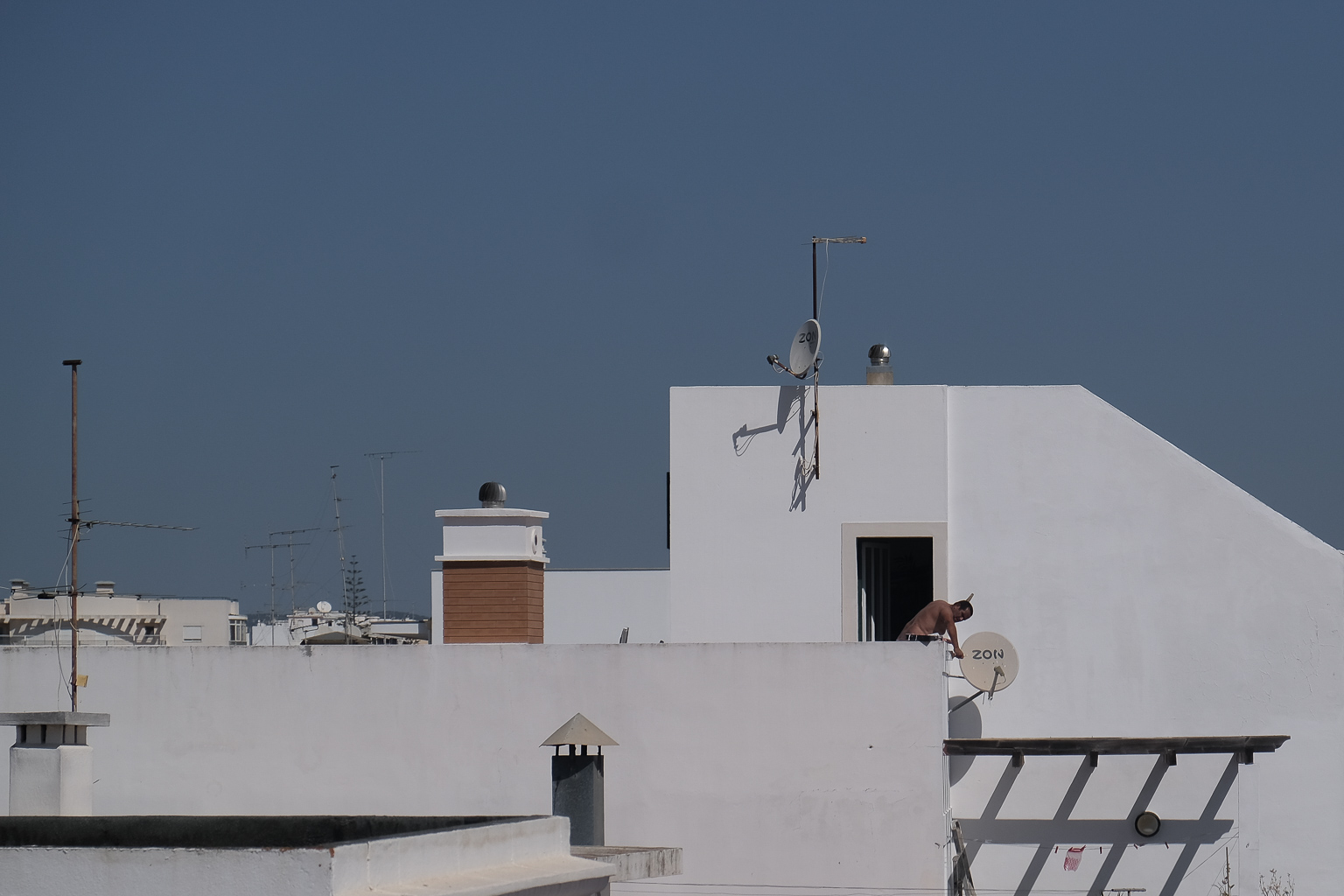
Steps from the market, the town contracts into a warren of alleys. Walls are etched with the patina of time: chipped azulejo tiles – no two patterns the same – cover every building, graffiti fading under sun-bleach, and wooden shutters painted every colour imaginable. It’s easy to get lost here, but that is part of the joy. On a rooftop terrace, washing flutters like flags. You hear the clipped vowels of Olhanense dialect, shaped as muh by Arabic as it is by European influence.

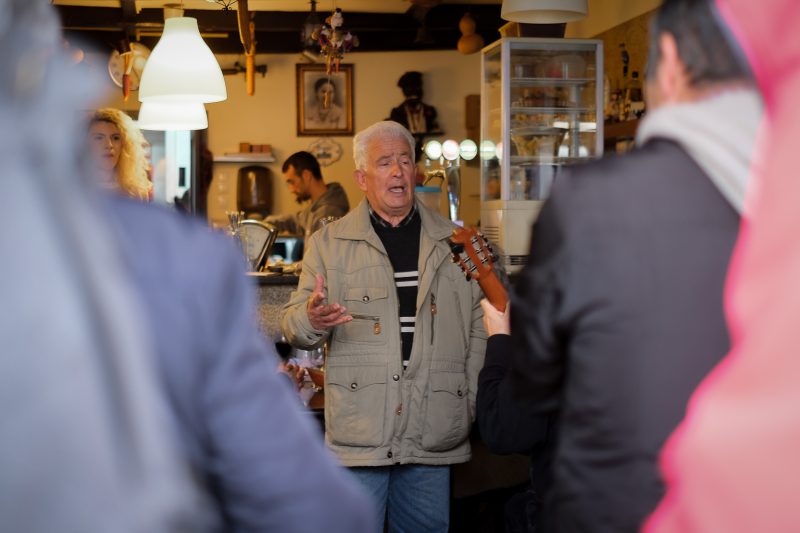
There’s the shuffle of dominoes slapped onto café tables, the rise and fall of fado from an unseen window. Unsurprisingly, there is a feeling of North Africa here as much as in Portugal. Chaotic, lived-in, uncurated, and therein lies its particular charm. You don’t wander here to see sights, but to be absorbed and to be dissolved into the streets.
I have a conversation with Mo Said and Talia Nehmé, owners of Cafe Tinto – one of the new wave of openings that are gradually transforming the city – about why they chose to relocate to Olhão from their native Canada. They had spent a long time in Colombia, learning about the country’s coffee culture, and claim that, out of everywhere in Europe, this is the place that has the most South American feel. It’s gritty and slightly ramshackle, yet welcoming. It feels like home.


Yet the lure of Olhão lies not only in its streets but in what lies beyond them. Step onto one of the town’s groaning ferries at the marina, or via taxi speedboat if you’re feeling flush, and the Ria Formosa unfolds. It’s an ever-changing lagoon of sandbanks and channels, a wetland of extraordinary beauty where flamingos stalk in coral-pink flocks and oystercatchers skim low over water that glitters like fractured glass. Within half an hour, the town is behind you, and you can reach one of the three barrier islands – Armona, Culatra, and Farol – that rise on the horizon.
On Armona, sandy paths thread between modest cottages and wild oleander. The Atlantic presses against the island’s edge with a slow, eternal insistence, and the beach unfurls for miles, unbroken. Time, here, seems to dilate. We spend half a day here, ambling the wooden boards from the harbour and village, where low-level cottages host holidaymakers and a dozen or so restaurants to serve you the perfect simple seafood lunch, to the low dunes. Beaten by the August sun, we catch rays and swim against the currents of the sea, ending the day with a glass of Super Bock and plates of fresh seafood, all with the soundtrack of the rising and falling sea and the scent of silver sage filling our nostrils.

Culatra is further, up to an hour’s walk through dunes, depending on the tides. It’s more heavily occupied than Armona, settled by fishing families, and lined with fishermen’s huts that huddle against the sand. You can still see their nets drying in the sun, and people come and go between its shorelines. Like Olhão, these are places of quiet retreat and a hint at what the Algarve was like before tourism began its homogenisation and smoothed its edges.

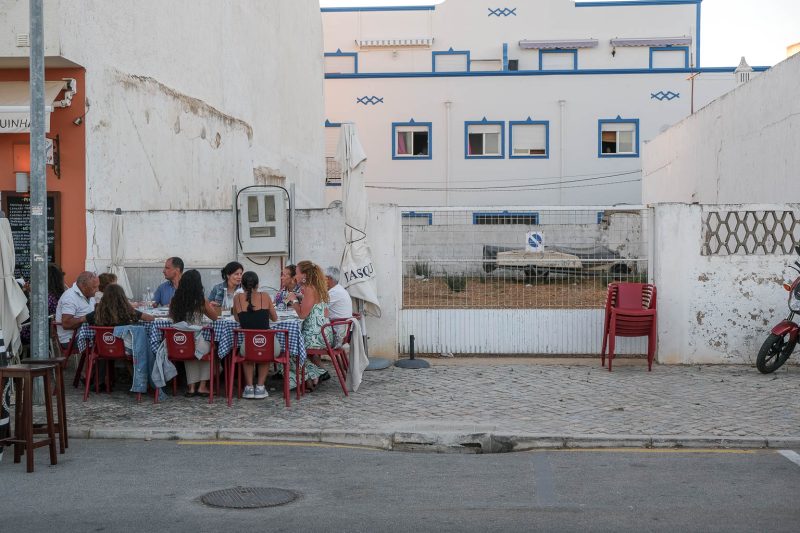
Back in Olhão, evening descends with a gentle drama. The streets that seemed sleepy at noon stir to life as restaurants set out tables along Avenida 5 de Outubro, beginning to come alive with conversation and clattering cutlery. Here is the essence of the town as it is today: a cataplana of seafood arrives at the table, its copper lid lifted to release a cloud of steam scented with coriander and wine. Razor clams gleam in pools of garlicky broth; octopus is grilled until tender and smoky; sardines, charred, flake under the gentle pressure of a fork. Seafood is the lifeblood of Olhão, yet there is nothing fussy about the cooking; it is a simple, honest, mirror of the town itself. You mop up the juices with crusty bread, sip a glass of Vinho Verde, and feel any of the pressures of the day dissolve.
And yet, beneath the ease, there is always history’s undertow. Olhão has weathered centuries of hardship: pirate raids, economic collapse, and the decline of its once-mighty canning industry. In the 20th century, the factories closed and families left; the town bore the scars of abandonment. But resilience lingers. Slowly, Olhão has found itself anew, not by transforming into a resort, but by leaning into what it already is. Artists and writers have drifted here, drawn by the light, the cheap property, and the sense of authenticity that other Algarve towns surrendered long ago. The old houses are being restored into guesthouses and ateliers, while gradually, new cafes, shops, and restaurants breathe new life. There’s a quiet renaissance, though it feels less like gentrification than a kind of resurgance.


As night descends, you wander once more through the alleys, tipsy on wine. A bar spills out onto the pavement and laughter echoes into the street; You’ll maybe pick up a late-night gelato and weave through the lanes of the old fisherman’s barrio; the scent of grilled fish drifts upward from unseen patios. Above, on a flat roof, people drink atop the parapet, watching the sky change from golden to black, where the moon pools silver across the lagoon. Always listening, you hear the sea even when unseen, shaping everything.

That is Olhão in a nutshell. A place where nothing, and everything, happens. Its main draw is that there is nothing to draw you here. My prized moments were those spent quietly contemplating the Moorish chimneys, glowing in the light of the early morning or late evening, while enjoying a plate stacked high with tinned fish and local vegetables, a glass of something special in hand with good company.
This not only keeps the tourist crowds away but also removes any sense that you should be busy. Instead, just linger and enjoy your surroundings. Olhão is not a town that dazzles. It doesn’t seek to. It reveals itself slowly, like the tide retreating across the sands of Armona. To visit is not to consume it, but to surrender to a slower pace of life.
The Best Tours from Olhão
Olhão is a town that rewards unhurried exploration, but one of the best ways to understand its character is to join a guided tour. These experiences aren’t about rushing through attractions – after all, there aren’t that many – but they do encourage immersion: learning the flow of the Ria Formosa, tasting seafood pulled straight from the water, or drifting across tidal flats as flamingos feed in the shallows.
The best place to start is on the water. Boat trips depart daily from the harbour, gliding through the channels of the Ria Formosa, past oyster farms and fishermen harvesting clams. Some focus on birdlife, with guides pointing out ospreys, spoonbills and flamingos, while others will pair a gentle cruise with freshly shucked oysters and a glass of vinho verde. For those short on time, island-hopping excursions provide an introduction to Armona, Culatra and Farol in a single day. Guides not only manage the logistics but also share stories of island traditions, from clam farming to the history of Olhão’s fishing families, adding depth to what might otherwise be a simple beach trip.
Where to Stay in Olhão
Whether you want a luxury stay with lagoon views, a compact guesthouse in the cubist Old Town, or a bungalow on a sandy island for relaxed, barefoot days surrounded by sand, Olhão has something for everyone.
The Marina/waterfront puts you next to the boardwalk, ferries and seafood restaurants. It’s ideal if you want to spend your days in Olhao taking boat trips and having sunset strolls.
Old Town (Centro Histórico) is the white, blocky heart of Olhão: With its maze of narrow streets, it’s a little rough around the edges, but this is part of the appeal; it’s atmospheric and within walking distance of the market and cafes.
The outskirts and countryside offer larger villas and agritourism stays if you want a quiet break and are willing to hire a car to make it easier to get around.
Island accommodation on Armona, Culatra, or Fuseta offers immediate beach access (as Olhao doesn’t have its own stretch of sand), but it requires a short boat transfer and a relaxed, rustic mindset.

I made sure to book an apartment in the middle of the old town. Here, found that I was never more than a 10 – 15-minute walk from any of the main sights, while still being able to enjoy lazy mornings and drawn-out sunsets from the terrace that overlooked Olhaos’ rooftops, usually with a glass of wine and a few tins of local fish.
Boutique Hôtel Casa Amor
Where: R. Dr. Pádua 24 A, 8700-521 Olhão
Best for: People looking for a characterful and stylish stay and to sleep in the heart of Olhão’s lived-in streets.
Part of the new wave of small, design-led stays in Olhão. This boutique hotel occupies a beautifully restored 19th-century house in Olhão’s historic core. Casa Amor mixes contemporary design with original features and promotes local food and artisanal touches.

Because it’s tucked into the Old Town, you can wander cobbled lanes to cafés, the market and neighbourhood restaurants within minutes, ending your afternoon by relaxing on a sunlounger beside their beautiful rooftop pool.
Real Marina Hotel & Spa
Where: Av. 5 de Outubro, 8700-307 Olhão
Best For: Families and people seeking comfort, sea views and a whole range of hotel amenities (spa, pools, restaurants).
Real Marina Hotel and Spa is fairly hard to miss if you’re wandering along Olhao’s marina. A five-star hotel sitting right beside the boardwalk, it offers modern rooms and suites with balconies that look over the Ria Formosa, as well as indoor and outdoor pools, spa facilities and on-site restaurants. It’s comfortable, polished and ideal for travellers who want comfort and amenities. Real Marina is also a practical choice for families who appreciate pools and larger suites.
Pure Formosa Concept Hotel
Where: Av. da República 34, 8700-310 Olhão
Best For: Couples and solo travellers who want a stylish base with modern comforts and one of the best rooftop views in town.
Opened in 2021, Pure Formosa Concept Hotel brings a stylish, contemporary edge to central Olhão.. Set on Avenida da República, right in the heart of town, it’s a short stroll to the municipal market, the ferry terminal and the marina.
The design is clean and modern, with nods to Olhão’s cubist heritage, but the real showstopper is the rooftop terrace. Here you’ll find a pool, bar and lounge deck with panoramic views over the whitewashed town and the island-studded Ria Formosa. It’s the perfect spot for sunset drinks.
Rooms are compact and relatively basic, but well thought out, with soundproofing, comfortable beds, and sleek bathrooms. Some have small balconies with city views. Breakfast is generous, with fresh fruit, pastries, and local produce often served up on that rooftop.
Although there’s no full-scale restaurant, the hotel’s central location puts you close to Olhão’s best seafood spots. There’s also parking (limited and for a fee), and accessibility-friendly rooms are available.
How to Get to Olhão
You will find Olhão in the Algarve area of Portugal, around 30 kilometres east of the region’s capital, Faro, and sitting just a few miles inland from the point where the mouth of the Rio Gilao flows into the Parque Natural da Ria Formosa.
Faro Airport serves the entire Algarve region, and there are regular scheduled flights from the majority of major UK airports.
From Faro Airport
To reach Olhão from the airport by public transport, you will likely have to first travel to central Faro (via either the number 16 or 56 bus, each departing from outside the terminal building). From Faro, you can take the direct number 63 bus or the 66 and 67 (both bound for Vila Real de Santo António) from Faro’s Rodoviário station. Buses leave approximately every half an hour to an hour and the journey takes just 20 minutes.
Alternatively, an Uber or taxi between the airport and Olhão will set you back just £10 – £15, so it may be cheaper than public transport for a few people travelling together.
Pre-booking a private transfer from Faro Airport is also a good option. The service often costs around the same price as an Uber, with the bonus that you will not need to wait for your pickup or potentially have to traipse to a meeting point. This is particularly useful if arriving late at night, meaning that you won’t have to worry about the stress of finding a taxi when you’re tired. I usually use Get Transfer, which will arrange for a driver to meet you on arrival. They will always arrive at a specified time or check the latest flight arrival times in case of delays. Pick-up at the airport with a nameplate is also included in the service price.
From the Western Algarve
Getting to Olhão from the western Algarve by public transport can be relatively time-consuming compared to making the journey by car, and once again, it is likely that you will have to travel via Faro, or even the airport, as there are no direct routes from Lagos to Olhão.

The semi-regular 56 Aerobus takes around two hours to reach Faro Airport from Lagos. From there, you will need to catch the number 16 into central Lagos and then an onward bus to your destination.
Alternatively, you can catch a train from Lagos railway station to Faro and then take either the bus or train to Olhão. This is the slightly faster option as the entire journey should take around 3 hours, including the stopover and transfer in Faro.
Things to do in Olhão
While Olhão has long been overlooked in favour of its better-known neighbours, the town is increasingly on the radar of travellers seeking something more soulful. It’s a place to wander narrow cobbled streets where Moorish-inspired cube houses glow under the southern sun, to savour long seafood lunches, and to lose track of time exploring lagoons and beaches that remain blissfully wild.
Olhão Market
Few places capture the essence of Olhão more vividly than its bustling market, housed in two striking red-brick pavilions along the waterfront. Designed in 1915 by French architect Gustave Eiffel’s workshop, the same engineering house behind Paris’s iconic tower, the market’s industrial aesthetic, with iron frames and tall windows, was radical for the Algarve at the time. A century later, it remains both a working hub for locals and a focal point of the city’s life.
Step inside the eastern hall, and the first impression is one of abundance. The fish market is among the most famous in Portugal, with rows of stalls piled high with the morning’s catch: glistening sardines and mackerel, octopus with curling tentacles, and trays of clams and razor shells harvested from the Ria Formosa. Fishermen’s wives, known for their sharp humour, still preside over many of the counters, calling out prices with authority. The air hums with the sound of knives on wooden blocks and the bargaining chatter of people stocking up for the weekend.

Next door, the western hall shifts the focus. Here, pyramids of citrus fruits perfume the air, alongside baskets of figs, almonds, and carob pods, which are all staples of Algarvean cooking. Stalls showcase regional cheeses, cured meats, jars of honey, and piri-piri sauce. The market is as much a cultural experience as a shopping trip.
On Saturdays, the energy spills out onto the waterfront promenade, where farmers from across the hinterland set up stalls beneath the palms. This weekly event transforms the seafront into a carnival of colour, with everything from homemade olive oil and herbs to embroidered linens and ceramics are on display.
Igreja Matriz de Nossa Senhora do Rosário
Standing in the heart of Olhão since the early 18th century, this parish church reflects the wealth and pride of a fishing community that once struggled against the sea. Its whitewashed Baroque façade gives way to an interior rich with gilded altars and azulejo tiles. Look for the striking carved woodwork and the small chapel dedicated to the men lost at sea. The church remains a focal point of local devotion, and visiting it offers both a moment of quiet reflection and a glimpse into Olhão’s cultural identity.


Bairro dos Pescadores
The old town, once the domain of the local fishermen, is a labyrinth of whitewashed cube houses and narrow alleys, a legacy of centuries of Moorish influence. Unlike other parts of the Algarve, Olhão’s architecture has a distinctly North African feel, with flat roofs, decorative chimneys, and rooftop terraces where residents once dried their fishing nets.


It’s easy to get lost wandering this maze of narrow streets, but that’s all part of the experience; intricately tiled buildings, laundry flutters from balconies, murals peek out from weathered walls, and small squares invite pause under the shade of olive trees and blossoming bougainvillaea. From above, the town resembles a patchwork of sugar cubes tumbling toward the waterfront, best appreciated at sunset with a glass of local wine in hand, when the light softens to a golden haze.
The Harbour and Bom Sucesso
Olhão’s harbour is the town’s beating heart, where fishing boats bob against the quays and crews unload their daily catch. Among them lies the Bom Sucesso, a replica of the vessel that carried Olhão’s fishermen to Brazil in 1808 to announce Portugal’s liberation from Napoleonic forces.

The modest wooden boat is a powerful symbol of courage and resilience, embodying the pride the town still holds in its maritime past. Watching the bustle of the harbour at dawn, when the boats return with their haul, is to witness Olhão at its most elemental.
Parque Natural da Ria Formosa
Stretching for more than 60km along the Algarve coast, the Parque Natural da Ria Formosa is one of Europe’s most remarkable wetland systems, and from Olhão, you’re right on its doorstep. Declared a protected natural park in 1987 and recognised as a wetland of international importance under the Ramsar Convention, it’s a place where land, sea, and sky blur together in ever-changing ways. The park is defined by its barrier islands, tidal flats, salt marshes, and lagoons. The landscapes here shift constantly with the seasons, the tides, and the winds.


For centuries, the Ria Formosa has shaped the lives of those who live along its edge. The lagoon shelters oyster and clam farms that remain a cornerstone of Olhão’s economy, and its salt pans, glittering geometric pools that blush pink at sunset, have been in operation since Roman times. The park is also a crucial migratory corridor for birdlife: in spring and autumn, thousands of flamingos, spoonbills, and waders descend on the marshes, while resident species such as the rare purple swamphen thrive year-round.
Exploring the Ria Formosa from Olhão is easy to do: Boat trips leave daily from the harbour, gliding past oyster beds and fishing huts perched on stilts. Some excursions focus on birdwatching, with local guides pointing out ospreys, herons, and terns, while others highlight the park’s gastronomy, pairing lagoon tours with tastings of freshly harvested oysters and chilled vinho verde.

For a more active adventure, kayaking and paddleboarding adventures allow you to move quietly through the narrower channels, where you’re more likely to spot wildlife undisturbed. Cycling routes also trace the edges of the lagoon, skirting the salt pans where flamingos feed, while walking trails lead across the barrier islands to windswept Atlantic beaches of Armona, Culatra, and Farol, the islands just offshore from Olhão, each with its own blend of fishing communities, dune systems, and unspoilt sands.
Practical information
Getting there: From Olhão, the park is best explored by boat. Ferries and water taxis to the barrier islands depart regularly from the harbour, and numerous companies offer guided tours into the lagoon. Kayak and cycling tours also leave from Olhão’s waterfront.
Best time to visit: Spring and autumn are ideal for birdwatching, when migratory species pass through. Summer offers the best conditions for island beach trips and water sports, though it can be busy.
Tips: Arrive early in the morning or late in the afternoon for the most atmospheric light and the best chance of spotting wildlife. Bring binoculars if birdwatching, and don’t forget sun protection, as much of the lagoon is exposed.
Municipal Museum of Olhão
Housed in a former aristocratic residence, the museum offers a thoughtful introduction to the town’s history and culture. Exhibits cover everything from prehistoric artefacts and Roman relics to the rise of the fishing industry that defined Olhão’s modern identity. Particularly striking is the section dedicated to traditional crafts and maritime life, with displays of tools, nets, and photographs of the families who built the community. The museum is small but evocative and is worth visiting if you want to deepen your understanding of Olhão.
Escape to the Barrier Islands
Just beyond Olhão’s harbour lies one of its crowning jewels: a string of barrier islands that shield the Ria Formosa lagoon from the Atlantic Ocean. Each of the islands has its own personality and atmosphere, offering a few differing ways to experience Algarve life. Some are home to fishing villages where time seems to have stood still, others have broad beaches where you can walk for miles with only seabirds for company. Together, they form one of Portugal’s most remarkable coastal landscapes.
Ilha da Armona
Armona is the closest island to Olhão and one of the easiest to reach. A ferry drops you at the village pier, where sandy lanes wind between clusters of simple cottages and holiday homes painted in cheerful colours. There are no cars here, just bicycles and bare feet. The main village is dotted with cafés, beach bars, and small shops, but walk just a little further and you’ll find yourself on vast, empty stretches of sand.


The island’s Atlantic-facing beach is a sweep of golden sand backed by dunes, perfect for long walks, swimming, or simply settling into the slow reality of island life. Families favour Armona for its gentle lagoon-side shallows, while nature lovers appreciate the birdlife that frequents the tidal flats.
Ilha da Culatra
Culatra offers something fairly rare in the Algarve: It’s a living fishing village, untouched by mass tourism. The island is home to around 1,000 permanent residents, many of whom still make their living from the sea. Nets dry in the sun, fishing boats bob offshore, and the cafés serve seafood so fresh it often comes straight off the boat. Octopus, clams, and cuttlefish feature heavily on menus.

The island is divided into two main settlements: Culatra itself and Farol at the western end. Between them stretches a long beach of white sand, where the Atlantic crashes endlessly against the shore. Staying for a few hours here feels like a welcome break from Olhão or even Faro, to a simpler Algarve, where the day revolves around tides and the daily catch.
Ilha do Farol
Technically part of Culatra, Farol is its own small village clustered around a striking red-and-white lighthouse that has stood watch since 1851. The settlement has a more seasonal feel, with whitewashed cottages, flower-filled gardens, and a handful of cafés and bars that cater to summer visitors.

The main beach at Farol is one of the most beautiful in the Ria Formosa: consisting of wide, soft sands that stretch far in both directions, backed by dunes and lapped by crystal-clear water. It’s a favourite spot for those seeking a little more comfort than Culatra, with sunbeds and beachside restaurants adding to the appeal.
Getting there: Ferries from Olhão stop at Farol during the summer months (about 35–40 minutes). Water taxis run year-round and are the quickest way to reach the island directly. Ferries to Armona (15-minutes) and Cultura (40-minutes) are much more regular, but it is recommended that you check the ever changing timetables at the harbour before you plan your journey. Ferries can become very busy during peak summer months and you may have to wait for the next one, if your intended ferry is full.
Where to Eat & Drink in Olhão
Olhão has a long history of fishing tradition, and as such, fresh seafood is the order of the day thanks to its vibrant fish market and quaint tavernas that serve up each day’s catch. However, there is much more on offer here. From freshly caught seafood to speciality coffee, this charming locale brims with eateries that showcase the region’s laid-back yet flavorful spirit.

Whether you’re craving refreshing ice cream, brunch delights, local tapas, cosy cafés, or a memorable sit-down dinner, Olhão has something for everyone. Here’s your curated guide to seven standout places to enjoy in and around this picturesque town.
Cestaria Bistro de Artesão
Sitting directly across from Olhão’s covered market, Cestaria’s outdoor terrace is the perfect spot for people watching; watch vendors close stalls, fishermen amble past, and the sunlight plays across the market’s red brick.
Its name, meaning ‘basketry,’ is woven into every aspect of the interior design, walls and ceilings adorned with palm-weaving by Algarve artisans, creating a space that is unstuffy, while still managing to be elegant and contemporary. The menu mirrors this blend of old and new. Classic Portuguese ingredients are reimagined with flair and plated artfully on the polished bistro tables: soft cod patties with lemon mayonnaise, tuna-muxama folded into black linguini, or fish ceviche with fiery chilli and brightened with sweet-potato purée. Desserts, too, celebrate Algarve’s flavours, from Medronho-infused puddings to reinventions of convent sweets.
An extensive wine list – over 80 Portuguese labels – and inventive cocktails inspired by regional crafts complete the experience. However, it wasn’t just the food and drink that made this the best meal I experienced during my time in Olhao; the service was attentive and warm, with each server going out of their way to make us feel welcome, offering advice on dishes and wine pairings.
The evening started perched at the bar watching the bartender’s flair while sipping perfectly crafted cocktails – a bitter negroni and an Artisan Beer (an inventive mix of bombay prerse, beer, lemon juice, and pineapple & saffron syrup, topped with a ginger foam and served in a miniature stein to look like a half pint of ale) – and continued in the heat of an Potuguese August evening on the outdoor terrace where we enjoyed sublime starters of braised mackrel fillet on a bed of mango salsa alongside a ‘cestaria style’ octopus salad which was the most tender I’ve ever eaten.
The mains were just as delectable: Black pork with Chimichurri and a codfish loin in an almond crust. It’s a romantic and intimate setting, perfect for a slow date night where the plates are as beautiful as they are delicious.
Where: Av. 5 de Outubro 102, 8700-304 Olhão
When: Daily 12pm – 12am
Dominó
On a quiet side street away from the seafront, Dominó is proof that some of the town’s best meals are found hidden in its smaller restaurants. With only a handful of tables, this family-run spot feels more like eating in your Nonna’s dining room than a conventional cafe. The welcome is warm and personal, with the owners greeting diners as guests, creating an intimacy that lingers long after the plates are cleared.
The menu is rooted in Portuguese home cooking, prepared with care and served without fuss. Octopus stew and arroz de polvo (octopus rice) are local favourites, while the cataplana, a generous seafood stew cooked in a copper pan, is so rich and plentiful it often feeds more than two. Simpler dishes, such as fried cod, garlic prawns or feijoada, are just as satisfying
The place fills quickly, indicated by a chalkboard that often appears outside to inform people that there is no space available, so make sure that you get here early.
Where: R. João de Deus 34, 8700-481 Olhão
When: Tuesday to Saturday 12.30pm – 3pm & 6pm – 10pm; Closed Sunday & Monday
Mósse!
I would say that Mósse! It is one of Olhao’s best-kept secrets, if it weren’t so constantly busy. Away from the busier tourist spots and hidden away on a quiet backstreet, the atmosphere is calm and intimate, while the food is a celebration of Portuguese ingredients, reimagined with a contemporary eye.
The menu draws freely Portuguese classics: light, flaky cod, octopus paired with earthy potatoes, and pork cheeks braised in rich red wine. The dining room has a classic style while still managing to feel modern: Light from warm fixtures spills across wooden tables, illuminating dishes like works of understated art. Service is attentive without being stiff, guiding you through local wines and seasonal specialities. Expect generous portions and wines that are well chosen yet modestly priced.
Where: R. Teófilo Braga 73, 8700-520 Olhão
When: Wednesday to Monday 12pm – 3pm & 6.30pm – 11pm; Closed Tuesday
Café Tinto
Tucked into Olhão’s network of narrow streets between grids of beautifully tiled buildings, Café Tinto is a quiet revelation, mainly because it is the only cafe I found in Olhão that serves decent speciality coffee. This temple to the black stuff, run by a Canadian couple who found their passion for beans while travelling in South America, may be small, but it manages to feel warm, welcoming, and like a deeply personal passion project at the same time.
It’s a perfectly pleasant and peaceful place to while away some time with a book, your laptop, or just sipping a microfoam latte. Travellers slip in and out, conversations crisscross in Portuguese and English, and the air carries the rich aroma of Colombian beans.

Yet Café Tinto is more than just its coffee. They also serve a selection of freshly made sandwiches, stacked on airy focaccia and smothered in their ‘secret sauces’ that are all crafted in house: The Espanola is packed with chorizo, cheeses, olives and salad; the portuguesa is filled with pork loin, ham and cheese, all smothered in creamy Dijoao mayo.
Where: R. Manuel Lopes Almeida 3, 8700-446 Olhão
When: Thursday to Saturday 9am – 3pm; Sunday 10am – 2pm; Monday 9am – 3pm; Closed Monday and Tuesday
Figo de Pita
By mid-morning, Figo de Pita is already a hive of gentle energy. Sunlight streams through large windows, bouncing off plates heaped with avocado, grains, and vivid vegetables. Smoothie bowls are fresh and layered, while pancakes are stacked with fresh fruit. Tables inside are filling quickly, and there’s already a queue for the suntrap seating on the street outside.
On the corner of Rua Moinho da Barreta, Figo de Pita is easily the most popular brunch spot in Olhao, and you can see why. This is an intimate café that exudes a warm, island-inspired charm, and when the huge shutters are wide open on a sunny day, it is the perfect retreat for enjoying a long, leisurely breakfast or sitting with a laptop while sipping a coffee.


The brunch offerings are a nice fusion of local ingredients and global influences; From avocado toast adorned with savoury granola to hearty bagels filled with scrambled eggs and bacon. The fruit bowls, yoghurt parfaits, and a variety of pancakes cater to sweeter tastes, ensuring there’s something for everyone.
Beyond the food, Figo de Pita has a good selection of cocktails, wines and cans of locally produced craft beers. Make sure to sample the Prickly pear sangria while you’re there.
Where: R. Moinho da Barreta 48, 8700-431 Olhão
When: Tuesday to Saturday 9,30am – 5pm; Sunday 9.30am – 3pm; Closed Monday
República 14
Housed in a 19th-century building once frequented by the town’s elite (it was commissioned by by the Counts of Alte and only people with high economic power were admitted, hence its nickname, ‘Recreativa Rica’ or the Rich Recreational Society, Republic 14’s current form couldn’t be any further from this – it now serves as a vibrant social and cultural centre, home to the town’s Associação Cultural. The space hosts a variety of events, from art exhibitions and poetry readings to open-air cinema nights and live music performances.
The café within República 14 offers a menu that, while simple, reflects the Mediterranean and Portuguese flavours of the region. Dishes are crafted with fresh, locally sourced ingredients, and you can expect to find a range of tinned seafood, soups, salads and tostadas that are available any afternoon that the venue is open, and at lunch time on Wednesdays
Where: Av. da República 14, 8700-310 Olhão
When: Tuesday 4pm – 10.30pm; Wednesday 10am – 10.30pm; Thursday to Sunday 4pm – 10.30pm
Sete Estrelas
For those seeking an authentic taste of Olhão’s local life, Sete Estrelas offers a quintessential taverna experience. Operating since the 19th century, this family-owned bar is a beloved gathering spot for locals; expect to find fishermen standing at the bar, quenching their thirst after a hard day at sea; old men chat outside while smoking; and the bar staff dash around, bringing steaming plates to the tables. It’s rustic inside, dark and dingy, adorned with vintage photographs and maritime memorabilia, while huge wine barrels take up most of the space behind the bar.
In terms of food, there isn’t always a menu, so it’s likely you will just be served whatever is on offer that day and charged a nominal fee for it. It could be anything from hearty fish stews and plates of cured meats and cheeses. Although it’s a place that feels fiercely local, you can expect a warm welcome.
Where: Tv. Alexandre Herculano 6, 8700-188 Olhão
São Gelados
You can often tell how good an ice cream parlour is by the size of the queue outside, and it was very rare that I passed by Sao Gelados without seeing one snaking down the alleyways of Olhao’s fisherman’s district. Shaded by bougainvillaea on a quiet street, São Gelados is no ordinary ice cream parlour. Opened in 2023 by a French-Italian couple, it has quickly become one of the most popular places in town to pick up an icy snack, and for good reason, the guys from Sao have won multiple global awards for their craft.
Everything here is entirely gluten-free, right down to the cones, making it a rare find for those with dietary restrictions. Flavours change with the seasons, drawing on the Algarve’s natural bounty and a larder of ingredients that stretches from São Tomé to Madagascar. One day, you might find passion fruit, plum or pitaya; on another, dark chocolate made from 100% Dominican cacao. Classics are reimagined too: Crema Florentina, a luxurious blend of egg, honey, milk and muscatel, or raspberry sharpened with rosewater and softened by Algarve almonds.


The flavours are as imaginative as they are delicious, with combinations like peach and rosemary, or orange and chocolate, evoking the landscapes and gardens of southern Portugal. However, despite offering the weird and wonderful, their simple pistachio ice cream was some of the best I’ve ever had.
São Gelados opens in the afternoons (closed Mondays), making it the perfect pause on a warm day, and stays open until late, often tempting me through its doors for a quick dessert while walking back to my apartment after a hefty meal and a few too many glasses of wine.
Where: R. Gaibeu 24, 8700-380 Olhão
When: Tuesday to Friday 4pm – 9pm; Saturday & Sunday 3pm – 9pm; Closed Monday
Vai e Volta
If you’re looking to really get a taste of Olhao’s seafood heritage, then Vai e Volta is the place to go. This family-run taverna on Largo do Grémio offers a rodizio de peixe grelhado-style feast for €16, bringing plate after plate of freshly grilled fish to your table in succession until you’re full. Expect sardines, mackerel, horse mackerel, and more, accompanied by simple, hearty sides of olives, tomato salad, potatoes, and bread.
It’s a simple concept, but one that is particularly satisfying to dine on. With each visit, you’ll be able to get a taste of the day’s freshest catches, and the fish on offer depends on what the local fishermen brought in that morning. Open Tuesday to Saturday for lunch and dinner, Vai e Volta is perfect for seafood lovers seeking an authentic slice of the Algarve.
Where: Largo do Grémio Nº2, 8700-343 Olhão
When: Tuesday to Sunday 12pm – 3pm
When is the Best Time to Visit Olhão?
Although I would usually recommend avoiding the Algarve during the peak summer months when the temperatures are high and visitors flock to the tourist-heavy resorts west of Faro, Olhão is generally off the radar of most people and doesn’t attract the same crowds. I visited during the August bank holiday and found the town to be relatively quiet.

At the same time, I did find that the ferries to Armona and Culatra from Olhão’s harbour filled quickly and both islands were packed with other tourists. Accommodation prices will also be cheaper during the shoulder months of Spring and Autumn.
If you happen to be in town during the summer, then it is worth trying to time your visit to coincide with the Olhão Seafood Festival. Usually taking place during the second week of August, the festival sees tens of thousands of people descend on the town for 5 days of live performances and to sample some of the best seafood that the Algarve has to offer.

It’s the perfect chance for seafood lovers to sample local specialities such as traditional rice dishes and cataplanas, alongside some less common delicacies like barnacles and razor clams.
Alongside the gastronomic delights, there is plenty of live music to keep you partying late into the night. The festival attracts some of the biggest names in Portugal from the worlds of pop, rock and Fado.
The Best Day Trips from Olhão
While charming Olhão is engaging enough to keep you occupied for a few days, its location makes it a perfect springboard for exploring the wider Algarve. From historic towns to wild stretches of beach, the towns and villages that speckle the coast all offer a slightly different perspective on the region’s culture and landscapes. Here are the best day trips from Olhão:
Tavira - The Algarve’s Most Picturesque Town
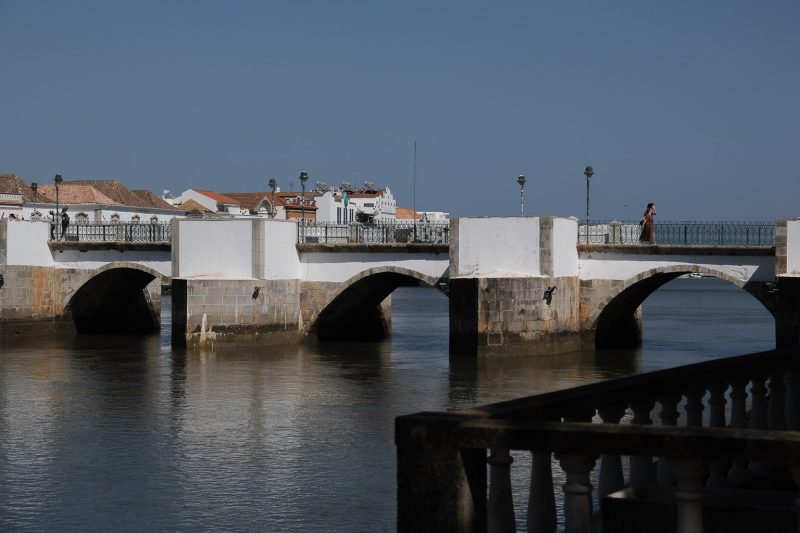
Tavira’s story stretches back more than two millennia. The Phoenicians first established a settlement here, attracted by the river and access to the sea. Later, the Romans built a bridge – still in use today, though rebuilt in the Middle Ages – linking both banks of the River Gilão. Under Moorish rule from the 8th to the 13th centuries, Tavira became a thriving port, its castle walls and narrow lanes still bearing the imprint of Islamic design. When Christian forces captured the town in 1242, they repurposed mosques as churches, creating the dense patchwork of religious buildings that now gives Tavira its skyline.

The Age of Discovery in the 15th and 16th centuries brought Tavira new wealth, as it became a base for ships exploring Africa and the Atlantic. Many of the town’s grand mansions date to this period, adorned with wrought-iron balconies and azulejo tiles. The 1755 earthquake devastated much of the Algarve, but Tavira was rebuilt with elegance and restraint, its streets lined with harmonious whitewashed façades and terracotta roofs.


Today, this blend of Phoenician, Roman, Moorish, and Christian legacies is what make Tavira so beguiling. Add to this the slow pace of riverside cafés, the charm of the castle gardens, and the its maze of quiet, cobbled streets, and it’s easy to see why Tavira is often hailed as the Algarve’s most beautiful town.
Read More: A Day in the Algarve’s Most Charming Town
Getting there: Regular buses and trains run from Olhão to Tavira. By car, it’s a 20-minute drive east on the N125.
Loulé – A Market Town in the Hills
Inland from Olhao and sitting amidst rolling hills, Loulé is a lively market town where Portuguese tradition still thrives. Its covered market is the main draw, featuring stalls selling everything from local cheeses to handwoven baskets. The town is also known for its artisans, who work copper and wood in small workshops. Like elsewhere in the region, Moorish influences linger in its architecture, most notably in the restored castle walls. Loulé is also a centre of festivals, particularly lively during Carnival and summer celebrations.
Getting there: Buses from Olhão to Loulé take about 45 minutes, while driving takes around 30 minutes.
Santa Luzia - Portugal’s Octopus Capital
This small fishing village, just west of Tavira, is famed for its dedication to polvo (octopus), with an abundance of quayside restaurants serving it grilled, stewed, baked with potatoes, and even in samosas. Each place has its own take on classic dishes, adding their own flourish.
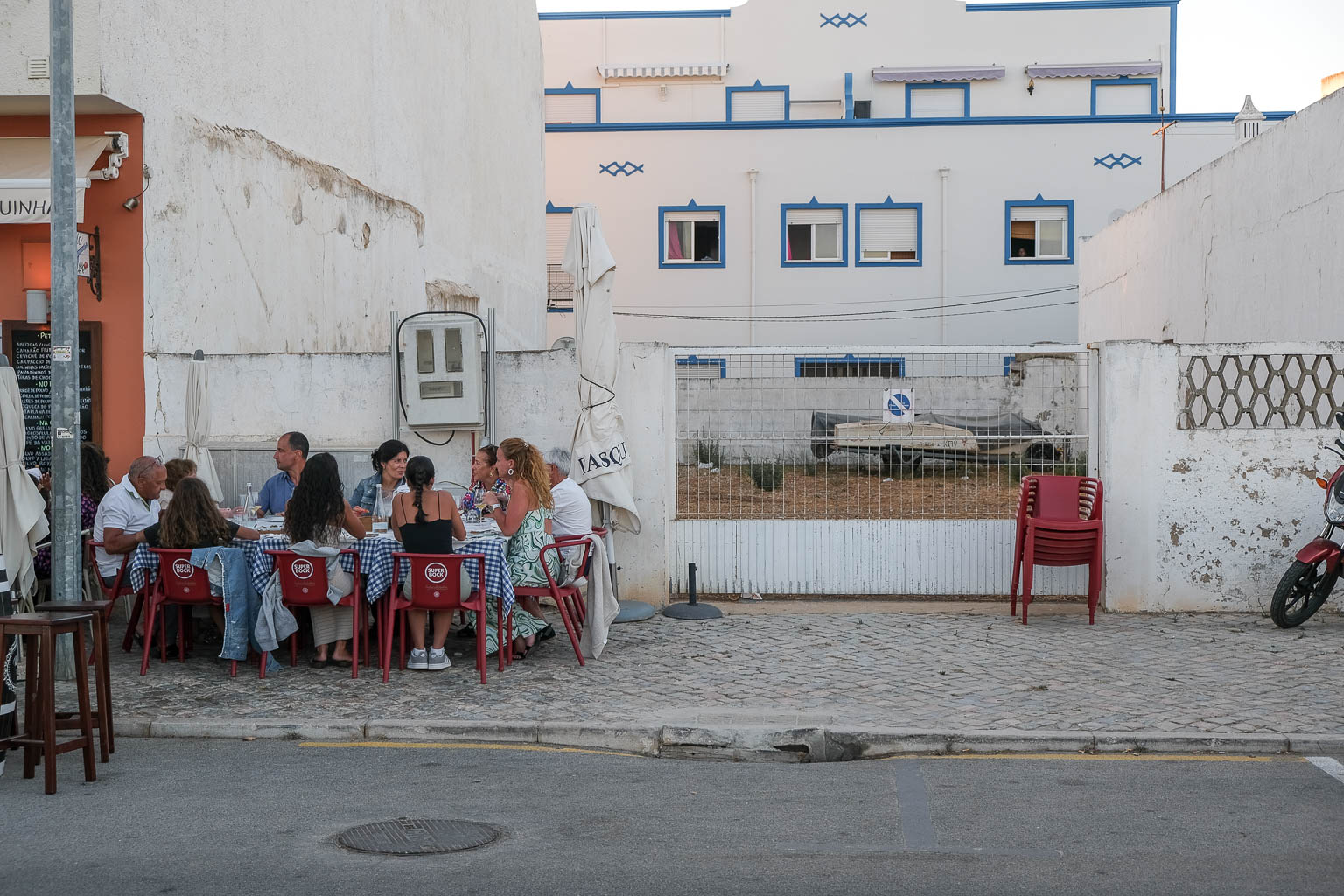
The village itself is quiet and charming, with tiled houses facing the lagoon and colourful fishing boats moored nearby. From here, you can also reach Praia do Barril, a broad beach accessed by a miniature train that once carried tuna fishermen to their huts. Today, the huts have been repurposed as beach bars and restaurants, but the anchors of old tuna nets remain planted in the sand as a striking memorial.
Read More: Dining in Portugal’s Octopus Capital
Getting there: By car, Santa Luzia is 30 minutes from Olhão. Alternatively, take the bus to Tavira (25 minutes), then a short taxi (around €3 – €4) or local bus (no. 105) to Santa Luzia.
Tip: Anyone in the know will tell you that, if there’s one place to sample octopus in Santa Luzia, it’s Casa do Polvo Tasquinha. This is the only place in town to feature in the Michelin guide, with a particular mention of their huge array of dishes that feature the 8-limbed mollusc. Having said that, I found that the octopus I ate at Cestaria in Olhao itself, was far superior.
Cacela Velha – A Clifftop Gem Over the Lagoon
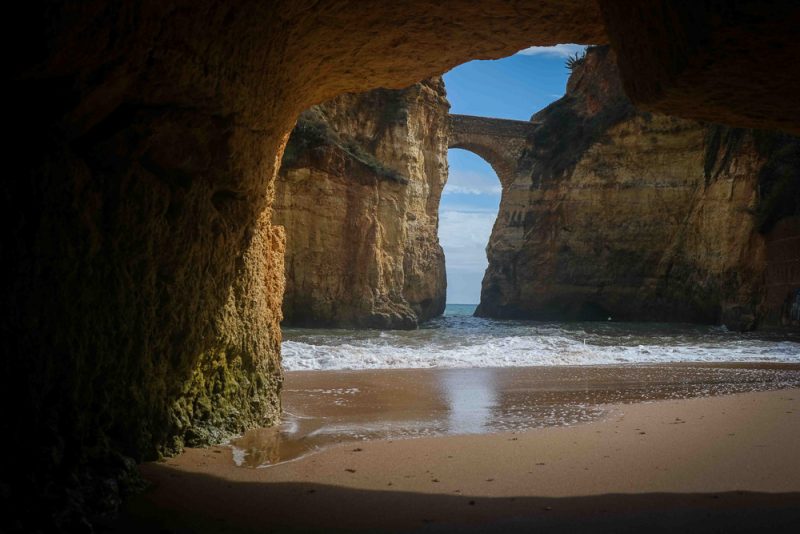
The tiny, well-preserved village of Cacela Velha perches above the Ria Formosa with some of the Algarve’s most stirring views. The whitewashed church and fortress overlook shifting sandbanks and tidal channels, creating a scene that feels like it has been unchanged for centuries. At low tide, it’s possible to walk across the lagoon to reach the beaches.
Getting there: By car, Cacela Velha is 35 minutes east of Olhão via the N125 or A22. The nearest train station is Cacela, around 3km away; from there, a short taxi ride is needed..
Tip: The beach here, Praia da Fábrica, is one of Portugal’s best. Condé Nast Traveller magazine say this is one of the best beaches in the world and The Guardian placed it on the list of the top 10 European beaches by foot.
Faro - The Algarve’s Walled Capital
Just minutes away from Olhão, Faro is far more than an airport city. Within its medieval walls, the Cidade Velha unfolds in cobbled lanes, lined with whitewashed houses and cafés that spill into shaded squares. The cathedral, Sé de Faro, offers a panoramic view over the Ria Formosa, while Igreja do Carmo draws visitors to its Chapel of Bones, where skulls and bones are arranged in haunting mosaics. Beyond the old town, Faro has a vibrant arts scene, museums, and an attractive marina.

Faro has been a crossroads for centuries, shaped by Romans, Visigoths, Moors, and Christians. Its strategic location by the Ria Formosa made it a thriving port in antiquity; Roman mosaics and ruins still lie beneath the modern streets, a reminder of those early settlements. Under Moorish rule, Faro flourished as a trading hub, protected by the medieval walls that still encircle the Cidade Velha.


After the Christian reconquest in 1249, Faro became the Algarve’s episcopal seat, which explains its wealth of religious architecture. The Sé de Faro, built on the site of a mosque, still preserves elements from the Gothic and Renaissance periods, while later Baroque flourishes reflect the prosperity of the 17th and 18th centuries. The town endured pirate attacks and an earthquake in 1755, yet it has retained its layered identity: a patchwork of winding lanes, whitewashed houses, and ornate churches that make it a worthy detour from Olhão.
Getting There: Trains and buses run regularly from Olhão, taking about 10 minutes. By car, the drive is equally short along the N125. An Uber journey between the two will cost you less than €10.