Reading List: South America

“The first commandment for every good explorer is that an expedition has two points: the point of departure and the point of arrival. If your intention is to make the second theoretical point coincide with the actual point of arrival, don’t think about the means — because the journey is a virtual space that finishes when it finishes, and there are as many means as there are different ways of “finishing.” That is to say, the means are endless.”

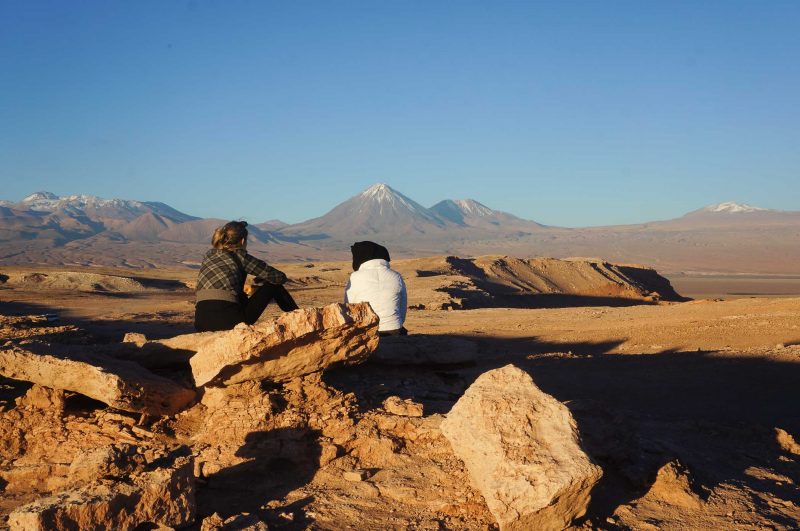
South America is a land so vast that it contains almost all of Earth’s possible landscapes and ecosystems; Impenetrable jungles, vast meandering rivers, snow-capped mountains and deserts with dunes that are thousands of feet high. Combine this with Caribbean beaches, modern cities and quaint colonial towns, you can see why travellers are drawn to South America and why those travellers with a propensity for the written word feel the need to articulate this to all. This list will hopefully take you from the Caribbean sea to the Southern Ocean, across the Andres and Atacama, from the Pacific to the Atlantic and everywhere in between.

Below are a few books that will help you get a feel for the continent. I have tried to stay away from novels and travel books set in one particular country this time and cover multi-country journeys and broad histories of the continent as much as I can.

South American History

Open Veins of Latin America: Five Centuries of the Pillage of a Continent by Eduardo Galeano

For a comprehensive insight into the last 500 years of Latin American history, there really is no need to look any further than this book. As you may have guessed with a subtitle like “Five Centuries of the Pillage of a Continent“, this is not an uplifting account of the past but it is eye-opening and will give you an uncompromising view of the effect that colonising forces have had on this part of the world. Rather than being chronological, Eduardo Galeano has organized the various facets of Latin American history according to the patterns of five centuries of exploitation. The slavery, wars, coups and exploitation of both people and natural resources are laid bare for the reader to see. A must-read.

Bolivar: The Epic Life of the Man Who Liberated South America by by Marie Arana

If there is one thing you will see and hear a lot of in South America, it is this mans name. Simon Bolivar. Every town seems to have a statue of him and a square named after him.  Bolívar ignited a revolution, liberated six countries from Spanish rule and is revered as the great hero of South American history. This book is the perfect background reading for someone who wants to get to know Latin America’s liberator.

South American Travelogues

Wild Coast: Travels on South America’s Untamed Edge by John Gimlette

On our South American travels, we had no plans on visiting the trio of forgotten countries in the far northeast of the continent. In fact, not many people seem to give a thought to venturing over to Guyana, Suriname, and French Guiana. Covered in dense impenetrable jungle and with 900 miles of muddy coast, separated by small wooden towns, it would seem that there is nothing to see or do, let alone write about. However, Gimlette manages to make his 3-month adventure enthralling, visiting forts rising out of steamy swamps, satellite launch pads and the site of the infamous 1978 cult suicide at Jonestown. The book takes the reader through the rich history from indigenous tribes who still live by sorcery to descendants of African slaves, Dutch conquerors, Hmong refugees, Irish adventurers, and Scottish outlaws.

The Motorcycle Diaries: Notes on a Latin American Journey by Che Guevara

He may be better known for his life as a revolutionary or for his manuals on guerrilla warfare, but as a young man Ernesto ‘Che’ Guevara embarked on one of his greatest journeys. In 1953 at twenty-three years old, Che and his friend set off across South America on a 500cc Norton motorcycle. Touring through Argentina, Chile, Peru and Venezuela, his greatest concerns are where the next drink is coming from, where the next bed is to be found and who might be around to share it. Becoming a world-renowned figure less than a decade later may have cemented this book as a travel classic but even without his revolutionary future, this is still an absorbing and extraordinary tale.

The Old Patagonian Express: By Train Through the Americas by Paul Theroux

Boarding the commuter train at the New York subway, Paul Theroux hops train after train, gradually working his way down the tracks to the end of the line and the end of the world at Argentina’s most southerly tip. Most travel books can seem overly saccharine, implying that every moment of travel is a wondrous journey, expanding your mind and feeding your soul so it is a welcome relief to read Theroux’s particular brand of curmudgeon. There are places he despises and people that rub him up the wrong way. he doesn’t concentrate on the locations he visits but on the minutiae of travel – The boring conversations on public transport or the train timetables in rural Mexico. This book is constantly funny and had me laughing along as he sweats and shivers through changing temperatures and vomited through the rising altitudes of the Andes. I was lucky enough to pick this book up in Patagonia and was able to follow Paul’s journey along with my own, tracing his steps as I made my way to the end of the world.

David McClane is a photographer and travel writer based in Leeds, UK. Since first picking up a camera on a yearlong journey through Central and South America in 2014/2015, He has carefully documented his travels through over 50 countries.

Leave a Reply

Your email address will not be published. Required fields are marked *