If you’ve ever wanted to stare deep into the dead and soulless eyes of an off-kilter Bruce Willis while being silently judged by a lopsided Pope John Paul II, then there is a place that may give you everything you need.
Tucked between souvenir shops, shot bars and pierogi joints on Floriańska Street in Kraków’s Stare Miasto, you will find an attraction that is a far cry from the gothic spires and Renaissance facades that draw the majority of people to Poland’s former capital. Instead, the Polonia Wax Museum is so surreal, unintentionally hilarious, that wandering around its interior can make you question whether you are in a museum or in the midst of a mild fever dream.
Wax museums have long held a peculiar place in the world of tourism. Equal parts artistry, spectacle, and uncanny entertainment, their popularity lies in the thrill of standing face-to-face with a lifelike replica of a celebrity, historical figure, or cultural icon. Whether it’s snapping a selfie with a silent movie star or marvelling at the details of a medieval monarch’s waxen expression, wax museums tap into people’s fascination with fame.
The concept dates back to the 18th century, when French artist Marie Tussaud began exhibiting wax figures of notable individuals during the French Revolution. Her travelling show eventually became the now-legendary Madame Tussaud’s, which opened its first permanent location in London in 1835. From there, wax museums flourished – first across Europe, then globally – as both kitsch attractions and surprisingly effective educational tools. They’ve since evolved into multi-sensory experiences with themed rooms, soundscapes, and interactive exhibits.
While Madame Tussauds remains the gold standard, with branches showcasing their hyper-realistic figure in major cities such as Las Vegas, Prague, Budapest, Dubai and Tokyo, not all of the pretenders to the throne have quite the same level of quality control. The Polonia Wax Museum is a prime example.
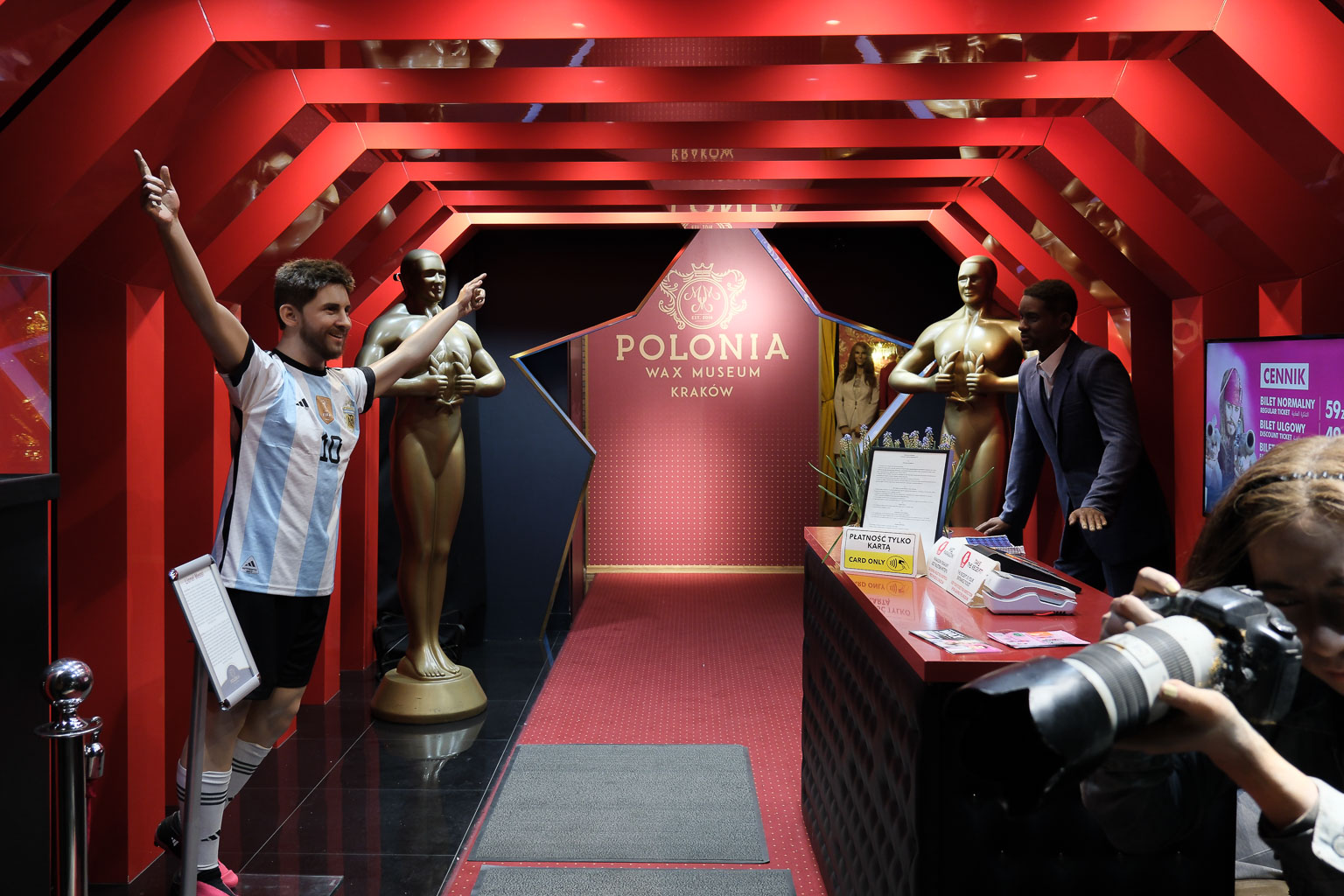
At first glance, the Polonia Wax Museum looks much like any other wax figure attraction. The entrance on Floriańska beckons tourists in with a glitzy looking red carpet area lined with statues. While Lionel Messi and Will smith both look slightly off-kilter and Rowan Atkinson – decked out in Mr. Bean’s usual brown jacket and red tie – has overly exaggerated features, these tasters of the exhibition give no real indication of the horrors you are about to witness inside.
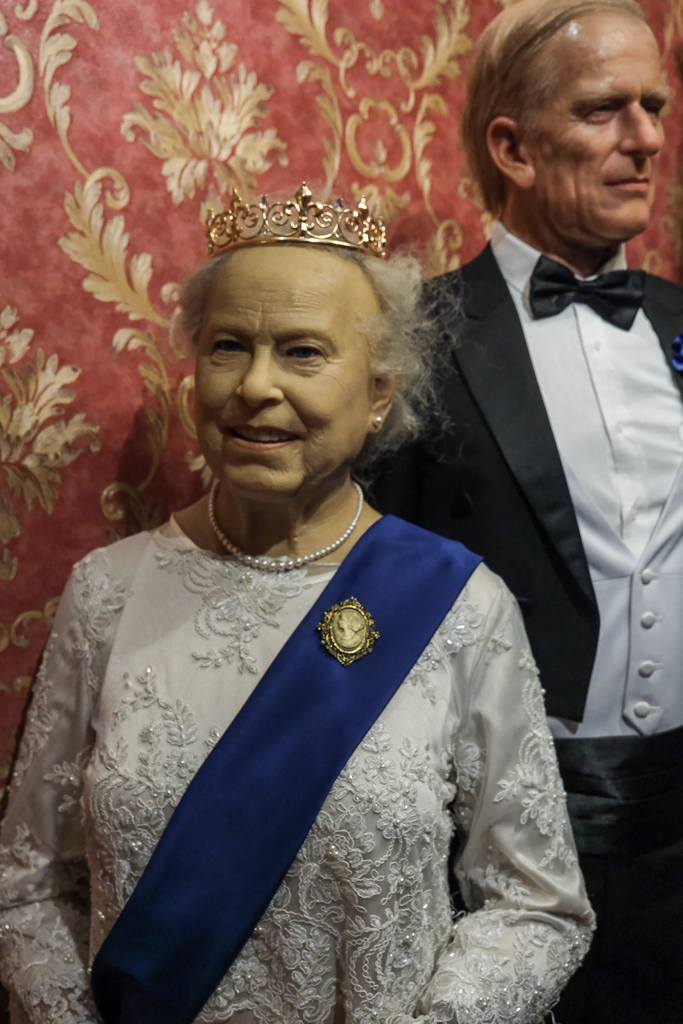

It’s Her Majesty the Queen that gives me my frst gasp – and belly laugh – of the evening. It’s a version of her that looks like it has been based on a hazy childhood memory and a blurry tabloid photo. Her hair appears to be attempting to escape towards the back of her head and her expression is somewhere between stern and startled.
Prince Philip stands loyally beside her, looking reasonably recognisable, but things take a turn with the newer generation. The Princess of Wales has a manic grin, the kind you give after too many espressos and not enough sleep (clearly her Royal duties are keeping her from resting), while Prince William stares out with a haunted expression and bared teeth that say “please don’t take my photo”.

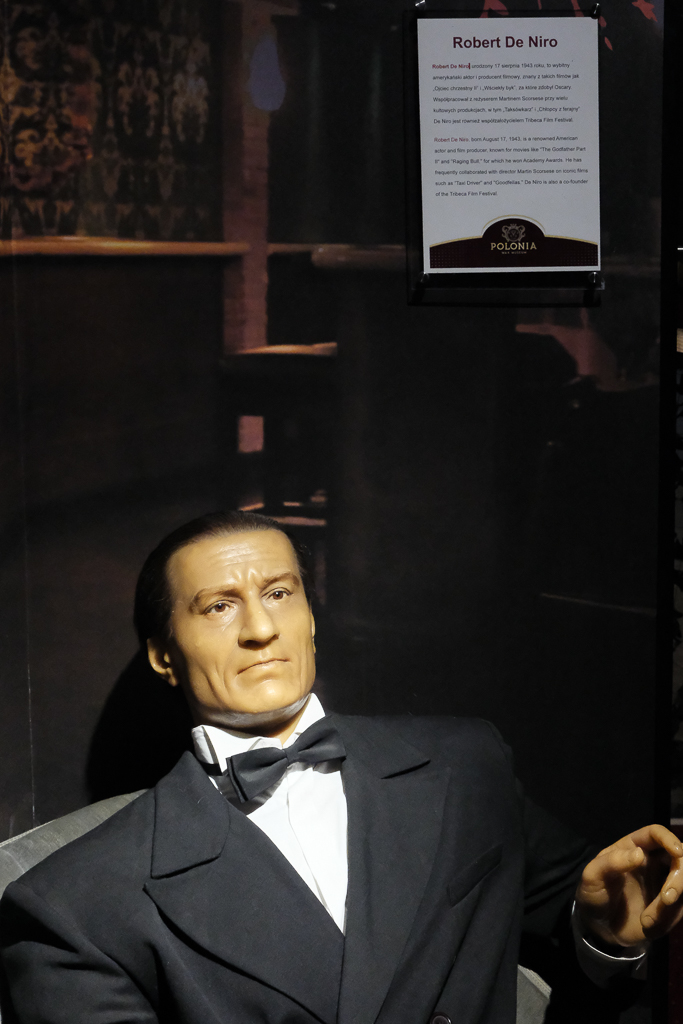
Following a Royal reception, I make my way through a room of actors; Robert De Niro sits sprawled out on a chair, his lifeless eyes fixed on a distant point or nothing at all. There’s Bruce Willis, Arnold Schwarzenegger and a misleadingly tall Tom Cruise.

Things don’t improve in the corridor of pop icons; Despite Michael Jackson’s real-life face being carved and chiselled by professionals, his wax figurine only bears a passing likeness. Opposite what I assume is Elvis Presley (the sequined jumpsuit gave it away), a glowering Mick Jagger is posed beside a woman who might be Lady Gaga. It’s hard to say. The lighting here is more dramatic, with coloured spotlights and velvet ropes, adding an oddly theatrical mood that only heightens the sense of stepping into another dimension.


By this point, I’m laughing so hard that I’m gasping for air. My stomach hurts, and a pain ricochets through my sides. Tears slowly roll down my face, and I know, just ten minutes into the experience, that this attraction is worth every złoty.
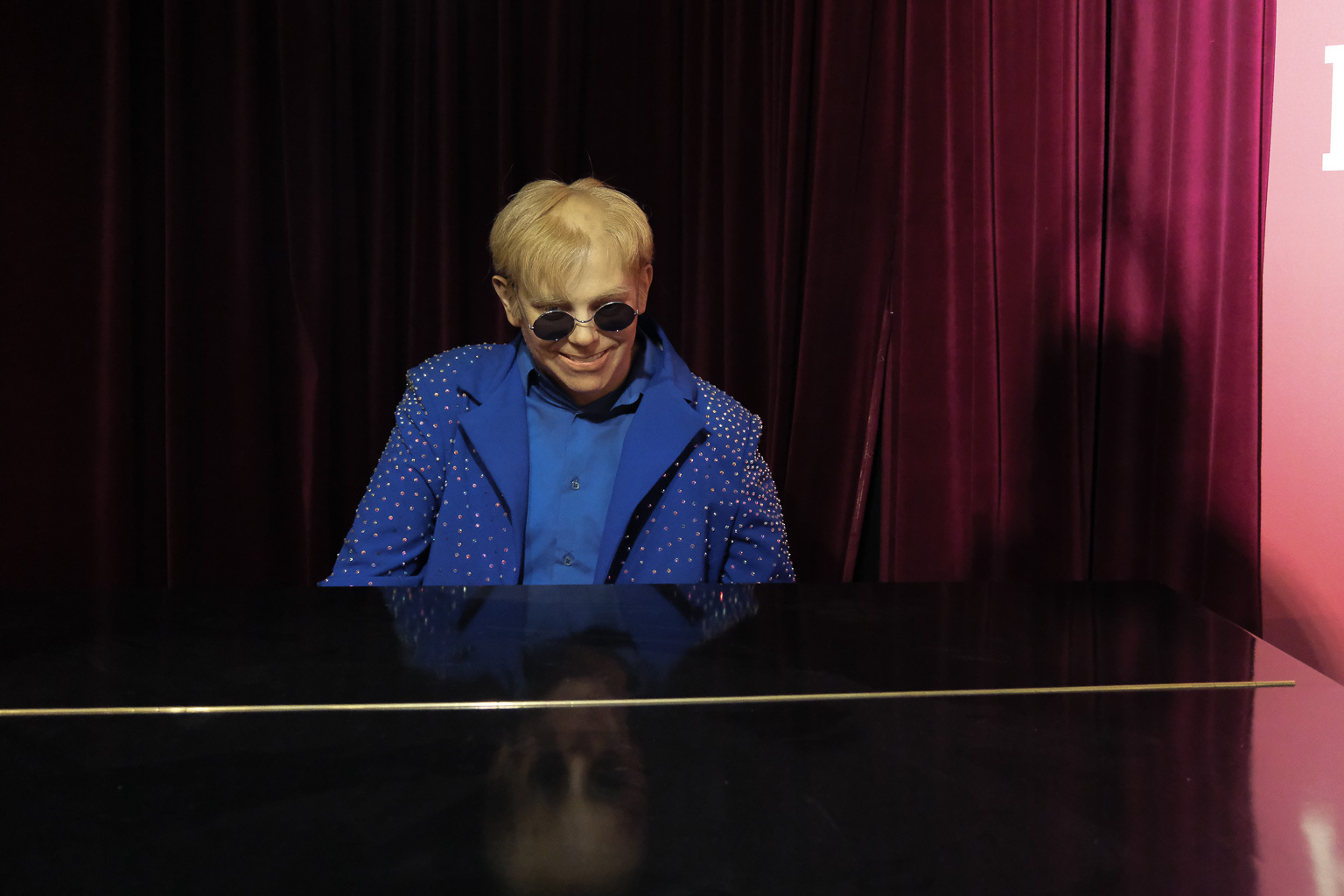
While these areas do seem to have a loose ‘theme’ to them, there is no rhyme or reason to the placement of some of the figurines; I find Hilary Clinton relegated to midway down a staircase, only recognisable from the campaign slogan plastered on the podium that she is propped behind; Elton John (an almost bald Elton, despite being a famous tuppee wearer in real life) is in a room with Audrey Hepburn, a haunted looking Leonado Di Caprio and a couple of skeletons that are arranged to be sat at a table in an intense game of poker. None of it makes sense.
It also doesn’t make sense that so much of the exhibit is dedicated to fictional characters, all arranged in ways that defy both genre and logic; How it is possible to make a SpongeBob SquarePants that is so far off the mark, I’ll never know. Although his missing nose, snapped off at some point and never replaced, probably adds to the uncanny valley effect. Yoda is here, as is Shrek and Kung Fu Panda, as well as a trio of Harry Potter characters that appear to have been crafted by someone who has never seen the movies and only glanced at the pages of the books.

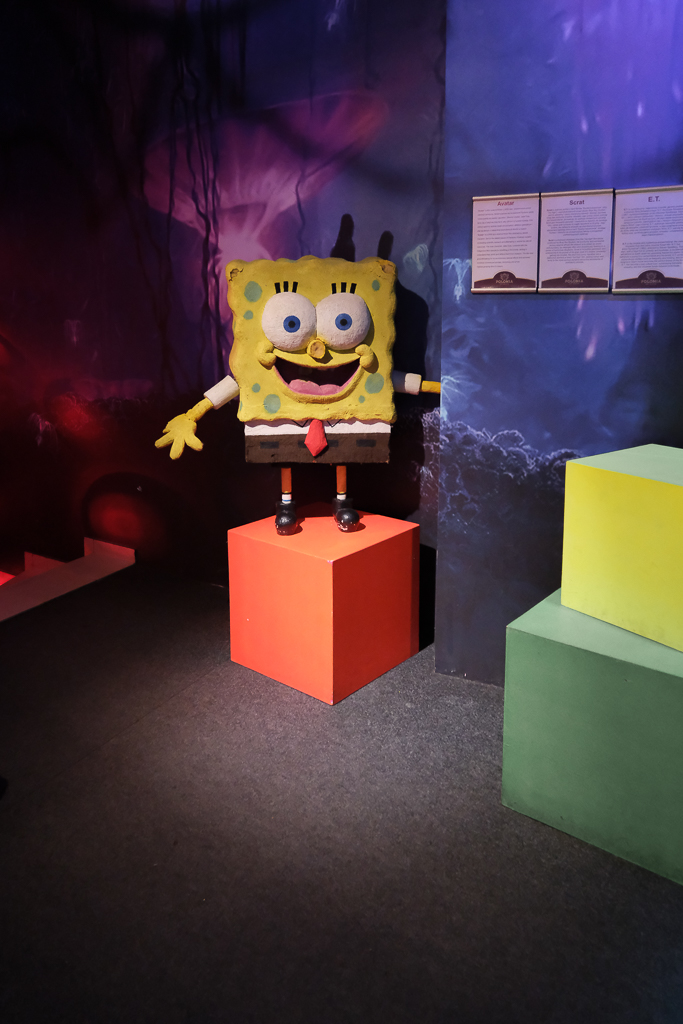
The museum unfolds like a dream sequence, if that dream were curated by someone with a passion for popular culture and a wobbly grasp of facial anatomy. You soon realise that very few of the wax figures bear even a slight resemblance to their real-life counterparts
Despite this, the museum does actually strive for realism. It was established in 2016, inspired by the World Youth Day that was held in Kraków that year, with the aim of presenting Polish history and culture through meticulously crafted wax figures, fostering a sense of national pride and identity.


In a way, it semi-successfully pulls this off. There are rooms stuffed with Polish heads of state such as Józef Piłsudski and Lech Wałęsa, sports stars like Robert Lewandowski and Marcin Gortat and even Popes Benedict XVI, Francis, and local favourite John Paul II arranged on a sofa looking like they have just headed back to John’s pad for an ill-advised afters following a night on the town. While it doesn’t give you a deep insight into Polish history, it can act as a crash course in the nation’s political evolution. The basement ‘dungeon’ that sees Stalin, Putin, Hitler, and Lenin confined to a prison cell along with a confusing representation of Osama Bin Laden, iIlustrates the darker aspects of Poland’s past.

However, it’s less ‘accurate historical representation’ and more ‘abstract impressionism with dodgy hairstyles’. Where else can you pose between a Donald Trump that looks like a melted candle in a wig and Volodymyr Zelenskyy with a forehead that is possibly twice the height of his real one?
The thing is, you don’t come here for realism. This isn’t Madame Tussauds, where precision and lifelike likenesses reign supreme. No, here the figures are more abstract, often capturing a sense of the person rather than a perfect replica; As if Madame Tussaud had consumed a few too many glasses of mead and sculpted entirely in the dark.


Instead, you visit the Polonia Wax Museum for the kind of off-kilter adventure that makes for fun and hilarious memories; a curiosity cabinet of uncanny replicas, where historical homage mingles with unintentional absurdity. Despite – and perhaps because of – these creative liberties, there’s an undeniable charm to the experience.
After an hour of wandering through warped faces and waxen stares, gasping for breath and holding my sides from constant laughter, I emerge back into the daylight, blinking like someone who had just escaped an alternate reality. There’s no gift shop on the way out, but honestly, the experience itself was the souvenir.
About the Polonia Wax Museum
Floriańska 32, Kraków Old Town | Open daily 10am until 10pm (or until 11pm on Fri & Sat)
Originally opening in 2016 following Kraków’s hosting of World Youth Day, the Polonia Wax Museum was envisioned as a modern tribute to Polish identity as well as a celebration of the nation’s heritage, spirituality, and pop culture, inviting visitors to encounter the country’s most iconic figures face to slightly distorted face.
While the initial intention was good, the museum curators may not have quite nailed the execution, and it has, in some ways, become a modern cabinet of curiosities that is a quirky mix of national pride, celebrity whimsy, and outright hilarity.
The museum is home to over 70 waxworks – shared and rotated between their outposts in Krakow and Zakopane – that are arranged across themed areas; Famous politicians, clergy, athletes, actors, and even fictional characters.
Despite (or perhaps because of) its sometimes eccentric likenesses, the Polonia Wax Museum draws roughly 150,000 visitors per year. It’s part history lesson, part pop culture shrine, and a wholly enjoyable offbeat detour for anyone who needs a break from the city’s more culturally significant sights.
Admission: Adults 59 PLN, Students/Seniors 49 PLN, Groups (9+) 33 PLN/person, Children under 5 free
More Info: www.poloniawaxmuseum.com
Getting to the Polonia Wax Museum
The Polonia Wax Museum is easy to find, situated on Floriańska, one of the main thoroughfares that runs through Old Town, between the Barbican and the Main Market Square. However, if you’re travelling from outside the Stare Miasto, there are several public transport options.
By Bus
Take bus numbers 130, 152, or 192 and alight at the ‘Teatr Słowackiego’ stop. From there, it’s approximately a 5-minute walk to Floriańska Street, leading directly to the museum at number 32.
By Tram
Kraków’s efficient tram network offers multiple lines that stop near the Old Town. Again, disembark at the ‘Teatr Słowackiego’ tram stop and proceed on foot to Floriańska Street.
Is the Polonia Wax Museum Worth Visiting?
It is absolutely worth visiting, but not in the way you’d recommend Wawel Castle or the Wieliczka Salt Mines. The Polonia Wax Museum isn’t historically enlightening or artistically refined but it is guaranteed to make you laugh non-stop for the duration of your visit. It’s a wonderfully weird slice of Kraków’s tourist scene – intentionally or not – and an real joy for fans of the strange, the kitschy, and the endearingly imperfect.
If you’re looking to break up the postcard-perfect beauty of the Old Town with something gloriously offbeat, step into this waxen wonderland. Just be prepared to question everything you thought you knew about facial structure.
Getting to Kraków
Kraków’s John Paul II International Airport (KRK) is around 11km west of the city. I took flights to Krakow with Jet2, who have regular flights from Newcastle, Leeds Bradford Airport, Manchester and Birmingham, as well as additional flights from London Stansted Airport, East Midlands Airport, Liverpool, Glasgow and Belfast during the Christmas period.
There is a train connecting Kraków Airport and Kraków Głowny railway station, running approximately every 30 minutes between 5am and 10:30pm. The route takes around 20 minutes.
The airport’s train station is just a short walk from the arrivals area and well-signposted with ticket machines situated on the platform. However, with a limited number of machines available, there can often be a queue, so it is easier to download the iMKA app and purchase your train tickets. The app can also be used to buy bus and tram tickets throughout your stay in Kraków.
Alternatively, bus lines 208 and 252 connect the airport with the city center during the day and the number 902 runs throughout the night. There is also a frequent Flixbus service, that takes just 25 minutes, running at all hours and can be booked through Trainline.
Where to Stay in Krakow
Kraków is Poland’s most visited city, so it should be no surprise that it is brimming with hotels to fit almost every taste or budget, with the old town – Stare Miasto – containing everything from party hostels to luxury hotels that occupy former castles and opulent townhouses.
The old town is relatively compact, but there are still great accommodation options outside of it in the Jewish Quarter and south of the Vistula, with the city’s affordable and efficient public transport system of trams and buses making it easy to get around and explore further.
Central Location
Golden Tulip Krakow City Centre
Tucked away on a side street just a 5-minute walk across Planty Park from the old town, not many hotels are as well situated as the Golden Tulip Kraków City Centre without being smack-bang in the centre of Rynek Główny (and these usually come with a pretty inflated price tag).
It’s nothing fancy. The rooms have the vibe of a mid-range business hotel, but they’re perfectly comfortable. The glass-covered restaurant juts out into a pretty courtyard, adding a touch of class to breakfast time. They also have a hotel in the old Jewish Quarter, Golden Tulip Krakow Kazimierz, for those who don’t mind being out of the Old Town and would rather be amongst the buzzing bars and quirky cafes of this cool and vibrant district.
Mid-Range
Amber Design Residence
Situated near Planty Park in a 1930s town house on a quiet residential street, Amber Design Residence contains 34 beautifully stylish rooms and apartments that are perfect if you prefer to have a self-catered stay in Krakow. There is also a sheltered garden as well as a small spa and gym.
Luxury
Hotel Copernicus
Housed in a regal 14th-century building on Krakow’s oldest street, Hotel Copernicus contains 29 luxurious rooms that are decorated in a classic and understated style, retaining historic features such as the wooden beams and medieval frescoes. The hotel is just a short walk from Wawel Castle and the rooftop terrace gives stunning views of the Old Town. For an extra treat, ensure you book ahead for the tasting menu in the Copernicus Restaurant.