Isolated in the icy heart of Argentinian Patagonia, surrounded by lakes and featureless landscape with the Austral Andes visible only in the distance, El Calafate feels like it is a long way from anywhere. The nearest significant town of El Chalten is a long 3-hour drive away and Chile’s Puerto Natales is even further, taking over 5 hours to reach by bus. However, despite being alone in a desert of civilisation, El Calafate is one of Patagonia’s most visited towns. The reason for its fame isn’t anything to do with the town itself, rather its main attraction lies 30 miles away in the Perito Moreno Glacier, one of Argentina’s greatest natural wonders.
Fringing the edge of Los Glaciers National Park, Perito Moreno isn’t Argentina’s – or even Los Glacier’s – largest ice sheet, that title goes to Upsala with its length of 60km and width stretching over 7km, but it is easily the most visually appealing, giving it a star-quality that far outshines most of its peers in the Southern Patagonian Icefield.

While ice and glaciers are known for their slow pace – Afterall, glacial is a common phrase denoting something that moves very slowly – Perito Moreno is determined to buck that trend. It’s true that it is considered to be stable, in a sense that it is not advancing or retreating year on year, but every so often it famously pushes its way across Brazo Rico, latching itself onto the land, and cutting off the flow of water between Rica and the much larger Lago Argentino.
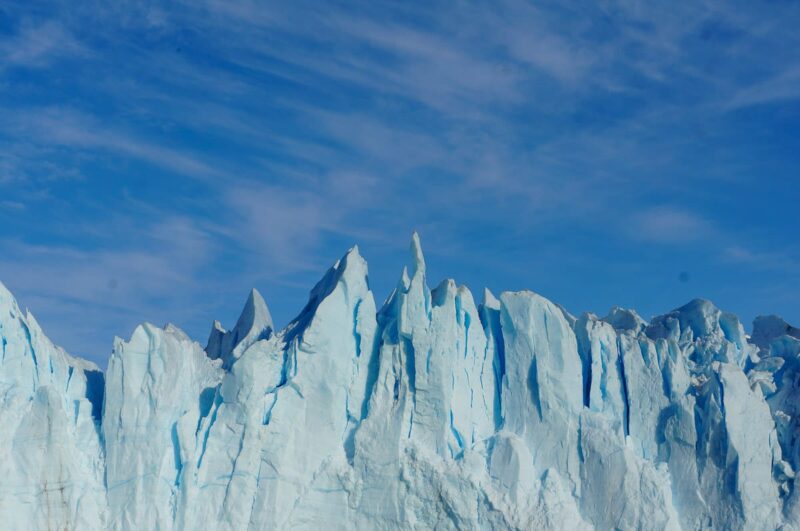
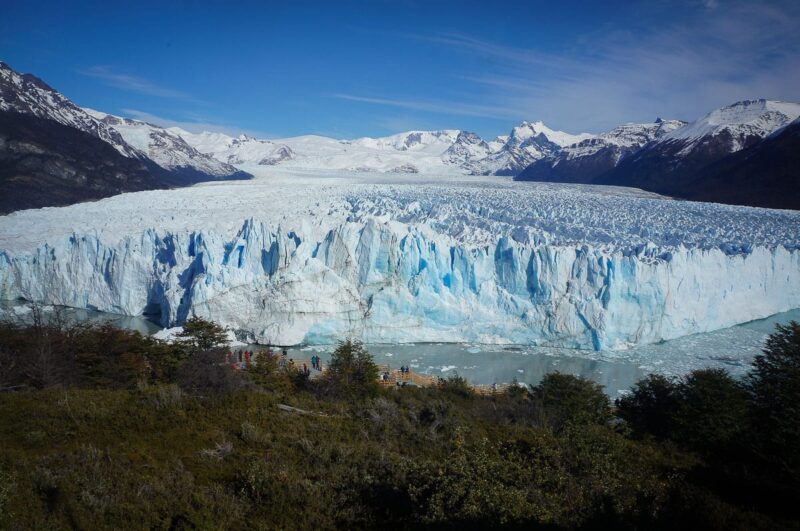
Even when the glacier hasn’t made its way to the shore, Perito Moreno is still one of the world’s most spectacular attractions. It has an area roughly the same size as Argentina’s capital, Buenos Aires, and from the walkaways that wind up and down the opposite peninsular, you are faced with a sheer cliff of ice 60m high and 3-miles wide. The icy behemoth feels very much alive, constantly creaking and groaning under its own weight and you can spend hours staring at its hypnotising blue-hued face, just waiting for a sudden thunderous crack that echoes around the lake before shuddering booms indicate chunks the size of cars falling from the block and splashing into the water below. It is one of South America’s most awesome spectacles and a sight worth travelling to the middle of nowhere for.

Getting to Perito Moreno from El Calafate
There are a number of different bus companies that head to the Perito Moreno Glacier from El Calafate. They all leave from the central bus station on Av. Jean Mermoz. Tickets for the 90-minute ride cost an eye-wateringly expensive $1000ARS with most buses leaving at either 7.30am or 8.15am, although I would recommend checking departure times when arriving in El Calafate. It is possible to book tickets on the day but ensure that you arrive at the bus station early if you plan on doing this. The return bus to El Calafate leaves the park at 4pm.
Check bus prices and availability between El Calafate and the Perito Moreno Glacier.
A return taxi ride to the park, including a few hours’ wait-time while you explore will cost around 3-times the price of a bus ticket, so if there are 3 or more of you, this could be a better option.

Entry Fee
The Perito Moreno Glacier is part of Los Glaciers National Park, a protected area of the Austral Andes stretching across over 7,000 square kilometres that was declared a UNESCO World Heritage Site in 1981. Although Perito Moreno is by no means the largest of the park’s 47 large glaciers, it is easily the most accessible and most visited. Entry to the park is $800AR which will need to be paid on arrival (credit cards are now accepted) even if you are visiting as part of a tour as tour costs do not include the price of entry.
WHEN IS THE BEST TIME TO VISIT PERITO MORENO?
Although the Glacier is open all year round, the best time to visit is during the high season, in the summer months between November and March. The glacier is at its best on a clear, sunny day when the blue in the ice really gets a chance to shine and in the more temperate summer climate, there is more chance of seeing the ice crack and break, with enormous sheets thundering into the water below. The weather in Patagonia can be unpredictable, so it may be worth staying in El Calafate for a few days to ensure that you get the perfect conditions to visit.
Perito Moreno Opening Times
Summer (September to April): 8am – 6pm
Winter (May to August): 9am – 4pm


Tours and Excursions
While visiting the park independently will save you a few pesos, many people opt to take a tour. While you will still have to fork out for the park entry fee on top of your tour ticket, many of them do include a hostel pick up/drop off as well as lunch.
Many of the tours from El Calafate include a boat tour on the lake: a 90 minute jaunt on the water where you will approach the glacier wall to get up close and personal with the ice sheet. While many people travelling to Perito Moreno independently choose not to take one of these trips, I really enjoyed the experience. Helio y Adventura are the most popular operator and depart hourly between 10am and 4pm from Puerto Bajo de las Sombras, 6km from the main car park. If you plan on doing this on your own and not as part of an organised tour, tickets cost $1000ARS and can be purchased from the booth marked Navegacion at the entrance to the national park. Patagonia Dreams offer a boat trip and return transport to the park for just £45 (including hotel pick up).
Helio y Adventura also offer ice-trekking excursions for the more adventurous traveller. These tours include transport from El Calafate and a boat tour to the glacier where you will disembark at the other side of the Brazo Rico and begin an hour-long hike from the southern moraine of the glacier to an access point where you will strap on your crampons walk between blue ponds, cracks, huge glacier mills, and caves towards the heart of the glacier. Their ‘Big Ice’ tour ($15000ARS) includes 3 and a half hours on the ice field before making your way back to Brazo Rico. Alternatively, their ‘Minitrek’ ($8000) is a little less strenuous, with a one and a half hour walk around the ice fields.

Where to Stay in El Calafate
Fringing Los Glaciers National Park, the town of El Calafate is the only settlement near the Glacier of any real significance. Sitting beneath the Andes, this is the perfect place to base yourself for exploring the ice sheets of the park. Accomodation prices tend to skyrocket during the most popular months of November to March but reduce a little a month either side. It’s worth nothing that you can camp inside the park itself at Lago Roca, beside the lake of the same name, but most people choose to stay in El Calafate and make the bus journey into the park each day.
America Del Sur
Located close to downtown El Calafate in a beautiful timber building with floor-to-ceiling windows that look out over Lago Argentino, America Del Sur is easily the best hostel in town. The large, cosy common area is the perfect place to relax after a day of hiking and the incredibly helpful staff are all knowledgable about the area, willing to help you organise any trips that you want to take in the region.
Adventure Domes
If you would prefer to stay outside of the town closer to nature, Adventure Domes provide a truly breathtaking backdrop. Perched on the Colonias Peninsula, facing the mighty Perito Moreno Glacier, the glamping domes allow you to have an intimate experience with the Patagonian wilds. There are two communal bathrooms on-site equipped with showers and toilets as well as a nightly campfire and dining tent where you can enjoy an evening meal by candlelight beside a roaring fireplace.
Design Suites
Located a 10-minute drive from town, this super chic hotel directly on the shores of Lago Argentino has an onsite a la carte restaurant, spa, and pool where you can relax after a hard day of hiking. It’s a beautifully designed hotel with enormous windows providing vistas over the lake and the Nimes Peninsula.