Located deep in the icy cold heart of Argentinian Patagonia on the edge of Los Glaciers National Park, the Picturesque little town of El Calafate acts as a thoroughfare for tourists making their way up and down the length of the South American continent. The majority of visitors only stop for a brief 24–36 hours in order to gawp at the unmissable Perito Moreno Glacier.
The city began its life back in the early 20th century when it was founded by sheep ranchers and takes its name from a Patagonian bush: There is a local legend, that states if you eat Calafate berries, you will someday make your way back to the town.
Since then, the tourist trade has meant that El Calafate has ballooned to 22,000 residents, primarily to cater for glacier enthusiasts but beyond the tourist trappings, El Calafate’s location beside Lago Argentino, the country’s largest lake, makes it a pleasant place to base yourself for hiking, fishing and outdoor pursuits in the 7,000 square kilometre expanse of the nearby national park.

Getting to El Calafate
El Calafate has a modern airport located 21km (a 30-minute drive) east of the city. There are daily flights to/from Buenos Aires, Bariloche, and Ushuaia with Aerolineas Argentinas and LATAM. The 3hr 15 flight from Buenos Aires will usually cost anywhere between £100 – £150, although I have seen it as low as £50 – £80 when booked far enough in advance. Considering the cost of overnight buses in Argentina and the amount of time it takes to travel by road from Buenos Aires to Patagonia, the flight is very tempting.
To/from El Chaltén
During the high season, 6 daily buses make the 215km journey between El Chalten and El Calafate, taking around 3 hours. All leave from the main bus terminal in El Calafate, which is located on Julio Argentino Roca. The TAQSA buses (3 daily; 8am, 12.30pm and 4.30pm) go via El Calafate Airport. During the winter, the service reduces to just two buses per day so make sure to check the latest timetable. Tickets cost $800ARS.
Check bus prices and availability between El Chalten and El Calafate.
To/from Río Gallegos
There are 3 daily buses from Río Gallegos to El Calafate at 9.45am, 12pm and 8.30pm. The journey takes 4 hours and costs $1040ARS.
Check bus prices and availability between Rio Gallegos and El Calafate.
From Puerto Natales, Chile
If you’re heading to El Calafate from Torres Del Paine National Park, you will have to catch the bus from Puerto Natales. Compared to other Patagonian bus journeys, it’s actually fairly manageable in length – just 5 or 6 hours including the border crossing. Buses depart from Puerto Natales at 8am, Monday, Wednesday, and Friday or 7am Tuesday, Thursday, Saturday, and Sunday.
Check bus prices and availability between Puerto Natales and El Calafate.
Getting Around
El Calafate is compact and easy to explore on foot. Most of the restaurants, cafes and guesthouses are concentrated around the main street of Av. Libertador that runs through the entire town. Some attractions, such as the Glaciarium, are located out of town but taxis are widely available if you plan to venture away from downtown.
The bus terminal is on the eastern side of town and has multiple buses each day going to and from Los Glaciers National Park. However, if you plan on spending a few days exploring the region, hiring a car gives you a lot more freedom.
Where to Stay in El Calafate
Primarily a tourist hub, El Calafate mostly exists to cater to the vast swathe of tourists that arrive to gawp at the wonders of Los Glaciers National Park and the Perito Moreno Glacier. As such, there are an extensive range of accommodation options, though prices across the board are generally on the high side when compared to the rest of South America, or even the rest of Argentina. Room rates reach their height during the peak months of January and February but there are more than enough budget hostels and camping facilities for those on a budget.
America Del Sur
Located close to downtown El Calafate in a beautiful timber building with floor-to-ceiling windows that look out over Lago Argentino, America Del Sur is easily the best hostel in town. The large, cosy common area is the perfect place to relax after a day of hiking and the incredibly helpful staff are all knowledgable about the area, willing to help you organise any trips that you want to take in the region.
Adventure Domes
If you would prefer to stay outside of the town closer to nature, Adventure Domes provide a truly breathtaking backdrop. Perched on the Colonias Peninsula, facing the mighty Perito Moreno Glacier, the glamping domes allow you to have an intimate experience with the Patagonian wilds. There are two communal bathrooms on-site equipped with showers and toilets as well as a nightly campfire and dining tent where you can enjoy an evening meal by candlelight beside a roaring fireplace.
Design Suites
Located a 10-minute drive from town, this super chic hotel directly on the shores of Lago Argentino has an onsite a la carte restaurant, spa, and pool where you can relax after a hard day of hiking. It’s a beautifully designed hotel with enormous windows providing vistas over the lake and the Nimes Peninsula.
The Best Things to do in El Calafate
Glacier-spotting in the nearby national park is El Calafate’s main draw, but the city itself is a pleasant enough place to base yourself for a few days. There may not be much to occupy you beyond a couple of museums and lakeside walks, but the surrounding region is ideal for hiking, fishing and camping trips.
Los Glaciers National Park
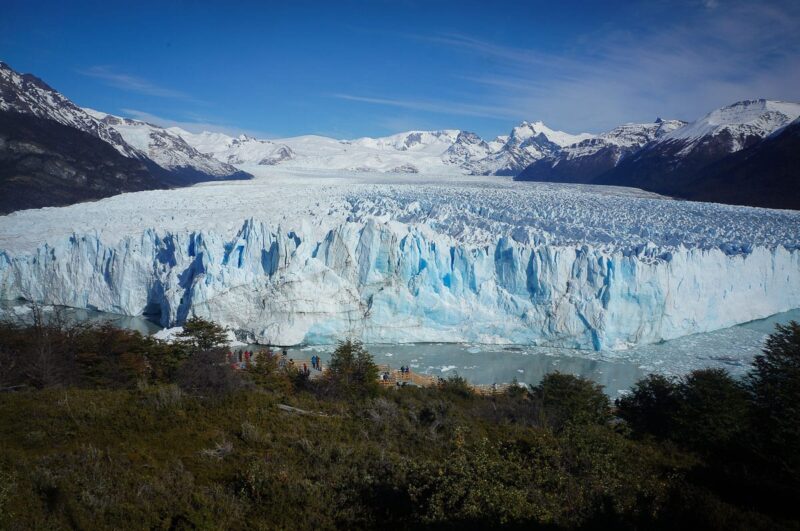
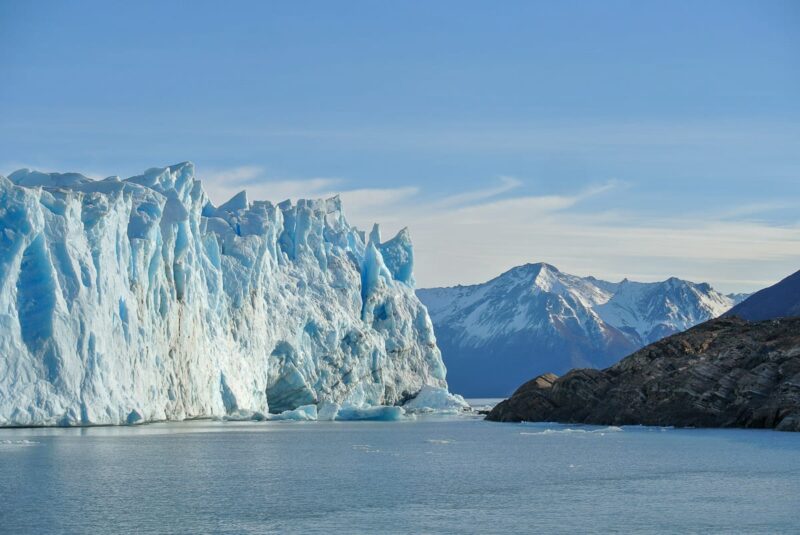
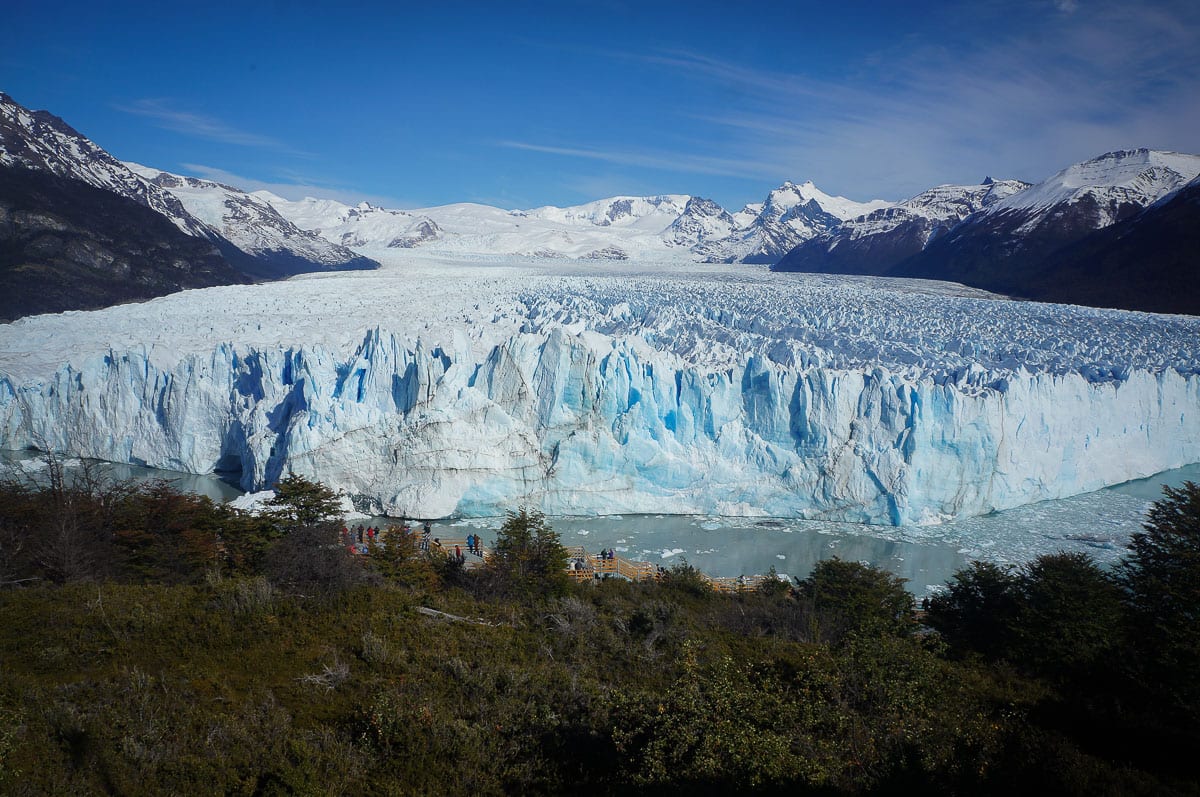
One of South America’s most awe-inspiring natural wonders, the blue-tinged Perito Moreno Glacier is the reason that most travellers make their way to this corner of Patagonia. It’s jagged cliff-face reached 60m high in some parts with a length and width of 30km and 3km, respectively, making it equal in size to Buenos Aries. Luckily for visitors, its façade reaches all the way to Peninsula de Magallanes where a long series of walkways and viewing platforms allow you to watch, waiting for the thunderous cracks and groans that precede huge sheets of ice sheering off and splashing into the water below.
There are few other of the park’s 47 glaciers that can compete with Perito Moreno in spectacle, but this UNESCO World Heritage-recognised ice field is home to even larger bodies of ice, such as Upsala which is almost double the size.
There are a number of different bus companies that head to the Perito Moreno Glacier from El Calafate. They all leave from the central bus station on Av. Jean Mermoz. Tickets for the 90-minute ride cost an eye-wateringly expensive $1000ARS with most buses leaving at either 7.30am or 8.15am, although I would recommend checking departure times when arriving in El Calafate. It is possible to book tickets on the day but ensure that you arrive at the bus station early if you plan on doing this. The return bus to El Calafate leaves the park at 4pm.
While visiting the park independently will save you a few pesos, many people opt to take a tour. While you will still have to fork out for the park entry fee on top of your tour ticket, many of them do include a hostel pick up/drop off as well as lunch. Many of the tours from El Calafate include a boat tour on the lake: a 90-minute jaunt on the water where you will approach the glacier wall to get up close and personal with the ice sheet.

Glaciarium
El Calafate’s newest tourist attraction, the Glaciarium is a modern, high-tech museum focussing on ice, glaciers, and climate change. The informative displays are interactive, with 3d models, interactive exhibitions, video and art installations, bringing issues relating to climate change and global warming to life. There is even an ‘ice bar’ in the basement but, as you can imagine, the prices are relatively expensive, even compared to the pricey bars in El Calafate itself. The Glaciarium is located 6km out of town, on the road to the national park, but a regular shuttle bus is available.
Where: RP11
When: Daily 11am – 8pm
Hike on a Glacier
Helio y Adventura offer ice-trekking excursions for the more adventurous traveller where you will get the chance to hike atop of the Perito Moreno Glacier. These tours include transport from El Calafate and a boat tour to the glacier where you will disembark at the other side of the Brazo Rico and begin an hour-long hike from the southern moraine of the glacier to an access point where you will strap on your crampons walk between blue ponds, cracks, huge glacier mills, and caves towards the heart of the glacier. Their ‘Big Ice’ tour ($15000ARS) includes 3 and a half hours on the ice field before making your way back to Brazo Rico. Alternatively, their ‘Minitrek’ ($8000) is a little less strenuous, with a one and a half-hour walk around the ice fields

Centro de Interpretación Histórica de Calafate
While not as flashy or modern as the Glaciarium, this interesting little museum explains the history of Patagonia from the prehistoric period up to the modern day through dioramas, informative displays and most excitingly, dinosaur skeletons. It is a fantastic place to visit if you want to learn more about the region’s indigenous cultures.
Where: Av. brown 1175
When: Daily 10am – 8pm
Reserva Natural Laguna Nimez
Just a short, 1km walk from El Calafate’s centre is the Laguna Nimez Natural Reserve. This wetland sanctuary is home to around a hundred different species of birds such as ibis, grebes, and upland geese, but the star attraction is the pink flamingos that wade through the park’s waters. It’s easy to spend a couple of hours navigating the self-guided trail if you’re an avid twitcher and binoculars are available for rent at the Casa Verde information hut. The best time to visit is early morning or at dusk but it is worth noting that bird-watching is just as good from the shoreline of Lago Argentina where one evening, I sat with a group of friends and a couple of bottles of Argentinian wine, whiling away a few hours watching the horses and flamingos.
When: Daily 9am – 8pm

HOW LONG SHOULD YOU STAY IN EL CALAFATE?
As there isn’t a great deal to keep you occupied in El Calafate town itself, deciding how long you want to spend in the region will depend on how much you want to explore Los Glaciers National Park. If you are here just to see the Perito Moreno Glacier, 2 nights is more than enough: Arriving on an evening, seeing the Glacier on your one full day in El Calafate and then leaving the next morning after your second night in town. However, the glacier is at its best on a clear, sunny day when the blue in the ice really gets a chance to shine so it may be worth staying in El Calafate for a few days to ensure that you get the perfect conditions to visit.
Where to Eat & Drink in El Calafate
As with accommodation, dining out in El Calafate can be expensive, particularly for those on a tight backpacking budget. The best option is to self-cater, picking up supplies at the town’s La Anónima supermarket (open daily 8.30am – 11pm) on Av. del Libertador and cooking in your hostel’s kitchen. Just make sure to take your own bags as plastic bags have been banned in El Calafate.
There are a number of good parillas in town, such as La Marca and Don Pichon, that offer up cheap and cheerful lunches whike if you fancy splashing out, you can stop by El Cucharon for an up-scale meal of classic Patagonian cazuela de cordero. Librobar, situated along Av. del Libertador in amongst a cluster of cute, alpine-style wood cabins is possibly the city’s best hangout spot where you will find craft beers, reasonably priced lunches, and a good selection of English-language books to buy. However, my personal favourite drinking spot is La Zorra Taproom, a lively brewpub with great craft beer and bar food.
When to Visit El Calafate
The weather in Patagonia can be unpredictable at the best of times but during the summer months of November to March, you will find a more temperate climate with an increased chance of clear, sunny days for hiking. Just be warned, this is the high season when prices reach their peak.
USEFUL INFORMATION
There are a number of ATMs in town but as a word of warning, they do sometimes run out of cash during the high season so ensure than you bring some pesos with you. Credit and dbit cards are widely accepted in the town.
If you plan on doing a lot of outdoor activities in and around the National Park, the National Park office on Av Libertador is the best place to go for information. They also issue hiking permits and fishing licenses. If you need to hire camping or hiking equipment, Patagonia on 9 de Julio and La Barraca on Amado both offer rentals.