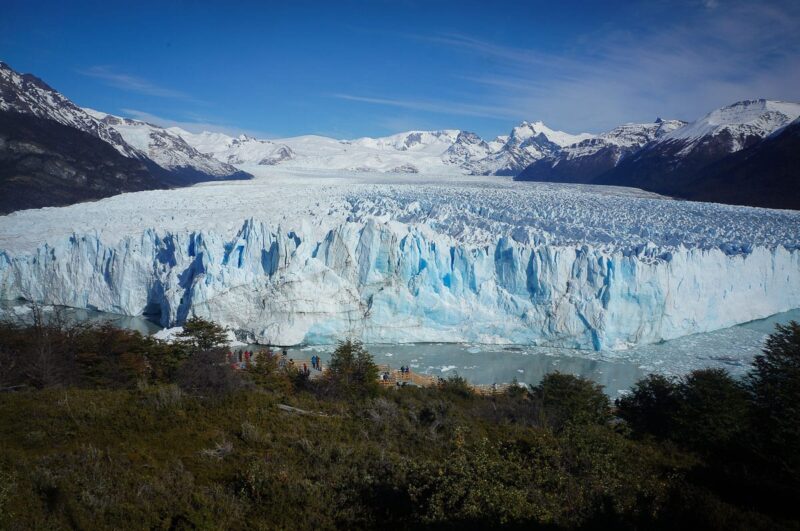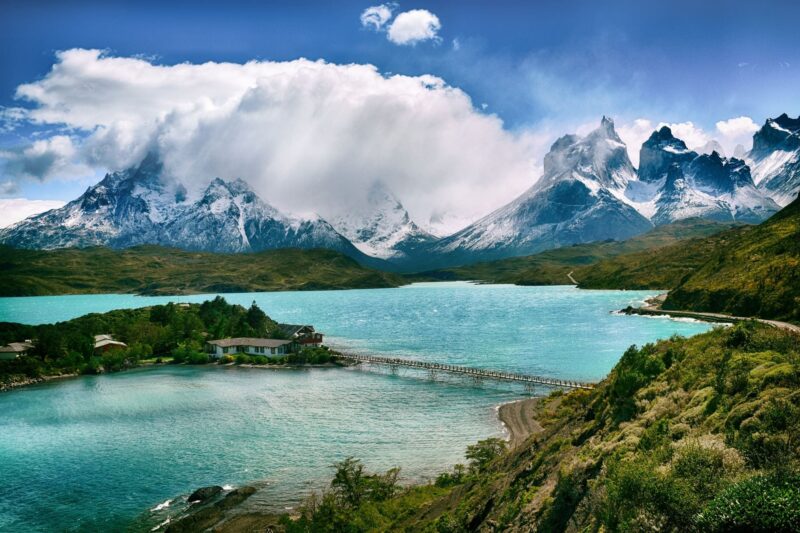
The W is the classic route to take around Patagonia’s spell-binding Torres del Paine National Park. This 80km walk winds its way up 3 different valleys, past magnificent blue glaciers, through haunting lenga forests, and up to spectacular miradors that sit beneath monolithic granite towers. It takes in the park’s most spectacular sights: from the iconic spires of Mirador Las Torres and the enormous Grey Glacier to the steep trail along Valle Francis and the contorted, multicoloured horns of Los Cuernos.
I knew that I couldn’t visit Patagonia without walking the route, but lasting 4 or 5 days, the hike takes preparation: from booking your accommodation well in advance, figuring out which route to take, and knowing what to take with you considering you will be carrying everything with you for almost the entire length of the trail. After hiking the W myself, I have a good insight into what essentials you will need to pack. Here’s my detailed guide.
Get Your Documents in Order
You will need to carry all of your travel documents with you in Torres del Paine National Par when hiking the W or O Trails. Not only will you need them upon registration at the park’s office, but you will also need to present your passport and immigration forms upon check-in at the refugios in order to avoid paying an additional tax, which is 19%.
- Passport & immigration card
- Travel insurance documents
- Booking information & confirmation numbers for refugios or campsites
- Cash & credit/debit cards
- Emergency contact details

Camping vs Refugios: Booking Accommodation
You have two options of where to stay while hiking the W: In a refugio or on a campsite. Deciding which is best for you will determine how much equipment you need to carry during the hike and is generally a toss-up between ease and cost. While refugios offer an extra level of comfort, they can be much more expensive than camping.
Refugios
A refugio is basically rustic hostel-meets-hotel and they are dotted around all the major stopping points on the trek. They’re open year-round and have dorm-style rooms, shared bathroom facilities with hot showers and a basic, on-site restaurant/canteen and bar. The rooms are generally warm and clean with comfortable beds and the refugios themselves often have open and sociable communal areas where you can relax in front of a roaring fire after a hard day of hiking.
There is also the added bonus of not having to haul camping equipment, bedding (although I recommend bringing your own sleeping bag to avoid the extra rental cost at the refugios), and food with you throughout your trek. All refugios provide meals on a full-board (breakfast, dinner, & a packed lunch), half-board (breakfast and dinner) or meal-by-meal basis. The food is expensive, even by Patagonian standards, so there is the option of using the refugios kitchen to cook your own food if you wish.
Most refugios also have campsites with separate facilities if you would prefer to camp out of the main building.
Camping
If you prefer a wilder experience in which you get to sleep under the stars and stare at the park’s incredible views through your doorway, you can camp at certain points along the W Trek’s trail. At refugio campsites you have the option of sleeping in pre-erected tents, meaning you don’t need to carry your own equipment. Sleeping mats and warm sleeping bags are available to rent (although I would recommend bringing your own as they don’t add much extra weight) to keep you cosy. As these campsites are often on the grounds of nearby refugios, you have access to toilets, warm showers, and the communal spaces of the refugios where you can enjoy a hot meal or cook your own dinner.
There is also a free campsite at Italiano, run by the National Park Authority (CONAF). You will need to bring your own tent and facilities are a little basic, but they do have on-site toilets, running water and a cooking shelter. Note: You still have to book this free campsite in advance.
BOOKING YOUR ACCOMMODATION
With Torres Del Paine being one of Chile’s most popular attractions and the W-trek being the most desirable hiking routes on the South American continent, it’s safe to say that booking your accommodation in advance – even up to 2 months in advance during the high season – is essential. All refugios and campsites can be booked online but to complicate matters slightly, there are 3 different companies that you will potentially have to use, depending which camping spots you choose: CONAF, Vertice Patagonia, and Fantastico Sur.
To check which campsites you will need to book, check out my hiking itinerary lower down this page.
Fantastic Sur run Chileno, Frances, Los Cuernos and Las Torres and their booking site can be found here. The booking system is fairly simple. You just select your dates and then choose whether you would like to camp or stay in a dorm room using the drop-down boxes. After this, you can add additional extras such as sleeping bags and mats, full-board, half-board, or sperate meals. If you have any issues with the booking, you can email them at [email protected] or drop into their office in Puerto Natales.
Vertice Patagonia run both Paine Grande and Grey. Their booking site can be found here. The process for booking with Vertice is slightly different from the one for booking with Fantastico Sur. First, you will need to select the number of people, set your nationality to ‘another’ if you are not Chilean, and the currency to US dollars. On the next page, you will select the W-trek option and then on the following page, you can choose which accommodation you would like to book. If you follow my itinerary below, you will need to select the Grey and Paine Grande option, however, there are multiple combinations as well as the ability to book each one separately. If you have any issues, you can contact them at [email protected].
The only free campsite on the trek route is Italiano, managed and maintained by the National Park authority (CONAF). Although the site is free, you still need to make a booking in advance via the CONAF booking site. Make sure to print out your reservation and bring it with you.
Camping Equipment
If you plan on spending as little money as possible when hiking the W, you will need to bring plenty of camping equipment to avoid having to rent it at the refugio campsites. However, if you choose to stay in the dorm rooms or pre-erected tents, you will obviously avoid having to bring your own tent. I still recommend carrying a sleeping mat and sleeping bag as otherwise, you will have to pay to rent these each night despite forking out for a pre-erected camping spot.
Please remember that whatever you pack you will have to carry with you on your back for up to 7 hours a day so try to pack as lightly as possible.
- A Lightweight tent. Winds can get rather ferocious in Torres del Paine national park so you need to find a good balance between picking up a sturdy and reliable tent and one that is lightweight enough to carry for 5 days. It also has to be large enough to fit both you and your backpack. The Snugpak Ionosphere is nice and compact and weighs just 1.8kg. Note that some campsites are on top of wooden platforms so you will need a way to secure the tent that doesn’t involve pegs.
- A lightweight, compact sleeping bag that’s good for minus temperatures. If you are not taking your own sleeping bag, I recommend packing a sleeping bag liner as you never know how clean the rental sleeping bags are.
- Roll matt.
- Mess kit (including pan, cup, plate, knife, fork and spoon).
- A small, foldable camping stove and gas canisters.
- Swiss Army Knife.
- Padlocks so that you can lock away valuables or bags in lockers at the camsites or refugios.
- Torch.
RENTING OR BUYING CAMPING EQUIPMENT IN PUERTO NATALES
If you are spending an extended length of time travelling around Patagonia or the South American continent without doing any other hiking or camping trips, it’s understandable that you may not want to carry a full range of camping equipment with you for your entire trip. If this is the case, you have 3 options: Buy equipment; Rent equipment in Puerto Natales; Or rent equipment at each campsite in the park.
As Puerto Natales is heavily tourist-focused, you should have no problem finding all of the equipment that you need in the myriad hiking and camping shops. However, for high-ticket items such as tents and sleeping bags, you may be better off purchasing them in Punta Arenas (if you have come from southern Patagonia) as the city’s duty-free status reduces the prices significantly.
I chose to rent all of the equipment that I needed from Erratic Rock in Puerto Natales. Not only is this a fantastic hostel, but they also host a daily seminar, nicknamed the 3 o’clock talk. You can join their expert guides each day at 3pm for a cup of coffee and seminar that covers everything you need to know about Torres Del Paine. This includes current weather conditions, accommodation, equipment, trail routes and transportation.
Erratic rock don’t allow reservations on gear and so operate on a first-come-first-serve basis, so you may just have to hope that they have everything you need. Their prices are below and listed as Chilean pesos per day.
Sleeping bag – CH$3000; Sleeping mat – CH$1500; Trekking poles x 2 – CH$3500; Waterproof jacket – CH$3000; Backpacks – CH$4000; Down Jackets – CH$2500; Gloves – CH$1500; Headlamp – CH$1500; Cooking kits for 3 people (Stove, bowls, cups, cooking pot, & water bottle) – CH$4000

The Best Backpack for Hiking the W
I always recommend packing light for multi-day treks like the W or O-Circuit. If you plan at staying at the refugios, you should only have to carry clothes, food and accessories so look for a relatively small backpack with between 30 – 50 litres capacity, depending on how heavy of a packer you are. The lighter your bag, the better. If you are carrying a tent, stove and other camping essentials, a 70-litre bag should be fine.
On some of the hiking days, you will be able to leave your main equipment and larger bag at refugios or with park rangers, so ensure you take a daypack to carry just valuables and essentials on these sections of the trail.
Daypack
For the majority of the W Trek, you will be hiking with your main backpack. However, on two days – when hiking from Refugio Grey up to the glacier of the same name and when hiking to Valle Frances – you will have the option of leaving your gear at a refugio and just taking a daypack. Something compact and foldable will be your best option. The Osprey Ultralight Stuff Pack can be packed down to the size of its very small pouch yet holds 18 litres and has side pouches that can hold water bottles up to 600ml in volume.
Main Backpack
If you are staying in dorm beds at the park’s refugios, you will only be carrying clothing and essentials so a 40-50 litre backpack will be more than enough. The Osprey Fairpoint 40 litre pack is rugged and durable (Osprey Fairview for women) but the Osprey Talon 33 litre pack is my favourite option if you’re willing to forgo a little capacity for additional comfort and features: it comes with external hiking pole straps, a lightweight frame and additional lumbar support.
If you are lugging a tent, sleeping bag, and camping accessories, the Osprey Aether Ag 70 is perfect. I have been using mine for the last 6 years through multiple hikes and long-term backpacking trips and it is still going strong.
Clothing
You will need to give a little forethought when it comes to what clothing to pack for hiking the W-Trek or O-Circuit in Torres del Paine. The weather on the trails can be rather unpredictable and is known to subject hikers to a mix of sunshine, snow, rain and sleet all in one day. I should know: on one day of the hike I went from walking alongside Lago Skottsberg in just shorts and a t-shirt in bright sunshine, to having to wrap up warm as I encountered a blizzard while ascending Valle Frances. In the summer months, temperatures can get quite high but you are still likely to encounter weather that ranges anywhere between 0 and mid-twenty degrees celsius at lower altitudes.
This means layering your clothes. Avoid cotton and wear quick-drying, synthetic base layers with both a fleece layer and wind/water proof jacket to wear on top for when you are making your way up Valle Frances or to the Torres.
- A good pair of hiking boots: Ensure that you wear in any new pair of boots before the trek as any unbroken-in boots will give you blisters and make the hike much more challenging.
- 2 or 3 pairs of warming hiking socks with 5 pairs of breathable, anti-bacterial liner socks to reduce the chance of blisters.
- Underwear.
- 2 pairs of waterproof hiking trousers. I recommend getting a pair that zip off and convert to shorts to make hiking in warm weather a little more comfortable.
- Long johns or thermal leggings to wear under your trousers when hiking in snow or keep you warm on cold nights in your tent.
- T-shirts
- A warm, fleece layer such as the North Face Glacier or Berghaus Prism. If you don’t own a fleece, a good hoody will do the trick.
- A Gortex jacket to protect you from the wind and rain such as the Berghaus Ridgemaster.
- A warm hat and waterproof gloves
- Sunglasses
- A snood to keep your neck protected from the sun and wind.

Food
Although a hot meal at the end of a hard day of hiking may sound tempting, food in refugios can be incredibly expensive, even by Patagonian standards. They are generally set menus and can be pre-booked online when booking accommodation. Many of the refugios do have shops where you can buy basic food supplies such as rice, pasta and sauces as well as snacks but the prices of these are also inflated.
I recommend bringing enough food for the entire trek, packing plenty of non-perishable items that are easy to carry and cook such as rice, pasta and cans/jars of sauces. Noodles, powdered soups and pasta pots will go a long way to keep you fed and energised throughout the hike. Cured meats or sausages also make a great addition to liven up the meal slightly. For breakfast, bring some sachets of quick-cook porridge and instant coffee. You will not need to bring any bottles of water with you as you can re-fill bottles in the park’s rivers and streams or at the refugios.
Note: You are only able to use stoves at certain spots within camp sites. If you think you will need a warm coffee or tea while hiking, boil water in a morning and take an insulated flask with you.
Hiking Gear
- Hiking Poles (can be hired in Puerto Natales)
- Sunglasses
- Sun cream
- A headlight or torch. This is useful for the last morning of the hike when you will be hiking up to Las Torres before dawn in order to watch the sunrise.
- A waterbottle that you can refill from rivers and streams along the trail. Collapsable bottles will save you a lot of space.
Toiletries and Accessories
Hiking is a strenuous and sweaty business and while you may want to embrace the wild and spend 5 days camping without setting your eyes on a shower, each of the refugios have good bathroom facilities that allow you to freshen up each evening or morning.
- Toothbrush and toothpaste
- Deodorant
- Soap or shower gel
- Toilet paper
- Hand sanitiser
- A lightweight, quick-drying microfiber towel
- Insect repellent
- A small first aid kit. While hopefully you will get through the hike without any injuries, it is always good practise to carry a small kit with painkillers, bandages, Imodium, plasters for any blisters

Electronics and Gadgets
Plug sockets and power are not available at all refugios and they are often in demand amongst other campers when they are. Assuming you will be travelling with a phone (you will struggle to get a signal in the park but WiFi is available at campsites for a fee) and camera, it’s a good idea to bring your own portable power supply.
- Phone
- Camera and accessories. I don’t travel anywhere without my camera gear.
- Universal plug adapter