It’s beautiful here. They said that of course, that Budapest is beautiful. It is, in fact, almost ludicrously beautiful.
Antony Bourdain
Trundling around Budapest in its charming, creaking yellow trams, its beauty is obvious. The city is a riot of architectural styles; sprawling palaces, expansive public spaces, and wide avenues filled with the former mansions of various princelings. The remains of long-gone empires are still here for all to see. If there were such a thing as building porn, this is the place to find it. Mix this with the sweeping city views, ruinous bars, and old-world charm, and you have one of Europe’s most Instagrammable cities.
Budapest is literally divided in two. From high up on Gellert Hill, you get a sense of the layout of a city divided, split by the Danube: Buda on one side and Pest on the other. It was historically a crossroads of the Eastern and Western worlds. The Danube once the border of the Roman Empire. It’s not just the Romans though, they’ve all been here over the years; the Celts, the Mongols, the Ottoman Turks; all had their way – or tried – and all left their mark, one way or another.
However, it wasn’t until the mid-19th century and the coming of the curious, yet seemingly improbably Austro-Hungarian Empire that the city came into its own. Fuelled by untold wealth, accumulated power and ambition, the city became one of the world’s greatest, both architecturally and intellectually. It was progressive and metropolitan. People wanted to move here, wanted to live here and wanted to build beautiful buildings. Most of what you see in Budapest today, from the iconic bridges to the ornate mansions and faux fairytale castles, are remnants from this opulent period in the city’s history and are what make Budapest one of Europes most photogenic, and therefore Instagrammable, destinations.
Gellért Hill & Citadella
There is a saying that “if you can look down, you’re in Buda but if you can look up at something, you’re in Pest” and there is no better viewpoint in which to look down over Budapest than from the citadel at the top of Gellért Hill. The140m high dolomite rock itself isn’t particularly photogenic, its only sights being the 19th-century fortress and the Liberty Statue (Szabadság Szobor in Hungarian), a large monument erected by the Soviet Red Army to commemorate their victory in World War II. However, the Panorama from the hill’s peak rewards those willing to climb to the top with views over the whole of Pest, including the Chain Bridge, the Parliament Building, St. Stephens Basilica and Margeret Island.
Fisherman’s Bastion
Part fairytale castle and part neo-Gothic palace, Fisherman’s Bastion’s seven towers and viewing terrace on the Buda side of the city lend Budapest a magical air. Believe it or not, this structure is a much more recent addition to the Castle District than its neighbours and it certainly isn’t a bastion. It was never built for defensive purposes and was actually constructed between 1895 and 1902 as a public space and viewpoint over the city.
The structure itself is playful and overly ornate, blending in perfectly with the neighbouring St. Matthias Church and its colourful rooftop. All of this makes for a perfect Instagram shooting location. To get the shots below, I had to arrive at 7 am, before the busloads of tourists began to crowd the terrace.
Széchenyi Baths
One thing that hasn’t changed over the years is the Hungarian affection for taking the waters, marinading in thermal baths. It’s a tradition going back to the Romans, continued by the Ottomans, and something that has survived right through two wars and communism. There are many bathhouses In Budapest, but the most famous of them all is Széchenyi Baths, a sprawling, canary yellow complex consisting of hot springs, both outdoor and indoor pools, saunas, steam rooms and spa treatments. There is even a beer spa for those wanting to bath in a tub of hops while drinking unlimited pints from your own personal tap.
Photography is allowed within the pool areas but be wary of other patrons. Not everyone is comfortable with strangers capturing images of them as they try to relax in a pool.
Gellért Baths
While Széchenyi may be the most famous and popular of Budapest’s bath houses, none are more beautiful or storied than the Gellert. It is said that it has only ever closed once – due to a fault in the water pipes – but has otherwise remained open through World Wars, communism and bloody revolutions.
Part of the famous Hotel Gellért in Buda, the bath complex was built between 1912 and 1918 in a beautiful Art Nouveau style that makes the building a prime subject for architectural photography.
Heroes Square (Hősök tere)
Dominated by its iconic statue complex featuring the Seven Chieftains of the Magyars and other important Hungarian national leaders, Heroes square is otherwise a vast, minimalist square with plenty of space for you to stretch your creative muscles and pose in front of an imposing backdrop. The square can get very busy during the day, so if you want a perfect shot without the crowds, you’ll have to arrive early in the morning or wait until people start to disperse at evening time.
Buda Castle
Buda Castle isn’t on this list due to its own beauty – as photogenic as it is – but it is actually here because it is the perfect vantage point for shooting the Danube, its many bridges, and a bird’s eye view of Pest. My favourite time to visit is early evening so that toy can photograph the sun setting over the city, followed by a nighttime shot of the illuminated Chain Bridge and Parliament building.
New York Cafe
The New York Cafe is one of the last remnants of Budapest’s prime. A time when opulent buildings were cropping up all over the city and a society where artists and intellectuals were valued citizens, regardless of financial means. When the cafe was built, there were more than 500 cafes in the local neighbourhood alone. Of all of them, the New York Cafe was said to be the most beautiful of them all. Legend has it that on its opening day in 1894, Ferenc Molnár stole the cafe’s keys and threw them in the Danube, declaring that it should remain open 24/7.

Here, like all the cafes in the world at the time, a few cents could buy you space all day for you to sit, sip your coffee and think great thoughts. It was a petri dish of creativity. Waiters spoke several languages and studied literature. They invited creatives to stay, even if they had no money. if you looked like a writer, the waiters would immediately bring you paper and ink, even a dictionary, whatever you were looking for. Most people didn’t have a telephone at home, so it was a place to receive telephone calls or your mail.
Today, the New York cafe is more the reserve of camera-wielding tourists than the city’s bohemian artists, but the gleaming marble surfaces, gilded light fittings and frescoes remain as they were the day that the cafe opened. It is worth a visit if you want to really immerse yourself in authentic 19th-century coffeehouse culture and the interior makes for a stunning Instagram backdrop.
Market Hall
Budapest’s Great Market Hall – opened in 1897 – is the largest indoor market in the city and provides a great shooting spot for architecture and street photographers alike. If the huge, three-floored steel structure and colourful Zsolnay tiled roof don’t do it for you, it is worth wandering through the maze of noisy and chaotic stalls to capture photographs of shoppers and stall owners.
Hungarian Parliament Building
In a city filled with gorgeous architecture and landmarks, it takes a lot to stand out from the crowd. The Hungarian Parliament Building manages this with ease. With its intricate neo-gothic revival edifice, it is the second-largest parliament building in Europe, but easily the most beautiful. It is Budapest’s most photographed landmark and an icon of the city.
For up-close, detailed photographs, head to Kossuth Lajos Square behind the building, but in my opinion, it is best seen from afar. Both Fisherman’s Bastion and Buda Castle provide a good vantage point but the best way to see the Parliament Building is from a boat on the Danube.
Szimpla Kert
The original and granddaddy of all the city’s ruin pubs, Szimpla was the first to set up in the 7th district back in the early 2000s and has gone from strength to strength since then. With this reputation comes a crowd, usually more tourists than locals, but with good reason. The decor and art installations alone make it worth a visit but you can also expect an open-air cinema, huge outdoor garden (complete with a seating area made from an old Trabant car), galleries and live music. Housed in what was once a stove factory, Szimpla is so photogenic due to the mix of tumbledown architecture, mismatched thrift store furniture and graffiti-covered walls.
For a more detailed look at Budapest’s ruin pub scene, check out my guide to bar-hopping in the Jewish Quarter.
The Széchenyi Chain Bridge
Of the 9 bridges that span the Danube, linking Buda and Pest, the Széchenyi Chain Bridge was the first to be erected and remains an icon of the city. You can get a wonderful photograph looking down the length of the bridge from the Pest side, with the two stone lions guarding the bridge’s entrance in the foreground of your shot and Buda Castle behind, however, I think that it is best seen from above, particularly when it is illuminated at night. I recommend heading up to Buda Castle at dusk to capture an iconic image of the Danube taking in both the bridge and the Hungarian Parliament building.
Liberty Bridge
While the Chain Bridge may be Budapest’s most famous, my favourite is actually the more restrained and spartan Liberty Bridge or Szabadság híd in Hungarian. It was originally named the Francis Joseph Bridge, but following its destruction during WWII, it was the first crossing of the Danube to be rebuilt and reopened, earning its new name: ‘Liberty Bridge’.
The reason I prefer to photograph Szabadság híd is partly due to its colour – a dull green that seems to stand out against the murky Danube – and partly due to the fact that Budapest’s famous yellow trams trundle across it every few minutes, providing a wonderful contrast to the green steel.
The Jewish Quarter’s Street Art
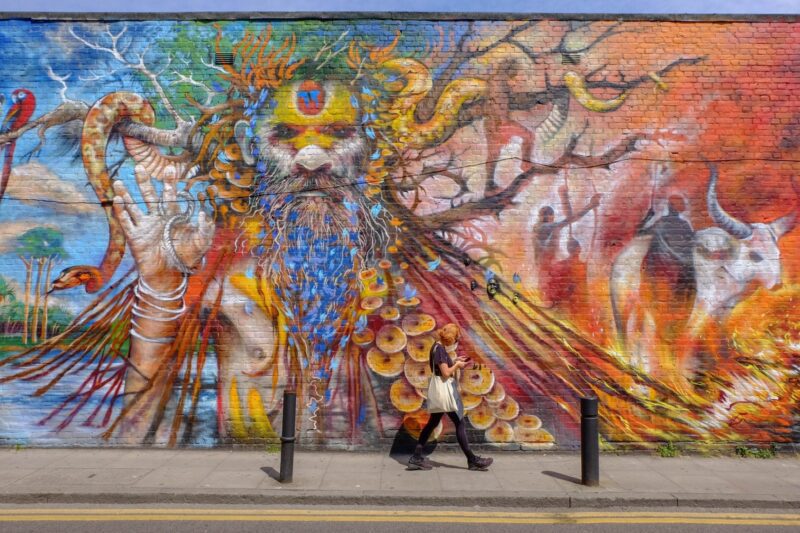
For a long time, Budapest’s Jewish district was left to decay. However, in the past two decades, it has seen a resurgence, becoming the city’s coolest neighbourhood. Urban art groups such as NeoPaint Works and Colorful City have set about brightening up the district and you can find their work on almost every street or vacant lot. As street art is very much illegal in Hungary, many of the largest pieces are commissioned by local authorities and so have a historical context or an educational message. This doesn’t make them any less interesting as the artists are still able to express themselves in their own unique styles. The largest of the murals is the piece dedicated to the “Match of the Century”, when Hungary defeated England in Wembley Stadium in 1953, on Rumbach Sebestyén Street, or the depiction of a bull scoffing greens beside Mika Kert that was painted to encourage people to eat more vegetables.
The best way to see the murals scattered around the district is to just wander the streets and stumble upon them yourself. However, you would like a little more information about each piece, Free Walking Tours Budapest do a great street art tour on a pay-what-you-feel basis.
St. Stephen’s Basilica
Not only is St. Stephen’s Basilica the tallest building in Budapest, it is also one of the most spectacular. Although it is beautiful when seen from above, most notably from Gellert Hill and Buda Castle, the reason it is on this list is the sweeping view from its observation deck. As well as providing an elevated perch for shots of the city, it also serves as a great backdrop for your photos. Wander down Zrinyi street to snap that perfect Insta portrait with the Basilica peeking out at the end the cobbled road.
Where to Stay in Budapest
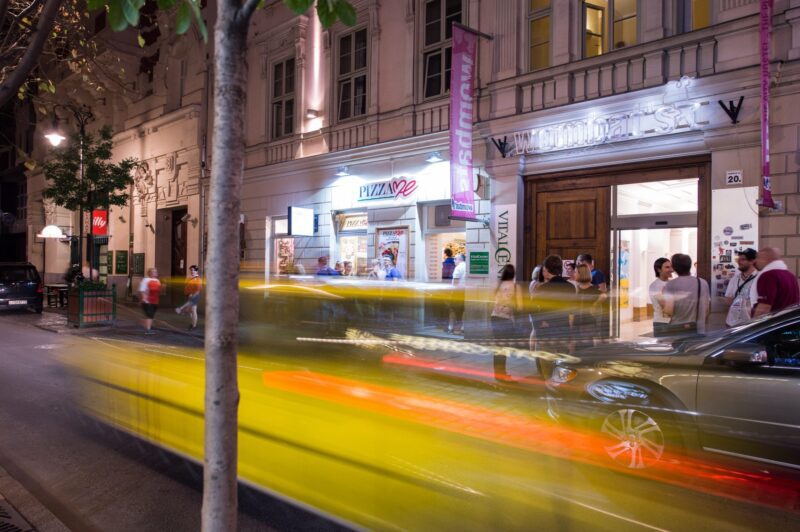
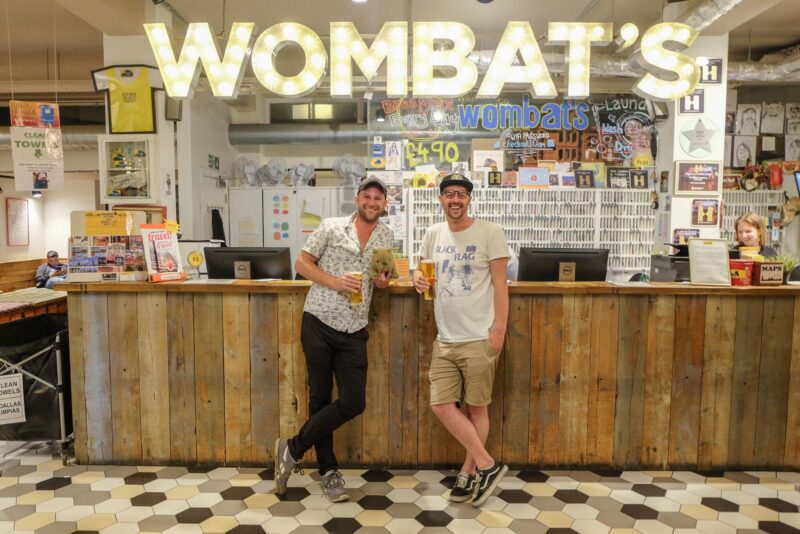
I stayed at Wombats CITY HOSTELS during my time in Budapest. Not only is the hostel located centrally, within walking distance of most of the city’s main sights, its location at the centre of Király Street at the heart of Budapest’s Jewish Quarter means it is situated in Budapest’s coolest district, close to a wide array of restaurants and bars.
Wombats offer both private rooms and dorm beds to fit with whatever style you like to travel. For the best prices (up to 15% cheaper than other booking platforms) book directly through their website.
This post was brought to you as a result of the #wombatsTraveller blog trip, created and managed by iambassador in partnership with Wombat’s CITY HOSTELS. However, all views expressed are my own.