As my bus pulls onto the wide, tree-lined avenue of Károly Krt, I can’t help but feel a pang of excitement. The disparate mix of blocky, communist buildings, ornate 19th-century mansions and old world charm, emphasised by the canary yellow carriages of the city’s charming trams trundling by, meant that I was back in one of my very favourite cities. I had arrived in Budapest.
The last time I had been in this corner of the world, Hungary’s capital was in the depths of winter. A thin layer of frost powdered the palaces and parks and people avoided the icy streets and instead bundled into the city’s ornate cafes swaddled in padded coats and knitted hats. The mighty Danube hadn’t yet frozen over, but it wasn’t for a lack of trying. It was a trip that left me enchanted: mesmerised by the beauty, the architecture, the history. The goulash.
It’s that previous visit that may have clouded my judgement when packing for this trip: a collaboration with Wombat’s CITY HOSTELS in which they’re sending 3 teams of travel bloggers to two Wombat’s locations each in an attempt to choose an ambassador their 20th birthday year. I peel off my thick denim jacket and fan myself with my sweat-soaked cap. As I alight at Városháza Park, my ill-thought-out black jeans are completely stuck to my legs. Europe is experiencing a sweltering heatwave and Budapest is no different, the temperature pushing 30°C.
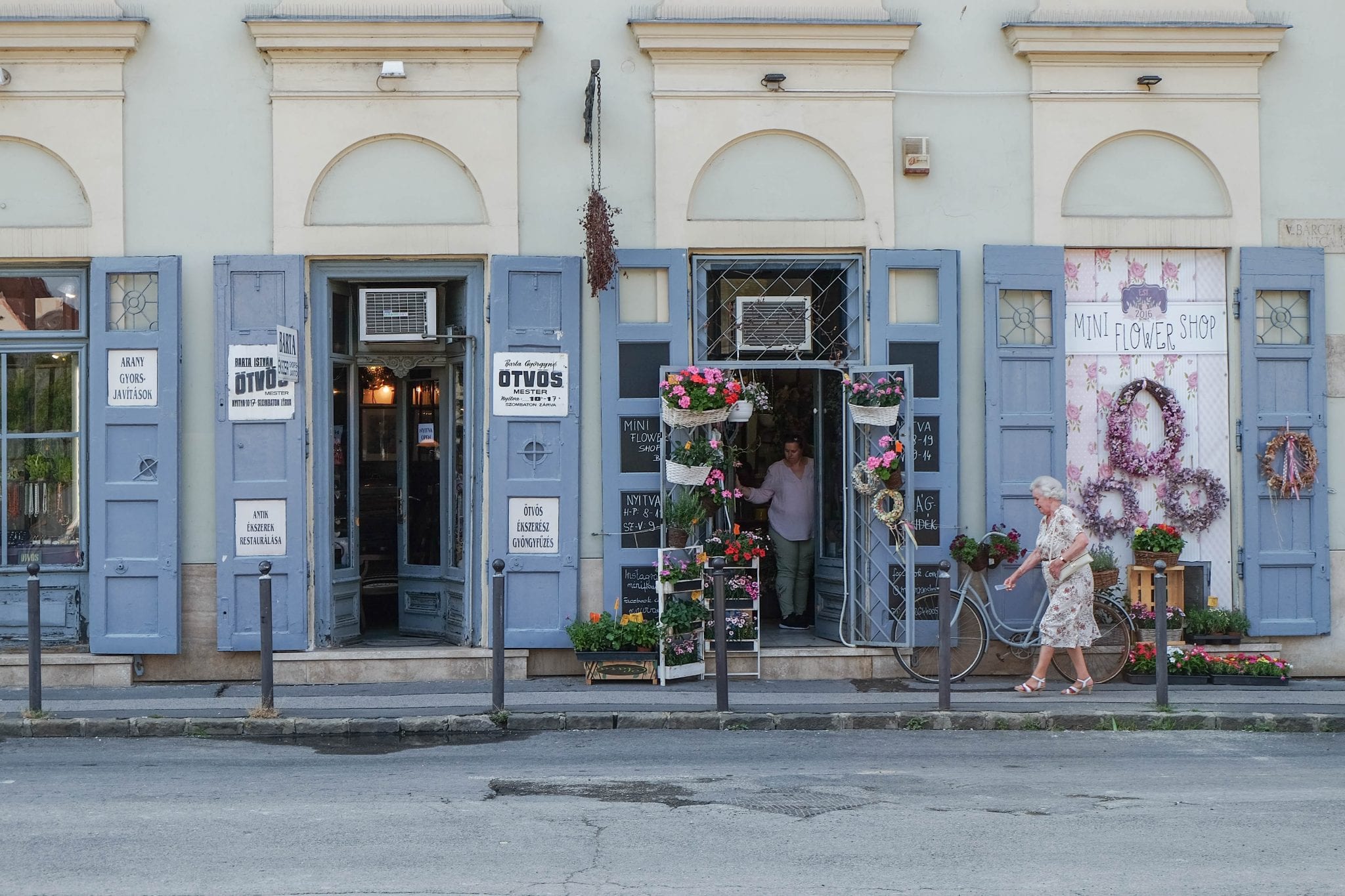
I’m always amazed by just how much a change in season can alter a city. Budapest was grey and solemn back then, but now the sky is blue and the trees are in full bloom. I’m taken aback by just how green Budapest is. The streets that were empty are now buzzing, tourists and locals alike crowding the pavements of Károly Krt or lounging in the city park. As I wheel my case down Király utca, the King’s Alley, I have to steer it around groups of people spilling out from the hip cafes and bars of Jewish Quarter, narrowly avoiding collisions with hastily erected al-fresco seating. The city feels alive.
If the city is alive, then Király utca is its lifeblood – or was until the beginning of the 19th century. Back then, it was the trade centre of Budapest. According to Wombat’s, “There were several shops, bars and nightclubs in each block. In the Orpheum zur blauen Katze, it was said that the dancers wore nothing but a necklace of genuine pearls. Some of the many wine bars on the street employed men who brought drunks home in a wheelbarrow, as horse-drawn carriages would no longer take them. Király, a street full of life, noise and vices.”
It wasn’t until the ambitious construction of the grand Andrássy út, parallel to Király utca, that the area began to lose favour with locals. At the beginning of the 19th century, most trade and business had moved to this splendid boulevard, leaving the Jewish Quarter in decline. By the end of the 20th Century, the Jewish Quarter was practically derelict, devastated by WWII and teeming with empty, bomb-damaged lots and tumbledown buildings in a state of disrepair.
The building that now houses Wombats was constructed in Király’s prime as a large, apartment block. Over the decades, a rotating cast of bars, shops and even an umbrella factory occupied its ground floor. In 2012, Wombat’s took over the building and gave it a new lease of life as Wombat’s CITY HOSTEL Budapest.
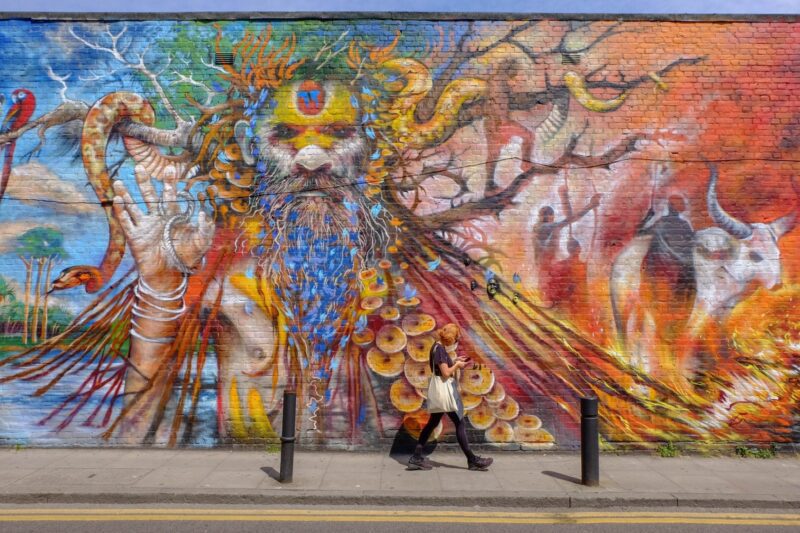
It isn’t only this building that has seen a resurgence, the Jewish Quarter itself has had a change in fortune. For the last decade and a half, thanks to the proliferation of ruin bars popping up in abandoned buildings and vacant lots, the area has found itself the unlikely centre of Budapest’s hipster scene, boasting minimalist coffee houses, striking street art and an exhilarating nightlife scene. Király Street is once again full of life and noise, just with a little less vice and wheelbarrow-wielding men.
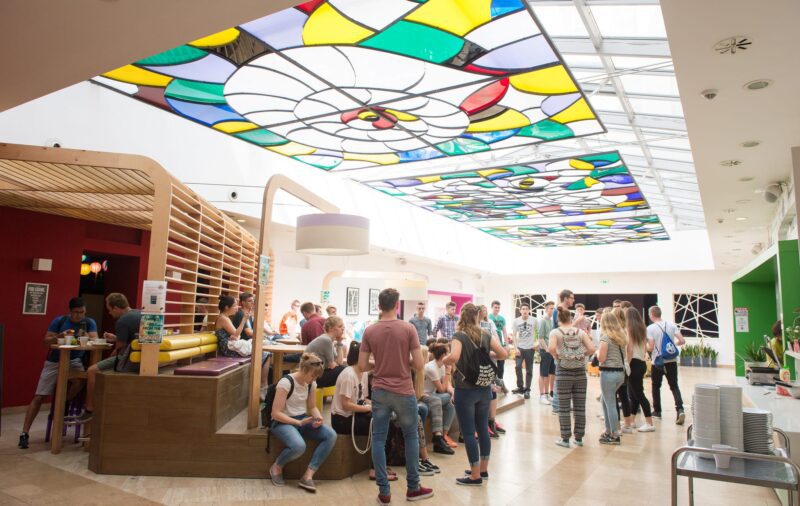

It’s just a few minutes walk from Városháza Park to Wombat’s, and soon I find myself stepping through a pair of enormous wooden doors into a building that still retains some of its 1840’s splendour. Checking in, I peer around the ground floor – there’s a wide, grand staircase circling upwards to the higher floors; an airy atrium that has been transformed into a huge social space thanks to the addition of modern furniture and a colourful stained-glass ceiling. There are football and pool tables and comfortable couches. Hidden away in an alcove just waiting to be discovered, was the cosy, tunnel-like hostel bar.
All of that will have to wait though. I’m keen to get up to my room and shed my sweat-sodden clothes. A ascend the swirling staircase and through the key-card activated doors. I wander down a long corridor decorated with murals of Hungary’s brightest and best alumni and when I swipe into my room, I’m pleasantly surprised. It’s bright and airy, clean, with a huge double bed. You would be shocked how often private rooms in a hostel seem to be an afterthought, cobbled together on the off chance they can make a few extra quid from dorm-averse couples but normally a little sparse. This is different and would put most budget hotels to shame. Its the little things – wardrobes, somewhere to sit other than the bed, ample plug sockets and a bathroom that you don’t have to hold your breath to squeeze into – that most places miss. I suppose when a hostel chain’s motto is ‘By travellers, for travellers’ – the idea to open the first hostel was conceived on a beer-fuelled night nearly 20 years ago by two Austrian backpackers in a Melbourne bar – you know that you are in good hands.

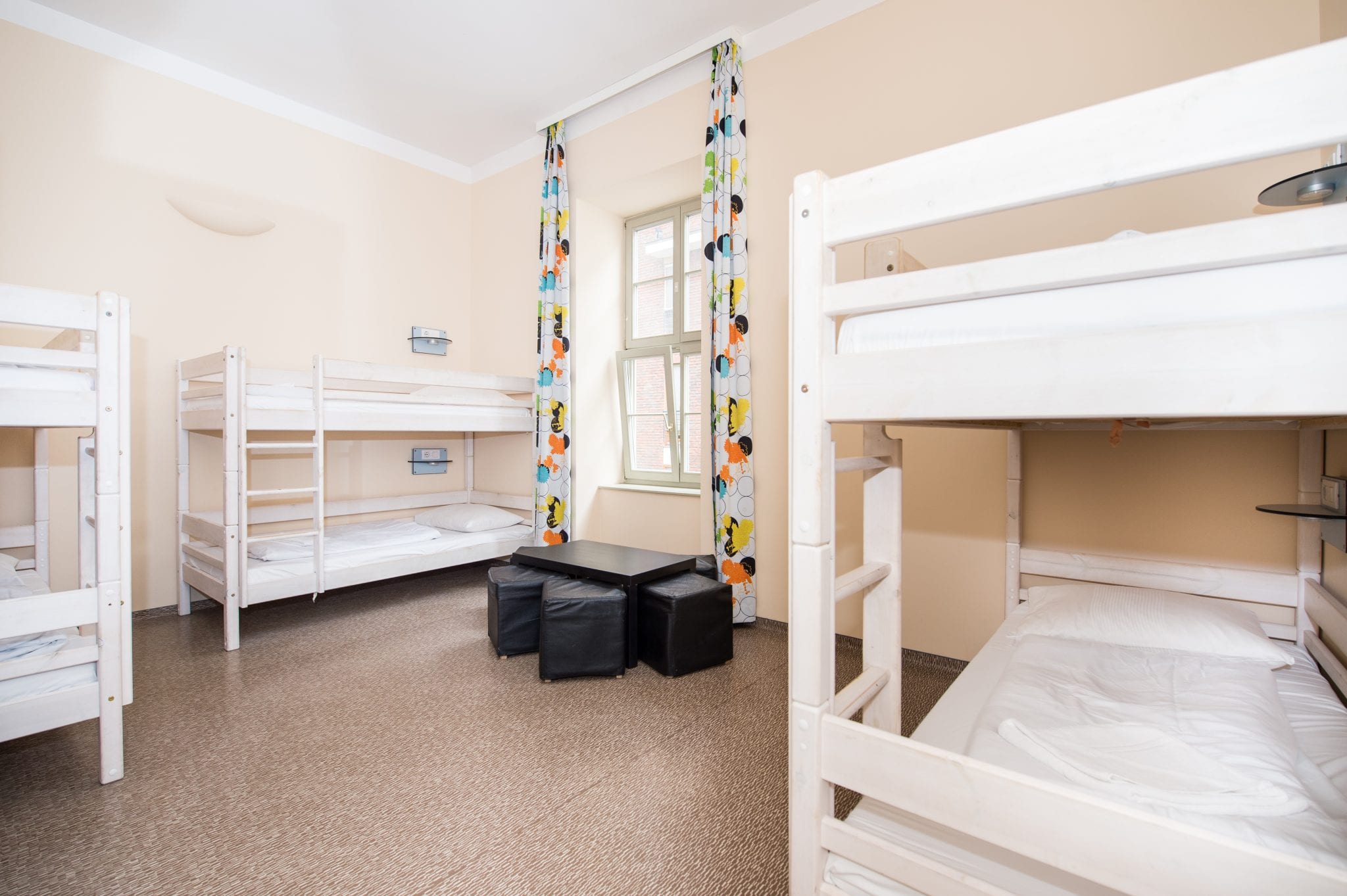
The dorm rooms are just as plush. There’s a choice of 4, 6 or 8-bed rooms, each of them spacious and comes with a choice of either mixed or female-only accommodation. All beds have their own shelf with sockets and a reading light. The mix of rooms makes for a good variety in the clientele. Walking through the lobby, I bumped into everyone from retired couples to teenagers travelling solo. There were groups of middle-aged people, 20-somethings on group tours of Europe and couples on romantic city breaks.
The dorm rooms are just as plush. There’s a choice of 4, 6 or 8-bed rooms, each of them spacious and comes with a choice of either mixed or female-only accommodation. All beds have their own shelf with sockets and a reading light. The mix of rooms makes for a good variety in the clientele. Walking through the lobby, I bumped into everyone from retired couples to teenagers travelling solo. There were groups of middle-aged people, 20-somethings on group tours of Europe and couples on romantic city breaks.

With that in mind, I took the time to leave the hostel and enjoy the balmy summer evening. It was the Jewish district that left the biggest impression on me during my last visit, and I want to experience it in summer, to soak in the atmosphere with the locals as they make the most of the bright June evenings and high temperatures. I spend the evening wandering from ruin bar to ruin bar – each and every one of them within a 10-minute walk from the hostel – supping ice cold Soproni in makeshift beer gardens that have popped-up in derelict lots.
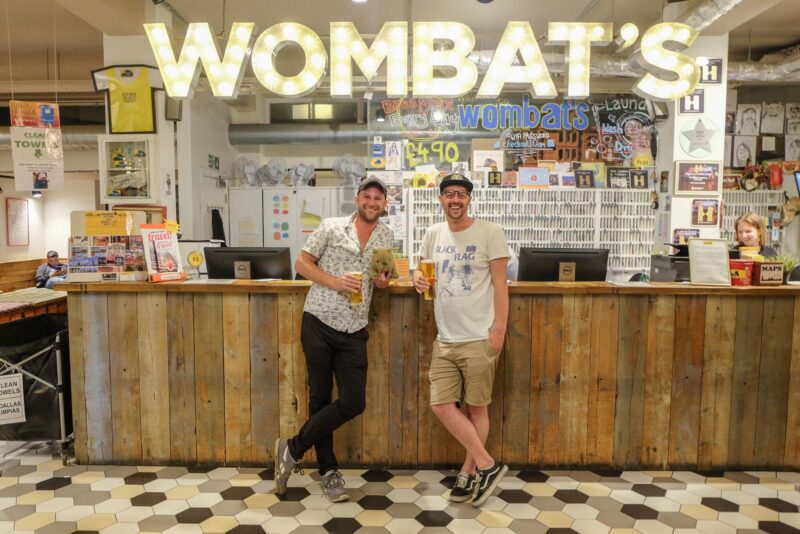
That isn’t to say that you need to leave the hostel to have a good time. Like all good hostels, Wombat’s is set up in a way that makes socialising, especially for solo travellers, easy. The Wombar – a long, cosy, dimly-lit space with arched ceilings hidden away on the ground floor – certainly helps with social lubrication and the cheap drinks offered during the hostel’s happy hour don’t hurt. For those looking to be more proactive in their drinking, the staff organise drinking games to get the slurring conversation started.

That’s how, on the second night of my stay, I find myself huddled around the table with a group of rather ‘spirited’ young people. I say young: they’re all around 18 or 19, full of cheap beer and bravado, but they certainly feel like kids compared to my ageing, 31-year-old self.
Wombats have suggested that I go on a Danube cruise. In my mind, I picture myself cruising down the river, past the stunning parliament building while sitting at a candle-lit on the deck of a luxury cruiser, sipping a classy red. In reality, I’m going on a party boat and these teenagers are my fellow passengers. Don’t get me wrong, I like a party as much as the next person, but a 10 pm start with a sailing time of 11 pm makes me yearn for my lovely private room and that plush double bed.
The animated conversation is already in full flow when I take my seat at the table, eased in with an introduction to my fellow sailors from our host, a member of staff that appears to be employed as a professional party facilitator. I’m wary at first, feeling my age, but within the hour we are all best friends, rambunctiously heading in a raucous convoy down to the Danube to board our craft.
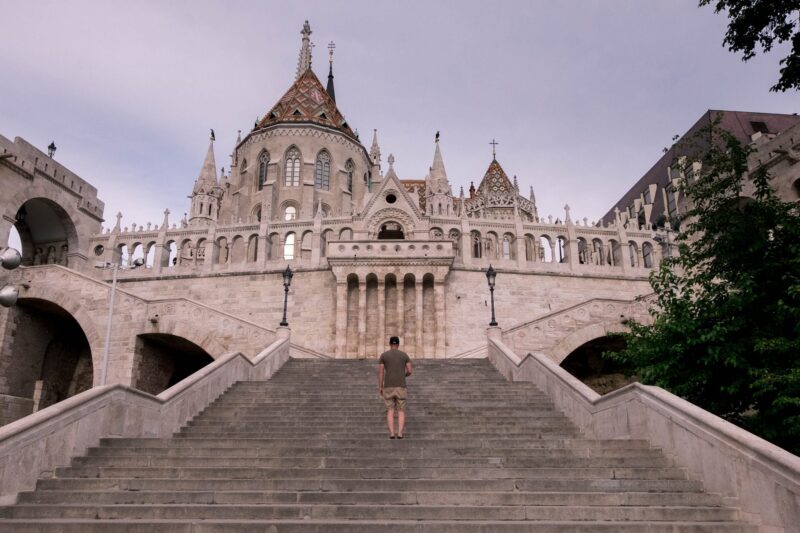
While the boat ride may not be the ritzy affair I first imagined, the free bottle of champagne that I’m handed as I hop on deck at least adds an illusion of class. As we set sail, all of my fears of being stuck on a boat with hundreds of drunk teenagers sink away. I‘m not the oldest on board, nor is the crowd skewed towards the under 20s. Rather than a drunken free-for-all, it’s a fun and pleasant evening of tipsy conversation fuelled by cheap champagne and bottles of beer. For two hours we cruise the mighty river, passing beneath its iconic bridges, captivated by the view of the city sparkling on the bank. First, passing the incredible Hungarian parliament on our left, and then all gawping in awe at the City Palace and Fisherman’s Bastion perched high above Buda on our right.
From our watery vantage point, I can’t help but think that Budapest is easily on of Europe’s great cities, or at least its most beautiful. I return to the hostel room and collapse, drunk on both cheap Hungarian lager and a revived love for this great city.
This post was brought to you as a result of the #wombatsTraveller blog trip, created and managed by iambassador in partnership with Wombat’s CITY HOSTELS. I received a complimentary stay at Wombat’s City Hostel, however, all views expressed are my own.