
The Guitarist carefully plucks his strings before clearing his throat and bellowing in a low, baritone voice. Two trumpeters beside him join with a long wail, filling the square with their cries. A group of teenagers begin to wander over, swaying to the strumming while clutching their bottles of Pacifico, fumbling in their pockets for a few pesos to throw the mariachi’s way.
10 metres away, a competing group of Norteno musicians begin playing the melancholy strings of El Ray. The tourists and locals gathered in the plaza recognise its opening refrains instantly. A few let out whoops and cheers while others join in and sing along to one of Mexico’s most famous mariachi tunes.
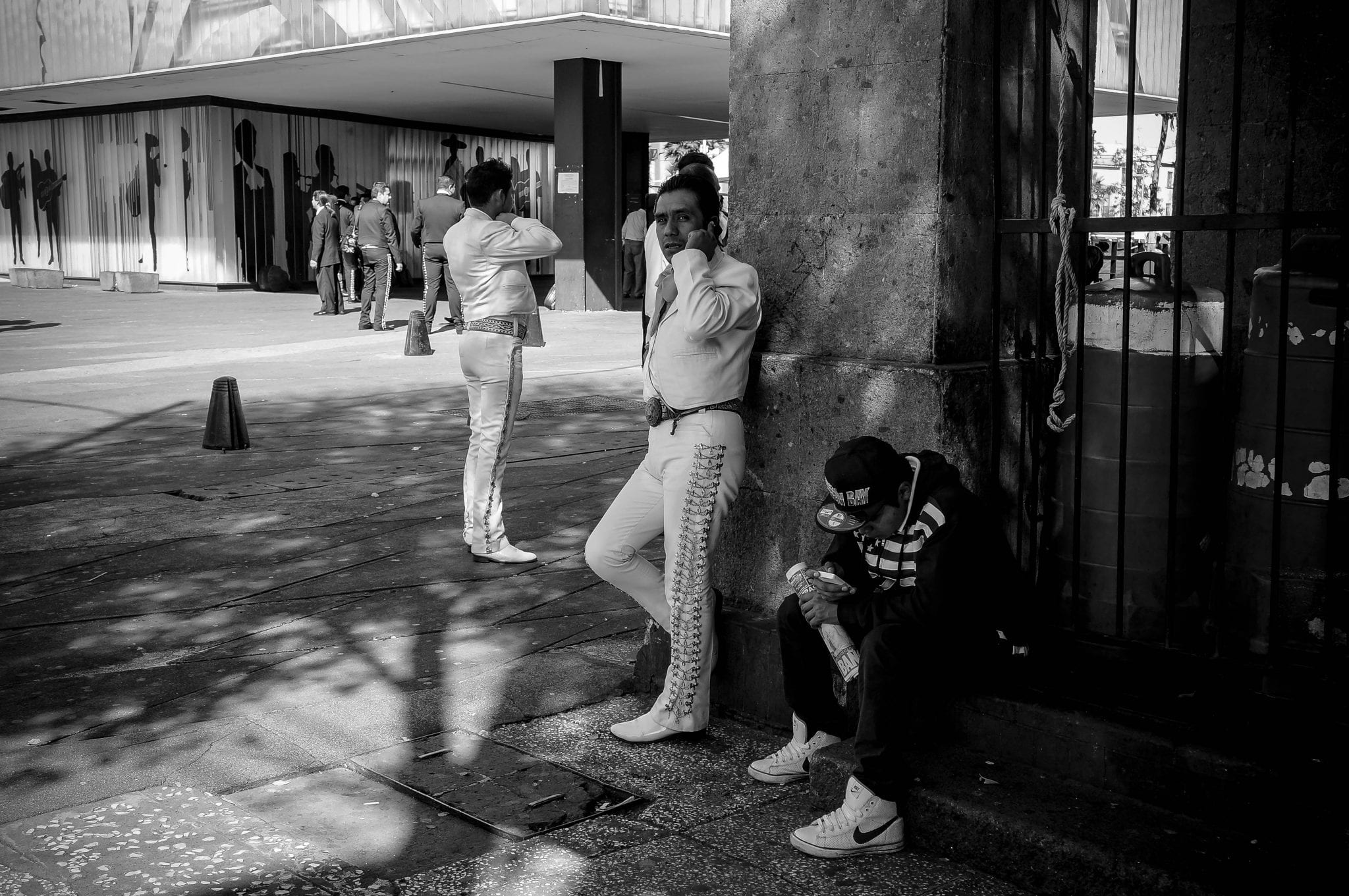
It’s late afternoon in Mexico City’s Plaza Garibaldi and at the moment, the musicians outnumber the punters. A dozen or so bands mill around the square, some of them performing while others relax and check their phones, waiting to be hired. Every so often, a car or van pulls up on Lázaro Cárdenas. The driver yells out to whichever band is closest and they gather their instruments, straighten their silver-spangled charro finery, and hop in the back, making their way to whatever wedding or birthday party their customer requires them to play at.
Plaza Garibaldi has been the home of mariachi in Mexico City since the 1920s. Around the clock, competing mariachi bands gather, dressed in their sharp suits with silver embellishments; Norteno musicians from the border areas in black belting out their Tex-Mex brand of country music, and white-clad Jarocho groups with matching sombreros, to play for anyone who’ll pay them a few pesos.

At the back of the square, in the market hall, taco stalls vie furiously for customers. Around its perimeter, bars are beginning to open for the evening crowds. Among them are a number of Pulquerias dishing out glasses of pulque, an alcoholic drink made by fermenting sap from the maguey plant that has been drunk since Aztec times, and Salon Tenampa, a restaurant and bar that has been attracting visitors for as long as the square has had mariachi music.

Inside Tenampa, colourful, intricately cut papel picado hang from the ceiling and murals depicting mariachi legends such as Pedro Infante and Javier Solis adorn the walls. Bartenders in black aprons whizz behind the gleaming, wood-trimmed bar dishing out tequila shots and cervezas while a band works its way around the tables, stopping to give an extended, personal concert for any group of diners that shows an interest. At the moment, the atmosphere is fairly subdued, but come 11 pm it will be a chaos of sound; musicians playing in the corner until their charro suits are soaked in sweat and revellers swirling on the dancefloor, singing their hearts out to classics such like Volver Volver and Guadalajara.

Out on the street, the evening’s revellers are beginning to arrive, spilling out of the bars that line the plaza. For many, Garibaldi is the final call of a long night around Mexico City’s drinking spots, and as the evening plays out, it can get pretty rowdy. Studded, heeled boots pound the pavement as bands weave through the crown in search of customers willing to pay for a song. In 2011, UNESCO named mariachi music an “intangible cultural heritage” of Mexico but in Plaza Garibaldi, with locals and tourists alike both drunkenly belting out heartfelt ballads, it feels completely material and real.

GETTING TO PLAZA GARIBALDI
Plaza Garibaldi is on Lázaro Cárdenasis, just a 10-minute walk from Palacio de Bellas Artes and a 20-minute walk from the Zocalo. The nearest metro station is Garibaldi – Lagunilla (the last metro leaves around midnight). Although it is safe to walk there during daylight hours, I would recommend getting a taxi after dark as the surrounding area can be a little sketchy, filled with dive bars, cheap motels and strip clubs. Although there is a fairly heavy police presence, beware of pickpockets.

One Response
What a vibrant depiction of the mariachi culture in Plaza Garibaldi! I could almost hear the lively music and feel the energy of the crowd. Your insights into the history and significance of these bands really added depth to the experience. Thank you for sharing such a colorful piece of Mexico City!