Staring out of the window of our taxi as we pulled into Oaxaca’s colonial centre, my first glimpse of the city was a strange one. An enraged man, clearly out of his mind with anger, chased two others down the cobbled streets. He was yelling and screaming, wielding a guitar over his head and threatening to bring it down on them like Pete Townsend and his infamous Rickenbacker moment. As we gawped out of the taxi window and the unfolding drama, our taxi driver just chuckled and shrugged his shoulders. “Es Mexico!” He laughed as we looked on in shock. It’s a sentiment that is echoed throughout the country. You see something crazy happening? That’s just Mexico. From what we had seen so far, Mexico seems to have a larger quota of craziness than most other nations. However, here in Oaxaca, we were about to enjoy its most famous display of weirdness – to non-Mexicans at least – The famous Day of the Dead, or Dia de los Muertos.


Day of the dead, or Dia de los Muertos, is one of Mexico’s most important religious holidays. It is a very special time of the year for most Mexicans as people gather together and remember loved ones. Celebrated every year on All Saint’s Day (Nov 1) and All Soul’s Day (Nov 2), it is thought to be the time of year when the veil between the worlds of the living and dead is at it’s thinnest and the deceased can pass through to visit the living. Nov 1 is the day to celebrate the memory of children and Nov 2 is dedicated to everyone, although in Oaxaca the party begins weeks before with the town already festooned in flowers and decorations when we arrived.
The roots of this tradition date back to some of Mexico’s oldest civilizations: Olmec, Zapotec, Maya, Purepecha when the fiesta took place in August. The conquistadors attempted and failed to eradicate this most uncatholic of ceremonies and in the end compromised by moving the festival to coincide with All Saint’s Day and All Soul’s Day.


At first glance, this may seem fairly morbid. Far from it. In Europe we have a strange relationship with death, It’s often talked about in hushed tones and any celebrations of a loved one’s life are sad affairs – both funerals and wakes are incredibly solemn. This is not the case in Mexico. The centre of Oaxaca bursts into rainbows of colour as families create altars to welcome the dead, stores sell little offerings such as ornaments and sugar skulls, and flower sellers sit amongst their bunches of bright orange marigold flowers. This is a celebration of people that are no longer with us in memory of what they achieved in life.

The colourful handmade alters can be found all over the town as families decorate them with elaborate marigold arches, photographs, letters and gifts ranging from toys for children to bottles of beer, tequila and food – depending on what the deceased favourite meals may have been.
We saw a fair few places offering expensive and unnecessary tours to help you experience Dia de Los Muertos but in our view, this was completely pointless – It’s so much easier to see everything for yourself. We spent the majority of the time wandering the streets and taking in the intricate altars (ofrendas), the skeleton effigies and the numerous fantastic food stalls lining the streets. The best place to start was the main square, or zocalo, where vendors set up in the shadow of Basílica de Nuestra Señora de la Soledad to peddle ornaments and sweet treats to offer to the deceased. Music was constantly playing and people sat at the numerous open-air cafes drinking and feasting.
We spent a lazy morning walking around Mercado Benito Juarez just south of the Zocalo to see the stalls selling alter decorations. You’ll find sugar skulls, pan de Muertos, incense burners and bunting with skulls and patterns cut into them. As you head over to the flower section the smell of freshly cut flowers is overpowering and you’ll see huge displays of orange Cempazuchitl and the purple Cresta del Gallo. On the streets, crowds gathered around healers as they burnt bundles of herbs, said to a powerful aid against spiritual evils.


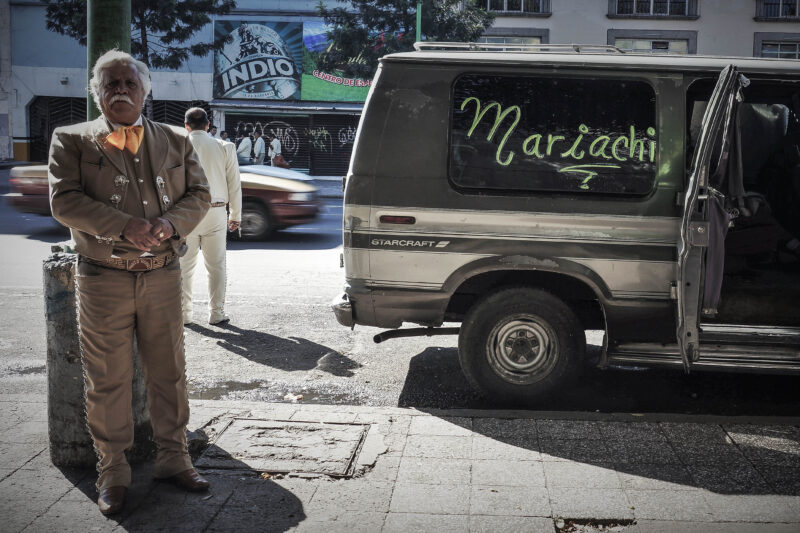
Every hour or so, music would echo through the city centre. Bands playing mariachi music and pounding drums would parade through the streets, complete with elaborate costumes and huge papier-mache skeletons, appearing suddenly and then vanishing down a cobbled alleyway before you know what hit you. At night, these parades become even noisier and visible as they march down the busiest street, Calle Alcalá. We even came across a rather strange sight – a dog parade – about 20 huskies, all dressed as vampires. I suppose “Es Mexico”.


During the day you can roam this street and take in a few cafes, galleries and donate a few pesos to the numerous children posing in costume (usually pretending to kill each other with scythes) but at night it seems that the whole town is here, crowded like sardines to take in the atmosphere. The Oaxacans were all in costume celebrating with stilt walkers and street performers. At the zocalo end of the calle, sand art covered the street. Up at the other end a parade culminated in a huge gathering outside Templo de Santo Domingo de Guzmán where mariachi bands played, fireworks were set off and people drank and danced.

As nighttime began to draw in, we hopped a taxi over to Panteon General. Our driver wasn’t too happy as the festivities and parades meant he had to take a pretty long route around town. We weren’t aware that the streets around the cemeteries were packed with food stalls, vendors and even a funfair meaning our cab couldn’t get too close to the action.

The inside of the cemetery was a little quieter – we arrived just as the crowds were beginning to depart but loud music emanated from the opposite end of the graveyard. The atmosphere was far from solemn, with people chatting and drinking around the decorated headstones giving the place a pretty relaxed and friendly feel. We wandered the rows of the dead while still hearing the muffled sounds of the party going on outside. Empty beer cans and packs of cigarettes were placed carefully on some of the graves to show where people had been sitting and reflecting on both life and death. Everything was covered in bunches of brightly coloured petals, often arranged into shapes or patterns with framed photographs of the deceased perched in pride of place on the altars.

This may seem morbid but it’s not – this is a must-do experience if you’re in Oaxaca at this time of year. Families gather to decorate the graves with flowers and candles often having a drink by the tombs and chatting with family members whilst sitting on the graves.


Oaxaca has a pretty good nightlife throughout the year but during Day of the Dead, it really comes into its own. We decided to get involved and had our faces painted in the Zocalo at one of the many face paint stalls. It cost next to nothing even though the lady running the stall spent 15 minutes painstakingly recreating the image I’d picked.

We spent time bar-hopping eventually ending up watching a house band in masks that we’re a crazy mix of ska, metal and funk sending the crowd loco.
On the final night of celebrations, we went to a friend’s hostel only to find everyone there preparing to head to a club. It turns out that the receptionist’s boyfriend was a DJ and was playing that night. He arrived in full native American headdress, calling us all ‘his gringos’, insisting we all go with him for free entry before shoving us into taxis, 6 people to each small car. The DJ yelled “Gringos, follow me” and before long, he was walking 30 people past the huge queue of annoyed-looking teenagers like a feathered Moses parting the crowd so that he could Shepard us all safely backstage. The faux Greek temple club was full to the brim of insanely drunk teenagers dancing and vomiting while we were up on the VIP stage dancing like gringos and taking full advantage of the VIP bar.
Day of the Dead in Oaxaca is a great experience for tourists but it is greatly important to Mexican Culture. It may seem strange that while locals are remembering the dead, the cemeteries are full of tourists taking snaps of the graves (ask first if the family is around) but really, everyone is welcome. Locals will tell you that this is a celebration and the more people there are to join in, the better.