
Sitting on the waterfront of the Galata Bridge’s northern side at the point where the Golden Horn meets the Bosphorus, Karaköy was once one of Istanbul’s most important ports. Settlement of the area dates back as early as the time of the Byzantine Empire when in the 13th century it was the main commercial centre of Constantinople.
Populated at that time mostly by the Genoese, the area was modelled on a typical Italian city. It quickly spread, incorporating the surrounding area and becoming one of the largest ports in Europe. The wealth attracted a vast array of differing communities: predominantly Jewish, Greek and Russian People. Unfortunately, a decline in trade over the last 2 centuries has meant that this once commercial powerhouse fell on hard times, and the magnificent buildings were divided into workshops for local traders.
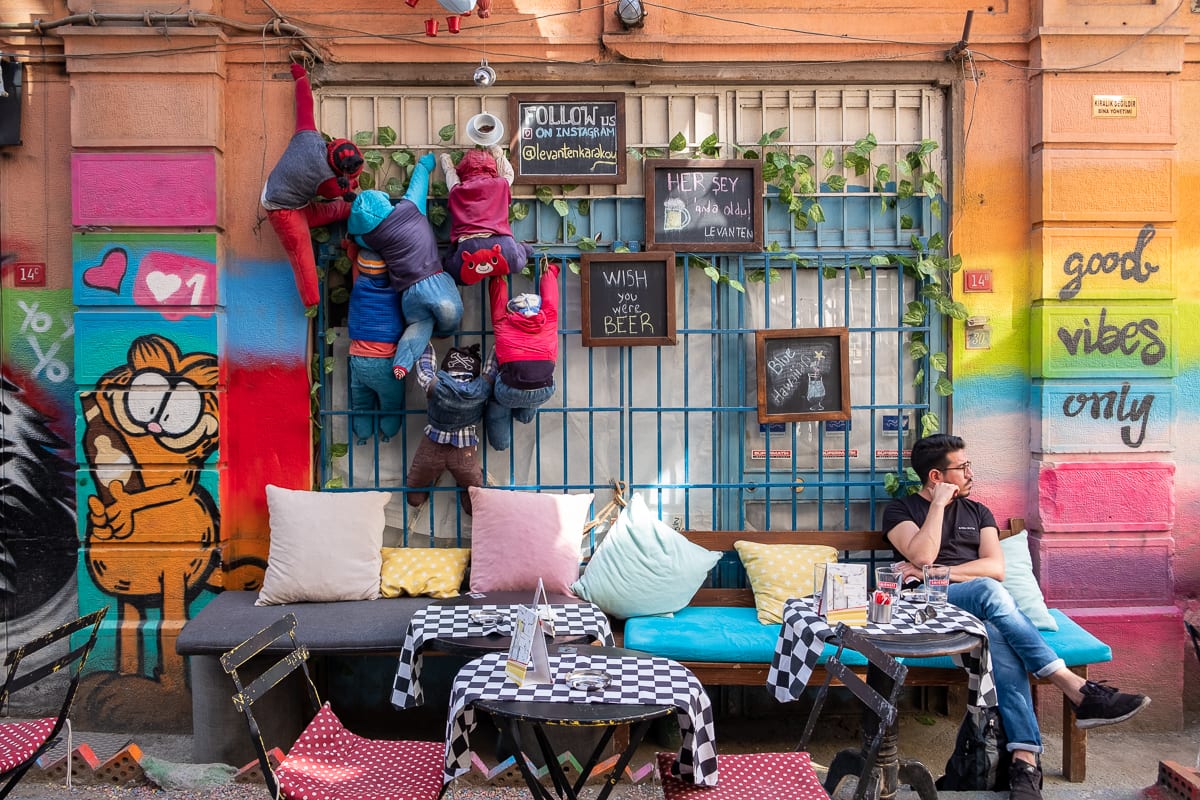
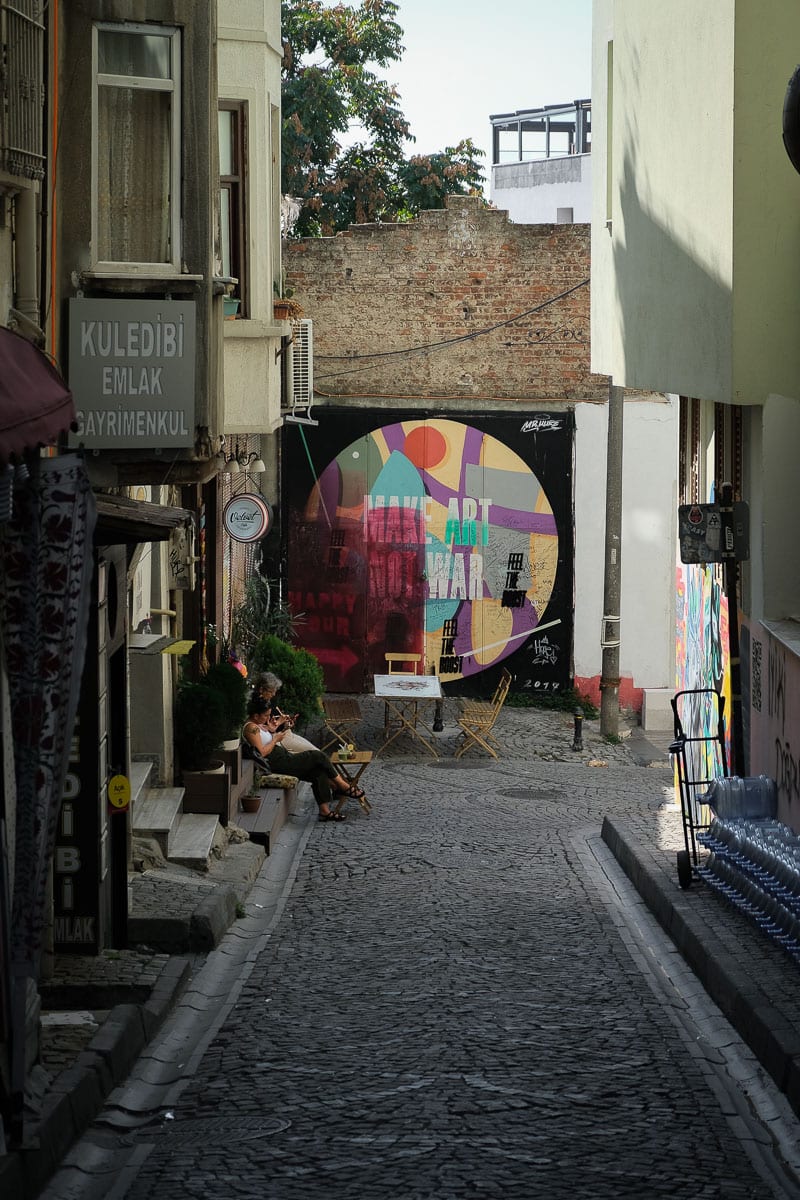
Nowadays, Karaköy is a neighbourhood of contradictions. Its differing populations living in close quarters have left an indelible mixture of differing architectural styles and religious heritage. The noisy, dusty workshops still exist in places, but now share the narrow grid of streets with chic cafes and modern galleries. Dusty antique shops, traditional bakeries and bustling markets coexist with pricy boutiques and designer stores splattered with street art. In a way, Karaköy exemplifies the dichotomy at play in Istanbul more than anywhere else: A city that is vibrant, exciting and modern but retains its pockets of tradition and conservatism.
It was the opening of the Istanbul Modern art gallery in 2004 that is thought to have sparked the renaissance and it wasn’t long before artists and hipsters moved in. Now, the cycle of gentrification is almost complete. This is no longer the hip hangout reserved just for those ‘in-the-know’ like it once was. Karaköy is very much on the tourist map but for good reason. It is possible to spend an entire day here wandering the numerous galleries and shops that sit among the dilapidated buildings, stopping for a coffee or cocktail below the canopy of umbrellas that cover Hoca Tahsin street and finishing the evening by sampling the high-spirited bar scene that has cropped up here.
A One-Day Karaköy Itinerary
Morning
Start the day by getting a caffeine fix at Karabatak. This cool café was one of the first of a flurry of new openings once the Istanbul Modern established itself. Starting life as a training café for Austrian coffee brand Julius Meinl, it has become a local breakfast favourite with a shabby-chic, vintage furniture-filled interior that just oozes charm.
From Karabatak, it is just a short walk to the Karaköy Gallery Building on Mumhane Caddesi, the home of Istanbul’s exciting contemporary art scene. The building contains four different galleries; Pi Artworks, Galeri Nev, Mixer and ArtSümer. Founded by Aslı Sümer in 2004 and moved to Karaköy in 2011, ArtSümer hopes to foster and nurture cutting-edge Turkish artists.
GETTING TO KARAKÖY
From Sultanahmet and Eminonu, it is just a short walk across the Galata Bridge to reach Karakoy, otherwise, you can take the Bagcilar-Kabatas tram (T1 line) to the Karakoy stop.
From Taksim, you can also take the Bagcilar-Kabatas tram (T1 line), this time from Kabatas. From Istiklal Avenue, you can take the Tunel-Karakoy funicular (F2 line).
If you still need your fill of art, it’s a long-40 minute walk from here to Istanbul ’74 on the western edge of the neighbourhood. Renowned couple Demet Müftüoglu Eseli and filmmaker Alphan Eseli established Istanbul ‘74 in 2009 as a location to host world-class exhibitions, workshops and festivals that have managed to attract works by Tracey Emin, Robin Rhode and Angel Otero in the short time that it has existed.
If Istanbul ’74 seems like a little far to walk, you will still find plenty of galleries while exploring the streets around Kemankeş Caddesi such as Elipsis, Istanbul’s only dedicated photography gallery, and Space Debris, a multi-purpose art space founded by Seyhan Musaoglu to showcase interactive new media works.
By this point, you may need a mid-morning pick me up, the sweet, syrupy baklava from Karaköy Güllüoğlu will give you the sugar hit that you need. Made from rich layers of flakey filo pastry filled with chopped nuts and soaked in sickly sweet syrup, baklava is an iconic Turkish desert can trace its roots back to the former Ottoman Empire and much of central & southwest Asia.
The Güllüoğlu family has been producing Baklava since the 1820s when Mahmet Celebi set up shop in the southern city of Gaziantep. He had previously spent 6 months in both Aleppo and Damascus honing his desert crafting skills before returning home and starting his own sweet stall. The Baklava making tradition was continued by his son, Haci Mehmed Güllü, and eventually Haci’s four sons.
The first Baklava shop in Istanbul was opened by Mustafa Güllü in Karakoy on November 7th 1949, introducing the city to this sticky delicacy. While the city’s residents didn’t take to it straight away, it soon became a local institution. Although many imitators have cropped up, the Güllüğolu family only own two shops, one in the basement of their Baklava factory (the first in the world) and this one in Karakoy that still attracts shoppers from all over Istanbul.
The crowds of both locals and tourists make Güllüoğlu Karaköy difficult to miss and while it looks fairly nondescript from the outside, the interior is heaven for those with a sweet tooth as counters filled with dozens of baklava varieties line all four sides of the store. Just pay at the till for your portion and then order from the smartly dressed servers behind the counters. I recommend picking up a few portions of the classic flavours – fıstıklı (pistachio) and cevizli (walnut) – all washed down with a hot tea to cut through the sweetness.
It is worth spending a little time wandering the narrow grid of lanes behind Kemankeş Caddesi. The French passage is a beautifully atmospheric old arcade (Fransiz Geçidi) has a good range of upmarket dining spots that are brimming with customers come lunchtime, such as Ops Café with its eclectic international menu or Ma’Na that serves up classic Turkish cuisine. Elsewhere, the Fransiz Geçidi shopping arcade hosts some fantastic independent boutiques and art spaces.

Afternoon
Heading east along Kemankeş Caddesi, passing the waterfront and wandering under the Galata Bridge, you will find yourself in Perşembe Pazarı (the Thursday Market), a jumble of rustic, tumbledown Ottoman-era caravansaries, workshops and houses that have largely been left untouched by the slow gentrification of Karaköy. Although this is normally just a good shortcut up to Galata, there are a couple of points of interest. The small fish market (Balık Pazarı) next to the ferry dock is worth a visit, and the few fish restaurants dotted along the shore are passable if you haven’t eaten. They at least have a good view of the Golden Horn and can claim to be better than the majority of the tourist traps that are dotted along the bridge’s lower level.
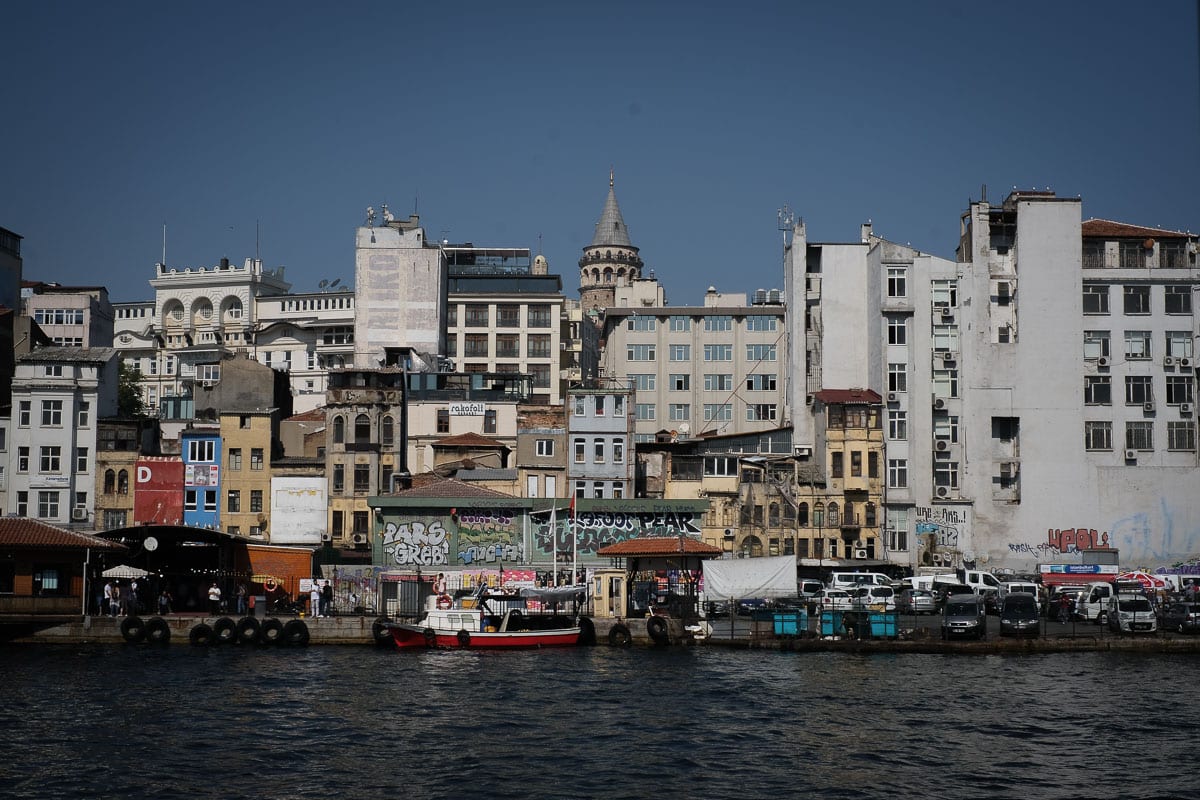
Next, make your way to the edge of Karaköy and neighbouring Tophane to pay a visit to one of Istanbul’s major cultural attractions and the institution that kick-started Karaköy’s resurgence. Along the way, you will pass Bankalar Caddesi (Banks Street) lined with the beautiful, imposing building that were once the headquarters of Turkey’s major banks and insurance companies. This area at the foot of the Galata Tower was historically the financial centre of the Ottoman Empire.

The marble halls of the landmark Imperial Ottoman Bank are now home to SALT Galata, a cultural institution that puts on a variety of talks, screenings and workshops. It also contains its own research library, art gallery, café, restaurant, bookstore and museum. It is free to enter and open to the public, so make sure to head inside this stunning building, stopping at the floor to ceiling window at the top of the staircase for expansive views across the Golden Horn and Bosphorus.
Beside SALT, you will find Kamondo Merdivenleri, an elegant passage containing a stunning 19th-century art nouveau staircase. The stairs are named after the family of the bankers of the Ottoman Court, which had built the stairs to reach their apartments at the foot of the Galata Tower. Once near the tower, ensure you seek out the tiny Jewish Museum of Turkey, situated next to the Neve Şalom Synagogue, housing a small but fascinating exhibition of photographs and documents.

By now, you are above Karaköy in Tophane. Developed after the capture of Constantinople by the Ottomans, the district was home to a cannon foundry (Tophane-I-Amire) under the reign of Sultan Mehmet II that was used for the production and storage of the Empire’s arsenal. Istanbul Modern straddles the border of Karaköy and Tophane. Starting life as a waterfront customs warehouse before being converted into a vast public space in 2005, this was Instanbul’s first contemporary art gallery and has developed a fantastic international reputation thanks to its exhibitions of 20th-century and contemporary Turkish works.
Heading back towards Karaköy, you’ll have the chance to stop off at Kılıç Ali Pasa and sample the restorative qualities of a traditional Turkish Hamam. This luxurious hammam dates from the 1580s and was designed by the famous architect Mimar Sinan. Although it has fallen into disrepair It reopened in 2012 after 7 years of meticulous renovations.
However, if like me you prefer the restorative qualities of a cocktail to those of a revitalising bath, Galata has a number of great rooftop bars where you can end your day. I settled on Snog which, despite its terrible name, has a prime spot on the top floor of a Galip Dede Cd building overlooking the Galata Tower. If you time it right, you will hopefully get there in time for sunset.

Stumbling back towards where you began your day, you’ll be able to continue your night on the narrow streets around Kemankeş Caddesi where dozens of bars spill onto the cobblestones below the hanging vines and strings of twinkling fairy lights. Almost all of them are good for a few glasses of wine or a cocktail, but when it comes to eating, it pays to be a little pickier. I highly recommend Karaköy Lokantasi, a traditional tradesmen’s eatery with décor inspired by the extravagant Topkapı Palace Harem. It’s worth staying here late too, as the restaurant transforms itself into a popular taverna come evening time.
Where to Stay in Karaköy
Hostel Le Banc
Despite its reputation as an up-and-coming hipster district, hostels can be hard to come by in Karakoy. Hostel Le Banc is the best of the bunch. Both the dorms and private rooms are surprisingly chic and the hostel offers a terrace, garden, bar and common area. Galata Tower, Hagia Sophia and the Grand Bazaar are all within walking distance.
Novotel Istanbul Bosphorus
Located in the heart of Karakoy, Novotel Istanbul Bosphorus is perfect for those looking to be close to the area’s galleries, cafes and nightlife. Always dependable, the Novotel brand can be relied on for smart, clean and comfortable rooms at a good price. An indoor pool, spa centre and Turkish bath are available on site.
The House Hotel
The House Hotel Karaköy, formerly known as Vault, is on Bankalar Caddesi – the heart of the city’s former financial district – and occupies 5 floors of an imposing 19th-century bank. It is stylish and spacious, with the more expensive of the 12 rooms spread over multiple floors. Many of the bank’s original features have been preserved, with the vaults reinvented as a bar and wine cellar.
Where to Eat & Drink in Karaköy
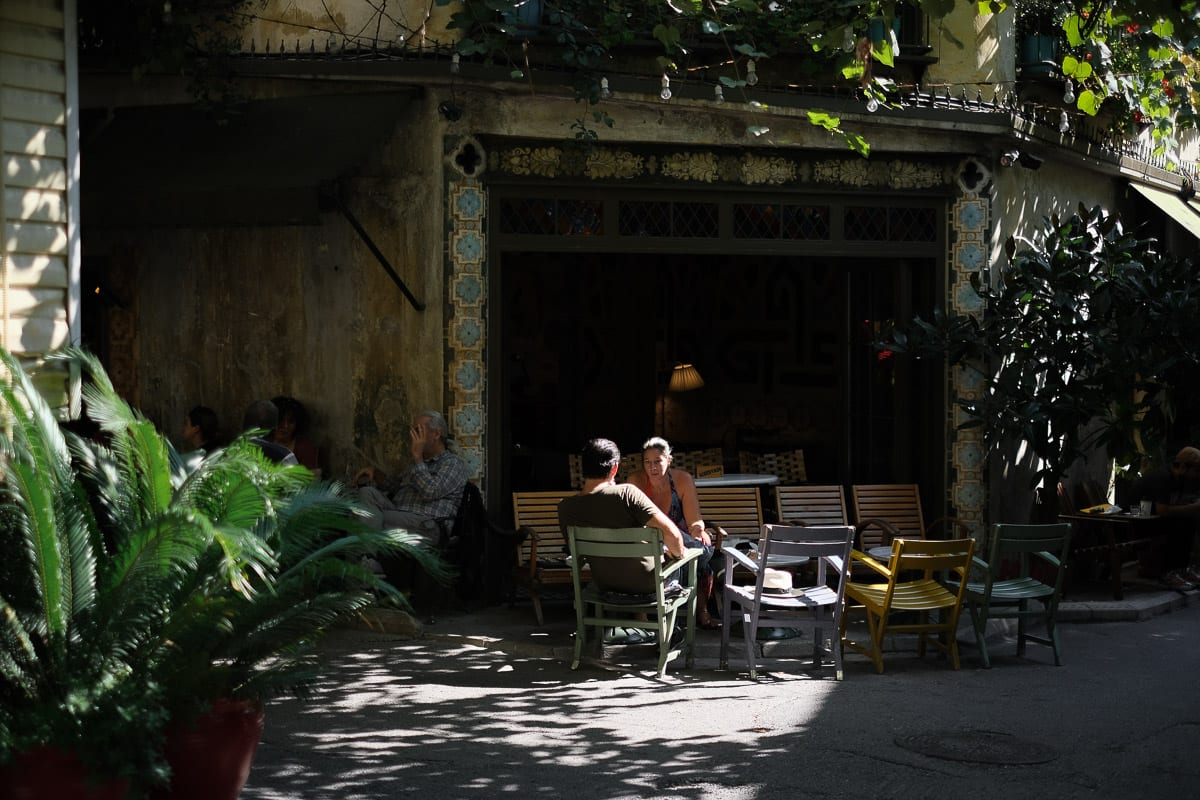
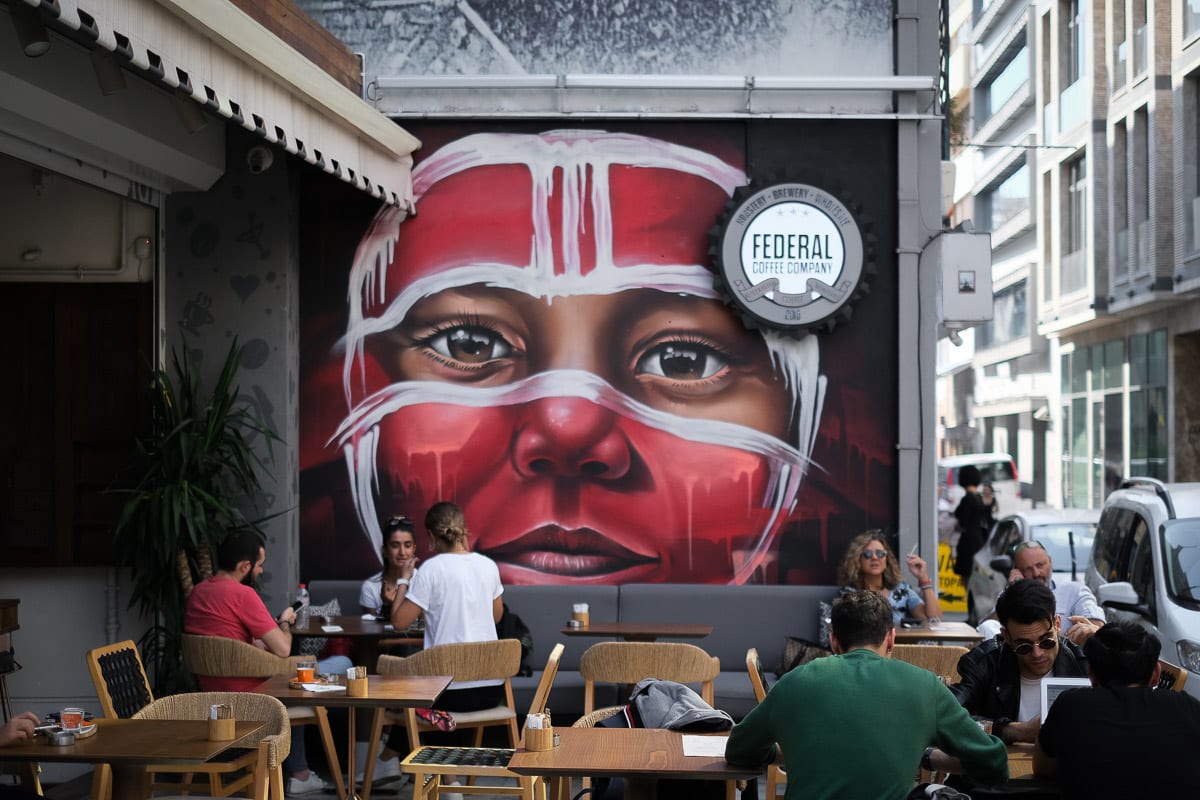
It didn’t take long from the opening of the Museum of Modern Art for the grid of little streets adjacent to the Museum to quickly become a hipster draw. Amongst the art galleries, a huge number of stylish cafes and restaurants have flourished alongside more traditional tea houses and lokantas. As young creatives have begun to move to Karakoy, the charming terraces have become a lively spot to hang out alfresco with a coffee, watching life unfold. Here are some of the best.
Karabatak
Ask anyone for a café recommendation in Karaköy and it’s more than likely that you will be pointed in the direction of Karabatak, a quirky coffee house situated in a formerly abandoned metal workshop. Named after the cormorants that swoop around the choppy Bosphorus, it began life as a training café for Austrian coffee brand Julius Meinl but has since bloomed into the neighbourhood’s most popular coffee spot thanks to the fantastic Austrian coffee, Viennese cakes, and quirky vintage décor. The breakfast menu is a little sparse, but sitting outside on a morning beneath the hanging vines that trail over Kemankeş Karamustafa Paşa is a wonderful thing.
Where: Kemankeş Karamustafa Paşa, Karaali Kaptan Sk. No:7
When: Daily 8.30am – 10.30pm
FiLbooks
Decked out in pastel colours and minimalist furniture, the achingly cute FiLbooks is part café, part bookshop. This is a true haven for photography enthusiasts, as the shop boasts one of the best collections of photo-books in the city and regularly hosts workshops, talks and roundtable discussions on art and photography. Martin Parr is just one of the many renowned photographers to have stopped by.
Where: Kemankeş Karamustafa Paşa, Ali Paşa Değirmeni Sk. No:1
When: Daily 10am – 10.30pm
Ops Cafe
Modern and relaxing, Ops café is a perfect coffee stop while exploring the streets of Karaköy. The open kitchen dishes out a hoist of Balkan flavours, from Albanian breakfasts to Macedonian smoked beef and Bosnian dried meats paired wedges of eski kaşar. Photography enthusiasts may also want to head over to Ops in order to view the rotating photography exhibits that adorn the café’s walls, showcasing the works of both known and unknown local artists.
Where: Kemankeş Karamustafa Paşa, Mumhane Cd. No:45
When: Daily 7.30am – 2am
NATO Lokantasi
Istanbul’s lokantas are an institution. These traditional tradesmen’s restaurants are where locals head to avoid the tourist crowds and indulge in fresh, home-style Turkish cuisine. Nato Lokantasi, which opened in 1952, is named in honour of Turkey’s entry into the North Atlantic Treaty Organisation over 60 years ago, and serves simple dishes of sauteed vegetables, soups and regional classics like orman kebabı and patlıcan.
Where: Kemankeş Karamustafa Paşa Mahallesi, Necatibey Caddesi Karanlık Fırın Sk.no.4
When: Mon to Fri 11am – 4pm
Karaköy Lokantasi
Another of Karaköy’s lokantas, this place started life as a traditional esnaf lokantasi, but soon pivoted to paying closer attention to food and design, delivering traditional Turkish dishes with a modern twist. Hünkar beğendi, an Ottoman-era dish of charred and mashed eggplants topped with slow-cooked lamb and drizzled in sauce is the star of the show. This stylish restaurant is a popular lunch spot with both the local bankers and creatives but transforms itself into a popular taverna come evening time.
Where: Kara Ali Kaptan Sokak 7
When: Mon to Sat 12pm – 10pm; Sun 4pm – 10pm
Karaköy Güllüoğlu
The first Baklava shop in Istanbul was opened by Mustafa Güllü in Karakoy on November 7th 1949, introducing the city to this sticky delicacy. While the city’s residents didn’t take to it straight away, it soon became a local institution. Although many imitators have cropped up, the Güllüğolu family only own two shops, one in the basement of their Baklava factory (the first in the world) and one in Karakoy that still attracts shoppers from all over Istanbul.
The crowds of both locals and tourists make Güllüoğlu Karaköy difficult to miss and while it looks fairly nondescript from the outside, the interior is heaven for those with a sweet tooth as counters filled with dozens of baklava varieties line all four sides of the store. Just pay at the till for your portion and then order from the smartly dressed servers behind the counters. I recommend picking up a few portions of the classic flavours – fıstıklı (pistachio) and cevizli (walnut) – all washed down with a hot tea to cut through the sweetness.
Where: Kemankeş Cad. Katlı Otopark Altı No: 3-4
When: Daily 7am – 1am

One Response
Great write up, well done, and thanks! Heading to Turkey in a few weeks. Staying in Karakoy for part of the trip and excited about that.
Must disagree however. In my opinion (and I often tend to agree with my opinion) SNOG is the best name ever for a place to wind down with an amour and have a sunset drink.
But hey, vive la différence. Thanks again for a super piece!
David.