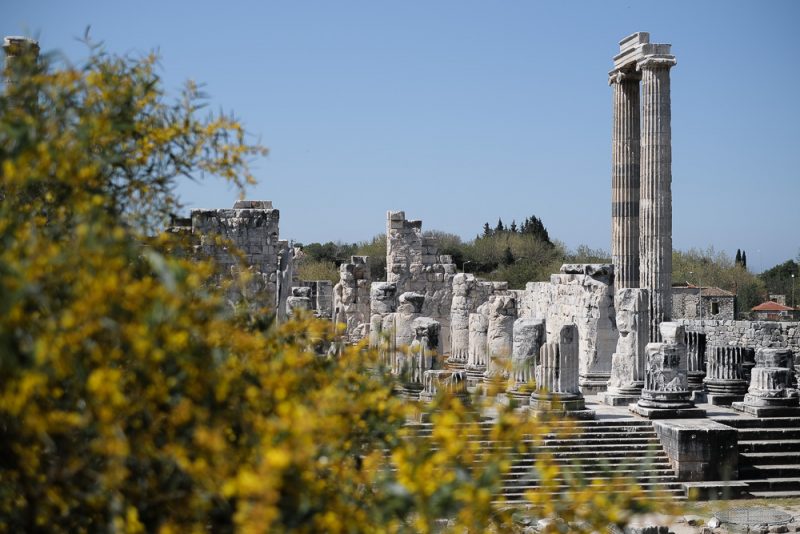
Istanbul is in a fairly unique situation, geographically at least. It straddles both Europe and Asia, its urban sprawl split in two by the mighty Bosphorus Strait, which connects the Black and Marmara Seas. This isn’t where Istanbul’s dichotomy ends. It is both modern and ancient, conservative and free, has a vibrant nightlife and bar scene yet its skyline is studded with the minarets of some of the world’s most beautiful and important mosques.
Possibly due to its strategic location between two continents, it is a city with an important history that has played a huge part in shaping the world as we see it today. It is the only city to have been the capital of consecutive Christian and Islamic empires which, over the course of 2500 years, has bestowed Istanbul with a wealth of world-class attractions: Byzantine churches filled with intricate mosaics, the domes and minarets of the Ottoman mosques that dominate the city skyline, and lavish palaces that have to be seen to be believed.
In modern Istanbul, the old and the new layers sit side by side harmoniously and although it is no longer the nation’s capital, it remains the cultural heart, a city brimming with colour, music and tradition where east really does meet west.

The Best Things to do in Istanbul
1. Witness the Mesmerizing Dance of the Whirling Dervishes
2. History & Hipsters in Balat
3. Marvel at the Majesty of the Aya Sofya
4. Taste the Best of Turkish Cuisine at Çiya Sofrası
5. Explore the Cafés and Galleries of Karakoy
6. Blue Mosque
7. Hop Across the Bosporus to Kadikoy
8. Experience the City’s Nightlife and Local Craft Beer at Bomontiada
9. Try the Sugary Sweetness of Karaköy Güllüoğlu’s Baklava
10. Pick Up a Balikekmek at Eminönü
11. Sample Some Local Flavour at the Spice Market
12. Take In the Opulence of Topkapı Palace
13. Wander the Labrynthine Alleyways of the Grand Bazaar
14. Check Out the City’s Street Art
15. Stroll Galata Bridge at Sunset
Witness the Mesmerising Dance of the Whirling Dervishes
Founded around the 13th century in the Turkish city of Konya, the Mevlevi order is a religious Sufi sect known for their centuries-old mesmerizing and mystical Sufi dance ceremony in which their whirling spins help them to reach a state of nirvana.
The Mevlevi Sufi order was founded in the 13th century by Jalaluddin Rumi, the famous Sufi Muslim mystic and poet living in Kony, then the capital of the Turkish Seljuk Empire. He would fast, meditate and eventually dance by whirling himself in circles in order to reach enlightenment. His followers, known as ‘the gentle ones’, practised principles of love, tolerance and giving up one’s existence and ego to unite with God. By the 15th century, other sects started to spread his dance, called the Sema, throughout the Ottoman Empire.


Although the best place to witness the Whirling Dervishes is in Konya, Istanbul remains of the easiest cities in Turkey to watch a ceremony due to a large number of touristic shows. Also, during the past decade, following the Mevlevi ceremony being designated ‘Intangible Cultural Heritage’ status by UNESCO, a number of lodges have been reestablished in Istanbul. These lodges include the Galata Dervish Lodge, which was built in 1491 and houses a museum; the Yenikapi Dervish Lodge, which originally opened in the 16th century; and the Bahariye Dervish lodge. However, the most popular ceremony takes place in Sirkeci Train Station where each evening, the whirling dervishes take to the floor of the old Orient Express waiting room in the beautifully historic station for an hour-long performance.
Read More: The Whirling Dervishes of Istanbul

History and Hipsters in Balat
Just a couple of miles from Eminönü along the western bank of İstanbul’s Golden Horn, are the intertwined neighbourhoods of Fener and Balat, some of Istanbul’s most historic areas that are often overlooked by travellers that are constrained by time and a strict itinerary.
These two neighbourhoods are a fascinating showcase of Istanbul’s ethnically diverse history. The district of Balat is one of the city’s oldest areas and was historically home to its Jewish community, while Fener is the old Jewish Quarter. After an earthquake in the late 1800s, most of the Jewish residents fled the area, with more departing in the 1960s. In the latter half of the 20th century, Balat’s socio-economic position declined and migrant communities moved in, but in recent years, it has seen a resurgence and a marked uptick in fortunes.

Lower rents have meant that over the last decade, bohemian and creative communities have gravitated towards both Balat and Fener, having a transformative effect. On the pedestrianised streets that run along the north of the district, street art covers the sides of buildings where antique shops, galleries, coffee roasteries and designer cafes have cropped up alongside traditional teahouses and now the area’s hip artists mingle with traditional tradesmen. It has become the city’s most vibrant and vital neighbourhood.
However, the tradition and history of Fener and Balat that have always made it an interesting region still exists side by side with the modern trappings. Despite the Greek Orthodox population dwindling, religious conservatism is still very much a way of life. Fener sits in the shadow of the Fatih Mosque and the magnificent Yavuz Selim Mosque as well as the imposing and ornate Phanar Greek Orthodox College, or kırmızı kale as it is known locally. There are also two important Islamic pilgrimage sites here: the tombs of Mehmet the Conquerer and Ebû Eyyûb el-Ensârî.
The majority of tourists pass through Balat in order to see the dilapidated-yet-colourful old houses that line its hilly streets. These historic wooden homes are over 200-years-old in some cases and are amongst the most photographed buildings in the city.
Marvel at the Majesty of the Hagia Sofia
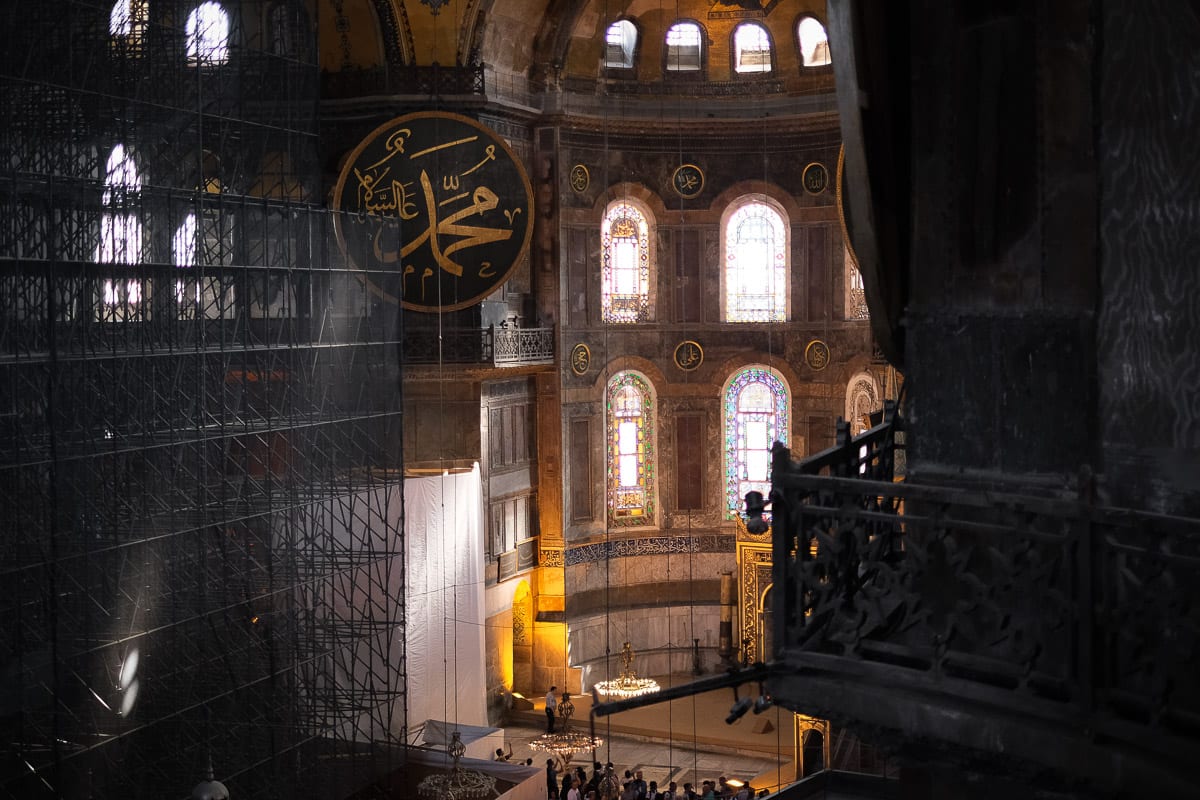
Stepping into the Hagia Sophia, with its complex and elegant design, it’s hard to believe that it is almost 1,500 years old. ‘The Church of the Divine Wisdom’ is the third church of this name to stand on the site and was constructed in the sixth century by Emperor Justinian after its predecessor had been razed to the ground. Through the millennia, the site has been designated a Greek Orthodox Christian Basilica, a Roman Catholic cathedral and later an Ottoman imperial mosque. The Hagia Sophia was the largest building in the world for 1,000 years until it was knocked off the top spot by Seville Cathedral.
The sheer sense of scale and awe is created by the 32m diameter dome that towers 55m above floor level. Prior to the Aya Sofya, most churches had rectangular, pitch-roofed designs, but architects Anthemius and Isidore wanted to create a building unlike any other in the Byzantine world. It wasn’t until the sixteenth century that anything similar was attempted.
Architecture aside, the interior of the ancient basilica is breathtaking. Pierced by forty windows, the tympanum walls surrounding the nave tower high with the apse itself contains a ninth-century mosaic of the Virgin Mary, Christ seated on her lap that watches over visitors. Several stunning mosaics still adorn the walls alongside more recent additions like the enormous wooden plaques that bear sacred Islamic names.
Despite its age, this is a building that wears its history well. It is a place brimming with a storied history, from the crowning of Ottoman emperors that took place on a throne in the omphalion, to the sackings, invasions and natural disasters that have left their mark – quite literally – on the mosaics, frescoes and columns of the building’s interior.
Taste the best of Turkish Cuisine at Çiya Sofrası
To get to Çiya Sofrasi from the tourist hotspots of Taksim, Eminönü or Beyoğlu can seem a little arduous: It means you take a twenty-minute ferry ride to the Asian side of the Bosporus and then walking from the ferry terminal to bustling Caferağa Street in the centre of the city’s vibrant Kadıköy neighbourhood. However, ask any of Istanbul’s foodies and they will tell you that the journey is worth it.
What was once Kadıköy’s best-kept gastronomic secret is now out in the open thanks to owner-chef Musa Dağdeviren’s appearance on Netflix series Chef’s Table but thankfully, despite the popularity, Çiya Sofrasi has remained true to what made it successful in the first place: A dedication to ‘New Anatolian’ cuisine. You see, Dağdeviren is not just a chef, he is also a culinary anthropologist, crisscrossing the nation in search of lost and traditional Turkish recipes to replicate in his restaurant and across the street in his more casual kebab shop where he has been serving customers for 25 years.
Musa Dağdeviren’s adventurous menu changes on a regular basis but is always packed with unusual regional dishes you’re unlikely to find anywhere else – lamb’s intestines, sour green plums, and fruity meat stews – alongside the usual pide, aubergine dolma and succulent skewers of meat.
Explore the Cafés and Galleries of Karaköy
Sitting on the waterfront of the Galata Bridge’s northern side at the point where the Golden Horn meets the Bosphorus, Karaköy was once one of Istanbul’s most important ports until, unfortunately, a decline in trade meant that this once commercial powerhouse fell on hard times, and the magnificent buildings were divided into workshops for local traders.
Nowadays it is a neighbourhood of contradictions. The noisy, dusty workshops still exist in places, but now share the narrow grid of streets with chic cafes and modern galleries. Dusty antique shops, traditional bakeries and bustling markets coexist with pricy boutiques and designer stores splattered with street art. In a way, Karaköy exemplifies the dichotomy at play in Istanbul more than anywhere else: A city that is vibrant, exciting and modern but retains its pockets of tradition and conservatism.
It was the opening of the Istanbul Modern art gallery in 2004 that is thought to have sparked the renaissance and it wasn’t long before artists and hipsters moved in. Now, the cycle of gentrification is almost complete. This is no longer the hip hangout reserved just for those ‘in-the-know’ like it once was. Karaköy is very much on the tourist map but for good reason. It is possible to spend an entire day here wandering the numerous galleries and shops that sit among the dilapidated buildings, stopping for a coffee or cocktail below the canopy of umbrellas that cover Hoca Tahsin street and finishing the evening by sampling the high-spirited bar scene that has cropped up here.
Blue Mosque
The exterior of the Sultan Ahmet Mosque, more commonly known as the Blue Mosque, is one of Istanbul’s most recognizable and spectacular sights: A cascade of curvaceous domes surrounded by 6 slender minarets (the Blue Mosque was the first outside of Mecca to be constructed with this many minarets) and the largest courtyard of all the Ottoman mosques.
If you think that the outside of the building is impressive, then the interior is sure to inspire awe. Sultan Ahmet I’s grand project contains an enormous prayer space where tens of thousands of hand-painted blue Iznik tiles – the very same tiles that give the mosque its name – adorn the interior and 260 windows bathe the domed space in a beautiful glow. It is worth noting that entry for non-worshippers is restricted during the 6-daily prayers and only worshippers are permitted through the main doors.

Hop across the Bosporus to Kadikoy
It’s well-known that Istanbul is a city of two halves. The majority of the major tourist hotspots and attractions are situated in what is considered the ‘European side’ – the districts of Beyoğlu, Eminönü and Besiktas – but across the Bosphorus, just a short ferry ride away is what is colloquially known as Istanbul’s ‘Asian side’: The waterfront neighbourhood of Kadıköy.

While for many people, the term ‘Asian side’ may conjure exotic images, Kadıköy is far from being somewhere completely at odds with the Bosphorus’ west bank settlements. In fact, it is fairly residential and one of Istanbul’s most ‘westernized’ neighbourhoods. For many years, this area was fairly unremarkable, but over the course of a decade, has become a cultural hub filled with cafes, music venues, cultural centres and a liberal-minded attitude that is fairly out of step with the usual authoritarian political leanings that are at play in Turkey.
However, unlike many of the recently gentrified areas of Istanbul, Kadıköy-Moda isn’t just some flash-in-the-pan flavour of the week. The artsy and culture-focused vibe has been a big part of Kadıköy’s appeal for years and makes it worth a visit despite the lack of big-hitting tourist attractions.
Experience the City's Nightlife and Local Craft Beer at Bomontiada
Since opening, the glitzy Bomontiada complex, occupying the old and long-abandoned Bomonti beer factory, has singlehandedly transformed the sleepy neighbourhoods of Bomonti and Kurtuluş, encouraging people to head north of Taksim in search of nightlife and helping foster a flurry of creative activity as well as tempt a surge in eateries and bars to set up shop in the area.
While visited on a relatively quiet Saturday afternoon when the bars and restaurants were mostly patronized by families enjoying an afternoon out, on an evening revellers flock to Bomontiada’s iconic music venue Babylon like moths to a musical flame. Even if you don’t plan on partying, the compound has plenty to offer with a multi-disciplinary art space Alt, the Ara Güler Museum and five different restaurants as well as a Leica Gallery that is sure to entice photography enthusiasts.
My main reason for heading to Bomonti was to visit The Populist, an enormous, hyper-stylish brewpub for the city’s Torch Brewery. The craft beer scene in Turkey has hit a fair few stumbling blocks over recent years when in 2013, In the midst of the Gezi Park protests that spread throughout Turkey, Tayyip Erdoğan introduced a number of strict and archaic alcohol laws that prevented breweries promoting their wares. Then there is the nation’s rather conservative taste in beer. Used to lagers and pilsners, Turkey has taken time to adjust to new beer styles. However, Torch’s head brewer Jan-Hendrich Koch – a German that has somehow found himself producing beer in Turkey – hasn’t been afraid to experiment. In the past, he has produced a witbier flavoured with anise in homage to the famous local spirit rakı, and his honey pepper ale sells well. Even if you don’t plan on pulling an all-nighter at one of Bomontiada’s more raucous venues, the Populist makes this place worth a visit for beer aficionados.
Read More: A Craft Beer Guide to Istanbul

Try the Sugary Sweetness of Karaköy Güllüoğlu’s Baklava
Made from rich layers of flakey filo pastry filled with chopped nuts and soaked in sickly sweet syrup, baklava is an iconic Turkish desert can trace its roots back to the former Ottoman Empire and much of central & southwest Asia.
The Güllüoğlu family has been producing Baklava since the 1820s when Mahmet Celebi set up shop in the southern city of Gaziantep. He had previously spent 6 months in both Aleppo and Damascus honing his desert crafting skills before returning home and starting his own sweet stall. The Baklava making tradition was continued by his son, Haci Mehmed Güllü, and eventually Haci’s four sons.
The first Baklava shop in Istanbul was opened by Mustafa Güllü in Karakoy on November 7th 1949, introducing the city to this sticky delicacy. While the city’s residents didn’t take to it straight away, it soon became a local institution. Although many imitators have cropped up, the Güllüğolu family only own two shops, one in the basement of their Baklava factory (the first in the world) and one in Karakoy that still attracts shoppers from all over Istanbul.
The crowds of both locals and tourists make Güllüoğlu Karaköy difficult to miss and while it looks fairly nondescript from the outside, the interior is heaven for those with a sweet tooth as counters filled with dozens of baklava varieties line all four sides of the store. Just pay at the till for your portion and then order from the smartly dressed servers behind the counters. I recommend picking up a few portions of the classic flavours – fıstıklı (pistachio) and cevizli (walnut) – all washed down with a hot tea to cut through the sweetness.
Pick up a Balık ekmek at Eminönü
Squeezed between Galata Bridge and the numerous ferries that shuttle passengers across the Bosphorus, three boats moored in the Golden Horn – more gaudy showboats decked out in polished wood and gold leaf than actual fisherman’s skiffs – buzz with activity as cooks dash about their on-board kitchens passing plates of food to the waiters dressed in kitsch Ottoman-style uniforms for them to serve to the hundreds of hungry Turks and tourists that are sat at picnic benches waiting for a meal.
These boats are producing one dish, a portion of street food that it a mainstay of Turkish street food culture and is a ‘must-eat’ for any tourist in Istanbul: Balık ekmek. Roughly translating to ‘fish bread’, Balık ekmek simply consists of grilled fish (typically mackerel) with raw onions and lettuce sandwiched in a crusty white roll, seasoned with salt and a squeeze of lemon.
Grilled fish has been served this way on the shores of the Golden horn since the mid-1800s as a way for fishermen to flog their excess catch, setting up makeshift grills on the decks of their boats to sell directly to hungry locals and earning a little extra money from their excess catch.
Although dwindling fish stocks and environmental damage caused by urbanization mean that the fish on these grills is no longer caught in the Bosphorus – it is in fact now imported from Scandinavia and purchased at Istanbul’s bustling fish markets – and the number of boats dishing out sandwiches has declined, the tradition that has been carried on by three boats moored just off Galata Bridge. Nowadays, the humble fishing boats have been replaced by a nostalgia-fueled fantasy-version of the past that didn’t exist in the form of ‘Ottoman-style’ boats in Eminönü, but Balık ekmek remains as popular as it ever was.
Alongside your sandwich, make sure to pick up a glass of şalgam from one of the nearby stalls. This bright red pickle juice concoction is an acquired taste, but one that is quintessentially Turkish.
Sample Some Local Flavour at the Spice Market
Lined with rows upon rows of colourful and fragrant spices piled high, this Ottoman era marketplace otherwise known as Misir Carsisi was built to provide rent for the upkeep of the nearby mosque, the Yeni Camii. Despite being one of Istanbul’s oldest bazaars, it remains a vibrant diversion for the thousands of tourists and locals that venture here to wander through the shops selling shimmering cubes of Turkish delight, aromatic herbs and all manner of dried fruits.
Although it is not quite the authentic souk experience that many expect – an increasing number of stalls have been given over to vendors flogging tourist trinkets and tat – it is still a great place to pick up a few culinary treats, chat to shopkeepers and marvel at the Ottoman architecture.

Take In the Opulance of Topkapı Palace
Once the home of Sultans, concubines, and courtiers, Topaki Palace was the political centre of the Ottoman Empire between the 15th and 19th centuries, endowing this sprawling complex of gardens, pavilions, jewel filled rooms and opulent harems with enough stories to fill untold volumes of history books.
The Palace requires at least half a day to explore properly, but it is worth your time for the glimpse it gives into the lives of the Ottoman Sultans, their families, concubines, servants and eunuchs that made up some of the 4000 people that called it home.

Wander the Labrynthine Alleyways of the Grand Bazaar
Istanbul’s chaotic and vibrant Grand Bazaar has been enthralling visitors ever since it was first constructed by Mehmet the Conqueror in 1461. Considered to be the world’s first shopping mall, the bazaar started as a small warehouse but has since grown into a sprawling, labyrinthine maze of buildings, and alleyways with over 4,000 stalls selling everything from clothing to the tackiest of souvenirs.
Peek through doorways to discover hidden treasure troves of shimmering tea sets, sparkling lanterns and piles of carpets, or wander down passages to see artisans at work. Around every corner, you will find something new to part you from your hard-earned cash.
However, the Grand Bazaar is not just the tourist trap that some claim it is. Locals shop here every day, and the bamboozling tangle of streets hide some of the city’s best street food eateries where shopkeepers, labourers, and souk workers pull up a stool around steaming grills and devour plates of delicious local dishes. Gaziantep Burç Ocakbaşi, a grill house located on a narrow side street off one of the Grand Bazaar’s busy thoroughfares in an unassuming storefront, is known to be one of the bazaars best. Serving up tasty morsels from Gaziantep, a city in south-east Turkey, Burç Ocakbaşi’s ambience is provided by the throng of workers dining on flavourful dolmas, succulent kebabs and tasty eggplant puree while waiters dash through the bazaars throng dishing out glasses of mint tea and coffee amongst the dried eggplant and spicy peppers that hang above the tables.


Check Out the City's Street Art
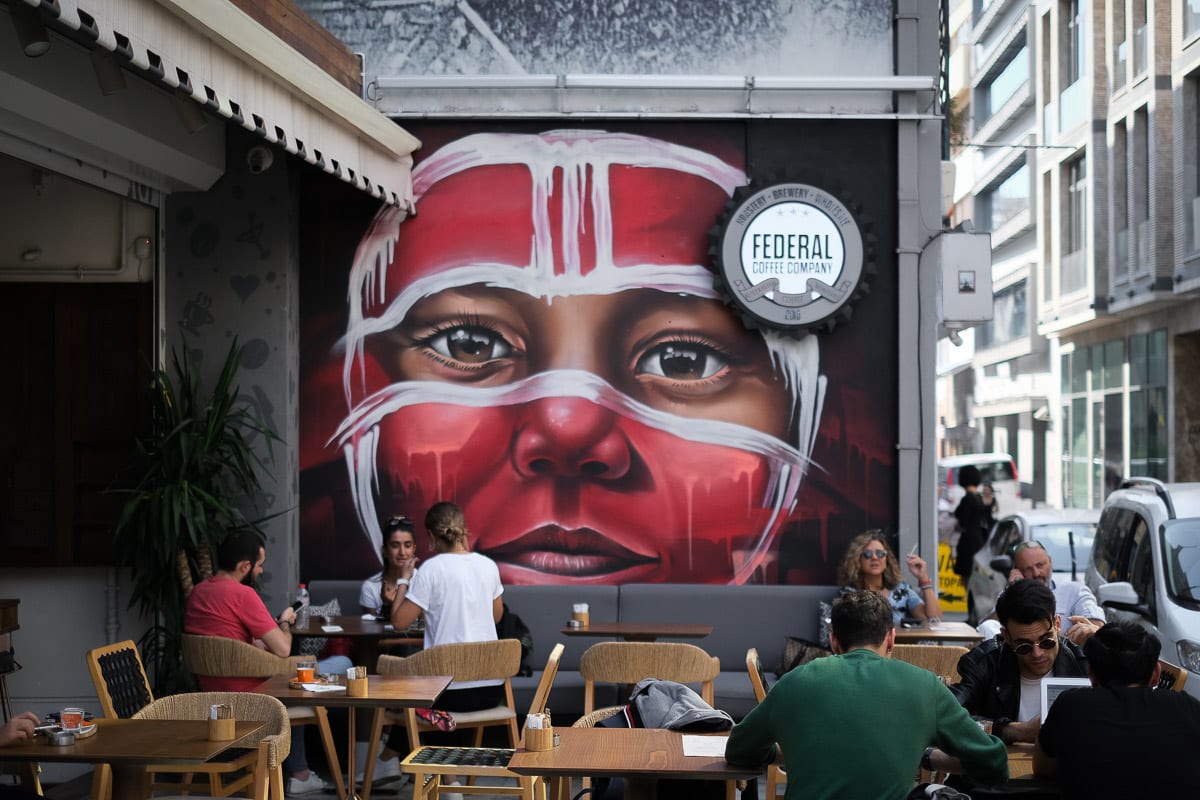
Spend any amount of time wandering around Istanbul and you will stumble across all manner of artistic scrawls on the city’s building, from tags and graffiti on shop shutters to more elaborate murals taking up the entire façades of buildings. Like any other major city in Europe, Istanbul has a passion for street art.
However, thanks to the support of the Kadıköy Municipality and ÇEKÜL (Foundation for the Protection and Promotion of Environmental and Cultural Values), Mural Istanbul has managed to take the city’s penchant for painting and establish one of the continent’s most prominent annual street art festivals, creating a stunning outdoor gallery spread throughout the Yeldeğirmeni neighbourhood. The festival has already brought in worldwide talents such as Pixel Pancho, INTI, and Dome as well as fostering local, Turkish talent.
Elsewhere in the city, you can find wonderful pieces scattered throughout Karaköy, Balat and Taksim if you don’t fancy taking a boat ride across the Bosphorus.

Stroll Galata Bridge at Sunset
With the Galata Tower rising over the buildings of the river’s northern bank in one direction and the minarets of Suleymaniye Mosque silhouetted by the orange sky in the other, the Galata Bridge is the perfect place to hang out as the sun sets over Istanbul.
Connecting the newer parts of the city – Karaköy & Beyoğlu – with the historic old parts of Eminönü and Sultanahmet, the Galata Bridge was constructed in 1994 and since then has become an iconic landmark. However, crossing the bridge without getting caught in a tangle of nets and lines can be a challenge. The city’s fishermen have frequented the bridge’s railings ever since the Golden Horn was cleaned up and now spend their days here trying to catch fresh palamut.
The view over the minaret-studded skyline of the Golden Horn is one of the most iconic photography spots in Istanbul but even if you’re not coming here to take pictures, the local fisherman dangling their lines over the railing of the bridge alongside the street food sellers and people hanging out make it an atmospheric location to spend the early evening.

Where to Stay in Istanbul
Hostel Le Banc
Despite its reputation as an up-and-coming hipster district, hostels can be hard to come by in Karakoy. Hostel Le Banc is the best of the bunch. Both the dorms and private rooms are surprisingly chic and the hostel offers a terrace, garden, bar and common area. Galata Tower, Hagia Sophia and the Grand Bazaar are all within walking distance.
The House Hotel
The House Hotel Karaköy, formerly known as Vault, is on Bankalar Caddesi – the heart of the city’s former financial district – and occupies 5 floors of an imposing 19th-century bank. It is stylish and spacious, with the more expensive of the 12 rooms spread over multiple floors. Many of the bank’s original features have been preserved, with the vaults reinvented as a bar and wine cellar.
Shangri-La Bosphorus
Located between Dolmabahce Palace and Naval Museum on the European coast of the Bosphorus with unparalleled views of the strait, the luxurious Shangri-La hotel occupies an abandoned former tobacco warehouse which dates back to the roaring 20s. Thankfully, the conversion has given the building a new, vibrant lease of life as one of Istanbul’s most prestigious hotels.