Riga is a city where a close attention to detail pays off. At street level, it’s an elegant display of cobbles, spires and pastel façades, but step inside and you’ll find a cultural scene that is much deeper.
Centuries of trade, occupation and revolution have shaped a capital where the stark cells of the secret police sit alongside exquisitely preserved Art Nouveau apartments. That story runs right through to the late 20th century, when the Singing Revolution helped restore Latvian independence, reinforcing a national identity that still shapes the country’s art, design and cultural spaces today.

This contrast is what gives Riga its edge; from east to west, from old to new, from ornate to barren. Discover medieval guild houses, Soviet headquarters and bohemian art galleries that reflect on its ancient history, confront its recent past, and celebrate its renewed self-determination, all within the space of a few streets.
Exploring art galleries and museums in Riga gives you a sharper understanding of the city, from its most difficult chapters to its creative present. You’ll start with grand national collections and move around small, experimental spaces, with just enough distance between them for a caffeine hit or a stroll in the park.
Full of character, complexity and a bubbling undercurrent of creativity, if you want more than a surface-level city break, Riga has a lot to offer.
Why Riga Is One of the Baltic’s Most Underrated Cultural Cities
With hundreds of years of Germanic, Scandinavian and Russian influences intertwined in Riga, Latvia’s biggest city has layers of history begging to be peeled back. Through the years, it has been a melting pot of empires, from ancient pagan traditions and German crusaders, to the conquests of the Tsar and the emergence from the USSR. Riga was once the largest city in Sweden, and the third largest in the Russian Empire.
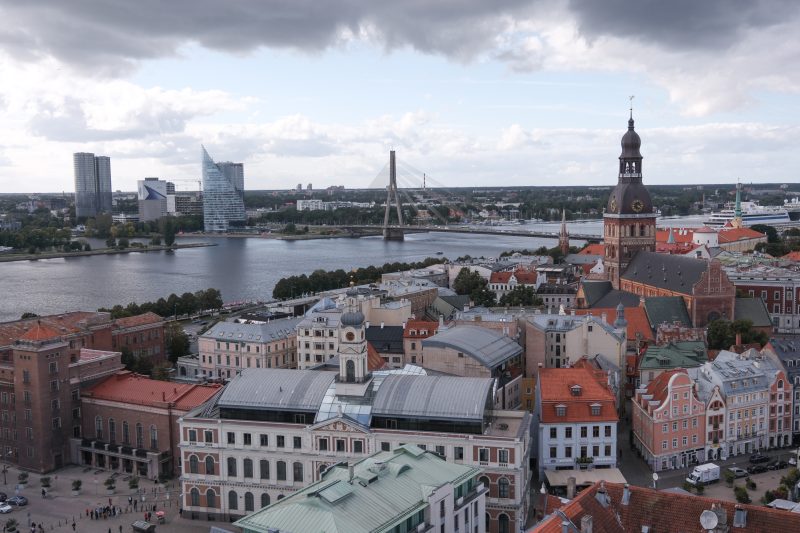
With a bustling harbour sitting along the banks of the Daugava River, this vibrant port was also a vital crossroads between Northern and Eastern Europe, with the UNESCO-protected Old Town serving as the strategic base for Baltic crusades. ‘Vecrīga’ is the perfect starting point to explore Riga, and its grid of medieval streets, churches and merchant houses. It’s small enough to explore in a morning, especially with a guided walk that fills in the details behind the architecture. Housing the immensely popular House of the Blackheads museum, the Old Town is the historical heart of the capital, and home to many of the best things to do in Riga.


From there, the city opens out into Riga’s Art Nouveau district. Centuries after the Hanseatic League, the industrial boom of the 20th century created a wealthy merchant class who needed an elegant boulevard to call home, and so the open-air museum of architecture along Alberta street was built. Wander below its curved balconies decorated with uniquely Latvian folk motifs, symbols of emerging romantic nationalism, or opt for a tour to help decode the symbolism and stories behind the buildings. The dainty but perfectly formed Riga Art Nouveau Centre, is a time portal to another era, and one of the smallest museums in Riga.
Underneath the decorative surface sits a more complex history shaped by occupation and independence, as you fast forward to the mid-century modernism of Soviet rule. Brutalist structures scrape the sky with steel and concrete, epitomised in the Latvian Academy of the Sciences, known by locals as “Stalin’s Birthday Cake”. Walking tours and museums such as The KGB Building unveil the secrets hidden behind the city’s doors.
Part of Riga’s cultural pull comes from how much is packed into a relatively small centre. You can cover a lot on foot, making it easy to follow your curiosity rather than a strict itinerary. Build your own route between history museums and contemporary Riga art galleries without overplanning.
The Best Museums in Riga for History
Riga’s museums are the perfect place to take a deep dive into the city’s history, moving between medieval trade, occupation and independence. Many are integrated into the fabric of the city itself, housed in former guild halls, defensive towers and Soviet-era buildings that still carry traces of their tangled past.
From national collections to smaller, specialist institutions, the city’s museum landscape is compact but dense. Together, they connect what you see on Riga’s streets with the forces that shaped it. Explore the capital’s history in fragments – from personal letters to family photos that bring centuries of stories to the surface. Then wander reconstructions of countryside life on the city’s suburbs, before you navigate the claustrophobic enclosures of Soviet jails.
Visiting the museums of Riga adds context to everything the city has to offer. From its architecture to its contemporary cultural scene, these places build a clear picture of how the Latvian capital has changed over time.
Museum of the Occupation of Latvia
Address: Latviešu strēlnieku laukums 1, Riga
Opening hours: Tuesday to Sunday 10am – 6pm
One of the most important history museums in Riga, covering Nazi and Soviet occupation between 1940 and 1991. Exhibits combine personal testimonies, letters, photographs and film to build a clear picture of daily life under the regimes. Bringing a focus on individual stories, it’s heavy, but essential context for everything else you’ll see in the city. It’s the kind of place you’ll spend longer than expected. Give yourself time to move through it properly.
Latvian Ethnographic Open-Air Museum
Address: Brīvdabas iela 21, Riga
Opening hours: Daily 10am – 5pm (varies by season)
This open-air site is a full-scale reconstruction of rural life in Latvia. Set in a forest on the edge of Lake Jugla, it’s around 30 minutes from the centre. Wooden farmhouses, churches and workshops lay along forest paths across a huge outdoor site, each one reflecting a different region of the country. It’s especially special in warmer months, when craft demonstrations and seasonal festivals bring the space to life. Allow a few hours here, it’s more of a half-day trip than a quick stop.
KGB Building (Corner House)
Address: Brīvības iela 61, Riga
Opening hours: Daily 10:30am – 5:30pm (varies by season)
This is the former headquarters of the Soviet secret police. The preserved cells, interrogation rooms and corridors have minimal staging, giving a stark insight into the realities of surveillance and repression. You can visit the ground floor exhibition for free, but guided tours allow you to visit the cells where 45,000 political prisoners were once contained, allowing you to fully understand the stories behind the space.


House of the Black Heads
Address: Rātslaukums 7, Riga
Opening hours: Daily 10am – 5pm
An instantly recognisable giant of Riga’s cultural tapestry, the reconstructed guild house that once hosted wealthy merchants (The Brotherhood of Blackheads), sits prominently on Town Hall Square. Inside, ornate halls, chandeliers and ceremonial rooms reflect Riga’s trading wealth during the Hanseatic era and its connections across Europe. Wander through the medieval cellar, its Celebration Hall, the historical President’s office and spot the astronomical clock that shows the time, calendar, and moon phases.


Three Brothers, Latvian Museum of Architecture
Address: Mazā Pils iela 17, 19, 21, Riga
Opening hours: Tuesday to Sunday 10am – 5pm (varies by season)
The oldest residential buildings in Riga, dating back to the 15th century. The interiors show how domestic life evolved across centuries, with each of the three houses representing a different period – showcasing Gothic, Dutch Renaissance and Baroque styles. Its exterior is one of the most photographed spots in Riga. It’s a shorter visit, but worth stopping by while exploring the Old Town, and it’s free.
Riga’s Best Art Galleries and Contemporary Spaces
Riga’s gallery scene reflects a city still shaping its cultural voice. Alongside established national institutions, there’s a growing network of independent spaces exploring Baltic identity through contemporary art and design.
Many of these galleries occupy unconventional spaces, from former warehouses to industrial buildings and houses on quiet residential streets, giving the art scene a hidden, exploratory feel.

The jewel of Riga’s artistic history is its ties to the Art Nouveau, or ‘New Art’ movement, that once dominated a third of the city centre’s buildings. This radical, late 1800’s century style rejected the academic art of the past, bringing fine art into the real world by mixing it with decorative arts. That revolutionary spirit lived on into the 20th century, with the national struggle for a cultural identity expressed by groundbreaking Latvian artists.
The capital’s cultural mix moves between heritage and innovation – traditional collections in national art museums sit within reach of experimental exhibitions, reflecting a city that is still interpreting itself.
From fine art, ceramics and crafts, to projections, photography and antiques, exploring Riga’s artistic offering adds a contemporary layer to its historic core, offering a different way of understanding the city beyond the past.
Latvian National Museum of Art
Address: Jaņa Rozentāla laukums 1, Riga
Opening hours: Tuesday to Sunday 10am – 6pm (Wednesday until 9pm)
The country’s leading fine art museum, and the main anchor for art museums in Riga, it covers everything from 18th-century works to contemporary exhibitions, building a strong sense of how Latvian national identity has been shaped through art. The building itself is worth the visit, recently restored with a rooftop terrace overlooking the city.


Art Museum Riga Bourse
Address: Doma laukums 6, Riga
Opening hours: Tuesday to Sunday 10am – 6pm
Set inside a former stock exchange building, this art museum focuses on international collections, with works from Europe, Russia and Asia. The Venetian-style building adds a bit of grandeur, with ornate ceilings and decorative halls just as detailed as the exhibits.
Museum of Decorative Art & Design
Address: Skārņu iela 10, Riga
Opening hours: Tuesday to Sunday 10am – 6pm
A well-curated look at Latvian craftsmanship, from historic textiles and ceramics to modern product design. Set inside a former church, the space and light adds to the experience of the museum.
Riga Art Nouveau Centre
Address: Alberta iela 12, Riga
Opening hours: Tuesday to Sunday 10am – 6pm
A fully restored apartment museum that recreates early 20th-century interiors in full detail and brings Riga’s Art Nouveau period to life. The only museum in the Baltic States dedicated to the art movement, it captures the era’s romanticism, optimism and fascination with the natural world.

Make your way up the spiral staircase to discover intricate wallpapers, antique woodwork, stained glass and tiled stoves, crafted into flowing organic shapes and decorated with floral motifs. Explore the master’s study, maid’s chambers and salon centrepiece that depict how the style elevated everyday living spaces.


Choose from visiting just the museum or the art gallery of virtual pieces. Located on the magnificent Alberta Street in the “Quiet Centre” (Klusa Centrs), the neighbourhood boasts the highest concentration of Art Nouveau architecture in the world.
Kim? Contemporary Art Centre
Address: Sporta iela 2, Riga
Opening hours: Wednesday to Sunday 12pm – 6pm
A small but influential gallery focusing on emerging and experimental Baltic creatives, Kim? is one of the key spaces for modern art in Riga. Exhibitions change regularly, so expect something different each visit. It’s compact, but consistently interesting.
Digital Art House
Address: Skolas iela 2, Riga
Opening hours: Friday to Sunday 12pm – 5pm
Immersive exhibitions combining projection, sound and light to create large-scale installations. More experiential than traditional, and a good contrast to Riga’s historic museums.
Riga Contemporary Art Space
Address: Kungu iela 3, Riga
Opening hours: Tuesday to Friday 12pm – 7pm, Saturday 11am – 7pm, Sunday 11am – 5pm
This is an underground exhibition space hosting rotating themed shows, installations and cultural events, across photography, design and modern art. This gallery showcases emerging Latvian artists, exploring contemporary culture and facilitating dialogue on the role of art in the 21st century, right in the heart of Riga’s Old Town.
Smaller Museums and Hidden Cultural Gems in Riga
Beyond the headline exhibitions, Riga has a host of hidden museums that are easy to miss if you’re only sticking to the Old Town highlights. These smaller spaces offer a more magnified view of the diverse elements of the city’s history and culture. They’re ideal to slot into gaps in your itinerary when you want to dig a little deeper into what Riga has to offer. Many of them sit just off the main routes, making easy additions as you weave between bigger sights.
Latvian War Museum
Address: Smilšu iela 20, Riga
Opening hours: Wednesday to Sunday 10pm – 6pm
Set inside the medieval Powder Tower, entry is free. Exhibitions cover Latvia’s military history and the long road to freedom, from 12th century conflicts through to its fight for independence.
The War Museum is right in the Old Town, so it works well as a quick extra stop between the Swedish Gate, Three Brothers and the Occupation Museum without needing to plan around it.
Zuzeum Art Centre
Address: Lāčplēša iela 101, Latgales priekšpilsēta, Rīga, LV-1011
Opening hours: Tuesday 12pm – 7pm, Wednesday and Saturday 11am – 7pm, Thursday and Friday 11am – 8pm, Sunday 11am – 5pm
A contemporary art space set in a former industrial building, with a focus on national and Baltic artists. Housing one of the largest private collections of Latvian art in the world, the exhibitions are immersive, interactive and more experimental than the city’s larger cultural institutions. Enjoy Zuzeum’s sculpture garden, cafe and rooftop terrace. It’s slightly outside the centre, so it fits best into a second day itinerary.
Riga Ghetto and Latvian Holocaust Museum
Address: Lastādijas iela 14A, Latgales priekšpilsēta, Rīga, LV-1050,
Opening hours: Sunday to Thursday 10am – 6pm, Friday 10am – 2pm
A mostly open-air museum documenting the lives of Jewish communities in Riga during World War II. The exhibits are simple but direct, designed to preserve the memories of the Jewish community in Latvia and document the tragedy of the Holocaust. Touching testimonials, poignant photographs and hand-drawn illustrations focus on individual stories as much as historical events.


Located on the edge of the old ghetto, it sits a little outside the Old Town, so it’s best paired with the nearby Central Market or Spikeri district. It’s closed on Fridays from 2pm and all day Saturdays to observe Shabbat.
Museum of Riga's History and Navigation
Address: Palasta iela 4, Centra rajons, Rīga, LV-1050,
Opening hours: Wednesday to Sunday 10am – 5pm
The oldest museum in the Baltics and one of the most ancient in Europe, located in a complex attached to Riga Cathedral. The collection of 500,000 items focuses on the city’s development as a major trading port, with maritime artefacts, centuries-old maps and navigation instruments that trace Riga’s role in the region, right back to the Bronze age.
Because of its central location, it’s an easy addition while exploring the Old Town, especially if you’re already visiting the cathedral.
RSU Anatomy Museum
Address: Kronvalda bulvāris 9, Centra rajons, Rīga, LV-1010
Opening hours: Tuesday, Wednesday, Friday and Saturday 11am – 6pm, Thursday 1pm – 8pm
A niche stop, but one of the most interesting if you’re after an alternative to Riga’s traditional museums, or are just passionate about medicine. The museum explores anatomy and medical history through skulls, preserved body parts and organ casts from the 1920s, housed in a modern and fully renovated building. The space was designed to educate the public on the complexity of the human body and explore how anatomy was studied in the period.
A short walk from the Old Town, it’s located near the University of Latvia Botanical Gardens.
Pauls Stradiņš Museum of the History of Medicine
Address: Ukrainas Neatkarības iela 1, Centra rajons, Rīga
Opening hours: Wednesday, Friday to Sunday 11am – 5pm, Thursday 11am – 7pm
One of Europe’s largest medical history collections offers a deeper dive into medicine, with over 200,000 items from the Stone Age to the modern era. Covering everything from ancient healing methods and early surgical tools to X-rays and vaccines, it’s more extensive than the Anatomy Museum, with a mix of morbid and unexpected exhibits with old-school presentation.
Located just outside the Old Town, it fits neatly into a route between the Art Nouveau district and central Riga.
National Library of Latvia
Address: Mūkusalas iela 3, Zemgales priekšpilsēta, Rīga, LV-1048
Opening hours: Monday to Friday 10am – 8pm, Saturday 11am – 6pm
Known as the ‘Castle of Light’, the country’s national library sits just over the Daugava river, across from the Old Town. Designed by renowned Latvian architect Gunnar Birkerts in 1989, the library has over 4 million items, including the ‘Cabinet of Folksongs’ and ‘The People’s Library’ – special collections of thousands of folk verses and donated books from Rigans. The top floor boasts a 360° panoramic view 223 feet above Riga.


How to Fit Riga’s Museums Into a Weekend City Break
The highlights of Riga are easy to map into a one cultural itinerary, while two days gives you a chance you to take it all in at a slower pace. Exploring the Old Town, Central District and Art Nouveau quarter, allows you to move between museums, cafes and galleries without overthinking the route. You can build your day around a few main stops, then leave space to wander.
One-Day Culture Route
Morning - Breakfast + Old Town history
Start the day off in style with a cosy breakfast in the art deco Vilhelms Ķuze (Jēkaba iela 20/22). Named after Riga’s ‘King of Sweets’, Kuze founded a chocolate company in 1910, with his family taking over the reins of the cafe. This nostalgic spot is adorned with vintage furniture, from plush suede armchairs to mahogany tables and antique radios, surrounded by black and white photographs of the dynasty’s factory workers. Besides their signature sweet treats, try a plate of Cheese Blintzes, crepe-like pancakes stuffed with cream cheese. It’s like starting your day off with a hug and too many biscuits at grandma’s house.
From there, walk into the Old Town via the Swedish Gate (Zviedru vārti), the last surviving entrance in Riga’s medieval walls, then continue past the Cat House, the Three Brothers, and into Riga Cathedral. If you need another caffeine hit, grab a sparkling espresso and a slice of homemade cake at the cosy and rustic Parunāsim Coffee Bar (Stabu iela 38), or a portion of apple-pear crumble and a cup of matcha latte at Crumble Cake (A. Briāna iela 9a).


Head towards the centre of the Old Town to visit the House of the Black Heads, then continue to the Museum of the Occupation of Latvia for a deeper understanding of the country’s recent history.
If you’ve got the energy, the Latvian War Museum inside the Powder Tower is right nearby and easy to dip into without committing too much time.
Lunch - Central Market or casual local spots
Head to Riga Central Market (Nēģu iela 7), set inside former Zeppelin hangars. Perfect for a quick lunch, you’re spoilt for choice with over 3,000 vendors and stalls. Choose from smoked mackerel, rye bread sandwiches, or dumplings.


If you fancy a sit-down meal, Lido (multiple locations) is a budget-friendly option for traditional Latvian dishes.
Afternoon - Art and architecture
After lunch, walk back towards the centre via the canal, passing through Bastejkalna Park before reaching the Freedom Monument. From there, continue to the Nativity of Christ Orthodox Cathedral, which sits just beyond the park. Coffee lovers will also love a cappuccino tart from nearby Kuuk (Dzirnavu iela 66A, Centra rajons).


Head to the Latvian National Museum of Art, before continuing into the UNESCO-protected Art Nouveau district to visit the Riga Art Nouveau Centre. Soak in the ornate façades and quieter streets of the open-air museum. You can also step back in time with a cup of specialty tea at Art Cafe Sienna, a bohemian timewarp with high-quality brews and old-school service. Enjoy the antique chandeliers, vintage lampshades and finest crockery.


If you still have the energy, you could loop back towards the Old Town and visit the Museum of Riga’s History and Navigation. On the way, pass by the Latvian National Opera, or plan to return in the evening for a show.
Dinner - Modern Latvian or something more traditional
Ease into the evening with a drink a Kakis Masia taproom (Torņa iela 4, Centra rajons). For dinner, next door, 3 Pavāru Restorāns (Torņa iela 4) is one of the city’s most creative kitchens run by three prominent chefs, with a seasonal menu that reworks Latvian dishes. Try their unique bread with dips that’s a piece of art in itself.


If you’d prefer something cosier and more traditional, you could also opt for Zviedru Vārti Restaurant (Torņa iela 4-1a), where you can order tasting menus soundtracked by live folk music. Or, if you want something more casual, the family-run and vegan-friendly Nirvana (Skolas iela 22, Centra rajons) is perfect for a relaxed meal.
Evening - Bar stop
Finish the night at Kaņepes Kultūras centrs (Skolas iela 15), a laid-back cultural venue next door to Nirvana with a bar, garden and regular exhibitions. Expect a mix of students, creatives and locals, especially in the evening.


If you’re after something more a little cosier, Black Magic (Kaļķu iela 10) offers a completely different setting, tucked into an 18th-century apothecary with candlelight, herbal liqueurs and rich chocolate drinks. Nearby Secret Event leans more alternative and low-key, with servings of local alcohol in the one of the oldest buildings in Riga.
Two-Day Museum and Gallery trip
With two days, you can stretch things out and see a different side of the capital, without trying to compress everything into one day. Keep your first day central, then use day two to pick up the museums and neighbourhoods that sit slightly further out.
Day one
Follow the same itinerary, focusing on the Old Town and Art Nouveau district.
Day two
Start in the centre with coffee at Rocket Bean Blaumana (Blaumaņa iela 10) or Kurt’s Coffee (Tērbatas iela 2J), then head to the KGB Building, which gives a more detailed look at Latvia’s Soviet past.
From there, continue to the Riga Ghetto and Latvian Holocaust Museum, which sits slightly outside the Old Town and works best as a dedicated visit rather than a quick stop.


Afterwards, head up to the Latvian Academy of Sciences Observation Deck and enjoy the panoramic views back across the city.
Late morning or lunch is a good time to slow things down again at Tejo Tea House (Kr. Barona iela 31). This calm, slightly tucked-away spot leans more towards tea rituals than takeaway coffee. It’s a good reset before shifting into Riga’s creative side.
After lunch, shape the afternoon around your interests. If you want artistic inspiration, spend time at Kim? Contemporary Art Centre or Zuzeum, both of which focus on Baltic and modern work in very different settings.
For something more niche, Pauls Stradiņš Museum of the History of Medicine or RSU Anatomy Museum offer an alternative to traditional museums.

If you want to stretch your legs, cross the river to the National Library of Latvia, where the ‘Castle of Light’ gives you a 360° view back towards the Old Town.
Spend the rest of the afternoon around Tallinas Kvartāls (Tallinas iela), a creative complex filled with cafés, bars, pop-ups and event spaces. Then head down the road to the bohemian Miera iela or ‘Peace Street’, also part of the Creative Quarter in Avotu, to dip into some of Riga’s vintage and second-hand spots, such as Humana Vintage and smaller independent stores around.


In the evening, head towards Labietis Kultūrkrogs or ‘Culture Taproom’ (Aristida Briāna iela 9a-2), a cult craft beer bar known for its experimental brews and busy programme of gigs, festivals and informal discussion nights. It sits in the Miera iela creative quarter, one of Riga’s most established pockets for independent food and drink.
Alternatively, continue east towards the Vagonu street area, where Nurme Brewery Taproom (Vagonu iela 21) sits in the centre of a local, up-and-coming neighbourhood. This is a slightly rougher, more residential part of the city where older apartment blocks sit alongside new bars and a growing creative scene. Enjoy the smaller, low-key spots as you settle in for the evening.
FAQs
Are museums in Riga free?
Some Riga museums and galleries offer free entry on the last Sunday of the month, including the Museum of Decorative Art & Design and Latvian National Museum of Art. While others, such as the Latvian War Museum, the Three Brothers and the National Library of Latvia, are free all year round. Otherwise, tickets are generally affordable compared to other European capitals.
Riga also offers numerous free walking tours, covering its Soviet History, Art Nouveau heritage and beyond.
Before you visit, check when museums and galleries are open, as most close on Mondays and over public holidays such as Easter and Midsummer. Jewish museums are also closed later on Friday afternoons and all day Saturdays.
How many days do you need in Riga?
One full day covers the main highlights. Two days to three days gives you time to explore smaller galleries, take breaks between visits and lap up the rich tapestry of Latvian culture.
Are Riga's museums English-friendly?
Most museums have bilingual staff, with English translations, pamphlets or audio guides. Major institutions such as The Museum of Latvian Occupation and the Corner House also offer English tour guides. At smaller museums, if you can’t see an English translation, ask for a print out.