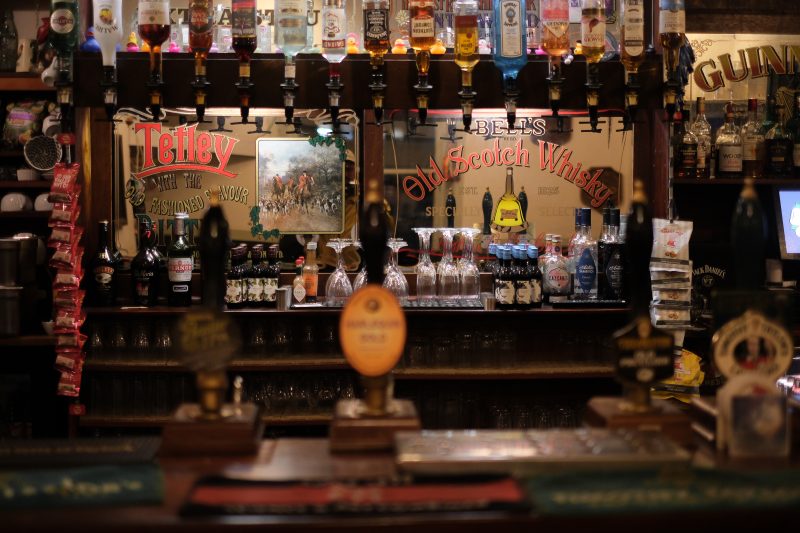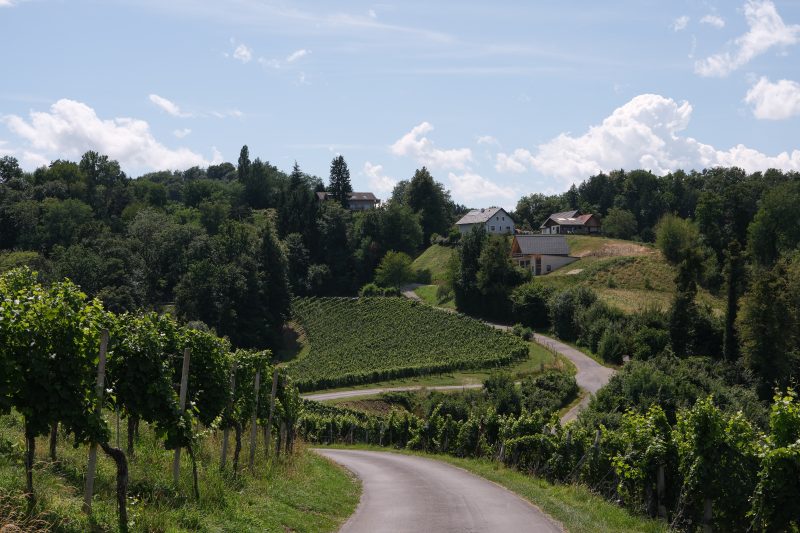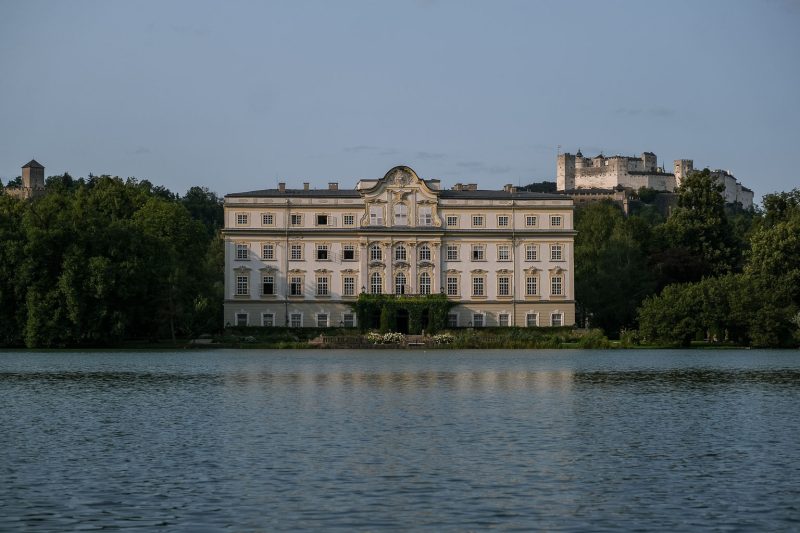
My Salzburg beer story begins, as so many do, beneath the leaves and branches of chestnut trees in the sprawling beer garden of Augustiner Bräu Mülln. It’s already getting dark and almost every seat in this 1,500 capacity space is taken, the drinkers lit by just the glow of the bar and a smattering of stung up bulbs. The air smells faintly of malt, grilled meat, and freshly baked pretzels, while the sound of revellers that occupy the tables makes it almost to loud to hear anything. There’s a constant clatter of stone steins and exclamations of ‘prost!’ all around me.
If there was a Mount Rushmore of iconic European drinking spots, I could probably think of a few dozen different venues. However, Augustiner would always be a contender. Long before the grand concert halls and Mozart souvenirs that Salzburg is known for today, local monks were perfecting the art of fermentation. In the Middle Ages, when clean water was uncertain and brewing was mainly for sustenance, the city’s abbeys became the cradle of beer-making knowledge. The Augustinian friars of Mülln began crafting their rich, malty lagers here in the 17th century, laying down traditions that still endure within those same monastery walls. As Salzburg prospered, its brewing reputation spread beyond the cloisters. By the Renaissance, small private breweries dotted the city, each serving its neighbourhood taverns and beer gardens, each competing to produce the smoothest, most consistent lager.
In this place, not much has changed in the 400 or so years since the monks originally perfected their craft. The stone walled, wood panelled beer halls and dining rooms look much the same as they would have when the cloaked brethren wandered its corridors. Their remains an archaic procedure when it comes to ordering a pint: You queue with a handful of coins until it is your turn you choose a stone stein, marked with the monks’ crest, from the shelf lined with drinking vessels. You’re then urged to give it a quick rinse in a cold trough before handing it across to be filled straight from a wooden barrel that appears to be constantly flowing, such is the volume of beer that is poured here.
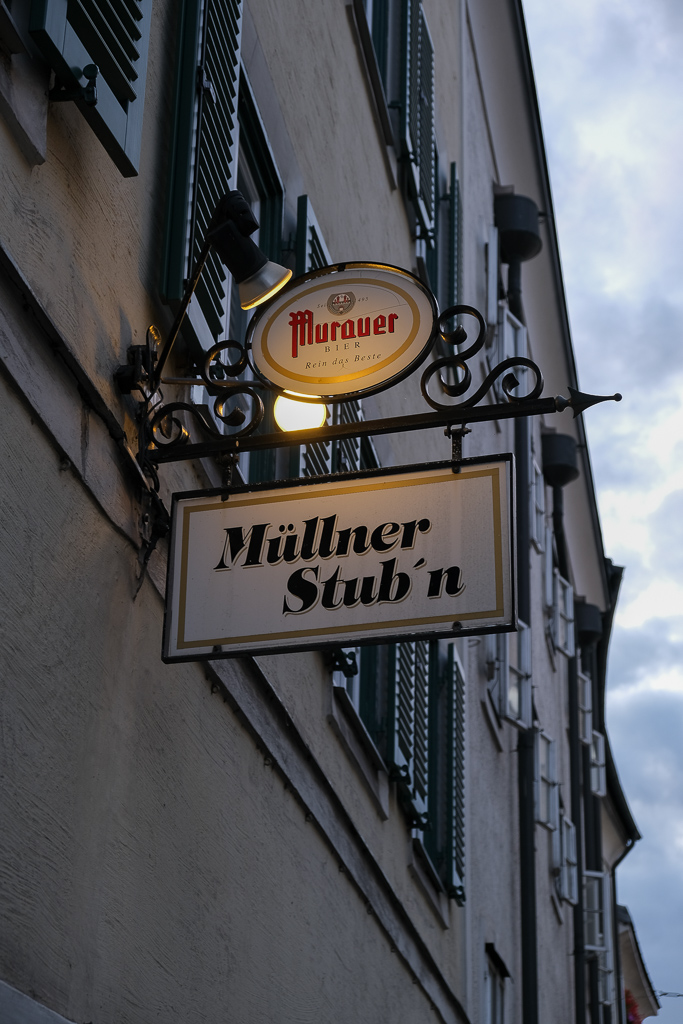
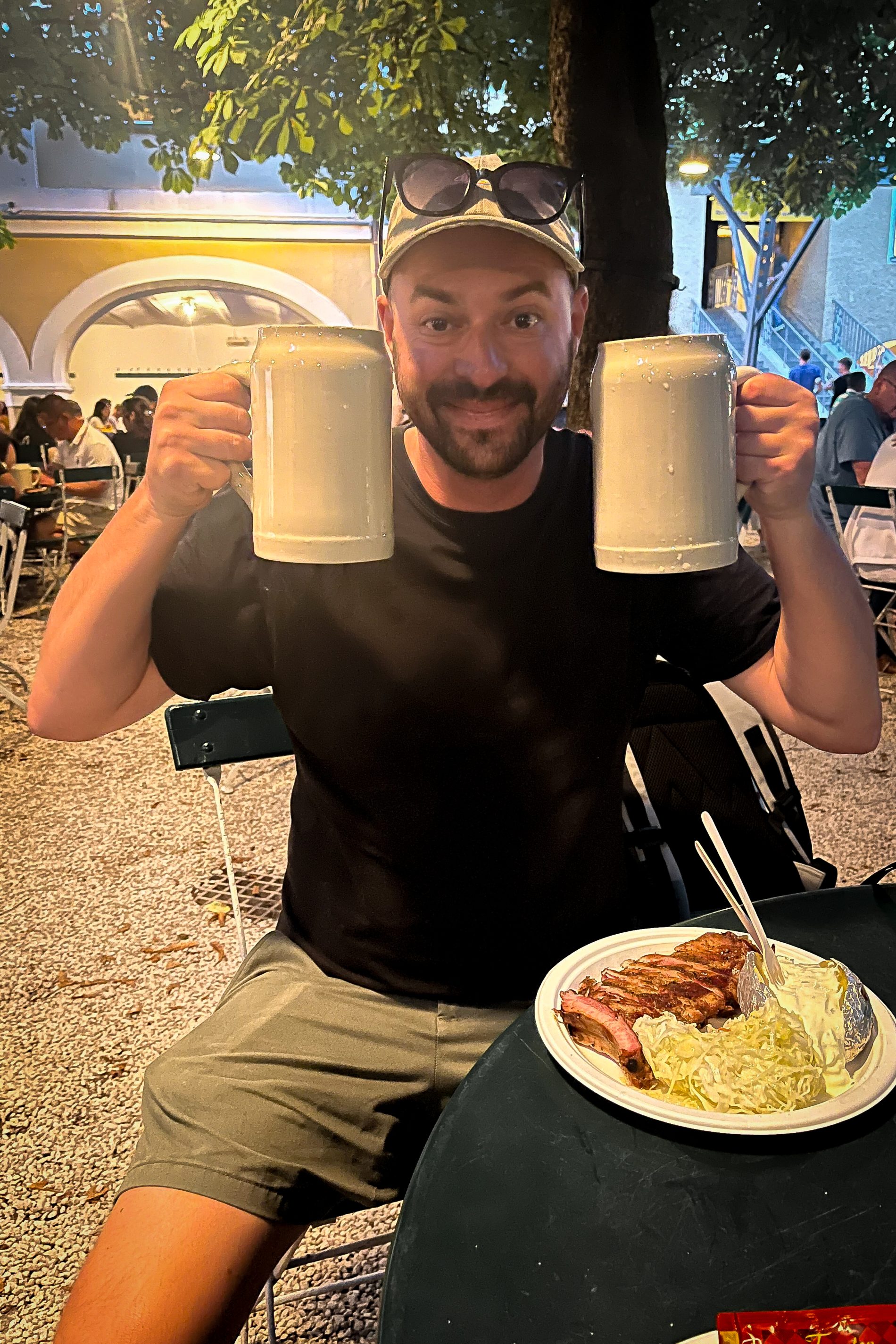
The amber beer foams thick and slow, carrying centuries of monastic tradition in its wake. You take a seat at at long wooden tables, not caring that you’re surrounded by strangers. Between bites of schnitzel and Pork knuckle, you chat, share stories, and before long, you’re strangers no more.
It’s easy to see why this piece of Salzburg’s brewing heritage is a landmark almost as beloved by locals as the fortress on the hill. Perched as it is beneath the wooded slopes of the Mönchsberg, its red-tiled roofs and baroque towers form a familiar silhouette above the city’s rooftops that have been a gathering spot for hundreds of years.
That heritage blossomed further in the 19th century, when Salzburg, positioned between Bavaria and the Alps, became a brewing crossroads. Techniques refined in Munich met local ingenuity, and the result was a new generation of lagers defined by clarity and balance. Among them rose Stiegl, founded in 1492 and still proudly independent today, which helped shape Austria’s national taste for crisp, full-bodied Märzen beer. It was an era that forged Salzburg’s reputation not only as a city of culture, but as one of the cornerstones of Austrian brewing.

To taste a glass of Stiegl’s beer at its best, you need to follow Salzburg’s beer trail as it winds naturally back downhill into the Old Town, and follow the winding cobbled road and gas lit streets beach up hill, climbing to the outdoor terrace of the Stieglkeller, perched beneath the looming Hohensalzburg Fortress. Below, the Salzach glimmers; above, the sky deepens to a soft indigo. A pint of Stiegl Goldbräu, crisp, malty, perfectly balanced, is the ideal place to start. This brewery grew from humble beginnings beside a small flight of steps in the Old Town and grew into one of Europe’s most respected private breweries, its Brauwelt complex now an immersive blend of museum, brewery, and tasting hall. There is no place better to be as dusk falls, sipping from a stein over the Dom du Salzburg as the afternoon light fades and the city begins to illuminate below.
While these two powerhouses of Salzburg’s brewing scene tend to steal the show, Salzburg’s beer culture doesn’t live by breweries alone. Down narrow lanes and beneath painted archways, a warren of taverns and bars are as much a part of the region’s drinking culture; vaulted cellar bars and historic taverns are found on most street corners.. At Die Weisse, the city’s oldest wheat beer brewery and a firm local favourite, glasses of cloudy Weissbier are served alongside hearty schnitzels in a courtyard that buzzes late into the night. A short walk away, Alchimiste Belge swaps rustic benches for candlelit tables, its menu of Belgian and Austrian brews a testament to the city’s curiosity and continental spirit. For something more modern, Beffa Bar and O’Malley’s offer small-batch craft ales, rotating taps, and a sense that Salzburg’s new generation of brewers are finding their own creativity beyond the Austrian classics. While the beer scene here seems firmly rooted in tradition compared to it’s neighbouring countries, there is still space for experimentation and more forward-thinking beers, even if they have to be sought out.
However, in my mind, it’s the fact that Salzburg’s beer scene is so firmly rooted in tradition that makes it one of Europe’s great, underrated, beer cities. A trip through it’s pubs and breweries is like a journey through time, and despite the few modern bars you find here, it is almost as if things have stood still for centuries.
From centuries-old monastery breweries like Augustiner Bräu Mülln to the panoramic terraces of Stieglkeller, the wheat-beer heritage of Die Weisse, and the cosmopolitan taps of Alchimiste Belge, the city’s brewing roots are clear to see and experience first hand. Whether you’re raising a stein in a riverside beer garden, sampling craft imports in a candlelit cellar, or tracing centuries of brewing prowess, Salzburg offers a beer experience as rich and layered as its baroque skyline.
The Best Breweries & Taprooms in Salzburg
Salzburg’s brewing scene centres around two heavyweights: Stiegl and Augustiner, each offering a distinct experience. Stiegl, Austria’s largest private brewery, blends modern innovation with centuries of tradition, producing refined, well-balanced lagers that reflect the city’s dedication to craftsmanship. Augustiner Bräu Mülln, by contrast, has old-world charm. It’s a monastery brewery where beer still flows from wooden barrels and is served in hefty stone mugs. While most people flock to these classic institutions, they aren’t the be all and end all of Salzburg’s brewing prowess, with a few more classic breweries to be found amongst the city’s Baroque streets.
Stiegl Brauwelt
If you’re a beer drinker and have spent any amount of time in Austria, there is no doubt that you have heard of Stiegl, or at least seen its bottles on supermarket shelves. This Brewery is an institution and is as much a part an icon of Salzburg as Mozart of the fortress that towers over the town.
Founded in 1492, the same year Columbus set sail for the Americas, Stiegl is Austria’s oldest privately owned brewery and still family-run today. Its name, Stiegl, meaning “little stair,” comes from a small flight of steps beside its original brewhouse in Salzburg’s Old Town, where beer once flowed down to the nearby Alm Canal.
Over the centuries, Stiegl grew from a modest medieval brewery serving local taverns, to one of the country’s most respected producers. When the brewery outgrew its city-centre home in 1863,, it moved to its current site in Maxglan, on the western edge of Salzburg. Today, this site has evolved into Stiegl Brauwelt, which is still a working brewery, but also a tourist attraction housing a museum, restaurant and polished visitor experience.
In a way, it’s like visiting a small, beer-themed village, such is the size of the sprawling yellow complex. The museum that tells the story of Stiegl and of brewing in Salzburg more broadly, from early monastic methods to the rise of industrial brewing, while the tour moves through interactive exhibits and artefacts, including antique copper kettles and historic adverts, before entering the modern production halls. There’s a short film in the ‘Stiegl Brew Cinema,’ then a tasting session in the stylish taproom, where three beers are included in the visit: Usually the flagship Stiegl Goldbräu, the unfiltered Zwickl and a seasonal special.
Unlike many European breweries of its scale, Stiegl has remained privately owned for over five centuries, a rarity in an era of mergers and global beer conglomerates. The brewery also champions sustainability: its operations are powered by renewable energy, its malt sourced regionally, and its brewing waste is repurposed for animal feed.
As for the beers, the core lineup remains classically Austrian. The Stiegl Goldbräu, the brewery’s flagship Märzen, is smooth, malty and well-balanced. The Stiegl Pils is crisp and hop-forward, while the Zwickl unfiltered and cloudy, with a soft breadiness. Their Weisse, a traditional wheat beer, adds notes of banana and clove, while the Paracelsus Bio-Zwickl, brewed with organic ingredients, nods to Salzburg’s Renaissance physician and philosopher Paracelsus, known for championing purity and natural balance.
Where: Bräuhausstraße 9, 5020 Salzburg, Austria
When: Monday to Saturday 11.30am – 10pm; Sunday 11am – 8pm
Augustiner Bräu Mülln
The story of Augustiner Bräu began within the walls of the Augustinian monastery of Mülln, where the monks began brewing in 1621 to sustain themselves and their community. For generations, they followed the Reinheitsgebot, the Bavarian Purity Law of 1516, using only water, malt, hops and yeast. The result was a beer of simplicity and depth, with word quickly spread beyond the monastery walls. By the 17th century, the brewery’s cellars had become a gathering place for Salzburg’s townsfolk, drawn by the quality of the beer. it remains one of Europe’s few surviving monastic breweries still operating largely as it did centuries ago.
A visit to Augustiner Bräu feels like stepping into a living piece of Salzburg’s heritage. The complex sprawls across vaulted halls, courtyards and, most famously, one of Austria’s largest beer gardens, a tree-covered beer oasis packed with benches and picnic tables that can seat up to 1,500 people on a sunny afternoon. The entire process of drinking here feels remarkable quaint and dated, but in the most charming of ways: You queue at the cashier to pay for your beer, rinse your chosen stone stein in the cold water trough, and hand it over to the barman at the counter, who fills it straight from a wooden barrel drawn from the cool cellars below.
Inside, the beer halls play into its history: warm, wood-panelled rooms, locals playing cards, and families sharing full plates from the adjacent Schmankerlgang, a market-style corridor lined with stalls selling traditional Austrian snacks. There’s roast chicken, smoked sausages, radishes, pickles, pretzels and the sort of earthy, salty dishes that pair perfectly with a litre of Märzen. It’s a system that can feel fairly unusual for people that aren’t local (it caused some confusion for me at least), but if you treat it like an old-fashioned take on a modern street food market, it makes complete sense (Just make sure to bring cash for some of the stalls).
Augustiner brews only a handful of styles, focusing on quality rather than variety. The flagship Märzen is malty, amber-gold and slightly sweet, served unfiltered and naturally conditioned, giving it a soft, creamy texture. There’s also a lighter Helles and a darker Bock or festive beer around Christmas, but the essence of Augustiner’s success lies in its steadfast simplicity. The recipe, unchanged for generations, is still brewed within the monastery complex, and fermentation and storage take place in traditional wooden barrels rather than modern stainless steel.
Unlike many breweries, Augustiner Bräu Mülln remains largely independent, with a production scale that is fairly modest compared to some of Austria’s larger breweries. Visitors who wish to delve deeper into the process can arrange a ‘Path of Beer’ tour, which leads through the brewhouse, cellars and historic museum rooms, revealing how the monks’ brewing traditions have been preserved through centuries. These tours are generally by appointment and cater mainly to groups, but even without one, simply being here gives a good sense of Salzburg’s brewing heritage.
Where: Lindhofstraße 7, 5020 Salzburg, Austria
When: Monday to Friday 3pm – 11pm; Saturday & Sunday 2.30pm – 11pm
Die Weisse
Along Rupertgasse in the quieter Neustadt district, Die Weisse stands as an important part of the city’s brewing heritage. Founded in 1901, it’s Austria’s oldest wheat beer brewery and one of Salzburg’s most beloved institutions.
Its timber-lined dining rooms and leafy beer garden are incredibly popular with locals and the reason is the beer: Naturally cloudy, gently effervescent, and brewed on-site to the original 1901 recipe. Die Weisse’s flagship wheat beer is smooth and aromatic, with hints of banana and clove, served in a tall glass. The brewery also produces a dark and a strong seasonal version, alongside small-batch brews. Under the guidance of master brewer Felix Gmachl, Die Weisse has managed to evolve without losing its heart, introducing organic ingredients and even a gluten-free wheat beer while staying true to its roots.
Where: Rupertgasse 10, 5020 Salzburg, Austria
When: Monday to Saturday 10am – 12am; Closed Sunday
Stern-Bräu
Sternbräu has been part of the city’s story for nearly five centuries. First recorded in 1542, it began as a modest brewery and tavern serving beer to merchants, craftsmen, and travellers making their way through the city. That makes it one of the city’s most enduring institutions with centuries of brewing tradition.
This history is clear to see in the vaulted ceilings, worn wooden beams, and brass fixtures that speak to the building’s age, while recent renovations have brought a gentle contemporary polish without losing the warmth of the original inn. The complex now spans several dining rooms and courtyards, from the rustic, wood-panelled Wirtshaus to the sleeker SternLounge, yet it’s the sprawling beer garden, shaded by chestnut trees a that exemplifies Stern-Bräu’s charm.
The house beer, Sternbier, is still brewed to the traditional recipe. However, in 1956, the original brewery ceased brewing it. Since 2014, it has been crafted in collaboration with Hofbräu Kaltenhausen who contract brew under the Sternbier name, ensuring a little piece of Salzburg’s beer heritage continues to this day. This naturally cloudy amber lager is full-bodied but easy-drinking, with soft malt sweetness balanced by a clean, herbal finish.
Although the beer is no longer brewed here, the beer hall is worth a visit; It’s one of the city’s largest, seating hundreds across its many rooms, and feels very local.
Where: Griesgasse 23, 5020 Salzburg, Austria
When: Daily 9am – 11pm
S'Kloane Brauhaus
S’Kloane Brauhaus, meaning ‘the Small Brewery’, lives up to its name. Inside the historic Kastner’s Schenke, wooden beams and a gleaming copper brew kettle set the scene, giving the space a warmth that feels part living room, part brewing workshop.
In a way, intimacy is the point. Long tables encourage a communal feel, while a small beer garden offers a quiet refuge on sunny afternoons. The brews are modest in scaler: a crisp Kellerbier, a smooth, fragrant Weizenbier, and the occasional seasonal special are all poured with care into traditional stoneware mugs.
The food here echoes the same philosophy. Plates of turkey schnitzel, roast pork, hearty soups, and other Austrian classics are prepared with local ingredients. The combination of simple yet carefully brewed beer, robust regional cuisine, and attentive service creates an atmosphere that will have you coming back for more.
Where: Schallmooser Hauptstraße 27, 5020 Salzburg, Austria
When: Monday to Friday 4pm – 12am; Closed Saturday & Sunday
The Best Pubs & Beer Bars in Salzburg
Although it is Salzburg’s breweries that put it on the beer map, the city’s pub scene plays an equally rich supporting role. In the Old Town, tucked beneath arches and cobbled alleys, traditional pubs are rich in atmosphere, while newer venues showcase Austria’s small but ever growing craft movement. Expect rustic interiors, small-batch brews, and a whole host of classic beers from throughout Austria.
Alchemist Belge
For something different, this Belgian-inspired bar stocks more than 150 beers, including Trappist ales, lambics, and a strong list of Austrian craft brews. Its rotating tap list makes it a magnet for beer lovers looking to push beyond Märzen and Weizen.
Where: Aristida Briāna iela 9a, Centra rajons, Rīga
When: Monday to Thursday 3pm – 12am; Friday & Saturday 1pm – 2am; Sunday 1pm – 12am
Stieglkeller
Perched beneath the fortress walls of the Hohensalzburg, Stieglkeller is one of the city’s classic and most-visited beer spots. It’s part traditional inn, part open-air terrace with one of the best views in Salzburg. It’s been welcoming drinkers since the late 19th century, when the Stiegl Brewery opened this grand beer hall as a showpiece for its signature brews.
It may take a arduous walk up a steep road to get there, but I assure you that it is worth the leg cramps. The atmosphere shifts with the seasons: in summer, locals and visitors fill the tiered terraces that tumble down the hillside, steins in hand, watching the sun set over the old town’s domes and spires. Inside, vaulted dining rooms lined with dark wood offer warmth and comfort through winter, with hearty Austrian dishes such as roast pork, schnitzel, and dumplings, all served alongside pints of crisp Stiegl Goldbräu or the unfiltered Paracelsus Zwickl.
Where: Aristida Briāna iela 9a, Centra rajons, Rīga
When: Monday to Thursday 3pm – 12am; Friday & Saturday 1pm – 2am; Sunday 1pm – 12am
TRUMEREI
A city centre outpost of Trumer Brewery (more on them later), this contemporary bar and restaurant showcases their more experimental lagers and pilsners in a stylish, modern setting. The food menu is more refined than your average beer hall, with small plates designed to match the beers. It’s also worth noting that they have a fairly packed calendar of tastings, pairing dinners, and seasonal beer launches.
Where: Aristida Briāna iela 9a, Centra rajons, Rīga
When: Monday to Thursday 3pm – 12am; Friday & Saturday 1pm – 2am; Sunday 1pm – 12am
Fuxn
In a city so steeped in tradition, it takes confidence to reinvent the Austrian Wirtshaus, yet that’s exactly what Fuxn has done. You’ll find it in the quiet district of Schallmoos, just a short walk from Salzburg’s historic centre. This lively tavern has managed to breathe new life into an old farmhouse, the 17th-century Fuchsengut estate, turning it into one of the city’s most characterful new beer spots.
Fuxn calls itself a Volkswirtschaft which literally translates to a ‘people’s inn’. With that in mind, it’s not trying to be a sleek gastropub or a typical tourist-trap beer hall; instead, it’s a gathering place that is as popular with locals as it is to the city’s visitors. Inside, long wooden tables and warm lighting along with the barn-like Stadl hall offer a welcoming atmosphere, while in summer, the leafy beer garden comes alive, shaded by chestnut trees that have likely stood since the farmhouse’s earliest days.
It’s a modern take on traditional Austrian hospitality. The kitchen takes its cues from classic Alpine cooking but gives it a modern twist: crisp Wiener schnitzel, slow-cooked pork with seasonal vegetables, or a vegetarian plate built around local cheese and herbs. Produce comes from regional farms, and everything has its roots in Salzburg’s mountainous landscape and meadows.
The beer, of course, is the most important ingredient. Fuxn’s six taps pour a rotating selection of Austrian, Bavarian, and Bohemian brews, from crisp lagers to cloudy wheat beers. But it’s the Fuxn Volksbier, brewed exclusively for the tavern by the nearby Bio-Brauhaus Gusswerk, that steals the show. The bottle list stretches further afield, with Belgian ales, French saisons, and a handful of small-batch Austrian craft beers that make it a must-visit for enthusiasts.
Where: Aristida Briāna iela 9a, Centra rajons, Rīga
When: Monday to Thursday 3pm – 12am; Friday & Saturday 1pm – 2am; Sunday 1pm – 12am
Beyond the City Centre
Step outside Salzburg’s compact core and you’ll find a handful of long-running breweries that reward the short journey. North of the city, Trumer Privatbrauerei in Obertrum combines cutting-edge brewing with scenic Alpine views, offering guided tastings of its crisp Pils and specialty beers. To the south, smaller regional producers and farm-based brewhouses experiment with organic malts and mountain water, showcasing how Salzburg’s rural surroundings continue to shape its beers.
Hofbräu Kaltenhausen
A short hop south of Salzburg, in the quiet district of Hallein, lies Hofbräu Kaltenhausen, one of Austria’s oldest breweries. Founded in 1475 by merchant Hans Elsenheimer, this historic site has witnessed more than five centuries of brewing, from the days of wooden barrels and monastic recipes to today’s small-batch experimentation.
The brewery’s location outside of the city was no accident. Nestled beneath the twin Barmstein peaks, Kaltenhausen benefits from a natural cooling system. It’s a place where wind tunnels run through the rock, perfectly ventilating the underground cellars where beer was stored at constant, cool temperatures. Add the crystal-clear mountain water from nearby springs, and you have the ideal conditions for brewing. By the late 15th century, the brewery had caught the eye of Salzburg’s prince-archbishops, who brought it under their patronage, hence the “Hofbräu” title, marking it as the official court brewery.
Over the centuries, Hofbräu Kaltenhausen has seen empires rise and fall, but it has never lost sight of its roots. Steam power arrived in the 19th century, and modern brewing technology followed, yet the emphasis on craftsmanship and quality remained. Today, the old industrial-scale operation has been reborn as a ‘speciality production centre’, where traditional methods are still used. It’s possible to visit the ‘Brauerei Kaltenhausen Spezialitäten-Manufaktu’, where modern brews and seasonal limited editions are made alongside classic lagers and wheat beers.
At the heart of the site is the Bräustübl, a cosy tavern that looks out over gleaming copper kettles where you can while away some time with a pint and a plate of hearty Austrian food: Try pairing a Märzen with schnitzel or a creamy wheat beer alongside roast pork and dumplings.
The brewery also doubles as a ‘forum for beer culture’, hosting tastings, guided tours, and brewing seminars that trace the evolution of Austrian beer from medieval cellars to the current craft beer scene. The adjacent cooperage museum is a small but fascinating exhibit dedicated to the traditional art of barrel-making, complete with old tools and displays that bring the craft to life.
While all of this makes a visit educational and engaging, the beer also delivers. The flagship 1475 Pale Ale pays homage to the brewery’s founding year, adding a contemporary twist with fruity hop notes and a smooth, balanced finish. Other highlights include the amber Bernstein, the unfiltered Kellerbier, and stronger seasonal offerings like Sigismund, a rich barley wine named after Salzburg’s Renaissance-era ruler. Each batch is small and carefully brewed, offering a chance to taste something you won’t find elsewhere.
Where: Aristida Briāna iela 9a, Centra rajons, Rīga
When: Monday to Thursday 3pm – 12am; Friday & Saturday 1pm – 2am; Sunday 1pm – 12am
Trumer Privatbrauerei
Brewing has been taking place in Obertrum am See, in the heart of the Salzburg Lake District, since 1601 when Archbishop Wolf Dietrich approved the ‘Brewing Right’ for the town. Trumer has a legacy that stretches back almost as far. A family business, now in its eighth generation with over 400 years of history, they have been producing beer since 1775. Owned and run by the Sigl family, in recent years, the brewery has become the standard-bearer for pilsner in Salzburg, with their Trumer Pils winning medals such as a silver at the Beer World Cup, and being honoured as Europe’s best pilsner with the gold European Beer Star.
However, it isn’t all about their pilsner; Their Obertrumer Original range features a a Märzen-Zwicklbier, Bio Radler, Märzen and a Herbstbier. Another talking point is their focus on unique glassware design and the development of the world’s first mouth-blown beer glasses. If you’re having a glass of their beer, make sure it’s from a ‘Schlanke Stange’ (roughly translated as the ‘slim stick’ and not too dissimilar from the kolsch glasses you find in Cologne or the altbier glasses you get in Dusseldorf) has been named the most beautiful beer glass in the world. It has even been exhibited in the Museum of Modern Art in New York.
You’ll find their award-winning brewery just 20 minutes north of Salzburg, where they offer tours and tastings in a scenic lakeside setting. Cycling routes link Obertrum with other nearby breweries, making for a perfect day trip into Salzburg’s ‘Beer World’ region.
Tours take place on Tuesday afternoons at 4.30pm during the months of May, June and Spetember. In July and August, there is an additional tour at 6pm each Thursday. Tours cost €10.50 per person.
Tip: Combine a brewery visit with a cycling trip from Salzburg, ending with a dip in one of the nearby lakes in summer.
Where: Brauhausgasse 2, 5162 Obertrum am See, Austria
Beer Tours in Salzburg
Most of Salzburg’s major breweries offer tours that allow you to get a behind the scenes of their history and centuries-old brewing process.
Start at the Stiegl Brauwelt, a short tram or taxi ride from the centre, where Austria’s largest private brewery doubles as a museum, restaurant and tasting hall. Housed in a grand yellow building on Bräuhausstrasse, Stiegl offers an immersive tour that traces the brewing process from grain to glass. Visitors are guided through a multimedia “brew cinema,” peek into the production halls, and finish with three tastings in the stylish tasting room. There’s a restaurant next door, serving hearty Austrian fare alongside the brewery’s signature lagers and seasonal specials.
For something older, head back towards the Mönchsberg cliffs to Augustiner Bräu Kloster Mülln, a monastery brewery founded by monks in 1621. While most people just stop by for a beer and a plate of hearty Austrian food, those keen to go beyond the stein can arrange a behind-the-scenes “Path of Beer” tour, which lifts the lid on the brewing cellars and bottling process, though these are usually available by group appointment only.
Beyond the city limits, about a 25-minute drive north, lies Trumer Privatbrauerei in Obertrum, where a smaller, family-run operation offers a contrasting experience. Known for its crisp Pils, Trumer opens its doors to visitors on guided tours that include a walk through its contemporary brewing facilities and a tasting session in the taproom. It’s an excellent detour for anyone wanting to understand Austria’s regional brewing scene.
However, if you don’t want to leave central Salzburg, guided pub crawls are are a great way to explore the city with someone that is knowledgable about the local beer scene, allowing you to find the best taverns and craft beer bars without the stress of planning. Typically lasting three to four hours, they weave through the Old Town, stopping at traditional inns, modern taprooms and hidden beer cellars, while giving you information about Salzburg’s brewing history along the way. You’ll sample a range of brews, from the bright, bready Märzen to richer Bocks, while guides share anecdotes about brewing monks, family dynasties and the evolution of Austrian beer.
Beer Festivals in Salzburg
Salzburg’s most atmospheric beer moment is Rupertikirtag, held each September in the squares around the cathedral. It combines fairground rides, market stalls, music, and beer tents in a celebration of the city’s patron saint. Smaller beer festivals throughout the year showcase seasonal brews, from bocks in spring to Märzen at harvest time.
Salzburg Beer Map
Whether you are planning a Salzburg pub crawl or just want to sip a pint at one of the historic breweries mentioned above, this map includes all the best breweries, taprooms and beer bars that were covered in this guide.
Using this map: This map shows both the city’s breweries (red icons), craft beer bars (orange icons), and bottle shops (green icons). The list can be seen and filtered by toggling the icon on the top left-hand side of the map, and each location can be explored further by clicking them. Expand the map by clicking the icon on the top right-hand side.
Getting to Salzburg
Salzburg sits close to Austria’s border with both Germany, making it well connected by road, rail, and air. Though compact, it’s surprisingly accessible for international visitors.
By air
Salzburg’s W.A. Mozart Airport is small but functional, with connections to major European hubs. From the UK, rates are reasonable, with the most frequent flights from London and larger airports like Manchester and Birmingham, particularly in ski season.
The airport is just 20 minutes from the city centre by bus or taxi. Expect to pay around €20-€25 for a taxi ride or €2.50 by bus. The number 2 and 10 buses to the centre depart every 15 to 20 minutes, starting from around 5:30 am to 11.30pm. Taxis are available 24/7.
By train
Austria’s rail network is excellent, and Salzburg Hauptbahnhof station is just a short stroll from the old town. High-speed Railjet services whisk you to Vienna in 2.5 hours and Munich in under two. Direct trains from Zurich, Budapest, and Prague are a scenic way to spend a day without moving!
By bus
FlixBus, ÖBB Postbus and other regional operators run routes from Munich, Vienna, and beyond, often at budget-friendly prices. While slower than trains, buses are a sensible choice if you’re travelling across Central Europe on a shoestring.
Getting Around
Once you arrive, Salzburg is easily navigable. The old town is compact, and most tourist sights are within walking distance. As in most of Austria, public transport is efficient and includes trolleybuses that connect neighbourhoods and tourist attractions, with most running every 10 to 20 minutes until midnight, and night services available over weekends. If bought in advance, standard single tickets are €2.50 or €4.90 for 24-hour passes. Purchase tickets from a kiosk or download the SalzburgMobil App, expect to pay more if you buy on board.
For serious tourists, the Salzburg Pass includes free transport and admission to all tourist attractions and museums, with 24, 48 and 72-hour options from €31 for adults. You can buy a digital card online or purchase one from a ticket office.
Hiring a bike is a scenic way to soak up Salzburg at your own pace, with the city being one of the most cyclist-friendly cities in Austria. Bikes are easily rented from shops such as aVelo Salzburg and Intersport Rent, or through online platforms like Lokki. Expect to pay around €25 per day for a standard bike and €40 for e-bikes.
Where to Stay in Salzburg
Salzburg accommodation has a varied selection of places to rest your head: choose from boutique hotels in the heart of the city, budget hotels in the new town, or a palace with Hollywood credentials on the outskirts. It’s easy to navigate around the city, but the old town has the most charm and character. You’ll wake up just steps from Mozart’s Birthplace, Residenzplatz fountain and the Baroque cathedral, making it easy to maximise your two days without your Fitbit exploding. Expect higher rates for rooms over summer and during the Christmas Market, and as it’s a small city, make sure you book ahead.
Magazin Rooms
Where: Franz-Josef-Straße 27, 5020 Salzburg, Austria
Best for: Affordable design in a quiet area that’s not too far from the action
This stylish little hideaway has playful themed rooms at reasonable rates, just a ten-minute walk from the old town. Tucked away in a residential area, Magazin Rooms has all the mod cons with an artistic twist.
The Little Guesthouse
Where: Riedenburger Str. 8, 5020 Salzburg, Austria
Best for: A vintage boutique stay away from the hustle and bustle
Set across the river in a residential neighbourhood near Mirabell Palace, this gorgeously renovated guesthouse offers a charmingly colourful garden, sumptuous buffet breakfasts and rooms with a balcony. A real home away from home, you can even rent free bikes.
Design Hotel Zum Hirschen
Where: Getreidegasse 37, 5020 Salzburg, Austria
Best for: Understated Scandi luxury with historic hosting traditions in the very heart of the old town
Just steps from the Cathedral, Salzburg’s oldest family-run hotel blends 500 years of hospitality heritage, award-winning architecture and contemporary design. Austria’s first certified organic inn, this central boutique stay has a landscaped garden, spa and on-site restaurant.