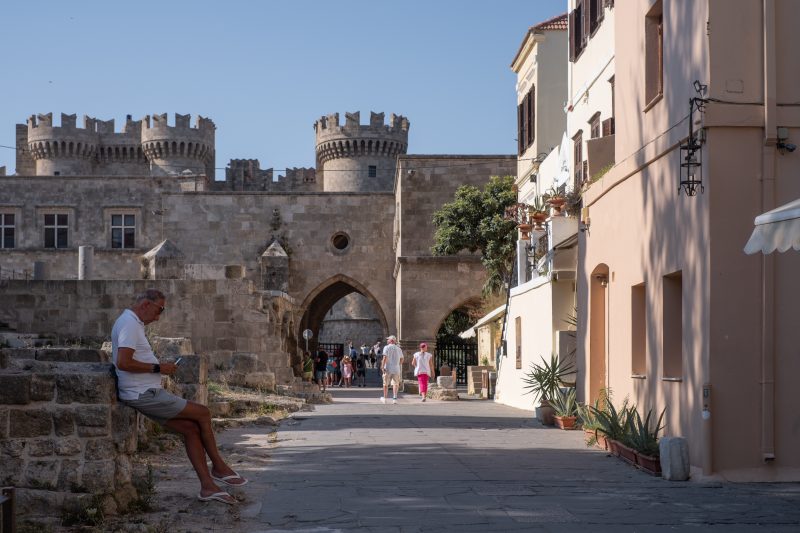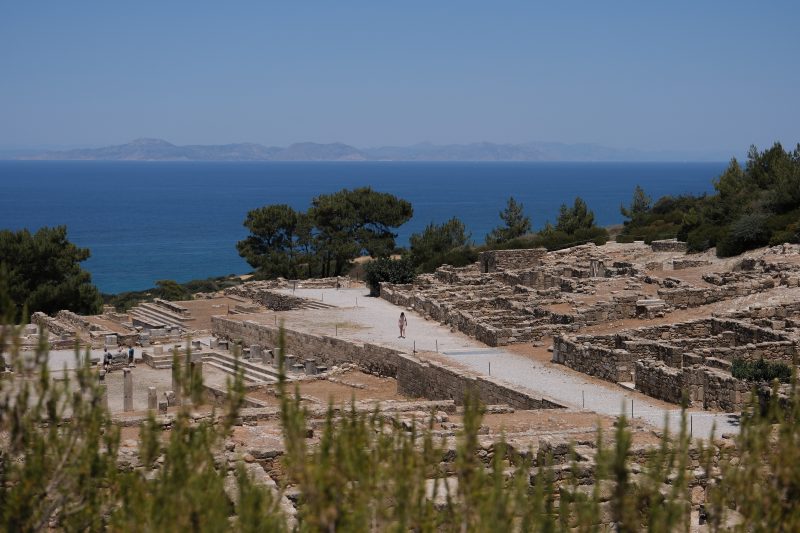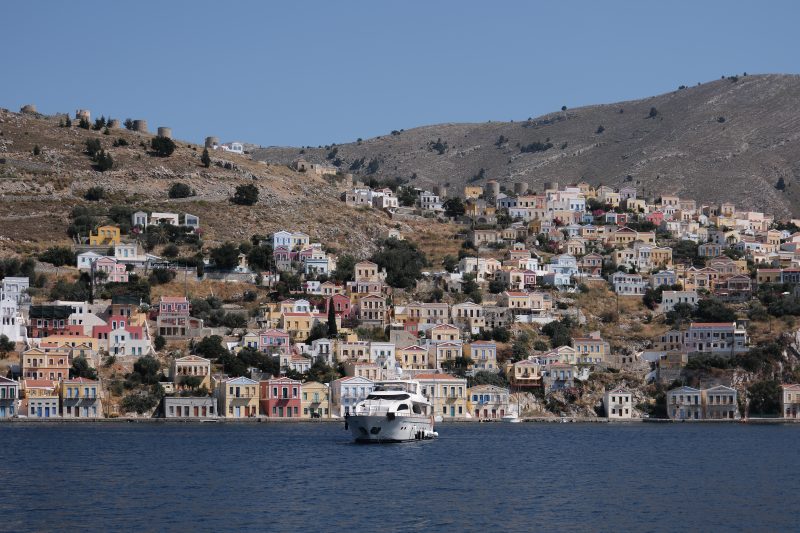
Rhodes, the largest of the Dodecanese islands, has long held a magnetic pull for travellers. Washed by both the Aegean and Mediterranean Seas and blessed with more than 300 days of sunshine each year, it has been a crossroads of cultures for millennia. The ancient Greeks built temples to Helios, god of the sun, here; the Knights of St John fortified its harbour during the Middle Ages; and Ottoman, Italian, and finally modern Greek influences have each left their mark. Today, the island is as famous for its medieval Old Town, a UNESCO World Heritage Site, as it is for its picturesque beaches and lively resorts.
Tourism in Rhodes began to flourish in the 1960s, when European travellers sought out its blend of history, sunshine, and affordability. Since then, it has become one of Greece’s most beloved beach destinations, catering to all manner of travellers. Families flock to safe, shallow bays such as those around Faliraki and Lindos, while couples seek out the romance of secluded coves and sweeping sandy stretches. Water-sports enthusiasts head for the breezier western coast, where the wind is perfect for kiteboarding and windsurfing. Meanwhile, Rhodes Town and the east coast’s larger resorts offer vibrant nightlife, bustling tavernas, and modern hotels.


Yet despite its popularity, Rhodes still holds plenty of hidden corners. Drive just a little beyond the main resorts and you’ll find untamed stretches of sand where the Aegean laps quietly at your feet, or rugged coastal landscapes where pine forests tumble down towards the sea. Whether you’re looking for family-friendly sands, lively beach clubs, or tranquil hideaways, Rhodes has something for every traveller. Here are ten of the very best beaches to explore on the island.
A Guide to the Must-Visit Beaches in Rhodes
Washed by the sapphire waters of the Aegean and blessed with nearly 300 days of sunshine a year, Rhodes is an island made for beach lovers. From sweeping golden bays framed by ancient ruins to hidden coves tucked beneath pine-covered cliffs, its coastline offers something for everyone, whether you’re seeking family-friendly shallows, world-class windsurfing, or a secluded spot to swim in crystalline waters.
Kalithea Springs Beach
A short drive south of Rhodes Town, Kalithea is less a simple beach than a meeting of history, architecture and spectacular seascape. The rocky bay here has drawn visitors for centuries, famed since antiquity for its mineral-rich thermal springs. In the 1920s, when the Italians ruled Rhodes, they built an elaborate spa complex of domed pavilions, mosaics and gardens designed to make Kalithea a world-class health resort. Though the springs themselves no longer flow, the buildings have been painstakingly restored, and the sense of old-world glamour lingers in every archway and colonnade.

The coastline itself isn’t so much a beach, but a series of rocky outcrops with a pebbly area to lounge. However, it’s impossibly photogenic: a cove where pine trees spill down to the water’s edge and the Aegean gleams.. Wooden decks have been built across the stone, offering sunbeds with direct ladders to the sea. The water is astonishingly clear, attracting snorkellers who drift between boulders and shoals of fish. It’s a place where you can slip easily from cultural sightseeing to pure relaxation, moving from the vaulted walkways of the spa complex to the shaded comfort of a beachside café.


Unlike the wide sandy stretches elsewhere on Rhodes, Kalithea feels intimate. It’s generally less busy than some of the places listed below and a spot for quiet swims, hours-long sunbathing sessions, and soaking in the unique atmosphere of a historic retreat.
Facilities: There is free parking above the bay. You are able to rent sunbeds and umbrellas, which are needed as the bay offers little shade. There is a basic toilet block, but when I visited, the beachfront cafe was closed and didn’t look like it was opening anytime soon. However, beside the carpark, there is a fast food kiosk that sells the best gyros I had during my time in Rhodes, as well as coffees, beers and soft drinks.
Best for: Sunbathing and swimming away from the crowds
Tip: It’s a good area for beach hopping as there are a number of picturesque bays just a short walk away. For cat-lovers, the wonderful Kalithea Cats Cat Sanctuary is just a few minutes from the beach. Here, volunteers look after over 200 strays who are free to come and go. Make sure to bring some cat food and supplies as a donation.
Anthony Quinn Bay
Few beaches on Rhodes feel as cinematic as Anthony Quinn Bay. Nestled between rocky headlands south of Faliraki, this tiny inlet of emerald-green water is framed by pine-clad slopes and rugged limestone cliffs. It’s easy to see why it became famous: it’s said that in the 1960s, actor Anthony Quinn filmed scenes for The Guns of Navarone nearby and was so taken with the place that he planned to buy it. The name stuck, and today namesake remains one of the island’s most well-known bays.

The beach itself is small, its narrow strip of sand and pebbles hemmed in by rocks that seem to tumble straight into the sea. Space is limited, especially in summer, but the water is the true draw: dazzlingly clear, tinged with deep shades of turquoise and jade thanks to the dark seabed. Snorkellers and divers flock here, as the rocky underwater landscape shelters schools of fish and creates perfect conditions for exploring.


Unlike the sweeping sands of Faliraki or Tsambika, Anthony Quinn Bay feels intimate, even secretive. Sunbeds and umbrellas are arranged in tight rows on terraces cut into the rock, while paths thread through the pines above, offering shaded viewpoints of the cove below. There’s a beach bar perched on the hillside, serving drinks and light meals with a panoramic view of the water.
Facilities: Sunbeds, umbrellas, a hillside beach bar, and boat rentals
Best for: The most spectacular bay on the island
Tip: Arrive early to secure a good spot and enjoy the bay at its quietest; otherwise, you will find yourself perched on the rocks that encircle the bay. Bring water shoes for comfort on the pebbly shore and rocky seabed.
Limni Beach
On Rhodes’s rugged west coast, under the village of Apolakkia and away from the crowds of the island’s more popular resorts, lies Limni. It’s a secluded stretch of sand and pebbles that feels untouched, off the beaten path and sheltered by gently rolling dunes. The beach opens onto azure waves that ebb softly across an expansive shoreline. This is a place of quiet relaxation. When I visited in the late afternoon, there were very few people carving out their own space on the sand, other than a few groups of Greek locals.


The sand drifts gradually into the sea, making Limni a safe haven for children to paddle, explore tidal rocky pools, and play in the waves. It’s sparsely visited as very few people make their way to this part of the island, yet its natural beauty and serene setting attract those hungry for solitude. Rock formations rising from the sea create miniature lagoons that are a nice contrast to the waves and are perfect for snorkelling.
Facilities: The facilities here are relatively basic. There is a decent-sized car park as well as showers and a toilet block. Sunbeds and parasols may appear during July and August, although I didn’t see any when I visited in late June. While food outlets are nearby in Apolakkia, don’t expect beachside dining.
Best for: An off-the-beaten-path escape away from the crowds.
Tip: The sea here is sometimes a little rough, typical of Rhodes’s west coast wind patterns. However, on calmer days, the waters are inviting and clear.
Prasonisi Beach
At the southernmost tip of Rhodes lies Prasonisi, a place where the island quite literally splits into two. A narrow sandbar stretches into the Aegean, creating twin beaches on either side and linking the main island to a small islet (also called Prasonisi) that becomes cut off at high tide. It’s a landscape unlike anywhere else on the island; it’s raw, windswept and elemental.

The west side of the sandbar faces the open Mediterranean. Here, strong winds whip up rolling waves, and the beach is alive with windsurfers and kiteboarders, their sails and kites flashing brightly against the blue horizon. It’s one of Europe’s premier spots for the sport, drawing enthusiasts from around the world who come to test their skill against the steady Meltemi winds. The eastern side, meanwhile, opens onto the calmer Aegean, where the water is shallow and sheltered.


Prasonisi’s beauty is matched by its sense of isolation. The landscape is relatively barren, with only sand and scrub surrounding you, while the lighthouse perched on the far tip of the islet feels like the edge of the world. Outside of peak summer, it can be hauntingly quiet, with few visitors and wide, empty horizons.
Facilities: There is ample (free) car parking in the car park directly next to the beach, alongside a smattering of cafes, tavernas and small supermarkets. You’ll also find toilets here. However, much of the beach remains wild and open.
Best for: Windsurfing, kiteboarding, and travellers drawn to wild landscapes.
Tip: Bring sturdy footwear if you plan to walk out to the lighthouse on Prasonisi islet.
Charaki Beach
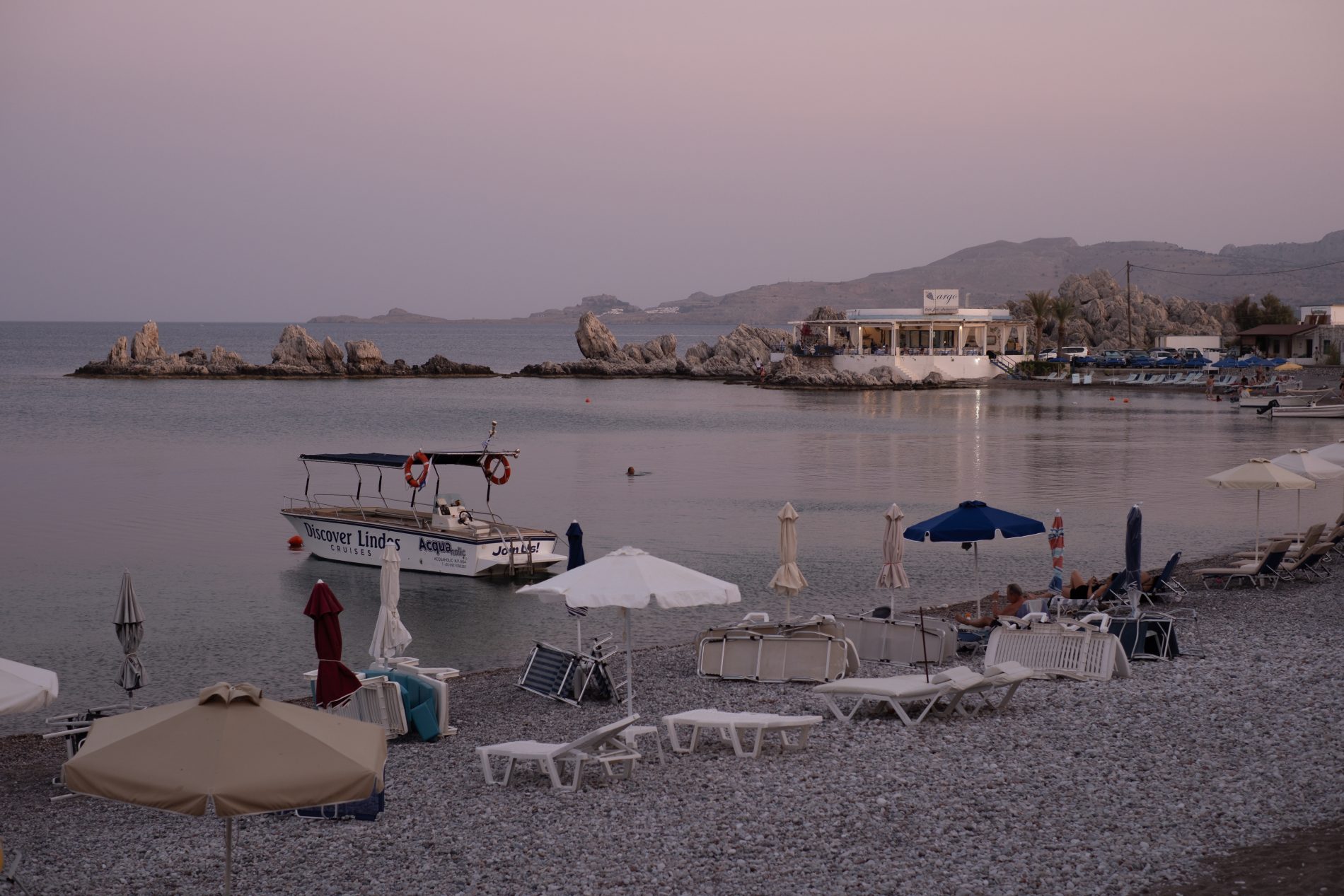
Tucked into a sheltered bay on Rhodes’ east coast, Charaki feels worlds away from the island’s busier resorts and, while I’m not a huge fan of this phrase, is the definition of a hidden gem. I booked a few days in this quiet, family-friendly village, not really knowing what to expect, and instantly knew it was the ideal place to spend a few days relaxing by the shore at a slow pace, spending my time reading books and swimming in the calm water.

Once a small fishing village, it has grown into a modest seaside escape that retains its slow rhythm of life. The curve of the horseshoe-shaped beach is framed by the looming ruins of Feraklos Castle, a medieval stronghold perched on the headland above, its weathered walls watching silently over the bay.
The beach itself is a mixture of sand and pebbles, lapped by still, shallow waters. Families settle here for the safety of the bay, while couples and older travellers come for the tranquillity. There are no loud clubs or sprawling resorts; instead, a seafront promenade lined with family-run tavernas and cafés that serve up generous portions of fresh fish and traditional Greek dishes. Here, the day often drifts from a swim to a shaded terrace meal: grilled sea bream, fried calamari, or a simple Greek salad, all while watching waves breaking gently on the shore just a few metres away.


Charaki is also a favourite with locals, particularly on weekends, when fishermen still moor their boats along the shore. In the evenings, the atmosphere is especially charming: children swim and play along the waterfront, while families gather in tavernas, and the castle above glows red in the setting sun.
For those wanting a little more variety, it’s only a short walk from Agathi Beach, a sandy bay with a more developed setup. However, Charaki’s appeal lies precisely in its unhurried simplicity. It’s a place to swim, eat, and rest, with not a lot else happening.
Facilities: Sunbeds and umbrellas are available for a reasonable price across the whole beach. Tavernas and cafés line the entire promenade, meaning there are plenty of options for food and drink. There is a fairly large car park close to the shore, so parking is never really an issue.
Best for: Families, thanks to the calm and shallow water. It’s also a rather romantic spot for couples looking for a peaceful base.
Tip: Stay into the evening for dinner along the seafront. I witnessed some of the most beautiful sunsets I have ever seen here; the castle ruins lit against the night sky are unforgettable.
Tsambika Beach
Halfway down Rhodes’ east coast, between the bustle of Faliraki and the charm of Lindos, lies Tsambika, a wide sweep of golden sand that seems almost purpose-built for long, lazy summer days. Backed by low, scrubby hills and stretching for nearly a kilometre, it is one of the island’s most popular beaches, yet its size ensures it never feels too overcrowded. From above, especially when viewed from the monastery that clings to the cliff high overhead, the beach curves like a golden ribbon against the turquoise sea.


The sand here is among the softest and most golden on the island, sloping gently into shallow, clear waters that are perfect for swimming and paddling. The atmosphere is easygoing, with a huge number of sunbeds and umbrellas available, plus plenty of beach bars, a supermarket, and cafés offering everything from traditional Greek plates to quick snacks and cold drinks.
Tsambika is also a hub for water sports. Pedalos and kayaks are available, while jet skis and banana boats add to the excitement. Those seeking more solitude can wander to the far ends, where the crowds thin and the sand feels a little emptier.


High above the beach sits the Holy Monastery of the Virgin Mary Tsambika (Kyra Psili), reached by climbing a steep and exhausting 300 steps. Dedicated to the Virgin Mary, it has long been a place of pilgrimage. Local legend tells that women struggling to conceive would climb barefoot to pray here. Today, it’s the ideal place to come for panoramic views over the coastline, which stretches as far as Lindos on a clear day.
Facilities: Sunbeds, umbrellas, showers, changing cabins, water-sports rentals, beach bars and tavernas. There is a large car park, but this can become full at the height of summer.
Tip: Visit in the early morning or late afternoon when the sand glows golden and the crowds are thinner; combine your visit with the short but steep climb up to Tsambika Monastery for a spectacular view.
Faliraki Beach
Despite being notorious as Rhodes’ party capital and the spot for neon-soaked nights of hedonism, the resort of Faliraki remains one of the island’s most versatile beach destinations, offering something for families, thrill-seekers and sun-seekers alike.
Its main beach stretches for nearly five kilometres, a broad sweep of soft sand lapped by the gentle Aegean. In summer, it’s buzzing with life, but there are quieter corners too, especially at the northern and southern ends, where the sands thin out.
Faliraki is the most fully equipped beach on the island. Rows of sunbeds and umbrellas stretch into the distance, cafés and tavernas line the promenade, and watersports of every kind are on offer. You can indulge in parasailing, banana boats, paddleboarding, and even scuba diving trips. Families are well catered for, with safe swimming areas and easy access to the nearby waterpark, while younger crowds gravitate to the beach clubs and cocktail bars that keep the energy high from afternoon until late in the evening.
Facilities: This is one of the most well-equipped beaches on the island. You’ll find extensive sunbeds, umbrellas, showers, cafés, tavernas, beach bars, and watersports centres.
Best for: While the resort may be most closely associated with the party-going 18-30s crowd, the beach is suitable for families, groups of friends, and travellers seeking a lively, well-equipped resort beach.
Tip: For more tranquillity, head to the far ends of the beach or to nearby Anthony Quinn Bay, which offers a more intimate setting.
Traganou Beach
Just north of the much more famous Anthony Quinn Bay, Traganou feels like its quieter, more rugged alternative. Stretching along Rhodes’ east coast, it’s a long, pebbly beach framed by striking limestone cliffs that are dotted with caves. It has an untamed character that sets it apart from the softer sands nearby.


At the northern end of the beach, the caves themselves form a dramatic backdrop. Some are shallow, perfect for cooling off in the shade during the heat of the day; others extend deeper and invite exploration.

Despite its wild appearance, Traganou offers a good balance of convenience and simplicity. One section of the beach is organised, with sunbeds, umbrellas and a couple of busy taverns dishing out ice-cold beers alongside fresh fish and grilled meats, while the rest of the beach remains blissfully unspoiled, leaving plenty of space for those who prefer to spread a towel on the pebbles.
Facilities: While sections of the beach have sunbeds, umbrellas, showers, and a well-regarded taverna, large areas remain unorganised.
Best for:A mix of wild scenery and light facilities.
Tip: Bring water shoes for walking across the pebbles
Lindos Beach (Megali Paralia)
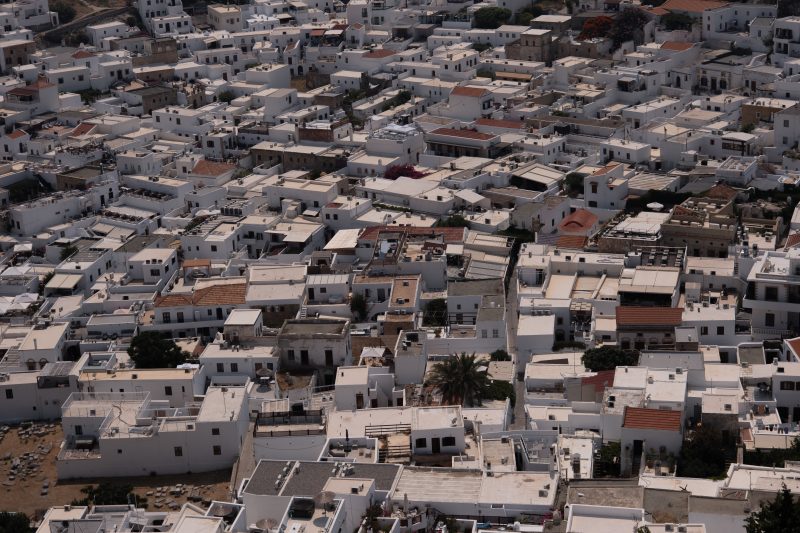
Few places in Rhodes capture the island’s essence quite like Lindos. The village itself is a labyrinth of whitewashed alleys, rooftop terraces and tiny chapels, all clustered beneath the mighty acropolis, a fortress encircling ancient temples and medieval walls.

At its peak, the Lindos Acropolis was a major religious centre, with a 4th-century BC temple dedicated to Athena standing proudly on the clifftop. Just below this tableau of history and architecture lies Megali Paralia, Lindos’ main beach: a wide, sandy bay sheltered by rocky headlands, creating a natural lagoon of still, turquoise water. The sand here is soft and fine, easy on bare feet, and the sea stays shallow for quite some distance, making it one of the safest swimming spots on the island.
Megali Paralia is fully set up for a day of relaxation. Neat rows of sunbeds and umbrellas line the shore, while tavernas with shaded terraces sit right on the sand, serving seafood platters, mezze and ice-cold frappés. Pedalos and small boats are available for hire, and a handful of operators run glass-bottom cruises along the coastline. Yet despite its popularity, it can feel as serene and timeless as the ruins that loom over it: fishing boats bob at anchor, donkeys sometimes clatter through the village above, and the acropolis keeps its eternal watch over the bay.
In the early evening, the sunlight turns the cliffs and ruins golden, and the Acropolis lights up as dusk falls, casting its glow across the water, making this the perfect place for a sunset dip.
Facilities: Sunbeds, umbrellas, showers, beach cafés and tavernas. There is some parking above the village (pay and display), but spaces are limited, and it is quite a long walk to the beach
Best for: A beach with a scenic, historic backdrop
Tip: For a quieter swim, head around the corner to St Paul’s Bay; a smaller, more intimate cove with spectacular views back to the Acropolis.
St. Paul's Bay
Tucked just south of Lindos, St Paul’s Bay is one of Rhodes’ most photogenic and storied coves. It’s a near-perfect horseshoe of turquoise water framed by craggy cliffs and a whitewashed chapel. According to local tradition, it was here in 51 AD that the Apostle Paul landed to preach Christianity, giving the bay its name and forever bestowing a sense of spiritual resonance on it.

Today, the bay is divided into two small beaches, one sandy and one pebbly, each with its own distinct character. The water is calm and sheltered, making it feel almost like a natural lagoon.
The landscape here is dramatic; Cliffs rise steeply around the water, creating an amphitheatre of stone that shields it from wind and waves. Nestled into the rocks is the tiny white chapel of Agios Pavlos, a favourite spot for local weddings and one of the island’s most photographed landmarks. Many visitors climb up the path above the chapel to capture sweeping views of Lindos village, its sugar-cube houses tumbling down the hillside beneath the great acropolis.


Despite its small size, St Paul’s Bay offers a handful of creature comforts. Sunbeds and umbrellas are available in both sections, but can be extortionately expensive, and a couple of beach bars serve drinks and light meals with views that stretch across the water. Still, despite being popular, the bay retains an intimate, tucked-away feel.
Facilities: There are sunbeds, loungers and cabanas available, but they can be very expensive, running at €50 to 70 each for the day. There is a fairly bougie beach bar sitting at one end of the bay and a basic drinks shack at the other. Toilets are available right beside the beach.
Best for: Those wanting to combine beach time with a visit to Lindos and its acropolis.
Tip:Arrive early morning or late afternoon for the most tranquil experience.
Agathi Beach
Close to the ruins of Feraklos Castle, Agathi is a golden-sand beach with a friendly, laid-back atmosphere. The shallow, clear water makes it ideal for children, while the small tavernas directly on the sand offer simple Greek dishes such as souvlaki and grilled fish. Facilities are limited compared with larger resorts, but that’s part of its charm. It’s best reached by car, with parking available just behind the beach.
Facilities: Sunbeds, umbrellas, showers and several small tavernas right on the sand.
Best for: Those looking for a relaxed, sandy bay with a low-key, local feel.
Tip: Come early in summer, as the beach fills quickly. Combine your visit with a short walk up to Feraklos Castle or a trip to nearby Charaki.
Elli Beach
For those wanting a beach experience without leaving the island’s capital, then Elli beach is the perfect compromise. At the very tip of Rhodes Town, where the island narrows into a slender point between the Aegean and the Mediterranean, Elli Beach curves around in a neat arc of shingle. This isn’t a remote and peaceful cove or rustic bay but a city beach with a bustling, cosmopolitan air. Its main draw is that it is close to the urban centre, with a lively promenade, vibrant cafés, and an abundance of upmarket beach clubs.


The beach itself is broad, with fine pebbles at the shoreline giving way to sandier patches. Its waters are unusually deep close to shore, making it especially appealing for confident swimmers and snorkellers. A line of bright umbrellas and sunbeds runs the length of the curve, while stylish beach bars spill onto the sand, serving cocktails and light bites. At its centre stands a tall diving platform, a local landmark where teenagers and seasoned swimmers launch themselves into the sea, which is a spectacle worth watching.
Elli has long been associated with the island’s cosmopolitan heyday. In the early 20th century, under Italian rule, Rhodes was a fashionable destination for the European elite, and the elegant art deco buildings just behind the beach, such as the towering Casino and the Aquarium, reflect that heritage. Today, the area still feels lively. It’s a place where tourists and locals mingle and move easily from the loungers to the cafés of Rhodes Town just a few steps away.
Facilities: You’ll find a full range of facilities, such as sunbeds, umbrellas, showers, changing cabins, cafés, and a huge variety of beach clubs, some more exclusive than others
Best for: Travellers wanting a city beach with atmosphere and nightlife nearby.
Tip: Aim to get a sunbathing spot close to the diving platform for a splash of local tradition
Map of Rhodes' Best Beaches
Whether you’re after water sports, history, or pure relaxation, this list should have something for you. For travel-planning ease, here’s a map of every beach mentioned above.
Using this map: This map shows the island’s best beaches (Green icons). The list can be seen and filtered by toggling the icon on the top left-hand side of the map, and each location can be explored further by clicking it. Expand the map by clicking the icon on the top right-hand side.
Getting to Rhodes
There are regular international flights arriving at Rhodes International Airport (Diagoras), located around 14km from Rhodes Town. During the summer season, the airport is served by the majority of the UK’s main airports, as well as numerous direct flights from major European cities. Year-round connections are also available via Athens. Alternatively, ferries connect Rhodes to Piraeus (Athens’ port) and several nearby islands, offering a scenic and slower-paced, way to travel.
Getting Around Rhodes
Getting around Rhodes is relatively easy, with buses being the main form of public transport. There are two companies covering the island: RODA operates routes in the north (serving Rhodes Town, Ixia, and Faliraki), while KTEL runs services to the south (serving Lindos, Pefkos, and Prasonisi). Expect to pay around €2 to €6 each way, depending on the distance. Be aware that schedules can be irregular, especially on weekends or during off-peak months.
Taxis are widely available in towns and can be hailed at taxi ranks or booked by phone. While taxis are usually metered, longer journeys, such as from Rhodes Town to Lindos, will have a fixed price, so it’s worth confirming the fare before setting off.
In Rhodes Town, much of the historic Old Town is pedestrianised, making it best explored on foot. For short hops along the coast, boat taxis connect popular beach resorts in summer, offering a scenic alternative to the roads.
I found that the best way to explore the island was to rent my own hire car, which allowed me a greater freedom without relying on public transport. Discover Cars are a great company to use for this as they allow you to compare multiple providers before booking.