In Cornwall, you are never far from the coast. In a way, the sea is intrinsically linked to the Cornish character. All of the local legends burned deep in the county’s collective memory have a nautical theme, drawing on tales of pirates, smugglers and mermaids, but this fearsome folklore has done nothing to dissuade the Cornish from their turquoise-coloured waters; Here, it seems that almost everyone surfs or swims.
Since the dawn of the railway people have flocked to the coast to experience the benefits of the healing sea air and the restorative power of saltwater. In Cornwall, this is easier than anywhere else. While wild swimming groups are growing in popularity, the invigorating endorphin rush gained from an ice-cold plunge is just as easy to achieve solo thanks to the many tidal pools that are dotted around the Cornish coastline.


The sea can be changeable and challenging for anyone but the most experienced open water swimmer and tidal pools offer the opportunity to connect with nature in a relatively safe, enclosed environment without the worry of currents and crashing waves. The majority of these Cornish tidal pools are relatively recent, dating back to the early part of last century – before the widespread availability of indoor swimming pools – and were blasted out of the rock by miners using their explosives. Very little is known about the history of the pools and due to the fact that they are often indistinguishable from naturally occurring rock pools it’s unknown just how many are man-made structures.
Over multiple trips to Cornwall across a number of years, I’ve visited many of this wonderous swimming holes. Some of them are simple bathing spots made by walling natural rock pools while others are extravagant lidos complete with cafes, art deco terraces and lifeguards. The common factor is that they are all fed by the sea and refreshed by rising tides. Here are some of my favourites.
Chapel Rock, Perranporth
Tucked between the Rugged headlands and dramatic cliffs of St. Agnes and the surfing haven of Newquay, the low-key seaside town of Perranporth is under-the-radar in comparison to its bustling neighbours. However, the town deserves a little more recognition; the high street jammed with independants, seafront dining spots serving freshly caught fish, and beachside bars are enough to entice even the most beach-fearing landlubber.
Despite the town pushing all the way to the sand’s edge, the beach manages to retain a rough, untamed appeal. At low tide, the receding water reveals an enormous expanse of sand surrounded by eerie caves, dramatic rock arches, and sweeping dunes, that connect to nearby Penhale Sands to form one of Cornwall’s largest beaches.

It is on one of these protuberant geological formations that you will find Perranporth’s small, natural swimming pool. The size of the pool makes it easy to miss, hidden as it is amongst the rock pools and crags of Chapel Rock – notable for the huge flag of St Piran swaying atop of it – that stands in the middle of the 3km long beach. This is one of the county’s most accessible and safest tidal pools to swim in at low tides, meaning it is often packed with families unless visited in the early morning. The pool is replenished with seawater twice a day, but make sure to time your visit right as Chapel Rock becomes an island at high tide.
Bude Sea Pool
Possibly Cornwall’s most famous and popular tidal pool, this semi-natural bathing spot on Bude’s Summerleaze beach was constructed in the 1930s by a wealthy local to provide a safe environment to swim near the rough north coast sea following a death on the beach the previous year.
At 91m long and 45m wide, it’s the region’s largest pool and comes into its own during wind-swept days when swimming in the sea is too risky and the Atlantic waves whip against the pool’s sides.
Due to funding being withdrawn by local authorities a decade ago, the pool is now run by the Friends Of Bude Sea Pool Charity who used any money raised to restore and maintain the pool.
Mousehole Rock Pool
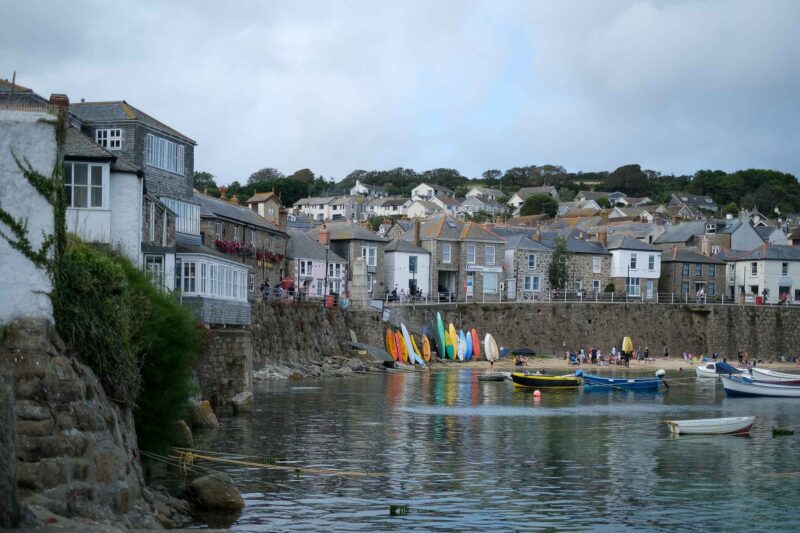
Amongst the sandy coves and beautifully precipitous cliff faces of the West Penwith coastline, hidden within the twisting nooks and crannies of Southwest Cornwall’s edges, are scores of picturesque, traditional coastal villages of which Mousehole – pronounced ‘mau-zul’ by locals – is one of the prettiest.
Once described by the poet Dylan Thomas as “the loveliest village in England”, Mousehole is no longer the quiet fisherman’s hamlet that it was when he hooneymooned here with Caitlin Macnamara in 1937 and now many of the whitewashed cottages that line the cobbled lanes are packed with holidaymakers throughout the year and the harbour rings with the sound of splashing children and teens leaping from the harbour walls on balmy summer days.


Chapel Pool, Polperro
Porthtowan Tidal Pool


Treyarnon Bay Tidal Pool
Along the coastal bath between Constantine Bay and Treyarnon Bay near Padstow sits a large, pool-sized natural lido hidden in the barnacle-speckled rocks. At 12-metres wide and almost 2m deep, it is big enough for swimming enthusiasts to practise front crawl technique or for a spot of rock-jumping.
Jubilee Pool, Penzance
The frigid waters of the Jubilee pool in Penzance have been delighting holiday makers since it opened in 1935 to celebrate King George V’s Silver Jubilee.
Sitting on the tip of Penzance’s ‘Holy Headland’, this Art Deco gem is one of the few saltwater, tidal, open-air swimming pools in the world. It has earned grade II listed status thanks to its graceful curves and fairly unique shape. The Pool was built upon Battery Rocks near Penzance Harbour, previously a traditional bathing spot, and was designed with a triangular shape to withstand the ferocity of Cornish storms and waves.
The pool itself is only re-filled with water (5 million litres of the stuff) during the high spring/summer tides which occur around once a fortnight.

The Jubilee pool fell into disrepair in the last few decades of the 20th century, eventually succumbing to storm damage 2014. Thankfully, the operation of the pool was taken over by Jubilee Pool Penzance Limited, a community run social enterprise in the form of a charitable Community Benefit Society. Repairs were made and £1.8m of funding was raised to allow year-round opening and the construction of a new geothermal pool which extracts warm water from a 410m deep geothermal well before re-injecting the cooler water back into the ground. It is the first of its kind in the UK.
Booking for the geothermal pool is essential but the colder, seawater pool usually has spaces available except during the summer holidays.
Tidal Pool Locations in Cornwall
See the map below for all of my favourite wild swimming spots and tidal pools in Cornwall, with a few extra thrown in for good measure.
Tide times vary for each beach so check a local tide timetable before venturing out, keeping in mind that a number of the pools listed here become inaccessible at high tide and will have no water in them when the tide is at its lowest.
A good rule of thumb is to arrive at the location around 2 hours before low tide which should give you good access to the pool and enough time to enjoy your swim before the sea level begins to rise again.