I often feel like Sheffield gets a short shrift when compared to other Northern cities. Graham Turner once described it as “a great city with an international reputation that is the capital of nowhere”. In a way, you can’t necessarily fault him for this quote; The northern part of the city was forged on industry, all warehouses, workshops and chimneystacks that blacked the buildings, earning Sheffield a nickname that has stuck to it like glue – The Steel City. To the south, the suburbs and parkland spread, blending the city seamlessly into Derbyshire and the gently picturesque hills and villages of the Peak District, which to me, someone who lives only an hour North, in Leeds, is practically the Midlands.
In a way, Sheffield has always been seen, even amongst fellow northerners, as slightly ‘other’ and fiercely individual. It could be down to the fact that the city was originally formed from a conglomerate of tiny towns and hamlets that sat clustered in a bowl of seven hills, before growing and merging when industry boomed.
So, what has Sheffield given the world? We should probably start with a big one – something that seems intrinsic to working-class life, and life in general in England; A national pastime and obsession; The Beautiful Game.
People may closely associate football with the behemoth clubs in Manchester and Liverpool. They may even think of Leeds and Newcastle before Sheffield’s own United and the oddly named Sheffield Wednesday, but not many know that without Sheffield, we may not even have professional football.
It was back in 1857 that sporting pioneers Sir Nathaniel Creswick and William Prest founded the world’s first football club, Sheffield FC. At the time, they didn’t have a pitch – they played at the local cricket club – and they didn’t have anyone to play against, so they passed the time with games of ‘married vs. singles’. However, it did give them a chance to come up with a set of rules for how the game should be played. They introduced the concept of the ball being allowed to be headed, added free kicks and corners, and devised the Rulebook of 1859, the official printed set of football laws and the foundation of the modern game as we know it today.


Luckily for them, a second team, Hallam FC, were founded not long after and opened their own football ground – another world’s first – which also led to the world’s first inter-city club game being played on Boxing Day of the same year.
My connection to the city is intrinsically linked to one of the modern clubs, Sheffield Wednesday. As a young child, my dad would often be gifted free tickets to Premier League games at Hillsborough, and we would spend our Saturday afternoons in the stands cheering on the likes of Chris Waddle, Mark Bright and Des Walker. These first experiences of the thrill of matchday left a lasting impression, and I would spend the best part of a decade donning the blue and white strips of The Owls, rather than the black and Amber ones of my home town club, Hull City, until I finally saw sense and switched allegiances.
Sheffield FC still exist, and is recognised by FIFA as the oldest existing club still playing football in the world today. They’ve since moved on from borrowing cricket pitches, and you can catch their games at The Home of Football Stadium on the outskirts of the city.

Even when it comes to music heritage, thoughts understandably lean towards Manchester and Liverpool once again. After all, Merseyside produced the Beatles and the Mersybeat boom of the 1960s, something they have been clinging on to for six decades. Manchester’s contributions are a little more recent, with Oasis dominating much of 1990s britpop and before that, the city, specifically the music scene around the Hacienda nightclub, spawned the Madchester bands of the Stone Roses, Happy Mondays and Inspiral Carpets as well as the drug-fuelled Acid House scene that precided it.
However, we shouldn’t overlook Sheffield’s industrious contributions to pop and rock music. It is a city that has produced two of the world’s most well known Cockers, Joe and Jarvis. While very different, both managed to capture the city’s working class voices and set them to music for the world to hear. During the indie boom of the early 00s, it gave us The Long Blondes, Slow Club, Little Man Tate, Richard Hawley, Miles Kane and most notably, the Arctic Monkeys, who grew to superstardom thanks tot heir witty, wry and occasionally punkish take on modern Britain and modern Sheffield, as viewed from the dancefloor of a local indie disco. More recently, local Metalcore act Bring Me the Horizon have grown to become one of the biggest bands in the country, headlining enormous festivals such as Download and Reading & Leeds.


Despite all of this, it’s electronic music that is most closely associated with Sheffield. It may be something to do with the relentless hum and clanking of the city’s workshops and inhuman foundries, but an impressive list of bands, artists and labels have emerged: The Human League, Heaven 17, Soft Cell, Moloko, and Warp Records, just to name a few.
It’s another way I feel an affinity with Sheffield, dancing away my youth in the city’s clubs and gig venues. One of the first gigs I ever went to, at least outside of my hometime, was at Sheffield’s iconic Leadmill, a venue that was essential in giving a springboard to up-and-coming bands on their way to stardom and is now, unfortunately, staring down the barrel of closure. During my university years, I would spend nights at Corporation, drinking too many questionable cocktails and dancing to emo and metal bangers with my friends. On the electronic music front, I’d drive over to the city with my housemates to attend DnB or Trance raves wherever we could find them. Despite living in Leeds, Sheffield’s music scene was a beacon that called to and drew us down the M1.

Through these cultural cornerstones, Sheffield holds a special place in the country’s and the north’s cultural and working-class identity. However, these aren’t how the city made a name for itself – Sheffield grew rich on coal and steel. It was once one of the centres of Britain’s Industrial Revolution, and by the 19th century, the city was a soot-covered cacophony of forge-hammers, steam engines and steel presses. Cutlery and tools stamped “Sheffield” were sent across the globe from these very streets.
Although the smog has dissipated and the forges appear to have fallen silent, Sheffield still produces steel today, and actually produces more than it ever has in history. The ‘Made in Sheffield’ mark still holds some sway.
However, wandering the city centre, you wouldn’t know it. Walk these streets, and the skies are no longer streaked with fire and the buildings are no longer blackened; instead, the facades are covered in murals and street art. The foundries hiss to the sound of espresso machines rather than smoke, and workshops have been replaced with independent shopping and dining spots.


Modern Sheffield is a city that has undergone a slow reinvention and is one of those rare cases where it has managed to retain some of its grit, not completely succumbing to the bland, cookie-cutter gentrification of other urban centres, while becoming a modern, forward-thinking place to live and visit.
Some of this has been done with the complete rejuvenation of former industrial spaces. Areas such as Kelham Island & Neepsend, once the centre of industry, have had their factories and warehouses transformed into food halls, workspaces, living spaces and in one case, a fantastic indoor skate park.
Otherwise, it has shifted its image by embracing open, green spaces. While the city may once have been a place of chimney stacks and cooling towers, now, an enormous 61% of it is made up of parks, woodlands and gardens, including one-third of the Peak District National Park.

There are approximately 4.5 million trees across the city, with Sheffield’s tree population far outnumbering its human one of just more than 550,000, with more trees per person than any other city in Europe and one of the reasons Sheffield was named the ‘Greenest City in the UK’ and the second greenest in Europe, after Oslo. Walking trails weave through the city and out into the hills, while rivers and nature reserves offer quiet escapes just minutes from the centre.
That isn’t even taking into account Sheffield’s eco-credentials, ranking highly on several criteria, including green energy production as well as its goal of becoming a net-zero carbon city by 2050.

So, despite Sheffield’s industrial grit, or maybe because of it, the city has grown to become one of the UK’s most interesting and exciting city break destinations, albeit one that is often criminally overlooked. Combining the rugged edges of the Peak District and South Yorkshire’s industrial past, Sheffield is full of surprises. Once defined by steel, today it blends creativity, green space, and a thriving independent scene while retaining its fascinating history and heritage.
From historic pubs and modern galleries to leafy trails and buzzing food halls, Sheffield makes for an ideal weekend escape.
Getting to Sheffield
Sheffield is well-connected and easy to reach, whether you’re travelling from within the UK or arriving from abroad.
By Train
Sheffield’s central railway station sits on the main line between London and the north, offering direct services from major cities including London (around 2 hours), Manchester, Leeds, Birmingham, and Edinburgh. The station is in the city centre and just a short walk from the majority of Sheffield’s main sights.
By Car
If you’re driving, Sheffield is conveniently located just off the M1 motorway (junctions 33 and 34), making it straightforward to access from the north and south. The city has plenty of car parks, though central traffic can be busy during peak hours, so plan ahead if you’re arriving during rush hour.
By Coach or Bus
National Express and Megabus offer regular services to Sheffield from cities across the UK, including London, Manchester, and Birmingham. Coaches arrive at the Sheffield Interchange, right in the heart of the city, within easy walking distance of shops, hotels, and attractions.
By Air
The nearest major airport is Manchester Airport, about 1 hour and 20 minutes away by train or car (there is both a bus and train station at the airport that offer routes to Sheffield). Other nearby options include East Midlands Airport and Leeds Bradford Airport.
Getting Around
Getting around Sheffield is relatively easy as the city centre is fairly compact and easily walkable. If you’re planning a full day of sightseeing or hopping between neighbourhoods, the city boasts an efficient and well-connected public transport system that makes exploring stress-free.
The extensive Sheffield Supertram is probably the most effective form of travel. With four colour-coded lines covering the city centre, Meadowhall Shopping Centre, the University of Sheffield, and even the suburbs, the tram offers a clean, fast, and scenic way to travel. Services run regularly throughout the day and evening, with simple ticketing and contactless payment options available.
Where to Stay in Sheffield
If you just have a short time in Sheffield, the city centre makes an ideal base. Not only is it walkable and well-connected, you will also find that it is brimming with restaurants, bars and cultural highlights with the added advantage that you are never far from most of the main attractions.
However, some of the city’s most memorable stays lie just beyond, in leafy suburbs and characterful neighbourhoods where you’ll find everything from design-led apartments to welcoming guesthouses. Whether you’re here for a weekend of urban exploration or looking to soak up the slower pace of Sheffield’s outer districts, there’s a stay to suit every style. Here are a few of the best hotels in the city.
Mercure Sheffield St Paul's Hotel & Spa
Where: 119 Norfolk St, Sheffield City Centre
Best for: Central luxury and spa indulgence
This upscale hotel sits right in the heart of the city, next to the Peace Gardens and Winter Garden. Expect stylish, spacious rooms with floor-to-ceiling windows, a serene on-site spa with an indoor pool, sauna, and steam room, plus a modern British restaurant. Ideal for both business travelers and couples looking to unwind in the city centre.
The Leopold Hotel
Where: 2 Leopold St, Sheffield City Centre
Best for: Boutique charm in a historic building
Brocco on the Park
Where: Centro Storico
Best for: A leafy location and foodie stay
On a quiet stretch of road facing the trees of Endcliffe Park, Brocco on the Park blends the sensibilities of Scandinavian design with a slice of Yorkshire. Housed in a century-old Edwardian villa, its eight individually designed rooms are named after birds – The Robin’s Nest, The Owl’s Burrow – with each one being a serene cocoon of soft greys, warm woods, and thoughtfully curated details, from cloud-like beds to handmade ceramics.
What makes Brocco stand apart from sheffield’s other hotels is its on-site restaurant, Brocco Kitchen, a neighbourhood favourite that draws both locals and travellers. The menu champions seasonal, locally sourced ingredients with a menu featuring such delights as slow-roasted lamb shoulder, wild mushrooms on toasted rye, and heritage carrots glazed with cumin and honey. There’s a Mediterranean undercurrent to many dishes, and a focus on ‘feel good’ food that doesn’t skimp on indulgence. For vegetarian and vegan diners, the meat-free options are genuinely inventive, not afterthoughts, and the brunches have become something of a Sheffield institution.
A Sheffield Weekend Itinerary
Friday Afternoon
Arriving in Sheffield by train is part of the experience. The route from Manchester, or even from London, snakes through thickening woods and rising hills until the city gradually emerges in an amphitheatre of stone and brick surrounded by green hills.
It’s a nice welcome. The modern steel sculpture that greets you in Sheaf Square as you emerge from the station perfectly represents the city’s dual identity, one of heritage and innovation. A collaboration between the Sheffield design team, Si Applied, and international glass artist Keiko Mukaide, Cutting Edge cuts across the square in a 300m long wall of striking stainless steel and water as a nod to Sheffield’s role as the place where stainless steel was invented and commemorates the tradition of small-scale, highly skilled craft cutlers that still operate here today.

If you have a few moments to kill before stepping out of the station into Sheffield city centre, then make a beeline for the Sheffield Tap. There’s something quietly romantic about drinking in a railway station. Maybe it’s the contrast between the clatter of arrivals and the stillness of a well-poured pint. Or perhaps it’s the sense of transience: a place where time slows down just long enough for a sip. In Britain, some of the finest pubs have found unlikely sanctuary in these liminal spaces and among them, The Sheffield Tap is nothing short of a masterpiece. It is, without question, one of the most beautiful station pubs in the country.
Thanks to a painstaking restoration in 2009, stepping into The Sheffield Tap is like stepping back into Edwardian opulence. The walls are draped in deep mahogany and marble, original mirrors stretch up to the high, corniced ceilings, and rich brass fittings gleam behind the bar. It is a wonderful celebration of Sheffield’s beer heritage.
While the setting may be grand, the beer is the star. The bar here is long, gleaming, and lined with more than 20 taps, both cask and keg, carefully curated to satisfy both traditionalists and modern hop-lovers.


Once you have dropped off your luggage and settled into the city, it’s time to get out of the centre and explore the south of Sheffield, in particular, the cool, Indie scene in Abbeydale Road & Nether Edge, also known as Sheffield’s antiques quarter. Although the area gets its nickname from retro stores like Sheffield Antiques Centre, Sheffield Antiques Emporium and Heeley Bank Antiques Centre, it’s also home to some fantastic and quirky independent bars, cafes and restaurants.
Until recently, I would have suggested the Picture House Social as the ideal place to stop for food and a few drinks. Occupying the old Abbeydale Picture House, this was a cool setting for a combination bar, food hall, venue, and shuffleboard place, but sadly, it had to close its doors for the last time in early 2025.
Thankfully, the neighbourhood plays host to some fantastic food and drink spots, so take your pick from those listed below:
Forge Bakehouse
If you arrive early in the afternoon (they close at 3pm), then a trip to Forge Bakehouse is a must. Serving delicious cakes, pastries and coffee to the people of this area since 2012, they have since expanded to Beauchief, Lodge Moor and even within Sheffield Station. Still, the original site remains and is worth a visit if you need a quick caffeine and sugar hit.
Bench
Head a little deeper into Netheredge and you’ll find Bench, a stylish neighbourhood bistro with relaxed, communal dining. They serve beautifully plated, seasonal dishes – think cured chalkstream trout with salted kohlrabi, grapefruit & roe or yeast-glazed celeriac with kale & green peppercorn sauce, alongside an excellent selection of cocktails and natural wines.
Nether Edge Pizza Co.
Pizza is always a good option for a relaxed dinner, and Nether Edge Pizza Co. have won awards for their wood-fired pizza and signature toppings.
Two Thirds
Launched in 2019, Two Thirds is now one of the city’s most beloved beer haunts, previously being named the No. 1 bar in Sheffield. The bar boasts 18 rotating lines, often featuring standout pours from the UK’s most progressive breweries, and outside, a leafy terrace buzzes on summer evenings.
Dead Donkey
A great little community cocktail bar, Dead Donkey’s tag line is “Good Shit in Nether Edge”. Which is fitting as the drinks are perfectly poured, and although they don’t have an extensive food menu, they do have a fantastic selection of sharing boards and bar snacks. The perfect spot to end your night.,
STYR
If tapas is more your thing, then Styr on Abbeydale Road brings a changing menu of tapas, small plates and pasta to your taste buds. Although you’ll find Spanish classics such as patatas bravas and albondigas, the menu is a mix of cuisines, so you are just as likely to be gorging on a plate of pasta, Argentinian steak or Italian arancini.
If there’s any space in Sheffield that exemplifies the city’s community spirit, then it’s Haggler’s Corner. Housed in a building that stood derelict for almost ten years on Queens Road, on the edge of the Antiques Quarter, Haggler’s corner started as a dream for two enterprising locals who, thanks to a family loan and help from friends of friends who provided upcycled furniture, fridges, decor, and even snooker tables they were able to refurbish the building and its units to create one of Sheffield’s coolest and most unique spaces.


Hagglers’ bar opens till late on Fridays and Saturdays, with great music from DJs alongside beers from local breweries and house cocktails. It hosts a pub quiz every third Wednesday, games night on the first Thursday of the month, plus the occasional live music, spoken word or comedy night. Corner Jammers are Haggler’s resident kitchen that serves incredible Middle Eastern-inspired food come evening time.
There are now 14 independent businesses in the building, ranging from hair salons and tattoo shops to haberdasheries and florists, all encircling a bohemian and ramshackle courtyard-cum-garden. I spent my evening in one such business, and one that has quickly become one of my favourite bars: Grub Records.


Opened in 2024, by a group of friends who have all been integral to Sheffield’s thriving music scene, running nights such as Apricot Ballroom, Groundwork, Mondo Radio, and Control, Grub is a hyper-cool record shop and neighbourhood wine bar. Alongside stocking the best new DJ-focused releases and second-hand stock from DJs all over the country, their stripped-back, minimalist bar serves an incredible selection of hand-picked, seasonal, low-intervention wines.
Many of the visiting DJs who are playing at club nights in the city are known to stop by for a free afternoon or early evening warm up set, so it’s quite easy to get drawn into the music here and while away a few too many hours listening to music, drinking wonderful wines, and chatting to the owners and their friends, much like I did.
Saturday Morning
If you spent a little too long sampling the bars of Abbeydale Road, there’s a chance that you’ll be waking up both late and slowly. If so, follow the scent of roasting coffee to Tamper, a Kiwi-run café tucked into former 19th-century silversmiths in Sheffield’s Cultural Industries Quarter. The breakfasts are all Australasian-inspired and its worth sampling their Try their corn fritters topped with housemade ricotta, eggs and hot honey. The coffee is exactingly made, and the vibe unhurried but cool.


Alternatively, start your morning at Marmadukes, a café with the warmth of a country kitchen and the precision of a Nordic bakery. It spills across three levels of a Georgian townhouse with window seats, floorboards rubbed smooth by boots and time, and the smell of cinnamon thick in the air. When I passed by in the late morning, the place was packed with the only seating space on the cobbled lane outside. Order a cardamom bun and a pour-over coffee to ease you into the day and keep you busy while you do a spot of people watching.
If it’s just coffee that you’re after, then you can’t go wrong with 2323 Coffee, just a few doors down on Norfolk Street. This stylish and modern speciality café has a rotating lineup of 3 to 4 roasts from top independent roasters. In a way, it’s like a wine bar, but for coffee. Perfect for coffee-savvy people who need a refined, no‑frills caffeine fix.


You’ll find some of Sheffield’s best galleries just a short walk away. Your cultural journey begins at the Millennium Gallery, Sheffield’s bright, contemporary space for art and design. The Museum houses two permanent exhibitions. The Sykes Gallery is home to the Metalwork Collection, which not only showcasies the city’s unique heritage, but is also one of the finest in the world, containing 13,000 items and thought to be the most extensive grouping of Sheffield-made cutlery, flatware (forks and spoons) and holloware (bowls, teapots, containers) in existence.
The highlight is the Ruskin Collection, a Victorian time capsule curated by polymath John Ruskin, who saw art, nature, and ethics as deeply entwined. There is a mix of minerals sparkling in glass cabinets, hand-drawn studies of leaves and birds that invite slow looking and watercolours and drawings Ruskin amassed and gifted to the people of Sheffield in the 1870s. In a way, it’s a philosopher’s scrapbook turned public gift.
Step next door into the Winter Garden, one of the largest urban greenhouses in Europe. It’s a small miracle: a curved cathedral of glass and timber filled with palms, ferns, and orchids from across the world. It’s a beautiful place to sit and get some respite from the bustle of the city centre while enjoying the warming sunlight that filters through the canopy.

To continue getting your art fix, head just across the street to the Graves Gallery. This gallery, situated above the Central Library, has been home to Sheffield’s visual art collection since 1934 and features works by notable artists such as Cezanne, Burne-Jones, Turner, Bridget Riley, Grayson Perry and Damien Hirst.
By now, you have probably worked up an appetite, and there’s no better place to satiate this than at Cambridge Street Collective. Located in the heart of Sheffield City Centre, this cavernous industrial venue is around 20,000 sq ft, making it Europe’s largest purpose-built food hall.


Design-wise, Cambridge Street Collective merges exposed brick, reclaimed materials and industrial steelwork in a way that feels distinctly Sheffield. The communal seating, rooftop bar and small cinema space make it a place to linger too.
Saturday Afternoon
A few steps away from Cambridge Street Collective, you’ll find Leah’s Yard. Originally constructed in the early 19th century, this Grade II listed building and courtyard once housed a collection of small industrial workshops, known locally as “little mesters,” who specialised in trades like horn dealing, knife manufacturing, and silver stamping.
After standing derelict for over two decades, Leah’s Yard has undergone a significant restoration as part of Sheffield City Council’s Heart of the City II project. Reopened in 2024, the complex now serves as a creative hub, housing a range of small independent shops, cafes, and businesses.


A highlight for me was Hop Hideout. a wonderful little beer bar tucked away in one of the small alleys that lead to the Yard. Founded in 2013 by local beer advocate Jules Gray, the bar began life as a pop-up in the city’s Antiques Quarter and quickly became a cornerstone of Sheffield’s craft renaissance. Today, it’s both a bottle shop and tap room, offering a meticulously curated selection of over 200 chilled beers in their fridges and a small selection of draught pours from cult UK producers and beyond. There’s also a strong showing of natural wines and farmhouse ciders.
Elsewhere you’ll find La Biblioteka book shop, Roots and Blooms florist, Gravel Pit houseplants and Mesters’ Market farm shop. Another must-visit is Chocolate Bar, a craft chocolate café operated by Sheffield’s acclaimed bean-to-bar chocolatiers, Bullion, offering an array of tempting sweet treats.


Heading out of the city centre, there are a few vital sights to see along the way. Make sure to stop off at the Peace Gardens. Given their name after the signing of the pre-Second World War Munich Agreement, this city square was first designed after the demolition of St Paul’s Church in 1938. In 1985, the name became official, and much later, in 2000, this inner-city sanctuary was overhauled as part of Sheffield’s Heart of the City redevelopment project. Here, you’ll find War memorials dedicated to Sheffielders who fought in worldwide battles.
Nearby, the town hall is worth a quick look, just to see its elegant entrance hall.
One thing that can’t be missed is Sheffield Cathedral. While not as grand or lavish as other places of worship dotted around Yorkshire, it’s the oldest building in the city and makes for an interesting diversion. It was granted Cathedral status in 1912, but the history of Christianity on this site goes back over 1000 years.


From the Cathedral, take a walk over to Kelham Island, once the industrial heart of the city. As the name suggests, this is a manmade island that was formed over 900 years ago when waterways were diverted to power a nearby mill. This area of Sheffield boomed in the early 1900s when it was at the very forefront of the Industrial Revolution.
Once the thumping heart of the city’s manufacturing and steelworking, this riverside quarter has re-emerged as one of the UK’s coolest neighbourhoods. In recent years, cooling towers have given way to cool bars serving local craft ales, while former factories have been transformed into food halls, live music venues, and cafes.
If you want to learn more about the history of this area, stop off at the Kelham Island Museum. First opened in 1982, the museum offers a comprehensive showcase of Sheffield’s rich industrial history. It’s a great place to visit for families, with interactive galleries showcasing how the art of steel-making established Sheffield as one of England’s main industrial cities and why ‘Made in Sheffield’ remains a mark of quality internationally.

A prime example of Kelham’s reinvention is found close to the museum. Little Kelham is a pioneering sustainable neighbourhood of modern townhouses and flats. It’s the first of its kind in Yorkshire. focused on promoting public transport use, clean energy and sustainable housing.
If you’re feeling peckish by this point, you’ll find Baker’s Yard in Little Kelham. This speciality coffee house and sustainable micro-bakery is run by Sam Lindsay and Becca Croft, whos delicious bakes are so good, that they have even gained the attention of the Good Food Guide who said “signature rum canelés are superb, as are the white chocolate, pistachio and lemon cookies, and the salted whey caramel and chocolate ganache tarts.” If you don’t have a sweet tooth, they also do a good range of savoury bakes, made fresh daily, which include pasties, flatbreads, sausage rolls and quiche.
By now, it is probably late afternoon, and you may need a pint. Luckily, Kelham Island is the place to be. While in Little Kelham, Hymn to Ninkasi is a good place to visit. Opened by brothers-in-law Andrew and Nathan in 2021, Hymn to Ninkasi takes its beer seriously. There are just a modest three taps, but they are meticulously curated, as is the fridge packed with cans from Sheffield’s finest breweries, as well as a wide selection of international brews and rare finds, from unfiltered Czech lagers, lambics, or small-batch German pilsners.


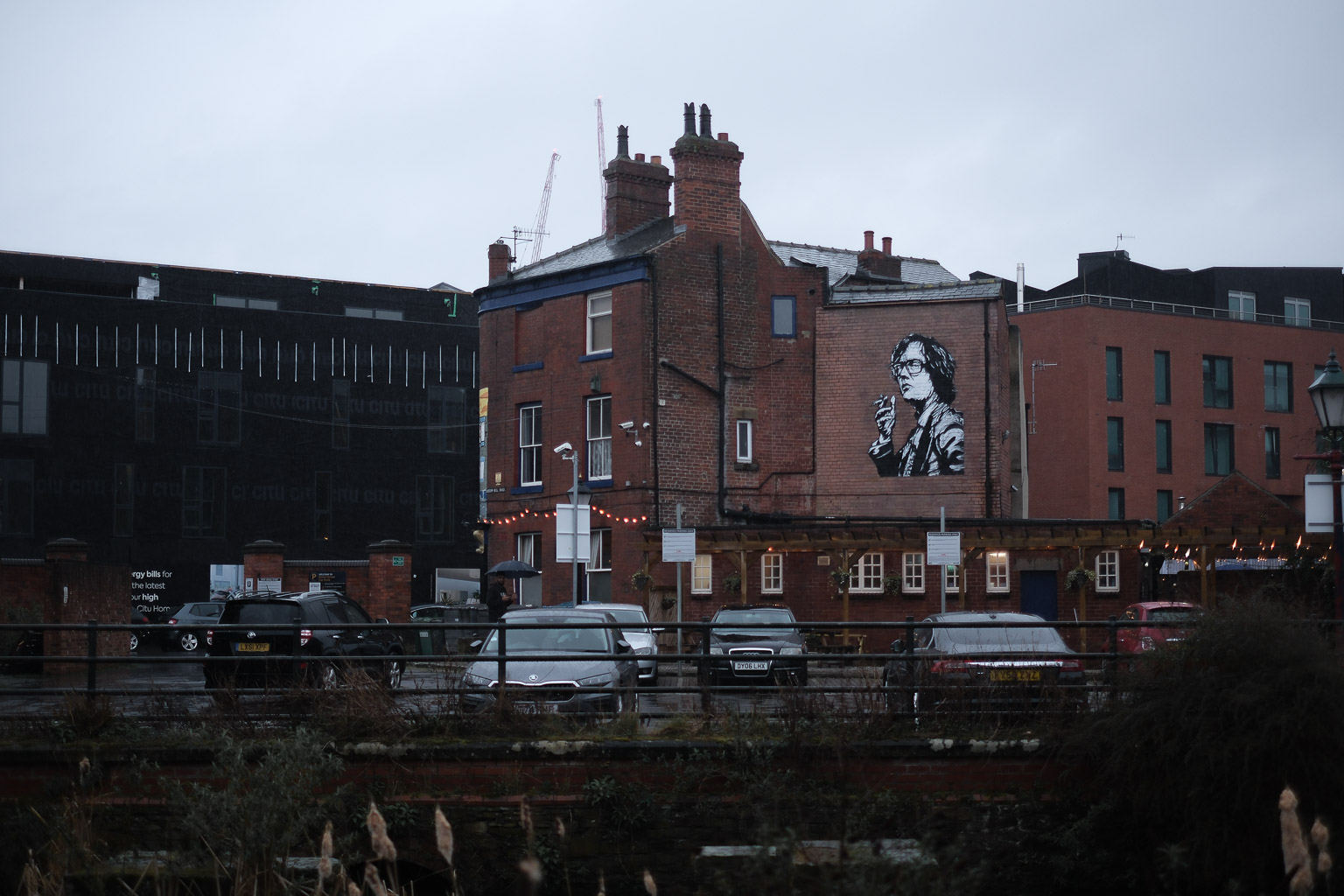
Those looking to take a deep dive into both the area’s beer heritage and its current brewing scene, the Kelham Island Beer Trail offers the perfect opportunity. It’s more than just a pub crawl; it’s a chance to explore the city’s working-class roots through its new craft culture.
Make sure to start at The Fat Cat, a modest, unassuming pub that sparked a quiet revolution in British brewing and is a cornerstone of Sheffield’s ale scene. Opened in 1981 and home to the now-legendary Kelham Island Brewery, this was ground zero for Sheffield’s ale renaissance. Pale Rider, its flagship brew, became a national favourite, taking home the title of Champion Beer of Britain in 2004.
Another must-visit is just a short amble away. The Kelham Island Tavern carries the torch of tradition with pride. With a wood-panelled bar and an ever-rotating lineup of real ales and innovative beers, this community pub has been named CAMRA’s National Pub of the Year twice.
Read More: A Craft Beer Guide to Sheffield


Across the water, you’ll find the equally rejuvenated and trendy area of Neepsend which blurs seamlessly into Kelham. I’m convinced that you could spend an entire weekend in Sheffield just exploring these two areas, such is the abundance of fantastic cafes, pubs, dining spots and shops. If indie shopping is your thing, then head towards Kelham Books & Music, Sheffield’s largest second-hand bookshop, or the Kelham Flea, an antiques and vintage emporium selling a huge range of goods from contemporary art to industrial salvage. Described as stocking “an eclectic mix of pre-loved treasures”.
If you’re lucky enough to be in Sheffield at the right time, then you’ll be able to take advantage of Peddler Market, which showcases the very best street food from across the UK on the first Friday & Saturday of every month.


First Launched in 2014 as a small gathering of vendors, it has since grown to be one of Sheffield’s most loved foodie events, filling a huge warehouse space on Burton Road that also plays host to all kinds of events throughout the year, from gigs, club nights and music festivals to crafts markets.
Thankfully, even if you’re not in the city on the correct dates to take advantage of Peddler Market, there are plenty of great food options in Kelham and Neepsend.
Neepsend Social
Feeling like you’ve walked into a stylised and minimalist version of Pheonix Nights, Neepsend social takes its inspiration from the working men’s clubs of the 70s, updating the concept for modern crowds and giving it a playful, cool twist. Yes, you’ll still find wood panelled walls, vinyl floors and dart boards, but the tap list is packed with drinks from some of Sheffield’s best breweries and I can tell you from experience that they do a fantastic Sunday roast.
Heist Brew Co.
What started as a cuckoo brewery now operates from a cavernous, arcade-filled taproom that feels more like Brooklyn than South Yorkshire. The taproom feels more like an adult playground than a brewery; Retro arcade machines line the walls, shuffleboards stretch down the centre, and there’s a fantastic street food kitchen on-site dishing out mouth-watering BBQ. It’s loud, lively, and unapologetically fun.

Cutlery Works
This former cutlery factory in has been transformed into a huge food hall that sprawls across two floors, featuring a mixture of permanent and semi-permanent unique and independent restaurants, communal dining spaces, bars and coffee roasters.You’ll find a good mix of cuisines from all over the world and, although I only stopped in to take a look rather than to eat, I’m reliably informed that Fuego 1987’s blend of Mexican-American street food is the place to go.
B’Reyt Dough
Not only a fun, Yorkshire-themed name, B’Reyt makes some of the best Neapolitan-style pizzas in the city. What started out as two friends operating as a mobile business now has a new home right next to Peddlers.
Church - Temple of Fun
Housed in a restored Victorian warehouse on the edge of the River Don, Church – Temple of Fun was founded by Bring Me the Horizon frontman Oli Sykes, who has created an eclectic space that Sheffield’s industrial heritage with a playful, gothic aesthetic full of stained glass, neon altars and retro arcade games. The bar and kitchen are both fully vegan, offering plant-based treats such as stacked burgers and loaded fries.
Depot Bakery
Established in 2014, Depot Bakery are an independent artisan bakery, cafe, and kitchen that occupies the same renovated, former industrial courtyard as B’Reyt and Peddler Market. The coffee is great, and it’s a wonderful spot to wind down with a sweet, freshly-baked treat.


If none of those tickle your fancy, head back to Little Kelham for dinner at Domo, a Sardinian restaurant run by a family who bring a slice of their island’s hospitality to South Yorkshire. The menu has everything you would expect: culurgiones with mint and pecorino, octopus salad, and crispy pane carasau. The interior glows with terracotta tones and candlelight. Outside, fairy lights string between old workshops, briefly giving this former industrial heartland a breezy, Mediterranean feel.
Finish the night at one of Kelham Island’s historic pubs, or if you’re up for something a little more lively, make your way to Piña. Housed in a former warehouse and inspired by the owner’s trip to Oaxaca and Mexico City in 2016, this place brings a slice of Mexican culture to Kelham. Make sure to sample a high-quality Mescal or two.
Sunday Morning
After a full day amid Sheffield’s busy city centre, spend Sunday morning escaping it amongst a little bit of nature and some quieter parts of town.
By 9am, head south of the city centre, down Bramall Lane, past Sheffield United’s iconic stadium of the same name, and take a seat at Lovely Rita’s Bakehouse, just a stone’s throw from the ground. This brightly coloured, 100% vegan bakery is an ideal place to sit and plan your day while supping a flat white and devouring an icing-covered pastry in their suntrap of a courtyard.

Feeling well-caffeinated and less hungry, it’s the perfect time for some retail therapy. Red Brick Market is just a short amble from Lovely Rita’s, and this converted, graffiti-covered warehouse space houses small stalls from over 100 local artists and makers. There are illustrations and prints, t-shirts, antiques, homeware and pieces of handmade jewellery, often with a distinctly Sheffield touch. Ideal for picking up a souvenir of your weekend in South Yorkshire.


Sheffield’s nickname of ‘the Steel City’ invokes images of factories, workshops and industrial grime. While this is true in some regard – despite many of the former industrial arrears being completely revamped with new businesses – it hides the fact that Sheffield is packed with green spaces. Not only does it border the stunning peak district, but the city itself is awash with open spaces, lush greenery and parks. In 2021 it was credited as being the UK’s greenest city as part of NatWest and the University of Southampton’s ‘Green Cities’ report., both in terms of parkland and sustainability.
A good way to experience this is by picking up another coffee and sipping it a short way from Bramall Lane in Endcliffe Park, watching joggers and dog walkers pass by. From here, it’s possible to follow the Porter Brook Trail, a green artery that leads from city to countryside. It’s a walk through microclimates: birch and beech, damp stone walls laced with moss, birds in the hedgerows. Eventually, you find yourself in Ringinglow, a hamlet on the edge of the Peak District National Park.

Rather than head for the Peaks, I started my Sunday with a casual walk to a different part of Porter Brook and one of Sheffield’s more underrated areas of open space. Sheffield’s General Cemetery was founded in 1836 as a response to the overcrowded graveyards of a rapidly industrialising city, the cemetery was designed not only as a resting place for the dead, but as a dignified retreat for the living. The last burial took place in the 70s and nowadays, as well as being Grade II listed for its exceptional historical and architectural interest, it is one of the country’s most atmospheric Victorian cemeteries; one where nature has slowly woven itself amongst the historical ruins.
Over 87,000 people are buried here, from steel barons and Chartist radicals to paupers and dissenters. Together, they form a layered portrait of the city’s social history. Meandering pathways wind through steep, terraced slopes shaded by sycamore trees. Along the way, you’ll find weathered obelisks, Grecian mausoleums, Ornate statues and the striking Nonconformist Chapel, now deconsecrated and sometimes used for exhibitions or tours. Although many of the names have faded, some are particularly notable, like Samuel Holberry, a Chartist agitator who died in prison, or Mark Firth, the philanthropic steel magnate who helped shape modern Sheffield.


Your convening with Nature continues with a 20-minute walk over to Sheffield’s Botanical Gardens. Spanning 19 acres of carefully sculpted landscapes, sweeping lawns, and glasshouse pavilions, the gardens offer another quiet escape.
Designed by the celebrated Victorian landscape gardener Robert Marnock, the gardens first opened in 1836 at the height of Sheffield’s industrial ascent. While the roar of furnaces continued in Kelham and soot blackened the rooftops, this was a peaceful retreat: a cultivated garden where Sheffield’s residents could stroll among exotic palms and medicinal herbs.
The centrepiece of the gardens are the glass pavilions. Restored to their original splendour, these glasshouses shelter over 2,500 species of plants, ranging from Himalayan rhododendrons to Australian wattles.

Another walk is in order. Slowly circling your way back to the city centre, take a detour to Weston Park and the excellent Weston Park Museum. The park itself is a gently sloping green, originally laid out in 1875 as one of Sheffield’s first designated public parks. Also designed by Robert Marnock – the same landscape gardener behind the Botanical Gardens – it was created as a place of education and well-being as much as leisure.
Bordering the park is Weston Park Museum, housed in a stately neoclassical building that once formed part of the 1875 Sheffield Exhibition. Inside, however, is something far more contemporary: a bold, inclusive museum that weaves together Sheffield’s past with its current creativity.
Renovated in 2006 and operated by Museums Sheffield, each gallery tells the story of different facets of the city’s history: from Bronze Age artefacts and Anglo-Saxon jewellery to Victorian kitchenware and contemporary protest banners. There’s a natural history section featuring a huge woolly mammoth (that kids are bound to love), and an art collection featuring works by Ruskin, Turner, and local luminaries. Perhaps most striking is how the museum engages with the diversity of modern Sheffield—through exhibitions on migration, industry, climate, and activism.
On my visit, there was a wonderful exhibition by local artist Pete Mckee, whose witty and wistful illustrations manage to capture the humour, heart, and quiet defiance of working-class life that not only feels distinctly Sheffield, but it is bound to resonate with people far beyond South Yorkshire (He also has a small gallery on shop in Leah’s Yard if you want to see more of his work).
Back in town by lunchtime, head to South Street Kitchen, a vegetarian café tucked into Park Hill. The space is sunlit and relaxed, while the food is fresh and full of Middle Eastern flavours. Order the falafel wrap or sabich flatbread, and linger on the terrace with a view over the station and valley beyond.


Park Hill itself deserves a little of your time. The brutalist giant looms over the city and was once a symbol of utopian post-war housing. Like many of its ilk, it fell into decay. Thankfully, like much of the city, it has undergone redevelopment and is now an icon of urban regeneration. Join a guided tour, or simply wander its maze of walkways and colour-blocked walls. Look out from the “streets in the sky” and see Sheffield below you: red rooftops, church spires, and winding trams. Make sure to admire the ‘I Love You Will U Marry Me’ graffiti that has become an iconic part of the estate.
If you have a little time to kill before catching your train home, have a short walk through the Devonshire Quarter. A hub of street art (including some by world-renowned local artist Phlegm) and student cafés, it’s a good spot to check out Sheffield’s independent spirit. Browse the racks at Bear Tree Records, where rare pressings sit alongside local bands on vinyl. At Sa-kis, you’ll discover Japanese and Scandinavian fashion finds. The fashion-conscious could spend hours browsing the racks in the vintage shops on both Devonshire Street and Division street, an area that was named the 2nd best in the country for independent outlets.


With that, it is probably time to go back to Sheffield’s Station and make your way home, not before a final pint in the Sheffield Tap. Despite a packed weekend, this itinerary only scratched the surface of what Sheffield has to offer. It may not be bestowed with as many plaudits or celebrated in the same manner as other Northern cities, but it has a certain magnetism.
Whether that is due to the contrast of industry and greenery, its quiet creativity that echoes out of galleries and music venues, or a confident friendliness that feels welcoming, open and isn’t found in many other big cities, it lingers with you.
It’s possibly that Sheffield doesn’t try to impress, which is why it leaves a lasting impression.