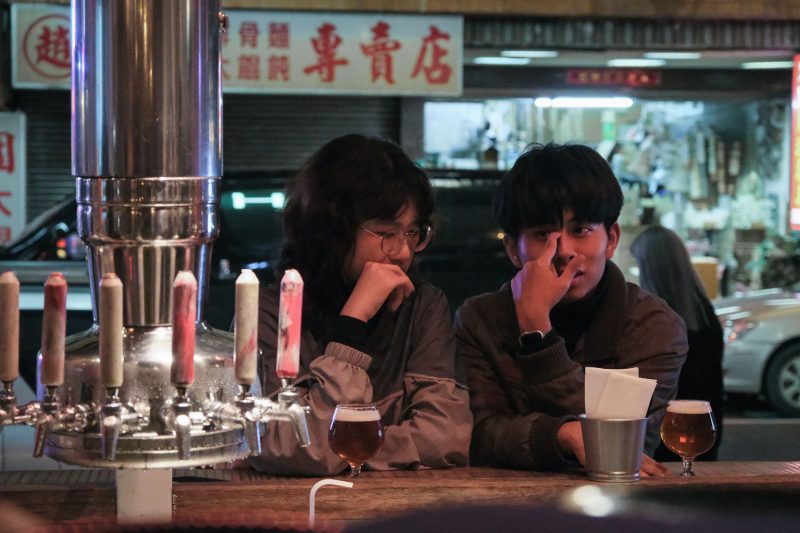
The smell hits me first. It’s intense and overwhelming, almost putrid. Clinging to the air, it curls its way into my nasal passages with every breath, sullying my olfactory nerves before sinking to the back of my throat where it seems to stick. Stubborn and unwelcome, it lingers there, firmly resolute in its intrusion.
If I didn’t know any better, I would suspect a localised sewerage leak or a collection of unemptied and overflowing bins at the roadside. There is no sign of either. I had been warned about the local delicacy of ‘stinky tofu’ before I had even arrived at Luodong’s night market and now I was experiencing the scent in all its glory. Like any good branding, the name sets out to describe exactly what the product is; tofu that is fermented in a brine of milk, vegetables, and occasionally seafood to give it a signature pungent smell. The longer the fermentation, the stronger the aroma. To me, the stench is unbearable but it’s somehow a a beloved street food here in Taiwan.


There’s still a pretence of daylight when I arrive but the night quickly encroaches. The growing darkness casts long shadows over the people that mill around on the street as lights flicker on. The fluorescent signs and neon lettering that climb the surrounding buildings gradually come to life as if to signal the start of the festivities. They illuminate the streets below in a kaleidoscopic rainbow of colour. The air is thick with grill smoke and the scent of hot oil mingles with that of cooking meat and the sweet aroma of sugary desserts. Each one a welcome relief from the intrusive smell of tofu.
Around the stalls, people move in steady waves, their voices rising and falling like the tide. The crowd undulates around sizzling hotplates and steaming bowls. Orderly queues form and dissipate. Families huddle around tables. Others slowly walk past each sign or menu, studying it intently to gauge whether this is the place to part with their hard-earned cash. There’s no rush – just the rhythm of the evening.

Luodong’s famed market may be one of Taiwan’s most popular and is widely considered to be amongst the nation’s best, but it is relatively young. Originating in the 90s, the local government’s primary goal in setting up the market was to attract visitors and boost the region’s economy.
While most night markets spring up around temples, they strategically placed this one in front of Luodong’s movie theater to provide moviegoers with convenient access to food. The concept was popular and the market expanded over the following decades. It now sprawls along the streets surrounding three sides of Luodong Zhongshan Park


I enter the market at the park’s edge and can instantly feel it pulse with energy. The street heaves, pressed in by stalls and bodies to create narrow passageways. On each side, canopies and kiosks are adorned with glowing lanterns and handwritten menus in elegant Chinese calligraphy.
The vendors worked fast, hands calloused, faces set.
Flames lick at the edges of skewers. Cleavers hit wood in a steady, unbroken rhythm. Somewhere, a motorbike sputters, weaving its way through the throng, the rider’s face blank as he slips past steaming pots and plastic tables.


The scents are intoxicating. Sharp, bitter herbs and the rich tang of meat seared over open flames. Something fermented, thick and strong, clings to the air. The wind shifts, and suddenly there’s sweetness; the faint, warm scent of sugar melting over a grill. It’s all there, mixing together, pressing down on the market like a heavy blanket.
It’s the sugary treats that attract me first; I buy a bag of small pancakes, perfectly shaped in the form of a small, chubby penguin. It’s a cute idea but not a particularly adventurous choice for my first taste of Taiwanese street food.
The next stall I come across is a little more challenging: Roasted duck necks are lying on the metal shelf in front of the vendor, blackened and charred with the head still intact. Various pieces of offal are grilled, skewered or wrapped around bundles of green onions ready to be deep-fried in bubbling vats of oil.
Yilan County, particularly Sanxing Township, is famous for producing these scallions. It’s said that the region’s cool climate, fertile soil, and abundant rainfall create the perfect growing conditions, producing a bounty with thick stalks, bright green color, and strong aroma. They’re a prized ingredient in Taiwanese cuisine. So many dishes sold at Luodong market highlight their distinct flavor, such as scallion pancakes, meat skewers and scallion dumplings. I work my way through the neon-lit streets and attempt to sample them all.


A man at a counter calls out. His hands move quickly, bagging food, passing it over, taking money and nodding once before turning to the next face. The aroma is difficult to bear. The pungency of stinky tofu is unmistakable, but for some reason it remains a popular staple at night markets and it’s a challenge that I can’t refuse.
Even through a heavy-handed garnish of the ubiquitous scallions, the smell comes through. For the uninitiated, this could be enough to put them off even entertaining the idea of lifting a spoonful towards their mouth, but the tang of fermentation isn’t as strong as I’m expecting. Still, it catches and lingers in the throat, making me gag and cough with my final bite at the market.
As I leave the crowd behind, the air cools and the lights dim. The sounds stretch thin. Behind, the night carries on; voices, smoke, footsteps on wet pavement. It will go on until the last pot cools, the last flame dies and the last plate of stinky tofu is consumed.


About Luodong Night Market
Luodong night market is considered to be one of Taiwan’s largest and most vibrant street food markets. First established in 1990 as part of a local government initiative to boost the area’s economy, it was strategically placed in front of Luodong’s movie theater so that it could provide moviegoers with convenient access to food. Over time it grew and expanded into the famous market that you see today.
It has now extended to the streets that surround Luodong Park and has been a key part of the local culture for decades, growing from a small gathering of street vendors into a bustling hub of food, shopping, and entertainment.
It operates daily from around 5pm until midnight.
how to get to Luodong Night Market
Luodong is the southernmost of Yilan County’s cluster of three main urban centers and is easily accessible from the other two, Jiaoxi and Yilan city. There are frequent, reliable bus services from Taipei to Yilan, departing from the Technology Building Station opposite the MRT on Fuxing South Road and arriving at Luodong transfer station which is found behind the railway station.
While many buses stop Jiaoxi and Yilan City before continuing to Luodong, direct routes are available. The journey can take anywhere between 45 and 90 minutes, depending on your chosen service. Tickets cost £3/4.
Check bus timetables and ticket availability here.
Train services are a little less frequent and more expensive. The rail journey takes between one and a half and 2 and a half hours.
From Luodong’s bus and train stations, it is around a 10-minute walk to the night market. Head west along Gongzheng Rd before turning left onto Xingdong Rd. After a few minutes of walking, you will reach the entrance to the market beside Luodong Zhongshan Park.
Must-Eat Food at Luodong Night Market
Luodong night market has dozens of stalls selling all manner of traditional Taiwanese street food dishes, fresh local produce, and specialties that are unique to Yilan county such as Sanxing scallion pancakes, angelica mutton soup, and peanut brittle ice cream wraps. This chance to get a taste for the region’s cuisine all in one spot makes it a popular destination for both locals and tourists looking to experience Taiwan’s cuisine.
I was lucky enough to have a local guide to advise me on the must-eat dishes, many of which I’ve listed and described here.
Angelica Mutton Soup
I was told multiple times that angelica mutton soup is a must-try when in Yilan County, and the crowds of people queuing around Uncle A-Zao’s Angelica Mutton Soup stand or huddled on tables at the streetside with steaming bowls of broth shows that it is particularly popular with the locals.
It’s a hearty and comforting dish that combines hunks of tender, slow-cooked mutton with medicinal Chinese angelica root (dang gui in Mandarin) and occasionally ginseng to create a warming and tasty soup.
Scallion Pancakes
Yilan County’s dedication to their famed scallions means that stalls throughout the market specialise in dishes based around these fragrant green onions. This includes different takes and variations on Taiwanese scallion cakes, a foodstuff that Yilan is particularly known for.
The classic take on this is a round and flat green onion pancakes with toppings such as egg and spicy sauce. I opted for one that was folded and filled with ham and cheese, which was absolutely delicious.
Other variations appear more like dumplings or pasties, where the cakes are stuffed with meat (often pork, although I did try one stuffed with fish), scallions, and vegetables before being deep fried to give a crispy outer crust.
One final type of green onion dish I spotted were green onion pies (congxianbing). Unlike the light and airy pancakes, these are made of denser, spiral-shaped dough and the only filling is green onions. I imagine there are a whole host of scallion-based treats that I missed while walking around the market, but these three seemed the most ubiquitous and are all worth sampling.
Ti-hoeh-koé (Pig's blood cake)
Ti-hoeh-koé, which roughly translates to ‘pig’s blood cake’ may look a little familiar to British eyes as it’s similar in appearance to black pudding. However, instead of being made from a concoction of blood, suet, cereals and herbs, this cake is made by boiling sticky rice in pigs blood until it forms a thick, cake-like block that is cut into smaller squares and fried for serving.
It’s not a particularly common snack with younger generations and I’m told for that reason, there aren’t a huge number of stalls selling it at night markets,which is a shame as it was one of the best things I tasted (although I will admit that I am a massive fan of black pudding despite it not being everyone’s cup of tea).
It’s the final preparation step that really sets ti-hoeh-koé apart from its blood sausage counterparts around the world. After frying, the block is dipped in a liquid that is somewhere between a tonkatsu sauce and pork soy broth before being sprinkled with a mix of chili power or chilli sauce, coriander, and a dusting of peanut powder, adding a complex mix of sweet and savoury that is heavenly on the tastebuds.
Stinky Tofu
If there is one dish that Luodong Night Market is known for that you must sample when visiting, it’s stinky tofu. Be warned though, this is not for the faint of heart as the smell lingers around the stalls and is enough to make you gag before you have even considered putting a spoonful of the stuff to your lips.
It’s a Taiwanese delicacy that combines the nation’s love of bold flavours with its passion for fermented foods. The overly pungent snack is often served with a side of pickled cabbage and a drizzle of garlic soy sauce or chili paste, creating a perfect balance of savory, sour, and spicy flavors. Mine was covered in mounds of chopped scallions which at least helped to mask the flavour a little.
It’s strong scent and noxious aftertaste make it a challenge for adventurous tourists, but it did seem to be popular amongst locals. However, stinky tofu is an essential part of the night market experience in Luodong and I feel like everyone that visits should at least give it a go. You never know, you may love it.
Dragon-phoenix rolls
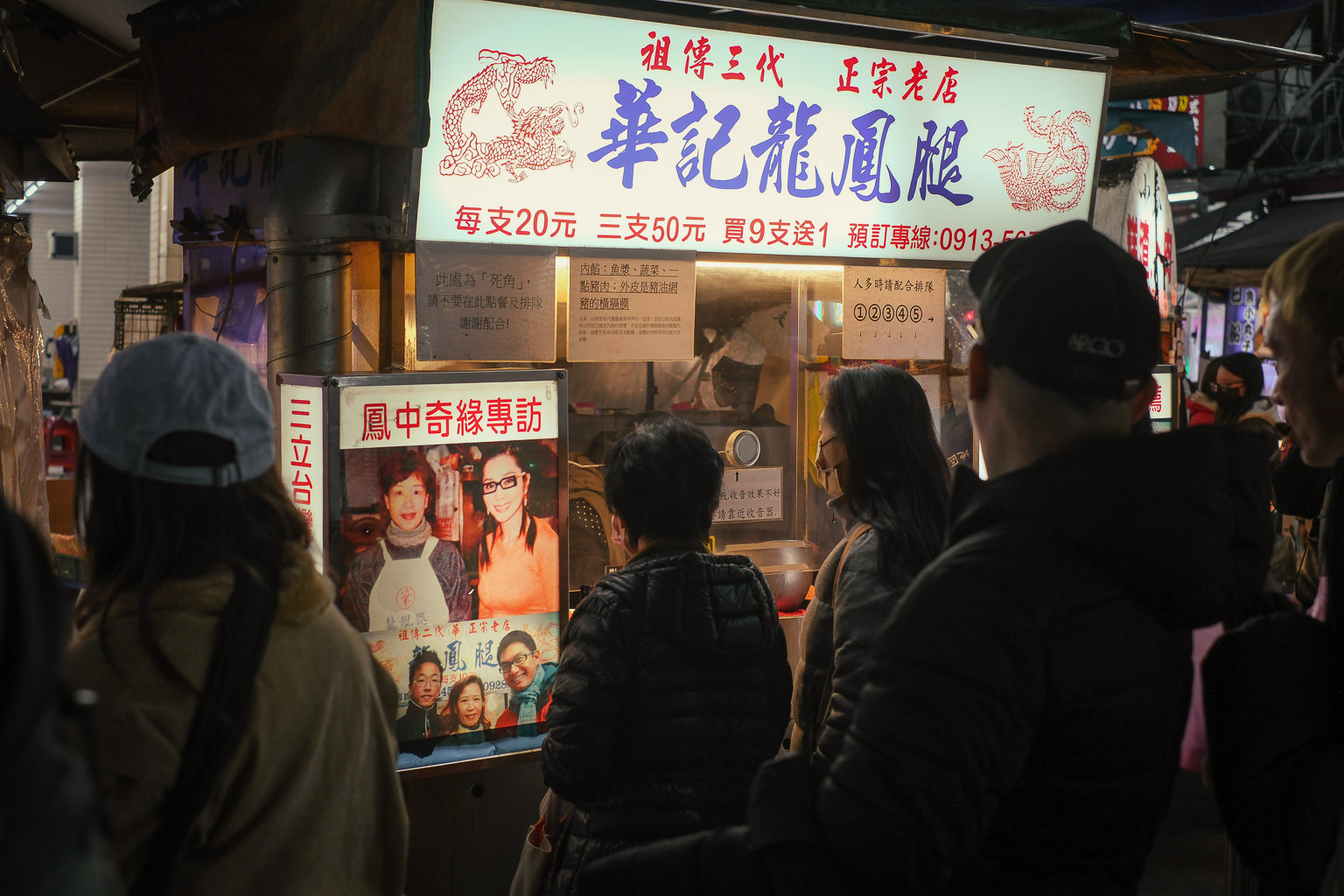
It’s said that dragon phoenix rolls (lóng fèng tuǐ, or 龍鳳腿 in Mandarin) have relatively humble beginnings. They originated in Taiwan’s coastal fishing villages and were considered a cheap snack in times of scarcity hen small amounts of pork, vegetables and fish paste could be combined to create a cost-effective filling to be stuffed inside pig intestines and fried. What you are left with is a sausage like concoction with a soft, savoury filling and a crisp outer layer.
They remain a popular dish at the country’s night markets but particularly so in Luodong, where I found stalls selling lóng fèng tuǐ throughout the market.
Stinky Tofu Fries
If you find the traditional stinky tofu a little difficult to stomach (and who could blame you?), then the modern take on this pungent, classic dish known locally as chòu shǔ tiáo (臭薯條) is much milder and more palatable for people that want to try stinky tofu but aren’t quite ready for the real deal.
This tofu fries variation is made by slicing the usual tofu block into thin strips which are then deep fried to achieve a crispy exterior and something that resembles chips. They’re often served with a cheesy or spicy sauce.
Scallion Meat Skewers
Although this isn’t a dish that was specifically recommended to me, I found stalls selling it throughout the market. With scallion meat skewers, known as 三星蔥肉串 or Sān Xīng cōng ròu chuàn, the omnipresent Sanxing green onions are wrapped in thin slices of tender, marinated pork before being cooked over a smokey grill.
Tapioca Dessert
It isn’t just savoury and meat dishes that are on offer at Luodong’s night market, there are a whole host of delicious Taiwanese sweet treats to be found too. Tapioca deserts are fairly common and one such speciality is heart tapioca (包心粉圓), in which translucent tapioca pearls are filled with sweet red bean paste and served over shaved ice to give a cooling and refreshing mouthful of chewy tapioca with a sweet interior.


Where to Stay in Yilan County
With good transport connections between Luodong, Yilan City and Jiaoxi, it is easy enough to stay in either of the two nearby cities and visit Luodong night market on a day trip. Both cities also make a great base for exploring the other attractions in Yilan county. However, if your only plan are to explore the night market, then it may be best to chose an overnight stay in Luodong.
I recommend a night or two in Jiaoxi so that you can enjoy the area’s natural hot springs, as well as the onsite thermal spas that are available in some of the more luxurious hotels.
Yilan City
Silks Palace Yilan
Only 10 minutes away from Yilan’ train station, Silk’s Palace is a luxurious hotel at the heart of the city. It is worth visiting for their Red Lantern restaurant alone; a dining spot renowned for its speciality of Cherry Valley roasted duck cuisine, in which the duck is carved tableside and served in a variety of ways.
Jiaoxi
Hotel Pin
Jiaoxi is one of the most renowned hot spring destinations in northern Taiwan and Hotel PIN, in the centre of the city, offers a great outdoor hot spring spa facilities. I stayed here during my first night in Jiaoxi and was particularly impressed with the hotel’s eco-friendly credentials and dedication to sustainability, such as not providing disposable amenities and replacing bottled water with sparkling water dispensers. The rooms are clean, comfortable and come with their own hot spring heated onsens.
Jiaoxi
Wellspring by Silks
My second night in Jiaoxi was spent at the luxurious and stylish Wellspring by Silks. With a rooftop pool overlooking the bustling city centre and contemporary rooms each connected to an exterior full of greenery and a large hot spring bathtub, this hotel creates a tranquil and soothing atmosphere away from the busy streets outside.
Luodong
Artch Inn
If you plan on staying in Luodong, the Artch Inn is a good budget choice. Although this small hotel is relatively basic compared to other hotels listed here, it has the benefit of being just steps from the night market.
I visited Luodong as a guest of the Taiwan Tourism Administration and Traverse. However, all views expressed are my own.