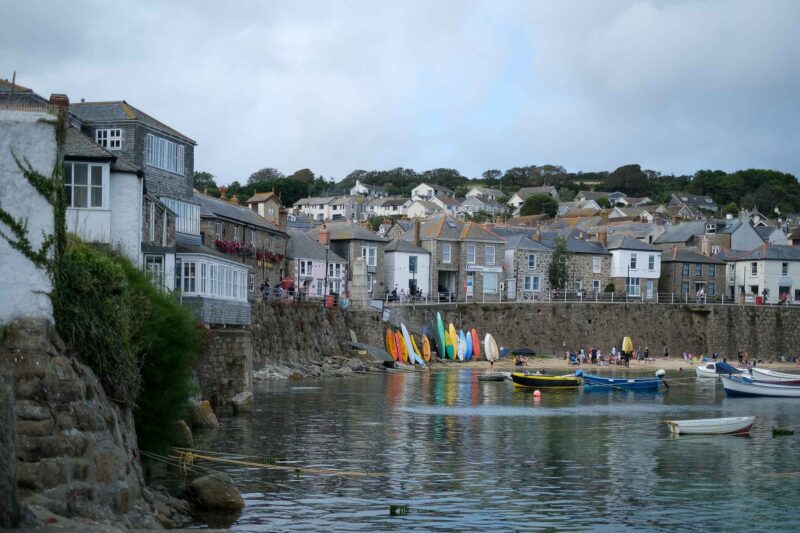
Walking around Charlestown Harbour, you could be forgiven for thinking you had stepped back in time to the late 18th century. Tall ships are moored beside the quay, swaying in the breeze with their rigging jangling with each gust. Old, worn oak barrels sit piled up as if they’re waiting to be loaded on board by a dishevelled deckhand. From the water’s edge, atmospheric cobbled lanes extend outwards, some lined with beautiful Georgian homes, harbourside inns, and traditional stone fishermen’s cottages reminiscent of times gone by.
Charlestown is just a short, 5-minute drive from bustling St. Austell, with a historic appearance has earned it a spot on the UNESCO World Heritage Site list as well as a starring role in multiple television and film productions; The hit BBC series Poldark shot many of its scenes here and the village has provided a backdrop for Hornblower, Mansfield Park, Tim Burton’s Alice in Wonderland and Dr Who, amongst dozens of others.

Before it was known as Charlestown, the small fishing village of West Polmear was located here, consisting of the homes of just 8 fishermen and their families who lived off the pilchard trade. Nowadays, the town is somewhat larger thanks to construction works undertaken by Charles Rashleigh, entrepreneur and member of the local landowning family, between 1791 and 1801 in an attempt to capitalise on the nearby copper, coal and china clay mining industries.
First, a pier was constructed to provide shelter for the small fishing fleet, followed by the creation of a basin, cut out of the bedrock to allow the sailing ships in. The port that Rashleigh established is the prime example of a Georgian ‘new town’ and by the time construction was complete, the population had exploded to almost 3,000 people. The town was renamed Charle’s Town in his honour.
Business at the port prospered until the outbreak of World War I but unfortunately, the design of the harbour limited its use to only small ships. Modern ships were far too large and the last commercial shipment of clay left the port in 2000.

Although the shipping trade is long gone, Charlestown’s Grade II listed harbour continues to thrive thanks to a combination of tourism and filmmaking. Many of the buildings and warehouses around the harbour that were once used for pilchard curing, shipbuilding, and brickmaking remain while the elegant Georgian mansions and quaint fisherman’s cottages still surround the harbour, meaning that Charlestown retains much of its Georgian character.
For this reason, Charlestown is a popular spot for film and television locations, which in turn has helped to subsidise the port’s upkeep, preventing modern development. Poldark is probably the TV series that brings the most visitors to Charlestown, but before the popular BBC show came here, Dr Who – played by Matt Smith at the time – was filmed here and way back in 1976, Sir Michael Caine visited this part of Cornwall to film ‘The Eagle Has Landed’.
However, it’s the 1999 adaptation of ‘Mansfield Park’ that probably left the most significant impact on the harbour. The producers of the film brought 200 doves with them to feature in one of the dramatic closing scenes, but when they packed up their cameras, they left the birds behind. There are still almost a hundred pure white doves living within the harbour, with the local residents even building wooden dovecotes along the walkways for them to call home.


While film fanatics travel to Charlestown in order to seek out the backdrops of their favourite scenes, history fanatics also flood to Cornwall to gawp at the fleet of square-rigger tall ships in the harbour. The Kajsamoor, a two-masted, wooden trading ketch, is permanently moored here. Built in Norway in 1939, it arrived in Charlestown in 2017 and has featured multiple times on the silver screen, in the likes of ‘Poldark’, ‘Taboo’ and ‘Frontier’.
Spend any warm summer evening in Charlestown and you will see first-hand how tourism has given this unspoilt village a new lease of life as a creative community has popped up to service the needs of visitors. Each evening, as the glorious corning sunset glows over St. Austell bay, crowds congregate on the waterfront picnic benches to take advantage of the ice cream stalls, coffee shops and dining spots that have all popped up along the quayside, making Charlestown a must-visit not only for history buffs, but all holiday-makers looking to experience a relaxed slice of Cornish life.
Where to Stay in Charlestown
Charlestown is just a short drive and bus ride from St. Austell which has much more choice than the harbourside village itself. However, there are still dozens of holiday cottages and apartments in the town centre catering to a range of budgets and Charlestown’s two main pubs both offer rooms for the night.
If sleeping under the stars is more your thing, there are myriad campsites in the region that stretches between St Austell to Pentewan. Pentewan Sands is one of the most popular and has a mix of static caravans, camping spots and pitches for touring caravans, motorhomes and tents. The site is located right next to the beach and has its own cafébar in the form of Cornish chain Hub Box.
Rashleigh Arms
Just a short walk from the harbour, the Rashleigh Arms is a cosy, traditional English inn offering locally sourced and seasonal pub food in a homely atmosphere. There are 18 rooms on the property – both above the 150-year-old pub and in the adjoining Georgian townhouse – all lovingly decked out in a modern, nautical theme.
Stones Throw
This contemporary ground-floor apartment with a stylish open-plan lounge, kitchen and dining area is perfect for couples looking for a quiet getaway in Mevagissey. A sofa bed is included, allowing the property to sleep 4 people if required.
Pier House
Like the Rashleigh Arms, Pier House is a beautiful, traditional inn run by local brewing giants St. Austell Brewery. The pub is situated right on Charlestown harbour with a sea-facing restaurant and sunny terrace, perfect for alfresco sundowners. There are 27 bedrooms on-site, many offering spectacular views of St Austell Bay and Charlestown’s harbour.
Where to Eat & Drink in Charlestown
For such a small village, Charlestown has more than its fair share of great dining spots. Two of the local pubs – The Pierhouse, a charming inn which appears in Poldark & The Rashleigh Arms – serve up great pub food but really, it’s the renovation of the quayside that’s really seen the Charlestown blossom, with local pop-ups appearing beside the tall ships and giving the area a real buzz on balmy summer nights.

The Longstore
Charlestown’s upmarket Longstore, possibly the most loved eatery in town, first opened in 2016 inside a renovated sail loft overlooking the tall ships of Charlestown Harbour. Fresh, local produce is the focus at this steak and seafood restaurant but even if you’re not feeling hungry, it’s worth stopping by for a drink at the Winestore, their cosy bar just below the restaurant, which is bursting with a selection of hand-picked wines, local beers, and spirits.
Where: Charlestown Harbour
When: Daily 4.30pm – 10pm
The Rum Sailor
Wander through a door in the quayside and up a short staircase in the quayside’s converted clay store and you will feel like you have stepped into an old smugglers bar. The small but perfectly formed Rum Sailor has over 300 different rums on offer with staff that are incredibly knowledgeable when it comes to this particular tipple.
Where: Charlestown Quayside
When: Mon to Thurs 5pm – 9pm; Fri 5pm – 10pm; Sat 1pm – 10pm; Sun 1pm – 8pm
HarbourQ
The Smokin’ Harbour BBQ, HarbourQ, is the latest enterprise from the team behind the Longstore. This harbourside popup features a bar that is perfect for sundowners and a melt-in-your-mouth menu packed with slow cooked barbecue meat, dirty fries and veggie specials crafted by Chef director Ben Ambridge.
Where: Charlestown Quayside
When: Daily 11am – 9.30pm
Charlestown Fish Co.
Another seasonal pop-up on Another seasonal pop-up on Charlestown’s Harbour, The Charlestown Fish Co. Serves up freshly cooked seafood dishes such as Thai green seafood curry, tiger prawns, cornish crab, fish burgers, and delicious Cornish mussels.
Where: Charlestown Harbour
When: Daily 12pm – 7pm
The Galley
The Galley is a small café and takeaway set within a courtyard overlooking the harbour. The coffee is some of the best in town and they serve a small menu of pasties, sandwiches, paninis and sweet treats ideal for a quick lunch on the go. For your caffeine fix, it’s also worth checking out Cubs Coffee on the Quayside.
Where: 45 Charlestown Rd
When: Mon to Sat 10.30am – 3.30pm
Things to Do in Charlestown
The majority of visitors to Charlestown come to visit the Grade II listed harbour and its collection of tall ships, of which one – the Kajsamoor – is always moored in the quay. It’s possible to step aboard to explore the deck and cargo hold, giving you a real taste for Charlestown’s merchant trading days, while those looking to find out even more about Cornwall’s seafaring past can take a guided tour of the inner harbour to learn all about Charlestown’s fascinating history.
Shipwreck, Rescue and Heritage Centre
For fans of maritime history or those just wanting to delve a little deeper into the old days of Charlestown, the Shipwreck, Rescue and Heritage Centre gathers together 8,000 finds from over 100 ships wrecked along the Cornish coast. Within the collection, you will find intact barrels filled with historic coins, gold bullion bars, ingots of copper, and the manillas used to sell people stolen from their homes and forced into slavery.
Not only do the salvaged items give an insight into the perils and possibilities of seafaring, they also tell a story of both horrific human struggle as well as wonderous tales of exploration.
Where: Quay Rd
When: Daily 10 am -8 pm (last entry at 7.30 pm)
Eden Project
The Brainchild of ex-record producer Tim Smit, the Eden Project’s enormous geodesic “biomes” – bubble-like conservatories made up hexagonal panels that wouldn’t look out of place in a far future sci-fi movie – are one of the south west’s most visited tourist attractions.
The domes were constructed in a 160ft-deep abandoned clay pit to mark the start of the new millennium with each one aiming to mimic a major world climate system in microcosm; one holds the olive groves and cacti reminiscent of the Mediterranean while the larger of the domes contains a waterfall and river flowing past plants and trees from the tropics.
Exhibitions within the Eden Project explore topics ranging from climate change and green technology to cultivation and farming, making it an educational experience for the whole family.
Where: Bodelva
When: Opening Times vary throughout the year. Check the Eden Project website for details.
St. Austell Brewery
At times it feels like every single pub you see in Cornwall has the castle logo of St. Austell Brewery hanging over its doorway. Founded in 1851, St. Austell is one of the region’s longest-running businesses and churns out millions of pints a year from the 170 pubs that it owns and operates. Despite the brewery’s modern ubiquity, it is only in the last couple of decades that St. Austell has transformed itself from a relatively small brewery to one that you can’t escape, increasing its production 10-fold since the Millennium.
Much of their success can be accredited to much-loved brewer Roger Ryman, who sadly died of cancer in 2020 at the young age of fifty-two. The story goes that, in 1999, he travelled down from Scotland where he was working as a brewer at Maclay & Co for his job interview at St. Austell, stopping at one of their pubs the evening before to sample a pint. In the interview, when asked what he thought of the beer, he told them that he thought it wasn’t very good and was immediately offered the job of head brewer.
It was Ryman’s creation, Tribute, that was the catalyst for St. Austell Brewery’s meteoric rise. Initially brewed as a one-off special amber ale, this blend of Maris Otter malts with Celeia, Fuggles and Willamette hops was an instant hit and is now the brewery’s biggest seller.
The St. Austell Brewery Visitor Centre features exhibitions detailing the history of the brewery as well as giving an insight into the brewing process. The brewhouse tour takes you through the brewing process from grain to glass, from the still-active Victorian brewhouse to the carefully reconstructed Cooper’s Workshop where you can get your hands on some of the machinery from the days of steam brewing. The tour takes place at 12 pm from Monday to Saturday. Entry cost includes a Cornish Pasty and a pint, as well as a beer-sampling session.
For a more hands-on approach, the 90-minute long Brewing Experience Tour takes place Monday to Saturday at 11 am & 2 pm, costing £15.
Beaches Near Charlestown
If you wander down the steps on the eastern end of the Harbour, you will see that Charlestown has its own fairly long shingle beach that looks out across St. Austell Bay. There is also a much smaller beach below the port.

Just a mile down the coast to the south and a short 20-30 minute walk away, Porthpean Beach is a much more enticing prospect. Despite its small size, Porthpean is possibly one of St. Austell’s finest beaches, backed by steep tree-topped cliffs with the kind of crystal-clear turquoise water that Cornwall is famed for. Although are no lifeguards on duty here, the generally calm waters make it a popular spot for swimming and paddleboarding.
The nearby village of Pentewan has a larger, more popular beach that has its own campsite, swimming pool and seafront burger bar, the Hub Box. While this beach does get busy, it is wide enough that it never feels cramped. Dinghys and kayaks are available to rent. Aside from the beach, the village is charming enough and features a lovely pub, the Ship Inn, where you can enjoy a cask ale or cocktail in their beer garden.
Walks In & Around Charlestown
Charlestown is situated on the South West Coastal Path, smack-band in the middle of two glorious stretches of coastline – the Polperro Heritage Coast and the Roseland Heritage Coast, meaning that walking in either direction will guarantee a spectacular ramble.
If you have the legs for it, the 6-mile walk westwards to Mevagissey is highly recommended as this quaint little fishing port is one of Cornwall’s most charming seaside villages. Even if you don’t plan on walking quite that far, this path takes you through some stunning scenery, from Porthpean Beach to the Meditation Jorge and Anna Nature Reserve.
For something a little shorter, you can’t go wrong with the 2-mile round trip to Carlyon Bay and back along the clifftop.
Getting to Charlestown
Charlestown is just a short, 5-minute drive from St. Austell. If arriving by car from outside Cornwall, the best route is to join the M5 to Exeter, then take the A30 towards St. Austell. From within Cornwall, take the A390 towards St. Austell and then follow signs towards the village.
There are no train services to Charlestown but a mainline service runs from London Paddington to St Austell, taking 4.5 to 5 hours. From St. Austell, you can catch either the number 24 or 25 bus (a 15-minute journey). National Express also run coaches to St. Austell.
Parking
Charlestown’s pay-and-display carpark is located opposite the Harbour entrance. Spaces are limited to just 150 so it can occassionally be difficult to find a spot. There isn’t a great deal of roadside parking in the village and even many of the pubs will charge you to use their car parks (although many refund you upon purchasing food and drink).
When is the Best Time to Visit Charlestown?
Although the south west tends to experience a better climate than the rest of the UK, those that have spent a significant amount of time in Cornwall will tell you that the weather is unpredictable and can turn without much notice.
Summer months (April – September) will guarantee the most sunshine but even in the colder seasons when the skies are moody and the waves are crashing, there is something lovely about getting comfortable beside a roaring fire in an old pub.
The Charlestown Regatta Week, usually held at the end of July or the beginning of August, is when the town is at its busiest. Regatta week is an annual tradition aiming to bring together the local community and visitors to enjoy live music, competitions, pasty demonstrations, raft races and water sports, all raising money for local charities and Charlestown’s annual Christmas light display.