
It’s the height of summer in South Africa and here on the eastern shores of the Cape peninsula, despite the day coming to a close, the sun is still beating down as best it can, searing the back of my neck and drawing enough sweat to soak my shirt. A few people mill around the car park of Seaforth Beach, queuing for cones of cooling ice cream or browsing the makeshift craft stalls that line the edge of the tarmac but the late afternoon heat – only broken by the strong, False Bay winds kicking up sand and blowing clouds of it across the road – means this little edge of Simon’s Town remains fairly free of crowds for the time being.
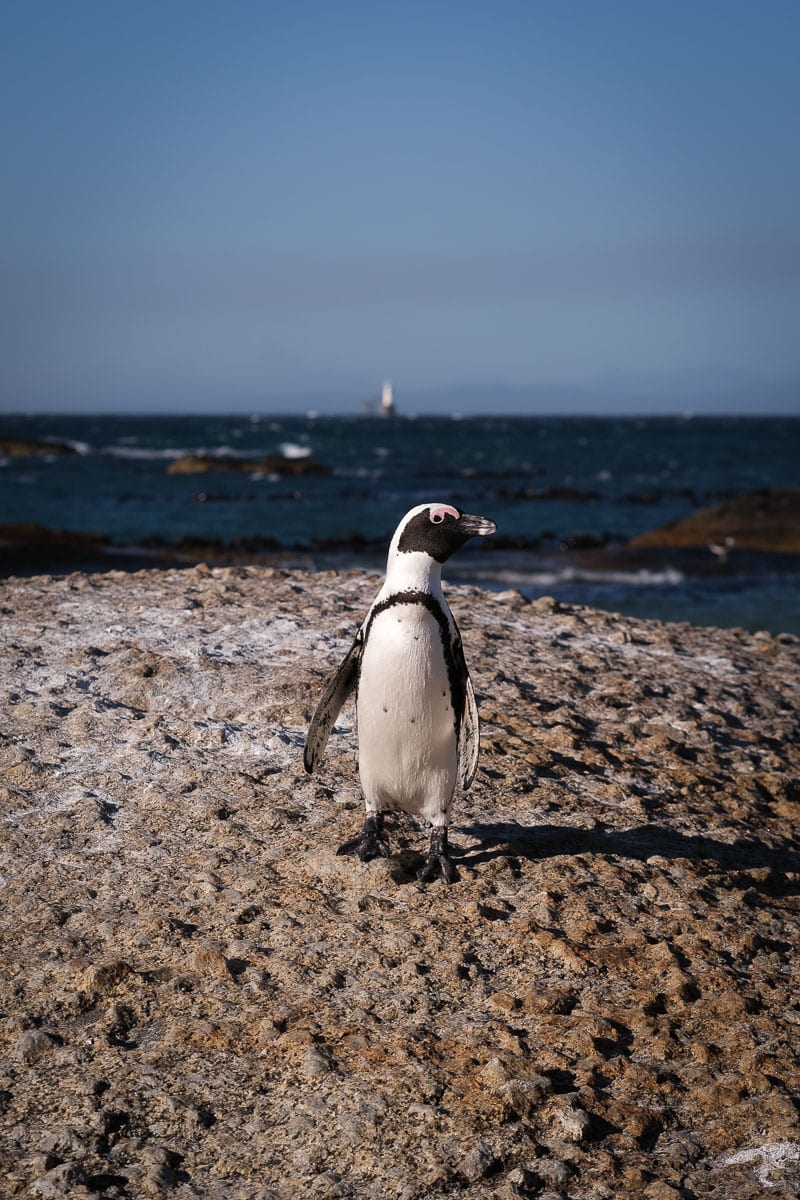
You wouldn’t normally associate penguins with this climate – in my mind at least, they’re much more closely linked to the chilly and frigid climate of Patagonia and Antarctica but here, on this scorching tarmac, I get my first sighting of what seems to me an oxymoronic breed: African Penguins.
These flightless birds only live in southwestern Africa (with just three mainland colonies located between Namibia and Cape Point) and here at Boulders Beach, they can be found waddling around the residential streets of this small neighbourhood untroubled by the presence of people. So much so that street signs warn of ‘penguins crossing’ while residents are told to check the underside of their cars for black and white intruders before driving away. I watch as a pair emerges from the bushes between two buildings and comically hop with a sway and a wobble across the pavement past the winding ice-cream queue.
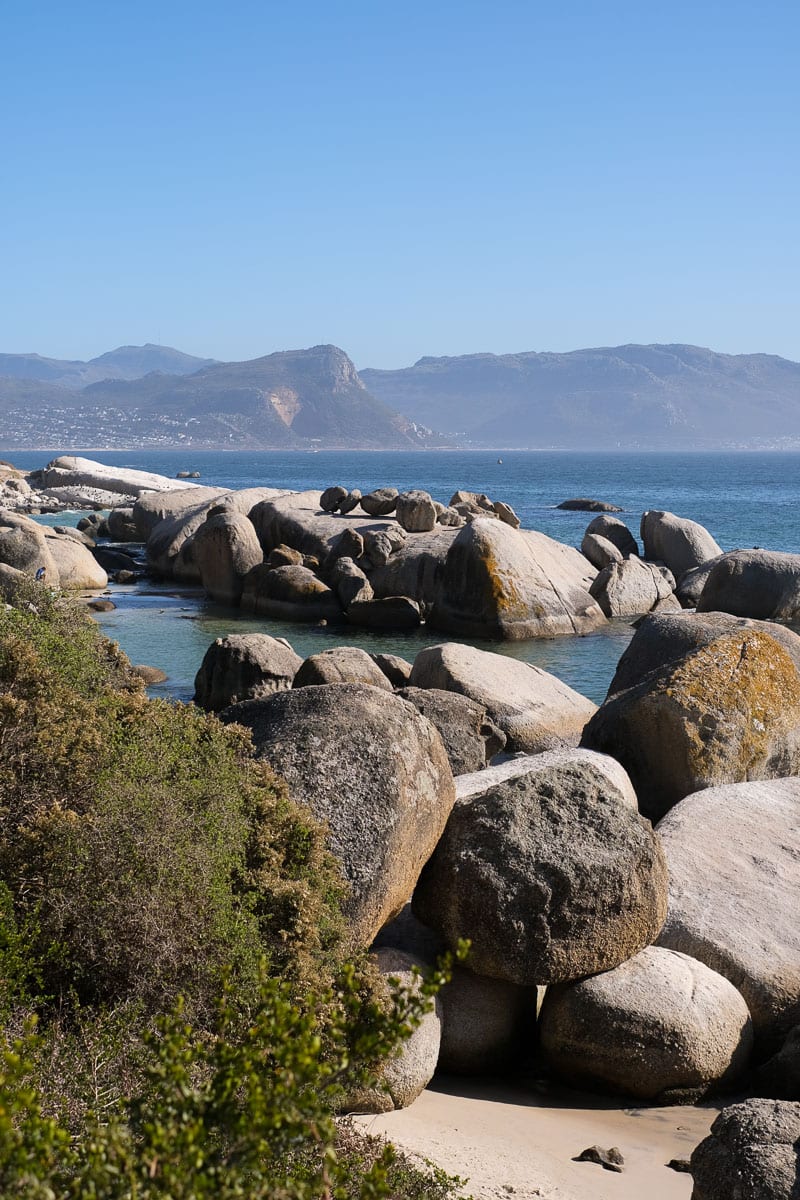
The penguins haven’t always lived here in False Bay. The first breeding pair arrived in 1982, settling on the soft white sand between the large granite boulders that protect the beach from wind and waves. They decided to stay and since then, the population has grown to between 2,000 and 3,000 birds.

Unfortunately, the number of African Penguins living on the continent as a whole has declined by more than 96% since the pre-industrial era, and 83% in just over 50 years. In 1910, there were an estimated 1.5 million African penguins. By 2009 that number dropped to just 26,000, and in 2010 the African penguin was classified as endangered.
This is mostly due to commercial fisheries and climate change are making the penguins’ prey scarcer, as well as destroying their habitat and since they live along a major global oil transportation route, they can also be the victims of oil spills. All of these factors are accelerating the penguin’s path to extinction. However, under the careful watch of South African National Parks, the Boulders colony has gone from strength to strength.
Commercial fish trawling in False Bay has been reduced significantly, allowing the penguins access to fish, such as pilchards and anchovy, which are a key part of their diet and the 3 beaches around their colony have been given over to the Table Mountain National Park which are linked by boardwalks that pass over the birds and their burrows, allowing visitors a closeup view without disturbing the colony as they breed and nest. This careful conservation management has allowed the birds to flourish.
It says a lot about the enduring appeal of these critters that in a country so blessed with astonishing wildlife – from the elephants, lions and giraffes that occupy game reserves to the whales and great whites that also call False Bay home – that the colony has quickly become one of South Africa’s most beloved tourist attractions. Even within our tour group with Exodus Edits, on a trip that spanned 7 days all around the Cape Town region that included mountain climbing, hiking, cycling and a spectacularly boozy day exploring the wineries of Stellenbosch, it was clear that the majority of my group were most thrilled about the chance to visit Boulders Beach.
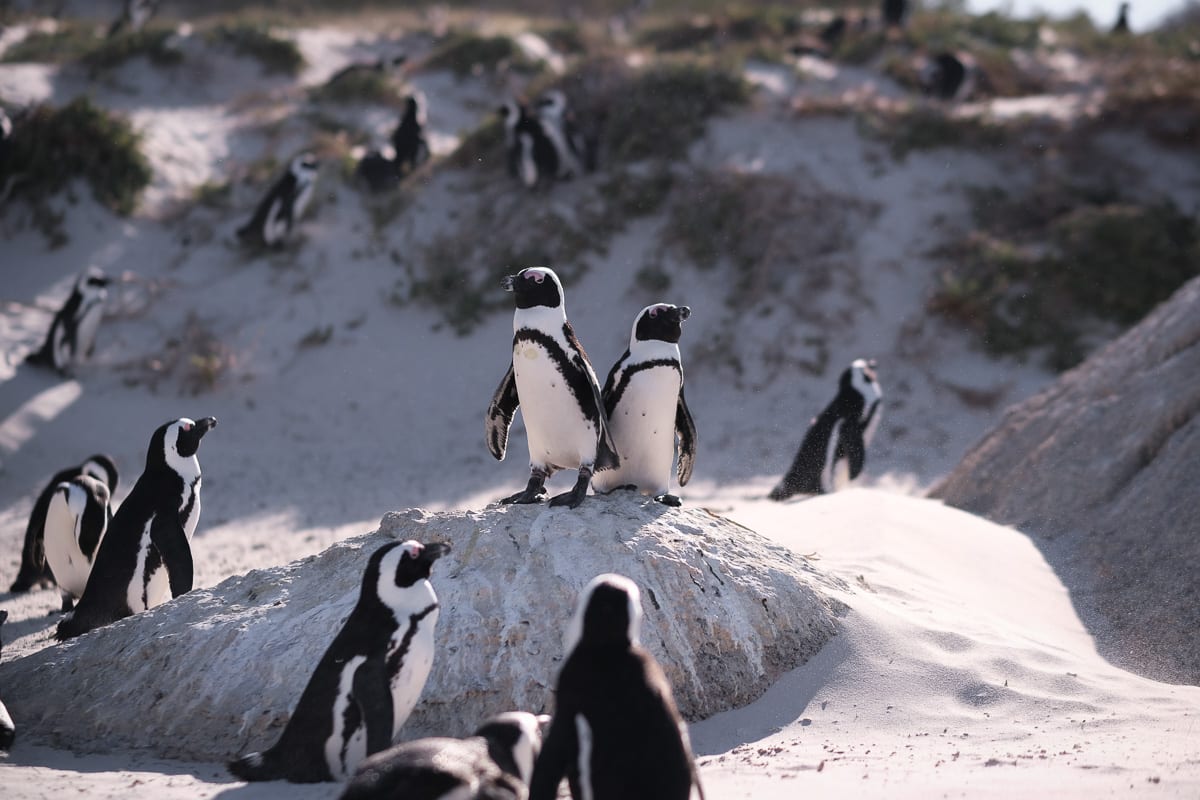
We make our way through the sand dunes along the wooden walkways and viewing platforms. Beneath us the penguins – hundreds, if not thousands of them – roam, scuttling to and fro, emerging from their burrows and waddling across the pristine white sand towards the ocean and letting out the donkey-like calls that gave them their alternative name: jackass penguins. The platforms allow you to get surprisingly close and there is no describing the joy you get from looking over the handrails to a cute little face gazing up.


We had arrived in Simon’s Town earlier that afternoon, taking the long coastal route down from central Cape Town and then back up the east coast of the peninsula via the Cape of Good Hope, winding our way along the steep, coastal roads of Chapman’s Peak Drive where the twists and turns of the drive constantly reveal breathtaking view after breathtaking view of the Atlantic Ocean and the mountainous, southwestern coastline. Here we pass beautiful bays whose names are sometimes Dutch, sometimes Afrikaans and very occasionally, like Scarborough, named in honour of distant English counterparts, although the latter’s wide vast, pristine sands backed by a rugged mountainscape are a far cry from the faded Victorian grandeur of the North Yorkshire seaside resort.
Despite its diminutive size, Simon’s Town plays an important role in South Africa’s history. It’s one of South Africa’s oldest towns and for more than 350 years Simon’s Town has been the headquarters of first the Dutch, and then the British navies. The Naval Base was handed over to the South African Navy in 1957 under the Simonstown Agreement and now enormous, grey military vessels sit in the harbour. As impressive as they are, they do little to distract from the old-world feel of the town and its quaint town square, wooden, verandaed buildings that line its single main street containing ice cream parlours, cute cafes and antique shops, and small harbour that bring to mind more of a Cornish fishing village than a major naval port.
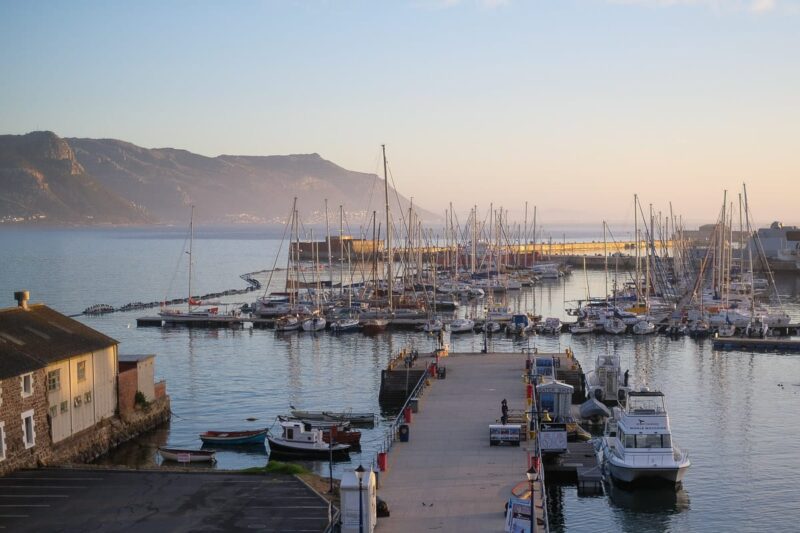
We settled into our hotel, the charming aha Simon’s Town Quayside that sits on the water’s edge with rambling corridors and rooms overlooking the long, concrete jetty and the surrounding boats that sway with the gentle tide of False Bay before grouping up beside the tiny Jubilee Square for fish and chips and a beer at the rustic Bertha’s Just as daylight starts to fade and the brown cliff faces begin to glow orange and pink in the light of the dusk.

The next morning, our group departs from Simon’s Town harbour by water, hopping in kayaks to the crash of artillery rounds ringing out from the surrounding hillsides – either ceremonial or part of the Navy’s training, I’m unsure – and make our way slowly back towards Boulders Beach, this time paddling carefully past the military vessels and working ports. We glide among coves, inlets and little white-sand beaches scattered with 540-million-year-old granite boulders, while the sandstone bluffs of Table Mountain National Park make a perfectly picturesque backdrop. False Bay’s waters glitter in the bright mid-morning light and the elusive flightless birds bob on the surface while shadows zip beneath the water’s surface. If there is a better way to see penguins in the wild, I can’t imagine it.

ABOUT EXODUS EDITS
I travelled to South Africa on a group tour from Exodus Edits. Edits is a collection of bitesize, adventure-filled holidays where you’ll travel with a small group of like-minded people in their 30s and 40s.
The concept behind Edits is to offer easy-to-plan, easy-to-book, shorter duration holidays for busy professionals that don’t scrimp on challenges, excitement and memorable moments, as well as timing the trips at points in the year that will help maximise their annual leave by taking a few shorter trips away.
The Cabernet & Capers Tour of Cape Town and the surrounding area is an 8-day long adventure that combines adrenaline-filled pursuits such as hiking Table Mountain, Kayaking with Boulder Beach’s Penguins, and sandboarding the Atlantis Dunes with indulgent wine tasting sessions at the vineyards of Stellenbosch and luxurious accommodation.
About Boulders Beach Penguin Colony
Boulders Beach has three different sections and it is possible to swim with the penguins at the small beach located at the far end of the boardwalks. If you want to swim, make sure to come at low tide, as beach space depends on the tides. Table Mountain National Park rangers patrol the beaches and no alcohol or smoking is permitted within the nature reserve. Some parts of the beach are closed to visitors to separate breeding and nesting penguins from visitors. Do not touch and feed the penguins.
Entry Fee
The entry fee is R160 for adults and R80 for children (R40 and R20 for South African nationals) with the majority of the entry fee going towards penguin conservation.
Opening Hours
Dec to Jan: 7am – 7.30pm
Feb to April: 8am -6.30pm
May to Sept: 8am – 5pm
Oct to Nov: 8am – 6.30pm
When is the Best Time to Visit Boulders Beach?
The penguins are most active during their nesting season between February and August. There will be fewer penguins on the beach between September and October, as they spend most of the time at sea during those months.
For the best experience, visit either early in the morning or late in the afternoon as the cooler temperatures will mean that more of the birds are out of their burrows.
Getting to Boulders Beach
The easiest way to reach Simon’s Town is by car, taking the M4 south from Cape Town to the Cape of Good Hope before travelling up the east side of the Cape Peninsula.
For public transport, there is a regular MetroRail service from Capetown via Fishhoek, Kalk Bay and Muizenberg. It is recommended that you buy a 1st class ticket and although safety has been an issue on MetroRail trains in the past, they are currently considered relatively safe. However, it is not recommended that you take the train at night. Boulders Beach Penguin Colony is just a 20-minute walk from Simon’s Town’s Jubilee Square.
Where to Stay Near Boulders Beach
With the Penguins at Boulders Beach putting Simon’s Town on the tourist map and drawing in huge numbers of visitors from all over the world, the town isn’t short of hotels looking to cater to them. Truly budget options such as dorm rooms and camping spots are a little hard to come by, but both Airbnb rental apartments and the area’s 3 to 4-star hotels are of a high standard and competitively priced. Our tour group stayed at the aha Simon’s Town Quayside Hotel, which has beautifully clean, nautical-themed rooms, many of which offer fantastic views out over the Simon’s Town Harbour.
Simon's Town Boutique Backpackers
Just 5 minutes’ walk from the railway station, Simon’s Town Boutique Backpackers is the only hostel in town but despite the lack of competition, it manages to provide everything a backpacker needs; a bar, lounge, BBQ facilities and a shared kitchen.
aha Simon’s Town Quayside Hotel
Perfectly positioned on the water’s edge of the Simon’s Town harbour, with breath-taking views over False Bay and the majestic Simon’s Kloof Mountains, this nautically styled, 4-star hotel is one of the best in the area.
Tintswalo at Boulders
A stone’s throw from the nearby penguin colony, this nine-room boutique B&B offers direct access to the beach and colony’s walkways. Inside is luxuriously appointed yet relaxed, offering a spectacular view across False Bay to the Hottentots Holland mountains.
This post contains affiliate links. By clicking a link and making a purchase, I may receive a small commission at no extra cost to you.

One Response
These penguins are adorable and I really loved watching them when I visited South Africa years ago. I think its time that I plan another visit