I was just 15 minutes into my first, and only, experience of Benidorm’s notorious strip before I witnessed blood spill on the dancefloor. Red spatters running together and pooling on the scuffed linoleum. Speckles of crimson amongst the shards of mottled green glass.
The flip-flops and high heels step aside to avoid dirtying themselves and spreading further, parting like the red sea, to make space for the bartender who emerges from behind the bar with a mop and bucket to begin his clean-up duties. He does this with a swiftness and a lack of emotion that suggests this isn’t the first, and certainly won’t be the last, time this exact scenario has played out.
Through it all, the performer on stage continues to sing without missing a beat and never acknowledges the bloody scene below. Verse followed by chorus, followed by the refrains of “ba ba ba” ringing out from the throats of the drunken revellers that still occupy the unsullied areas of the dance floor.


It’s at this point that I’m beginning to question my own sanity, or at least beginning to question just how strong the drink I’m holding really is. Everyone around me is unfazed, carrying on as if nothing happened. It is almost as if this is the sort of thing that the bar, the singer on stage, and the patrons witness on a regular basis. It wasn’t an event at all.
When I finally decide to abandon my pint and emerge into the daylight, It’s only just passed 4pm on a midweek afternoon on Calle Gerona. Even at this early hour, the strip is doing what the strip does best. Neon signs stutter over pub fronts advertising cheap beer deals and karaoke slots, a tribute act is butchering something by Oasis two doors down, and stumbling past me is a hen party in matching pink sashes looking for their next watering hole to invade.


I can only imagine what kind of car crash happens here once the sky dims and the pub signs brighten, as night falls and the party goes, dazed by a day of sun and a skinful of ale, make their way to this part of town. However, sit at any of these bars long enough (one warm pint is more than enough), plastic chair sticking slightly to the back of your legs, and you start to understand exactly why Benidorm carries the reputation it does.
It’s brash, loud, unapologetically down-to-earth, and for a certain kind of holidaymaker, it’s precisely the point. This is the Benidorm of package deals and lads’ weekends, the one immortalised, not always kindly, by the long-running ITV sitcom of the same name that turned its sunburnt clientele into a national institution for over a decade. If you’ve never been, you’ve probably still absorbed the stereotype secondhand: all-day breakfasts, tattoos, and Union Jacks strewn across barfronts.

All of which is true, as far as it goes. But it’s also only one layer of a place that is much more interesting than stereotypes and the tabloids would have you believe.
Benidorm didn’t always have this reputation. As recently as the 1950s, it was a modest fishing village of a few thousand people, with an economy and lifestyle built around fishing boats and sardine nets rather than drunk sunburnt Brits belting out slurred, badly tuned renditions of Oasis hits at all hours of the day.

Its transformation is almost entirely down to one man, Pedro Zaragoza Orts, mayor from 1950 to 1967, who looked at his sleepy hometown’s beaches andgloriously sunny climate and decided, against the puritan views of an insular, Catholic, Francoist Spain, to build the country’s first mass tourism resort from scratch. His 1956 General Urban Plan, the first of its kind in Spain, was radical for its time. Rather than spread outward, he decided that Benidorm would build upward, densely packing high-rise blocks into a small area and leaving space for wide avenues, plazas and green corridors between the towers.
At the time, it was a genuinely visionary piece of urban planning, decades ahead of its neighbours, and it’s the reason Benidorm looks utterly unlike anywhere else on the Spanish coast. In fact, because new buildings have been constantly erected ever since, the city is a haven for architecture enthusiasts and students; every single architectural style from that time onwards is represented here, in towering, brash form.


Zaragoza didn’t stop at architecture, either. I was told that in 1953, he legalised the bikini on Benidorm’s beaches, defying the Catholic Church and reportedly riding his moped all the way to Franco’s residence near Madrid to argue his case in person after the local bishop threatened him with excommunication. It worked, and the tourism economy continued to boom.
It’s this vertical philosophy that has produced one of the most fascinating skylines in Europe, and it’s a big part of why Benidorm deserves a second look from anyone with an interest in architecture, however unlikely that sounds. The Gran Hotel Bali, completed in 2002, held the title of tallest building in Spain for several years and remains the tallest hotel in Europe at 186 metres. I didn’t get a chance to visit, but its viewing deck on the 45th floor gives an unmatched panorama over the coastline.

There are so many more interesting buildings to seek out; The Intempo tower is one of the most recognisable and fascinating, with its distinctive twin-peak silhouette connected by an inverted cone, and is the tallest residential skyscraper in the country. The brutalist Neguri Gane, the sleek Torre Lúgano, and a scattering of newer, sustainability-focused towers make this cityscape feel like an open-air museum of late-20th and 21st-century tower design, all crammed onto a space no more than a few kilometres wide.
I’m not sure how tongue-in-cheek this is, but I have seen Benidorm being referred to as the “Manhattan of the Mediterranean” on more than one occasion, and while that’s a stretch in some ways, the density and ambition of the skyline is quite impressive. Nowhere else in Spain, and very few places in Europe, concentrate this much high-rise design into so small a space.


And yet, for all the neon and glass towers, rowdy stag and hen dos, and the feeling of being in a small enclave of Britain at its worst, the story doesn’t end there. Climb the hill behind the seafront and the tower blocks disappear almost entirely, replaced by the whitewashed streets of a much older town; the fishing village that Zaragoza’s plan grew out of, still largely intact. Follow the coastline east or west of the main beaches and the cliffs, coves and pine-scented trails of Sierra Helada Natural Park take over.
Head inland, just a few kilometres back from the strip, and vineyards, mountain villages and waterfall-fed gorges appear as if the resort doesn’t exist at all. This is the other Benidorm, the one that exists in the same postcode as the karaoke bars and hen parties, but is rarely given any airtime. My time in the city was mostly spent exploring this; seeking out the bougie bars, hidden gems, and authentic food spots. Beyond the balconies, there’s a great deal more here than the stereotype gives it credit for.
Getting to Benidorm
Benidorm sits on the Costa Blanca in south-eastern Spain, in the province of Alicante. It’s built around a headland roughly midway between Alicante city, about 45km to the south, and Valencia, around 130km to the north, with the Mediterranean directly on its doorstep and the Sierra de Aitana behind it.
By Air
The nearest airport is Alicante–Elche (ALC), around 50km south of the town, and has direct flights from most major UK airports. Direct coaches run frequently (more than 40 services a day) from outside the terminal, taking around 45 minutes and dropping off at Benidorm’s bus station or the Avenida de Europa stop in the town centre. Tickets cost roughly €9–12 and can be bought online in advance or on the day.
If you would prefer to take a taxi, there is a pick-up point directly outside arrivals, with the journey by road taking around 40 minutes. There’s no need to book ahead. Agree the fare before setting off, and avoid unofficial drivers touting for business inside the terminal.
By Train
The narrow-gauge FGV line (TRAM Metropolità) connects Alicante and Dénia, stopping in Benidorm along the way. It’s a useful option if you’re based elsewhere in the Costa Blanca and want to visit Benidorm for a day trip without driving or taking a taxi.
By Car
Benidorm sits just off the AP-7 motorway, around 45 minutes from Alicante and just over an hour from Valencia. If you’re driving, be aware that the old town’s streets are narrow and largely pedestrianised. It’s worth parking on the edge of the Casco Antiguo and continuing on foot rather than trying to navigate in.
Getting Around
I know that the stereotype is that most of Benidorm’s visitors get around on mobility scooters (and truth be told, it isn’t necessarily just a stereotype, as there are quite a few of them whizzing along the seafront), but getting around Benidorm on foot is easy enough. The old town is compact enough to cross in fifteen minutes, and getting lost in its side streets is part of the appeal.

The trip from the far end of Playa de Levante to Playa de Poniente can take a fair bit longer, but for anything further afield, the FGV tram line runs along the coast toward Alicante, useful for day trips without a car, while local buses cover the wider urban area. Taxis are plentiful and reasonably priced for reaching the natural park trailheads or the hillside bodegas, where public transport doesn’t quite reach.
Things to do in Benidorm - The Alternative List
Benidorm has a handful of fantastic experiences most people miss, as they are too focused on the beaches and cheap pints. Here are a few things that rarely make it into the standard holiday itinerary, leaning into the landscape and Spanish culture behind the coast, and others into the town’s more polished, design-led side. Add these things to your trip plans, and you’ll get a picture of Benidorm that has as much to do with vineyards, nature, and rooftop views as it does with the seafront everyone already knows.
The Old Town
Sandwiched on a rocky outcrop between Poniente and Levante Beaches, the Casco Antiguo, or the Old Town, feels a world away from the skyscrapers that surround it.
Here you’ll find a knot of streets perched on a promontory jutting out into the sea, and the original settlement from which modern Benidorm grew. It dates back to the 14th century, when the village was founded and fortified, and for some time afterwards it was defined by its connection to the water rather than tourism; it was a working fishing village of white houses and narrow lanes with a population that, as recently as the early 20th century, numbered under two thousand. It wasn’t until the mid-20th century that the tourism boom transformed the town beyond recognition, yet remarkably, this small quarter kept much of its original medieval layout intact, right down to the alleys threading off Carrer Major.


You’ll notice the contrast with the seafront almost immediately. Whitewashed façades with wrought-iron balconies line narrow, cobbled streets; flower pots sit on colourfully painted window ledges; and laundry lines still cross between buildings. At the top of the hill stands the Iglesia de San Jaime y Santa Ana, an 18th-century church instantly recognisable by its cobalt-blue dome, and nearby, fragments of the old medieval walls and defensive towers can still be seen between more modern buildings.


It’s worth spending some time around the Balcón del Mediterráneo, a viewpoint and beautiful terrace that extends out into the water, splitting the view between Levante and Poniente beaches with the mountains rising behind. It’s one of the few spots in Benidorm where you can see the contrast between old and new so clearly, tower blocks on either side of you and the historic town behind.


There aren’t a lot of landmarks or sights to see in this part of Benidorm, but that doesn’t mean it isn’t worth stopping by and exploring for half a day or an evening. There are plenty of independent boutiques selling handmade jewellery and leather goods, small plazas where street performers appear and locals hang out, as well as the kind of authentic tapas bar that you’re unlikely to find on the main strip. This compact quarter is easily covered in a few hours, but I would recommend taking your time and just wandering, enjoying the atmosphere and the more subdued vibe this part of town brings.


Explore the Coastline Beyond Playa de Levante
Benidorm’s two main beaches are, in fairness, genuinely good. Long stretches of golden sand, impeccably clean and with calm Mediterranean water. They have had Blue Flag status since 1987 and are backed by a promenade that runs for miles, with all the amenities you could need, from shops and supermarkets to cafes and bars.


Levante, on the eastern side, is the livelier of the two: It’s two kilometres of fine sand surrounded by the town’s densest cluster of bars, restaurants and high-rises, with water sports operators, sunbeds and a party atmosphere that runs from early morning into the small hours.
Poniente, to the west, is the longer of the pair at over three kilometres, generally quieter and more spacious, with a wide, palm-lined promenade. There are plenty of family-friendly amenities and a slightly more local feel. Both are well worth a morning or afternoon in their own right, and neither deserves the eye-roll they sometimes get for being too touristy.

However, if you are seeking out the ‘other side of Benidorm’, it may be worth following the coastline past either beach where the hotels drop off and are replaced by rugged cliffs and coves.
Sierra Helada Natural Park
East of the town, the coastline changes character entirely. Sierra Helada is a protected natural park of dramatic sea cliffs, pine-covered slopes and walking trails that trace the clifftop toward Altea. On a clear day, the views stretch as far as the Peñón de Ifach near Calpe. It’s a landscape that feels a world away from the beachfront a few kilometres back.

East of Levante beach, the coastline completely changes. Officially declared a natural park in 2005, Sierra Helada (Serra Gelada in the local Valencian) stretches across more than 5,600 hectares between Benidorm, L’Alfàs del Pi and Altea, made up of pine-covered slopes, walking trails and cliffs that rise over 300 metres from the sea in some places. The name itself has a nice bit of local folklore behind it: fishermen once said the limestone cliffs, catching the moonlight on cool nights, looked like a floating iceberg, giving the ‘frozen mountain’ its name.


The easiest way into the park on foot is the walk to the Albir Lighthouse, which is a gentle, fully paved route of around 5km round trip from the L’Albir side. The path traces the cliff edge with the Mediterranean constantly in view, passing pine woods, wild rosemary and rockrose scrub, and the occasional dwarf palm, before reaching the lighthouse itself.
For a more demanding hike, the Sierra Helada crossing climbs to the ridge itself, a route of around 8km that takes roughly four hours. It passes the Alto del Gobernador, the park’s highest point at 440 metres, and is one of the best views that you will get of the city and its skyline.

If you want to save your legs, hiring an e-bike and pedalling the trail makes things a little easier. Despite some of the sections being a little steep, the help of an electric motor means that almost anyone can do this route.

We hired our bikes from Tao Bikes in the centre of town (it’s a bargain at only around €15 per day for rental), taking the route along Levante, up through the hills and along the coast to Les Caletes watch tower, an ancient tower constructed in the 16th century to protect the village from pirate attacks. The entire route is clear and well signposted – you just follow the coastal road along the cliff edge – and gives you the opportunity to stop at viewpoints along the way that look back towards the city, its skyline and all the little coves in between.
Isla de Benidorm
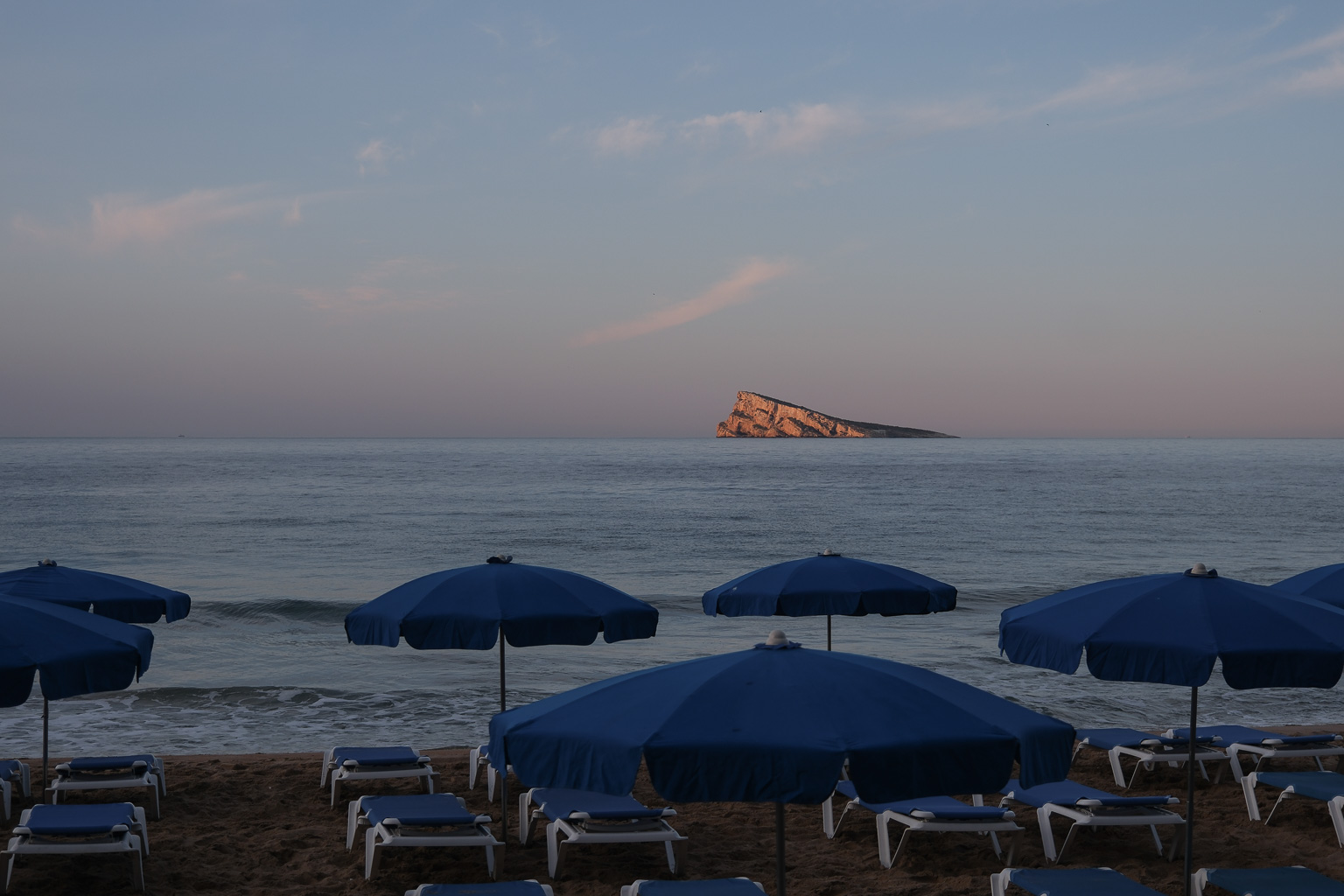
Visible from the shore, this small uninhabited island is a nature reserve and a common boat trip destination. Regular boats run from the harbour, and the surrounding waters are great for snorkelling. It’s popular with birdwatchers as it’s a nesting site for several seabird species, including Eleonora’s falcon.
Cala Ti Ties and Mal Pas
Tucked beneath the cliffs, Cala Tío Ximo is fairly easy to miss as it’s a tiny cove barely 60 metres long, reached by a scenic ten-minute walk down from the Punta l’Escaleta viewpoint, or along the coastal path from the far end of Levante beach. The water here is remarkably clear and the mix of fine sand and pebble underfoot giving way to rocky seabeds that make it one of the better spots on this stretch of coast for snorkelling, with cardinalfish, painted combers and the occasional grouper hiding among the rocks. There are no amenities or bars, sunbed rentals or facilities beyond a lifeguard post in peak summer months.


By contrast, Mal Pas sits on the opposite side of town, wedged between Poniente beach and the old town itself, directly beneath the old castle site. It’s reached either from the harbour or via a set of stairs descending straight from the Balcón del Mediterráneo, dropping from the clifftop viewpoint into a small, sheltered cove in a matter of minutes. It’s tucked into the rock beneath the town’s oldest quarter, making it a good counterpoint to Benidorm’s busier beaches.
Off-Road on an Open-Top Jeep Safari
Inland from the coast, the landscape shifts to dry sierra and scattered farmland. Open-top jeep safaris head into this hinterland, following dirt tracks through the hills for a view of the region that most visitors never see, or cars can’t access, and a version of the Costa Blanca that is mostly rock and pine forest rather than the stereotype of sandy beaches.


We chose a small group tour that was fairly exhilarating. Our driver, ‘Crazy Frank’, is apparently a driving instructor in his spare time, but with the pace that he was whizzing over bumps and around bends, I’m not sure he would be my first choice when learning how to get behind the wheel. Having said that, it was one of the most fun things I did in Benidorm and every sharp corner had us screaming or yelling out of either fear or joy.
There are a few different providers for this kind of tour, but the best of the bunch is Marco Polo Expediciones, who offer this trip via Guadalest and Algar Falls.
Take a kayak Tour of the coastline
For a closer and more in-depth look at Benidorm’s coastline, seeing Sierra Helada’s cliffs from the water adds a different dimension entirely. Kayak tours set out from Playa de Levante and paddle beneath the cliffs and into coves inaccessible on foot, with the option to stop for a swim along the way.


We took our kayak tour with Capitán Kayak, who were brilliant. Trips leave from the waterfront at a cost of €40 and last around an hour. We had a small dry box on board each kayak where we could store phones, cameras and valuables, and the entire thing was at a relaxed pace, meaning it’s perfectly suitable for beginners.
Wine Tasting at Bodegas Enrique Mendoza
Before visiting, I wouldn’t have imagined that I would find myself taking part in a wine tasting at a beautiful winery while in Benidorm, but I was wrong. A short drive into the foothills near Alfaz del Pi, less than 20 minutes from Benidorm, brings you to one of the Costa Blanca’s most respected wineries. It began life in the late 1970s, when Enrique Mendoza began making wine purely for family consumption in the Marina Baixa region. It just started out as a personal project but has since grown into a serious estate, and the winery, still family-run, has spent the decades since establishing itself as a benchmark for quality winemaking under the Alicante Denominación de Origen. It’s not unheard of for the founder himself to appear partway through a tasting, as he is still very much involved in the business he built.


The vineyards are planted on land close enough to the Mediterranean that the sea moderates what would otherwise be a punishing inland climate; an unlikely combination that gives the estate’s Chardonnay, Moscatel, and reds built on Monastrell, Cabernet Sauvignon, Merlot, Syrah and Petit Verdot their particular character. These aren’t at the winery itself, so don’t expect to be frolicking amongst the vines during your visit.


However, the guided tours are fantastic. They run for roughly 90 minutes to two hours, in Spanish or English, and take in the production process and the underground cellar, where the wines age in some 1,200 French and American oak barrels. The visit ends in the winery’s beautiful tasting room that sits within the gardens with typically six or seven wines, often including premium labels such as the Bordeaux-style Santa Rosa blend and the single-varietal Estrecho, both of which have picked up recognition from international wine critics, paired with a board of local cold cuts, cheeses, and olive oil. It’s a proper afternoon out rather than a quick stop, and worth booking ahead, as places on each tour are limited. We tasted a white, a blush and 5 different reds during our visit, so there’s a good chance that you could leave tipsy too.

Enrique Mendoza sits on the Ruta del Vino de Alicante, the province’s official wine route, which links wineries producing under the Alicante DO across the Marina Baixa and further inland toward Villena and the Vinalopó valley. Alicante’s wines lean on Monastrell as their signature red grape, alongside a curious local speciality in Fondillón, which is a rare, oxidatively aged sweet wine unique to the region, historically prized enough to have once been served at European royal courts. It’s worth knowing this is only one stop on a wider regional wine trail, with plenty more of the DO’s character to explore further inland.
Sundowner Cocktails on a Rooftop
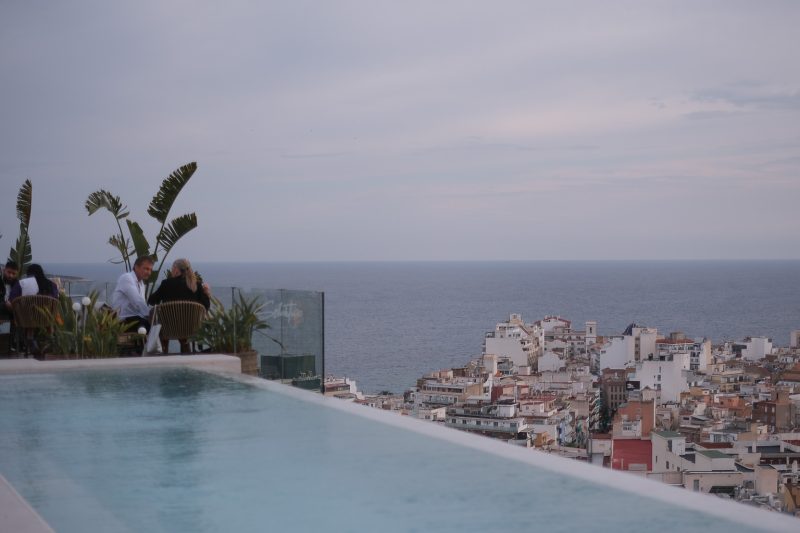
Benidorm’s cluster of high-rise buildings means that it is ripe for rooftop drinking spots, but some are better than others. Seventeen floors above the Primavera Park Hotel, close to the old town, Selvático trades the strip’s karaoke bars for something considerably more polished: a jungle-themed terrace of lush greenery, an infinity pool with views of Benidorm’s skyline, and a drinks menu built around signature cocktails from a genuinely inventive mixology scene. By day, it’s a sun-drenched spot for a slower drink with the city and the Mediterranean spread out beneath you; by evening, resident DJs and occasional live performances shift the mood toward something closer to a proper night out, without ever losing the view.


Food here is an afterthought by design and mostly consists of a short menu of snacks rather than a full kitchen, so it’s worth eating beforehand, or pairing a visit with dinner downstairs at Exótico, the hotel’s fusion restaurant, before heading up. Weekends draw the biggest crowds and run later into the night, so a weekday sunset visit is the quieter option if the aim is to watch the light change along the coastline rather than queue for a table. It’s not cheap, and it’s unmistakably designed for the camera as much as the cocktail, but as an elevated, design-led counterpoint to the rest of Benidorm’s nightlife, it earns its place on this list.
Where to Eat Like a Local in Benidorm
On the Benidorm strip, the food ‘scene’ is just as you would imagine: tackily themed British and Irish pubs dishing out English breakfasts (almost always with an additional cheap pint) and laminated picture menus displaying roast dinners, gammon and egg or fish and chips. It’s the kind of thing that wouldn’t be out of place at a Toby Carvery.


However, Benidorm does have a genuinely good tapas scene, concentrated in the old town and around the harbour where small, unassuming bars serve fresh seafood such as grilled sardines, garlic prawns, and fideuà to a mostly local crowd or the tourists that know where to look. The Mercado Municipal is worth a visit in its own right, and although it doesn’t cater to tourists, it’s a working market where you can pick up produce, cured meats and cheese, or simply wander for a sense of everyday Benidorm.
Tapas Alley
Step off the main pedestrian promenade and into Calle Santo Domingo, and you will find a place known in Benidorm as Tapas Alley. It’s a knot of narrow, cobbled lanes radiating from Plaza de la Constitución, where cosy bars spill onto the street, and the smell of garlic, grilled fish and sizzling meat fills the air.
It’s fairly empty in the morning, but by late afternoon the shutters are up, and the first chairs are dragged out onto the street. By early evening the alley is in full swing as people huddle around tables beneath awnings and lines of lights strung overhead, and at times, the tables are so close together that it is difficult to tell where one bar ends and the next begins.


Waiters weave between them balancing plates stacked three high, taking orders over the noise. The bars themselves are, for the most part, simple, unpretentious and often family-run, glass-fronted and packed with the day’s offerings of crisp croquetas, blistered padrón peppers, hunks of tortilla still warm from the pan.


Although some places are certainly better than others, the bars along the street all seem to blend into one; it can be hard to choose between them meaning there is no single best spot here and the appeal is cumulative, enticing you with the atmosphere and the appeal of moving table to table, ordering two or three plates at a time and sharing them on the side of the pavement.
Ideally, come without a plan and follow your nose or the crowds to find a place to dine, or even hop between bars and make a night of it.
HIgher-End Restaurants & Dining in Benidorm
Alongside great tapas, Benidorm also has its fair share of higher-end restaurants that make for a long, lazy lunch or the perfect evening date night; you just need to know where to find them. Get away from the strip, and you’ll find them dotted around the Old Town, in some of the more luxe hotels, or spread along Poniente Beach.
Llum del Mar
Inside the boutique Villa Venecia hotel, with floor-to-ceiling windows over the Mediterranean and a menu built around refined seafood and rice dishes. It’s the perfect choice for a romantic, special-occasion dinner.
Exótico
Set on the first floor of the Hotel Primavera Park near the old town, this stunning fusion restaurant blends Mediterranean, Southeast Asian and Latin American flavours against a backdrop of lush, tropical decor. On some evenings, you’ll find live music and choreographed shows run through dinner. Alongside the Selvetico rooftop bar, which is a great destination for pre- or post-dinner drinks, you can make a night of it.
D'Vora Gastrobar
A lovely spot in the old town pairing modern, elevated tapas with sweeping sea views in the old town with a balcony that offers extensive and sweeping sea views across Levante Beach. It’s polished yet relaxed, and the wine list is extensive. They gave me one of my favourite dining experiences in Benidorm.
La Fachada
A small, well-regarded restaurant tucked into the old town, known for confident modern Spanish cooking, from truffle artichokes to succulent lamb shoulder, in an intimate room.
Restaurante Ulia
A classic seafront restaurant on Poniente Beach, favoured by locals for traditional Spanish seafood and one of the best paellas you will find in the city.
Read More: Where to Eat & Drink in Benidorm
Where to Stay in Benidorm
Your accommodation choice can make a fairly big impact on the kind of Benidorm trip you have. While plenty of the hotels here may resemble something you are likely to find on the Benidorm TV show, in the main part of town, along Levante Beach and around the new town, there are a handful of higher-end hotels do the strip well. These tend to be polished, adults-focused properties with rooftop pools, sea views and a short walk to the old quarter. If you want to avoid the raucous crowds entirely, it’s worth looking slightly further out.


INNSiDE by Meliá Costablanca
An adults-only four-star hotel set back from Levante Beach, within an easy walk of both the lively new town and the Old Town. This makes it a useful middle ground for a trip exploring both sides of Benidorm. Rooms are modern and understated, some with sea or city views, and the outdoor pool and sun terrace are an ideal spot to unwind between coastal walks.
Barceló Benidorm Beach
Another adults-recommended four-star hotel that opens directly on Levante Beach, and its position right at the end of the stretch of sand means that it is only a minute or two stroll from the Old Town and its tapas bars. Despite not getting a huge amount of sunshine during my stay, B-Heaven, the rooftop pool and bar on the top floor with panoramic views over the Benidorm skyline, was a highlight.


Two restaurants cover a Mediterranean buffet and a more informal tapas-style menu, while the bar area is vibrant with a nod to art deco stylings. I’m incredibly pleased that I chose Barceló Benidorm Beach as my base, as the central position is ideal for walking to both the Balcón del Mediterráneo and the harbour. I couldn’t recommend this hotel more.
Where To Stay Beyond the Town Centre
Areas like Rincón de Loix and La Cala sit away from the densest stretch of high-rises, meaning they are away from most of the noise that emanates from the strip’s bars while still being a short walk or tram ride from the centre.
What to look for: If the goal is the alternative side of Benidorm, prioritise location over amenities; Somewhere within reach of the Old Town and the coastal paths will do more to give you peace than one of the more luxurious high-rise pool complexes on the main strip.
Day Trips from Benidorm
If you’re staying in town for a week or more, there’s a good chance that you will want to travel a little further afield. Benidorm makes a convenient base for exploring inland Alicante. The Sierra and the villages nearby feel like a world away from Benidorm and offer a little peace and quiet when you have had your fill of pubs, bars and rowdy holidaymakers. Most are within an hour’s drive and easily reached, particularly if you have your own rental car.

Guadalest
Around 30 minutes inland, Guadalest is one of the most photographed villages in Spain, and for good reason. Entry to the old quarter is through a rock tunnel that opens onto narrow cobbled streets, small museums and a ruined 11th-century castle perched above a startlingly turquoise reservoir. It’s compact enough to see in a few hours, and although it draws a steady stream of day-trippers, an early or late visit means you will have the place to yourself.
Finestrat
A quieter alternative to Guadalest, Finestrat is a hillside village of colourful, Moorish-influenced houses beneath Puig Campana, the second-highest peak in Alicante province. Its old town has a genuinely local feel, with winding streets, an 18th-century church, and viewpoints looking out over Benidorm and the coast. The village’s beach, confusingly, sits several kilometres away on the shore, a quirk locals will happily explain, tied to a centuries-old land grant.
Sella
Further into the Sierra de Aitana, Sella is smaller and far less visited than some of the other places listed here. It’s a mountain village of five bars, a couple of shops and a few hundred residents, built around a ruined castle and known among hikers and climbers for its surrounding trails and crags. The Water Route (Ruta del Agua) is the easiest way in, a gentle loop past old springs, mills and swimming pools with the almond terraces and gorges of the Sierra de Aitana on every side.
Fonts de l'Algar (Algar Waterfalls)
About 15km inland near Callosa d’en Sarrià, this protected natural area is a series of spring-fed waterfalls and clear pools set into a limestone gorge, with a 1.5km walking circuit alongside the Algar river. The water stays cold year-round, which can be a shock on a hot day. It gets busy by midday in summer, so an early start (or a visit toward closing time, when entry is often free) is best.
FAQs
A few quick answers to the questions that tend to come up most when planning a trip built around Benidorm’s less-seen side.
Is Benidorm worth visiting beyond the nightlife?
Although it’s not as historic or quite as picturesque as some of Spain’s other coastal cities, the old town is worth a wander, and Benidorm actually makes a good base for exploring Sierra Helada Natural Park and the surrounding countryside. It’s quite possible to spend a few days here and only experience a version of Benidorm that has little to do with its infamous reputation.

What is Benidorm's Old Town Like?
A compact quarter of whitewashed streets and traditional architecture, centred around the Iglesia de San Jaime y Santa Ana and the Balcón del Mediterráneo viewpoint. Despite being right beside the main beach, it’s a world away from the Playa de Levante waterfront and the streets that sit behind it.

Where's the Best Area to Stay in Benidorm for a More Peaceful Trip?
Stay in the Old Town for atmosphere, or Rincón de Loix and La Cala for a slower pace that is slightly removed from the main strip.